
History of Wood Carving
Wood Carving in India Over the past many centuries, wood carving in India has flourished to become one of the finest expressions of craftsmanship. Temple architecture to royal palaces, Indian craftsmen used wood as a medium to narrate stories, Wood carving in India conserve cultural symbols and give life to deities with intense detailing. Each region created its own visual language of design — some based on nature, others mythology and the daily routine.
And the most unique part of India’s wood-carving tradition is that it has not lost its touch with tradition. Every trick of the trade was transmitted from father to son, frequently across several generations in families who dedicated their lives to perfecting a technique. Whether made for worship, ornament and utility, the first wood pieces laid the foundation of the present-day wooden handicraft sector.
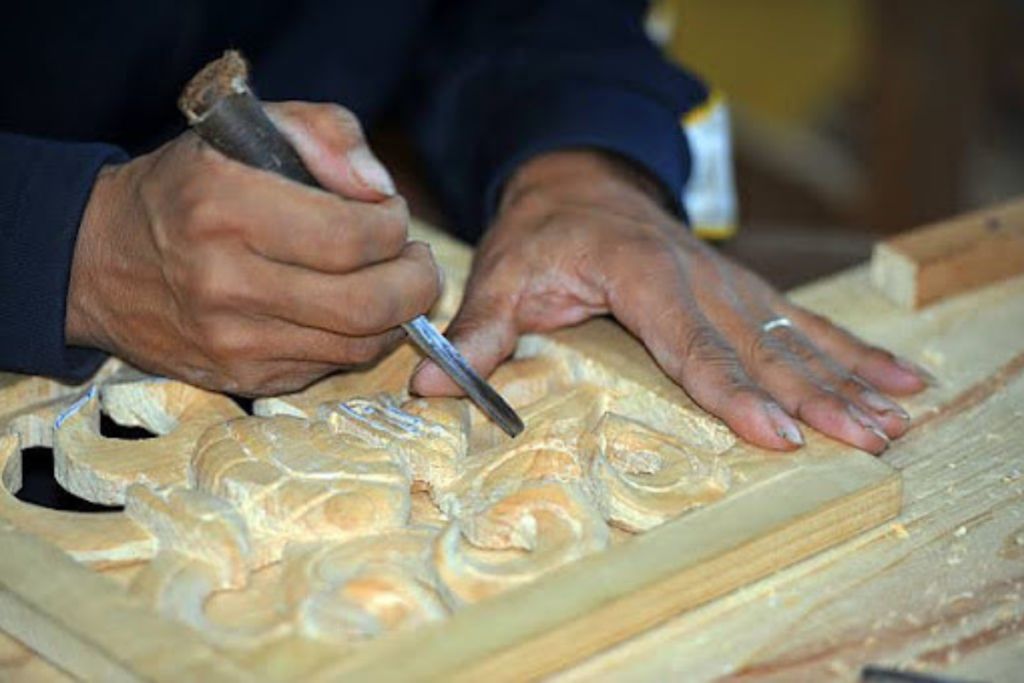
State-Wise Wood carving in India Styles
India is a land of diversity and its carving styles reflects this beautifully. Each region has its own identity, provided by the local materials, cultural history and artistic predilections.
Saharanpur, Uttar Pradesh
Wood Carving in India capital, Saharanpur creates intricately carved furniture, flowers designs & jaali work and home decor items. The craft amalgamates Mughal culture and contemporary form, which contribute to its reputation by the international admirers.
Kashmir
Kashmiri walnut wood carving is one of the most delicate and detailed forms of craftsmanship in the country. Artisans carve deep patterns of chinar leaves, vines, and traditional Kashmiri designs on trays, furniture, and decorative pieces.
Karnataka
Karnataka’s sandalwood carving is world famous for its fragrance, precision, and miniature detailing. Artisans create intricate idols, decorative boxes, and jewelry using carving tools that bring a smooth, sophisticated finish to the wood.
Tamil Nadu
The state is known for temple-inspired carvings made from jackfruit wood. Traditional sculptures, temple doors, and classical motifs dominate the craft, reflecting Dravidian architectural influence.
Rajasthan
Rajasthan offers bold and vibrant ethnic wooden art, including carved doors, statues, antique-finish furniture, and puppets. The desert state’s traditional patterns often highlight royal motifs and folk stories.
Gujarat
Gujarat’s wood carving heritage includes ornate furniture, tribal motifs, and traditional doors found in Kutch and Saurashtra homes. The designs often blend geometric details with symbolic cultural patterns.

Popular Wooden Products
Wood Carving in India offers a broad range of handcrafted items that appeal to both domestic and global markets. Some of the most popular products include:
Hand-Carved Furniture
Tables, chairs, beds, sideboards, and cabinets with floral or geometric carvings remain in high demand for both home and luxury décor.
Decorative Wooden Artifacts
Wall panels, figurines, idols, photo frames, candle holders, and carved boxes serve as timeless décor pieces with strong aesthetic appeal.
Wooden Kitchenware
Bowls, serving trays, spoons, spice boxes, and charcuterie boards crafted from neem, mango, or acacia wood have become popular due to their durability and eco-friendly nature.
Religious Sculptures
Carved wooden deities and spiritual motifs remain an important part of India’s cultural crafts, especially for gifting and temple décor.
Handmade Souvenirs
Miniatures, toys, keychains, and traditional puppets add character to regional craft markets and tourist destinations.

Market Value & Demand
The demand for Indian wooden handicrafts continues to grow due to rising global interest in sustainable, handmade, and cultural products. Europe, the United States, and the Middle East form major export hubs for Indian carved furniture and décor.
Consumers worldwide appreciate pieces that are unique, handcrafted, and made with natural materials. With increased online visibility through wood carving in india marketplaces and social media, Indian artisans now have more opportunities to reach an international audience.
The export value of wooden handicrafts and carved furniture has steadily increased in recent years, driven by:
- Urban home décor trends
- Rising popularity of artisanal and eco-friendly goods
- Growth of online handmade craft marketplaces
- Custom furniture orders for hotels, resorts, and luxury homes
Wooden handicrafts now hold a strong position in India’s MSME sector due to consistent demand and strong cultural identity.
Furniture Manufacturing Trends
The furniture industry in India is entering a new era where tradition meets modern expectations. While handcrafted designs remain timeless, artisans are now adopting new techniques and adapting to evolving consumer lifestyles.
Fusion Designs
Many manufacturers blend traditional carving techniques with minimalist contemporary styles. This appeals to modern homes that prefer a balanced aesthetic.
Sustainable Wood Choices
Consumers now look for eco-friendly materials like reclaimed wood, bamboo, mango wood, and responsibly sourced teak. This trend supports sustainability while keeping traditional craftsmanship alive.
Customization Demand
Custom-made carved furniture has become a premium segment. Customers request personalized details, finishes, and dimensions, giving artisans creative flexibility.
Global Aesthetic Influence
Design influences from Scandinavian, Middle-Eastern, and rustic American styles are being merged with Indian carving to create hybrid furniture that fits international markets.

Selling Wooden Craft Through Desi Biz
Platforms like Desi Biz give Indian wood artisans an opportunity to sell handcrafted products directly to customers without depending entirely on local markets.
Artisans can list carved items, showcase regional styles, and offer customized creations. By creating a digital storefront, craft businesses gain visibility, credibility, and a wider customer base.
For MSMEs in the wood carving industry, Desi Biz becomes an essential tool to:
- Reach national and international buyers
- Build a brand around traditional craftsmanship
- Offer unique handmade products directly to customers
- Increase sales without heavy infrastructure costs
This digital boost allows small craft businesses to compete with established players while preserving India’s centuries-old carving tradition.
Conclusion
Wood Carving in India represents artistic mastery, cultural heritage, and sustainable craftsmanship. From Kashmir’s walnut wood to Karnataka’s sandalwood and Saharanpur’s intricate furniture, each region tells a story through handcrafted details. As global demand grows, Indian Wood Carving products continue to stand out as premium, artistic, and collectible pieces that carry the legacy of skilled artisans.
Frequently Asked Questions
What are the major traditional wood carving techniques practiced across different regions of India?
Different regions in India practice distinctive carving methods based on their local culture and materials. Techniques include deep carving, jaali work, relief carving, miniature carving, and lattice-style patterns. Artisans use chisels, knives, and hand tools to create detailed textures and intricate motifs that reflect regional identity.
Which Indian states or regions are most famous for their distinctive wood carving styles and products?
Saharanpur in Uttar Pradesh, Karnataka, Kashmir, Tamil Nadu, Rajasthan, and Gujarat are among the most renowned regions for wood carving. Each area specializes in unique styles—from walnut wood sculptures to sandalwood miniatures and traditional temple carvings.
How have market trends and globalization impacted the demand and pricing of traditional Wood carving in India?
Globalization has increased awareness and demand for handcrafted and eco-friendly wooden products. As a result, Wood carving in India now receive better pricing and consistent international orders. Online marketplaces, export opportunities, and lifestyle décor trends have boosted visibility and value for artisan-made wooden pieces.
What types of wood are typically preferred for traditional carving in India and why?
Popular choices include sandalwood, teak, walnut, rosewood, mango wood, and jackfruit wood. These woods are preferred because they are durable, easy to carve, and capable of holding fine details. Some, like sandalwood and walnut, also offer natural fragrance or rich grain patterns that enhance the final finish.
What are the challenges and future prospects for contemporary Indian wood carvers and the preservation of this craft?
Traditional artisans face challenges such as rising raw material costs, competition from machine-made products, and limited market access. However, the future remains promising due to the growing demand for handmade, sustainable, and culturally rich décor. Digital platforms, global interest, and government MSME initiatives continue to support artisans in preserving and expanding their craft.
Leave a Reply