
The Jharkhand Pavilion at IITF 2025 feels like stepping into a world carved from forests, folklore, minerals, and tribal wisdom. The moment you enter, the scent of lac crafts, the earthy tones of dokra metalwork, and the colourful rhythms of tribal paintings create an atmosphere that’s rooted yet refreshingly modern.
This year, Jharkhand exhibits a beautiful balance of heritage and innovation — from traditional textiles of Santhal and Ho communities to MSME innovations in handicrafts, organic foods, metal art, and rural enterprises. With its naturally rich identity and thriving artisan economy, the pavilion stands as a celebration of authenticity, sustainability, and cultural pride.
Visitors can explore tribal artefacts, handwoven fabrics, jewellery, forest-based products, and local delicacies — each carrying the quiet heartbeat of Jharkhand’s diverse communities. Whether you’re a buyer, a cultural enthusiast, or a curious traveler, the pavilion opens a window into the state’s soul: raw, radiant, and full of creative power.
Jharkhand’s Culture & Tradition
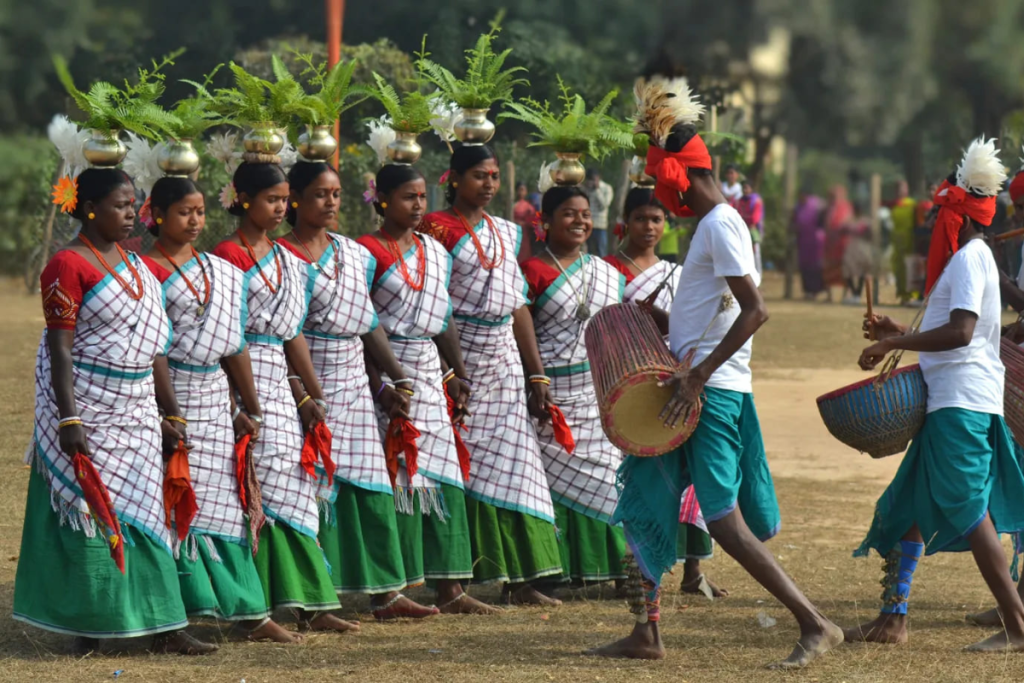
Santhal & Chhau Dance Performances
The pavilion hosts live folk performances that represent Jharkhand’s vibrant tribal heritage. Santhal steps flow like river rhythms, while Chhau dancers bring mythological tales alive with expressive masks and energetic movements.
Paitkar & Sohrai Art Displays
Walls decorated with Paitkar (scroll paintings) and Sohrai murals celebrate tribal storytelling. Their natural colours and symbolic drawings reflect themes of harvest, festivals, and ancestry.
Dhokra Metal Art Demonstrations
Artisans showcase how molten metal transforms into timeless figures and decorative pieces using the ancient lost-wax technique — a practice preserved for thousands of years.
Traditional Instruments & Tribal Craftwork
Handcrafted drums, bamboo instruments, ornaments, and wooden items reveal the everyday art of Jharkhand’s indigenous communities.
Food Delights of Jharkhand
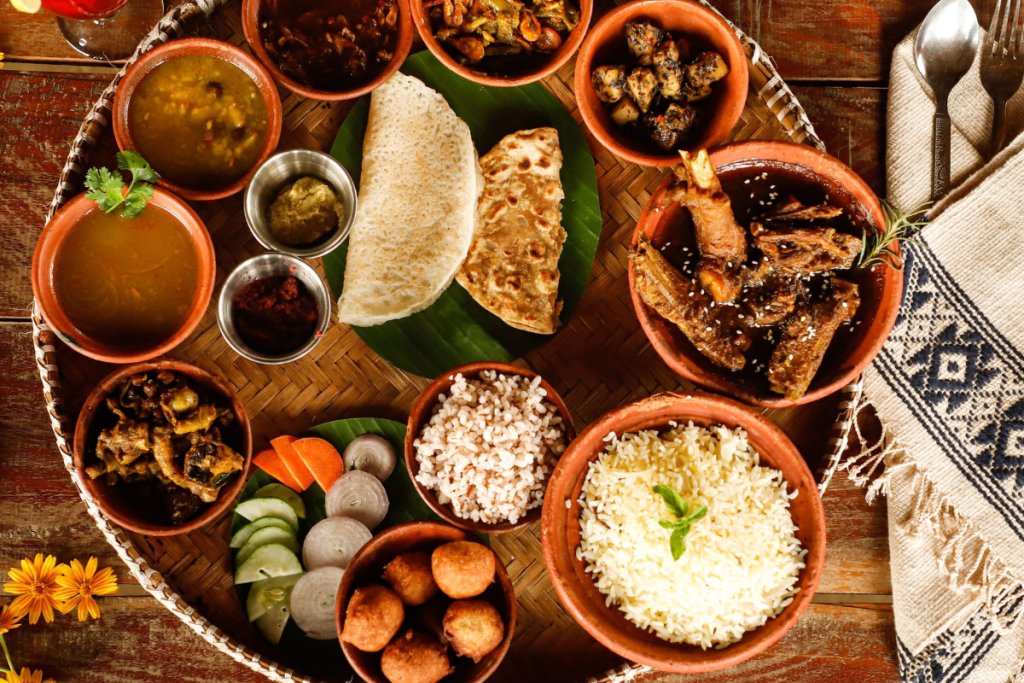
Litti–Chokha & Dhuska Counter
Jharkhand’s famous Litti, paired with chokha, is one of the first stalls to gather crowds. Dhuska, a crispy rice-lentil deep-fried dish, adds a rustic flavour that visitors instantly love.
Handia & Tribal Fermented Foods (Non-Alcoholic Variants)
Traditional rice-based beverages and fermented foods showcase Jharkhand’s unique food science. These preparations reflect the ecological knowledge of tribal communities.
Tilkut, Thekua & Tribal Sweets
These sweets carry the warmth of festivals and ceremonies. Simple ingredients — sesame, jaggery, rice, wheat — come together to create snacks that are both nutritious and flavourful.
Organic & Forest-Based Products
Honey, mahua ladoos, bamboo shoots, pickles, and wild herbs introduce visitors to authentic rural flavours rarely found outside the region.
Jewellery Collections: Tribal, Elegant, Unique
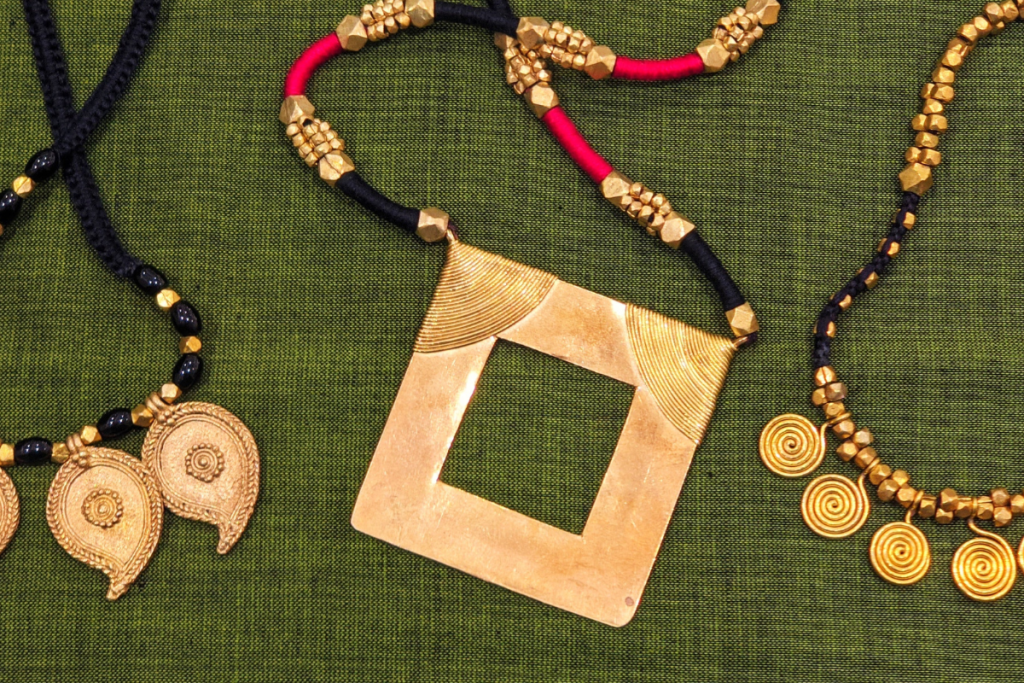
Dhokra Brass Jewellery
These handcrafted pieces combine ancient metallurgy with modern fashion. Their rustic gold-tone finish gives each ornament a timeless tribal charm.
Santhali Beaded Jewellery
Bright beads woven into necklaces, chokers, and waistbands reflect the lively spirit of Santhal culture. They pair beautifully with both traditional and modern outfits.
Bamboo & Terracotta Ornaments
Eco-friendly and lightweight, bamboo and clay jewellery pieces stand out for their creativity and sustainable design.
Metal, Shell & Tribal Fusion Designs
Several MSMEs offer contemporary tribal fusion jewellery, blending traditional patterns with wearable modern styles.
Clothing & Handloom Showcase
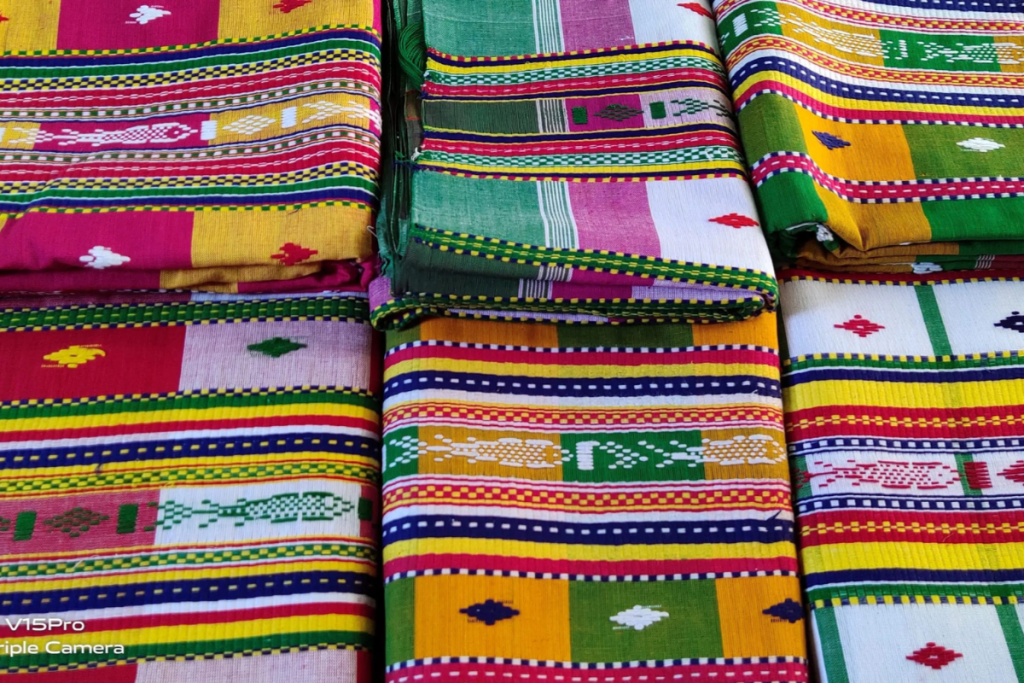
Tussar Silk Sarees & Fabrics
Jharkhand is one of India’s largest producers of premium Tussar silk, and the pavilion proudly displays sarees, stoles, and yardage woven from wild silkworm cocoons.
Handwoven Tribal Textiles
Santhal and Ho weavers showcase bold geometric patterns and earthy colour palettes. Each fabric is made with hand-spun threads on traditional looms.
Cotton, Linen & Natural Dyes
Visitors admire the soothing tones achieved through plant-based dyes. Many textiles are lightweight, breathable, and perfect for everyday wear.
Hand-Embroidered Apparel
Contemporary designers collaborate with rural artisans to create apparel featuring tribal motifs, mirror work, and eco-friendly fibres.
MSME Products from Jharkhand
Lac Products & Craft Items
Jharkhand is famous for its lac cultivation. Exhibits include lac bangles, toys, home décor, and jewellery, all handmade by rural artisans.
Organic & Forest Produce
Products like wild honey, dried mushrooms, herbal powders, tamarind, and seed-based snacks attract both retail buyers and exporters.
Dhokra Metal Art Products
Brass figurines, tribal artifacts, and decorative items crafted using lost-wax casting techniques gain attention for their antique appeal.
Eco-Friendly Household Items
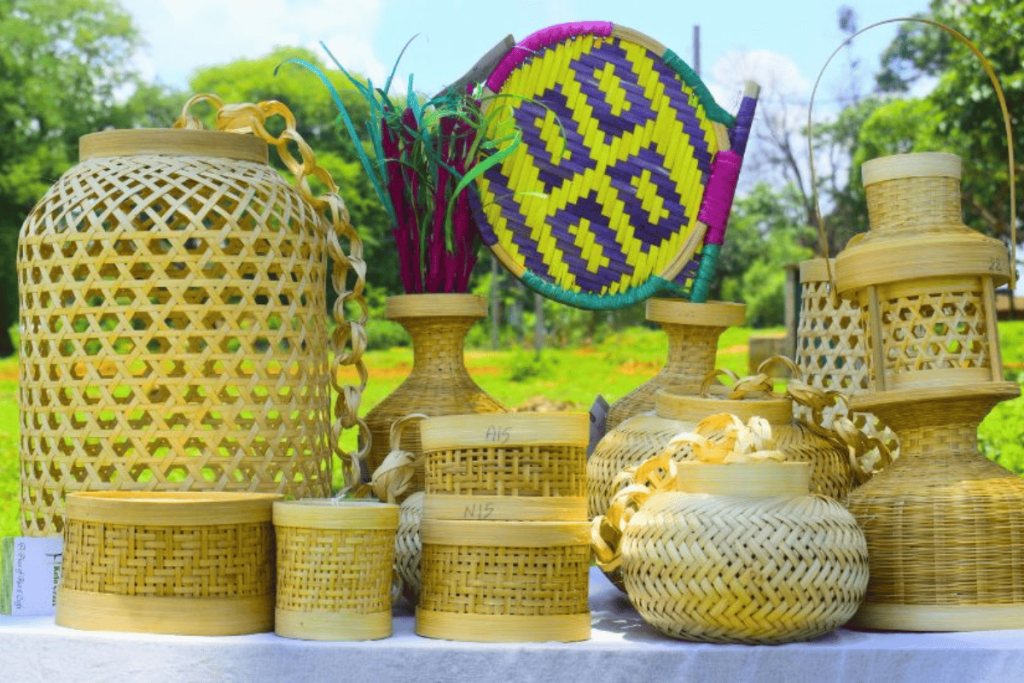
Bamboo baskets, wooden bowls, natural fibre mats, and biodegradable home items reflect Jharkhand’s commitment toward sustainable MSMEs.
Art & Craft Treasures
Paitkar Paintings (Scroll Art)
Often called “the earliest school of painting,” Paitkar art tells stories of folklore, rituals, and tribal life through long, detailed scrolls.
Sohrai & Khovar Paintings
These mud-based wall arts use natural pigments and symbolic motifs inspired by farming, animals, and festive rituals.
Terracotta & Clay Craft
Rustic clay sculptures, pots, tribal masks and decorative lamps showcase the deep connection between the people and the land.
Bamboo Craftwork
From baskets to lamps and furniture, bamboo artisans display their mastery of shaping nature into functional beauty.
Business & Trade Opportunities
Export-Ready Tribal & Organic Products
Many MSMEs offer certified organic goods, handmade crafts, and forest-based products that are in demand internationally.
B2B Meetings & Networking Counters
Business visitors can meet cluster leaders, cooperatives, and government-supported artisan groups for sourcing and partnerships.
Startup Zone for Young Entrepreneurs
The pavilion highlights startups bringing innovation to textiles, food processing, and rural crafts — blending old wisdom with new ideas.
Government Support Desks
Information regarding artisan training, subsidies, and export promotion is available for buyers and entrepreneurs.
Visitor Tips for IITF 2025 (Jharkhand Pavilion)
Visit During Weekdays for Better Access
Crowds thin out on weekdays, allowing peaceful exploration and more meaningful interactions with artisans.
Carry Cash + Digital Payments
UPI works widely, but some rural artisans prefer cash, especially for smaller handmade purchases.
Taste Local Foods Before Peak Hours
Jharkhand’s food stalls get busy by afternoon, so mornings are ideal for shorter queues and fresh servings.
Engage with Artisans
Most exhibitors are creators themselves — they love sharing the stories behind their art, crafts, or textiles.
Wear Comfortable Footwear
The pavilion is wide and detailed. Comfortable shoes help you enjoy every stall without tiring early.
Conclusion
The Jharkhand Pavilion at IITF 2025 stands as a glowing tribute to India’s tribal heartland — rich in artistry, heritage, and sustainable living. From dazzling Tussar silks and soulful Paitkar paintings to flavourful local foods and unique MSME innovations, every corner reflects Jharkhand’s timeless beauty.
Whether you’re discovering tribal arts for the first time or exploring new business opportunities, this pavilion promises a journey filled with culture, creativity, and authenticity. It’s a space where ancient traditions meet modern markets — and where every visitor leaves with something meaningful.
Frequently Asked Questions
1. What are the main attractions of the Jharkhand Pavilion at IITF 2025?
This FAQ helps users quickly understand the highlights — tribal art, Tussar silk, Dhokra craft, lacquer products, organic foods, and cultural performances.
2. Is Tussar silk available for purchase at the Jharkhand Pavilion?
A highly searched question, since Jharkhand is India’s Tussar hub. This boosts textile and saree-related keywords.
3. What types of tribal jewellery and handicrafts can be found at the Jharkhand Pavilion?
Users often search for curated lists of tribal crafts — Dhokra jewellery, bamboo crafts, lac items, and Santhal beadwork.
4. Does the Jharkhand Pavilion offer food items or organic products from local communities?
This targets searches around Litti-Chokha, Dhuska, wild honey, herbal products, forest produce, etc.
5. Are there business or B2B opportunities available at the Jharkhand Pavilion during IITF 2025?
Buyers and entrepreneurs look for information on MSMEs, sourcing options, cooperatives, and export-ready products.
Leave a Reply