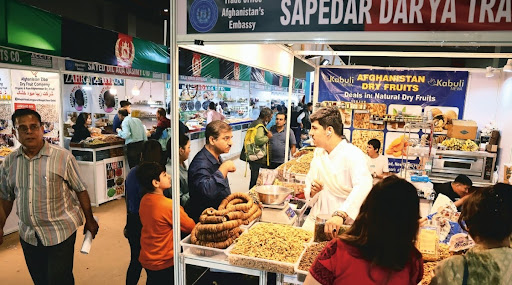
The Afghanistan Pavilion at Trade Fair 2025 stands like a beautifully carved doorway into Central Asia — rich with aroma, colour, craft, and centuries of cultural memory. This year, the pavilion blends Afghanistan’s timeless artistry with modern export-ready industries, attracting visitors with its handmade carpets, precious stones, dry fruits, saffron, ceramics, and traditional textiles.
Walking through the pavilion feels like entering an Afghan bazaar, where artisans weave stories into carpets, jewelers polish ancient motifs, and traders present top-quality commodities sought across the world. Their exhibits reflect resilience, craftsmanship, and the entrepreneurial spirit of Afghan MSMEs.
From business networks to cultural showcases, from gourmet dry fruits to gemstone markets, the Afghanistan Pavilion offers a rare, immersive experience — equal parts tradition and innovation. It is one of the most aromatic, colourful, and globally relevant pavilions of IITF 2025.
1. Afghanistan’s Culture & Heritage
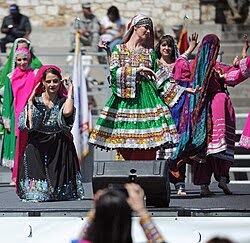
Traditional Costumes & Textiles
The pavilion displays elegant traditional Afghan clothing featuring embroidered coats, colourful dresses, and handwoven fabrics. Each textile reflects regional patterns and centuries-old weaving traditions.
Handcrafted Pottery & Ceramics
Afghan blue pottery and ceramic art showcase the country’s love for intricate geometric patterns. The stall narrates the story of how clay, colour, and fire come together in Afghan craft culture.
Historical Art, Calligraphy & Decorative Items
Stalls featuring Islamic calligraphy, metal engravings, and miniature art draw visitors into Afghanistan’s artistic world. These pieces symbolise the fusion of spirituality and craftsmanship.
Live Craft Demonstrations
Artisans sometimes perform live embroidery, beadwork, or weaving sessions, offering visitors a rare look into the skill and patience behind Afghan handmade goods.
2. Food & Flavours of Afghanistan
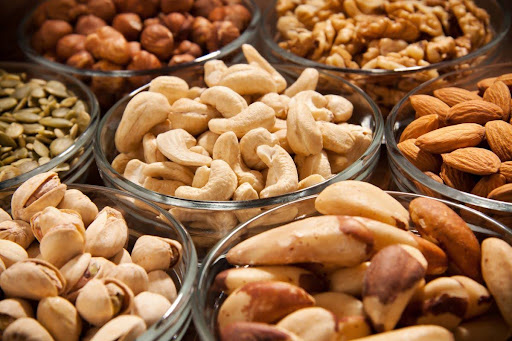
Premium Dry Fruits & Nuts
One of the most popular attractions—Afghanistan’s almonds, figs, pistachios, raisins, and apricots are showcased in premium export quality. Their natural sweetness and rich flavour speak for themselves.
Afghan Saffron: World-Class Quality
Known globally for its purity, Afghan saffron is showcased in different grades. Exhibitors explain how its aroma and deep red strands make it prized in culinary and medicinal use.
Traditional Afghan Sweets
Visitors can explore sweet treats like Sheer Pira, Halwa-e-Sohan, and dried fruit confections. The natural ingredients reflect Afghan culinary simplicity and richness.
Herbal Teas & Organic Goods
Afghan green teas, herbal mixes, and organic spice blends add depth to the food section. These items appeal to health-conscious visitors.
3. Gemstones, Jewellery & Precious Crafts
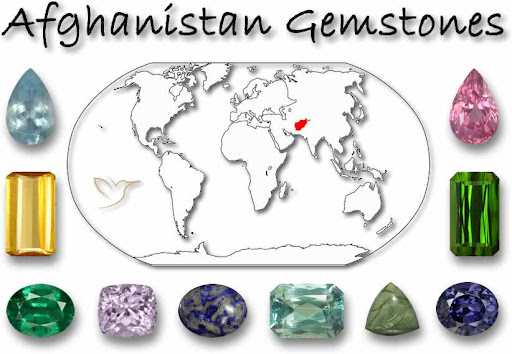
Lapis Lazuli: Afghanistan’s Blue Treasure
The pavilion proudly displays Lapis Lazuli — Afghanistan’s iconic deep-blue stone. Jewelers exhibit pendants, rings, sculptures, and raw stones with rich colour and high-grade finish.
Emeralds, Rubies & Semi-Precious Stones
Visitors can explore a range of gemstones sourced from the mountains of Badakhshan and Panjshir. Certified sellers offer both raw and finished pieces.
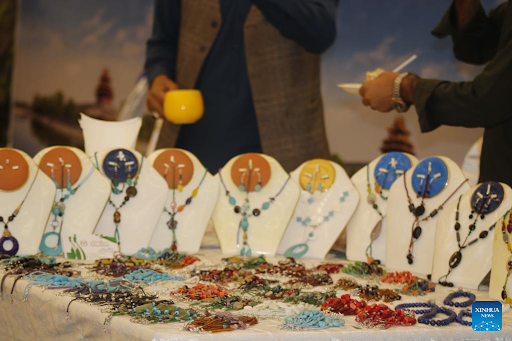
Handcrafted Silver & Metal Jewellery
Afghan jewellery often features tribal motifs and bold designs. These handcrafted ornaments represent a blend of cultural identity and meticulous artistry.
Carved Stone Artifacts
Beautifully crafted stone bowls, decor pieces, and sculptures highlight Afghanistan’s stone-carving heritage, offering unique collectible pieces.
4. Textiles, Carpets & Handwoven Masterpieces
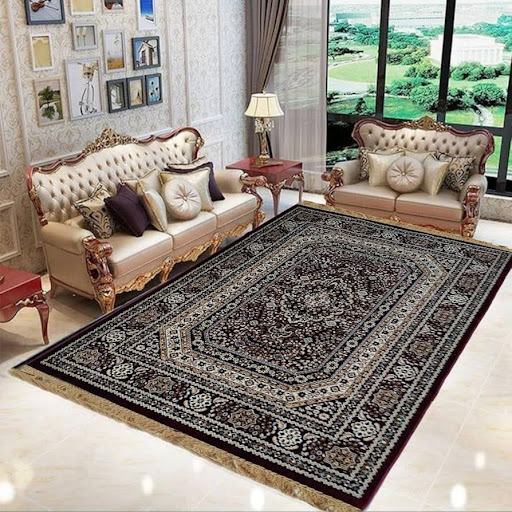
Handwoven Afghan Carpets & Rugs
These carpets are the heart of the pavilion — rich in colour, wool quality, knot count, and symbolic patterns. Many buyers visit exclusively for these authentic carpets known for durability and luxury.
Kilim Rugs & Tribal Weaves
Flatwoven kilims with geometric designs are favourite picks for home décor. Their patterns are inspired by nomadic lifestyles and ancient symbolism.
Silk & Wool Textiles
Visitors can explore premium wool shawls, embroidered scarves, and handcrafted fabrics. Each item reflects regional identity and traditional weaving expertise.
Embroidery & Tribal Clothing
Hand-embroidered garments, vests, and accessories feature mirrorwork and colourful threads, showcasing Afghanistan’s vibrant fashion heritage.
.
5. MSME & Export Products at Afghanistan Pavilion
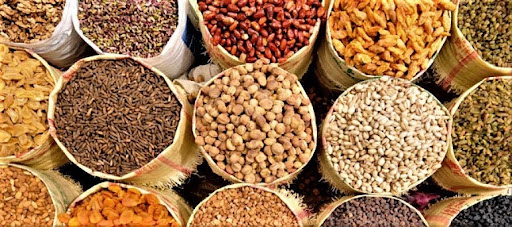
Agricultural & Organic Products
Honey, saffron, figs, dried fruits, herbs, and natural oils dominate the MSME sector. These products are export-ready with international demand.
Handicrafts for Global Markets
Woodwork, ceramics, carpets, gemstones, and jewellery represent the strength of Afghan artisanship. Many exhibitors offer international shipping and bulk orders.
Beauty, Wellness & Herbal Items
Natural skincare products, essential oils, handmade soaps, and herbal balms showcase Afghanistan’s growing organic wellness industry.
Leather Goods & Handmade Accessories
Leather bags, wallets, belts, and footwear crafted by local MSMEs display durability and artistic detail.
6. Art, Craft & Cultural Showcase
Ceramic Art & Blue Pottery
Rich turquoise and cobalt tones dominate Afghan pottery works. These pieces are famous for their geometric patterns and vibrant glazes.
Miniature Paintings & Calligraphy
Historical and cultural themes come alive through intricate brushwork and decorative calligraphy panels—popular among art collectors.
Wooden Décor & Carved Furniture
Hand-carved wooden trays, furniture pieces, and decorative panels show Afghanistan’s deep woodworking traditions.
Wool & Felt Craft Items
Felt rugs, bags, and warm woollen accessories highlight traditional techniques used by rural Afghan communities.
7. Business, Trade & Export Promotion Opportunities
Meetings with Afghan Exporters
Dedicated B2B corners allow buyers to meet exporters of carpets, dry fruits, gemstones, handicrafts, and textiles. These interactions open pathways for sourcing partnerships.
Information on Afghanistan’s Export Sectors
Government bodies and trade associations provide insights on market trends, certifications, logistics, and export potential for Indian and global buyers.
Startup & Innovation Displays
Afghan startups present food innovations, packaging solutions, digital trade support, and modern product lines, bridging tradition with technology.
Investment & Collaboration Prospects
Indian buyers, retailers, and wholesalers explore joint ventures, distribution partnerships, and import opportunities across several sectors.
8. Visitor Tips for Exploring Afghanistan Pavilion
Visit During Early Hours
Mornings and weekdays allow smoother browsing of carpets, gemstones, and dry fruits without large crowds.
Check Certifications for Gemstones
Most gemstone sellers provide authenticity certificates. Visitors looking for genuine stones should request documentation.
Carry Cash + UPI
While UPI works at many places, some Afghan traders prefer cash for quick transactions.
Taste Dry Fruits Before Buying
Exhibitors often offer samples—use this to compare quality before purchasing larger packs.
Ask for Export or Delivery Options
Most vendors offer India-wide or international delivery, especially for carpets and bulk products.
Conclusion
The Afghanistan Pavilion at Trade Fair 2025 is a colourful fusion of heritage, craftsmanship, and global trade potential. From world-class dry fruits and saffron to handwoven carpets, gemstones, ceramics, and artisan-made treasures — the pavilion brings Afghanistan’s cultural depth and economic strength together under one roof.
Whether you’re a buyer, culture lover, or simply curious explorer, the pavilion invites you into a world shaped by tradition and renewed through innovation. A slow walk here feels like travelling across Afghan markets, each stall offering a new story, texture, or flavour.
Frequently Asked Questions
1. What products are most popular at the Afghanistan Pavilion?
The most in-demand items include Afghan dry fruits, saffron, handwoven carpets, gemstones like Lapis Lazuli, ceramics, and traditional textiles.
2. Are the gemstones and carpets sold here authentic?
Yes. Most sellers provide authenticity certificates for gemstones and quality details for carpets. Visitors should always request documentation before purchasing.
3. Can we buy products in bulk or place export orders?
Absolutely. Many exhibitors are MSMEs and exporters offering bulk orders, B2B deals, and international shipping.
4. Do Afghan vendors accept UPI payments?
Most do, but some prefer cash for quick transactions. It’s advisable to carry both UPI and cash.
5. Are delivery or shipping options available for heavy items like carpets?
Yes. Vendors generally offer India-wide and international delivery for carpets, handicrafts, and bulk products. Shipping details are provided at each stall.
Leave a Reply