City Overview
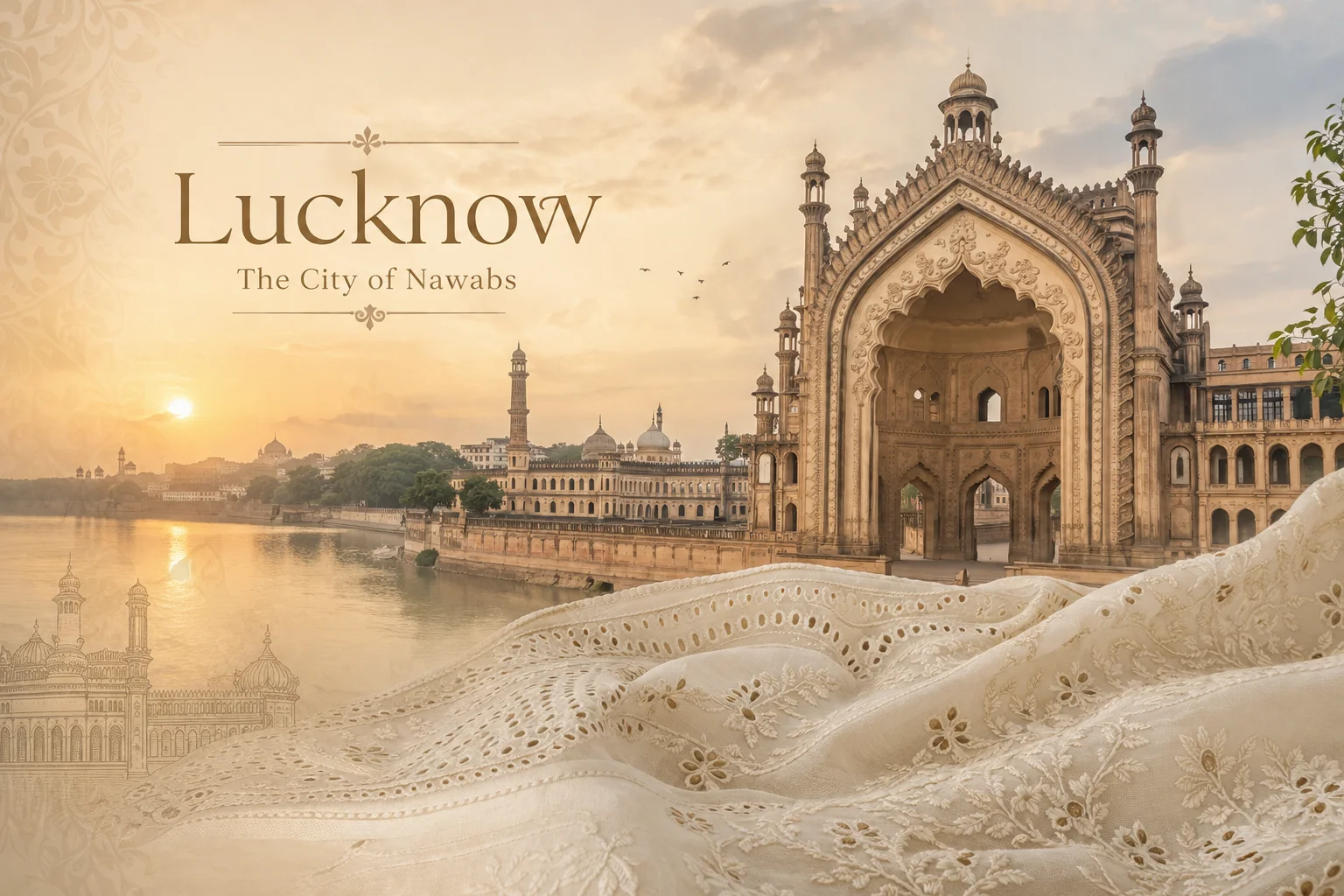
Lucknow is a cool city. It is the capital of Uttar Pradesh. People call it the City of Nawabs. This is because of its history and culture. The city has a lot of things like good food and beautiful art. Lucknow is situated on the banks of the river Gomti.
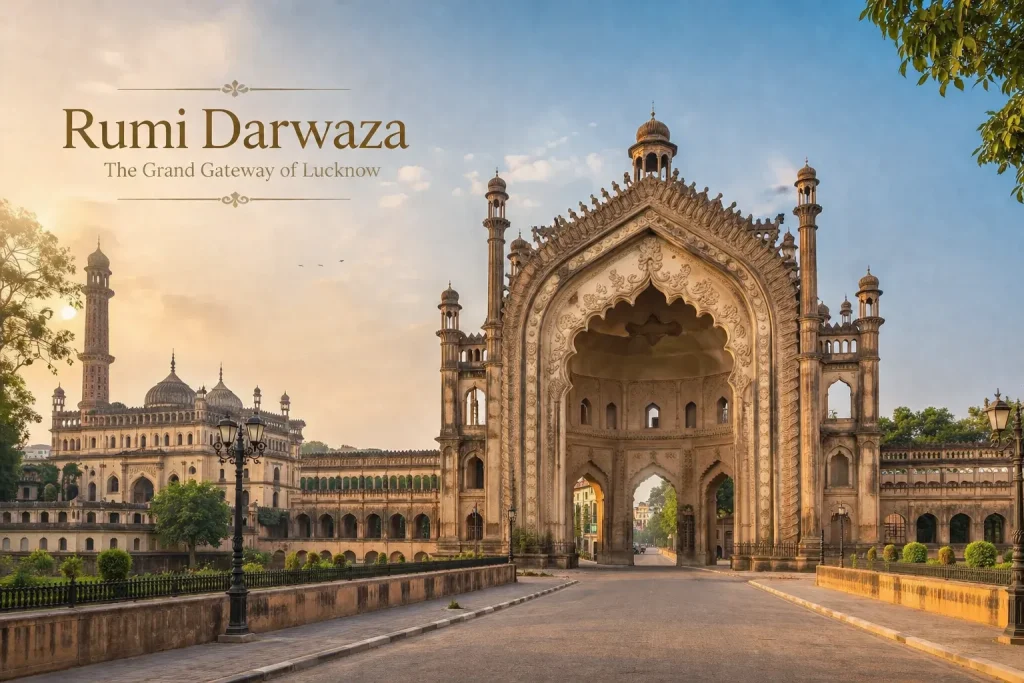
The city has old buildings like the Bara Imambara, Chhota Imambara and Rumi Darwaza. These buildings are from the time of the Nawabs. Lucknow is also famous for its crafts like chikankari embroidery and zardozi work.
It is also becoming modern. There are IT parks and a metro system. This makes Lucknow a great place to visit and live. It has an old-world charm and it is also a new and exciting city. Lucknow is a part of the Hindi heartland. It is becoming an economic hub.
History of the City
Lucknow has an old history, more than a thousand years.
It became really important in the 18th and 19th centuries under the Nawabs of Awadh.
At that time Lucknow was like an independent kingdom and was very rich in culture. This was after the Mughal Empire in Delhi started to weaken. The Nawabs, Asaf-ud-Daula loved to support good architecture, poetry, music, dance and food.
Lucknow`s food, dance, especially Kathak and crafts like chikankari became very famous because of the Nawabs support. The city was very involved in the Revolt of 1857 which was centred around the Residency.
Even though the city has grown a lot its history, under the Nawabs is still what makes it special.
Their food and crafts still show its Nawabi roots.The city is still known for Lucknows architecture, courtesy, cuisine and crafts.
Lucknows cultural identity is still defined by its Nawabi legacy.
Famous Product Overview - Chikankari Embroidery
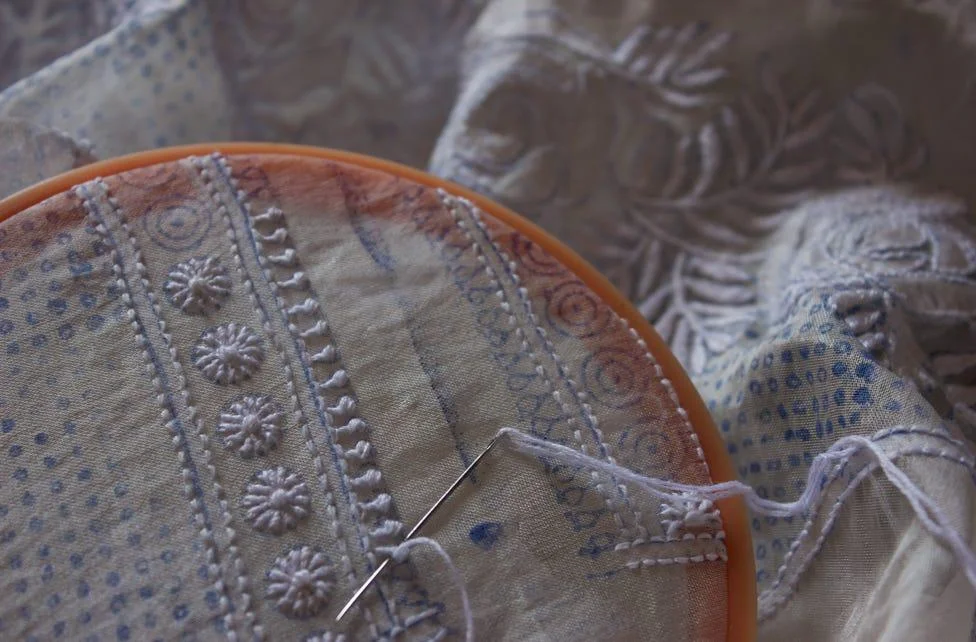
Chikankari Embroidery is an old and traditional craft that people do by hand in Lucknow. They use threads to make beautiful designs on light fabrics like muslin, cotton, georgette, chiffon and silk. Usually Chikankari Embroidery is thread on white fabric. The name Chikankari comes from a word that means embroidery. This shows that Chikankari Embroidery has a connection to Persian and Mughal styles.
People believe that Empress Noor Jahan, the wife of Mughal emperor Jahangir brought this craft to India in the century. Later the Nawabs of Awadh helped it become very popular. It became a special kind of textile art in Lucknow. Chikankari Embroidery uses about 30 to 36 stitches like tepchi, bakhiya, hool, jaali and murri. These stitches help create designs, shadow work and lace-like patterns all by hand without using any machines.
In the past Chikankari Embroidery was only done in thread on white fabric.. Nowadays Chikankari Embroidery is done in many soft and bright colours. It is also combined with decorative things, like mukaish, sequins, beads and mirror-work to make it look modern and fashionable while still being made by hand.
Manufacturing Process
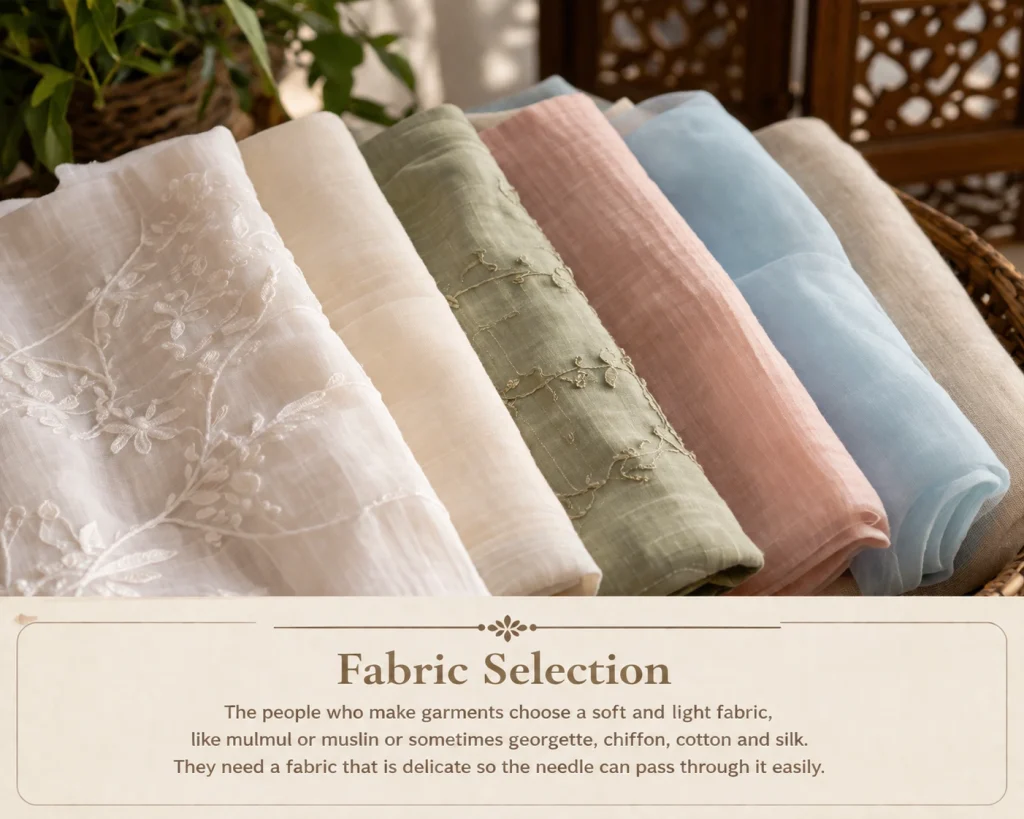
Fabric Selection: The people who make garments choose a soft and light fabric, like mulmul or muslin or sometimes georgette, chiffon, cotton and silk. They need a fabric that’s delicate so the needle can pass through it easily.
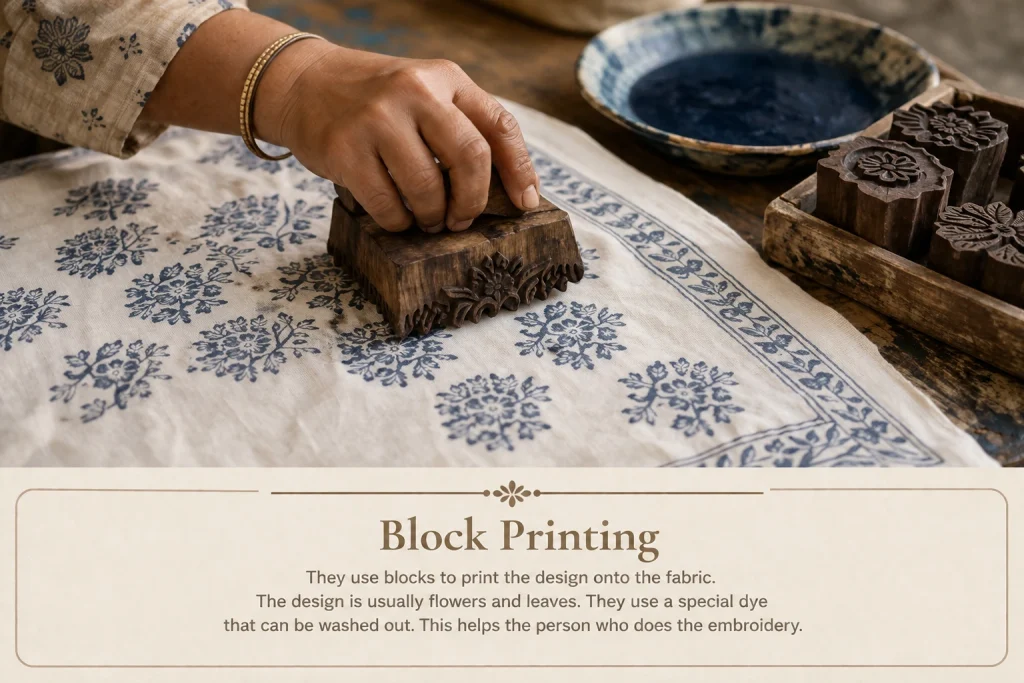
Block Printing: They use blocks to print the design onto the fabric. The design is usually flowers and leaves. They use a special dye that can be washed out. This helps the person who does the embroidery.
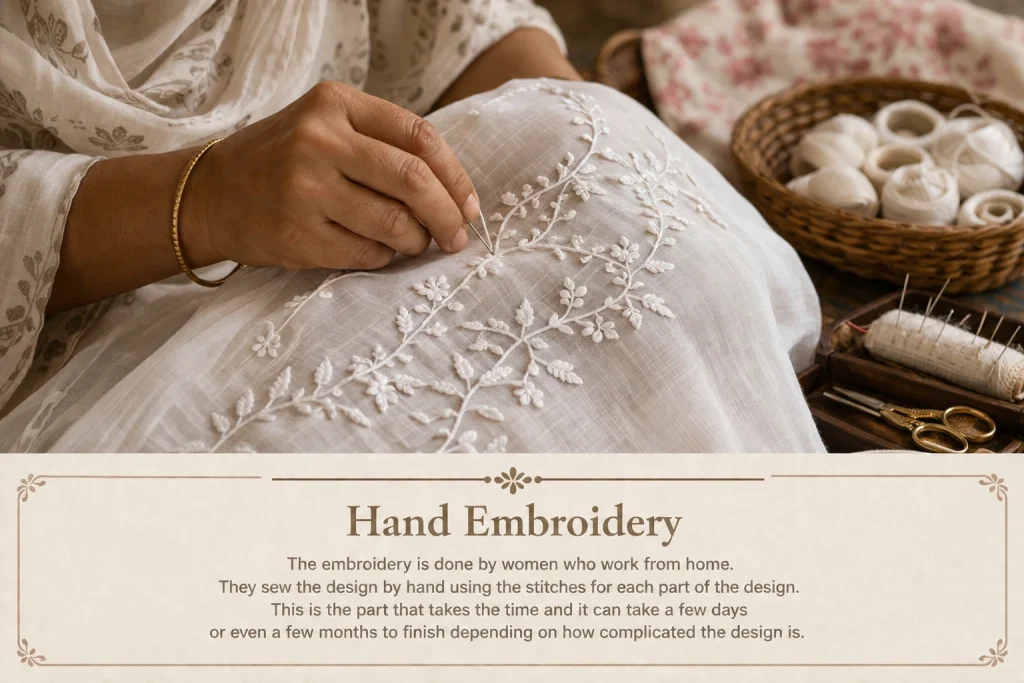
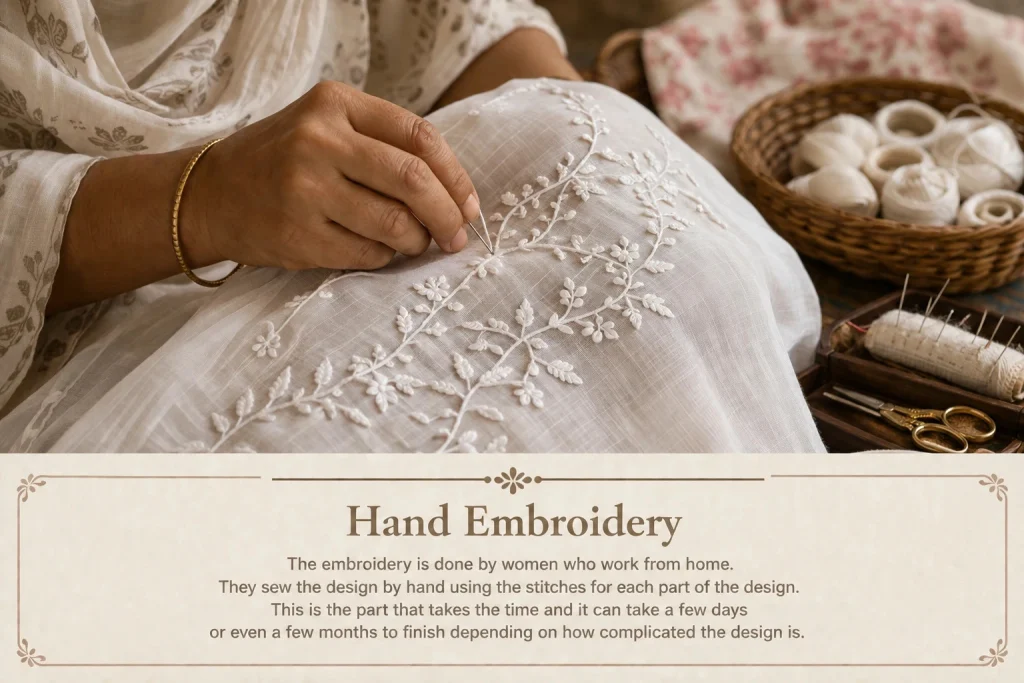
Embroidery: The embroidery is done by women who work from home. They sew the design by hand using the stitches for each part of the design. This is the part that takes the time and it can take a few days or even a few months to finish depending on how complicated the design is.
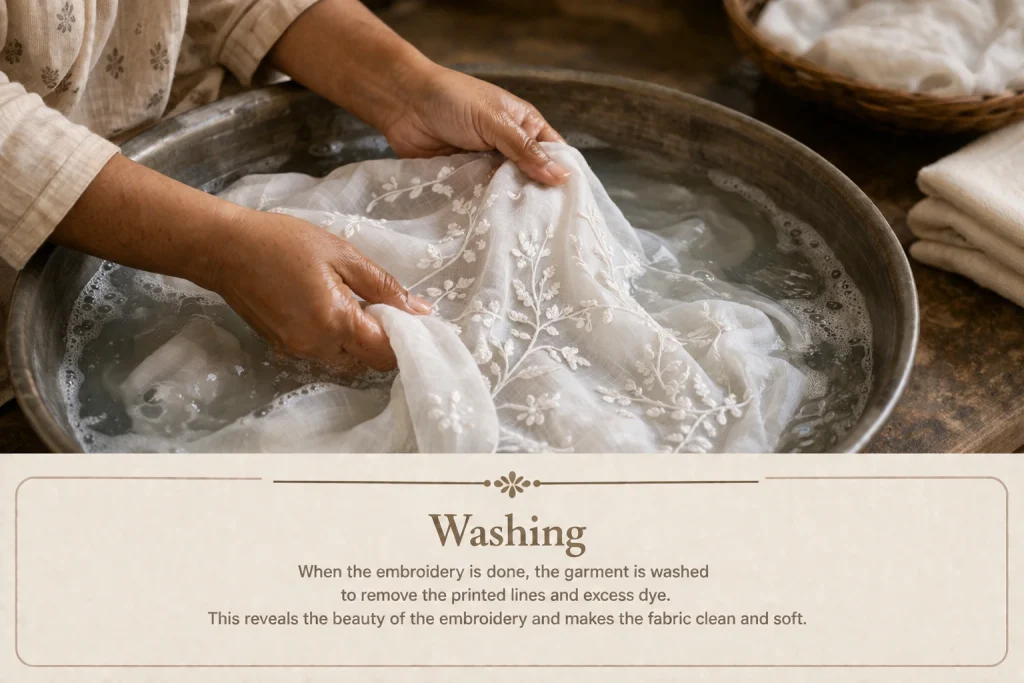
Washing: When the embroidery is done the garment is washed to remove the printed lines. This shows the embroidery.
Finishing: The garment is then starched and ironed and any extra decorations like mukaish, sequins, buttons or lace are added. Then it is checked for quality and packaged.
Cultural And Economic Significance
Chikankari is a part of Lucknows culture. You can see people wear it during Awadhi festivals and weddings and it is a symbol of the Nawabi style which is all about being elegant in a simple way. When it comes to the economy Chikankari is very important for the handicraft industry. People think the Chikankari trade in Lucknow is worth thousand crore rupees every year and it helps a lot with the MSME and export economy in Uttar Pradesh.
Chikankari helps a lot of people. Women in Lucknow and the villages around it. To earn a living. For many of these women doing Chikankari embroidery is the way they can earn money for their families.
Supply Chain & Distribution Network
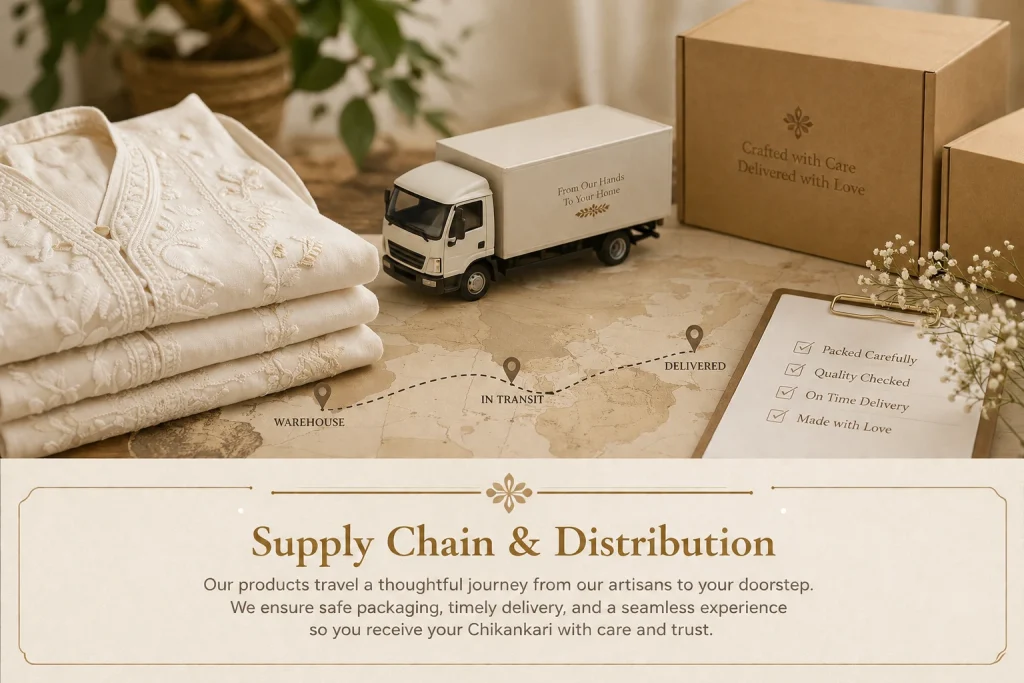
The chikankari supply chain usually starts with people who sell fabric and others who buy and sell it in bulk in markets like Chowk and Aminabad. These people give cloth to master craftsmen or thekedars who’re like contractors. The contractors get the fabric printed with blocks. Then give it to women who do embroidery at home in Lucknow and nearby villages.
These women take days or weeks to finish the stitching. When they are done the finished pieces are collected, washed and given back to the contractor or the person who exports them. They then make sure the products are good and ready to be sold.
The products then go through different paths: some go to stores and fancy shops in Lucknow, like Hazratganj, Chowk and Aminabad. Some go to people who buy in bulk and sell to stores over India.
Some go to export houses that send them to buyers in countries.. Now more and more they go to online stores and brands that sell directly to consumers.
Challenges and Competition
. The trade is mostly not organized, which puts artisans who work from home in a spot.
. The biggest market threat is machine-made clothes that look like chikan work.
. These clothes are made faster and cheaper not in Lucknow but also abroad.
. They are often sold as chikankari even though they are not handmade which hurts artisans.
Other challenges include:
* Long production times that make it hard to increase production
* Many artisans can’t. Write well and don’t have internet access, which makes it hard for them to sell online
* Not enough new and interesting designs to keep up with fashion trends
* Health problems from sitting for hours and doing detailed needlework
* Younger people are not interested in learning chikankari as a profession, which’s a concern for the future of the craft.
Future Scope
Chikankari has a chance to grow more because people worldwide are looking for clothes that are sustainable made by hand and part of the ‘slow fashion’ movement. Hand-embroidered chikan clothes are naturally more authentic than mass-produced ones.
Some opportunities for growth are:
* Selling directly to customers and exporting through e-commerce platforms so artisans and cooperatives can deal directly with buyers.
* Working with fashion brands on new designs to make more than just traditional clothes, like accessories, shoes and home decor.
* Spreading awareness about what makes chikan special and teaching people how to tell hand-embroidered work from machine-made copies.
* Training young artisans, especially women, in chikan and digital skills so they have better negotiating power.
If the government keeps supporting chikankari through ODOP and export promotion and helps promote its heritage and special status chikankari can grow strongly in the term benefiting both artisans in Lucknow and the fashion industry worldwide.