HERITAGE OF UTTAR PRADESH
BAREILLY
History of Bareilly
Bareilly is a city in the Rohilkhand area of Uttar Pradesh. It has a lot of history and an interesting culture. The city also has traditional industries that are still doing well.
The city of Bareilly was started by Jagat Singh Katehriya a time ago in the early 16th century. On the Mughal and Rohilla rulers made it a lot bigger and better. Over time Bareilly became an important place for people to buy and sell things and for craftsmen to make things. The city is also where people from cultures came to meet and exchange ideas.
Today people know Bareilly for its Zari-Zardozi embroidery things made of bamboo, furniture and other handicrafts. The skilled people who make these things are very good at what they do. They still use methods but they also know how to make things that people want to buy today. This is why Bareilly is a place to see Indias rich handicraft heritage and it is becoming a big hub for traditional craftsmanship. Bareilly is a city that's very good at making traditional things and it is getting better at it. The traditional industries of Bareilly like Zari-Zardozi embroidery and bamboo products are still very important, to the city.
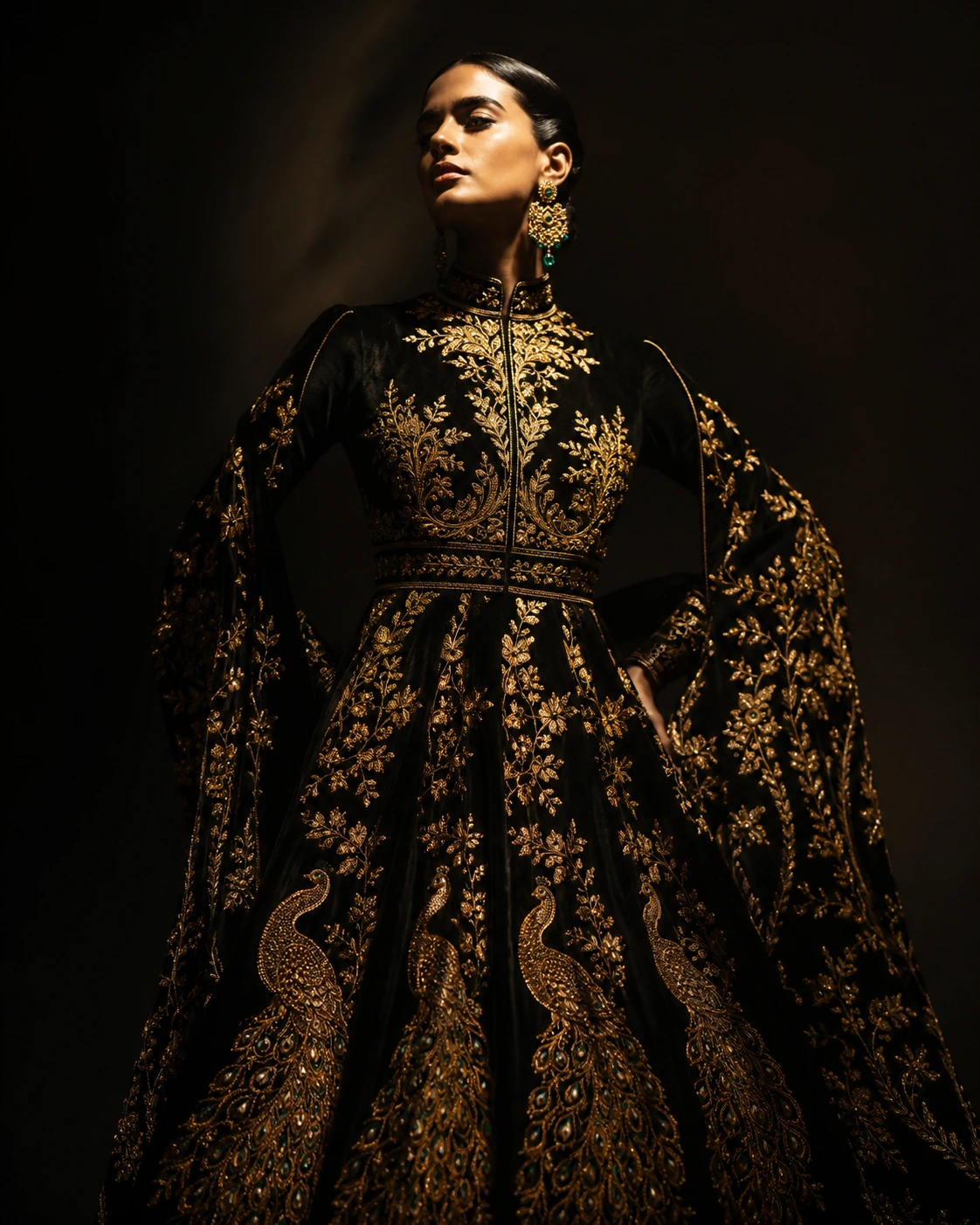
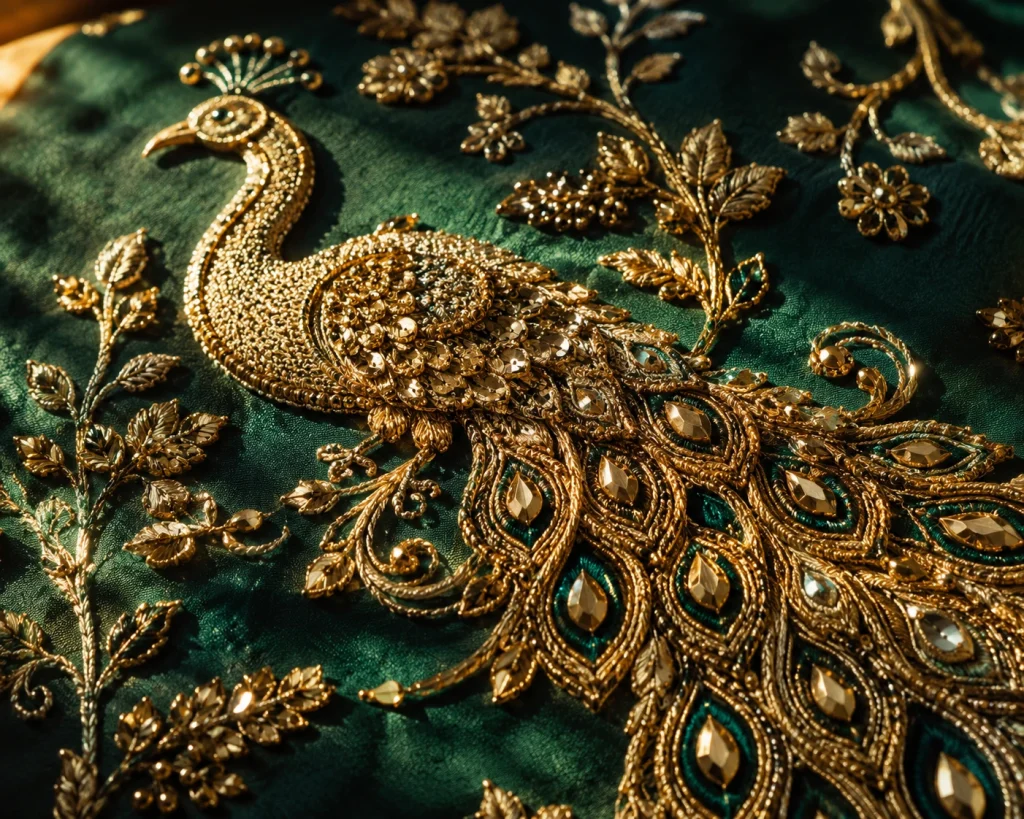

Bareilly Zari-Zardozi
Discover the history, cultural importance, and modern applications of Bareilly’s iconic embroidery tradition.
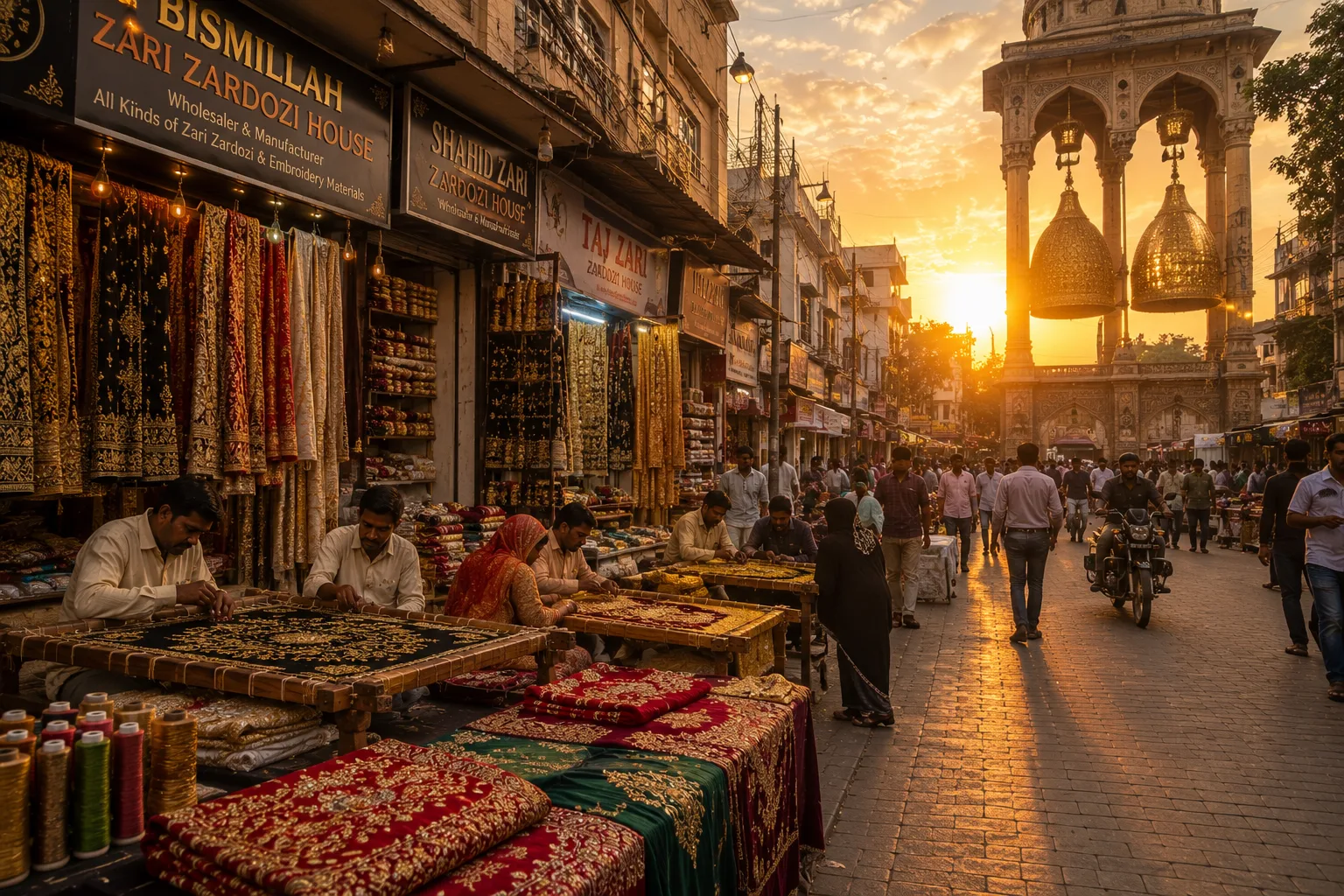
Bareilly is really famous for its system. This is an old craft that people have been doing for a long time. They use threads that are gold and silver colored to make beautiful designs on clothes. The people who do this work are very skilled. They make really pretty patterns on fabrics like velvet and silk.
They make these patterns by weaving or stitching the threads onto the fabric. The designs they make are often flowers and other decorative things. These designs are used to make clothes like bridal wear and sarees look more beautiful.
The craftsmen in Bareilly are very good at what they do. They have been doing this for a time and they are very precise. This is why Bareillys Zari work is still very popular today. People in India really, like the clothes that are made with Zari work. The Zari system is also used to make modern clothes look nice. This means that the old craft of Zari is still useful today. Bareillys Zari work is a part of Indias textile and fashion industry.
Manufacturing Process
Bareilly embroidery production is an entirely handcrafted process; therefore, it requires extraordinary skills and patience. All products go through a mandatory multi-stage embroidery process; even the design stage may take designers days or weeks to complete a single project. Though computer software is now used in design development, embroidery is still done manually.
Design Development
The design team creates beautiful floral, paisley, geometric, Mughal, contemporary, and traditional motifs for embroidery products. Designs are carefully developed to match fabric, product style, and customer requirements. Modern designers use advanced computer tools along with traditional methods to create precise, detailed, and production-ready patterns for various applications.
Design Transfer
The perforated Khaka pattern is placed over the selected fabric. Chalk powder or coloured pigment is rubbed across the surface, allowing the design outline to pass through perforations. This creates a clear guide on the fabric, helping artisans accurately follow intricate motifs during the embroidery process with precision and consistent alignment throughout.
Pattern Making
The finalized design is transferred onto tracing paper and carefully perforated by hand using fine needles. This perforated pattern, called Khaka, serves as a guide for embroidery work. Skilled artisans ensure every motif and detail is accurately marked before the design is properly transferred onto the selected fabric surface for further processing.
Frame Stretching
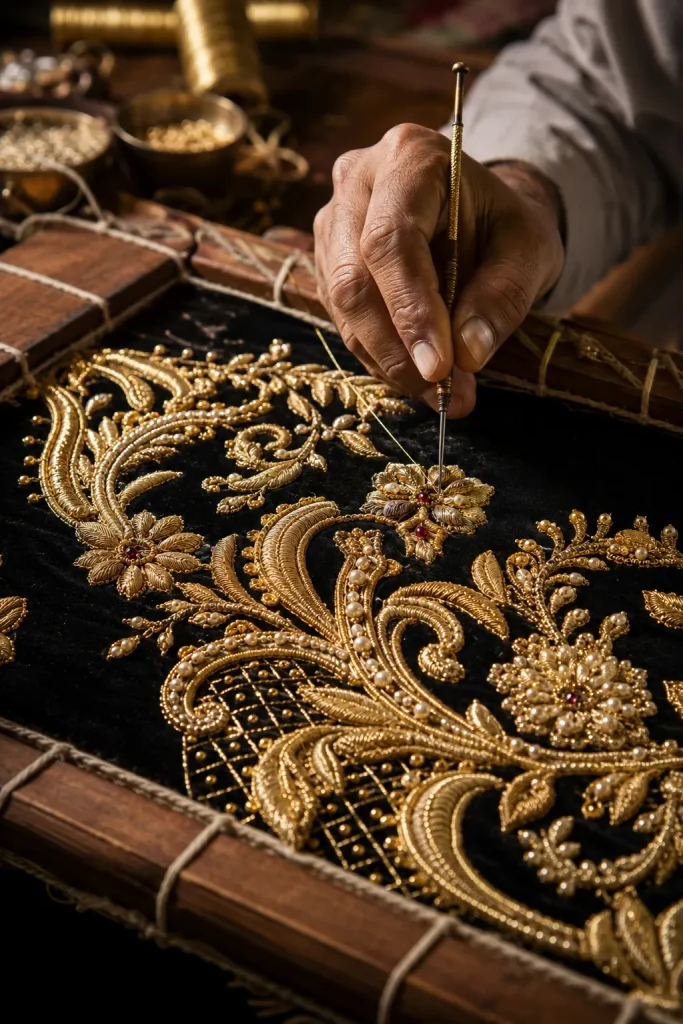
The fabric is mounted and stretched tightly on a large wooden frame called Adda. This setup allows artisans to hold the fabric firmly without wrinkles or movement. Proper stretching ensures better control, improved stitching accuracy, and consistent embroidery quality, making it an essential preparation step before starting detailed hand embroidery work.
Cutting
Once the design is finalized, suitable fabric is selected and cut according to product requirements. Fabrics such as velvet, silk, satin, organza, georgette, chiffon, cotton, and linen are commonly used. The fabric choice depends on product type, design complexity, purpose, and the level of embroidery detailing required for final production.
Hand Embroidery
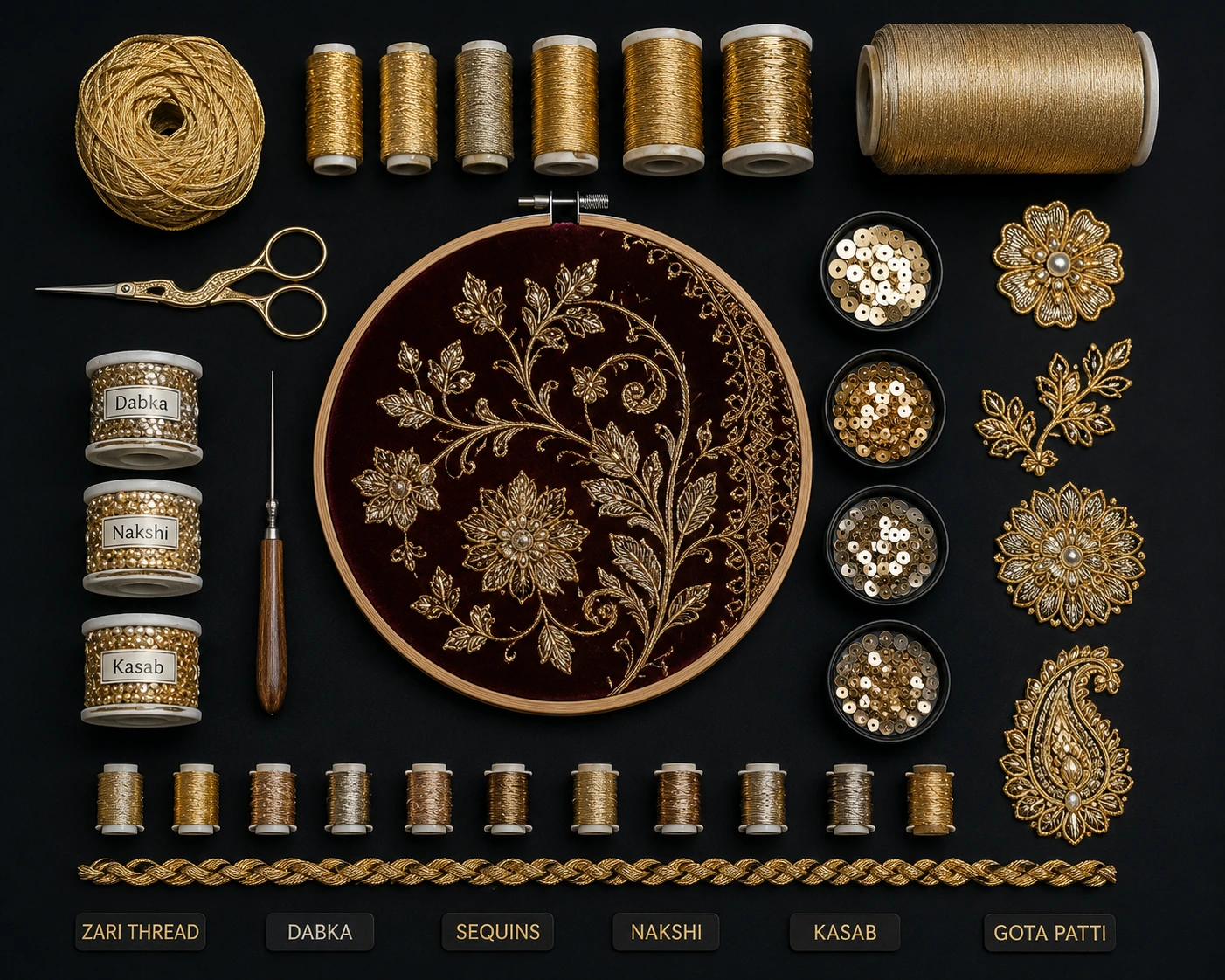
Skilled master embroiderers create intricate patterns using zari threads, dabka, nakshi, sitara, beads, pearls, mirrors, crystals, and resham. Each detail is carefully crafted by hand using fine needles and traditional techniques. This process produces rich embroidery with exceptional texture, depth, durability, and a luxurious finish suitable for premium fashion products.
Raw Material
Based on the range and category, the raw materials may vary for each product.
Silks, Velvets, Satin, georgette, chiffon, organza, cotton, linen, net
Gold, Silver Zari threads
Copper coated metallic threads
Dabka (spring wire)
Nakshi wire
Kasab thread
Salma wire
Sitara (sequins)
Beads
Pearls
Crystal stones
Glass stones
Rhinestones
Mirrors
Varieties of Product
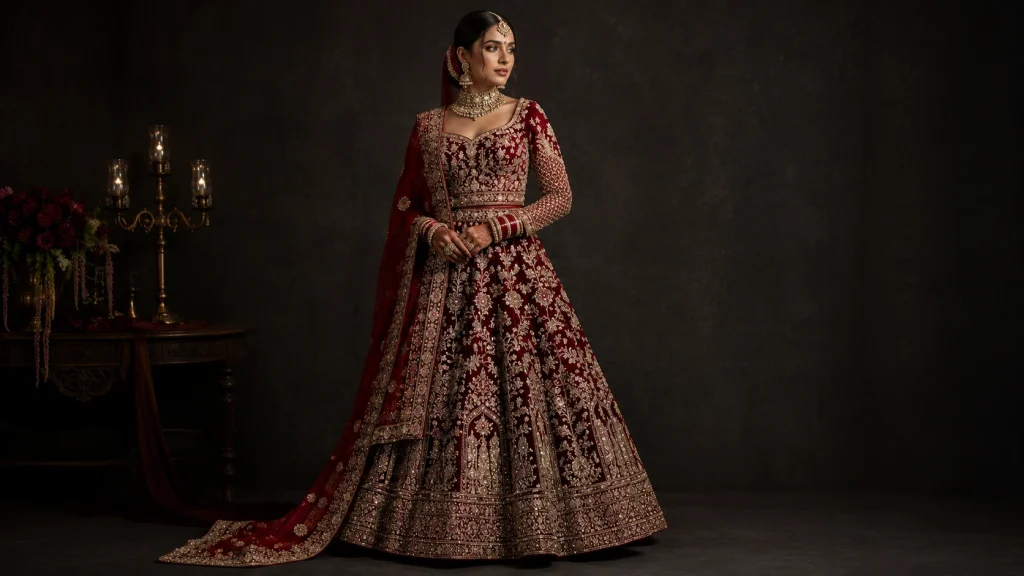
BRIDAL LEHENGA
Exquisite Bareilly Zari-Zardozi craftsmanship woven into timeless bridal elegance.
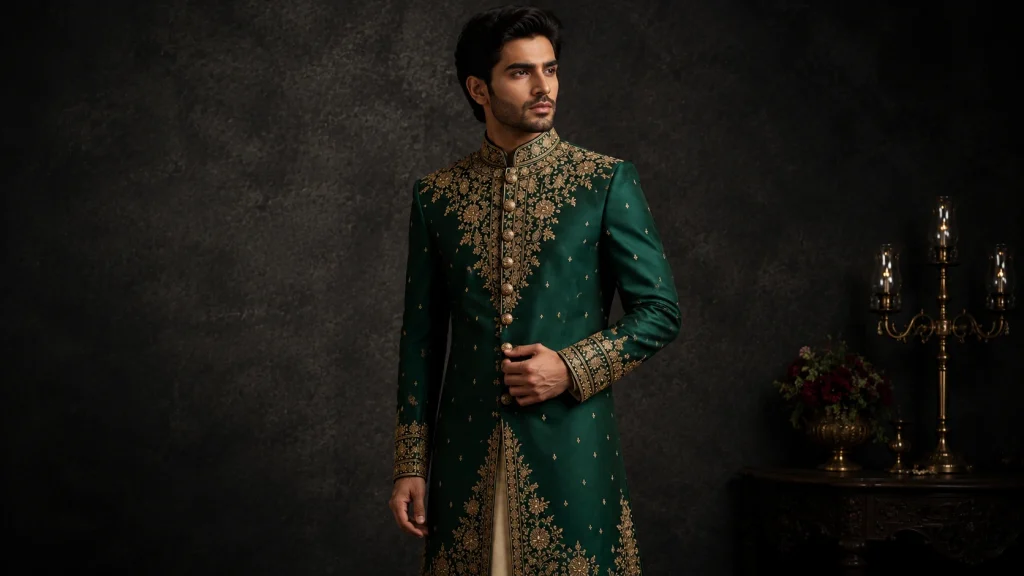
SHERWANI
Royal sherwanis adorned with authentic Bareilly Zari-Zardozi embroidery.
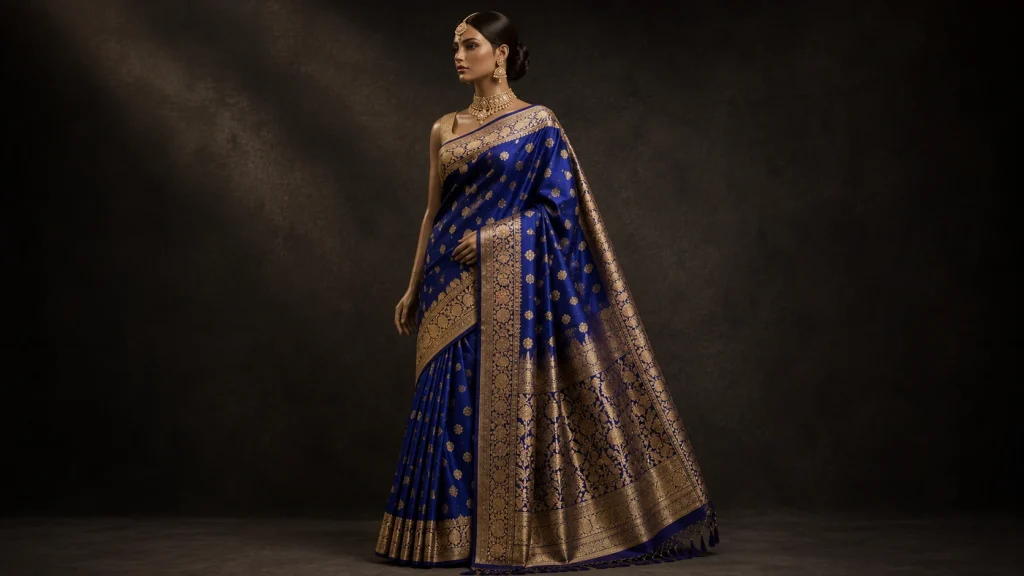
SAREE
Elegant sarees showcasing the rich heritage of Bareilly’s handcrafted embroidery.

FOOTWEAR
Traditional footwear beautifully embellished with intricate Bareilly Zari-Zardozi artistry.

CLUTCHES
Luxury clutches handcrafted with the signature elegance of Bareilly embroidery.

JACKET
Designer jackets enhanced with the finest Bareilly Zari-Zardozi craftsmanship
From Materials to Market
Bareilly's embroidery industry is supported by a well-connected supply chain that links raw material suppliers, skilled artisans, manufacturers, and buyers across India and international markets.
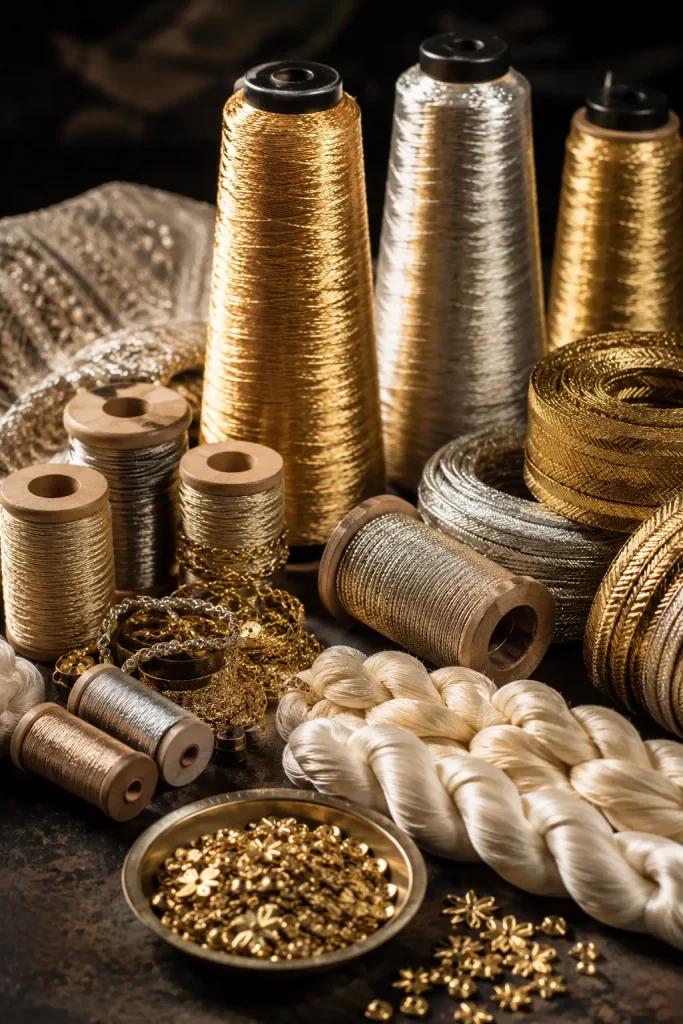
Raw Materials
Fabrics and embroidery materials are sourced from textile markets in Surat, Delhi, Mumbai, Kolkata, Varanasi Tamil Nadu, and local suppliers

Design & Production
Design houses collaborate with individual home-based embroiderers and local workshops to create intricate embroidery products.
Collection &Manufacturing
Finished embroidery products are collected and handled by manufacturers, wholesalers, exporters, and producers.
Collection &Manufacturing
A small river named Duden flows by their place and supplies it with the necessary regelialia. It is a paradisematic country, in which roasted parts of sentences fly into your mouth. Even the all-powerful Pointing has no control about the blind texts it is an almost orthographic life
One day however a small line of blind text by the name of Lorem Ipsum decided to leave for the far World of Grammar. The Big Oxmox advised her not to do so, because
- Phone:+1 (859) 254-6589
- Email:info@example.com
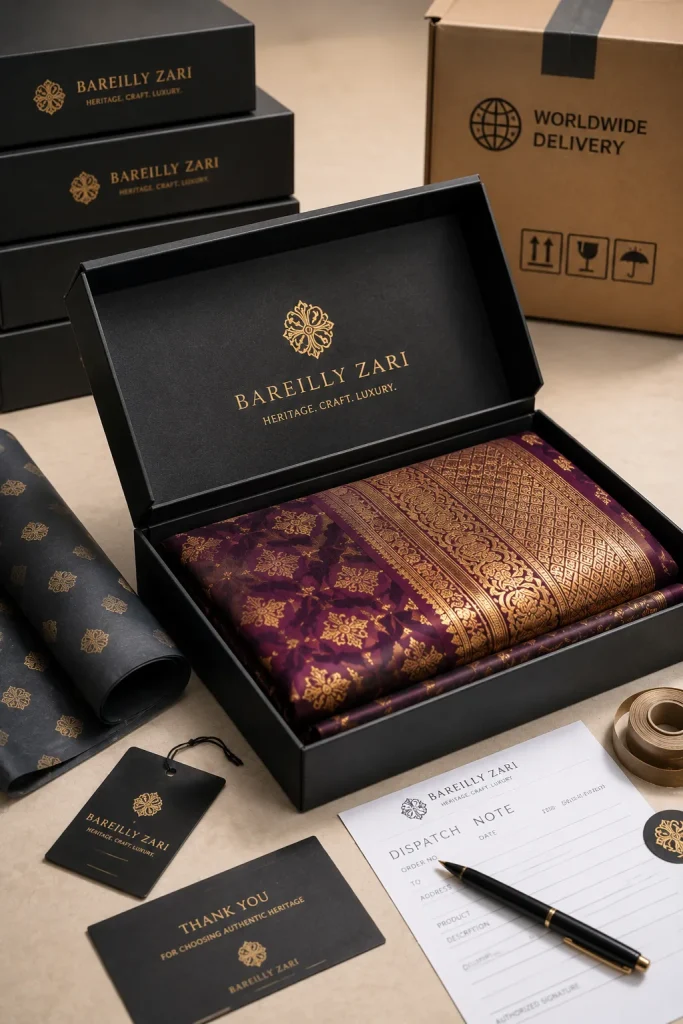
Distribution
Products move through a broad distribution network connecting manufacturers and buyers with regional, national, international, markets.
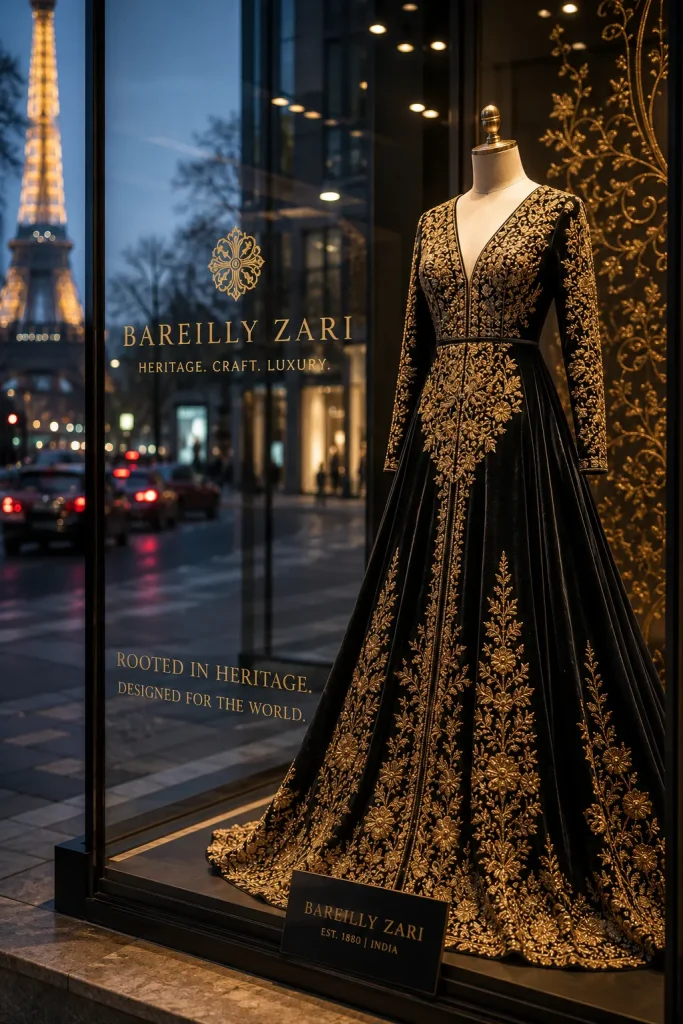
Global Reach
The network serves both domestic and international buyers, taking Bareilly's traditional embroidery to markets around the world.
Culture & Value
Bareilly Zari-Zardozi embroidery has become synonymous with Indian culture and tradition. This art form has survived the test of time while being part of India’s cultural heritage. Currently, it supports the local economy by providing employment to many people.
Bareilly embroidery sustains Bareilly’s handicrafts, textile, and furniture market. Moreover, this industry supports local designers, exporters, traders, and fashion houses that rely on this unique embroidery technique to brand their products and sell them both locally and internationally.
FAQ
Frequently Asked Questions (FAQs)
Bareilly Zari-Zardozi is a traditional form of decorative embroidery known for its intricate designs created using metallic zari threads, beads, sequins, stones, and other embellishments
Bareilly has a long-standing tradition of skilled craftsmanship and is recognized as an important centre for Zari-Zardozi and other handicrafts in Uttar Pradesh.
Common materials include gold and silver-coloured metallic threads, silk and velvet fabrics, beads, sequins, stones, pearls, and other decorative elements.
The embroidery is created by skilled artisans who carefully stitch decorative threads and embellishments onto fabric, often using a traditional wooden embroidery frame known as an adda.
Zari-Zardozi is commonly used to create and decorate bridal wear, sarees, lehengas, sherwanis, suits, dupattas, clutches, bags, footwear, home décor, and other fashion accessories.
Fabrics and embroidery materials are sourced from major textile markets in cities such as Surat, Delhi, Mumbai, and Kolkata, along with suppliers from the local market.
The craft is produced by skilled artisans working through home-based units, individual workshops, design houses, and manufacturing establishments.
Yes. Bareilly's Zari-Zardozi products are supplied through a distribution network that serves both domestic and international buyers, including exporters, fashion houses, and garment manufacturers.
Its uniqueness lies in the combination of traditional embroidery techniques, intricate craftsmanship, rich metallic detailing, and the artistic skills passed down among generations of artisans.
You can explore local artisans, workshops, manufacturers, wholesalers, and design houses in Bareilly to discover authentic Zari-Zardozi products and understand the craft's traditional production process.