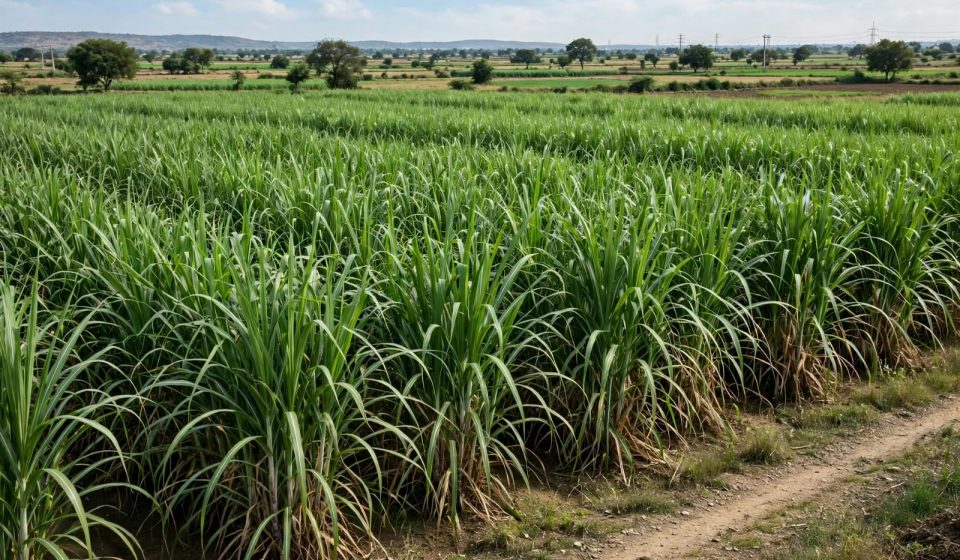

Sugarcane is an important agricultural crop in Maharashtra. Besides producing sugar, it provides the raw material for making jaggery, a traditional sweetener used in Indian homes. Parbhani Sugarcane-based products (jaggery) offer opportunities to connect local agriculture with food processing, traditional food production, and small businesses.
Jaggery is widely used in sweets, snacks, beverages, and everyday cooking. Unlike refined white sugar, traditional jaggery generally retains some minerals from sugarcane juice. However, its nutritional value varies, and it should still be consumed in moderation.
Processing sugarcane into jaggery can also create opportunities for farmers, local manufacturers, wholesalers, and retailers. With suitable production methods, hygienic handling, and attractive packaging, businesses can offer jaggery in several forms to different customer groups.
This article explores Parbhani Sugarcane-based products (jaggery), including their production process, common varieties, benefits, business opportunities, challenges, and practical tips for choosing and selling quality products.
What Are Parbhani Sugarcane-Based Products (Jaggery)?
Parbhani Sugarcane-based products (jaggery) are value-added products made by processing sugarcane juice into traditional jaggery and related sweeteners. Jaggery is produced by concentrating sugarcane juice through heating until it reaches the desired consistency. Depending on the processing method, it can be sold as solid blocks, powder, or granules.
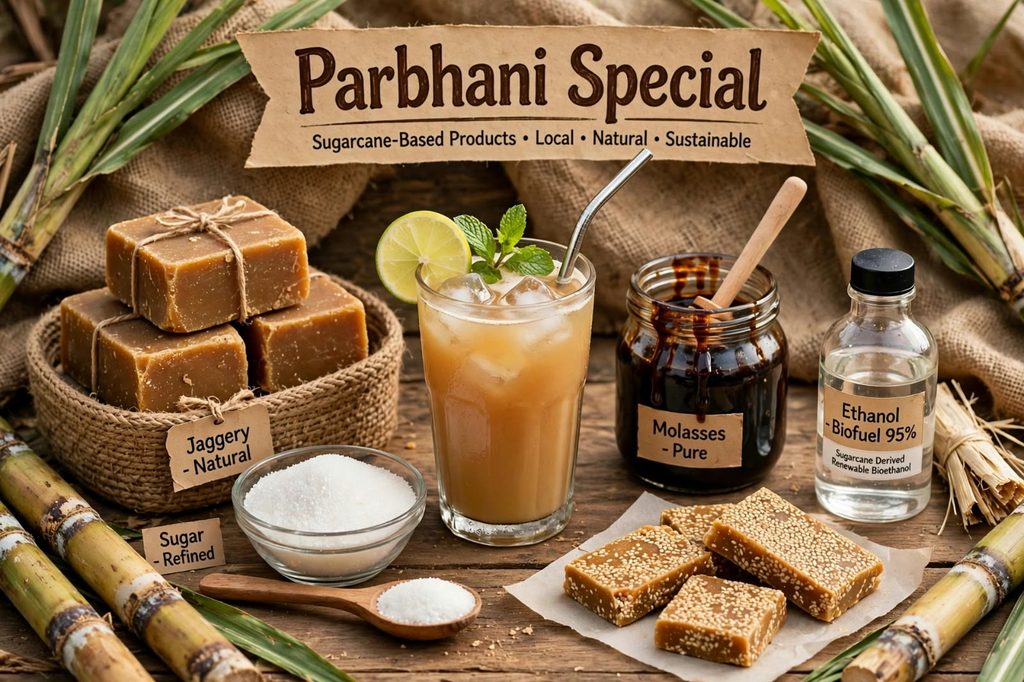
Understanding Parbhani Sugarcane-Based Products
Jaggery, commonly called gur in India, is a traditional sweetener used across many regions. It is usually golden yellow, brown, or dark brown, depending on the sugarcane juice and production process.
Sugarcane juice contains water and natural sugars. During jaggery production, processors remove impurities using suitable clarification methods and heat the juice to reduce its water content.
The concentrated mixture is then cooled or shaped according to the desired product.
Common sugarcane-based jaggery products include:
- Solid jaggery: Traditional blocks or lumps used in cooking and sweets.
- Jaggery powder: A powdered form that is convenient for measuring and mixing.
- Jaggery granules: Small particles suitable for selected food applications.
- Liquid jaggery: A syrup-like sweetener used in certain recipes and food preparations.
- Flavoured jaggery: Jaggery prepared with ingredients such as ginger, cardamom, or sesame, where appropriate.
- Jaggery-based snacks: Traditional sweets and snack products made using jaggery as a sweetening ingredient.
The exact range available in Parbhani depends on local manufacturers, sugarcane supply, processing facilities, and customer demand. Product availability should be confirmed with individual suppliers.
Why Are Parbhani Sugarcane-Based Products Important?
Parbhani Sugarcane-based products (jaggery) can support agricultural value addition by turning sugarcane juice into products that are easier to package, transport, and sell. Jaggery production can create opportunities for local processing units and traders. Its commercial success depends on raw-material costs, product quality, production efficiency, and market demand.
Supporting Farmers and Local Businesses
Parbhani is part of Maharashtra’s agricultural landscape, where sugarcane cultivation and processing may contribute to local economic activity.
Sugarcane growers can supply suitable cane to jaggery manufacturers. Processing businesses can then convert the juice into products for household consumers, sweet shops, food manufacturers, and wholesalers.
For example, a small processing unit could purchase sugarcane from nearby farmers and produce solid jaggery during the available crushing season. The unit could sell bulk quantities to traders and smaller packaged quantities to local retailers.
This approach may provide several benefits:
- Additional opportunities for agricultural processing.
- Employment in juice extraction, cooking, moulding, and packaging.
- Opportunities for small-scale food businesses.
- More product choices for consumers.
- Potential markets beyond the immediate production area.
- Opportunities to develop branded regional products.
However, jaggery production does not automatically guarantee higher profits. Manufacturers must assess cane prices, fuel or energy costs, labour, packaging, storage, and transport before investing.
How Is Jaggery Made From Sugarcane?
Jaggery is made by extracting sugarcane juice, removing impurities, and heating the juice until it becomes concentrated. The thick liquid is then cooled or shaped into the desired form. Proper temperature control, hygiene, and moisture management help produce consistent jaggery with suitable texture, colour, and storage stability.
Step 1: Harvest and Select Sugarcane
The process begins with suitable, mature sugarcane.
Processors should source fresh cane from reliable growers and reject raw materials that show signs of spoilage or contamination. Cane quality affects juice extraction, sugar content, and the characteristics of the finished jaggery.
Step 2: Extract and Clarify the Juice
Sugarcane is cleaned as appropriate and passed through a mechanical crusher to extract its juice.
The juice is filtered to remove larger particles. Suitable clarification methods help remove suspended impurities before the juice is concentrated.
Clean equipment and safe water are important throughout the process.
Step 3: Heat and Concentrate the Juice
The clarified juice is heated in suitable vessels.
As water evaporates, the juice becomes thicker and more concentrated. Skilled operators monitor the process to achieve the consistency required for the intended product.
Excessive heating can affect colour, flavour, and texture. Inconsistent heating may also result in poor-quality jaggery.
Step 4: Shape and Cool the Jaggery
Once the mixture reaches the required consistency, it is transferred to suitable moulds or cooling surfaces.
The jaggery is allowed to set before being removed, sorted, and prepared for packaging.
Powdered or granular jaggery requires additional processing under suitable conditions.
Step 5: Package and Store
Finished jaggery should be packed in clean, food-grade packaging.
Packaging should protect the product from moisture, dust, pests, and contamination. Manufacturers should check product quality and validate shelf life under the recommended storage conditions.
Popular Types of Sugarcane-Based Jaggery Products
Different jaggery products serve different needs. Some are intended for household cooking, while others are designed for retail sales or food manufacturing.
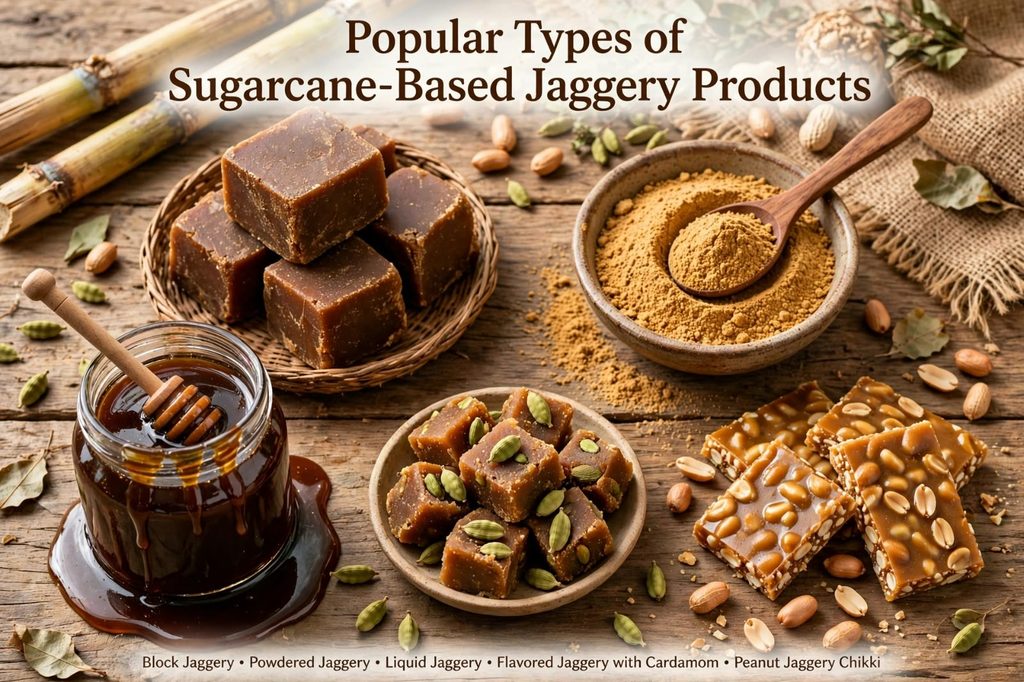
1. Traditional Solid Jaggery
Solid jaggery is one of the most familiar forms of gur.
It is commonly used in Indian sweets, traditional recipes, and everyday cooking. Its colour and texture vary according to the raw material and processing method.
Best suited for: Household consumers, sweet shops, and traditional food businesses.
2. Jaggery Powder
Jaggery powder is made by processing solid or suitably concentrated jaggery into smaller particles.
It is easy to measure and can be mixed into beverages, desserts, and selected recipes.
Best suited for: Retail packaging, home cooking, bakeries, and food-service businesses.
Manufacturers must manage moisture carefully because powdered jaggery may absorb moisture and develop lumps.
3. Jaggery Granules
Jaggery granules offer another convenient form of sugarcane sweetener.
They can be used in applications where controlled portioning and easy mixing are useful. Granule size and moisture content affect product performance.
Best suited for: Packaged-food manufacturers, beverage preparations, and selected retail applications.
4. Liquid Jaggery
Liquid jaggery is a concentrated sweetener with a syrup-like consistency.
It can be used in certain sweets, desserts, and traditional preparations. Its storage and preservation requirements differ from those of solid jaggery.
Best suited for: Food preparation businesses and consumers who need a pourable sweetener.
5. Jaggery-Based Snacks
Jaggery can be combined with ingredients such as peanuts, sesame seeds, puffed rice, or roasted grains to make traditional snacks.
Examples include peanut-jaggery chikki, sesame-jaggery sweets, and puffed-rice treats.
Best suited for: Snack manufacturers, sweet shops, local retailers, and seasonal gift packs.
Benefits of Parbhani Sugarcane-Based Products (Jaggery)
Jaggery offers culinary versatility and opportunities for agricultural value addition. It can replace refined sugar in some recipes, although the taste, texture, and sweetness may differ. Its commercial and nutritional benefits depend on the product, processing method, and how it is consumed.
The main benefits include:
- Traditional flavour: Jaggery provides a distinctive caramel-like taste that suits many Indian recipes.
- Multiple applications: It can be used in sweets, snacks, beverages, sauces, and selected bakery products.
- Different product formats: Solid blocks, powders, granules, and syrups serve different customer needs.
- Agricultural value addition: Processing creates another market for sugarcane beyond conventional sugar production.
- Business opportunities: Small manufacturers can explore local retail, wholesale, and food-service markets.
- Convenient storage: Properly processed and packaged solid jaggery can be stored for extended periods under suitable conditions.
- Regional product development: Businesses can build brands around traditional production methods and locally sourced sugarcane.
Is Jaggery Healthier Than White Sugar?
Jaggery may contain small amounts of minerals that are largely absent from highly refined white sugar. However, it remains a concentrated source of sugar and provides a similar amount of energy per gram.
Jaggery is not a treatment for anaemia or other health conditions. It should not be considered a free substitute for sugar by people who need to manage blood glucose.
For most consumers, portion size and overall dietary habits matter more than choosing jaggery solely because it is less refined.
Challenges and Common Mistakes in Jaggery Production
Jaggery manufacturing requires careful handling, consistent processing, and proper storage. Common problems can affect product appearance, texture, food safety, and profitability.
| Problem | Possible Cause | Practical Solution |
|---|---|---|
| Very dark colour | Excessive heating or variations in juice quality | Monitor heating and standardise processing |
| Uneven texture | Inconsistent concentration or cooling | Use documented production procedures |
| Sticky jaggery | High moisture or unsuitable storage | Control moisture and use suitable packaging |
| Powder forming lumps | Moisture absorption during storage | Use moisture-resistant packaging |
| Unusual flavour | Poor raw-material quality or process control | Inspect cane and monitor production |
| Contamination | Poor hygiene or pest exposure | Clean equipment and protect finished products |
| Low profitability | High production costs or weak demand | Calculate costs and test the market |
A Common Business Mistake
A common mistake is assuming that all jaggery products can be manufactured and stored in the same way.
Solid blocks, powders, granules, and liquid jaggery have different processing and packaging needs. Businesses should establish separate specifications for each product rather than using one general procedure.
Best Practices for Jaggery Manufacturers and Sellers
Businesses producing Parbhani Sugarcane-based products (jaggery) can improve quality and reduce avoidable losses by following these recommendations.
- Choose reliable suppliers: Work with sugarcane growers who can provide suitable raw materials.
- Check cane quality: Inspect incoming sugarcane and maintain consistent purchasing standards.
- Maintain clean equipment: Follow documented cleaning and sanitation procedures.
- Control heating: Monitor the concentration process to achieve the desired consistency.
- Standardise product quality: Set specifications for colour, texture, flavour, and moisture.
- Use suitable packaging: Protect jaggery from moisture and contamination.
- Calculate production costs: Include cane, energy, labour, packaging, storage, and transportation.
- Follow food regulations: Check applicable FSSAI registration or licensing and labelling requirements.
- Test shelf life: Evaluate the product under realistic storage conditions before assigning a shelf life.
- Research customers: Ask retailers, sweet shops, and wholesalers about preferred product formats and price ranges.
These steps can help manufacturers create a reliable product and make better business decisions.
Comparison of Different Jaggery Products
Each type of jaggery has different practical uses, storage needs, and packaging requirements.
| Feature | Solid Jaggery | Jaggery Powder | Liquid Jaggery |
|---|---|---|---|
| Form | Blocks or lumps | Fine particles | Thick liquid |
| Main use | Traditional cooking and sweets | Beverages, baking, and cooking | Sauces, desserts, and selected recipes |
| Convenience | Must be broken or grated | Easy to measure | Easy to pour |
| Moisture sensitivity | Depends on moisture and packaging | Can clump when exposed to moisture | Requires suitable preservation and storage |
| Packaging | Wrappers or food-grade containers | Moisture-resistant pouches or containers | Suitable sealed containers |
| Potential market | Household and wholesale | Retail and food manufacturing | Food-service and specialised retail |
The best product depends on customer requirements, production capabilities, and the ability to maintain consistent quality.
Frequently Asked Questions
1. What are Parbhani Sugarcane-based products (jaggery)?
Parbhani Sugarcane-based products (jaggery) are value-added sweeteners and food products made by processing sugarcane juice. Common forms include solid jaggery, powder, granules, liquid jaggery, and jaggery-based snacks.
Their availability in Parbhani depends on local manufacturers and distribution networks.
2. How is jaggery made from sugarcane?
Jaggery is made by extracting sugarcane juice, filtering and clarifying it, and heating it until it becomes concentrated.
The mixture is then cooled or shaped into blocks. Additional processing can produce powdered or granular jaggery.
3. What is the difference between jaggery and white sugar?
Jaggery is generally less refined than white sugar and may retain small amounts of minerals from sugarcane juice.
White sugar contains mostly sucrose. Both are concentrated sources of sugar, so neither should be consumed without considering portion size and overall dietary needs.
4. What are the main uses of jaggery?
Jaggery is used in traditional sweets, chikki, sesame treats, beverages, desserts, sauces, and selected bakery products.
It can replace sugar in some recipes, but its flavour, colour, and moisture content may change the finished product.
5. Is jaggery a healthy alternative to sugar?
Jaggery may contain small amounts of minerals, but it remains a concentrated sweetener.
It is not automatically a healthy food simply because it is less refined. People managing diabetes or blood glucose should treat jaggery as an added sugar and follow appropriate medical advice.
6. How should jaggery be stored?
Jaggery should be stored in clean, dry conditions and protected from moisture, pests, and contamination.
Powdered jaggery may need more protection from moisture than solid blocks. Manufacturers should follow validated storage guidance based on the product’s composition and packaging.
7. Can jaggery production be a small business in Parbhani?
Jaggery production may suit entrepreneurs who can source sugarcane, access suitable processing equipment, and identify reliable buyers.
Before investing, they should estimate production costs, examine local competition, confirm regulatory requirements, and test demand for the intended product.
8. What licences are needed to sell jaggery in India?
Businesses must follow applicable food safety, registration or licensing, and labelling requirements in India.
The specific requirements depend on the business activity and scale. Entrepreneurs should check current rules through the official Food Safety and Standards Authority of India website before starting operations.
Key Takeaways
- Parbhani Sugarcane-based products (jaggery) connect sugarcane cultivation with food processing.
- Common products include solid jaggery, powder, granules, liquid jaggery, and traditional snacks.
- Jaggery is versatile but remains a concentrated source of sugar.
- Processing quality and moisture control affect texture, taste, and storage stability.
- Small businesses should research customers before investing in machinery.
- Appropriate packaging, hygiene, and food safety practices are essential.
- Reliable sourcing and cost management help support sustainable operations.
Final Verdict
Parbhani Sugarcane-based products (jaggery) offer opportunities for agricultural value addition and traditional food manufacturing. Solid jaggery, powder, granules, and jaggery-based snacks can serve different customer groups, from households to food-processing businesses.
However, success depends on suitable sugarcane, consistent processing, hygienic production, reliable packaging, and strong customer demand. Businesses should avoid assuming that traditional products are automatically profitable or that jaggery provides unlimited health benefits.
Entrepreneurs can begin by researching local sugarcane suppliers, comparing processing options, and speaking with potential buyers. A small-scale market test can help establish which product format offers the best commercial fit.
Conclusion
Parbhani Sugarcane-based products (jaggery) represent a practical opportunity to add value to sugarcane through traditional sweeteners and food products. From solid jaggery to convenient powders and snack ingredients, these products can meet a range of culinary and commercial needs.
The best approach is to focus on quality, food safety, appropriate packaging, and realistic market research. For farmers and entrepreneurs, understanding raw-material availability and customer demand is an important first step toward building a sustainable jaggery business.