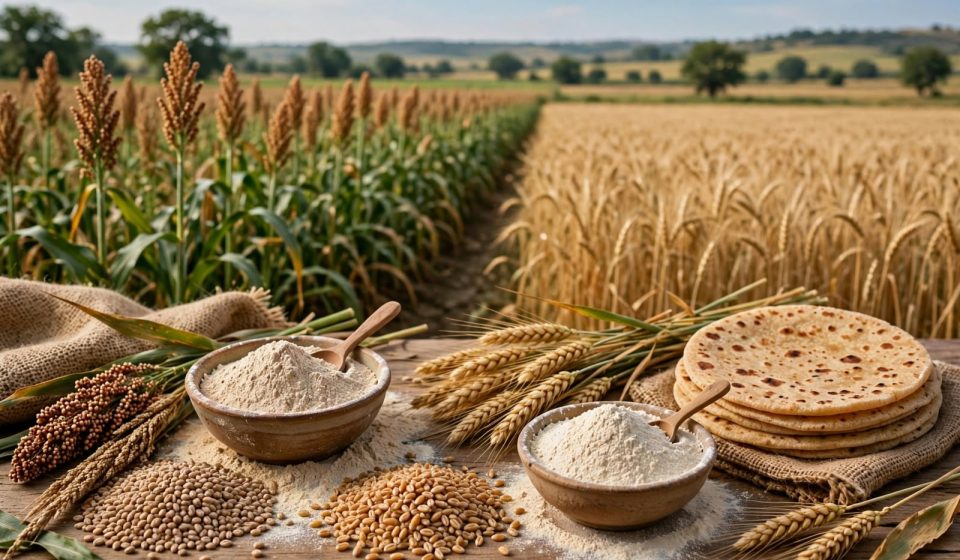

Traditional grains remain an important part of Indian food culture. In Maharashtra, jowar and wheat are widely used to prepare everyday meals, snacks, and bakery products. Solapur Millet-based products (jowar, wheat) offer opportunities to connect traditional grain-based foods with modern consumer needs.
Jowar, also known as sorghum, is a traditional millet valued for its versatility and naturally gluten-free composition. Wheat is another widely consumed grain used to make flour, chapatis, bread, and many other foods. Although both grains can be processed into similar product categories, their nutritional properties and cooking behaviour differ.
Solapur has a strong association with Maharashtra’s agricultural and food traditions. Products made from locally sourced grains can serve households, retailers, restaurants, and food manufacturers. However, product availability and sourcing depend on individual suppliers and local production conditions.
This article explores Solapur Millet-based products (jowar, wheat), including their varieties, production methods, nutritional characteristics, benefits, business opportunities, and practical tips for selecting quality grain-based foods.
What Are Solapur Millet-Based Products (Jowar, Wheat)?
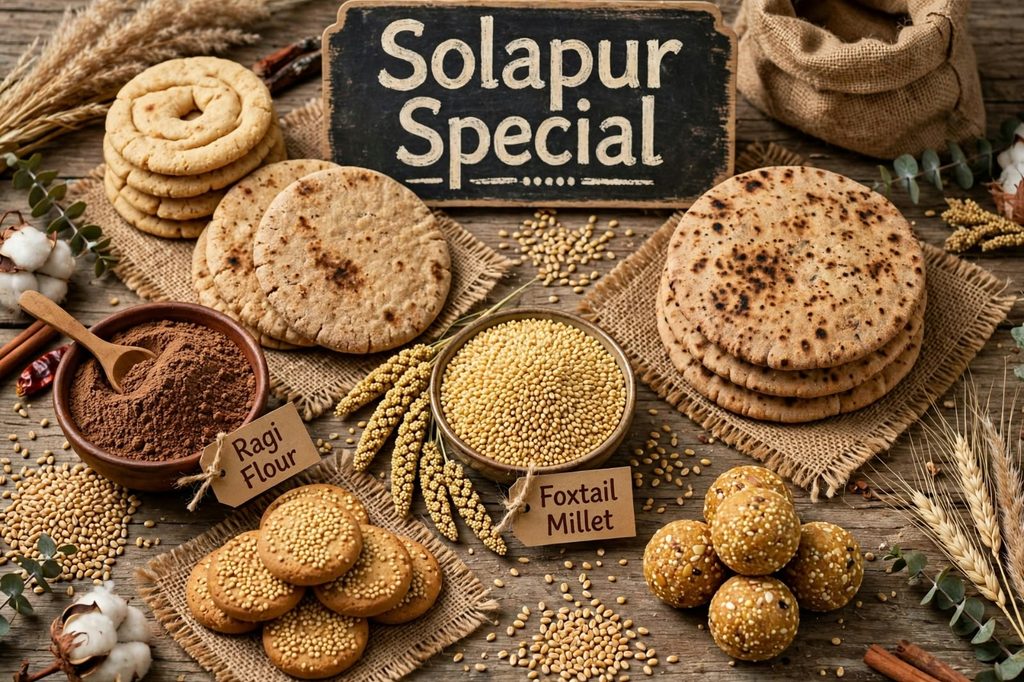
Solapur Millet-based products (jowar, wheat) are grain-based foods made using jowar, wheat, or their processed forms. Common products include flour, bhakri, chapati, multigrain mixes, snacks, and bakery ingredients. These products support everyday cooking and offer opportunities for grain processing, packaging, retail distribution, and food manufacturing.
Understanding Solapur Millet-Based Products
Jowar and wheat serve different purposes in traditional and modern cooking.
Jowar is the grain of the sorghum plant. Its flour is commonly used to make bhakri, a traditional flatbread popular in Maharashtra. Jowar can also be used in porridge, crackers, and selected snack products.
Wheat is milled into flour for chapatis, bread, biscuits, noodles, and other foods. Its gluten-forming proteins help dough stretch and hold its shape.
Popular grain-based products include:
- Jowar flour: Flour made from sorghum grains.
- Wheat flour: Flour used in chapatis, bread, and baked foods.
- Jowar bhakri: A traditional flatbread prepared using jowar flour.
- Wheat chapati: A common flatbread made from wheat flour.
- Multigrain flour: A blend containing two or more grains, sometimes combined with pulses or seeds.
- Jowar snacks: Products such as roasted jowar, crackers, and puffed-grain snacks.
- Wheat-based snacks: Products such as biscuits, baked snacks, and savoury crackers.
- Ready-to-cook flour mixes: Packaged blends designed to simplify meal preparation.
The quality of these products depends on grain variety, milling methods, storage conditions, packaging, and preparation techniques.
Why Are Solapur Millet-Based Products Important?
Solapur Millet-based products (jowar, wheat) can support traditional food habits while creating opportunities for grain processing and packaged-food businesses. They provide ingredients for household meals, restaurants, and retail markets. Their commercial value depends on grain quality, consumer demand, production costs, and the ability to deliver consistent products.
Supporting Local Agriculture and Food Businesses
Jowar is an important traditional grain in parts of Maharashtra, where it is used in regional dishes. Wheat also supports a wide range of food products.
Grain processing allows businesses to turn raw agricultural produce into flour, ready-to-cook mixes, and packaged snacks.
For example, a small food business could source jowar from suitable suppliers, mill it into flour, and sell it in sealed packages. It could also develop a ready-to-cook bhakri mix for customers seeking convenient traditional foods.
Potential opportunities include:
- Additional markets for grain growers.
- Employment in cleaning, milling, packaging, and distribution.
- New products for local retailers and supermarkets.
- Opportunities for small-scale food manufacturers.
- Greater convenience for consumers.
- Potential access to online grocery markets.
These benefits are not automatic. Businesses must evaluate grain prices, milling costs, storage requirements, competition, and customer demand before investing.
How Are Jowar and Wheat Products Made?
Jowar and wheat products are made by cleaning grains, processing them into flour or other forms, and preparing them for cooking or packaging. The exact method depends on the product. Proper grain storage, hygienic processing, suitable packaging, and quality checks help maintain product safety and consistency.
Step 1: Select and Clean the Grains
The process begins with suitable jowar or wheat grains.
Suppliers and processors check the grains for visible damage, foreign materials, pests, and signs of moisture-related spoilage.
Cleaning removes dust and unwanted particles before milling or further processing.
Step 2: Mill the Grains
Clean grains are processed using suitable milling equipment.
Milling reduces the grains into flour. The texture depends on the equipment and the intended use.
For example, jowar flour for bhakri may require a different texture from flour intended for a packaged snack formulation.
Wheat flour specifications also vary according to whether the flour will be used for chapatis, bread, or biscuits.
Step 3: Prepare the Final Product
The flour can be sold directly or used to make finished foods.
Examples include:
- Mixing jowar flour with water to prepare bhakri dough.
- Combining wheat flour with water to prepare chapati dough.
- Blending suitable grains and ingredients to create multigrain flour.
- Processing grain mixtures into crackers or other snacks.
Each product requires appropriate preparation and cooking conditions.
Step 4: Package and Store
Packaged flour should be protected from moisture, insects, pests, and contamination.
Manufacturers should use food-grade packaging and maintain suitable storage conditions. They should also check product quality and establish an appropriate shelf life.
Popular Types of Jowar and Wheat Products
Jowar and wheat can be used to produce many foods for traditional cooking and modern retail markets.
1. Jowar Flour
Jowar flour is made by milling cleaned sorghum grains.
It is commonly used to prepare bhakri, porridge, and selected baked products. Because jowar lacks gluten, its dough behaves differently from wheat dough.
Best suited for: Households, traditional food businesses, and manufacturers developing millet-based products.
2. Wheat Flour
Wheat flour is used in a wide range of Indian and international foods.
It is suitable for chapatis, bread, biscuits, noodles, and many baked products. The protein content and milling characteristics influence the flour’s performance.
Best suited for: Households, bakeries, restaurants, and food manufacturers.
3. Jowar Bhakri
Jowar bhakri is a traditional flatbread associated with Maharashtrian cuisine.
It is often served with vegetables, pulses, chutneys, and other regional dishes.
Best suited for: Households, restaurants, traditional food outlets, and packaged ready-to-cook product businesses.
4. Multigrain Flour
Multigrain flour combines two or more grains. Some blends also include pulses or seeds.
A blend containing jowar and wheat can offer different flavours and cooking properties. However, its nutritional profile depends on the proportions and ingredients used.
Best suited for: Households, packaged-food brands, and customers looking for variety in grain-based meals.
5. Jowar-Based Snacks
Jowar can be used in roasted, puffed, or baked snack products.
Manufacturers may develop crackers and savoury snacks using suitable processing methods and complementary ingredients.
Best suited for: Snack retailers, supermarkets, and packaged-food businesses.
6. Wheat-Based Snacks
Wheat flour is used in biscuits, crackers, baked snacks, and many savoury products.
These foods vary in their nutritional content depending on the flour type, added fats, salt, sugar, and other ingredients.
Best suited for: Bakeries, snack manufacturers, food-service businesses, and retailers.
Benefits of Solapur Millet-Based Products (Jowar, Wheat)
Jowar and wheat offer different nutritional and culinary properties. Jowar provides dietary fibre and is naturally gluten-free, while wheat is useful for foods that need elastic dough. Including suitable grain products in a balanced diet can add variety, but benefits depend on the product and its ingredients.
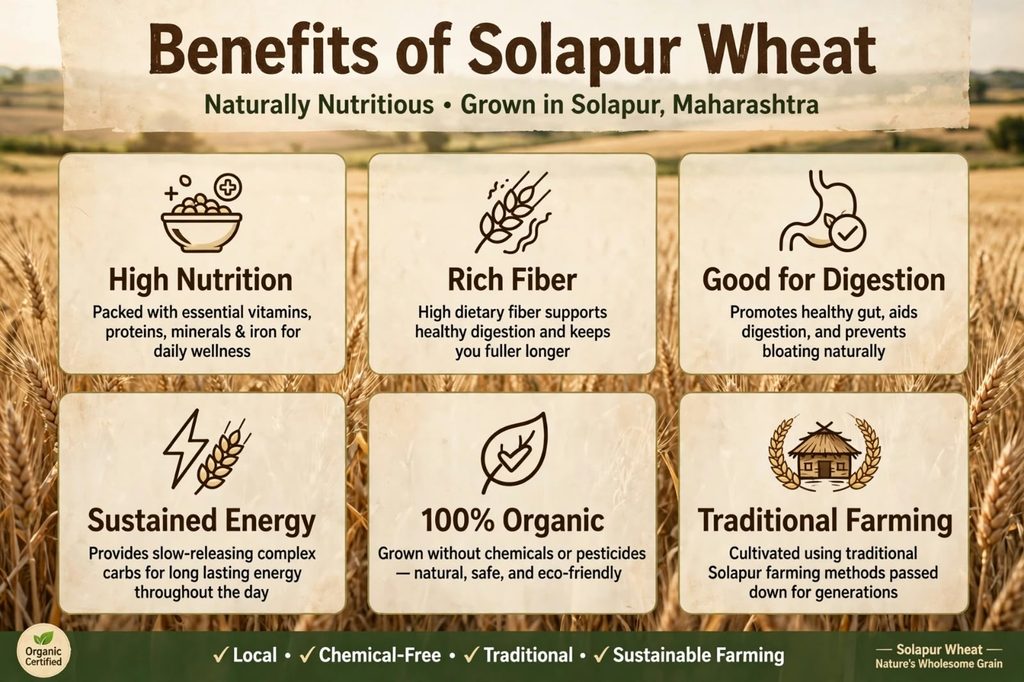
Key benefits include:
- Dietary variety: Jowar and wheat provide different flavours, textures, and uses in everyday meals.
- Traditional cooking: Jowar flour supports regional foods such as bhakri.
- Flexible applications: Both grains can be used in flour products, snacks, and prepared foods.
- Convenience: Packaged flour and ready-to-cook mixes can simplify meal preparation.
- Business opportunities: Milling, packaging, and snack production can support food enterprises.
- Potential fibre intake: Whole-grain versions can contribute dietary fibre.
- Product innovation: Manufacturers can develop grain blends and new snack formats.
Is Jowar Better Than Wheat?
Neither grain is universally better than the other.
Jowar is naturally gluten-free and may suit people who need to avoid gluten, provided it is not contaminated during processing. Wheat contains gluten, which helps dough stretch and makes it useful for bread and many baked products.
Whole-grain jowar and whole-wheat products can both contribute fibre and nutrients. The best choice depends on dietary needs, product ingredients, portion sizes, and preparation methods.
People with coeliac disease should choose products with verified gluten-free handling and appropriate controls.
Challenges and Common Mistakes
Grain processing businesses must manage raw-material quality, storage, product consistency, and customer expectations.
| Problem | Possible Cause | Practical Solution |
|---|---|---|
| Flour develops an unusual smell | Poor storage or moisture exposure | Store flour in clean, dry conditions |
| Inconsistent flour texture | Uneven milling | Standardise milling settings |
| Jowar dough cracks | Its structure differs from wheat dough | Adjust water and preparation methods |
| Short product shelf life | Moisture, unsuitable packaging, or storage problems | Validate packaging and storage conditions |
| Weak customer demand | Limited market research | Test products with target customers |
| High production costs | Equipment, labour, and packaging expenses | Calculate total costs before scaling |
| Cross-contamination with gluten | Shared equipment or handling areas | Use suitable cleaning and segregation controls |
A Common Business Mistake
A common mistake is assuming that jowar flour can replace wheat flour in every recipe without changes.
Jowar does not form the same gluten network as wheat. Therefore, breads and baked products may require different formulations or suitable additional ingredients.
Testing recipes before commercial production can help businesses maintain quality and avoid unnecessary waste.
Best Practices for Jowar and Wheat Product Businesses
Businesses producing Solapur Millet-based products (jowar, wheat) can follow these recommendations to improve quality and manage costs.
- Choose reliable suppliers: Buy grains that meet clear quality requirements.
- Inspect incoming grain: Check for foreign materials, pests, damage, and moisture-related problems.
- Use suitable milling equipment: Match the milling process to the intended product.
- Maintain hygiene: Clean equipment and food-contact surfaces regularly.
- Protect against moisture: Use suitable packaging and dry storage areas.
- Standardise recipes: Record ingredient proportions and preparation methods.
- Test shelf life: Establish appropriate storage conditions and expiry dates.
- Follow food regulations: Check applicable FSSAI registration or licensing and labelling requirements.
- Research the market: Ask retailers, households, and food businesses what they need.
- Track production costs: Include raw materials, labour, energy, packaging, storage, and transport.
These steps can help manufacturers produce reliable grain-based foods and make better business decisions.
Comparison of Jowar and Wheat Products
Jowar and wheat differ in composition, cooking properties, and typical uses.
| Feature | Jowar | Wheat |
|---|---|---|
| Grain type | Sorghum, a millet commonly used as a grain | Cereal grain |
| Gluten | Naturally gluten-free | Contains gluten |
| Common flour product | Jowar flour | Wheat flour |
| Traditional use | Bhakri and regional foods | Chapati and many baked foods |
| Dough behaviour | Does not form a gluten network | Gluten supports elastic dough |
| Snack applications | Roasted snacks, crackers, and puffed products | Biscuits, crackers, and baked snacks |
| Storage needs | Dry, protected storage | Dry, protected storage |
| Key consideration | Recipe adaptation and gluten-free controls where needed | Gluten content and flour specifications |
Both grains can be useful in a varied diet. The right product depends on dietary requirements, cooking needs, and the intended application.
Frequently Asked Questions
1. What are Solapur Millet-based products (jowar, wheat)?
Solapur Millet-based products (jowar, wheat) are foods made using jowar, wheat, or their processed forms.
Common examples include jowar flour, wheat flour, bhakri, chapati, multigrain mixes, and packaged snacks. Availability depends on individual manufacturers and local suppliers.
2. What is jowar called in English?
Jowar is called sorghum in English.
It is a grain used in traditional foods across India. Its flour is commonly used to make bhakri and can also be used in selected snacks and other food products.
3. Is jowar gluten-free?
Yes, jowar is naturally gluten-free.
However, packaged jowar flour may become contaminated if it is processed or packed using equipment that also handles wheat. People with coeliac disease should select products with appropriate gluten-free controls.
4. What is the difference between jowar flour and wheat flour?
Jowar flour comes from sorghum, while wheat flour comes from wheat grains.
Jowar does not contain gluten, so its dough behaves differently. Wheat flour forms elastic dough that works well in chapatis, bread, and many baked products.
5. What products can be made from jowar?
Jowar can be used to make flour, bhakri, porridge, crackers, and selected roasted or puffed snacks.
Manufacturers can also include jowar in multigrain blends. The final product depends on processing methods, recipes, and customer preferences.
6. Are jowar and wheat good sources of fibre?
Whole-grain jowar and whole-wheat products can provide dietary fibre.
The amount depends on the grain variety, milling process, and product formulation. Refined flour products may contain less fibre than products made from whole grains.
7. Can jowar flour replace wheat flour?
Jowar flour can replace wheat flour in some recipes, but not always in equal proportions.
Because jowar does not form gluten, bread and other baked products may need recipe adjustments. Bhakri and other traditional flatbreads are naturally suited to jowar flour.
8. Can jowar and wheat products be sold as a business in Solapur?
Jowar and wheat products may offer opportunities for flour mills, packaged-food brands, bakeries, and snack manufacturers.
Before investing, entrepreneurs should research grain availability, equipment costs, local competition, food safety requirements, and customer demand.
Key Takeaways
- Solapur Millet-based products (jowar, wheat) include flour, bhakri, chapati, snacks, and multigrain mixes.
- Jowar is naturally gluten-free, while wheat contains gluten.
- Both whole-grain products can contribute dietary fibre.
- Jowar and wheat require different preparation methods in some recipes.
- Grain quality, milling, storage, and packaging affect finished products.
- Food businesses should research customer demand before investing.
- Applicable food safety and labelling requirements must be followed.
Final Verdict
Solapur Millet-based products (jowar, wheat) connect traditional grain-based foods with opportunities in modern food processing and retail. Jowar flour, wheat flour, bhakri, multigrain mixes, and packaged snacks can serve different household and commercial needs.
However, product quality depends on grain selection, suitable milling, hygienic handling, packaging, and proper storage. Businesses must also understand the differences between jowar and wheat when developing recipes and food products.
For entrepreneurs, a practical starting point is to select one product, identify reliable grain suppliers, and speak with potential buyers. Testing demand before investing in machinery can reduce risk and help establish a stronger business foundation.
Conclusion
Solapur Millet-based products (jowar, wheat) offer opportunities to preserve traditional food practices while supporting grain processing and product development. From jowar bhakri and wheat chapati to multigrain flour and packaged snacks, these grains have a wide range of culinary applications.
The best approach is to focus on consistent quality, suitable processing methods, safe storage, and realistic market research. For consumers, choosing suitable whole-grain products can add variety to everyday meals. For businesses, understanding customer needs and grain characteristics is the first step toward sustainable growth.