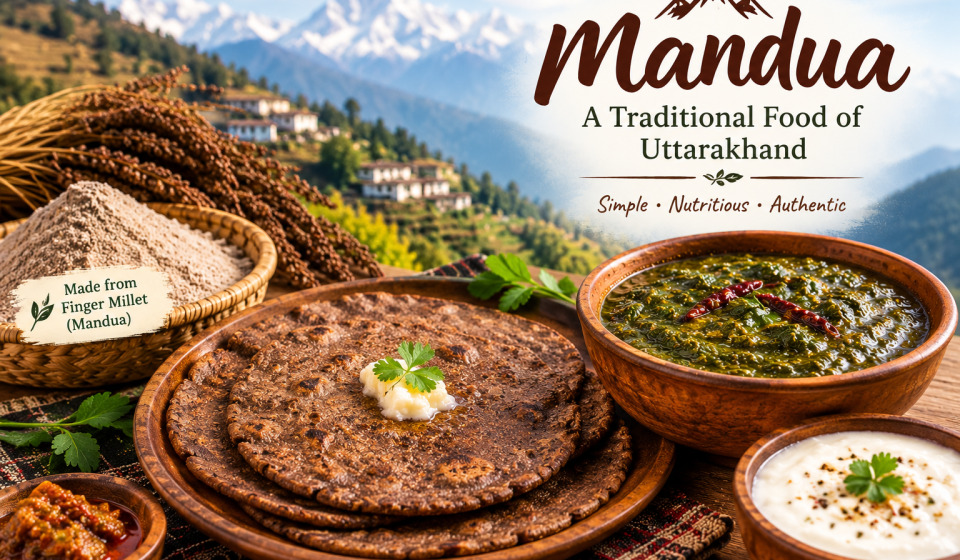

Uttarakhand is known for its beautiful mountains, rich culture, and traditional food. One important part of its food heritage is Mandua, a traditional food of Uttarakhand made from finger millet. Known as ragi in many parts of India, mandua has been a staple crop in Himalayan villages for generations.
It is used to prepare several dishes, including roti, porridge, pancakes, and traditional snacks. Its earthy flavour and rustic texture make it a favourite in many local households. The crop also grows well in certain hilly farming conditions, making it valuable to mountain communities.
Today, mandua is gaining attention among people interested in traditional grains, regional Indian cuisine, and diverse food choices. However, many people still do not know how mandua is grown, prepared, or used in everyday meals.
This article explores mandua’s meaning, nutritional value, traditional uses, preparation methods, benefits, and role in Uttarakhand’s food culture.
What Is Mandua?
It is the local name for finger millet, a traditional grain widely used in Uttarakhand. Known as ragi in other parts of India, it is ground into flour and used to make roti, porridge, and other foods. Mandua is valued for its distinctive taste, versatility, and role in traditional Himalayan diets.
Understanding Mandua and Finger Millet
It is a small-seeded cereal grain belonging to the grass family. Its scientific name is Eleusine coracana. Farmers grow it in several parts of India, including the Himalayan region.
In Uttarakhand, mandua flour is commonly used to prepare flatbreads known as mandua roti. These rotis are often served with vegetables, lentils, leafy curries, and local dishes such as Kafuli.
The flour has a darker colour than refined wheat flour and a slightly earthy flavour. Since it contains little gluten, mandua dough behaves differently from wheat dough. It may require warm water and careful handling when shaping rotis.
It is also used in modern recipes such as millet pancakes, baked snacks, porridge, and mixed-flour breads.
Key Characteristics
- Local name: Mandua
- Common English name: Finger millet
- Other popular name: Ragi
- Scientific name: Eleusine coracana
- Main food product: Mandua flour
- Traditional uses: Roti, porridge, and other grain-based dishes
- Typical flavour: Mildly earthy and nutty
- Food category: Traditional cereal grain
Why Is Mandua Important in Uttarakhand?
It is important because it connects traditional farming, local food, and everyday life in Uttarakhand. The grain provides an alternative to wheat and rice, supports regional culinary traditions, and offers farmers a crop suited to certain hill environments. Its continued use also helps preserve knowledge of traditional Himalayan food.
1. A Part of Traditional Himalayan Food
For generations, many households in Uttarakhand have used locally grown grains in their daily meals. Mandua roti is one of the best-known examples.
Families commonly eat it with dal, seasonal vegetables, leafy curries, and chutneys. These combinations reflect the region’s preference for practical meals made with familiar ingredients.
2. Supports Traditional Farming
It is grown in different agricultural environments, including some rain-fed hill areas. Its suitability depends on factors such as rainfall, soil, altitude, and farming practices.
For some farmers, finger millet can contribute to crop diversity. Growing more than one type of grain may also help reduce dependence on a single crop.
3. Preserves Local Food Heritage
Traditional foods carry knowledge about local ingredients, preparation methods, and seasonal eating habits.
Preparing mandua roti at home helps keep these customs alive. It also introduces younger generations and visitors to the food culture of Uttarakhand.
4. Creates Opportunities for Local Businesses
It can be sold as grain, flour, or an ingredient in packaged foods. Small businesses may develop products such as mandua biscuits, ready-to-cook mixes, porridge flour, and millet snacks.
Success depends on product quality, food safety, pricing, packaging, and customer demand. A traditional grain can offer business opportunities, but market research remains important.
How Is Mandua Used in Traditional Food?
It is mainly used by grinding finger millet into flour. The flour can be mixed with water to form dough, cooked into flatbreads, or prepared as porridge. In modern kitchens, it can also be combined with other flours for pancakes, baked foods, and snacks.
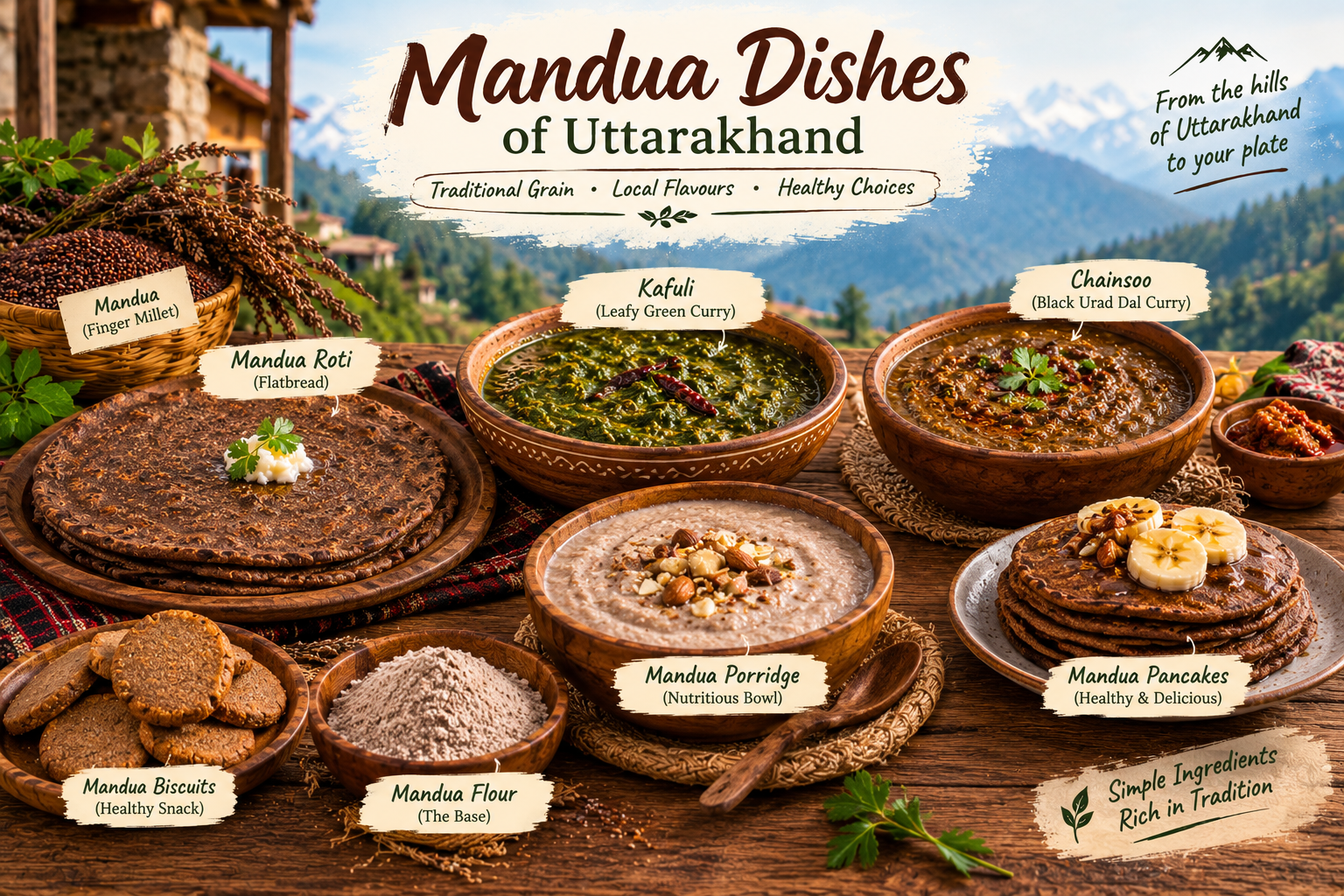
Popular Mandua Dishes
Mouthwatering Food Of Uttarakhand – Majestic Journey
1. Mandua Roti
A traditional flatbread made from finger millet flour and water. It is commonly served with vegetables, dal, or Kafuli.
2. Mandua Porridge
A warm dish made by cooking millet flour with water or milk. It can be prepared sweet or savoury.
Ragi Chilla: ब्रेकफास्ट में ट्राई करें कुछ हट के? बनाएं हेल्दी रागी चीला, एक परफेक्ट मॉर्निंग रेसिपी
3. Mandua Pancakes
A modern variation that combines mandua flour with ingredients such as curd, milk, or other flours.
Buy Pahadi Ragi Biscuits (Finger Millet Cookies) Online | Simdi
4. Mandua Biscuits and Snacks
Packaged products made with mandua flour offer another way to use this traditional grain. Recipes vary in sugar, fat, and other ingredients.
How to Make Traditional Mandua Roti
Mandua roti is one of the simplest ways to enjoy finger millet. It requires only a few ingredients, although shaping the dough can take practice because mandua flour contains little gluten.
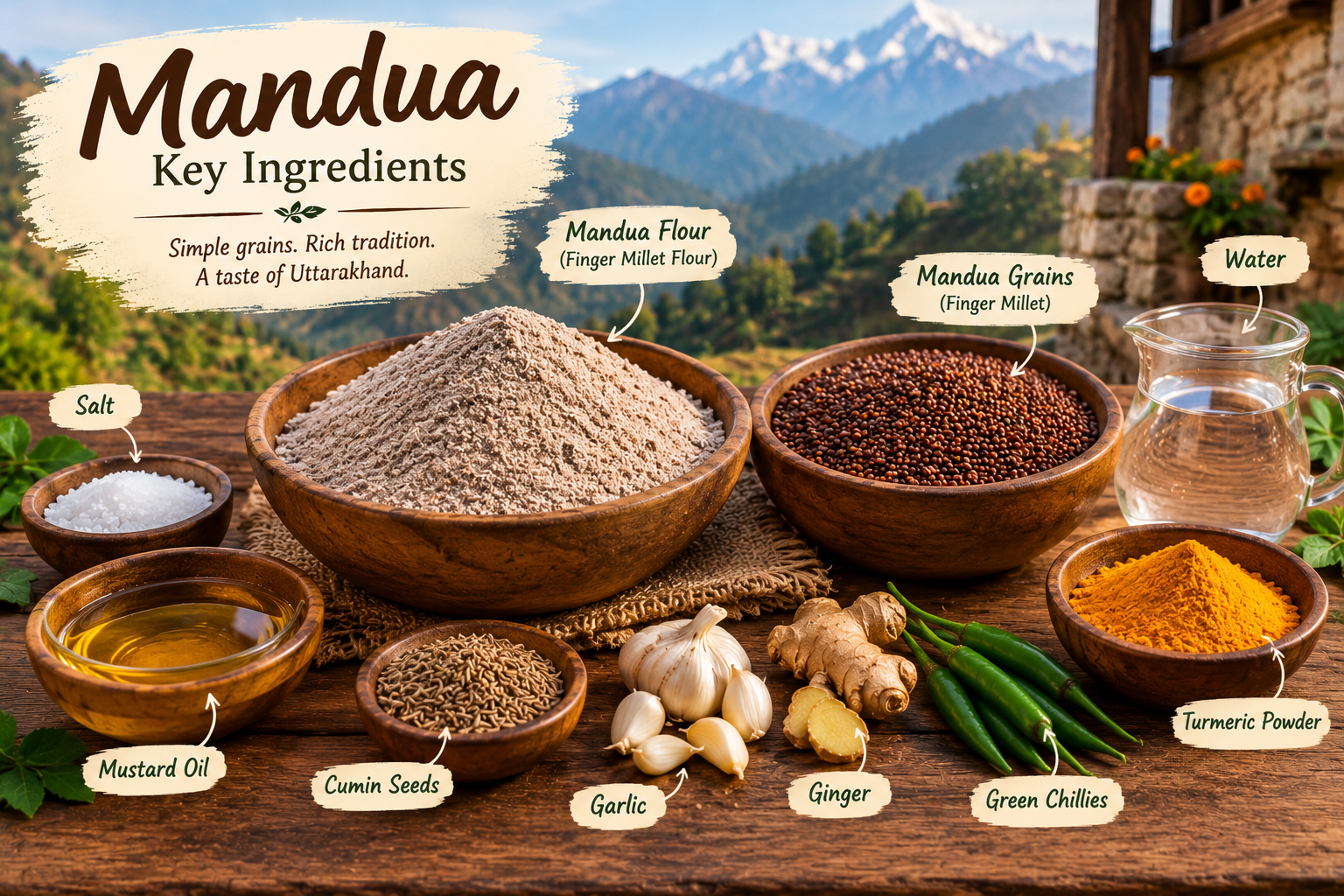
Ingredients
For approximately 4 small rotis, you will need:
- 1 cup flour
- Warm water, as needed
- A pinch of salt, optional
- A little extra flour for shaping, if required
Step 1: Prepare the Dough
Place the mandua flour in a bowl. Add warm water gradually and mix until it forms a soft dough.
Avoid adding too much water at once. The dough should hold together without becoming overly sticky.
Step 2: Shape the Rotis
Divide the dough into small portions. Flatten each portion gently between your palms or shape it on a clean surface.
If the dough cracks, use slightly damp hands and press the edges together. This is normal because finger millet flour behaves differently from wheat flour.
Step 3: Cook on a Hot Tawa
Place the shaped roti on a preheated tawa or flat pan. Cook both sides until the roti is firm and properly cooked.
Turn it carefully to avoid breaking it. Adjust the heat so the outside does not burn before the inside cooks.
Step 4: Serve Warm
Serve mandua roti with Kafuli, dal, seasonal vegetables, or chutney. These combinations create a traditional-inspired meal using familiar regional foods.
Practical tip: Beginners can mix a small amount of wheat flour into the mandua flour to make shaping easier. However, this changes the recipe and adds gluten.
Nutritional Value and Benefits
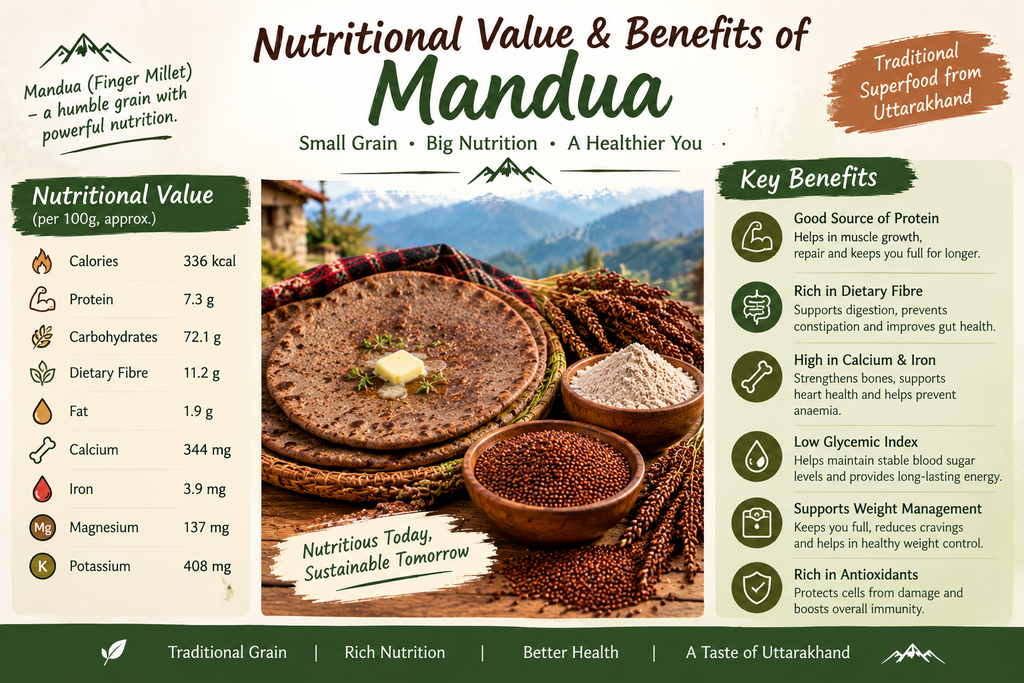
Mandua provides useful nutrients and can be part of a varied, balanced diet. Finger millet is known for its dietary fibre and mineral content, including calcium. Its actual nutritional value depends on the flour, serving size, processing method, and ingredients used in the final dish.
1. Contains Dietary Fibre
Finger millet contains dietary fibre, which supports normal digestive function. Including whole grains and a variety of vegetables in meals can help increase overall fibre intake.
The amount you receive depends on the quantity eaten and how the flour is processed.
2. Provides Calcium
Mandua is known for its calcium content compared with many common cereal grains. Calcium is important for maintaining bones and teeth and supporting normal muscle function.
However, eating mandua alone does not guarantee adequate calcium intake. A balanced diet should include a range of suitable calcium sources.
3. Supplies Energy
Like other cereal grains, finger millet provides carbohydrates that the body uses for energy. roti can form part of a meal alongside protein-rich foods such as dal, beans, or curd.
Combining different food groups makes a meal more balanced.
4. Offers an Alternative to Refined Grains
Mandua flour can add variety to diets that rely heavily on refined wheat flour or white rice.
Using it in rotis, porridge, or mixed-flour recipes can help people explore different grains and flavours.
5. Supports Dietary Variety
Eating a variety of grains can introduce different nutrients and textures into everyday meals. It is one option alongside wheat, rice, oats, maize, and other millets.
No single grain provides every nutrient the body needs, so variety remains important.
Challenges and Common Mistakes
Mandua is versatile, but it behaves differently from wheat flour. Understanding these differences helps you prepare better dishes.
1. The Dough Breaks Easily
Problem: The roti cracks while shaping.
Cause: Mandua flour contains little gluten, so the dough lacks the stretch found in wheat dough.
Solution: Add warm water gradually and shape the dough gently with damp hands.
2. The Roti Becomes Too Dry
Problem: The cooked roti feels hard or crumbly.
Cause: The dough may be too dry, or the roti may have cooked for too long.
Solution: Use enough water and cook over controlled heat.
3. The Flour Tastes Bitter or Stale
Problem: The finished food has an unpleasant flavour.
Cause: The flour may be old, poorly stored, or exposed to moisture.
Solution: Buy fresh flour, check its smell and appearance, and store it in an airtight container in a cool, dry place.
4. Expecting Mandua to Behave Like Wheat
Problem: The dough does not stretch or roll easily.
Cause: Finger millet has different baking properties from wheat.
Solution: Use a pressing or patting method, or blend it with another flour if the recipe allows.
5. Assuming Every Mandua Product Is Healthy
Problem: A packaged snack is considered healthy simply because it contains millet.
Cause: The overall recipe is overlooked.
Solution: Check the ingredient list, added sugar, salt, fat, and serving size.
Best Practices
- Choose fresh flour. Look for clean, dry flour without an unusual smell.
- Store it properly. Keep it sealed away from moisture and heat.
- Use warm water for dough. It can make the flour easier to combine and shape.
- Add water gradually. This helps you control the dough’s texture.
- Start with small rotis. Smaller portions are easier to shape when learning.
- Cook at moderate heat. This helps the roti cook without burning.
- Pair it with other foods. Serve mandua with vegetables and protein-rich dishes.
- Try different recipes. Explore porridge, pancakes, and baked foods.
- Check packaged labels. Review the ingredients and nutrition information.
- Support reliable local producers. Choose suppliers who maintain clean processing and proper food storage.
Mandua vs. Wheat Flour vs. Rice
Mandua, wheat, and rice are all useful foods, but they differ in taste, texture, and cooking properties.
| Feature | Mandua Flour | Wheat Flour | Rice |
|---|---|---|---|
| Source | Finger millet | Wheat grain | Rice grain |
| Flavour | Earthy and slightly nutty | Mild and wheaty | Mild and neutral |
| Gluten | Naturally gluten-free | Contains gluten | Naturally gluten-free |
| Common uses | Roti, porridge, snacks | Roti, bread, baked foods | Steamed rice, porridge, other dishes |
| Dough behaviour | Less elastic | More elastic | Depends on the recipe |
| Notable nutrient | Calcium and fibre | Protein and B vitamins, depending on type | Carbohydrates; nutrients vary by type |
People with coeliac disease or a medical need to avoid gluten should choose products labelled gluten-free and check for cross-contamination. itself is naturally gluten-free, but packaged products may contain other ingredients.
Frequently Asked Questions
1. What is mandua called in English?
It is called finger millet in English. It is known as ragi in many Indian languages and is used to prepare flour, flatbreads, porridge, and other foods.
Finger millet is an important traditional grain in parts of India, including Uttarakhand.
2. Which state is famous for mandua?
Uttarakhand is well known for traditional mandua-based foods, especially mandua roti. Finger millet is also grown and eaten in other Indian states, so it is not exclusive to Uttarakhand.
Its place in Himalayan cuisine reflects local farming and food traditions.
3. What is mandua roti?
Mandua roti is a flatbread made from finger millet flour and water. It has a darker colour and a distinctive earthy taste.
It is commonly served with vegetables, lentils, chutneys, and traditional Uttarakhand dishes such as Kafuli.
4. Is It the same as ragi?
Yes. Mandua and ragi are regional names for finger millet. The grain is the same, although the name varies by language and region.
In Uttarakhand, people commonly use the name mandua, while ragi is widely used elsewhere in India.
5. Is It healthy?
Mandua can be part of a balanced diet because it provides carbohydrates, fibre, and minerals such as calcium. Its nutritional contribution depends on the serving size and preparation method.
Pairing it with vegetables and protein-rich foods helps create a varied meal.
6. Can It be eaten every day?
Many people can include mandua regularly as part of a varied diet. However, no single grain needs to be eaten at every meal.
Alternating mandua with other whole grains and including vegetables, pulses, fruits, and suitable protein sources helps maintain dietary variety.
7. Is it gluten-free?
Finger millet is naturally gluten-free. However, flour may become contaminated during milling, storage, or packaging.
People who must strictly avoid gluten should choose appropriately labelled products and check whether the manufacturer controls cross-contamination.
8. What dishes can be made from mandua flour?
flour can be used to prepare traditional roti, porridge, pancakes, biscuits, and other baked foods. It can also be combined with other flours depending on the recipe.
The best method depends on the desired texture, flavour, and cooking technique.
Key Takeaways
- It is finger millet, also widely known as ragi.
- It is an important traditional grain in Uttarakhand.
- Mandua roti is one of its best-known dishes.
- Finger millet provides carbohydrates, fibre, and minerals such as calcium.
- Its low gluten content makes dough shaping different from wheat dough.
- It can be used in porridge, pancakes, snacks, and other recipes.
- Good storage and careful preparation help maintain flavour and quality.
- A varied diet is more useful than relying on a single grain.
Final Verdict: Why Mandua Deserves a Place in Your Kitchen
It is a traditional grain that brings together local farming, everyday cooking, and the food heritage of Uttarakhand. Its earthy flavour makes it a distinctive ingredient, while its versatility allows it to be used in both traditional and modern recipes.
Mandua roti remains a simple way to experience this regional food. You can also explore porridge, pancakes, and other recipes to find ways that suit your preferences.
For anyone interested in traditional Indian grains, mandua is worth exploring. Start with fresh flour, prepare a small batch of rotis, and serve them with vegetables or dal.
Conclusion
a traditional food of Uttarakhand, represents the region’s strong connection with local crops and home cooking. Made from finger millet, it is used in dishes such as mandua roti and porridge and offers a distinctive alternative to common cereal grains.
Its cultural value, cooking versatility, and nutritional contribution make it an important part of Uttarakhand’s food heritage. Try mandua roti with Kafuli or another traditional curry to experience a simple meal inspired by Himalayan cuisine.
URL Slug
mandua-traditional-food-of-uttarakhand
Business details table
| Business name | Location | Contact details | Relevant dishes / business details |
|---|---|---|---|
| Hotel River Vale | Garhi, Pipalkoti, Chamoli, Uttarakhand | 917895943505 / 9760253355 | Its published menu lists Chainsoo and Koda ki Roti, made from mandua (finger millet) flour. Hotel River Vale |
| Desi Chulha | 17B, Rajpur Road, near Clock Tower, Dehradun | +91 96389 65555 | Garhwali/Pahadi thalis; Chainsoo is listed among its regional dishes. |
| Pahadi Rasoi by Chef RG | Dhanachuli, Uttarakhand | +91 78170 57318 | Traditional Pahadi food, including mandua roti; Bhatt ki Churkani has reportedly been prepared on request. |
| SAMOON – Mountain Food Connect | Gangotri Highway, Khadi, Tehri Garhwal | +91 95484 37386 | Local Pahadi food with mandua-based items, including mandua samosas. |
| RASSYA – The Kumauni Cuisine | Patkote, Uttarakhand | +91 85328 75601 | Kumaoni food, including mandua roti and traditional regional meals. |
| Pali Hills Guest House – Restaurant | Lansdowne, Uttarakhand | +91 91197 04587 | Its restaurant page lists Garhwali specialties including Chainsoo, Kafuli and Phaanu. Pali Hills Guest House – Lansdowne |
| Garh Bhoj By 4 Chef | Maniram Marg, near Panjab Sindh School, Rishikesh | +91 70178 11461 | Garhwali thalis and regional Pahadi dishes; contact them to confirm specific items. |