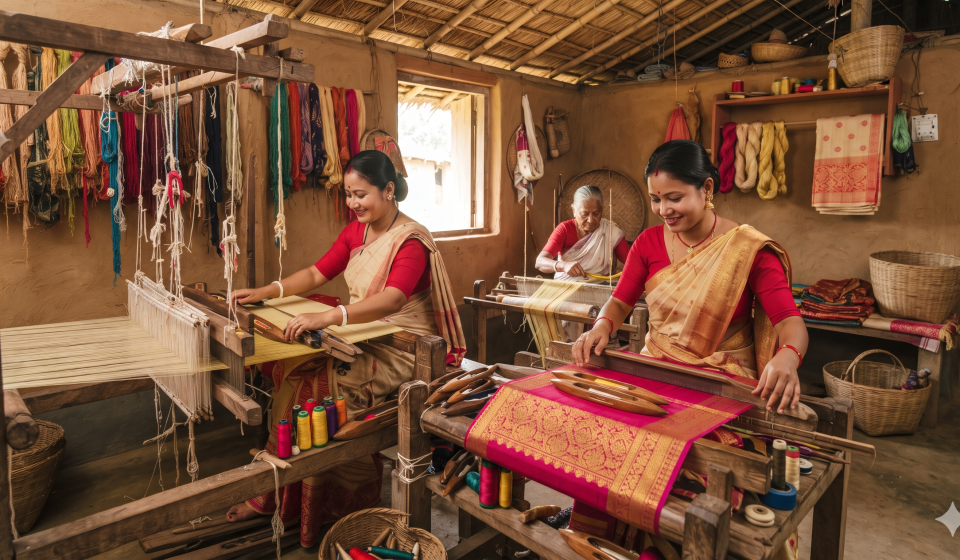

Discover the Beauty of Handwoven Silk of Assam
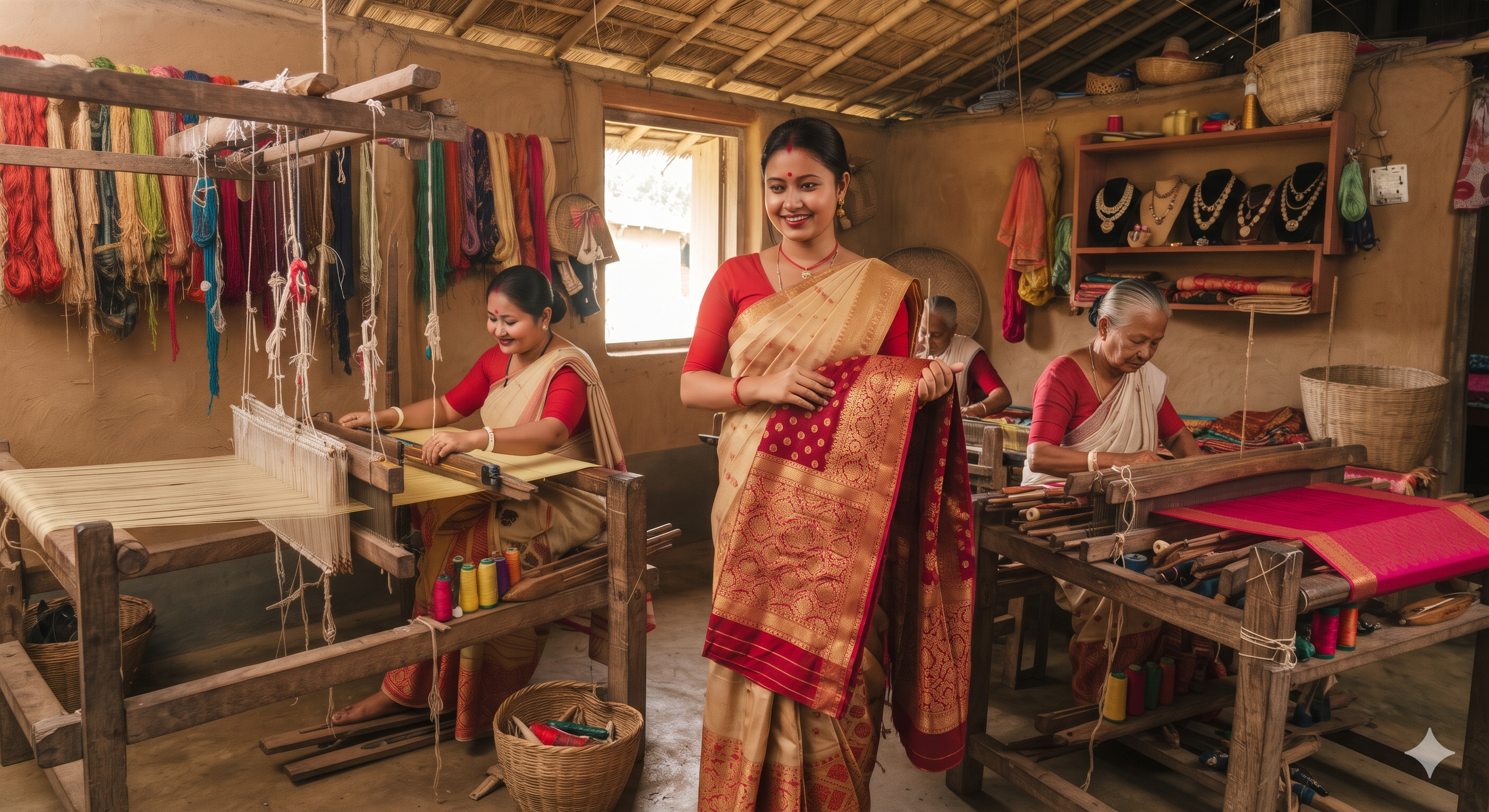
The handwoven silk of Assam brings together natural fibres, traditional craftsmanship and generations of cultural knowledge. From the golden glow of Muga silk to the soft texture of Eri, each variety tells a different story about Assam’s textile heritage.
Assam holds a special place in India’s silk industry. Local silkworm species, skilled artisans and traditional weaving communities contribute to the state’s distinctive textile identity. Moreover, Assamese silk plays an important role in festivals, weddings, traditional clothing and contemporary fashion.
Four silk varieties deserve particular attention: Muga, Eri, Pat and Oak Tasar. Each offers different textures, colours and practical qualities. Therefore, understanding these varieties can help shoppers, designers and retailers choose the right fabric.
This guide explores the main types of Assam silk, explains their traditional uses and introduces suppliers and organisations that readers can contact for further enquiries.
What Makes the Handwoven Silk of Assam Unique?
The identity of Assamese silk begins with the fibre. Different silkworm species produce fibres with distinct characteristics, while weaving techniques give each textile its individual appearance.
Muga silk offers a characteristic golden tone. Eri provides a softer, more textured feel. Pat silk delivers a smooth finish and elegant drape. Oak Tasar adds another dimension through its natural texture.
Traditional weavers transform these fibres into garments and accessories that reflect local aesthetics. For example, the Mekhela Chador combines graceful fabric, decorative borders and traditional motifs to create a distinctive Assamese outfit.
Furthermore, contemporary designers use Assamese silk in modern sarees, stoles, jackets and other fashion products. This combination of heritage and innovation continues to attract new customers.
What Are the Four Main Types of Assam Silk?
The four principal varieties associated with Assam’s silk tradition include:
- Muga silk: A distinctive silk with a natural golden appearance.
- Eri silk: A soft, textured fibre that offers comfort and warmth.
- Pat silk: Assam’s traditional mulberry silk, valued for its smooth finish.
- Oak Tasar silk: A wild silk that offers a more textured appearance.
Each variety serves different preferences and applications. The following sections explain their individual qualities and help you compare them.
1. Muga Silk: The Golden Pride of Assam
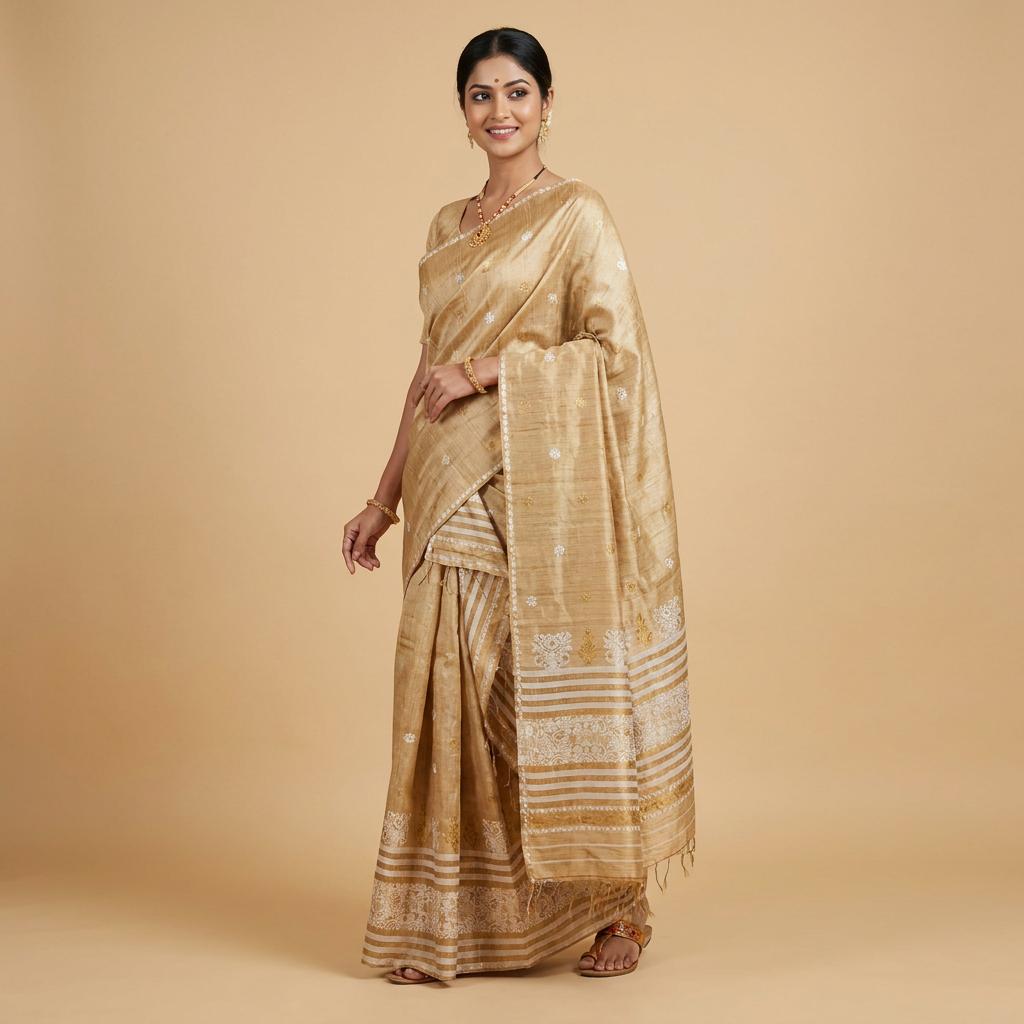
Muga silk stands among Assam’s most recognisable textile treasures. The silkworm Antheraea assamensis, native to the region, produces this distinctive silk.
Its natural golden colour gives the fabric a special character. Depending on the yarn and finishing process, the finished textile can display shades ranging from pale gold to deeper honey tones.
What makes Muga silk special?
Muga silk combines a characteristic lustre with strength and a distinctive natural colour. These qualities make it especially appealing for traditional garments and premium textile collections.
Assam’s Muga silk also holds Geographical Indication (GI) recognition. This recognition connects the product with its regional identity and helps distinguish the recognised product from unrelated textiles.
Traditional uses of Muga silk
Artisans and designers use Muga silk to create:
- Mekhela Chador sets for festivals and ceremonies.
- Sarees for weddings and special occasions.
- Traditional stoles and scarves.
- Premium gifts and heritage-inspired accessories.
- Contemporary garments that incorporate Assamese motifs.
Who should choose Muga silk?
Muga silk suits buyers who appreciate a natural golden appearance, traditional craftsmanship and distinctive textiles for special occasions.
However, buyers should not rely on colour alone when checking authenticity. Instead, ask the supplier about the fibre composition, product origin and available supporting documentation.
2. Eri Silk: Softness, Warmth and Comfort
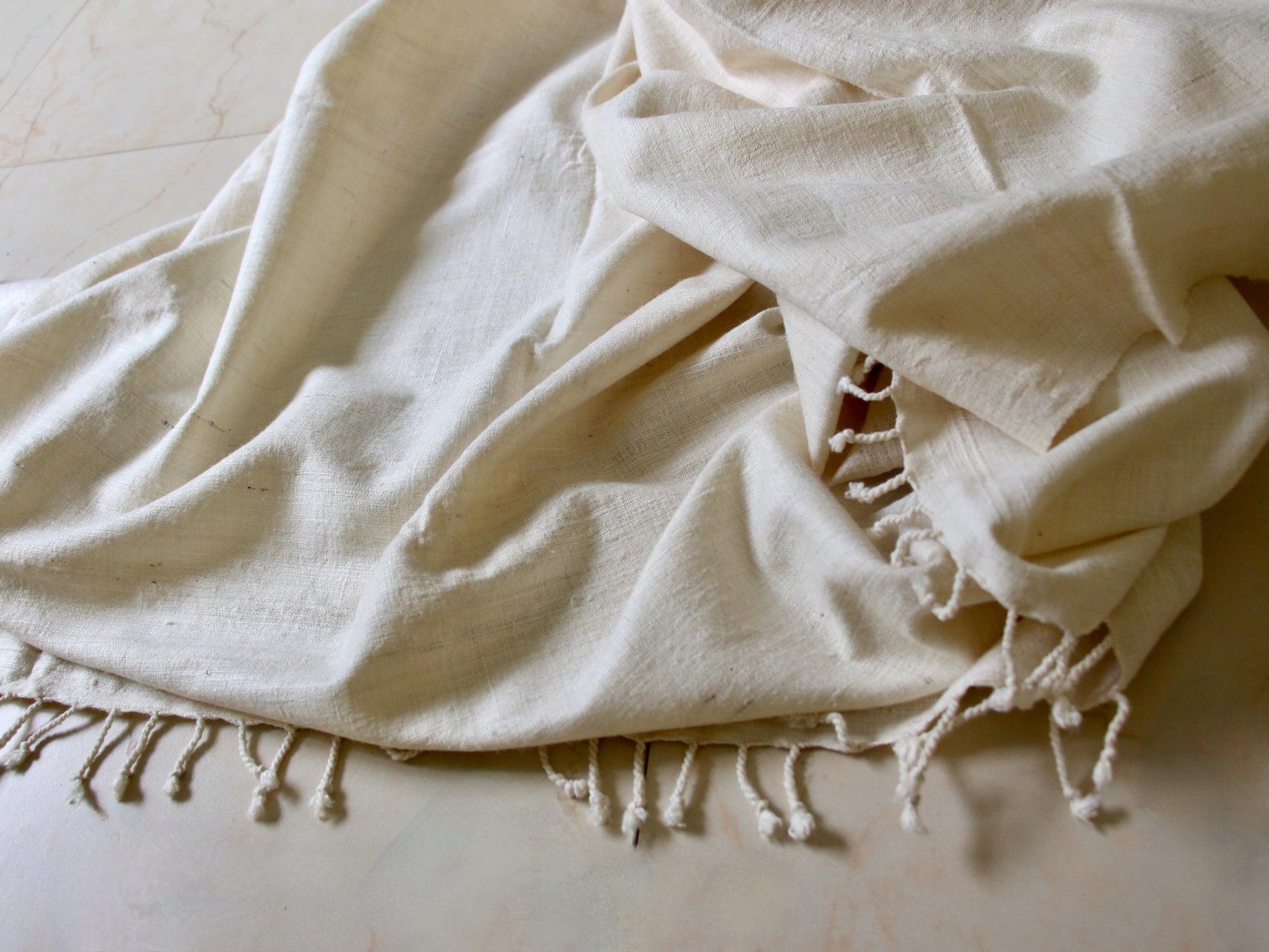
Eri silk forms another important part of Assam’s textile heritage. The silkworm Samia ricini produces this fibre.
Unlike the glossy appearance that many people associate with silk, Eri often has a matte finish and a slightly textured surface. Its soft feel and insulating qualities make it suitable for comfortable clothing and accessories.
People also use the names Endi and Erandi for Eri silk in different contexts.
Key characteristics of Eri silk
Eri silk offers several qualities that appeal to textile buyers:
- A soft and comfortable texture.
- A relatively matte appearance.
- Natural shades that include cream and light brown.
- A warm feel that suits layered clothing.
- Flexibility for traditional and contemporary designs.
Common uses of Eri silk
Weavers and designers create shawls, wraps, scarves, stoles, jackets and other garments from Eri silk.
Its understated finish also suits customers who prefer subtle textures instead of a highly reflective surface. In addition, designers can combine Eri with contemporary cuts to create products for modern wardrobes.
Does Eri silk always qualify as Ahimsa silk?
No. Many people associate Eri with Ahimsa silk because certain production methods allow the moth to emerge from its cocoon before producers collect the remaining fibre for spinning.
However, production practices vary. Buyers who prioritise non-violent production should ask suppliers to explain their process and provide supporting information.
3. Pat Silk: The Elegance of Assamese Mulberry Silk
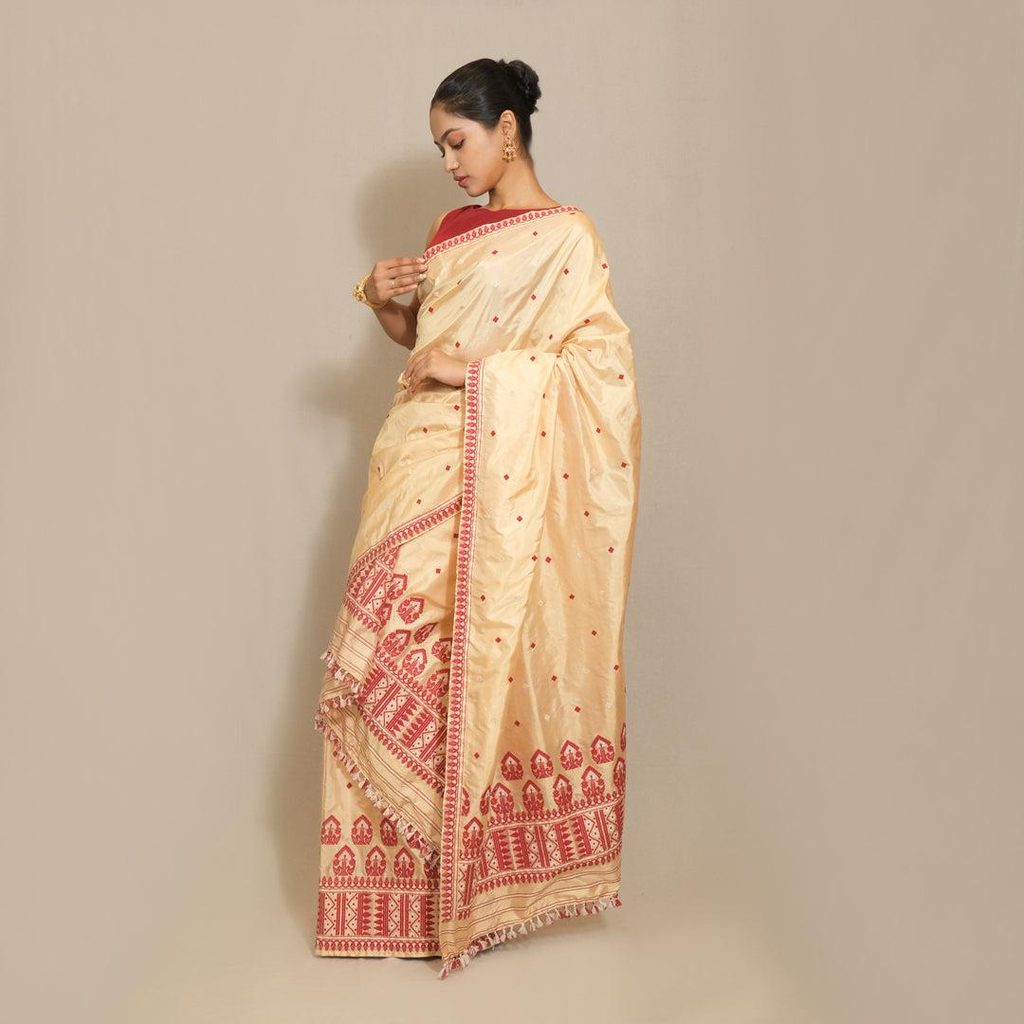
Pat silk refers to mulberry silk in Assam’s textile tradition. This variety generally offers a smooth surface, a refined sheen and an elegant drape.
Many traditional Pat silk garments feature ivory or off-white shades. However, dyers can also create Pat silk textiles in a wide range of colours.
Distinctive features of Pat silk
Pat silk offers several qualities that make it popular for traditional clothing:
- A smooth and relatively fine texture.
- An elegant drape.
- A refined sheen.
- Compatibility with detailed woven patterns.
- Versatility across traditional and contemporary fashion.
How do people use Pat silk?
Weavers create Mekhela Chador sets, sarees, dress materials and other garments from Pat silk. Customers often choose these products for festivals, weddings and formal occasions.
Modern designers also use Pat silk for contemporary silhouettes. They can combine traditional Assamese borders with modern cuts to create clothing that appeals to a wider audience.
How does Pat silk differ from Muga silk?
Pat and Muga silk offer different visual characteristics.
Muga silk stands out for its characteristic golden tone, while Pat silk generally offers a smoother finish and a lighter appearance. Buyers should consider the intended garment, colour preference, occasion and budget before choosing between them.
Always check the fibre composition when a seller advertises a product as pure silk.
4. Oak Tasar Silk: A Distinctive Wild Silk
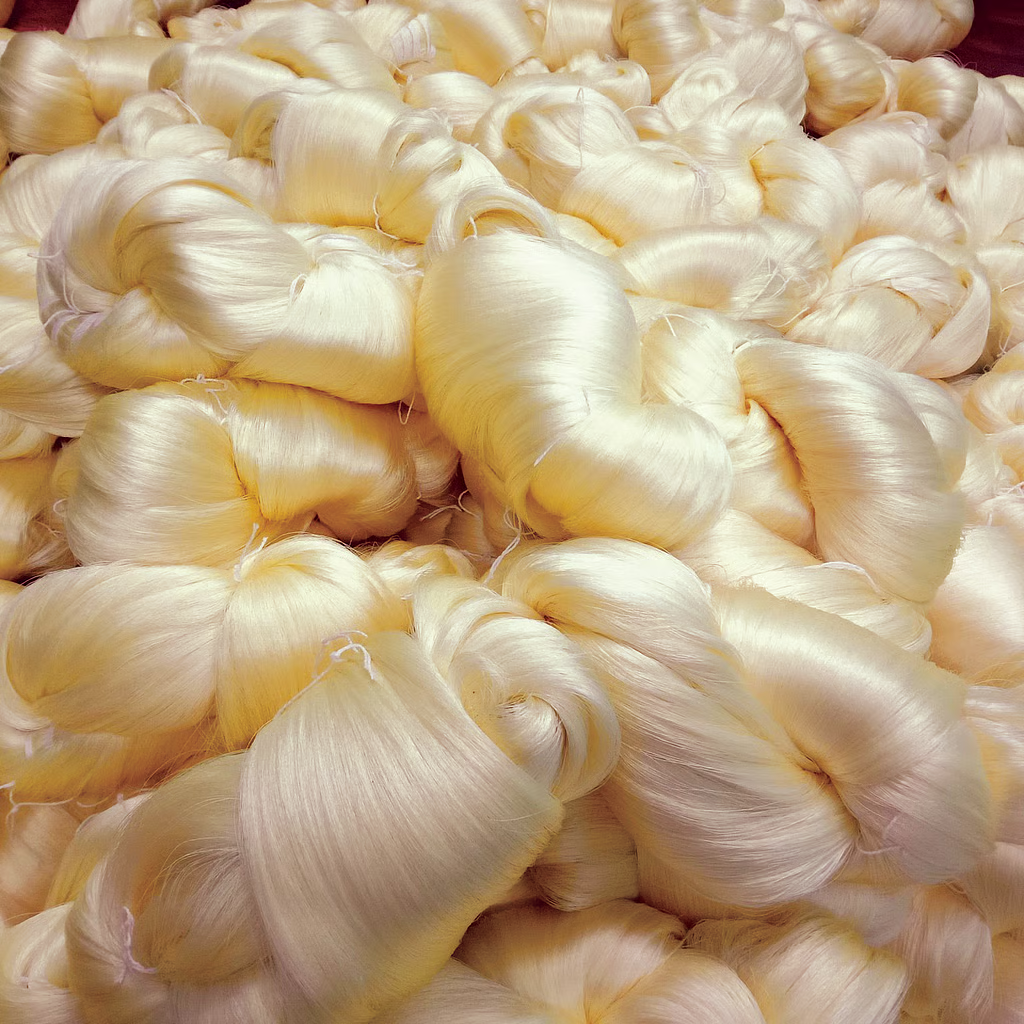
Oak Tasar, also spelled Oak Tussar, belongs to the broader family of wild silks. Producers cultivate this variety on a more limited scale in parts of Assam.
Compared with the smooth finish of many mulberry silk fabrics, Tasar textiles often display a more pronounced texture and a natural-looking surface. The final appearance depends on the fibre, yarn preparation, dyeing and weaving technique.
What distinguishes Oak Tasar silk?
Oak Tasar appeals to buyers who prefer visible texture and a less uniform finish. Fashion designers can explore it for handcrafted surfaces, natural colour palettes and distinctive textile collections.
Common applications
Depending on the yarn and fabric construction, designers and textile producers can use Tasar for sarees, scarves, stoles, dress materials and other textile products.
However, buyers should confirm the actual fibre and production origin with the supplier, particularly when they specifically want Oak Tasar from Assam.
Assam Silk Comparison: Which Variety Should You Choose?
| Silk type | Main characteristics | Suitable applications |
|---|---|---|
| Muga | Golden tone and distinctive lustre | Premium Mekhela Chador, ceremonial wear and special-occasion sarees |
| Eri | Soft, textured and relatively matte | Shawls, wraps, scarves and comfortable clothing |
| Pat | Smooth finish and elegant drape | Sarees, Mekhela Chador and dress materials |
| Oak Tasar | Textured, natural-looking surface | Stoles, sarees, dress materials and designer textiles |
These descriptions provide general guidance. The yarn quality, weave, dyeing and finishing process can influence the appearance and performance of the finished fabric.
Sualkuchi: Explore Assam’s Silk-Weaving Heritage
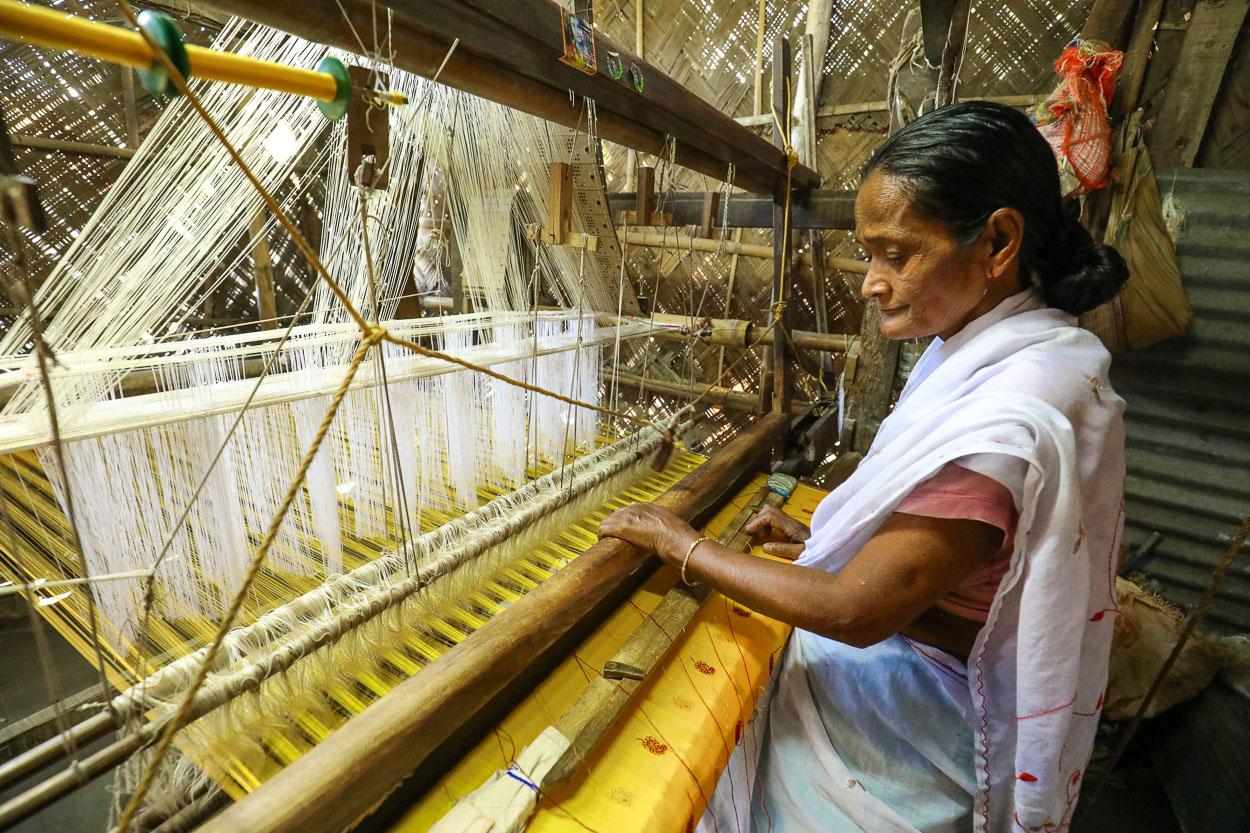
Sualkuchi, in Kamrup district, ranks among Assam’s best-known silk-weaving centres. The town lies approximately 35 kilometres from Guwahati and attracts people who want to explore traditional Assamese textiles.
Local weaving households, workshops and businesses produce a range of silk garments and accessories. These include Muga, Pat and Eri products, Mekhela Chador sets, sarees, gamusas and dress materials.
Sualkuchi offers more than shopping opportunities. Visitors can explore the connection between weaving skills, family traditions and local livelihoods. They can also compare products, inspect fabric quality and discuss designs directly with businesses.
For retailers and fashion designers, the town offers a useful starting point for supplier research. Some businesses may discuss custom designs or bulk orders, although buyers should confirm those services directly.
Explore more information through Assam Tourism’s Sualkuchi guide.
Assam Silk Manufacturers and Suppliers to Contact
Assamese Handicrafts Suppliers and Manufacturers
Contact directory for sourcing traditional Assamese handicrafts, handloom textiles, cane and bamboo products.
| Serial No. | Name of Supplier or Company | Contact Details | Location |
| 1 | Canecraft & Allied Industries | Phone: +91 361 2340250 Mobile: +91 9864093172 Email: canecraftassam@gmail.com Website: https://canecraftassam.com/ | 4th Floor, House No. 563, G.S. Road, Christian Basti, Dispur, Guwahati, Assam – 781005 |
| 2 | Baishya Silk Emporium | Phone: +91 6002257019 / +91 9864079233 Email: thebaishyasilkemporium@gmail.com Website: https://www.baishyasilkemporium.com/ | Chancellor Commercial Building, H.B. Road, Panbazar, Guwahati, Assam – 781001 |
| 3 | I-Weave Silk Handloom | Phone: +91 84738 19362 / +91 70025 44351 Email: iweavesilkhandloom1978@gmail.com | House No. 7, Bahini Lane, A.G. Office Road, Guwahati, Assam – 781029 |
| 4 | Assam Apex Weavers and Artisans Cooperative Federation Ltd. (ARTFED) | Phone: 0361-2543772 / 0361-2548987 Email: artfed12@gmail.com Website: https://artfed.assam.gov.in/ | A.K. Azad Road, Rehabari, Guwahati, Assam – 781008 |
| 5 | Assam Government Marketing Corporation Ltd. (AGMC) | Product information: https://agmcltd.assam.gov.in/portlets/handloom-handicraft-products Contact through official channels | Assam, India |
| 6 | Sani Cane and Bamboo Industry | Phone: +91 9531027053 | Karimganj, Assam |
| 7 | Puspawati Cane & Bamboo Industry | Phone: +91 8011527716 | Karimganj, Assam |
| 8 | Lakshmi Cane Bamboo Industrial | Phone: +91 9476727658 | Karimganj, Assam |
| 9 | Krishna Cane and Bamboo Industry | Phone: +91 6901099227 | Karimganj, Assam |
| 10 | Sunrise Industrial S/C Primary Cooperative Society Ltd. | Phone: +91 9706975390 | Karimganj, Assam |
| 11 | Ahad Cane and Bamboo Industry | Phone: +91 6002167722 | Karimganj, Assam |
Note: Contact details and locations are reproduced from the information provided. Verify current contact numbers, addresses, product authenticity, and wholesale availability before placing an order or publishing this directory.
How to Buy Authentic Handwoven Silk of Assam
Buyers can reduce uncertainty by checking a few important details before purchasing Assamese silk.
1. Confirm the silk variety
Ask whether the product contains Muga, Eri, Pat, Oak Tasar or a blend. Request the fibre composition in writing, especially for online and bulk purchases.
2. Ask about the weaving method
Find out whether the supplier uses handloom weaving, power-loom production or a combination of techniques. The location of a seller alone does not establish the weaving method.
3. Check authenticity documentation
If a seller advertises GI-recognised Muga silk, ask what documentation or applicable labelling supports the claim. Remember that GI recognition does not automatically authenticate every individual garment.
4. Inspect the fabric
Examine the texture, weave consistency, borders, finishing and stitching. Request close-up photographs or physical samples before committing to a large order.
5. Clarify the commercial terms
For wholesale purchases, confirm the minimum order quantity, unit price, production lead time, packaging, transport costs, payment terms and return policy.
6. Request an invoice
Ask for a proper invoice and a written product description. These documents provide a useful record of the transaction.
Business Opportunities in Assam’s Silk Industry
Assamese silk offers opportunities across traditional apparel, premium gifting, designer fashion and contemporary accessories.
Retailers can explore Mekhela Chador sets and traditional sarees. Fashion labels can investigate custom borders, colours and patterns. Meanwhile, designers can develop Eri-based wraps and accessories for customers who prefer soft textures and understated finishes.
However, a successful silk business requires more than a supplier list. Entrepreneurs should assess product consistency, authentic fibre composition, pricing, packaging and reliable delivery schedules.
A practical approach starts with small sample orders from several suppliers. Compare the actual products, check the documentation and calculate the total landed cost before ordering larger quantities.
This process helps businesses make informed sourcing decisions and build stronger relationships with their suppliers.
Frequently Asked Questions About the Handwoven Silk of Assam
1. What are the four main types of Assam silk?
The four principal varieties associated with Assam are Muga, Eri, Pat (mulberry) and Oak Tasar. Each variety offers different fibre characteristics, textures and traditional uses.
2. Which silk is Assam most famous for?
Muga silk enjoys particular recognition because of its characteristic golden appearance and strong connection with Assam’s cultural heritage. Assam also has important Eri and Pat silk traditions.
3. Why does Muga silk stand out?
The native Muga silkworm produces a distinctive silk with a natural golden tone. Its characteristic lustre and regional identity make it a prized textile.
4. What is the difference between Muga, Eri and Pat silk?
Muga offers a golden appearance, Eri generally provides a soft and textured feel, and Pat typically delivers a smooth finish and elegant drape. Buyers should choose according to the garment and their preferences.
5. Where can I buy authentic Assam silk?
Sualkuchi offers an excellent starting point for exploring Assamese silk. Buyers can also contact businesses such as Baishya Silk Emporium and Silkalay Sualkuchi, or enquire with ARTFED about its retail and production channels.
6. Can I buy Assam silk directly from suppliers?
Yes. Some businesses accept direct enquiries, but minimum order quantities and wholesale terms vary. Contact each supplier to establish whether it sells directly to retailers, individual customers or institutional buyers.
7. Does every silk product from Assam come from a handloom?
No. Assam has a strong handloom tradition, but buyers should not assume that every silk product from the state comes from a handloom. Ask the seller to confirm the weaving method.
8. Does every Eri silk product qualify as Ahimsa silk?
No. Some Eri producers follow methods that allow the moth to emerge before they collect the remaining fibre. Buyers should verify the production method instead of assuming that every Eri product follows the same practice.
9. Which Assam silk works best for traditional clothing?
Muga, Pat and Eri all suit traditional clothing, depending on the design and occasion. Muga offers a golden appearance, Pat provides an elegant drape, and Eri offers a softer, textured finish.
10. How can I check genuine Muga silk?
Check the supplier’s reputation, fibre composition, product origin and available authenticity documentation. Colour and shine alone cannot prove that a fabric contains genuine Muga silk.
Conclusion: Keep Assam’s Silk Heritage Alive
Assam’s handwoven silk represents far more than beautiful fabric. Muga, Eri, Pat, and Oak Tasar each offer distinctive textures, appearances, and connections to India’s textile traditions. Meanwhile, Sualkuchi continues to showcase the remarkable skills of Assamese weavers.
When you choose authentic Assam silk, you appreciate the craftsmanship, cultural heritage, and dedication behind every piece. Whether you prefer Muga’s golden elegance, Eri’s comfortable texture, or Pat silk’s refined finish, these exceptional textiles offer a lasting connection to Assam’s artistic legacy.


[…] Weaving is one of the most important traditional crafts of Assam. For generations, Assamese families have produced beautiful textiles using traditional techniques. These fabrics are valued for their quality, patterns, and cultural significance. To learn more go to https://desibiz.in/handwoven-silk-of-assam/. […]