

Uttarakhand is famous for its Himalayan landscapes, rich culture, and traditional food. One of its most loved regional dishes is Bhatt Ki Churkani, a traditional food of Uttarakhand made from black soybeans. This hearty curry is especially associated with the Kumaon region, where bhatt has been an important part of local cooking for generations.
Bhatt Ki Churkani is known for its earthy flavour, thick gravy, and simple preparation. The dish commonly uses black bhatt beans, spices, and flour to create a rich consistency. It is often served hot with steamed rice, making it a comforting meal during cold mountain weather.
Today, people interested in regional Indian cuisine are discovering traditional Uttarakhand dishes like Churkani. It also offers an opportunity to explore local ingredients and food traditions that have been passed down through families.
In this article, you will learn what Bhatt Ki Churkani is, how it is prepared, its nutritional value, common cooking mistakes, and its place in Uttarakhand’s food culture.
What Is Bhatt Ki Churkani?
Bhatt Ki Churkani is a traditional Kumaoni curry from Uttarakhand made primarily with bhatt, a local variety of black soybean. The beans are cooked with spices and often thickened with flour to form a rich gravy. The dish is commonly served with steamed rice and is valued for its earthy taste and hearty texture.
Understanding Bhatt Ki Churkani
Bhatt Ki Churkani is closely linked to Kumaoni home cooking. Bhatt refers to a dark-coloured soybean traditionally grown and eaten in parts of Uttarakhand. Churkani is a curry prepared using these beans and regional cooking techniques.
Recipes vary by household. Some cooks soak the beans before cooking, while others may lightly roast them to develop a deeper flavour. The curry often includes cumin, garlic, ginger, turmeric, and coriander. Wheat flour or another suitable flour may be used to thicken the gravy.
The final dish has a savoury taste and a thick, comforting texture. Although it can be prepared in different ways, bhatt remains its defining ingredient.
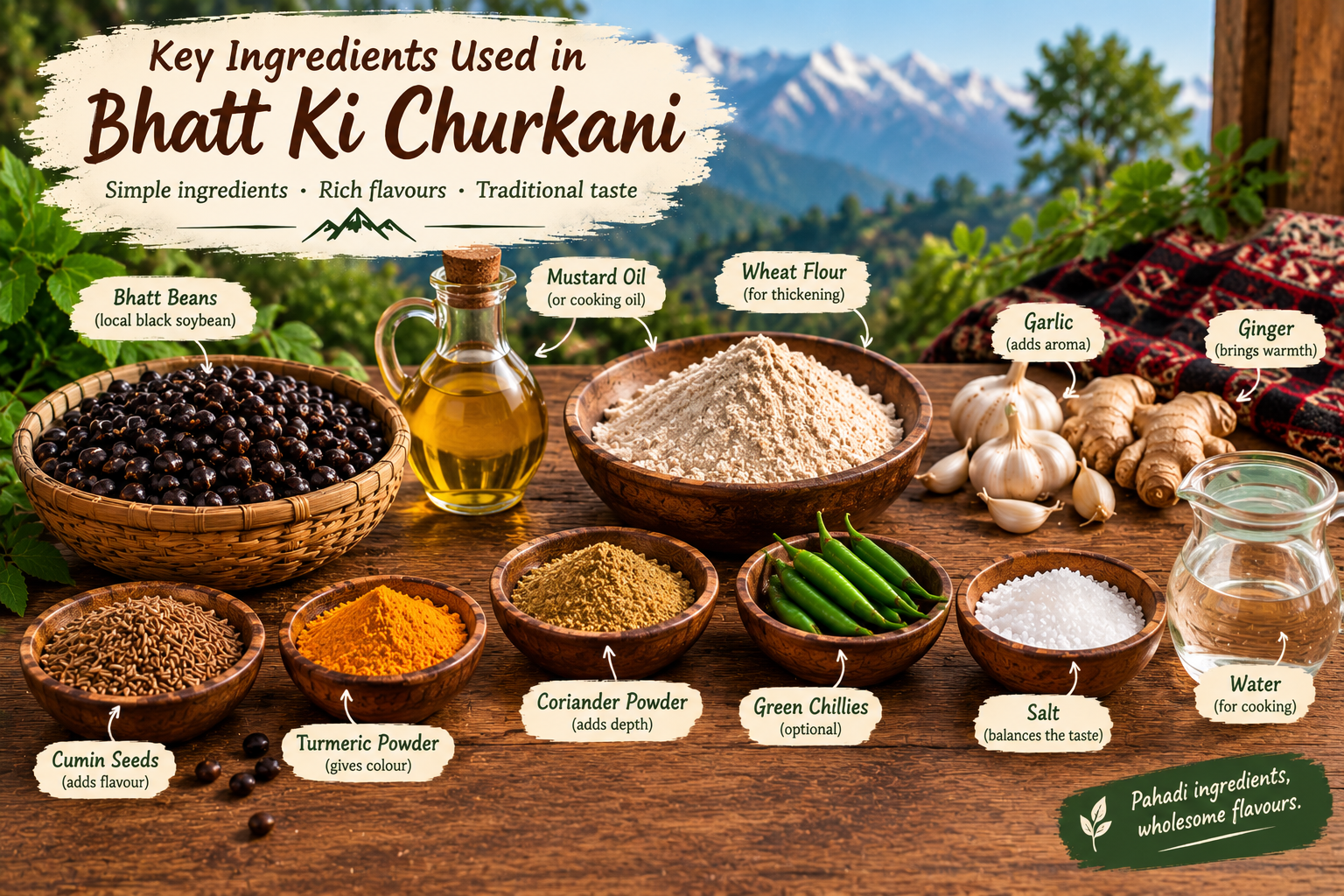
Key Ingredients Used in Bhatt Ki Churkani
- Bhatt beans: The main ingredient, traditionally a dark-coloured local soybean.
- Mustard oil or cooking oil: Forms the base for the spices.
- Cumin seeds: Add warmth and an earthy aroma.
- Garlic and ginger: Provide depth and fragrance.
- Turmeric powder: Adds colour and flavour.
- Coriander powder: Brings a mild, warm spice note.
- Wheat flour or another flour: Helps thicken the curry.
- Salt and water: Balance the flavour and control consistency.
- Green chillies: Optional, for extra heat.
The ingredients and their proportions can vary depending on local customs and personal taste.
Why Is Bhatt Ki Churkani Important in Uttarakhand?
Bhatt Ki Churkani is important because it connects local farming, traditional ingredients, and Kumaoni food culture. It turns a locally valued bean into a filling meal using familiar spices and simple cooking methods. The dish also helps preserve regional recipes and introduces new generations to Uttarakhand’s culinary heritage.
1. A Traditional Kumaoni Dish
Bhatt Ki Churkani is associated with Kumaon, a cultural region of Uttarakhand. Families have their own ways of preparing the curry, and recipes may differ in seasoning, texture, and cooking time.
These variations are part of the region’s food heritage. They show how home cooks adapt a shared dish to their tastes and available ingredients.
2. Uses a Local Agricultural Crop
Bhatt is a traditional soybean crop in parts of Uttarakhand. Local pulses and beans have long played an important role in mountain diets.
Using regional crops in everyday meals helps maintain links between agriculture and food traditions. However, the availability and quality of bhatt can vary by location and season.
3. Suitable for Home Cooking
The dish uses common spices and a straightforward cooking process. Once the beans are cooked until tender, the curry can be prepared in one pot.
This makes it a practical choice for families who enjoy traditional bean-based meals.
4. Offers Opportunities for Food Businesses
Traditional dishes can inspire packaged food products, restaurant menus, and regional food brands. Bhatt Ki Churkani could be offered as a ready-to-cook mix or a prepared meal.
Businesses should first assess customer demand, recipe consistency, food safety, packaging, shelf life, and pricing. A regional dish can attract interest, but commercial success depends on careful planning.
How Is Bhatt Ki Churkani Prepared?
Bhatt Ki Churkani is prepared by cooking bhatt beans until tender, making a spiced base, and simmering the beans with water and a flour mixture until the gravy thickens. A home-style recipe can be adapted to suit the beans, spices, and cooking equipment available.
Ingredients for 3–4 Servings
- 1 cup bhatt beans
- 1–2 tablespoons mustard oil or cooking oil
- 1 teaspoon cumin seeds
- 4 garlic cloves, chopped
- 1 small piece of ginger, chopped
- 1 small onion, optional
- ¼ teaspoon turmeric powder
- 1 teaspoon coriander powder
- 1–2 tablespoons wheat flour
- 3–4 cups water, as needed
- Salt to taste
- Green chilli, optional
- Fresh coriander leaves, optional
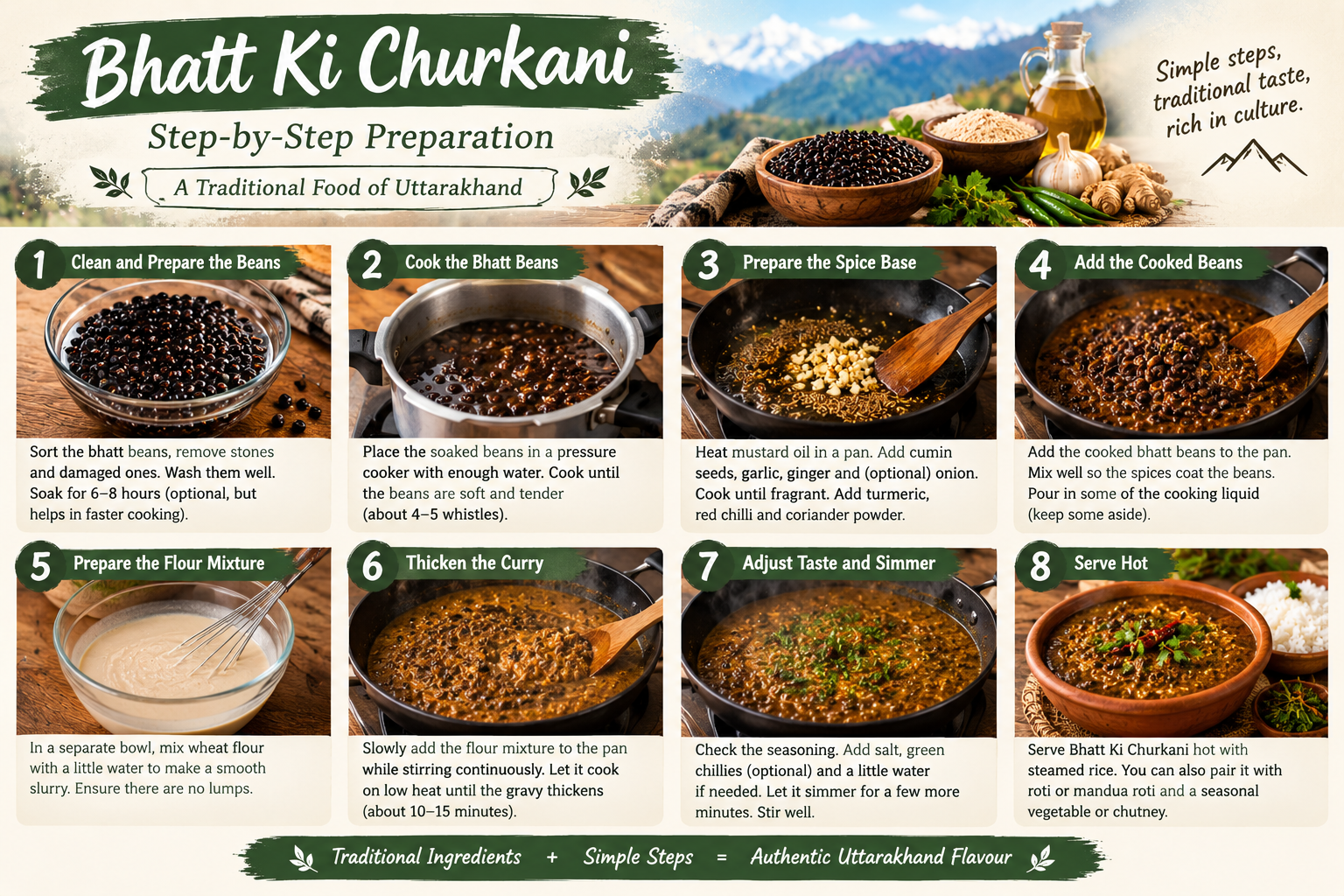
Step 1: Clean and Prepare the Beans
Sort the bhatt beans and remove any stones or damaged beans. Wash them thoroughly under clean running water.
Soaking the beans for several hours can help reduce cooking time. Drain and rinse them before cooking.
Step 2: Cook the Bhatt Beans
Place the beans in a pressure cooker with enough water. Cook until they become fully tender, following the instructions for your cooker and the condition of the beans.
Do not discard the cooking liquid unless necessary. It can add flavour to the curry.
Step 3: Prepare the Spice Base
Heat mustard oil in a heavy pan. Add cumin seeds and let them release their aroma.
Add the garlic, ginger, and optional onion. Cook until fragrant, then add turmeric and coriander powder. Stir briefly to prevent the spices from burning.
Step 4: Add the Cooked Beans
Add the cooked bhatt beans to the pan. Mix them with the spices so the flavours coat the beans evenly.
Pour in some of the reserved cooking liquid. Adjust the amount according to how thick you want the curry.
Step 5: Prepare the Flour Mixture
Mix the wheat flour with cool water in a separate bowl. Stir until smooth and free from lumps.
Gradually add the mixture to the curry while stirring. This helps create a thick gravy.
Step 6: Simmer and Serve
Simmer the curry over low heat, stirring regularly, until the flour is fully cooked and the gravy reaches your preferred consistency.
Check the seasoning and add salt or water if needed. Serve hot with steamed rice, accompanied by a seasonal vegetable or chutney.
Cooking tip: Cook the beans until completely tender before preparing the gravy. Undercooked beans can spoil the texture and are not suitable for serving.
Benefits and Nutritional Value of Bhatt Ki Churkani
Bhatt Ki Churkani can be a nourishing part of a balanced diet because its main ingredient is soybean. Soybeans provide plant protein, fibre, and several minerals. The nutritional value of the finished dish depends on the portion size, amount of oil, flour used, and accompanying foods.
1. Provides Plant-Based Protein
Bhatt is a type of soybean, and soybeans are known for their protein content. Protein helps the body build and maintain tissues.
Serving the curry with rice or another grain creates a filling meal. The amount of protein per serving depends on the quantity of beans used.
2. Contains Dietary Fibre
Soybeans contain dietary fibre, which supports normal digestive function. Eating a range of beans, vegetables, fruits, and whole grains can help increase fibre intake.
The exact amount in Churkani varies with the recipe and serving size.
3. Supplies Energy
The beans provide protein, fat, and carbohydrates, while rice or roti adds further energy. This combination can make the meal satisfying and suitable for everyday eating.
4. Supports Dietary Variety
Bhatt Ki Churkani introduces a traditional legume into the diet. Eating a variety of pulses, beans, and grains can help provide a wider range of nutrients.
5. Fits Vegetarian Meal Plans
A traditional version made with plant-based ingredients is suitable for vegetarian diets. People with soy allergies should avoid bhatt because it is a soybean.
The dish is not a treatment for any medical condition. Its benefits depend on the overall diet and individual nutritional needs.
Challenges and Common Mistakes When Making Churkani
A few common mistakes can affect the flavour, texture, and cooking time of Bhatt Ki Churkani.
1. The Beans Remain Hard
Problem: The beans stay firm after cooking.
Cause: They may be old, insufficiently soaked, or not cooked for long enough.
Solution: Soak them when practical and continue cooking until fully tender. Follow the pressure cooker’s instructions.
2. The Gravy Becomes Too Thick
Problem: The curry turns pasty instead of having a smooth gravy.
Cause: Too much flour is added.
Solution: Start with a small amount of flour slurry and add more only if needed.
3. The Spices Taste Burnt
Problem: The curry develops a bitter flavour.
Cause: The spices are cooked too long in hot oil.
Solution: Lower the heat and stir the spices briefly before adding the beans and liquid.
4. The Curry Tastes Bland
Problem: The beans lack flavour.
Cause: The seasoning is not balanced, or the curry has not simmered long enough.
Solution: Taste near the end of cooking and adjust salt and spices gradually.
5. Using the Wrong Beans
Problem: The finished dish does not have the expected traditional flavour.
Cause: Another bean variety is used without adjusting the recipe.
Solution: Choose bhatt beans when available. Other beans can work as substitutes, but the taste and texture will differ.
Best Practices for Making Bhatt Ki Churkani
- Choose good-quality bhatt. Look for clean, dry beans without visible damage.
- Sort and wash the beans. Remove stones and unwanted material before cooking.
- Soak when practical. This can help shorten cooking time.
- Cook until tender. Check the beans before adding the thickening mixture.
- Use mustard oil if preferred. It adds a flavour associated with many regional Indian dishes.
- Avoid burning the spices. Use moderate heat and stir regularly.
- Add flour gradually. A smooth slurry helps prevent lumps.
- Balance the gravy. Add cooking liquid to make the curry thinner or simmer it longer to thicken it.
- Serve it hot. Steamed rice is a classic accompaniment.
- Store leftovers safely. Refrigerate promptly in a covered container and reheat thoroughly before eating.
Bhatt Ki Churkani vs. Other Traditional Uttarakhand Dishes
Uttarakhand has many traditional dishes made with beans, lentils, and vegetables. Although some may look similar, their main ingredients and cooking methods differ.
| Feature | Bhatt Ki Churkani | Chainsoo | Kafuli |
|---|---|---|---|
| Main ingredient | Bhatt, a local soybean | Commonly black urad dal | Leafy greens |
| Dish type | Bean curry | Roasted lentil curry | Green vegetable curry |
| Main flavour | Earthy and savoury | Deep, roasted, and earthy | Fresh and mildly earthy |
| Typical texture | Thick gravy with beans | Thick lentil-based gravy | Smooth green gravy |
| Common accompaniment | Steamed rice | Rice or mandua roti | Rice or roti |
| Regional association | Kumaon | Garhwal, with regional variations | Uttarakhand’s regional cuisine |
Each dish reflects a different part of the region’s culinary heritage. Bhatt Ki Churkani is distinctive because of its use of bhatt beans.
Frequently Asked Questions About Bhatt Ki Churkani
1. What is Bhatt Ki Churkani?
Bhatt Ki Churkani is a traditional Kumaoni dish from Uttarakhand made mainly with bhatt, a local variety of black soybean. The beans are cooked with spices and often thickened with flour. The dish is commonly served with steamed rice as part of a traditional meal.
2. Which state is famous for Bhatt Ki Churkani?
Bhatt Ki Churkani is associated with Uttarakhand, particularly the Kumaon region. It is part of the state’s traditional food culture and reflects the use of local beans and familiar spices in home cooking.
3. What is bhatt in Uttarakhand?
Bhatt is the local name for a traditional dark-coloured soybean used in Uttarakhand cuisine. It is used in dishes such as Bhatt Ki Churkani and other regional preparations. The name can refer to local soybean varieties rather than every type of black bean.
4. What is served with Bhatt Ki Churkani?
Bhatt Ki Churkani is commonly served with steamed rice. It can also be eaten with roti or mandua roti, depending on household preference. A seasonal vegetable or chutney can complete the meal.
5. Is Bhatt Ki Churkani vegetarian?
Yes, a traditional version of Bhatt Ki Churkani is vegetarian when prepared with beans, spices, flour, and plant-based oil. The ingredients should still be checked if the dish is bought ready-made or served outside the home.
6. Is Bhatt Ki Churkani nutritious?
Bhatt Ki Churkani can provide plant protein, fibre, and other nutrients because its main ingredient is soybean. Its overall nutritional value depends on the recipe, portion size, and foods served alongside it.
7. Can Bhatt Ki Churkani be made without flour?
Yes. Flour is often used to thicken the gravy, but it can be omitted. Mash a small portion of the cooked beans and simmer the curry to create a thicker texture naturally.
8. Can black soybeans be used for Bhatt Ki Churkani?
Black soybeans may be a practical substitute if traditional bhatt is unavailable, but the result may differ in flavour and texture. For a more traditional version, choose bhatt beans from a reliable supplier when possible.
Key Takeaways
- Bhatt Ki Churkani is a traditional dish associated with Kumaon, Uttarakhand.
- Its main ingredient is bhatt, a local soybean.
- The curry is often thickened with flour and served with rice.
- The recipe varies between households.
- Soybeans provide plant protein and dietary fibre.
- Cooking the beans until tender is essential.
- Soy allergies should be considered before eating the dish.
- The dish can inspire restaurant menus and regional food products, but commercial production requires food safety and market planning.
Final Verdict: Why You Should Try Bhatt Ki Churkani
Bhatt Ki Churkani is a hearty example of Uttarakhand’s traditional food culture. Its earthy flavour, soybean base, and thick gravy make it different from many everyday curries.
The dish is also a useful introduction to Kumaoni cuisine for people who want to explore regional Indian food. With properly cooked bhatt, balanced spices, and a simple flour slurry, home cooks can prepare a satisfying version in their own kitchens.
If you are discovering traditional Uttarakhand dishes, try Bhatt Ki Churkani with steamed rice. Use quality beans, follow safe cooking practices, and explore family recipes to appreciate the variety within the region’s food traditions.
Conclusion
Bhatt Ki Churkani, a traditional food of Uttarakhand, represents the region’s connection with local crops, home cooking, and cultural heritage. Prepared mainly with bhatt beans and regional spices, it offers an earthy, filling alternative to everyday lentil curries.
Its simple ingredients and flexible recipe make it worth exploring for anyone interested in Kumaoni cuisine. Prepare it with fully cooked beans, serve it hot with rice, and enjoy a traditional dish that continues to hold a place in Uttarakhand’s culinary identity.
URL Slug
bhatt-ki-churkani-traditional-food-of-uttarakhand

