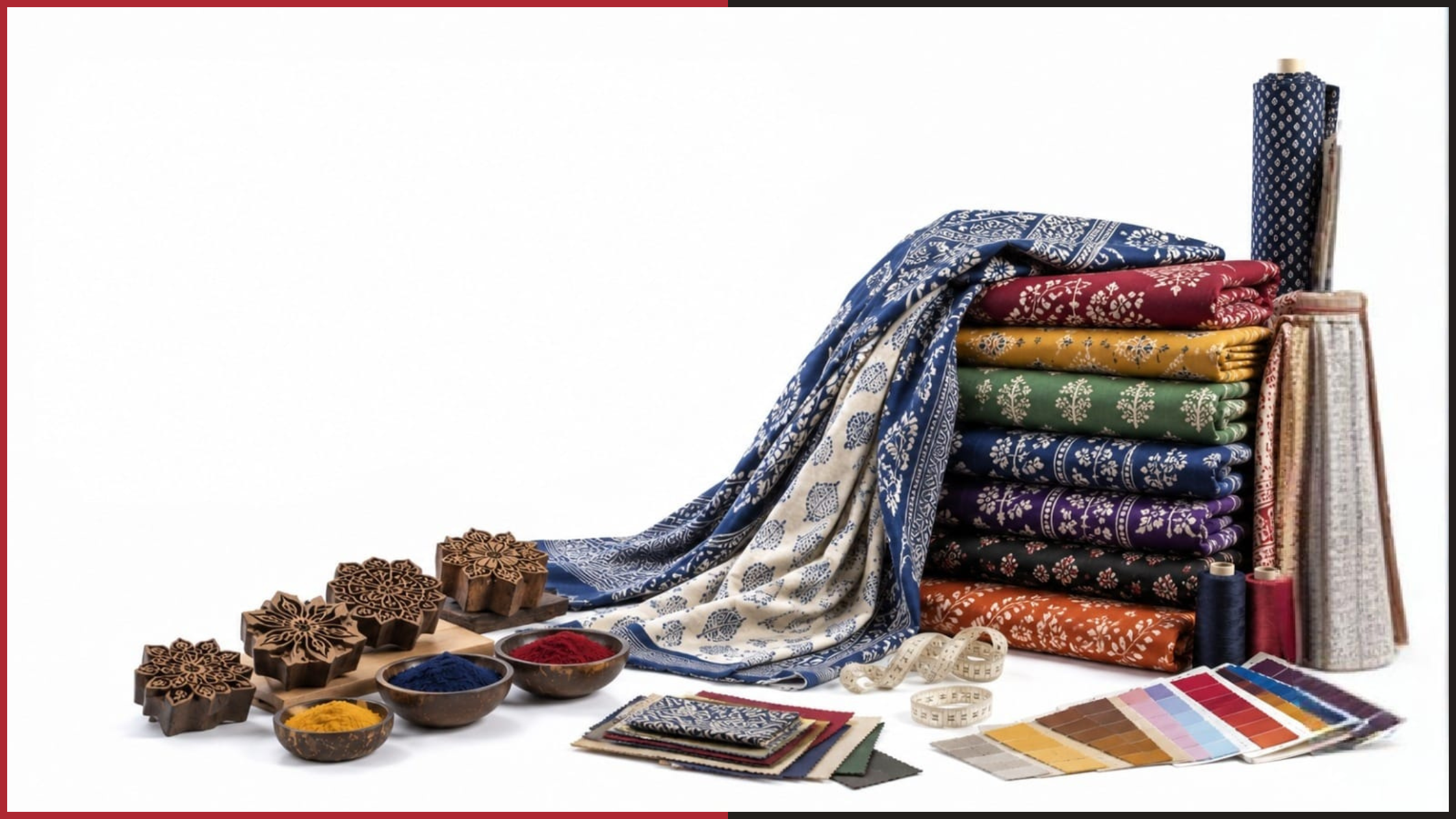
Rajasthan is globally renowned for its rich textile heritage, and right at the heart of this vibrant tradition lies Balotra, a bustling industrial town in the Barmer district. Known widely as the textile printing and processing capital of western Rajasthan, Balotra has shaped fashion markets, local economies, and international supply chains for decades. From traditional hand-block prints to mass-produced rotary screen textiles, Balotra printed fabrics represent a seamless blend of ancestral craftsmanship and modern industrial capacity. This comprehensive guide explores what makes Balotra textiles unique, how production works, the benefits and challenges of sourcing from this region, and best practices for global buyers and retail brands.
What Is Balotra Printed Fabrics?
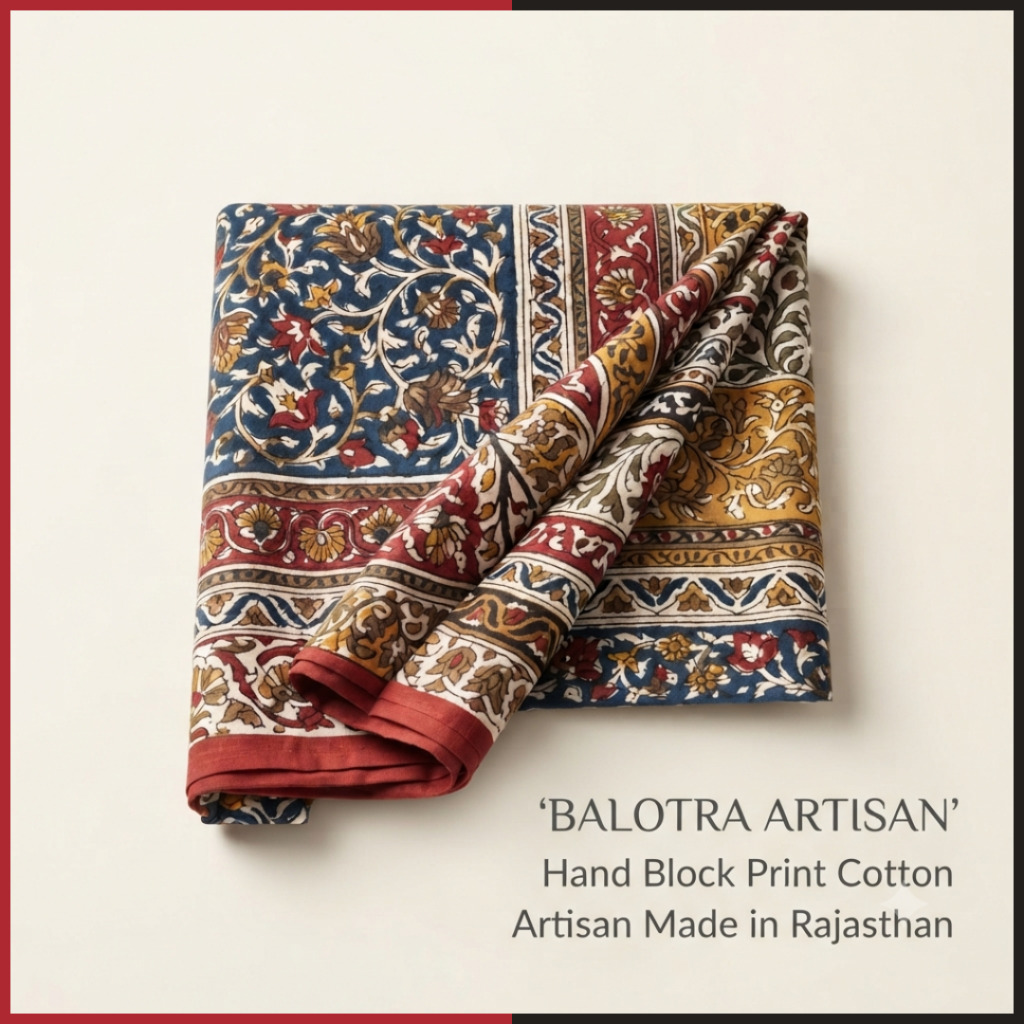
Balotra printed fabrics refer to textiles dyed, printed, and processed within the industrial clusters of Balotra, Rajasthan. Famed for vibrant colorfastness, traditional block designs, and diverse base materials like cotton and cambric, these fabrics serve domestic retail markets and international apparel brands looking for authentic Indian textile art.
Balotra’s textile legacy dates back generations, evolving from small-scale artisan workshops into a massive textile processing hub. Printers utilize techniques ranging from traditional wooden block printing and screen printing to advanced mechanized roller printing. The region specializes in treating grey fabrics (unprocessed cloth) through bleaching, dyeing, and high-quality printing. Because the local water and specialized climate historically aided dye absorption, Balotra became a premier destination for affordable, high-volume, and culturally rich Indian prints.
Key Components
- Base Greige Fabrics: Pure cotton, rayon, cambric, and mixed synthetic blends sourced from across India.
- Printing Techniques: Hand block printing, screen printing, pigment printing, and discharge printing.
- Dyeing Agents: Eco-friendly vegetable extracts alongside advanced reactive and pigment dyes.
- Finishing Processes: Calendering, softening, and specialized heat setting for color durability.
Why Are Balotra Printed Fabrics Important?
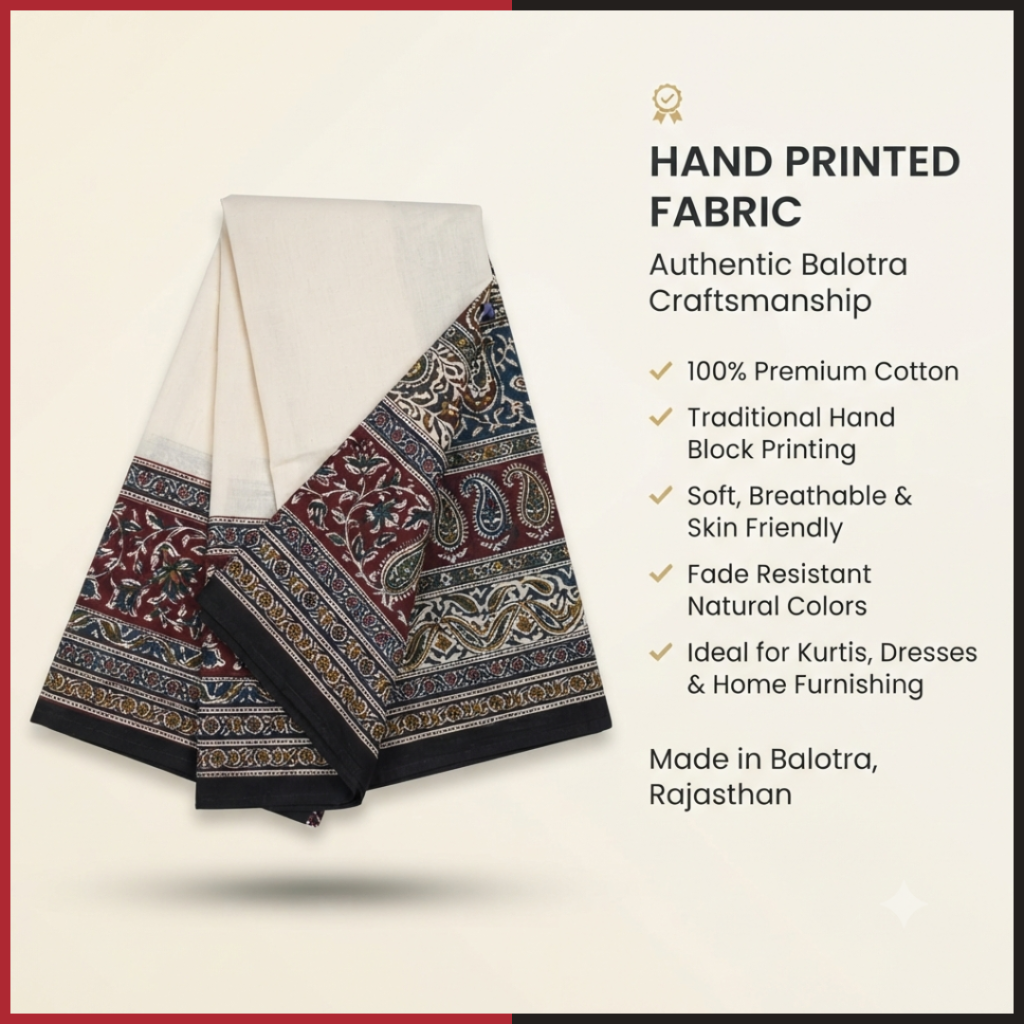
Balotra printed fabrics drive significant economic value for India’s textile sector while offering unmatched commercial advantages to retail buyers.
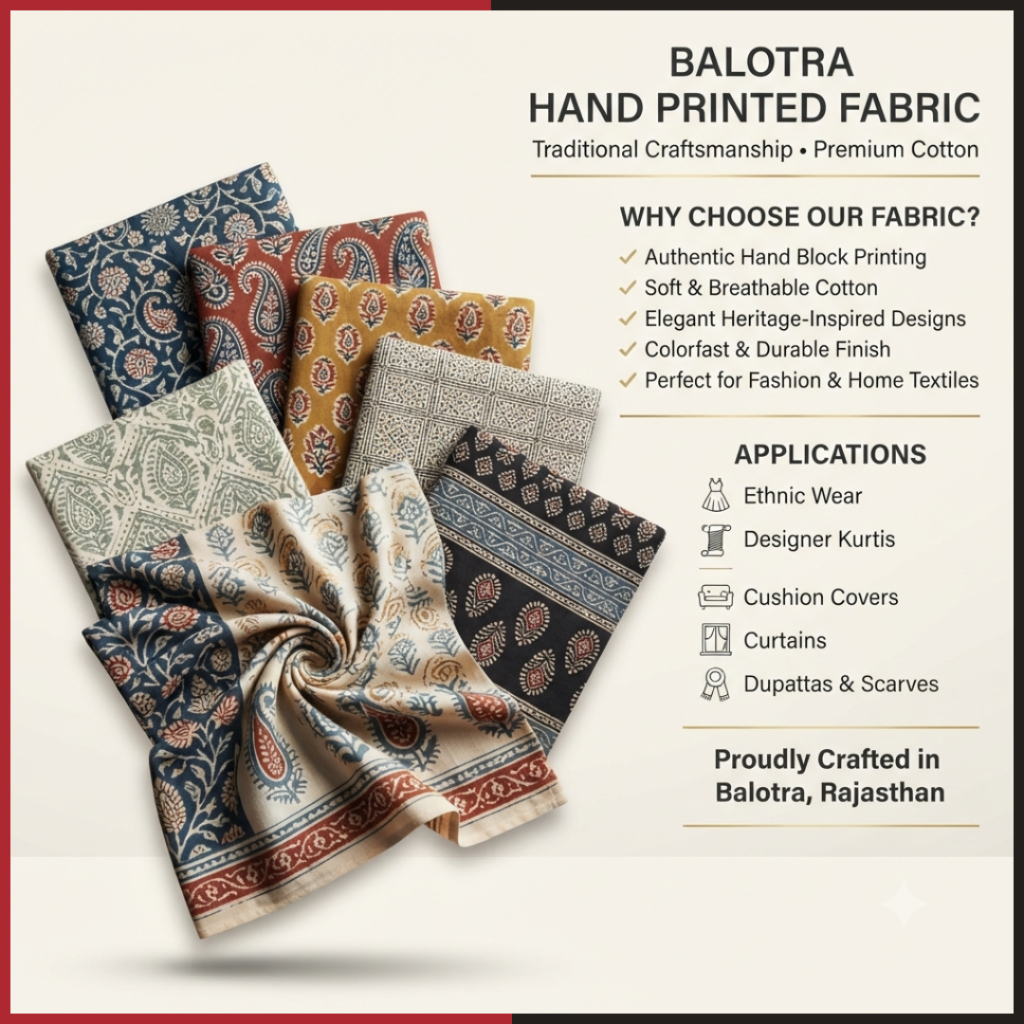
From a user and business perspective, sourcing from Balotra bridges the gap between high-fashion ethnic aesthetics and mass-market affordability. Local manufacturers provide scalable production lines capable of turning around bulk orders quickly. For the global fashion market, these textiles supply the raw material for kurtis, sarees, home decor items, and ethnic wear lines. As consumer demand for sustainable, culturally authentic clothing surges, Balotra’s blend of indigenous motifs and modern scalability anchors its crucial role in modern textile commerce.
How Does Balotra Printed Fabrics Production Work?
Step 1: Fabric Sourcing and Preparation
Raw, unbleached cloth (greige fabric) arrives in Balotra from major spinning mills. Workers wash and scour the fabric to remove sizing chemicals, impurities, and natural oils, ensuring the cloth absorbs dyes evenly.
Step 2: Dyeing and Printing Execution
Fabrics undergo base dyeing or proceed directly to printing tables and machines. Artisans or machine operators apply intricate patterns using carved wooden blocks or metal screens with specialized pigment, reactive, or discharge pastes.
Step 3: Curing, Washing, and Finishing
Printed fabrics pass through high-temperature curing chambers or sun-drying yards to fix the colors. Final washing removes excess surface dye, followed by calendering to give the fabric a smooth, professional retail finish.
Benefits of Balotra Printed Fabrics
- Exceptional Color Durability: Advanced fixing methods ensure vibrant shades resist fading through multiple washes.
- High Production Scalability: Industrial clusters enable manufacturers to fulfill large bulk orders with short lead times.
- Design Versatility: Seamlessly accommodates traditional Rajasthani motifs, Bandhani patterns, and modern geometric prints.
- Cost-Effective Sourcing: Competitive labor and processing costs make Balotra textiles highly profitable for wholesale buyers.
- Extensive Material Compatibility: Adapts smoothly to lightweight cottons, heavy cambrics, and blended fabrics alike.
Challenges and Common Mistakes
- Problem: Inconsistent color matching across different production batches.
- Cause: Variations in water mineral content or manual dye-mixing proportions.
- Solution: Establish strict Pantone color codes and partner with certified industrial processing units.
- Problem: Fabric shrinkage during the initial garment manufacturing wash.
- Cause: Lack of pre-shrinking or sanforization before printing.
- Solution: Request pre-shrunk or fully pre-washed base fabrics from your manufacturer.
- Problem: Delayed shipment timelines during peak festive seasons.
- Cause: High domestic demand overwhelming local processing units.
- Solution: Place bulk orders several months in advance and sign clear service-level agreements.
Best Practices and Expert Tips
- Verify Supplier Credentials: Work directly with manufacturers holding standard textile and environmental compliance certifications.
- Request Physical Swatches: Always approve physical handloom or printed strike-offs before launching full-scale production runs.
- Specify Fabric GSM: Clearly define the grams per square meter (GSM) to ensure the fabric weight matches your apparel design.
- Test Color Fastness: Conduct standard rub and wash fastness tests on initial samples to guarantee consumer satisfaction.
- Optimize Logistics: Partner with freight forwarders experienced in handling textile cargo shipments out of Rajasthan.
- Understand Seasonal Trends: Align your production cycles with peak Indian wedding and festive shopping seasons.
- Maintain Clear Communication: Use precise technical sheets detailing printing methods, dye types, and finishing requirements.
- Build Long-Term Partnerships: Cultivate direct relationships with Balotra mill owners to secure priority scheduling and better pricing.
Balotra Printed Fabrics vs. Other Textile Hubs
| Feature | Balotra Printed Fabrics | Sanganeri Printed Fabrics | Surat Synthetic Fabrics |
| Primary Material | Cotton, Cambric, Rayon | Pure Cotton, Silk | Polyester, Nylon, Chiffon |
| Specialty | High-volume industrial prints & block styles | Delicate hand-block floral motifs | Mass-produced synthetic sarees & dress materials |
| Production Scale | High industrial capacity | Semi-artisanal & medium scale | Massive automated industrial output |
| Cost Efficiency | High affordability for bulk orders | Moderate to high (artisan value) | Extremely high for synthetics |
Frequently Asked Questions (FAQ)
Balotra primarily processes pure cotton, cambric, rayon, and various cotton-blend fabrics. These materials absorb reactive and pigment dyes effectively, making them ideal for comfortable daily wear, ethnic apparel, and lightweight home furnishings.
While traditional artisan units utilize eco-friendly vegetable and natural dyes, modern industrial clusters in Balotra rely heavily on synthetic reactive dyes. Many manufacturers now adopt zero-liquid discharge (ZLD) plants and compliant chemical processes to minimize environmental impacts.
International buyers can source fabrics by attending major Indian textile trade expos, partnering with reliable sourcing agents in Rajasthan, or connecting directly with verified manufacturers via B2B digital export marketplaces.
Minimum Order Quantities in Balotra vary by design complexity, ranging from 500 to 1,000 meters per design for custom prints, while ready-stock wholesale fabric rolls can often be purchased in smaller quantities.
High-quality Balotra printed fabrics do not bleed color if properly washed and cured during the manufacturing process. However, inexpensive pigment prints or unwashed reactive prints may experience minor initial bleeding.
Yes, Balotra manufacturers regularly accommodate custom designs, allowing brands to supply digital artwork, CAD files, or physical reference samples for exclusive private-label collections.
Key Takeaways
- Industrial Powerhouse: Balotra is a premier hub for high-volume, cost-effective printed and dyed textiles in Rajasthan.
- Material Diversity: Specializes primarily in versatile cotton, cambric, and rayon fabrics suitable for apparel and home decor.
- Customization Ready: Capable of fulfilling bespoke private-label designs alongside extensive catalog offerings.
- Quality Control Matters: Partnering with compliant mills and conducting pre-shipment inspections ensures color durability and exact specifications.
Final Verdict
Balotra printed fabrics offer an unbeatable combination of cultural heritage, industrial scalability, and commercial value for modern retail brands and wholesalers. By understanding production workflows, maintaining strict quality controls, and partnering with verified manufacturers, businesses can unlock profitable supply chains. Whether you are launching an ethnic wear line or sourcing breathable summer textiles, incorporating Balotra fabrics into your inventory provides a definitive competitive edge in today’s fast-moving fashion market.
Conclusion
The enduring legacy of Balotra printed fabrics highlights Rajasthan’s unmatched contribution to global textile artistry. Merging traditional block-printing aesthetics with modern industrial processing power, Balotra remains an essential sourcing destination for high-quality, vibrant, and affordable fabrics. By following best sourcing practices, verifying supplier credentials, and prioritizing quality assurance, brands can successfully harness this vibrant textile ecosystem. Take the next step today by requesting physical fabric swatches from verified Balotra manufacturers to elevate your upcoming apparel or home decor collection.
| Manufacturer Name | Product Name | District Name | State Name | Contact Number | Website Link / Google Map Link |
| G.P. Dyeing | Plain Roto Fabric, Printed Roto Fabric, Cotton Poplin Fabric, Micro Polyester Fabric, Abaya Fabric | Balotra | Rajasthan | +91-8043801550 | View Google Map Link |
| Mahadev Dyeing & Printing Mills | Printed Fabric, Cotton Nighty Fabric, Printed Cotton Fabric | Balotra | Rajasthan | +91-8047763061 | View Google Map Link |
| Fashion Passion Balotra | Cotton Women Suits, Rubia Fabric, Shoes, Wrist Watches, Siffon Jari Saree | Balotra | Rajasthan | +91-8000999533 | Website Link |
| Mor Mukat Fab Tex | Cotton Fabric, Rayon Fabric, Polyester Fabric, Ladies Cotton Gown, Nighty Fabrics | Balotra | Rajasthan | +91-7014273007 | Website Link |
| Yaseen Mohammed Industries | Printed Cotton Fabric, Cotton Nighty Fabric, Dyed Cotton Poplin Fabrics, Ladies Cotton Petticoat | Balotra | Rajasthan | +91-7949324787 | View Google Map Link |
| M. Ashok Industries | Cotton Poplin Fabric, Printed Cotton Nighty Fabric, Cotton Inner Lining Cloth, Saree Petticoat Fabrics | Balotra | Rajasthan | +91-7942540296 | View Google Map Link |
| Balotra Textile | Cotton Poplin Fabric, Rayon Fabric, Ladies Cotton Printed Nighty, Petticoats | Balotra | Rajasthan | +91-8890608890 | Website Link |
Leave a Reply