
State: Assam
District: Nalbari
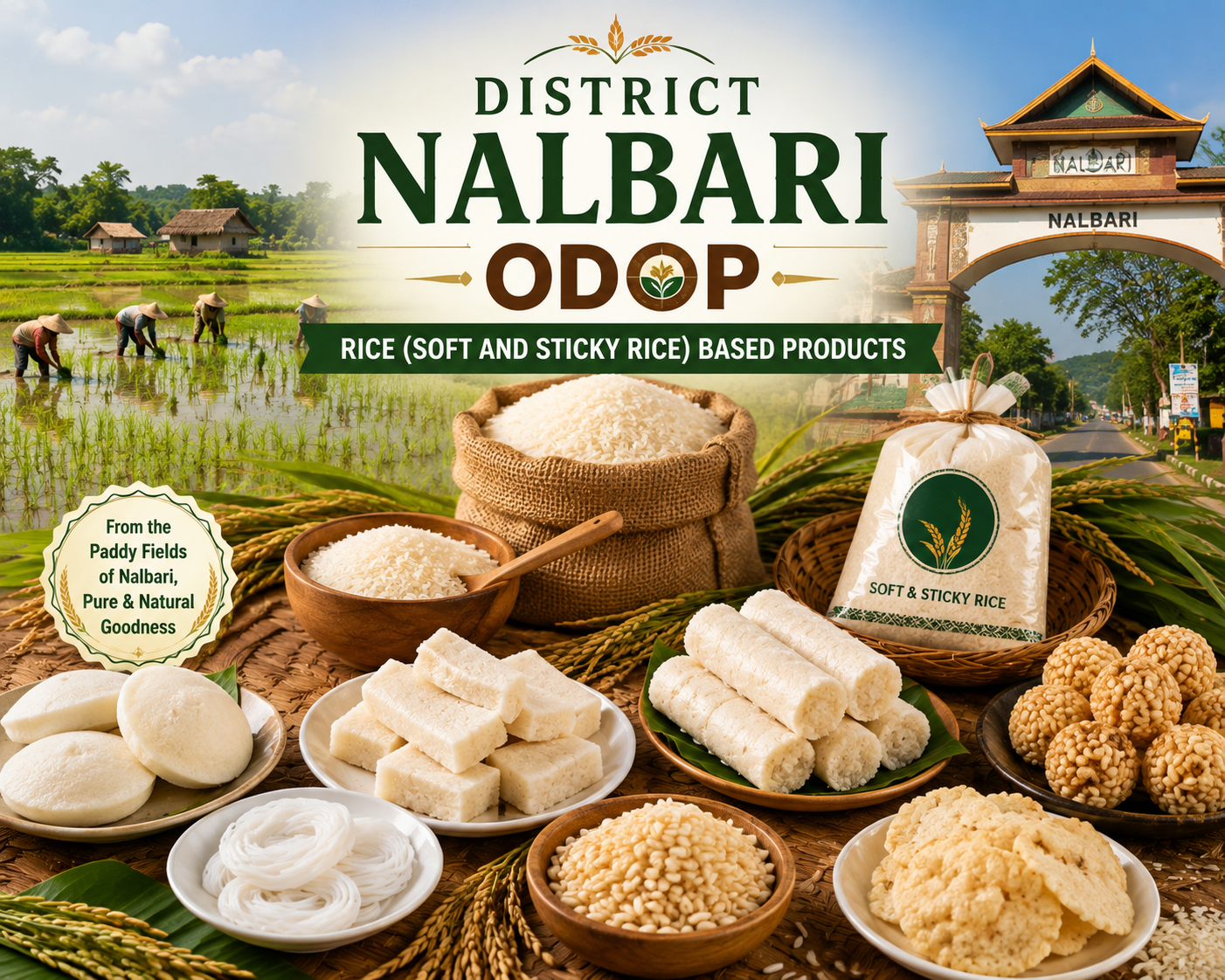
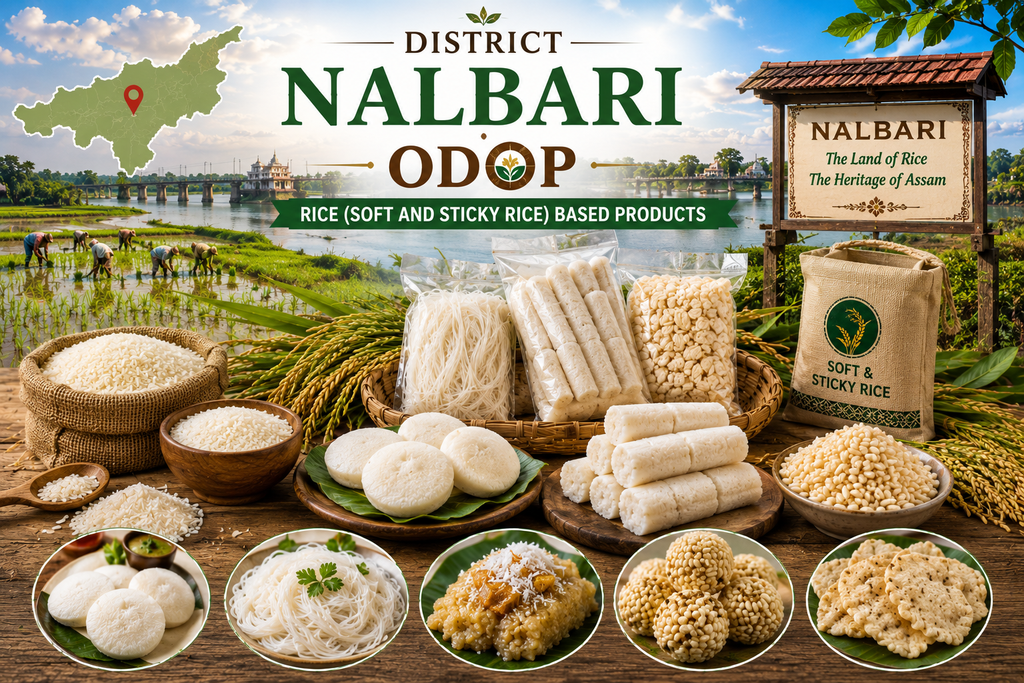
ODOP Product: Rice (Soft and Sticky Rice) Based Products
Category: Traditional Food, Rice Products & Rural Entrepreneurship
For the people of Assam, rice is more than a staple diet; it is intertwined with life, celebrations, family and traditions. Passed down generations, rice cultivation has formed an inseparable part of the state’s agricultural practices while playing a vital role in food preparations.
In Nalbari, the relationship between rice, agriculture and food is particularly notable, as the district exhibits a rich cultural history linked closely to this crop. Local food traditions reflect the versatility of rice and the uniqueness of local agriculture, as they feature a variety of rice types, including different kinds of ‘soft and sticky rice’.
Under the One District One Product (ODOP) scheme, Nalbari is linked to traditional products made from ‘rice (soft and sticky rice)’. This category particularly includes Pitha, puffed and flaked rice, as well as other local specialties made from this staple grain.
While simple at first glance, these food items represent centuries of local agricultural traditions and culinary heritage.
Rice as the Heart of Assamese Cuisine
In Assamese homes, rice holds a special place. It is a staple diet component and a beloved item of comfort food for people of all ages. Different varieties of rice are used for preparing a variety of dishes. Some are used for their aroma, others – for texture, while certain types are specifically selected for their sticky consistency.
Traditional agricultural practices in Assam featured extensive cultivation of rice. Local farmers used to grow several types of rice, including Bora, a sticky rice variety, and Boka or Komal rice, a type of soft rice. According to agricultural literature, Bora is a sticky rice usually used for making rice cakes or Pitha, while Komal rice is soft and can potentially be eaten raw when properly soaked. Local cuisine features a number of dishes made from sticky and soft rice varieties, including festive Pitha, as well as more everyday snacks and desserts made from puffed and flaked rice.
The Tradition of Soft Rice That Tastes Best Soaked
A particularly notable variety of traditionally cultivated rice in Assam is Komal Saul, or soft rice. Unlike other types of rice, which usually require extensive preparation before eating, soft rice can be used in a variety of simpler preparations. Traditionally, it is soaked and then eaten with milk, curd, cream, banana and jaggery.
This staple food item is a perfect example of the resourcefulness of Assamese people. In times of scarcity, farmers used their agricultural expertise to grow rice varieties that did not need to be boiled before eating. Instead, they were used as an ingredient in numerous local dishes or even eaten on their own with various additions. Today, a simple dish of soaked soft rice with milk and jaggery is a beloved comfort food staple for many people.
As Komal Saul was extensively cultivated in Assam, it has become an essential part of the local culinary traditions. Its unique preparation methods have since been passed down from generation to generation. The versatility of this rice variety has also played a major role in the creation of numerous traditional delicacies.
Sticky Rice Known as Bora Saul
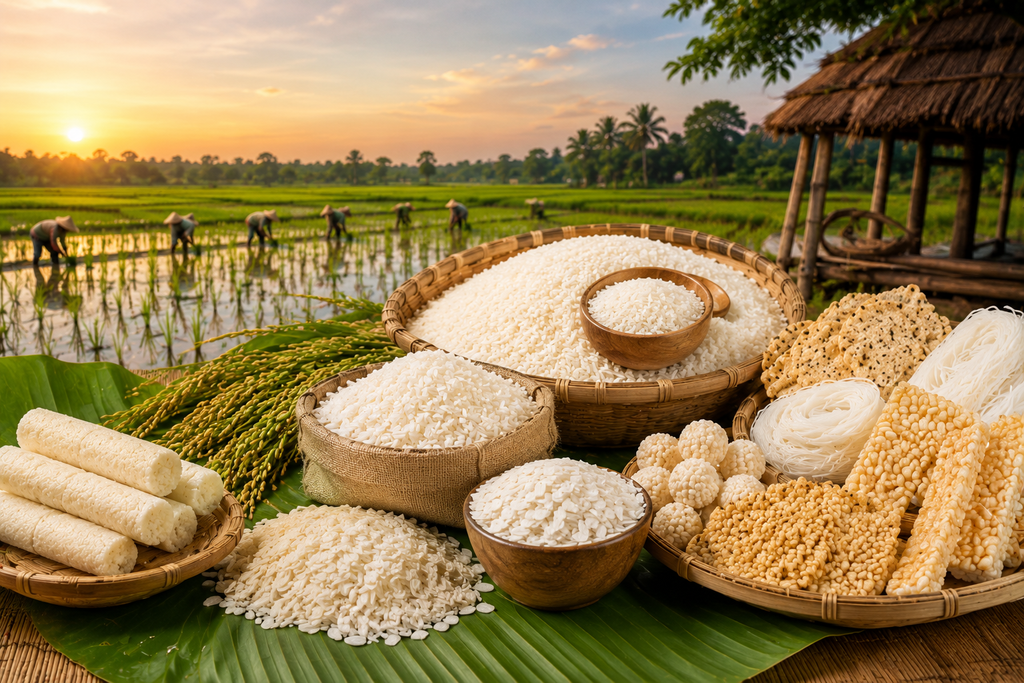
Another traditional rice variety that has been widely cultivated in Assam is Bora Saul or sticky rice. Bora Saul is a staple food in Assamese homes, as it can be prepared in a variety of ways. Sticky rice is particularly popular in Assam for its unique texture and flavor, as well as the wide range of dishes it can be used for. One of the most popular preparations featuring sticky rice is Pitha.
Pitha is a traditional Assamese sweet often prepared during festive holidays and family celebrations. Assam Tourism lists Pitha among the local specialties of Assam, describing it as a popular traditional delicacy made from sticky rice. Sticky rice is also used in a number of other traditional Assamese dishes.
Pitha: The Soul of Assamese Culinary Traditions
If there is one dish that perfectly encapsulates the spirit of Assamese culinary traditions and the role of rice in this regional cuisine, it is Pitha. This beloved delicacy is traditionally prepared using different types of rice, including Bora Saul, Komal Saul and Boka. The versatility of this dish knows no bounds: there are dozens of regional varieties of Pitha, such as Til Pitha, Ghila Pitha, Narikol Pitha, Sunga Pitha and many others. Assam Tourism notes that Pitha is an indispensable part of Assamese festivals, including the local Bihu festival and weddings.
Most traditional recipes for Pitha are relatively simple: they only include rice, jaggery, sesame seeds, coconut and other locally available ingredients. At the same time, making Pitha is a time-consuming process that requires extensive experience. In many families, children used to learn the art of making Pitha from their elders. There was no need to write down detailed recipes – the knowledge of preparing this beloved delicacy was passed from generation to generation.
Jolpaan: Traditional Breakfast Staple
Another beloved breakfast staple in Assam is Jolpaan. Local cuisine features a variety of traditional dishes that can be described as breakfast items, including Chira, Muri, Bora Saul, Kumol Saul, Pithaguri and many others. These dishes are traditionally prepared using local ingredients, such as milk, curd, cream, jaggery and local bananas, and can be eaten either as a snack or a full meal. According to Assam Tourism, Jolpaan is a beloved part of Assamese festivals and special events. It plays an important part in the culture and traditions of Assam.
Jolpaan is a perfect example of the unique traditional Assamese cuisine. Many dishes in this category do not actually require any special preparation: a simple combination of local ingredients, such as rice flakes and curd, can be transformed into a full breakfast. In a similar fashion, puffed rice can be used as a simple snack, while soft rice can be soaked and mixed with milk, jaggery or other additions. This staple breakfast item is very popular among the locals for its accessibility and versatility.
Muri and Chira: Traditional Snacks Turned into Business Opportunities
Among the large variety of traditional Assamese breakfast foods, Muri and Chira – also known as puffed and flattened rice – are two of the most popular. Both of these traditional items can be used in a variety of dishes. Muri and Chira can be eaten with milk, curd, jaggery, bananas or used as a stuffing for savory dishes. Due to their light texture and unique flavor, these breakfast cereals are often paired with a variety of sweet and savory additions.
In the past, they were mostly prepared using traditional methods and local tools, such as a dheki, a traditional pounding tool. However, with the emergence of mechanized alternatives, Muri and Chira became widely available beyond the local markets. Today, they are staple food items for millions of people. Still, the traditional method of preparation using a dheki is an important part of local agriculture and food culture in Assam. While mechanization has made it possible to make Muri and Chira in record-breaking quantities, the unique story of these staple foods remains an important part of local agricultural heritage.
Why Soft and Sticky Rice Is Perfect for Nalbari
The inclusion of puffed, flaked and sticky rice in the ODOP list presents a valuable opportunity for local agricultural enterprises, as these staple foods are in great demand among the local population. Moreover, there are numerous local food traditions that include these ingredients, making it possible to develop a wide range of traditional delicacies. In addition, the creation and promotion of local brands that specialize in the production of local products offer significant opportunities for local women entrepreneurs. Traditional food products made from locally available rice varieties can be developed, produced, promoted and sold both locally and beyond the district.
Products made from local puffed, flaked and sticky rice that could potentially be developed in Nalbari:
Traditional Pitha
Puffed rice (Muri)
Flaked rice (Chira)
Traditional breakfast items made from flaked rice
Sticky rice desserts and products
Rice flour
Pitha-making mixes
Traditional rice-based snacks
Jaggery-based sweets
Festival delicacies gift sets
Strengthening Local Agricultural Practices
The development of local businesses that specialize in the production of rice-based goods is also beneficial for local farmers. Traditional rice cultivation is an important part of local agriculture that has existed for centuries. However, it requires a significant amount of effort and time. At the same time, the profit from local rice sales is often relatively modest. Processing local rice into a variety of food items, such as rice flour, Pitha, Muri, Chira and others is an excellent way to support local farms. This way, local agricultural producers can secure a steady source of income while promoting local brands and food traditions.
Opportunities for Women and Small-Scale Businesses
Traditional rice-based foods have an immense potential for the development of local women entrepreneurship. For starters, the creation and promotion of local brands that specialize in the production of traditional food items, such as Pitha, Muri, Chira or rice snacks is a great opportunity. In addition, small-scale businesses could be developed that specialize in the production and sale of traditional delicacies that use locally produced rice. Even small home-based initiatives could potentially yield substantial dividends in the local market. With proper training in the field of food safety and business practices, a women’s self-help group could potentially develop an enterprise that would specialize in the production of traditional Pitha for local festivals, markets and restaurants.
Similarly, small local businesses could be created that would specialize in the production of hygienically packed Muri, Chira, rice flour and other staples. Another opportunity is the development of local brands that specialize in the production of traditional rice-based sweets and snacks. There is also an opportunity to create products that feature local specialties, such as traditional Pitha, Muri, Chira or rice-based desserts in festive gift sets. For local buyers, such sets would represent a unique opportunity to experience local food culture. For local producers, this would mean additional revenues.
Local tourism could also play a vital role in promoting the local food heritage in Nalbari, as visitors are usually interested in discovering local specialties. Local food could become an essential part of the local tourism industry.
Preserving Local Food Traditions
While local rice production and product diversification present numerous economic opportunities, it is crucial to keep in mind the cultural significance of local food traditions. As society undergoes rapid modernization, traditional food items and their preparation methods are gradually being forgotten. It is vital to preserve the knowledge of traditional food preparation methods, as well as the unique flavors and aromas. One way to achieve this is through local culinary traditions. If traditional rice-based items, such as Pitha, Muri, Chira or soft and sticky rice desserts are to continue to be produced and consumed, they must receive proper attention and support. Thus, the revival and commercialization of local food products and methods is an important step towards preserving the unique food culture of Assam.
Modern food production methods and the growing popularity of processed and ready-to-eat foods have changed the way people eat. Many staple foods that used to be produced at home are no longer as popular as they used to be. Even though many traditional food items are still widely consumed, their preparation and consumption methods are constantly changing. Today, many young people are unfamiliar with local food traditions and the methods of traditional cooking. Therefore, it is vital to ensure that traditional food products and their preparation methods are preserved, passed down and shared. One way to do this is by creating and promoting local brands that specialize in the production of traditional food items.
The commercialization of local products is an opportunity not only to promote local specialties but also to preserve food traditions and ensure sustainability. Local producers could create traditional products, such as Pitha, Muri, Chira or rice-based sweets, using traditional methods. However, they could also be modified in accordance with the modern consumer preferences, such as enhanced food safety and convenience. Thus, traditional food products would retain their unique flavors and aromas while also becoming more accessible, convenient and popular. This way, traditional food products and local culinary traditions could continue to be an important part of modern society.
Traditional Products as Unique Gifts
Traditional food products and specialties can also serve another useful function – they have the potential to be unique gifts. Local specialties, such as Pitha, can be presented in special packaging that also showcases the local food culture. Such items would be perfect gifts for family and friends, particularly during local festivals and celebrations, such as Bihu. In addition, specialty gift sets featuring local products, such as Muri and Chira, could also be developed. Local food specialties are also an opportunity to provide the local population with unique gifts, such as traditional Pitha-based delicacies.
Local food specialties have the potential to be both delicious gifts and a means to promote traditional food culture.
Tourism-Related Opportunities
The rich local food traditions of Assam present an opportunity for local businesses to promote local products. Traditional foods are usually highly appreciated by tourists, who want to experience and support local culinary culture and traditions. A local restaurant could be created that would specialize in the preparation of traditional Pitha and other local dishes. Local markets could also be utilized by local producers who want to present traditional foods. In addition, local tourism is also an opportunity for local product developers to introduce their items to a greater audience and sell them both locally and outside the region.
Developing the Local Brand
In order for traditional products to become popular, they need to be well-promoted and recognized. Thus, the local product and brand development will be an essential part of the proposed project. Local products, such as rice flour, Pitha, Muri, Chira, local sweet delicacies, can be packaged in eye-catching wrapping. The brand could highlight traditional Assamese breakfast foods, such as Jolpaan and its many regional variations. The key message of the brand could be something along the lines of traditional rice products from Nalbari, Assam. This way, the brand would be able to attract customers who appreciate traditional food and its unique cultural significance.
In order for the brand to become memorable and recognizable, it must be distinctive, appealing and trustworthy. The brand image should convey the value of traditional food and its importance to local food culture, as well as the quality and uniqueness of the offered products. Thus, an effective concept for a local brand is essential in order to ensure consumer trust and loyalty. A properly developed brand will also be vital in differentiating local products from similar goods offered by competitors.
The Future of Traditional Food in Nalbari
Traditional food products and their production methods can become valuable assets for local markets and agricultural producers. While being deeply rooted in local culture and traditions, local specialties can also be adapted to the modern consumer demands, offering convenience and unique flavors. Local breakfast items, such as Muri or Chira, can be further developed, producing healthy and easy-to-prepare meals. Pitha can also become part of local festivals, serving as unique festive treats. Soft and sticky rice varieties can also be utilized in a variety of local recipes. Thus, traditional food culture has great potential to be further developed and promoted in Nalbari.
Traditional products from Nalbari: from local agricultural heritage to modern business opportunities.