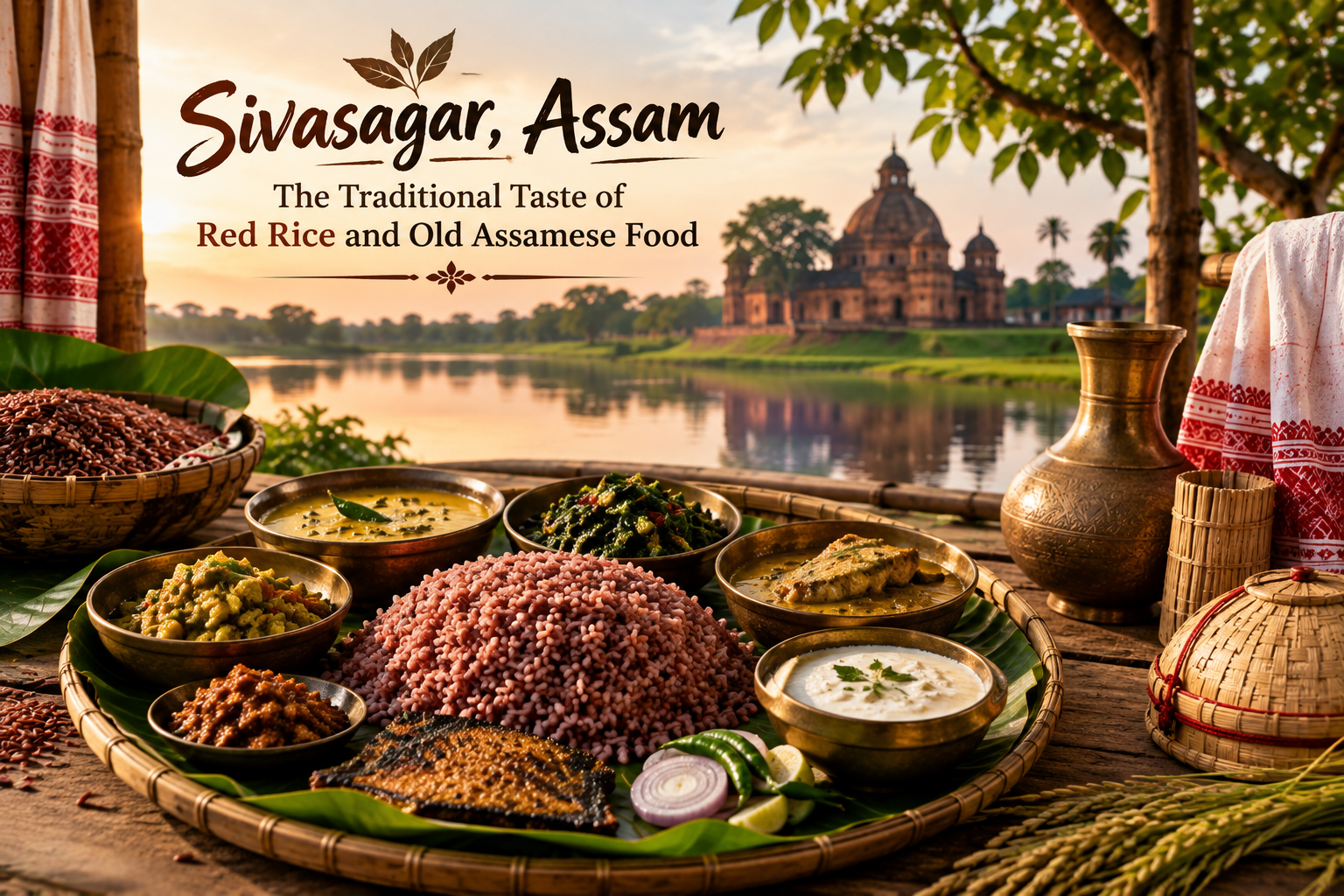

State: Assam
District: Sivasagar
ODOP Product: Rice (Red Rice) Based Products Category: Traditional Food, Rice Products & Rural Entrepreneurship
Food has a unique characteristic that reflects the background of the country or village, where it is made. It can narrate the history of the place, the people living there, the climate, the food culture, and the family values.
For Assam, rice is a complete saga that connects generations, living together in the same region, sharing air, soil, rivers, and agriculture practices, and developing traditions and customs around rice cultivation and its daily use.
Rice, especially red one, has a special significance in Sivasagar – one of the historically and culturally rich districts of Assam. For that district, rice is a part of agriculture development, a significant part of festivals, traditional recipes, and everyday food culture that has been existing for generations.
Sivasagar’s Red Rice: A Historical Overview
Sivasagar is a district characterized by agricultural fertility, water resources, and rural habitation. The region has a long history of rice farming dating back to many generations.
Rice cultivation used to be a lifestyle for many people in Sivasagar – they worked in the fields, and they ate the rice that they grew. Their habits, values, and beliefs were formed around the crop, the agriculture, and the food that they consumed the most.
Sivasagar’s red rice fits into this concept perfectly well as it is a traditional variety of rice with a distinct red color.
It also represents the local agriculture and food culture that has been developed by Sivasagar people over generations.
Compared to the polished white rice, red rice has a unique appearance and was used in traditional Assamese culture as well as a variety of local recipes that included rice, such as Pitha, Jolpaan, etc.
Moreover, local people used to grow several types of traditional rice, including red one, and consumed them as a staple diet.
Red rice has a unique feature among the traditional varieties of being transformed into several types of value-added products.
This product fits well into the concept of traditional Assamese food. It is important to keep in mind that Assamese food culture is based on local agricultural production.
Many traditional Assamese recipes are usually composed of rice and seasonal vegetables, dal, fish (fresh or preserved), and leafy vegetables that are used in the local diet.
The preparation process is relatively simple, and the ingredients are fresh and seasonal.
Therefore, when considering the concept and unique characteristics of traditional Assamese food, one should remember that rice is at the center of every meal.
Moreover, in many cases, it is the basic ingredient of Assamese recipes with the secondary ones complementing it.
For instance, Pitha is one of the traditional Assamese foods that has been a beloved snack of Assamese people for generations.
It is a dish prepared for Bihu and other festivals, which is cooked from rice (either white or red one), rice flour, and various other ingredients, such as sesame, coconut, and jaggery.
Pitha used to be a dish that was cooked and shared among generations due to the fact that older household members knew the recipes, while younger ones were able to learn them and pass further.
There existed a unique culture of preparing this dish, and the memories that people used to create while preparing it with close ones were priceless.
Furthermore, the traditional Assamese food culture used to incorporate a variety of rice-based products. They were mostly consumed by rural populations whose diet included cereals, dairy products, vegetables, and fish.
In addition to being a staple diet, rice was used to prepare a variety of traditional Assamese snacks and was included in the daily meals.
However, in the modern time, the traditional Assamese cuisine has undergone several changes due to a rapid urbanization, modernization, and globalization processes, which resulted in the emergence of new food products, both local and international.
Despite that, traditional Assamese food still has a great significance for the people of Assam. Its unique characteristics and qualities, the use of local ingredients, the principles of healthy and balanced nutrition, and the unique preparation methods can be beneficial for the local economy and even the global market.
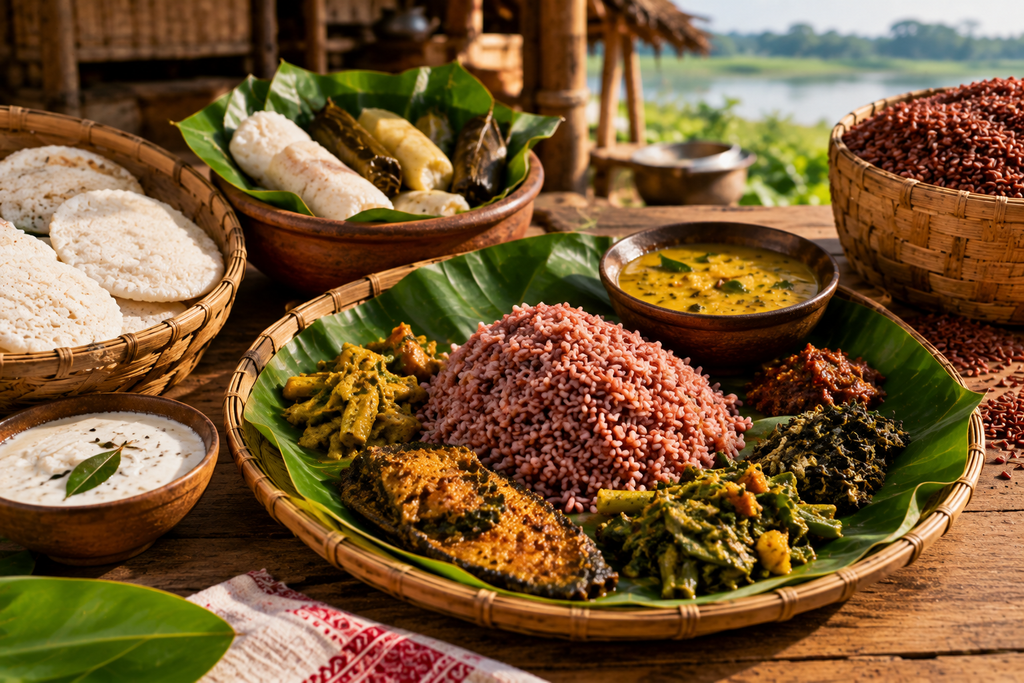
Red Rice: An Opportunity for Development
The above-mentioned characteristics of traditional Assamese cuisine, rice-based products, and red rice in particular, suggest that there is a great potential in developing and promoting this product on a greater scale. First of all, it is necessary to introduce the Sivasagar red rice into a wider range of buyers.
Local producers can offer a variety of red rice-based products.
For instance, local farmers can sell traditional red rice, and local business men can develop value-added products, such as red rice flour, red rice-based snacks, traditional Pithas, breakfast items (chira, muri), red rice flakes, etc.
Moreover, the local business men can develop ready-to-cook traditional recipes with rice, as well as red rice-based traditional sweets, traditional rice snack combinations, and gift sets with red rice products.
It is also possible to develop a variety of modern-looking, healthy, and convenient rice-based snacks and products for local and global marketplaces.
However, it is essential to keep in mind that these products should still be based on traditional Assamese food culture and rice recipes.
When developing value-added products it is important to keep their traditional identity in mind.
A modern customer would still be able to identify a traditional Assamese dish by its conventional appearance.
At the same time, a carefully selected packaging, as well as the introduction of new, healthy, and convenient rice-based products, can bring more value to the local producers and promote their goods on a greater scale.
Benefits That Sivasagar Red Rice Can Bring
The traditional Assamese cuisine has been developed based on locally available resources and agricultural products. As a result, the local residents used to consume a diet that consisted of vegetables, rice, fish, and dairy products.
Moreover, many traditional Assamese recipes, including Pitha, Jolpaan, etc., were mostly made of rice and other locally available ingredients. This suggests that the development of local products, such as red rice-based snacks, can have a significant impact on the local economy.
First of all, local rice producers can sell their harvest and rice-based products (rice flour, flakes, etc.). In addition, they can also develop a variety of value-added products and sell them on local markets, as well as promote them on a global scale.
However, in order to be able to do that, they would require processing and packaging equipment.
It is also possible to develop and implement marketing strategies aimed at promoting local red rice recipes and products in local social media networks, as well as nationwide and worldwide.
All of that would create job opportunities for local residents, such as working in processing units, manufacturing, packaging, storage, transport, retail, and more.
Another benefit that Sivasagar’s red rice can bring is the possibility to generate additional income for local farmers.
As it was mentioned above, traditional Assamese food used to be largely dependent on local agricultural products.
At the same time, it is only the farmers who play the key role in the whole process, while other parts of the supply chain, such as processing, packaging, retail, and more, benefit from their work.
In addition, many local women and small-scale entrepreneurs can participate in the development of traditional recipes-based products, such as Pitha, rice-based snacks, and various rice-based dishes and meals. Local women-led self-help groups and farmer groups can participate in developing and promoting local products.
This can serve as an additional opportunity as it will not only help generate additional income for them but also preserve the traditional food culture and pass it to the next generations. This is especially important because many traditional Assamese recipes used to be handed down from generation to generation.
However, in the modern time, there is a risk that they will be lost since there are fewer and fewer people who know about them or care to learn.
The development and promotion of red rice-based snacks, traditional dishes, and other products can help ensure that traditional recipes and food culture are preserved.
Moreover, it will also allow local producers to gain more profit due to the fact that local women self-help groups and small-scale entrepreneurs will participate in the production process.
Preserving the Traditional Assamese Food Culture
At present, food culture and cuisine are changing dramatically under the influence of a rapid modernization and globalization processes. Due to that, traditional foods and recipes that used to be consumed by several generations are increasingly being replaced by instant and healthy meals offered by the global fast food market.
However, that does not mean that traditional cuisine should be completely abandoned. Instead, it should be modernized in order to meet the requirements of the contemporary consumers.
The traditional Assamese cuisine can be preserved and promoted in multiple ways.
First of all, local farmers and entrepreneurs can develop and promote traditional recipes using local agricultural products and ingredients.
For instance, local red rice farmers can introduce a variety of traditional and non-traditional rice-based snacks, such as rice flakes, rice flour, red rice-based traditional sweets, and many more.
In addition, traditional recipes-based ready-to-cook meals, such as Pitha, can be packed in convenient food packaging. Moreover, products like red rice can be placed in special gift sets along with the traditional Assamese sweets and other traditional foods.
This will not only help promote local products in local markets but also increase their competitiveness in the global marketplace.
As mentioned above, the development and promotion of local products can benefit both local producers and consumers. In particular, it will improve the overall quality of the local food culture, as well as increase the availability of fresh, healthy, and nutritious local foods.
However, in order to do that, the local food producers and marketers should keep in mind the importance of preserving the traditional food culture.
The Rich Cultural Heritage of Sivasagar
The cultural and historical significance of Sivasagar can bring many benefits to the local economy and promote the products developed there, such as red rice. The rich cultural history of Sivasagar has allowed it to become one of the most visited destinations in Assam.
At present, numerous tourists are visiting this district in order to admire its architectural legacy as well as its ancient temples and monuments.
In addition to that, these travelers also tend to look for local products and souvenirs to buy and take home with them. A product like red rice, well packaged in attractive packing with the name of Sivasagar, Assam on it, can represent the local culture and historical legacy of this district.
Not only that, but it can also serve as a reminder of the traveler’s visit to Sivasagar.
Local markets and ODOP stores sell a variety of local hand-crafted souvenirs and local specialty foods and products. These goods can be great promotional materials for Sivasagar’s products, such as red rice-based snack combinations and traditional dishes. This will allow local businesses to both promote their goods on a larger scale and diversify their sales.
In addition, in order to do that, local producers and marketers should also look for opportunities to market and sell their products to other local markets and business owners.
Moreover, the modern technology and social media offer numerous opportunities in that regard, such as presenting the local products and food culture of Sivasagar to the world through them.
For instance, a short video of the local rice producers, farmers, and cooks can show the beauty of the Sivasagar landscape as well as the hard work of local farmers and rice producers. This will not only attract more attention to the local products, such as red rice, but it will also allow more people to become familiar with the local food culture and traditions.
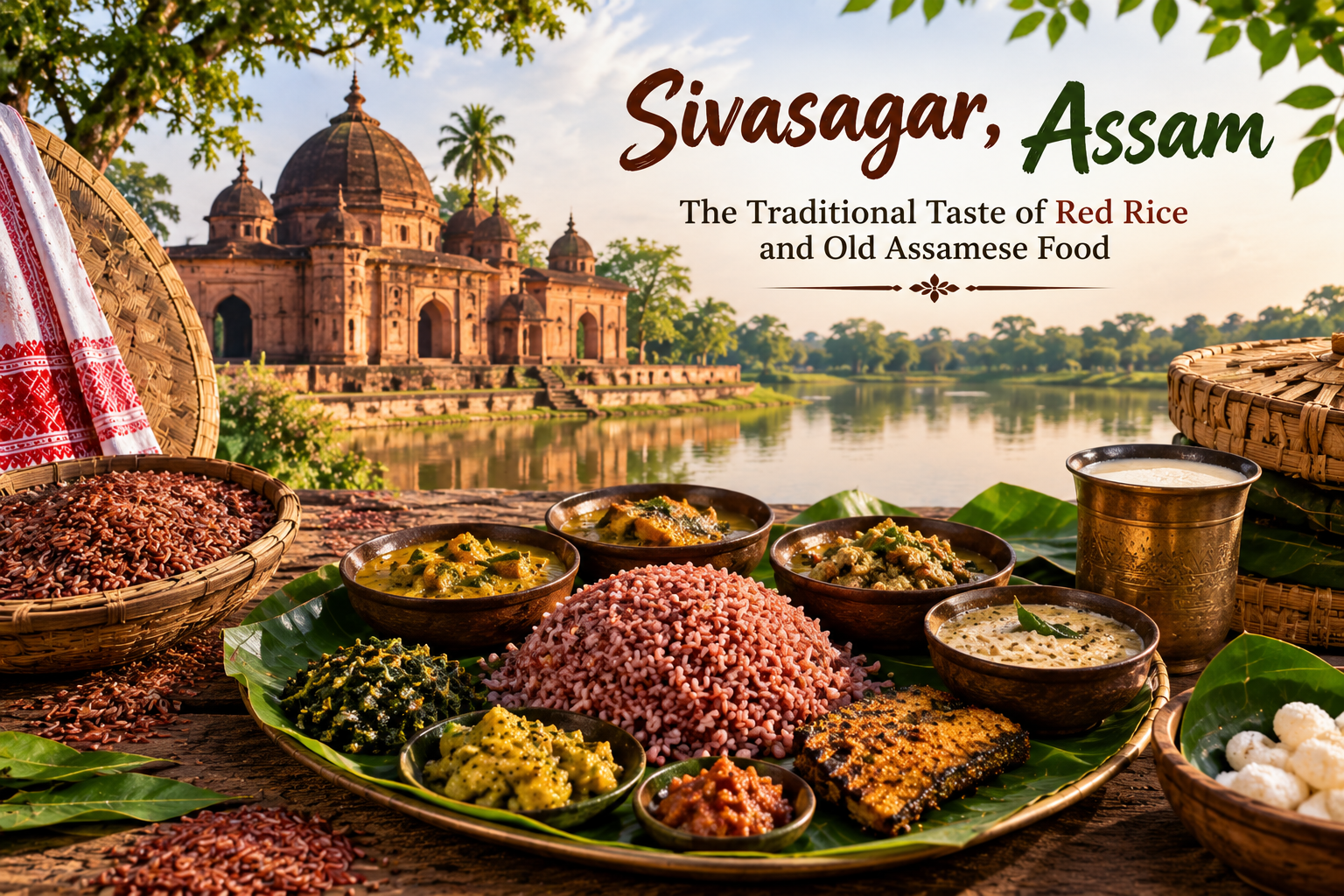
Sivasagar: A Promising Place for Further Developments
When developing and promoting local products like Sivasagar’s red rice, it is essential to consider their characteristics, unique features, and benefits. It is also important to pay attention to the promotion and marketing of local products.
In particular, local business owners should invest more effort and resources into creating attractive packaging that will help promote their local product. Moreover, they should invest more to develop their brand image.
An authentic local brand that promotes the unique characteristics of red rice and its traditional recipes that have been handed down from generation to generation will help the local producers gain a competitive advantage over their rivals.
In addition, it is essential to provide accurate descriptions and information regarding the local product (in this case, red rice). A careful selection of wording and the inclusion of certain keywords can help the local producers reach out to the exact audience that is interested in their product.
It can be said that the development and promotion of local products, such as Sivasagar’s red rice, require the joint efforts of local farmers and business men. Together with local women entrepreneurs, they can develop a variety of traditional rice-based snacks, ready-to-eat traditional meals, such as Pithas, and much more. All that combined will not only promote local products but also help preserve the traditional food culture of Assam.
Moreover, the development of traditional food products in Sivasagar can also have an effect on the national and international markets. Local producers can sell their local products in local markets, as well as national and international ones. Local business men can also develop and sell local products related to Sivasagar’s food culture and traditional Assamese cuisine and promote them on social media.
In conclusion, it can be said that Sivasagar’s red rice products can play a significant role in the future development of the local economy as well as the national and international markets.
The red rice is not only one of the district’s products, but it also represents Sivasagar’s rich cultural and historical heritage. From Sivasagar’s traditional Pithas and Jolpaan to local farmers that have been growing it for generations – red rice has been a part of the everyday food culture and economy for centuries.
Its future looks promising as it can both benefit the local economy and preserve the local cultural heritage.