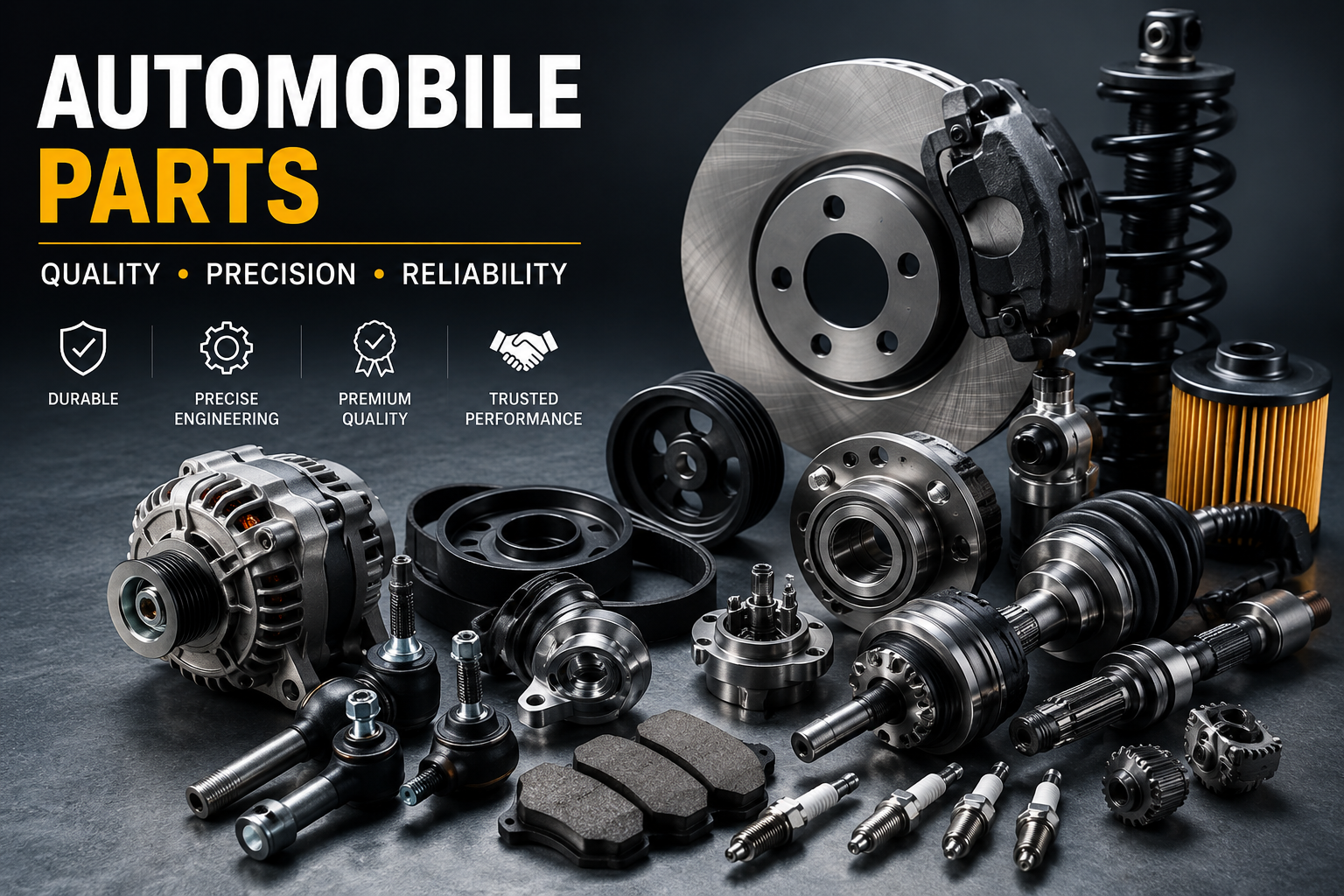
The automotive industry depends on a reliable supply of high-quality components to ensure vehicle performance, safety, and durability. Automobile parts manufacturing in Panchkula has emerged as an important contributor to this ecosystem due to its strategic location, skilled workforce, and proximity to major industrial hubs in North India. Manufacturers in the region produce precision-engineered parts for passenger vehicles, commercial vehicles, tractors, and industrial machinery.
Whether you are an automobile manufacturer, supplier, distributor, or entrepreneur, understanding how automobile parts manufacturing works can help you make informed sourcing and business decisions. This guide explains the manufacturing process, benefits, challenges, industry trends, best practices, and frequently asked questions.

What Is Automobile Parts Manufacturing?
Quick Definition
Automobile parts manufacturing is the industrial process of designing, engineering, machining, molding, assembling, and testing components used in automobiles. These components include engine parts, suspension systems, braking systems, transmission components, electrical parts, and body components that meet strict quality and safety standards.
Detailed Explanation
Automobile parts manufacturing combines engineering expertise with advanced production technologies to create durable and precise vehicle components. Manufacturers use materials such as steel, aluminum, cast iron, plastics, rubber, and composites to produce thousands of different parts.
In Panchkula, manufacturers cater to Original Equipment Manufacturers (OEMs), aftermarket suppliers, agricultural equipment companies, and industrial machinery manufacturers. Many facilities follow internationally recognized quality systems such as ISO 9001 and IATF 16949 to ensure consistent product quality.
Key Components of Automobile Parts Manufacturing
- Product design and engineering
- Raw material selection
- Precision machining
- Sheet metal fabrication
- Casting and forging
- Plastic injection molding
- Surface treatment and coating
- Assembly operations
- Quality inspection
- Packaging and logistics
Why Is Automobile Parts Manufacturing in Panchkula Important?
Direct Answer
Automobile parts manufacturing in Panchkula supports India’s growing automotive industry by producing reliable, high-quality components for OEMs and aftermarket businesses. It contributes to employment, industrial development, exports, supply chain efficiency, and technological innovation while supporting regional economic growth.
Detailed Explanation
Panchkula enjoys several advantages that make it attractive for automotive manufacturing.
Strategic Location
Located near Chandigarh and connected to Haryana’s industrial belt, Panchkula offers excellent transportation and logistics infrastructure.
Skilled Workforce
Engineering graduates, technicians, and experienced machinists support modern manufacturing operations.
Growing Industrial Ecosystem
The region benefits from nearby automotive clusters in Haryana and Punjab, making collaboration easier.
Supply Chain Efficiency
Easy access to steel suppliers, plastic manufacturers, logistics providers, and machine tool vendors reduces production delays.
How Does Automobile Parts Manufacturing Work?
Direct Answer
Automobile parts manufacturing follows a structured process that includes product design, material selection, production, quality inspection, assembly, and final delivery. Every stage focuses on maintaining precision, durability, and compliance with automotive industry standards.
Step 1: Product Design
Engineers prepare CAD models, technical drawings, and manufacturing specifications.
Example:
A suspension bracket is designed using CAD software before production begins.
Step 2: Material Selection
The correct material is selected based on strength, corrosion resistance, weight, and durability.
Common materials include:
- Carbon steel
- Stainless steel
- Aluminum alloys
- Engineering plastics
- Rubber compounds
Step 3: Manufacturing Process
Depending on the product, manufacturers use processes such as:
- CNC machining
- Forging
- Casting
- Injection molding
- Welding
- Stamping
- Laser cutting
Step 4: Quality Inspection
Each component undergoes rigorous testing using:
- Coordinate Measuring Machines (CMM)
- Hardness testing
- Dimensional inspection
- Surface finish testing
- Performance testing
Step 5: Assembly
Multiple components are assembled into finished automotive systems.
Example:
Brake assemblies combine discs, calipers, bolts, and mounting brackets.
Step 6: Packaging and Delivery
Products are packed carefully to prevent damage during transportation and shipped to OEMs or distributors.

Benefits of Automobile Parts Manufacturing
Direct Answer
High-quality automobile parts manufacturing improves vehicle safety, reduces maintenance costs, supports industrial growth, enhances production efficiency, and enables manufacturers to meet global automotive standards.
Major Benefits
1. High Product Quality
Manufacturers use precision machinery to ensure dimensional accuracy.
Outcome: Better vehicle reliability.
2. Improved Safety
Critical parts undergo extensive testing.
Outcome: Reduced risk of component failure.
3. Cost Efficiency
Modern manufacturing minimizes material waste.
Outcome: Lower production costs.
4. Faster Production
Automation improves manufacturing speed.
Outcome: Shorter lead times.
5. Better Durability
Premium materials increase component lifespan.
Outcome: Reduced maintenance expenses.
6. Supports OEM Requirements
Manufacturers comply with strict automotive standards.
Outcome: Consistent product quality.
7. Export Opportunities
Globally certified manufacturers can supply international markets.
Outcome: Increased business growth.
8. Innovation
Investment in robotics, automation, and digital manufacturing enhances productivity.
Outcome: Higher competitiveness.
Challenges and Common Mistakes
| Problem | Cause | Solution |
|---|---|---|
| Poor product quality | Low-grade materials | Use certified raw materials |
| Production delays | Weak planning | Improve production scheduling |
| High rejection rate | Inadequate quality control | Implement rigorous inspection |
| Increased costs | Material wastage | Optimize manufacturing processes |
| Equipment downtime | Poor maintenance | Follow preventive maintenance schedules |
| Customer complaints | Lack of testing | Perform comprehensive product validation |
Best Practices and Expert Tips
- Use certified raw materials from trusted suppliers.
- Adopt CNC and automated production technologies.
- Follow ISO 9001 and IATF 16949 quality systems.
- Conduct regular machine calibration.
- Train employees on modern manufacturing practices.
- Implement preventive maintenance programs.
- Use digital quality inspection tools.
- Monitor production using real-time data.
- Maintain strong supplier relationships.
- Continuously improve manufacturing through Lean and Six Sigma principles.

Comparison of Automobile Parts Manufacturing Methods
| Feature | Conventional Manufacturing | Advanced Manufacturing |
|---|---|---|
| Precision | Moderate | Very High |
| Production Speed | Medium | High |
| Automation | Low | High |
| Material Waste | Higher | Lower |
| Product Consistency | Moderate | Excellent |
| Cost Efficiency | Medium | High |
| Scalability | Limited | Excellent |
Industry Applications
Direct Answer
Automobile parts manufactured in Panchkula are widely used across passenger vehicles, commercial vehicles, electric vehicles, agricultural machinery, defense equipment, and industrial machinery applications.
Major Applications
- Passenger cars
- Trucks and buses
- Electric vehicles
- Tractors
- Construction equipment
- Two-wheelers
- Agricultural machinery
- Defense vehicles
- Industrial automation equipment
Future Trends in Automobile Parts Manufacturing
The industry is rapidly evolving through:
- Electric vehicle component manufacturing
- Smart factories
- Robotics and automation
- Industry 4.0 integration
- AI-assisted quality inspection
- Lightweight materials
- Sustainable manufacturing
- Digital twins
- Predictive maintenance
- Additive manufacturing (3D printing)
These innovations improve efficiency, reduce costs, and help manufacturers remain globally competitive.
Frequently Asked Questions (FAQs)
1. What is automobile parts manufacturing?
Direct Answer
Automobile parts manufacturing involves producing vehicle components through machining, molding, forging, casting, assembly, and testing processes to meet automotive quality and safety standards.
Detailed Explanation
Manufacturers create everything from engine parts to braking systems using advanced engineering and quality control techniques.
2. Why is Panchkula important for automobile manufacturing?
Direct Answer
Panchkula offers skilled manpower, strong connectivity, nearby industrial clusters, and access to suppliers, making it an attractive destination for automotive component manufacturing.
Detailed Explanation
Its strategic location supports efficient logistics and collaboration with manufacturers across North India.
3. Which industries use automobile components?
Direct Answer
Automobile components are used in passenger vehicles, commercial vehicles, tractors, electric vehicles, construction equipment, agricultural machinery, and industrial automation systems.
Detailed Explanation
High-quality parts ensure safety, durability, and operational efficiency across multiple industries.
4. What quality standards do manufacturers follow?
Direct Answer
Leading manufacturers commonly implement ISO 9001, IATF 16949, and customer-specific quality requirements to maintain product consistency and reliability.
Detailed Explanation
These standards emphasize process control, traceability, continuous improvement, and defect prevention.
5. Which materials are commonly used?
Direct Answer
Steel, aluminum, cast iron, engineering plastics, rubber, and composite materials are commonly used based on the application’s strength, weight, and durability requirements.
Detailed Explanation
Material selection directly affects product performance, lifespan, and manufacturing cost.
6. How does quality control improve manufacturing?
Direct Answer
Quality control identifies defects early, ensures dimensional accuracy, reduces rework, and helps manufacturers consistently deliver reliable automotive components.
Detailed Explanation
Inspection tools and testing procedures verify compliance with engineering specifications before shipment.
7. What technologies are transforming automobile parts manufacturing?
Direct Answer
Automation, robotics, CNC machining, Industry 4.0, AI-based inspection, IoT monitoring, and additive manufacturing are reshaping modern production.
Detailed Explanation
These technologies improve productivity, accuracy, and operational efficiency while reducing waste.
8. How do businesses choose the right automobile parts manufacturer?
Direct Answer
Businesses should evaluate certifications, manufacturing capabilities, quality systems, delivery performance, production capacity, technical expertise, and customer support before selecting a supplier.
Detailed Explanation
A reliable manufacturing partner ensures consistent quality, timely deliveries, and long-term supply chain stability.
Key Takeaways
- Automobile parts manufacturing supports the automotive industry’s growth.
- Panchkula offers strategic advantages for manufacturing and supply chains.
- Quality standards such as ISO 9001 and IATF 16949 improve reliability.
- Modern technologies increase precision and productivity.
- Skilled labor and efficient logistics strengthen regional competitiveness.
- Continuous improvement helps manufacturers remain globally competitive.
- Advanced quality inspection reduces defects and improves customer satisfaction.
- Sustainable manufacturing is becoming increasingly important.
Final Verdict
The automotive industry depends on precision, consistency, and continuous innovation. Manufacturers in Panchkula are well-positioned to meet these expectations by combining skilled engineering talent, advanced machinery, quality management systems, and efficient logistics. Organizations that invest in automation, workforce development, and internationally recognized standards will be better equipped to serve both domestic and global markets while adapting to future trends such as electric mobility and smart manufacturing.
Conclusion
Automobile parts manufacturing in Panchkula continues to play an important role in strengthening India’s automotive supply chain. With modern production technologies, skilled professionals, strict quality standards, and a growing industrial ecosystem, the region offers excellent opportunities for manufacturers, suppliers, and buyers alike. Whether your goal is sourcing reliable components or expanding manufacturing capabilities, understanding the processes, standards, and best practices outlined in this guide will help you make informed decisions and achieve long-term success.
Leave a Reply