
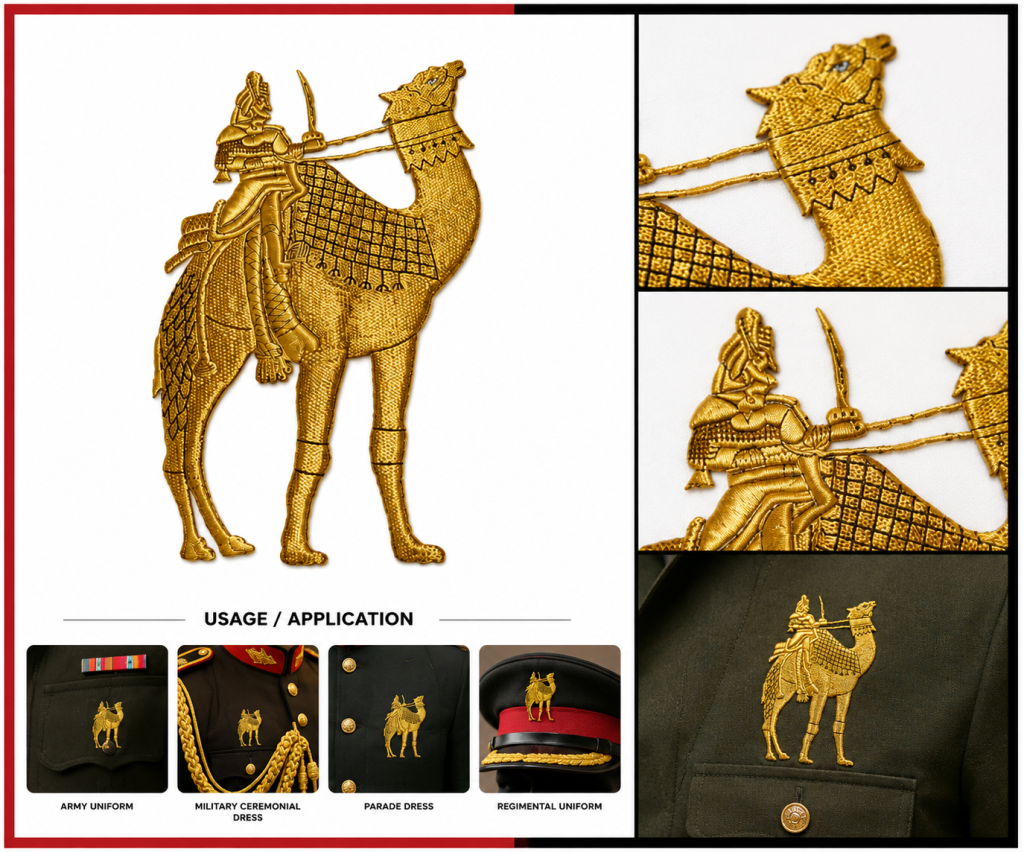
Punjab is known for its vibrant culture, rich traditions, and exceptional textile artistry. Among its many traditional crafts, Malerkotla Embroidery work stands out for its intricate needlework, elegant designs, and cultural significance. For generations, skilled artisans in Malerkotla have preserved this embroidery tradition by creating beautifully handcrafted textiles for daily wear, festive occasions, and weddings.
Today, Malerkotla Embroidery work continues to attract fashion enthusiasts, textile businesses, designers, and buyers who appreciate authentic craftsmanship. Whether used on traditional suits, dupattas, kurtas, or home décor fabrics, this embroidery reflects a perfect blend of heritage and modern fashion. This guide explains what makes Malerkotla embroidery unique, why it remains relevant, how it is created, its benefits, common challenges, and best practices for selecting quality embroidered products.
What Is Malerkotla Embroidery Work?
Quick Definition
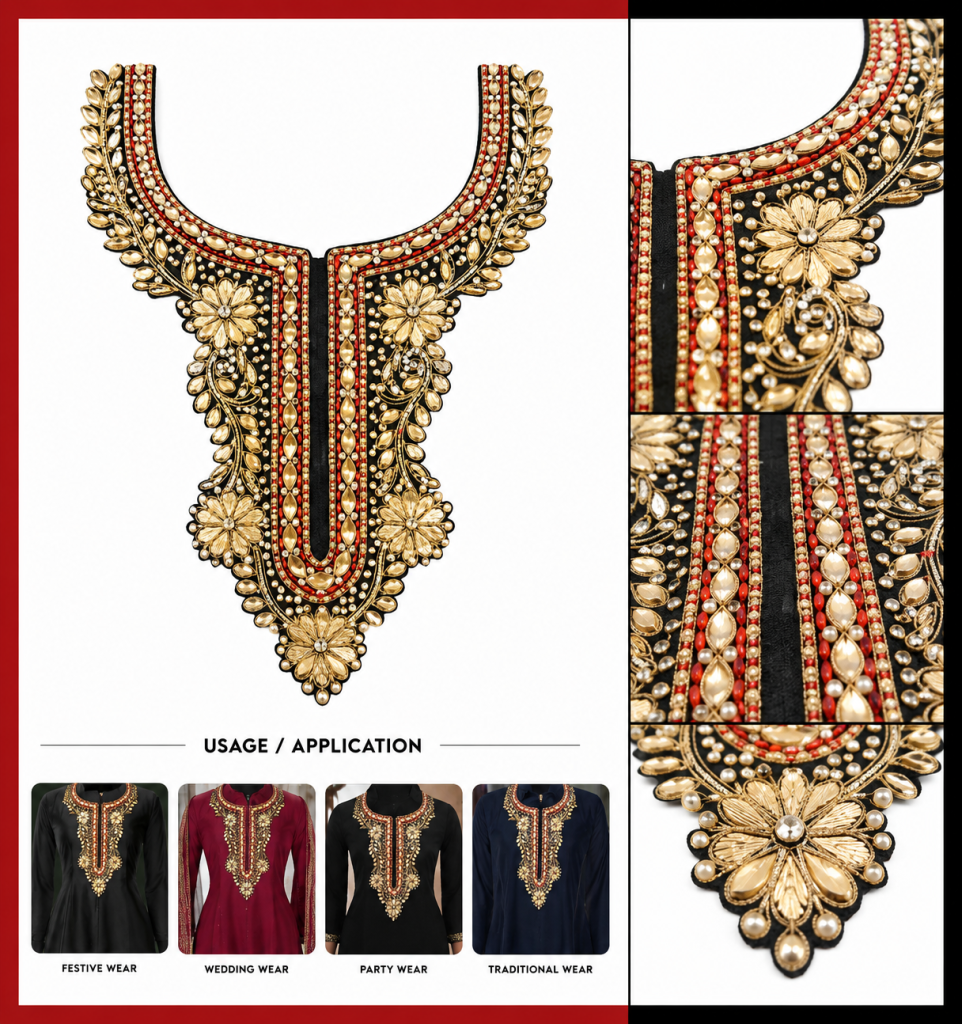
Malerkotla Embroidery work is a traditional textile craft practiced in Malerkotla, Punjab, where artisans decorate fabrics using detailed hand embroidery and machine embroidery techniques. It is widely recognized for its floral motifs, geometric patterns, elegant threadwork, and its application on Punjabi ethnic wear and fashion textiles.
Detailed Explanation
Embroidery has long been an essential part of Punjab’s textile heritage. In Malerkotla, embroidery artisans have developed specialized techniques that combine traditional craftsmanship with evolving fashion trends.
Unlike mass-produced embroidered fabrics, Malerkotla embroidery often reflects attention to detail, balanced pattern placement, and durable stitching. Depending on customer requirements, embroidery may be completed using hand-operated methods, computerized embroidery machines, or a combination of both.
The craft is commonly used for:
- Punjabi suits
- Dress materials
- Dupattas
- Kurtas
- Bridal wear
- Kids’ ethnic wear
- Boutique collections
- Home furnishing textiles
Its versatility allows manufacturers and designers to create products suitable for casual wear, festive occasions, corporate uniforms, and luxury fashion.
Key Components of Malerkotla Embroidery Work
- High-quality fabric selection
- Creative embroidery pattern design
- Precision threadwork
- Floral and traditional Punjabi motifs
- Computerized embroidery technology
- Skilled finishing and quality inspection
- Durable stitching for long-term use
Why Is Malerkotla Embroidery Work Important?
Direct Answer
Malerkotla Embroidery work is important because it preserves Punjab’s traditional textile heritage while supporting modern fashion, local employment, and textile manufacturing. It offers high-quality decorative fabrics that combine artistic craftsmanship with commercial value, making it popular among consumers, boutiques, garment manufacturers, and exporters.
Detailed Explanation
Embroidery adds both aesthetic and commercial value to textiles. A plain fabric becomes visually appealing through carefully designed embroidery patterns, increasing its desirability and market value.
For consumers, embroidered garments provide elegance and individuality. For businesses, embroidery creates opportunities to develop unique fashion collections that stand out in competitive markets.
The embroidery industry also contributes significantly to the local economy by creating employment for designers, machine operators, artisans, finishing specialists, and quality inspectors.
As demand for ethnic wear and customized apparel continues to grow, Malerkotla remains an important center for embroidery production in Punjab.
How Does Malerkotla Embroidery Work?
Direct Answer
Malerkotla embroidery follows a systematic production process that begins with design creation, continues through fabric preparation and embroidery, and ends with finishing and quality inspection. Each stage ensures the final product delivers both visual appeal and long-lasting durability.
Step 1: Design Development
The process begins by selecting or creating embroidery patterns.
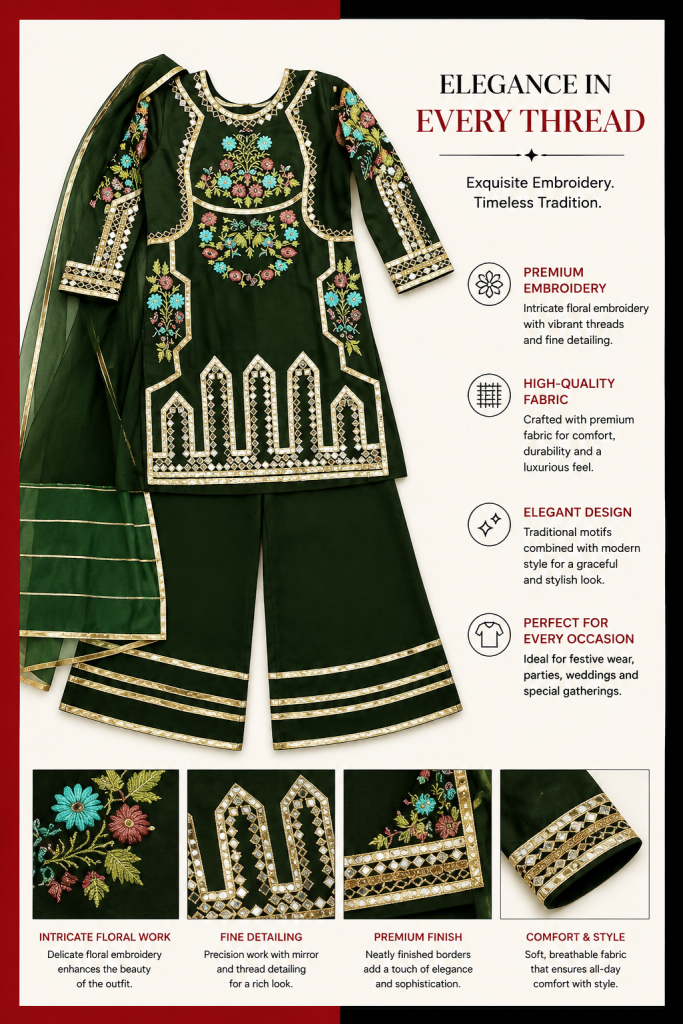
Designers prepare floral motifs, geometric artwork, paisley patterns, wedding themes, or customized logos depending on customer requirements.
Modern embroidery software allows manufacturers to digitize artwork before production begins.
Practical Example
A boutique designing festive Punjabi suits may create a unique floral neckline embroidery that matches the color theme of the collection.
Step 2: Fabric Preparation and Embroidery
Suitable fabrics such as cotton, rayon, silk, georgette, chiffon, velvet, or linen are prepared before embroidery.
The embroidery process may involve:
- Hand embroidery
- Computerized embroidery
- Multi-head embroidery machines
- Decorative thread embroidery
Skilled operators ensure precise stitching throughout production.
Practical Example
A bridal dupatta may require dense floral embroidery using silk threads and metallic accents, while a casual kurta may feature lighter decorative patterns.
Step 3: Finishing and Quality Inspection
After embroidery is completed, the fabric undergoes:
- Thread trimming
- Cleaning
- Ironing
- Quality inspection
- Packaging
Only products meeting quality standards proceed for retail or export.
Practical Example
Before dispatch, embroidered suits are checked for thread consistency, design accuracy, fabric damage, and overall finish.
Benefits of Malerkotla Embroidery Work
1. Beautiful Traditional Appearance
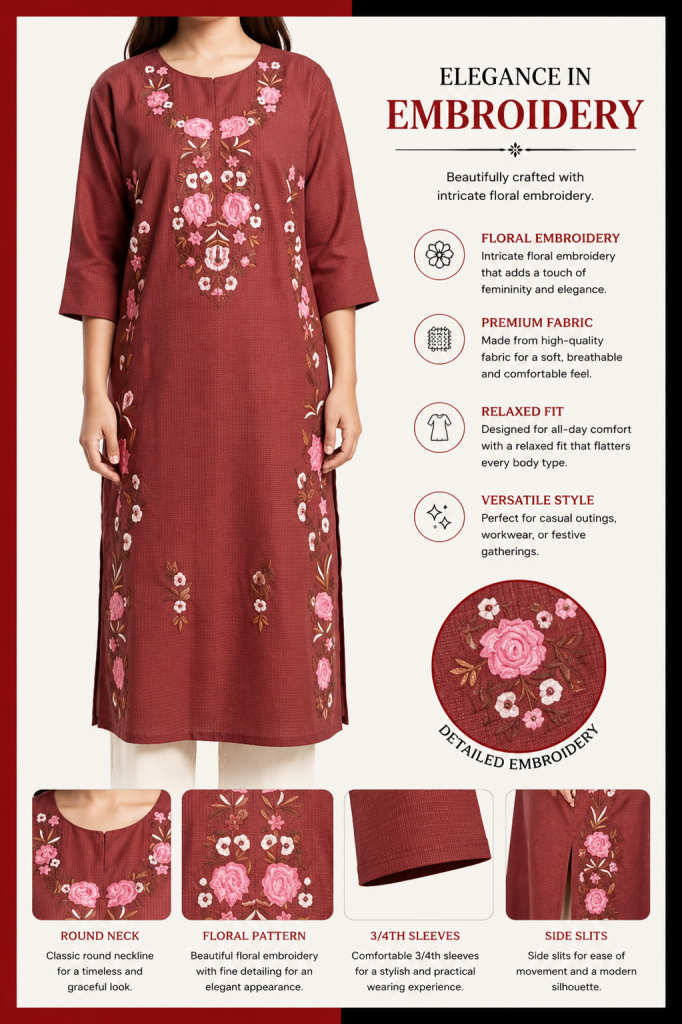
Embroidery enhances the visual appeal of garments and creates timeless ethnic designs suitable for every age group.
Expected Outcome: Elegant clothing that remains fashionable for years.
2. High Customization Options
Designs can be customized based on customer preferences, festivals, weddings, fashion collections, or corporate requirements.
Expected Outcome: Personalized products that appeal to different customer segments.
3. Strong Textile Industry Support
Embroidery supports local textile manufacturers, garment exporters, boutiques, and fashion designers.
Expected Outcome: Sustainable employment and business growth.
4. Suitable for Multiple Fabrics
The embroidery process works effectively on cotton, silk, georgette, chiffon, velvet, rayon, and blended fabrics.
Expected Outcome: Greater flexibility for fashion manufacturers.
5. Increased Product Value
Decorative embroidery significantly improves the perceived value of garments.
Expected Outcome: Better pricing opportunities and improved customer satisfaction.
6. Durable Decoration
Quality embroidery remains attractive even after repeated use when proper materials and techniques are used.
Expected Outcome: Long-lasting garments with premium appeal.
7. Ideal for Weddings and Festivals
Punjabi weddings and celebrations frequently feature embroidered suits, dupattas, and ethnic wear.
Expected Outcome: Consistent seasonal demand.
8. Export Potential
Traditional embroidery is appreciated by international buyers interested in handcrafted and ethnic fashion.
Expected Outcome: Opportunities for global textile trade.
Challenges and Common Mistakes
| Problem | Cause | Solution |
|---|---|---|
| Uneven embroidery | Poor machine calibration | Regular equipment maintenance |
| Thread breakage | Low-quality thread | Use premium embroidery threads |
| Fabric puckering | Incorrect stabilizer selection | Match stabilizer with fabric type |
| Design distortion | Improper digitizing | Use professional embroidery software |
| Color mismatch | Poor planning | Test thread colors before production |
| Weak stitching | Incorrect machine settings | Perform quality checks during production |
Best Practices and Expert Tips
- Select premium-quality fabrics suitable for embroidery.
- Use high-quality embroidery threads for better durability.
- Test embroidery designs before bulk production.
- Maintain embroidery machines regularly.
- Choose experienced digitizing professionals for complex designs.
- Inspect every product before packaging.
- Follow consistent quality control procedures.
- Combine traditional motifs with modern fashion trends.
- Store embroidered fabrics properly to prevent damage.
- Work with skilled artisans to preserve craftsmanship while meeting modern market demands.
Comparison Table
| Feature | Traditional Hand Embroidery | Computerized Embroidery |
|---|---|---|
| Craftsmanship | Highly artistic | Highly precise |
| Production Speed | Slow | Fast |
| Cost | Higher | More economical for bulk orders |
| Customization | Excellent | Excellent |
| Consistency | Artisan dependent | Highly consistent |
| Best For | Luxury and bridal wear | Commercial production |
| Production Volume | Limited | Large-scale manufacturing |
| Design Complexity | Unique handcrafted finish | Complex digital patterns with accuracy |
Frequently Asked Questions (FAQ)
Malerkotla Embroidery work is a traditional textile art from Malerkotla, Punjab, known for its intricate hand and machine embroidery on fabrics such as cotton, silk, georgette, velvet, and rayon. It is widely used for Punjabi suits, dupattas, kurtas, bridal wear, and designer garments.
Malerkotla is known for its experienced embroidery artisans, textile manufacturing expertise, and long-standing tradition of producing high-quality embroidered fabrics for domestic and international markets.
The most commonly embroidered fabrics include cotton, silk, rayon, velvet, chiffon, georgette, linen, and blended fabrics. The fabric selection depends on the garment type and embroidery design.
Yes. Malerkotla Embroidery work is widely used for bridal suits, lehengas, dupattas, and wedding outfits because it offers elegant designs, detailed craftsmanship, and premium finishing.
Malerkotla embroidery is recognized for its detailed craftsmanship, traditional Punjabi motifs, quality finishing, and the ability to combine heritage designs with modern embroidery technology.
Connect with Trusted Malerkotla Embroidery Businesses
Looking for authentic Malerkotla Embroidery work, premium embroidery threads, customized embroidery services, or reliable textile manufacturers? Explore these trusted businesses to discover quality craftsmanship, innovative embroidery solutions, and traditional Punjabi textile excellence
Leave a Reply