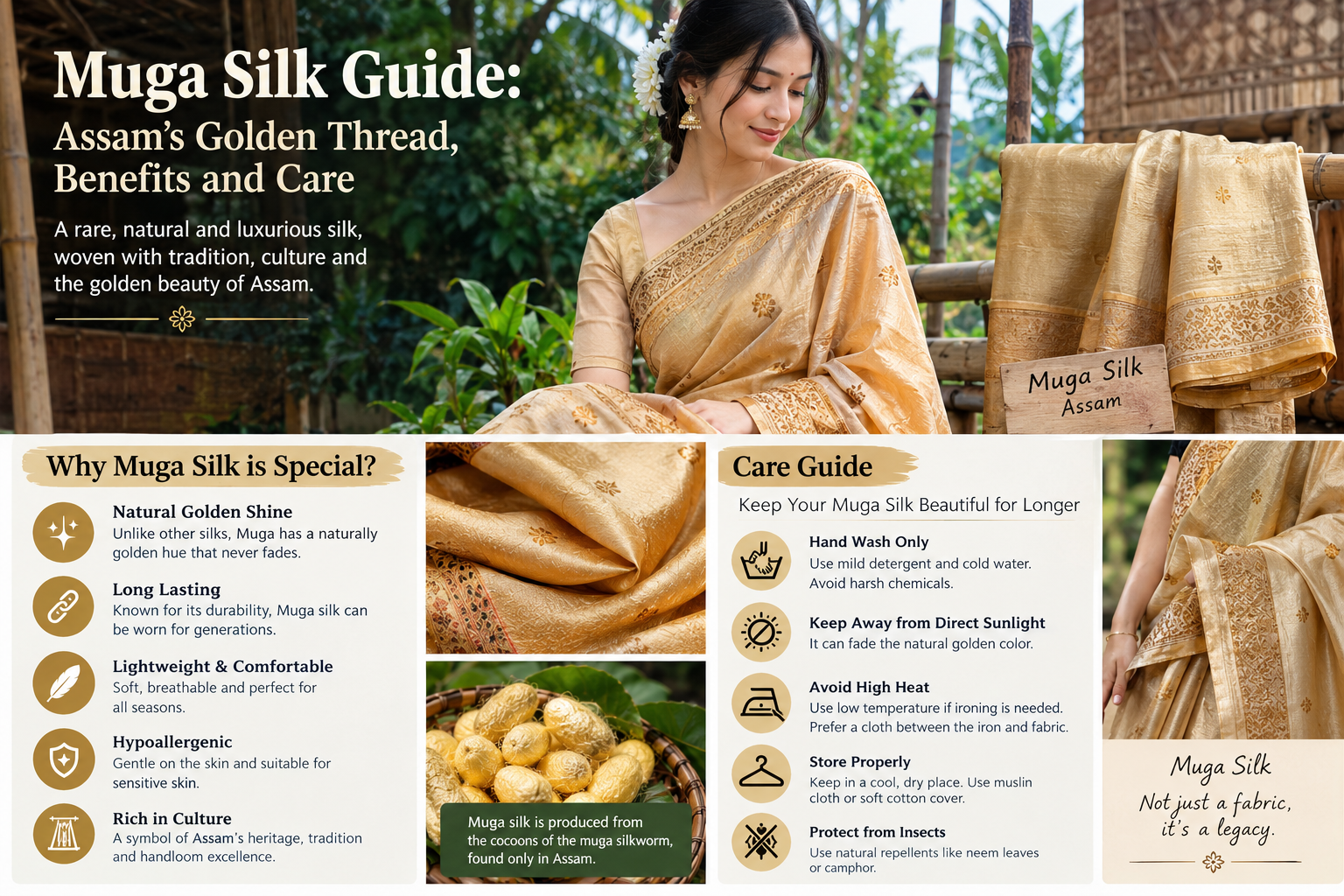
Some fabrics fade with every wash. Muga silk does the opposite: its golden glow gets richer over the years. That is one reason families in Assam keep these garments for generations.
Buying Muga silk can still be confusing. Prices vary widely, fakes are common, and many shoppers don’t know how it differs from other silks. This guide covers what Muga silk is, how it’s made, why it costs more, how to check if it’s real, and how to look after it.
What Is Muga Silk?
Quick Definition
Muga silk is a rare wild silk produced only in Assam, India, by the Antheraea assamensis silkworm. It has a natural golden-yellow sheen that needs no dye. It is known for its strength and long life, and it holds a Geographical Indication (GI) tag that links it legally to Assam.
Detailed Explanation
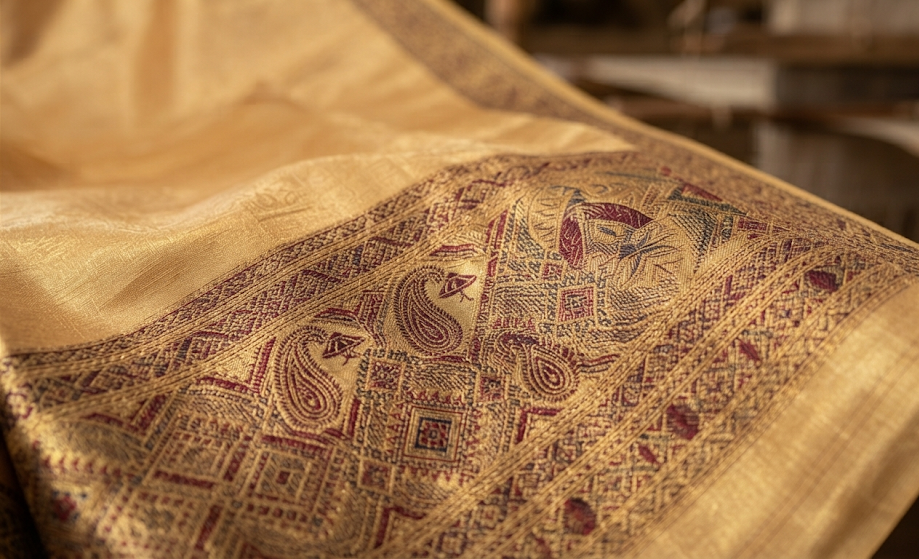
“Muga” means amber-colored in Assamese, which describes the fabric’s natural shade. Unlike mulberry silk, which comes from silkworms raised indoors, Muga silkworms are semi-domesticated. They live outdoors on host trees and feed mainly on Som (Persea bombycina) and Sualu (Litsea species) leaves.
The silk has deep roots in Assamese culture. It was linked to the Ahom royal court for centuries. Today it is most often worn as the mekhela chador, the traditional two-piece outfit of Assamese women, especially at weddings and during Bihu.
Key Components
Main weaving hub: Sualkuchi, near Guwahati
Silkworm: Antheraea assamensis, found only in the Brahmaputra valley
Host plants: Som and Sualu trees
Color: Natural golden-yellow, without dye
Origin protection: GI tag registered in 2007
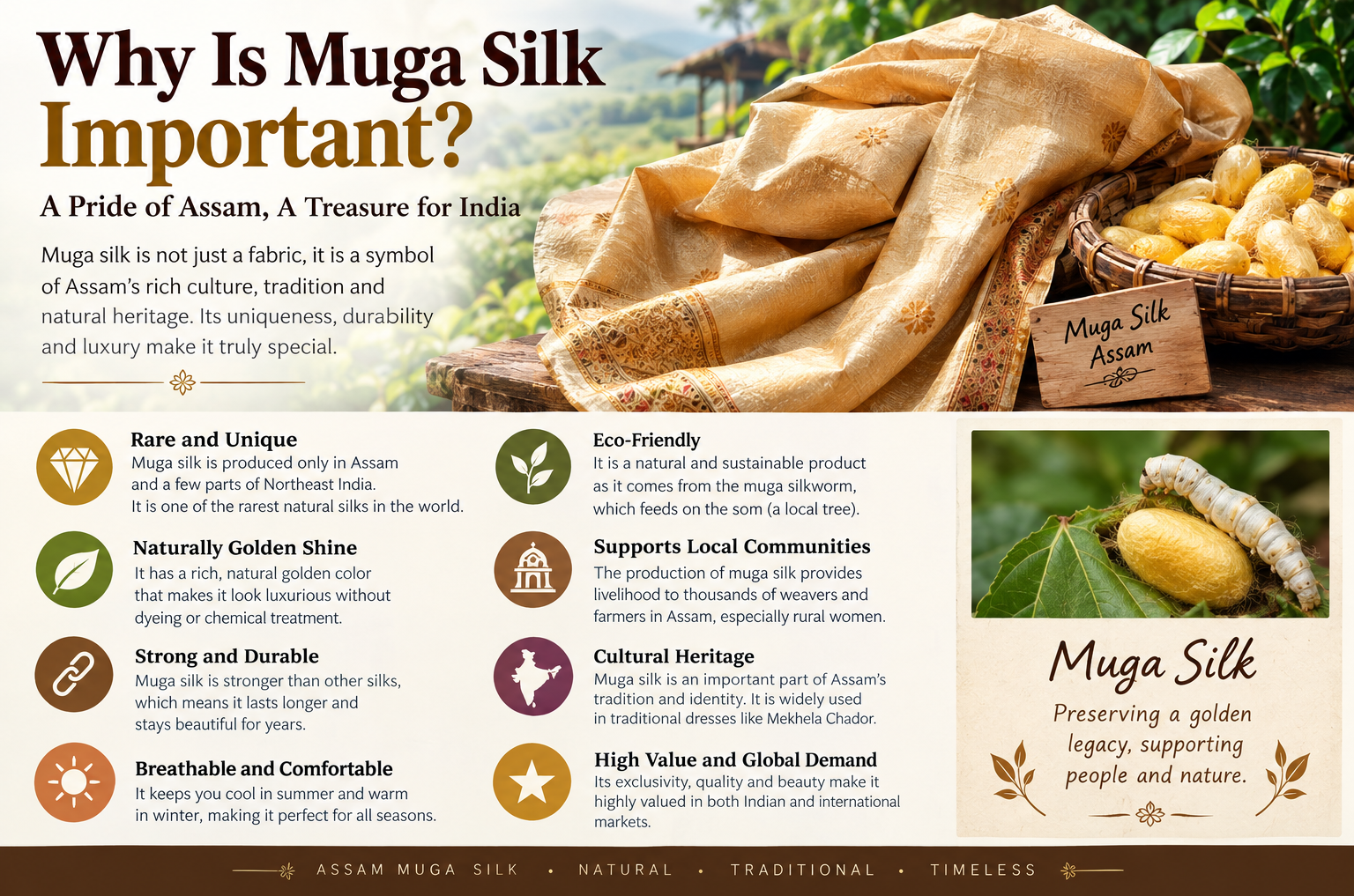
Direct Answer: Muga silk matters because it is a rare, natural, long-lasting textile tied to Assam’s identity. It supports thousands of rural rearers, reelers, and weavers. It also offers buyers a fabric that outlasts most others and suits the growing demand for sustainable, handmade clothing.
For buyers, it means owning a durable heirloom. For Assam, it means jobs in villages where silkworm rearing is a family skill. For the wider fashion world, it is a strong example of slow, low-chemical production. The GI tag also gives weavers legal backing against cheap imitations sold under the same name.
How Does Muga Silk Production Work?
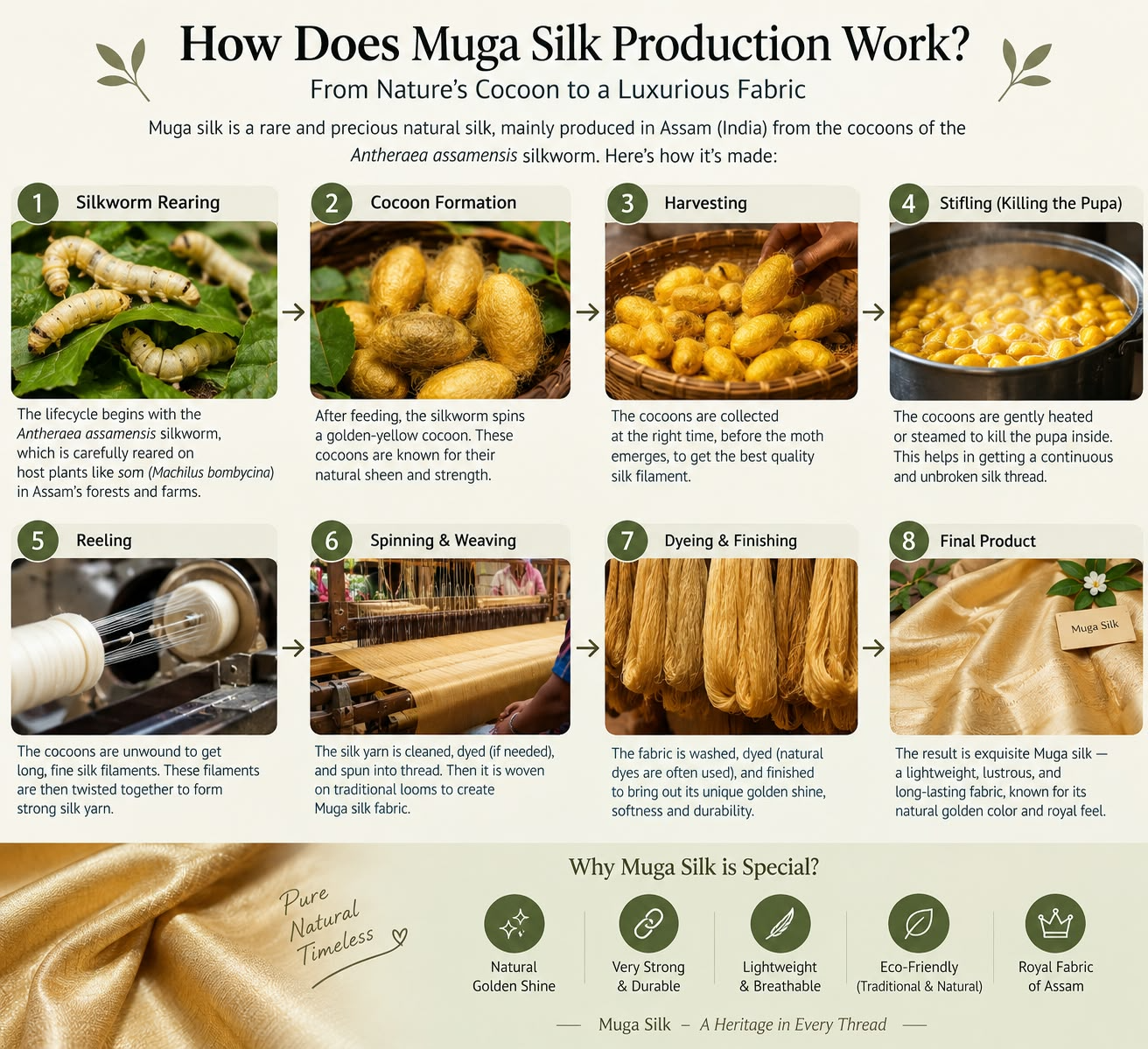
Direct Answer: Muga silk production follows four main stages: rearing silkworms outdoors on Som or Sualu trees, collecting the cocoons, reeling the silk thread, and weaving it on handlooms. The whole process is mostly manual and depends heavily on weather, which is why output stays small.
Step 1: Rearing. Farmers place young larvae on host trees. The worms feed in the open for several weeks. Rearers guard them from birds, ants, and heavy rain.
Step 2: Cocoon collection. Mature worms spin cocoons, often in leaves near the tree base. Farmers gather them by hand.
Step 3: Reeling. Cocoons are cooked to soften the gum. Reelers then draw out fine filaments and twist them into yarn, often on traditional reeling machines.
Step 4: Weaving. Weavers in Sualkuchi and nearby villages work the yarn on handlooms. A single mekhela chador with detailed motifs can take weeks.
Example: One unseasonal storm during rearing can wipe out a large share of a family’s crop. This sensitivity to climate is a major reason supply is limited.
Benefits of Muga Silk
- Exceptional durability
- What it is: Muga is among the strongest natural silks.
- Why it matters: It resists tearing and wear.
- Outcome: Garments often pass down through generations.
- Luster that improves with age
- What it is: Careful washing tends to brighten its sheen.
- Why it matters: The garment looks better over time.
- Outcome: Strong long-term value for money.
- Comfort across seasons
- What it is: The fiber breathes well.
- Why it matters: It stays comfortable in warm and mild weather.
- Outcome: Wearable beyond rare occasions.
- Cultural and craft value
- What it is: Each piece carries Assamese weaving traditions.
- Why it matters: Buying genuine Muga supports artisans.
- Outcome: A purchase with social impact.
Challenges and Common Mistakes
1. Buying fake Muga
- Problem: Many “Muga” sarees are blends or other silks.
- Cause: High prices make imitation profitable.
- Solution: Look for the GI logo and the Silk Mark label, and buy from trusted Assam sellers or government emporiums.
2. Expecting bright colors
- Problem: Buyers want Muga in vivid shades.
- Cause: Muga does not take dye easily.
- Solution: Choose pure Muga in its natural shade, or Muga motifs on a different silk base.
3. Washing it wrong
- Problem: Fabric loses texture or gets stained.
- Cause: Harsh detergents, wringing, or direct sun.
- Solution: Use mild soap or dry clean, and dry in shade.
4. Judging by price alone
- Problem: A “deal” turns out to be fake.
- Cause: Genuine Muga is costly to make.
- Solution: Treat unusually low prices as a warning sign.
Best Practices and Expert Tips for Buying Muga Silk
- Check for the Silk Mark label. It certifies natural silk content.
- Look for the Assam Muga GI logo where available.
- Buy from Sualkuchi weavers or state emporiums when possible.
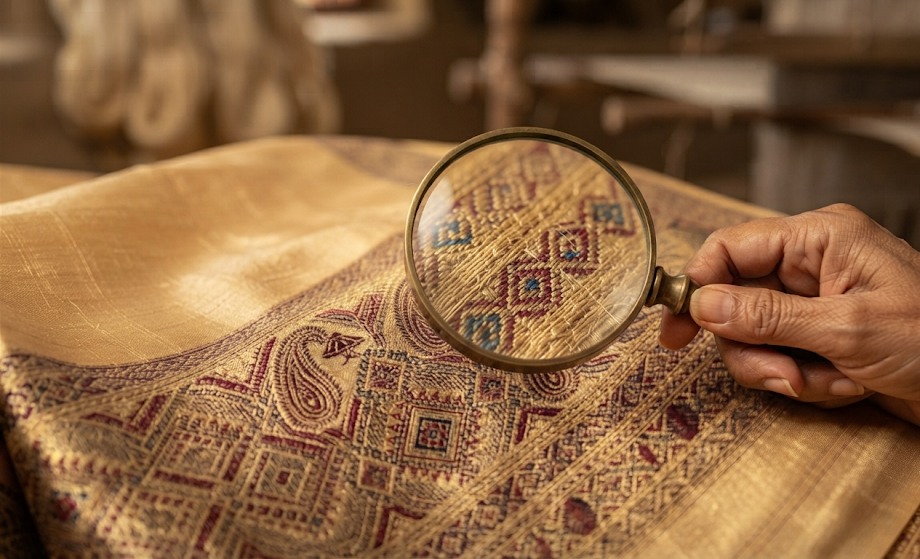
- Do a burn test on a loose thread. Real silk smells like burnt hair and leaves crushable ash.
- Feel the texture. Pure Muga feels slightly coarse at first and softens with use.
- Look at the sheen in daylight. Genuine Muga has a warm, natural gold, not a flat yellow.
- Ask about the base fabric. “Muga work” on a saree may not mean the whole saree is Muga.
- Store in muslin or cotton cloth, not plastic, to let it breathe.
- Refold stored garments every few months to avoid permanent creases.
- Iron on low heat with a cloth between the iron and the fabric.
Muga Silk vs Other Indian Silks
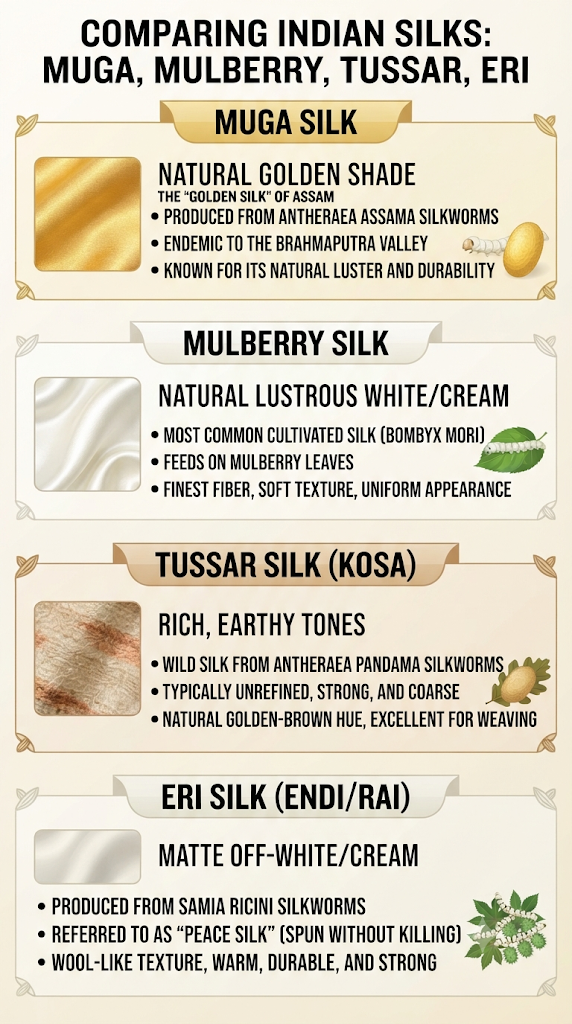
| Feature | Muga Silk | Mulberry Silk | Eri Silk | Tussar Silk |
| Silkworm type | Semi-wild | Domesticated | Domesticated | Wild |
| Main region | Assam only | Karnataka and others | Assam, Northeast | Jharkhand, Chhattisgarh, others |
| Natural color | Golden-yellow | White to off-white | Creamy white | Copper to beige |
| Texture | Firm, glossy | Smooth, soft | Soft, wool-like | Coarse, matte |
| Durability | Very high | Moderate | High | High |
| Dyeability | Low | High | Good | Moderate |
| Typical price | Highest | Moderate to high | Moderate | Moderate |
Frequently Asked Questions
1. Why is Muga silk so expensive?
Direct Answer: Muga silk is expensive because it is rare and hard to produce. The silkworm lives only in Assam, rearing happens outdoors and depends on weather, and reeling and weaving are mostly done by hand. Low supply and high labor input push the price far above common silks.
Detailed Explanation: A single garment needs a large number of cocoons. Losses from rain, pests, and pollution reduce yields further. Fine motif work adds weeks of labor.
2. How can I tell if Muga silk is real?
Direct Answer: Check for the Silk Mark label and GI logo, buy from trusted Assam sources, and look for a warm natural gold sheen. A burn test on a loose thread helps: real silk smells like burnt hair and turns to soft ash, while synthetics melt into hard beads.
Detailed Explanation: Avoid judging by color alone, since dyed fabrics can mimic the shade. Certification is the most reliable signal.
3. Can Muga silk be dyed?
Direct Answer: Muga silk does not absorb dye easily, so most pure Muga is sold in its natural golden shade. Colored designs usually come from motifs woven with other yarns. Buyers wanting bright colors often choose Muga-on-mulberry blends or entirely different silks instead.
Detailed Explanation: This natural resistance is part of the fabric’s character. Many collectors prefer the original shade.
4. How do I wash Muga silk at home?
Direct Answer: Hand wash Muga silk gently in cool water with a mild, silk-safe detergent. Don’t scrub or wring it. Roll it in a towel to remove water and dry it flat in the shade. For heavily worked or zari pieces, dry cleaning is the safer choice.
Detailed Explanation: Direct sunlight and harsh soaps can damage the fiber. Many owners find the luster improves after careful washing.
5. Does Muga silk have a GI tag?
Direct Answer: Yes. Assam Muga silk received a Geographical Indication tag in 2007. The tag legally links the name to silk produced in Assam using the Antheraea assamensis silkworm. It helps protect genuine weavers and gives buyers a way to identify authentic products.
Detailed Explanation: A dedicated GI logo was introduced later to make identification easier for shoppers.
6. What is the difference between Muga and Eri silk?
Direct Answer: Both come from Assam, but they differ in look and use. Muga is golden, glossy, and very strong. Eri is creamy white, soft, and wool-like, often used for shawls. Eri is sometimes called “peace silk” because the moth usually leaves the cocoon before reeling.
Detailed Explanation: Muga suits festive wear, while Eri is popular for warm, everyday wraps.
7. How long does Muga silk last?
Direct Answer: With proper care, Muga silk can last for decades. Many Assamese families keep Muga mekhela chadors for generations. Its strong fiber resists wear, and its sheen often deepens with age, making it one of the most durable natural fabrics available.
Detailed Explanation: Good storage matters. Keep it dry, breathable, and away from moths and moisture.
8. Where is the best place to buy Muga silk?
Direct Answer: The most reliable sources are weavers and cooperatives in Sualkuchi, Assam government emporiums, and sellers offering Silk Mark certification. Online buyers should check seller reviews, certification details, and return policies before paying, especially for high-value pieces.
Detailed Explanation: Buying close to the source also means more of the price reaches the artisans.
Key Takeaways
- Muga silk is a rare golden silk made only in Assam.
- Its color is natural and needs no dye.
- It is one of the strongest and longest-lasting silks.
- High prices reflect limited supply and handmade production.
- The GI tag and Silk Mark help identify genuine pieces.
- Gentle washing, shade drying, and breathable storage keep it looking its best.
Final Verdict
Muga silk is worth the investment if you value durability, natural beauty, and craft heritage. It is not the right pick if you want vivid colors or a low-cost fabric for frequent casual wear. For weddings, festivals, or a lasting heirloom, few fabrics compare. The key is buying certified pieces from trusted sources.
Conclusion
Muga silk stands apart for its natural golden sheen, rare origin, and remarkable lifespan. It carries centuries of Assamese tradition and supports the rural families who rear, reel, and weave it. Before you buy, check for the Silk Mark and GI logo, and choose a seller you trust. Care for it gently, and your Muga silk can stay beautiful for generations.