
Raipur is the capital city of Chhattisgarh. It is one of the most important places in the state for business, learning, travel and factories. Raipur lies in the flat lands of central Chhattisgarh. The area has a farming tradition and a growing city economy. The mix of farms produces growing demand from people, good roads and people who start businesses makes an environment for food factories.
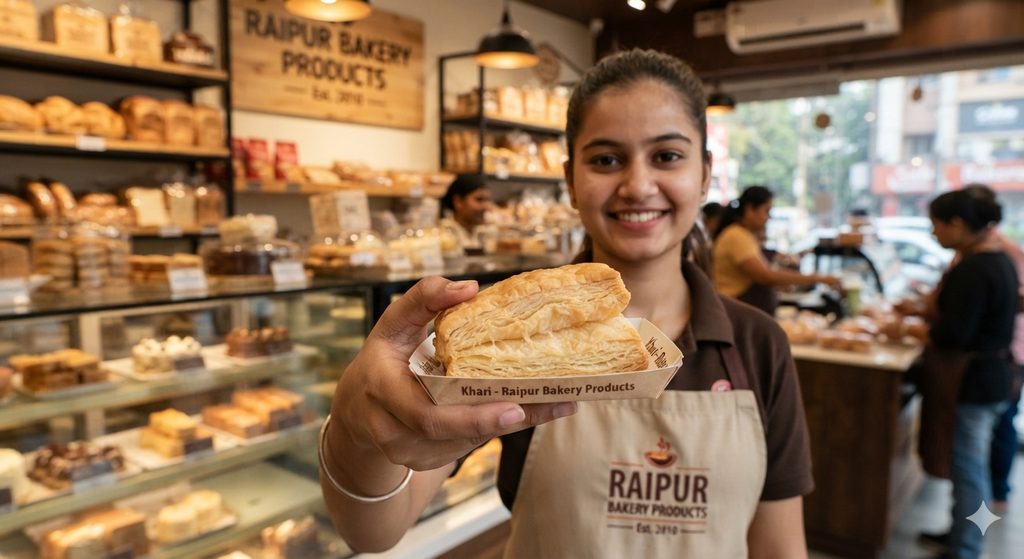
In the One District One Product plan Raipur has been chosen to focus on Bakery Products. The Ministry of Food Processing Industries has updated its list. Says that Raipur will work on Bakery Products.
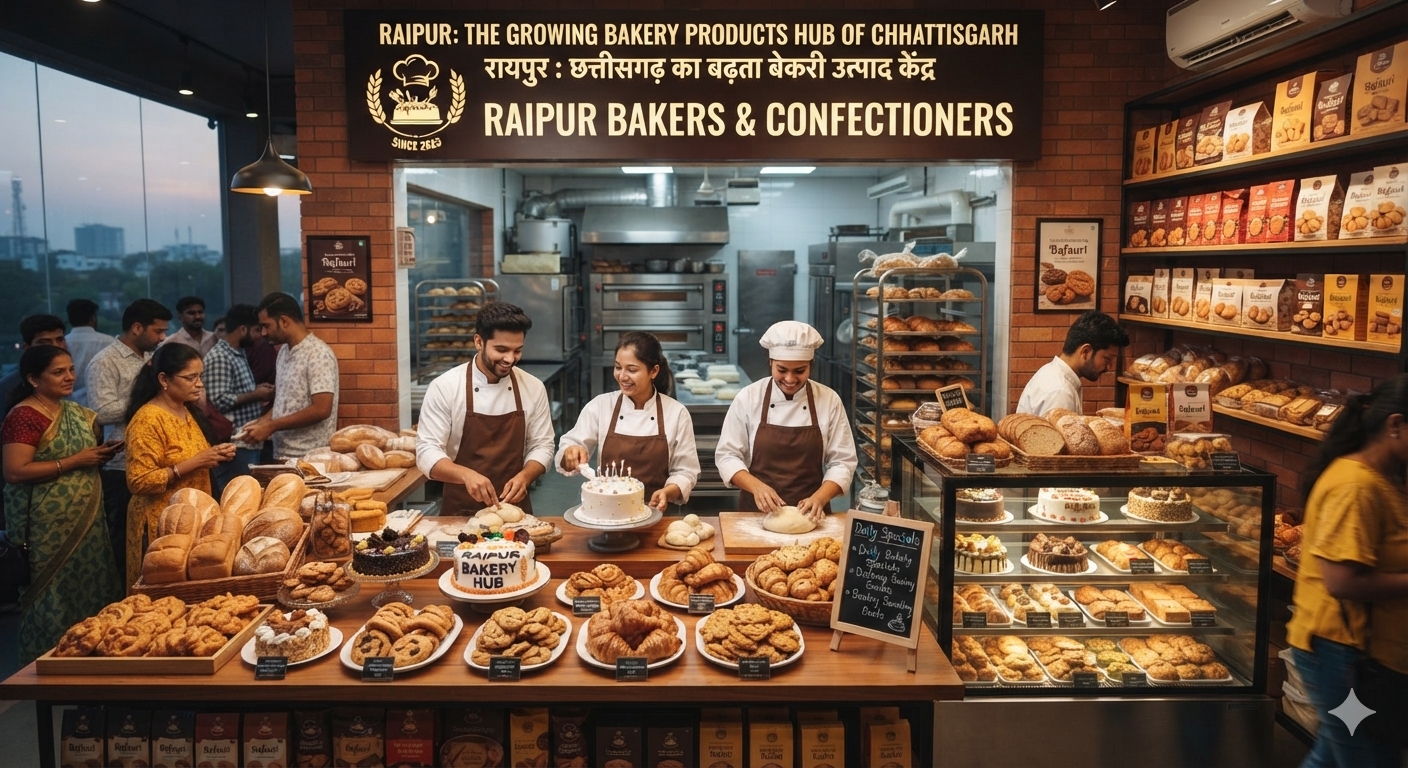
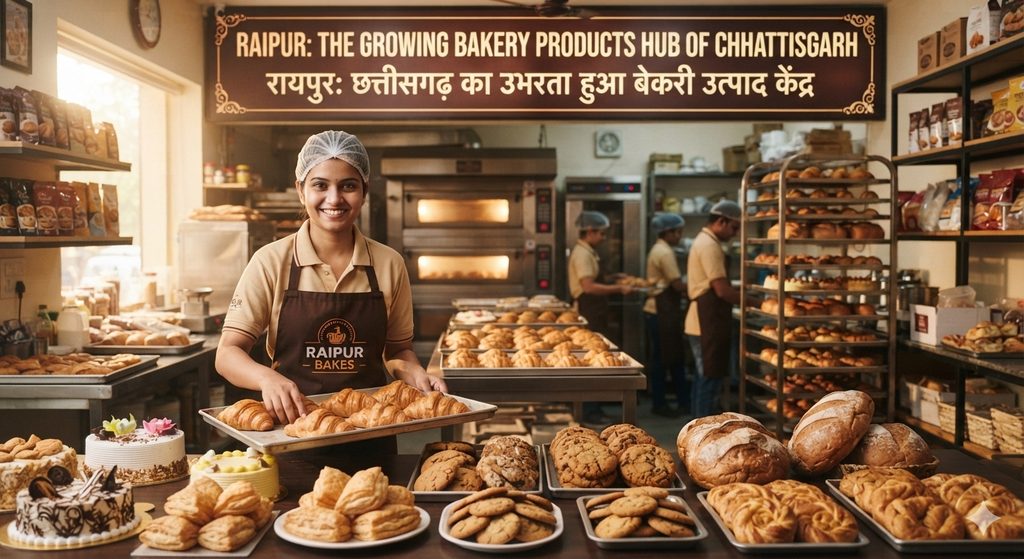
Choosing bakery products matters a lot because baking is more than making bread and cakes. Baking covers items such as biscuits, cookies, rusks, breads, buns, cakes, pastries, savoury snacks and other baked foods. If we use processing, packaging, branding and delivery Raipur can build a strong bakery network that links small business owners, skilled workers, suppliers of raw materials, shops and customers.
The One District One Product plan can turn this existing demand into an organised and stronger local industry.
Raipur: A Strategic Location for Food Businesses
Raipur’s location is one of its economic strengths. Raipur sits in the middle of Chhattisgarh. It is the state capital.
Raipur is linked to important nearby districts and has built good roads, railways and other transport that help trade and business.
The Raipur District Export Action Plan calls Raipur a transport hub, with roads, rail, air and inland shipping connections. Main highways such as NH 53 NH 30 and NH 130 link Raipur to markets and factories. Raipur also has a railway station and can send cargo by air through Swami Vivekananda Airport.
These connections are very useful for bakery products.
Unlike fresh farm items, packaged bakery items can travel many miles if they are processed and wrapped correctly. A bakery in Raipur could serve customers inside the city. Also in other parts of Chhattisgarh and nearby states.
Having an Inland Container Depot and links to ports makes Raipur even stronger for businesses that want to reach larger national and export markets.
Why Bakery Products Are Suitable for ODOP
The One District One Product method is made to create buying power, shared facilities, processing and promotion. It wants to make value chains stronger for products that have potential in a district.
Bakery products fit this method well because they involve connected steps.
The value chain looks like:
Raw Materials → Mixing → Processing → Baking → Cooling → Packaging → Branding → Distribution → Retail
Each step gives chances for business and jobs.
Raw materials needed are flour, sugar, fats, dairy items, eggs if needed, cocoa, dried fruits, flavourings and packaging items. These materials are turned into goods using special machines and baking methods.
The finished items can be sold in bakeries, supermarkets, restaurants, hotels, cafés, grocery shops, online sites and, to institutions. This builds a network instead of just one factory.
The Diversity of Bakery Products
The bakery industry has an advantage because of the wide variety of products it offers. A single bakery can make types of items including:
- Bread
- Buns
- Pav
- Biscuits
- Cookies
- Rusks
- Cakes
- Pastries
- Muffins
- Puffs
- Crackers
- Pizza bases
- Khari
- Cream rolls
- Celebration cakes
- Savoury baked snacks
This variety helps businesses reach different parts of the market. Everyday items like bread and biscuits can bring in sales while cakes and pastries can meet the needs of people who want to celebrate or enjoy themselves at cafes. Savoury items like puffs and crackers can attract people who want easy snacks.
The bakery industry can serve both needs and special occasions.
Changing Consumer Preferences
Consumer habits play a role in the growth of bakery businesses. As more people move to cities, their lifestyles. They see more food from other countries. This has made bakery products more popular.
People today do not just want fashioned bread and biscuits. They want kinds of cakes, pastries, handmade bread, cookies, desserts and foods that are easy to eat.
Raipur is becoming a city so bakeries here can reach many customers. At the time what people like is also creating chances for healthier options.
Companies can try things like:
- Millet-based cookies
- Whole-wheat breads
- High-fibre biscuits
- Low-sugar items
- Products with nuts and seeds
- Eggless cakes
- Gluten-free items when possible
- Traditional Indian-style baked goods
Using millets is especially promising in Chhattisgarh because the state encourages growing and using these grains. The Raipur District Export Action Plan talks about the state’s work through the Chhattisgarh Millet Mission to support crops like ragi, kodo and kutki.
This means there is a chance to make bakery products that use baking methods along, with local grains.
Small Businesses and Entrepreneurship
One of the appealing features of the bakery industry is that it can support businesses of many different sizes.
A person can start with a home‑based bakery while larger entrepreneurs can set up industrial production facilities.
Small businesses can specialize in custom cakes, cookies, brownies, cupcakes, traditional bakery products, celebration products and healthy baked snacks.
Medium‑sized businesses can supply bread, biscuits, rusks and snacks to retail outlets.
Large‑scale bakeries can produce packaged products for distribution across districts and states.
This makes bakery products especially suitable for entrepreneurship.
Raipur already has an established ecosystem of bakery businesses. For example ARNA Bakers “Bake O Fun” reports that it produces more than 100 SKUs, including breads, cookies and cakes from its manufacturing facility in the Raipur area and distributes products across Chhattisgarh and parts of Odisha. (BakeOFun) This shows the potential for a Raipur‑based bakery business to grow beyond its local market.
Women and Home-Based Bakery Enterprises
The bakery sector can also give opportunities to women entrepreneurs. Home‑based baking businesses have operating models and can start with products such as cakes, cookies, cupcakes and savoury snacks. With training in food safety, costing, packaging, digital marketing and accounting small home‑based businesses can slowly become micro‑enterprises. Social media has lowered the entry barriers more. Entrepreneurs can show their products online, receive orders digitally and build a customer base without buying a large retail outlet. As businesses grow they can move to kitchens, commercial equipment and formal packaging. This progression—from home baker to micro‑enterprise to established bakery—creates a path for entrepreneurship.
Government Support for Food-Processing Enterprises
The ODOP initiative can be supported by food-processing programmes.
The Pradhan Mantri Formalisation of Micro Food Processing Enterprises (PMFME) Scheme supports micro food-processing businesses and organisations such as FPOs, SHGs and producer cooperatives. Chhattisgarh State Industrial Development Corporation has been appointed as the state’s nodal agency for implementation of PMFME. (CSIDC)
The PMFME framework includes support for areas such as:
- Upgradation of individual micro food-processing units
- Common infrastructure
- FPOs and SHGs
- Capacity building
- Branding and marketing
The central PMFME programme states that eligible individual units can receive credit-linked capital subsidy subject to the scheme’s conditions while common infrastructure projects for groups can also receive support. (PMFME)
Such programmes can help entrepreneurs improve their equipment, facilities, packaging and market reach.
Raipur as a Distribution Hub
One of the advantages for Raipur is its logistics network.
The district’s Export Action Plan describes road, rail and air connectivity as strengths and identifies Raipur as a key logistics hub in central India.
For bakery products efficient logistics can make a difference.
Products with longer shelf lives, such as biscuits, cookies and rusks can potentially be distributed over distances. Fresh products such as cakes and pastries require delivery and therefore benefit from strong local logistics.
This creates two markets:
- Fresh bakery market: Primarily local and regional.
- Packaged bakery market: Statewide and beyond.
A business can therefore choose its expansion strategy according to the products it manufactures.
Challenges Facing the Bakery Industry
Despite its potential the bakery sector in Raipur faces challenges.
Competition is strong. There are bakery businesses in Raipur, which means any new enterprise must stand out. This can be done through quality competitive pricing, a wider range of products or strong branding.
Raw-material costs are another concern. The prices of flour, sugar, dairy ingredients, fats, dry fruits and packaging materials can go up or down. These changes impact production costs. Affect profit margins.
Skilled labour is important too. Experienced bakers and trained food-processing workers help maintain quality. Without them even the best recipes may not turn out well.
Shelf life is short for bakery products. These items don’t last long so managing inventory carefully is essential. Much stock leads to waste while too little can mean lost sales.
Food safety is a must. Poor hygiene or improper storage can lead to products. This not risks customer health but also harms the business’s reputation.
Energy costs are a factor well. Ovens, refrigerators, mixers and other equipment use a lot of electricity. Efficient operations help cut down on energy use and lower expenses.
Addressing these challenges needs a mix of technology proper training, smart financial planning and strong management.
Innovation and Healthy Bakery Products
Looking ahead, the future of the bakery industry seems to point toward product diversification. People now want goods that are both convenient and healthy. This shift opens up opportunities for different kinds of products.
These include:
- Millet cookies
- Multigrain breads
- High-fibre biscuits
- Low-sugar cakes
- Seed-based crackers
- Protein-oriented snacks
- Whole-grain products
Chhattisgarh has an advantage with its millet resources. These grains can be used as a base for products. By treating traditional grains and modern bakery items as separate entrepreneurs can combine them.
This blend creates a product offering:
Local grains + modern baking + attractive packaging = differentiated Raipur bakery products.
This approach can help new businesses set themselves apart in a market while also meeting changing consumer demands.
The Future of Bakery Products in Raipur
Raipur’s bakery industry has the potential to grow in directions at the same time.
The first direction is entrepreneurship with more home-based and small bakeries becoming official businesses.
The second direction is production with bigger companies making packaged items for a larger audience.
The third direction is new kinds of baking using millets, whole grains and new recipes.
The fourth direction is branding, linking bakery items with the identity of Chhattisgarh.
The fifth direction is market expansion using Raipurs road, rail and air connections to reach people outside the district.
All these trends can change bakery products from a food type into a stronger food-processing industry.
Conclusion
The identification of Bakery Products as Raipur’s One District One Product gives a chance to make a sector that mixes entrepreneurship, food processing, retail and jobs. The Government of India’s updated ODOP list officially names Raipur for bakery products. (Ministry of Food Processing Industries)
Raipur has benefits for growing this sector. Its position as the state capital, an increasing number of city consumers, a transport system, an industrial environment and access to food-processing facilities make a good place for bakery businesses. The district’s road, rail and air connections can also help businesses grow their markets beyond the city.
The bakery industry offers chances at levels. A small business owner can start with cakes or cookies from home while bigger companies can make bread, biscuits and packaged snacks at a scale.
The industry can also help women entrepreneurs, bakers, packaging companies, transporters, retailers and food-processing workers.
Innovation will be very important in the years to come. Items using millets, whole grains, local ingredients and healthier options can help Raipur’s bakeries meet customer needs. At the time classic baking items can still serve the daily market.
Government programs like PMFME can help food-processing businesses by making them officially build their skills, improving their facilities, creating brand awareness and offering money help. (PMFME)
In the end the future of Raipur’s bakery industry depends on mixing baking skills with new technology, good branding and easy access to markets.
From a home bakery to a big factory every business adds to the bigger chain of work. With the help Raipur can create a bakery industry that not only serves its growing local market but also shows the identity of Chhattisgarh to people all over India.
The story of Raipur’s bakery products is a story of business, food ideas, jobs and adding value—turning items into products that can create jobs and build a unique regional food industry.