Surajpur: Turmeric-Based Products – Turning a Traditional Crop into a Value-Added Industry

Introduction
Surajpur is a district in northern Chhattisgarh, known for its natural resources, farming, forests and rural communities. Farming gives people a living and the district’s varied natural environment offers chances to grow new farms and forest businesses. In the One District One Product (ODOP) program turmeric products have been chosen as Surajpur’s specialty. This choice lets Surajpur strengthen farming and more importantly build a full value chain around turmeric from processing to packaging, branding and marketing. Turmeric is more than a kitchen spice. It has been used in cooking, cultural rituals and many household preparations for a long time. Modern food processing has opened more possibilities. Turmeric can become powder, dried turmeric spice mixes, extracts, drinks, pickles and other added‑value items. For Surajpur the ODOP program can turn turmeric, from a farm product into a source of new business, jobs and rural economic growth
Surajpur and Its Agricultural Potential
Surajpur district is located in the part of Chhattisgarh. It has a rural character. Agriculture and related activities play a role in the local economy. The agricultural setup in this district offers potential for growing crops that can be processed and sold as value-added products. Turmeric stands out as a choice because it can be dried and stored for a long time. This makes it more durable than many other fresh farm produce. Turmeric does not spoil quickly unlike crops that go bad fast.
The basic turmeric value chain includes steps:
Turmeric Cultivation → Harvesting → Cleaning → Boiling → Drying → Processing → Packaging → Branding → Distribution
Every step in this chain can provide work and income for farmers, laborers and small entrepreneurs. The ODOP model can support these activities. It can help link stages together. This way more value stays within the area. It can also help create opportunities and improve livelihoods in Surajpur district.
Why Turmeric Is an Important ODOP Product
The choice of turmeric under ODOP gives Surajpur a product that can help build infrastructure and encourage people to start businesses.
Turmeric is an item for food processing.
First, it has a history of use in Indian cooking.
Second, it can be kept for a time if it is dried properly.
Third, it can be made into different products.
Fourth, turmeric products can be sold in areas outside the region.
These features make turmeric a good fit for businesses as well as bigger food processing companies.
Than selling turmeric just as raw roots farmers can create products, like:
- Turmeric powder
- Dried turmeric
- Turmeric spice mixes
- Turmeric tea mixes
- Turmeric-based drinks
- Pickles
- Prepared spice mixes
- Turmeric extracts
- Packaged cooking turmeric
- Turmeric-based meals
This kind of adding value can help raise the money earned from the crop.
From Turmeric Rhizome to Finished Product
Turmeric processing starts when we harvest rhizomes.
After harvesting turmeric must be cleaned carefully to remove soil and other unwanted material.
Depending on the chosen processing method the rhizomes may be. Treated in other ways before drying.
Proper drying is very important because moisture changes storage quality. Can cause deterioration.
When turmeric is fully dried it can be turned into powder.
The basic process is:
Harvesting → Cleaning → Processing → Drying → Polishing → Grinding → Sieving → Packaging
Modern machinery can make these steps more consistent and efficient.
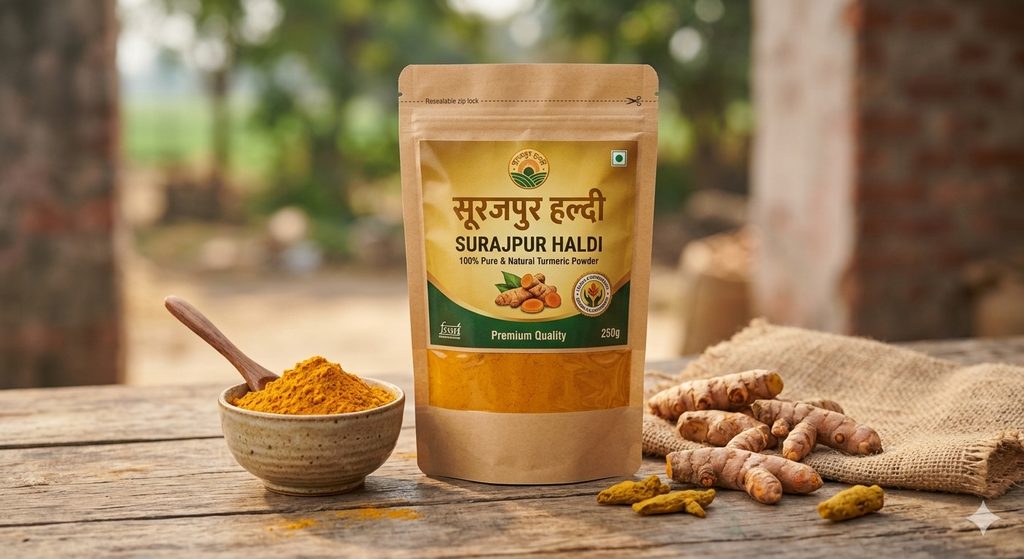
The finished turmeric powder can then be packaged in sizes, for household, retail and institutional customers.
Turmeric Powder: The Core Product
Turmeric powder is likely to remain one of the important products in a turmeric-based value chain.
It is used extensively as a spice, in households and food businesses.
A produced turmeric powder can be marketed through:
- Grocery stores
- Supermarkets
- Restaurants
- Hotels
- Local markets
- Food-processing businesses
- Online marketplaces
However competing in the packaged spice market requires consistent quality.
Consumers expect turmeric powder to have colour, aroma, texture and purity.
Therefore businesses need to focus on raw-material selection, hygienic processing, suitable packaging and quality testing.
A strong Surajpur-origin brand could use the district’s identity as part of its marketing strategy.
The Importance of Quality Turmeric
Quality is one of the factors that decide how well turmeric products do. The quality of turmeric can be affected by things such as:
- Variety
- Soil conditions
- Cultivation practices
- Harvesting time
- Processing methods
- Drying
- Storage
- Grinding
- Packaging
Bad storage can make the product worse and wrong processing can change the color and smell.
Because of this training for farmers and managing what happens after harvest are important parts of the ODOP strategy.
The goal should not just be to grow more turmeric but to grow high-quality turmeric that’s good, for making other products that add more value.
Farmers as the Foundation of the Industry
Farmers are at the start of Surajpur’s turmeric value chain.
Without a supply of good quality turmeric processing companies cannot work well.
So creating organised buying systems can help both farmers and processors.
Farmer Producer Organisations, cooperatives and groups of farmers can bring together turmeric from farmers.
Of each farmer talking separately with buyers group organisations can help with:
- Buying in large amounts
- Sorting the turmeric
- Transporting the turmeric
- Storing the turmeric
- Connecting to markets
- Negotiating deals
These kinds of groups can also pass on the quality needs of processors back to farmers.
This makes a link between growing the turmeric and processing the turmeric.
Women Entrepreneurs and Self-Help Groups
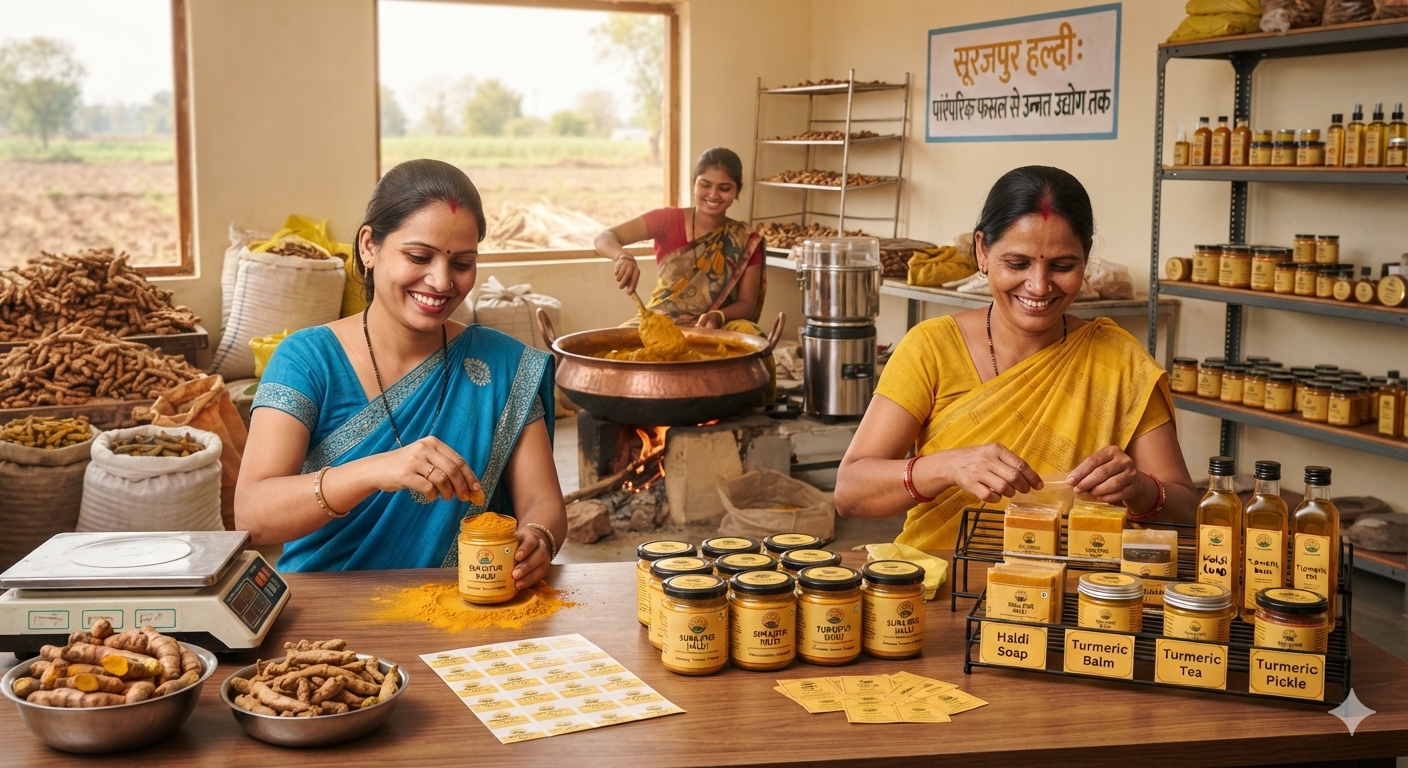
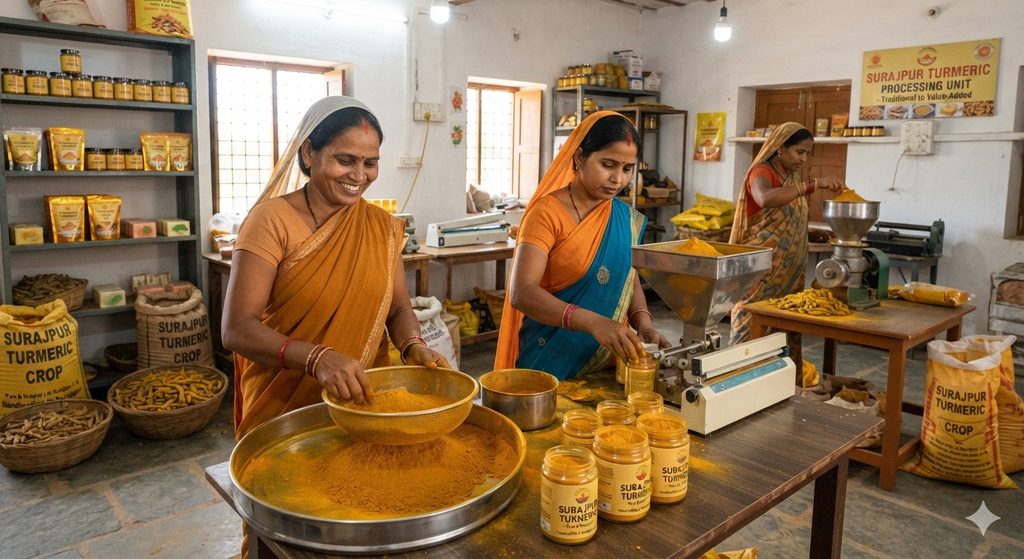
Women-led self-help groups can play a role in developing turmeric-based enterprises.
Turmeric powder, spice mixes, pickles and other food products can be made by groups if they receive proper training and have good facilities.
Self-help groups can participate in:
- Processing
- Packaging
- Labelling
- Product development
- Local marketing
- Exhibition sales
A group can begin by selling to markets and then slowly grow its customer base.
Training in food hygiene, packaging, accounting, costing and digital marketing can help these turmeric-based enterprises become more professional.
This can create a source of income for rural households and also encourage womens participation in local entrepreneurship.
Turmeric-Based Food Products
Turmeric’s use is not limited to powder.
Entrepreneurs can develop a wider product portfolio.
Turmeric Tea
Turmeric-based drink mixes can be positioned as inspired beverages. Such products should be marketed responsibly without making medical claims.
Spice Blends
Turmeric can be combined with other spices to create ready-to-use cooking blends.
Turmeric Pickle
Pickled turmeric can provide an opportunity to preserve traditional food practices in a packaged format.
Turmeric-Based Snacks
Food entrepreneurs can experiment with snacks that incorporate turmeric as a flavouring or colouring ingredient.
Ready-to-Cook Mixes
Turmeric can be included in convenient cooking mixes for modern consumers.
Product diversification can reduce dependence on a single product such as loose turmeric powder.
Traditional Knowledge and Modern Processing
Turmeric has been a part of traditions for hundreds of years. In communities it is used in cooking and in cultural rituals. This standing connection adds depth to the story behind regional brands.. Tradition alone is not enough. Traditional knowledge must be paired with food-processing standards. A product can keep its identity while also using hygienic processing, standardized recipes, modern packaging, quality testing, proper labelling and efficient distribution. Together these elements help traditional products adapt to today’s markets. They become more reliable, safe and accessible, without losing their roots.
Government Support and PMFME
The Pradhan Mantri Formalization of Micro Food Processing Enterprises Scheme is relevant to the development of food-processing businesses. I believe this scheme can open doors for many small entrepreneurs.
The PMFME Scheme aims to support the formalization and upgrading of food-processing enterprises. The PMFME Scheme includes assistance in capacity building, infrastructure, branding and marketing to eligibility and scheme conditions. I feel the support can make a difference.
For Surajpur entrepreneurs such programmes can potentially help address some of the technical challenges involved in establishing or upgrading turmeric-processing units. I see Surajpur entrepreneurs hoping for this help.
Support, for training and formalisation can also help informal businesses move towards organised operations. I hope that informal businesses will take advantage of these opportunities.
Challenges in Turmeric Processing
The development of Surajpur’s turmeric industry will also face challenges.
Quality Variation
Turmeric quality can vary depending on cultivation and processing methods.
Processing Infrastructure
Small producers may have limited access to modern machinery.
Storage
Improper drying and storage can affect product quality.
Competition
Established spice brands already have strong distribution networks.
Branding
Local businesses may lack experience in packaging and professional marketing.
Finance
Entrepreneurs may face difficulties in financing equipment and working capital.
Technical Knowledge
Processing, food safety and quality-control skills are necessary for sustainable growth.
These challenges can be addressed through training, common infrastructure, financial support and stronger farmer-business partnerships.
Conclusion
Identifying turmeric-based products as Surajpurs ODOP speciality gives Surajpur a chance to build a link between agriculture and food processing.
Turmeric already holds a place in Indian food and culture. By using processing, packaging, branding and marketing Surajpur can raise the value made from turmeric.
Opportunities spread from turmeric powder to many spice blends, pickles, drink mixes and other food items.
Farmers stay at the core of this system. FPOs, self-help groups and entrepreneurs can push turmeric further by processing and marketing turmeric.
Women-led businesses and rural young people can especially gain from growing food-processing shops. Government programmes like PMFME can give help for formalisation, training and infrastructure as long as rules apply.
The biggest strength of the ODOP model is that it pushes the growth of an ecosystem not just the production of one product.
For Surajpur this means building links between farms, processing units, businesses and markets.
With technology quality checks, professional packaging and clear branding, turmeric from Surajpur can travel beyond local markets and become a known regional item.
In the end the story of Surajpurs turmeric is a tale of adding value to agriculture and creating business. A crop that has long been grown and used as a spice can become the base for processing firms, jobs and fresh markets.
From the fields of Surajpur to kitchens all, over India value-added turmeric products can become a key part of Surajpurs economic future.