
Durg Tomato-Based Products show how fresh tomatoes from Chhattisgarh can be processed into a variety of useful, flavorful and market-ready value-added foods.Durg tomato-based products show how fresh tomatoes from Chhattisgarh can be processed into practical and value-added foods for everyday consumption. Tomato is a common vegetable in Indian kitchens. Tomatos role does not stop at being eaten. When handled properly tomato can become products that come in forms and make life easier for people who buy them.
In Durg, Chhattisgarh, tomato-based products have been chosen as the district’s One District One Product or ODOP. The Government of Chhattisgarh and the Ministry of Food Processing Industries have listed Durg – Tomato Based Products under the state’s ODOP plan.
This change gives a chance to see tomato not as food you eat but as a raw material for food processing. It is a chance to build something from what farmers grow.
The full journey can be broken down into steps:
Tomato Cultivation → Harvesting → Sorting → Washing → Grading → Pulping → Processing → Product Development → Packaging → Market
Every step adds value. Every step creates chances for farmers, food processors, entrepreneurs and food businesses to grow.
The story of Durg’s tomato products is not about tomato. It is about turning a crop that everyone knows into ready‑to‑use foods. It is, about building a future where a common vegetable becomes a market product.
.
Why Tomato-Based Products Matter in Durg, Chhattisgarh
I love tomatoes because tomatoes are very flexible. Tomatoes can be eaten raw. Tomatoes can also be turned into different kinds of products.
Some typical tomato-based product types are:
- Tomato puree
- Tomato pulp
- Tomato sauce
- Tomato ketchup
- Tomato paste
- Tomato chutney
- Cooking sauces
- Ready-to-use tomato bases
Processing is very helpful because fresh tomatoes go bad quickly. Turning them into processed products can make them easier to keep move around and use.
For a place, like Durg building a tomato-processing system can help link farming with food making.
Of the path stopping at the local vegetable market tomatoes can go into a longer and more valuable chain.
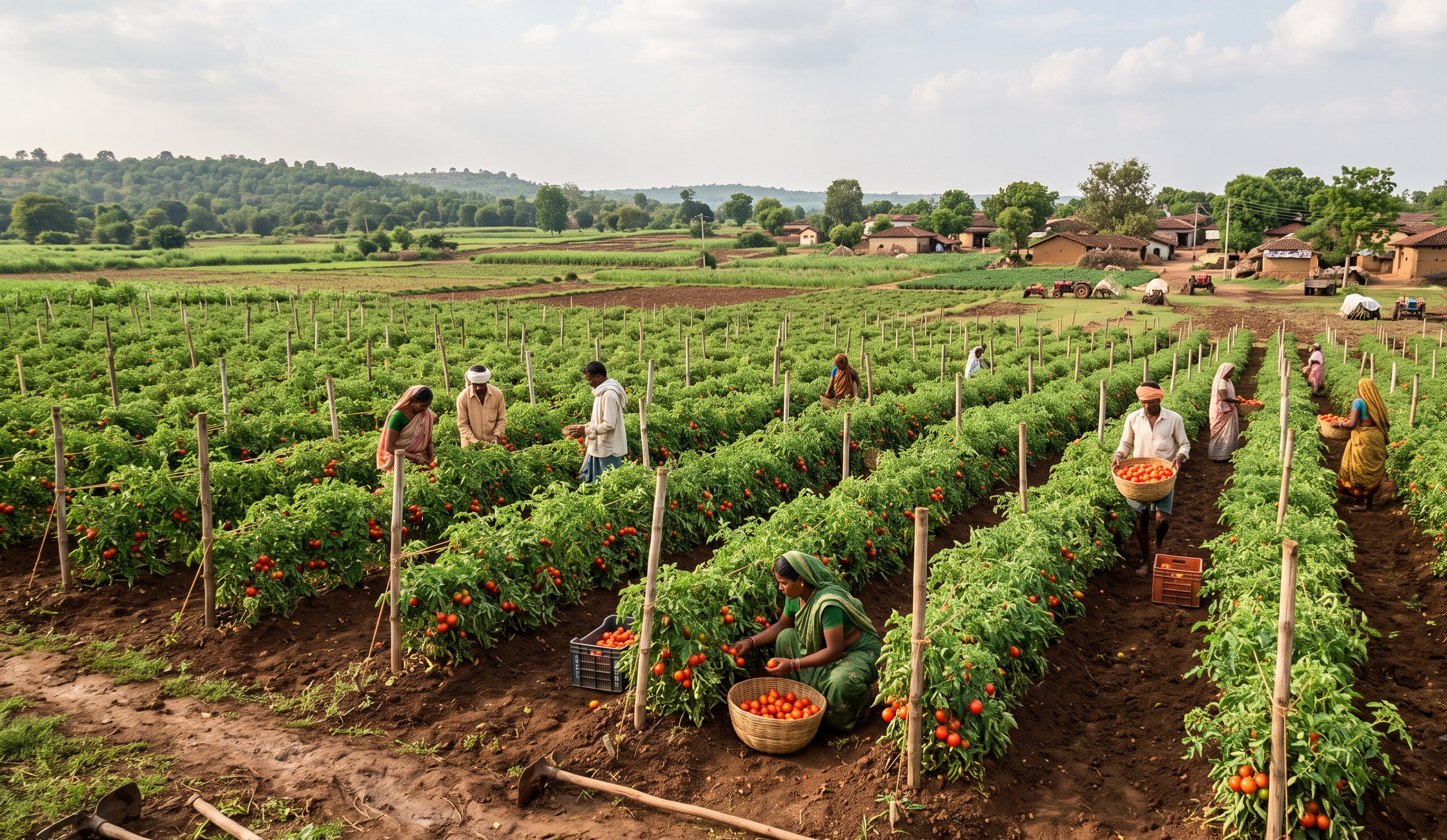
The Journey Begins in Durg’s Tomato Fields
Every tomato-based product begins with tomatoes. The quality of the raw tomato matters because it affects the color, taste, texture and overall quality of the product. Farmers grow tomatoes. They pick the fruits when they are at the stage for the market they are meant for. Fresh tomatoes are then taken to be sorted. At this point the aim is to get good-quality tomatoes into processing and as clean, as possible
.
Step 1: Harvesting the Tomatoes
Harvesting is the stage in the processing journey.
Tomatoes need to be harvested at a maturity stage depending on the product they are intended for.
Fresh tomatoes intended for processing should be reasonably uniform and free from damage.
After harvesting they are placed into containers. Transported to the collection or processing point.
Careful handling is important because excessive bruising can affect quality.
The the suitable produce moves, into controlled processing the easier it becomes to maintain consistency.
Step 2: Sorting and Removing Damaged Tomatoes
Once the tomatoes reach the processing unit the tomatoes are sorted.
Workers look at the tomatoes. Remove:
- tomatoes
- Severely damaged tomatoes
- Unripe or unsuitable tomatoes
- Leaves
- Stems
- Soil and other foreign material
Sorting is a key step for quality control of tomatoes.
A processor cannot make a tomato product from raw tomatoes that are inconsistent.
Therefore the processing journey begins with selecting the tomatoes.
At units sorting of tomatoes can be done by hand. Larger facilities can combine inspection with systems, for tomatoes.
Step 3: Washing and Cleaning
After sorting the tomatoes must be cleaned well. Washing gets rid of dirt, dust and other things on the outside. Large factories might use washing machines while smaller places can use hand washing or machines that help a little. The goal is to get clean tomatoes ready, for cutting and making into pulp. The water needs to be clean the machines need to be clean. Everyone needs to handle the tomatoes in a safe way. When washing is done the tomatoes are all set for the step.
Step 4: Cutting and Preparing the Tomatoes
Depending on the processing method tomatoes may be cut, crushed or otherwise prepared before pulping.
This makes it easier to release the juice and pulp.
The prepared tomatoes are then passed through processing equipment.
The exact process can vary depending on whether the final product’s intended to be:
- Puree
- Paste
- Sauce
- Ketchup
- Pulp
- Chutney
- Another tomato-based preparation
Different products require different formulations and processing conditions.
Step 5: Tomato Pulp Extraction
Pulp extraction is one of the important stages.The prepared tomatoes are processed to separate pulp and juice from seeds, skins and unwanted fibrous material.
A pulper or similar processing system can help produce a tomato base.
The resulting pulp contains the tomato colour and flavour that will become the foundation of the final product.At this point the tomato has already moved from an agricultural commodity to a processed food ingredient.
.
Step 6: Tomato Puree and Paste
Once the pulp has been extracted it can be changed into forms.One common way is concentration.Taking out some of the water makes a tomato product.Depending on the mix and the way it is processed this can become puree or paste.
Tomato Puree
Puree usually has a feel and can be used as a cooking ingredient.
Tomato Paste
Paste is more concentrated and is used in smaller amounts to give tomato flavor, color and thickness.These forms are useful because people and food businesses can use them without having to process tomatoes themselves.
Step 7: Making Tomato Sauce and Ketchup
Tomato pulp can also serve as the base for sauces and ketchup.Depending on the recipe and the final product needs additional ingredients are. The process is carefully controlled.
The mixture is then cooked and processed to get the right:
- Thickness
- Flavour
- Texture
- Colour
- Consistency
ready the sauce is filled into food-grade containers that are safe for packaging.
Tomato ketchup is especially well known, to consumers. It shows how raw agricultural produce can be transformed into a branded food product.
Step 8: Tomato Chutney and Other Value-Added Foods
Tomatoes can be turned into other food products.Tomatoes can be used to make a variety of dishes.One example of this is tomato chutney.Tomato chutney is a ready‑to‑use condiment that many people enjoy.Depending on the formulation tomatoes can be mixed with the spices and other ingredients to create a ready‑to‑use condiment.Tomatoes can be combined with herbs, vinegar, sugar or garlic to give the chutney its flavor.
Other possibilities include:
- Cooking bases
- Tomato dips
- Pasta sauces
- Pizza sauces
- Spiced tomato preparations
- Ready‑to‑use tomato blends
The exact product depends on the target consumer and the processing capability.Tomatoes are one part of the equation; the final product must meet the needs of the people who will buy it.This is where food entrepreneurship becomes important.Food entrepreneurs can turn an idea into a marketable product.A processor can identify a consumer need. Develop a product around the same raw tomato.Tomatoes remain the core ingredient that brings the product together.
Why Value Addition Is Important
Fresh tomatoes are useful. They spoil quickly which can cause problems.Processing changes how the product looks and how it can be used.Of just sending fresh tomatoes to market companies can make new products that last longer and are easier to use.
For example:
Fresh Tomato → Pulp → Puree → Sauce → Packaged Product
Each step adds processing.Each new form can appeal to a kind of customer.This is what we mean by value addition.The goal is not just to change the food.It is to turn farm goods into useful, stable and easy-, to-sell products.
Step 9: Quality Control
Quality control is needed through the tomato-processing journey.
It begins with choosing raw tomatoes and goes on through:
- Washing
- Pulp extraction
- Cooking
- Formulation
- Filling
- Packaging
- Storage
Food-processing businesses must keep the production areas clean and follow the food-safety rules that apply.Being consistent is also important.Customers want a packaged tomato product to taste and look the same every time they buy it.So standardised processing and quality checks are very important as a business grows.
Step 10: Packaging Durg’s Tomato Products
Packaging is the big step before a product gets to the market.
Tomato puree, paste, sauce, ketchup and chutney each may need kinds of packaging based on their own qualities.
Good packaging must do things:
- Protect the product
- Prevent contamination
- Provide suitable storage protection
- Communicate product information
- Create a recognisable brand identity
A brand that comes from a region can include Durg and Chhattisgarh in its product story.
For example a made-up brand might say:
Durg Tomato Products
Chhattisgarh
Tomato-Based Foods
The packaging can feature images of tomatoes textures, from farming and simple design touches that reflect the area.
It should not show fake certifications or make claims that cannot be backed up.
Building a Diverse Tomato Product Range
A strong food-processing business does not have to rely on one product.A Durg-based tomato enterprise could potentially create formats.
Tomato Puree
A simple cooking ingredient for households.
Tomato Paste
A thick product for cooking uses.
Tomato Ketchup
A known packaged condiment.
Tomato Sauce
A flexible product for meals and snacks.
Tomato Chutney
A local and new kind of condiment.
Ready-to-Use Tomato Base
A easy choice for households and food-service businesses.Different products can reach people.This variety can lower reliance, on a market type.
Local Entrepreneurs and Tomato Processing
Value addition can make opportunities that go beyond farming.
A tomato‑processing ecosystem can involve:
Farmer → Collection Centre → Sorting → Processing Unit → Product Development → Packaging → Branding → Distribution → Retail
At points in this chain local businesses can get involved.Farmers produce the material for tomato products.Workers. Clean tomato fruit.Processing units turn tomatoes into pulp. Finished tomato goods.Entrepreneurs develop recipes and new tomato brands.Packaging businesses prepare tomato products for the consumer.Distributors connect tomato products with arkets.This builds an economic ecosystem, around tomato.
Connecting Fresh Tomatoes with Modern Food Habits
Tomatoes are popular because they fit well into cooking.Fresh tomatoes need to be washed, cut and prepared.A made tomato puree or sauce can save time.This helps processed tomato products be very helpful for people who’re busy, like families, restaurants and food companies.At the time the main ingredient is still the same.People already know how tomatoes taste and how to use them.Processing just changes how they are presented.
The Role of Branding
A good product requires more than processing.
It also needs an identity.
For Durgs tomato products branding can share three messages:
Origin
Durg, Chhattisgarh
Ingredient
Tomato
Transformation
Processed into a convenient food product
A steady logo, packaging design, product photography and storytelling can help build recognition.
The local identity should back the product of taking attention away, from it.
Opportunities for Small Food Businesses
Tomato processing can be done at sizes.
A small entrepreneur might start with a products.
For example:
Tomato Chutney + Tomato Sauce
As the business grows it can add items:
Paste + Ketchup + Ready-to-Use Cooking Base
This lets businesses slowly expand their product line.
Small food companies can also make regional items instead of just competing with big national brands.
The key is quality good hygiene, eye‑catching packaging and a clear place, in the market.
From Durg’s Tomato Fields to the Consumer
The complete journey of Tomatoes can now be seen as one connected process.
Tomatoes are grown in the fields of Durg, Chhattisgarh.
Tomatoes are. Then transported.Suitable Tomatoes are. Cleaned.
The fruit of Tomatoes is. Turned into pulp.
The pulp of Tomatoes can be turned into puree, paste, ketchup, sauce or chutney.
The finished products of Tomatoes go through quality checks and packaging.
Finally the products of Tomatoes are delivered to consumers.
Conclusion
The story of Durg Tomato-Based Products shows how a simple crop like tomato can grow into a food-processing industry. It starts with tomatoes grown and picked in Durg, Chhattisgarh. These tomatoes are carefully sorted, cleaned and readied for processing. From there the pulp gets turned into different things. Like puree, paste, ketchup, sauces and chutneys. Packaging and branding give these products a to-buy look. This turns the journey from fresh produce into something much bigger. A full food-processing value chain.
The path goes like this: Tomato → Pulp → Processing → Value Addition → Packaging → Consumer.
For Durg this means more than farming. It connects farming with business with food manufacturing and with what people want to buy. The Government of Chhattisgarh has named Tomato-Based Products as Durg’s ODOP focus. That means they see potential in growing value from this crop.
The opportunity is clear: take a tomato that people already know and use at home and turn it into something new forms, new packages and new markets. That’s the story. It’s about transforming produce into convenient useful foods while building a stronger link between farmers, processors and customers.
** Asked Questions (FAQs)**
1. What is Durgs ODOP product?
Durg is recognized for Tomato Based Products under the Chhattisgarh ODOP program.
2. Why are tomato-based products important?
Turning tomatoes into puree, paste, sauce or ketchup adds value beyond selling them. It creates income and less waste.
3. How are tomatoes processed?
The steps include harvesting, sorting, washing, preparation, pulping, further processing, product development and packaging.
4. What products can be made from tomatoes?
Tomatoes can become pulp, puree, paste, ketchup, sauces, chutneys or cooking bases. Depending on how they’re processed.
5. Why is sorting important in tomato processing?
Sorting removes damaged or poor-quality tomatoes. It keeps the material consistent and improves the final product.
6. What is tomato pulp?
Tomato pulp is the part of the tomato after removing seeds, skins and other unwanted bits. It’s the base for processed products.
7. What is the difference between tomato puree and tomato paste?
Both come from tomatoes. Tomato paste is thicker and more concentrated while puree has a lighter texture.
8. How can tomato processing benefit local entrepreneurs?
Entrepreneurs can get involved in processing creating products, packaging, branding and distributing. Each step opens business opportunities.
9. Why is packaging important for tomato products?
Packaging protects the product shows how to store it and shares brand details and product info, with buyers.
10. What is the complete Durg tomato value-addition process?
Cultivation → Harvesting → Sorting → Washing → Pulping → Processing → Product Development → Packaging → Market.