
Meta Description: Explore fish-based products in Chamoli, Uttarakhand, their importance, processing opportunities, business potential and future in Himalayan aquaculture.
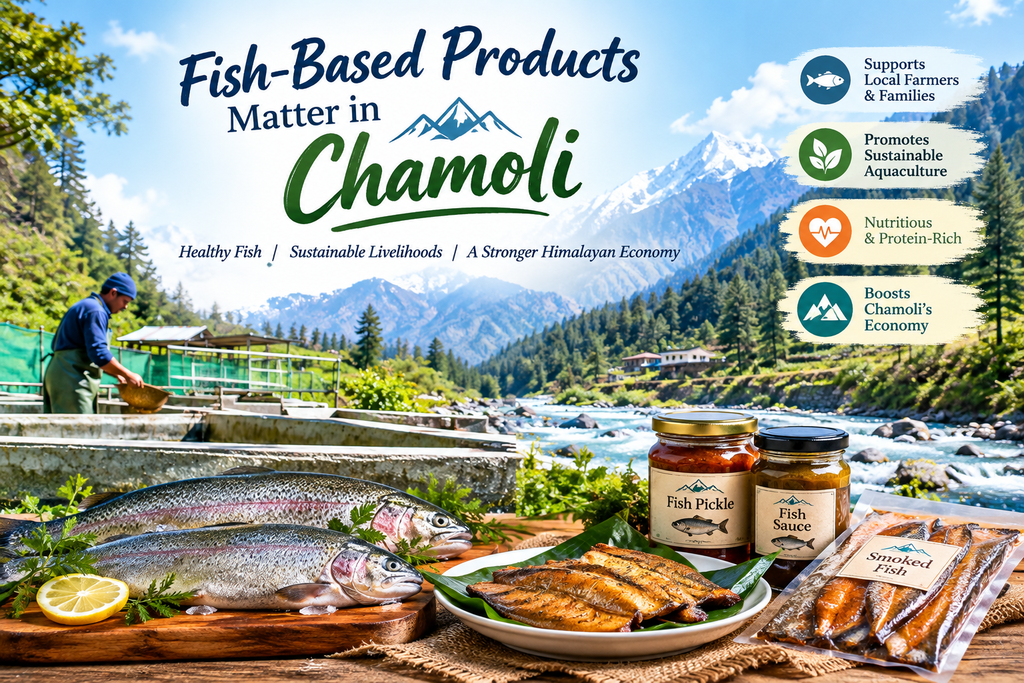
When people think about Chamoli they often picture snow-covered mountains, peaceful valleys, rivers and the spectacular landscapes of the Garhwal Himalayas.. Beyond tourism and natural beauty Chamoli also has an emerging agricultural and livelihood ecosystem built around the regions natural resources.
Among the products receiving recognition is fish-based products. The Government of India has identified Chamolis Fish based products as its One District One Product (ODOP) under Uttarakhands district- ODOP listing.
This recognition highlights the potential of fisheries and fish processing as an economic activity. For farmers, entrepreneurs, food processors and professionals fish-based products can create opportunities to move beyond the sale of fish and develop products with greater value, longer usability and stronger market potential.
From processed fish to dried, smoked and ready-to-cook formats fish-based businesses can become an important part of a wider Himalayan food and livelihood economy.
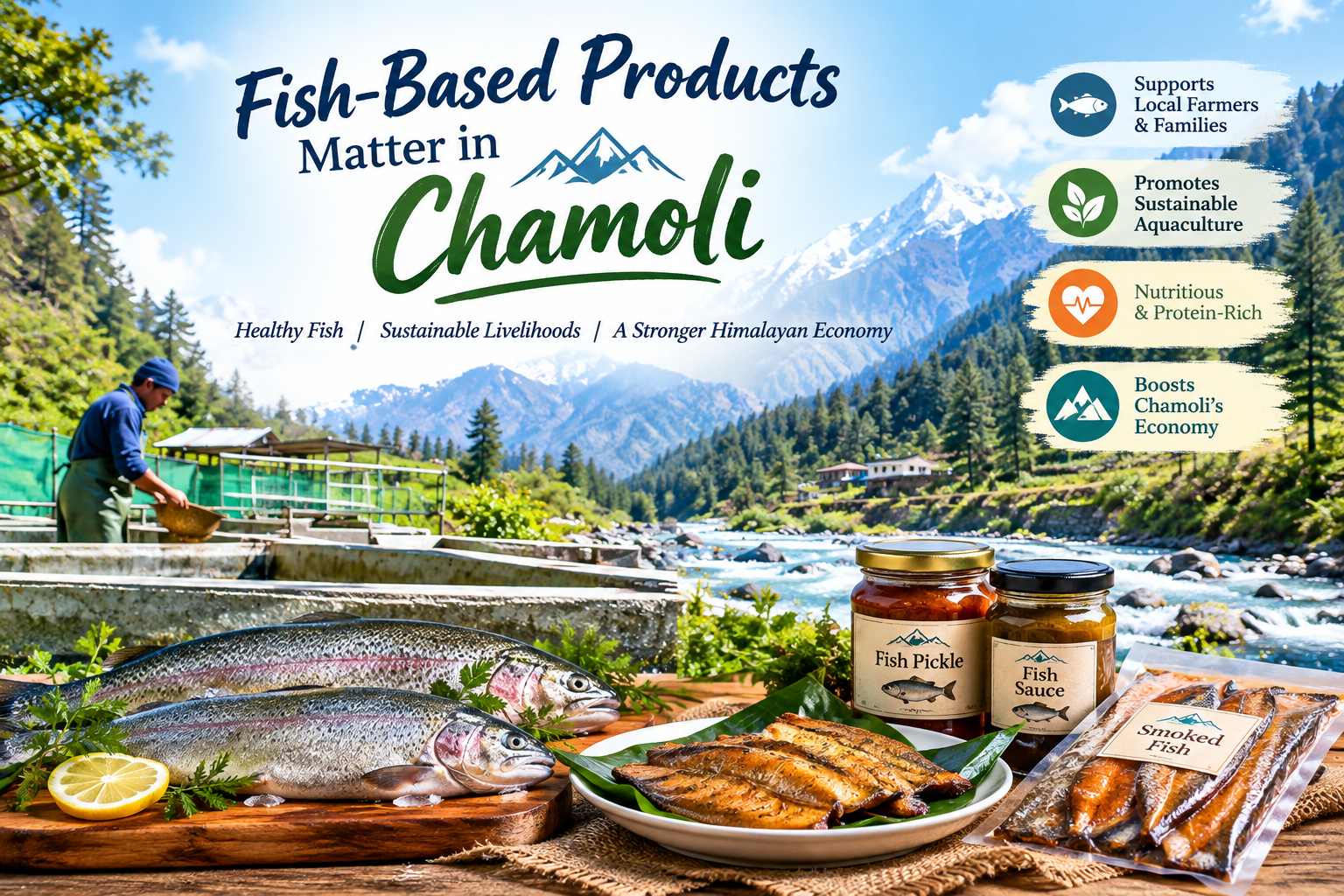
Why Fish-Based Products Matter in Chamoli
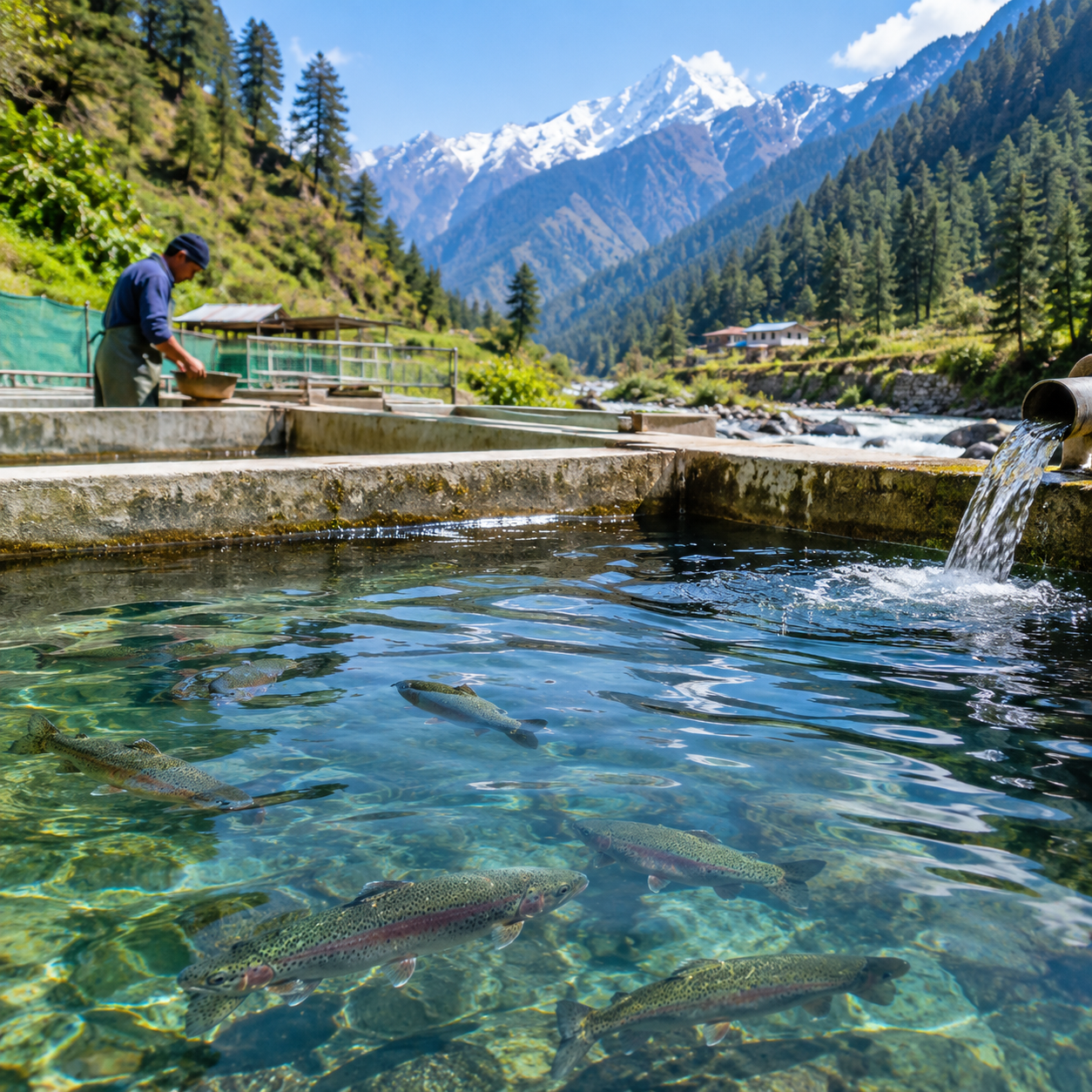
Chamoli is a district with rivers and water resources that provide opportunities for fisheries and aquaculture. Fish production can contribute to livelihoods while also supporting local food businesses.
The importance of this sector becomes more significant when fish is processed into value-added products.
Fresh fish is highly perishable. Requires careful handling, refrigeration and transportation. Processing can help businesses create products that’re easier to package, distribute and market.
Potential value-added categories include:
cleaned and packaged fish
Chilled fish
Frozen fish
Dried fish
Smoked fish
Marinated fish
Ready-to-cook fish products
Fish pickles and specialty preparations
Fish-based food ingredients
Packaged fish products
The exact product range depends on local production practices, consumer demand, food-safety requirements and processing infrastructure.
Chamolis ODOP Recognition
The One District One Product initiative is designed to identify and promote products associated with districts helping local products gain stronger market recognition and opportunities for value addition.
Under the Government of Indias ODOP listing for Uttarakhand the states 13 districts have designated products with Chamoli listed for Fish based products.
This recognition is important because it gives fish-based entrepreneurship in Chamoli a regional identity.
For a brand such as DesiBiz this story can be communicated as:
Local resources → Local production → Value addition → Local entrepreneurship → Wider markets
Such a model can connect rural producers with modern consumers and businesses.
Types of Fish-Based Products
1. Fresh and Cleaned Fish
The simplest form of value addition is cleaning, cutting and hygienically packaging fish.
Of selling whole fish businesses can provide ready-to-cook portions. This can save customers preparation time. Make the product more convenient.
Professional packaging can include information such as:
Product name
Net weight
Packing date
Storage instructions
Use-by information
Processing details
Required food-safety information
This format can be particularly useful for consumers, restaurants and hospitality businesses.
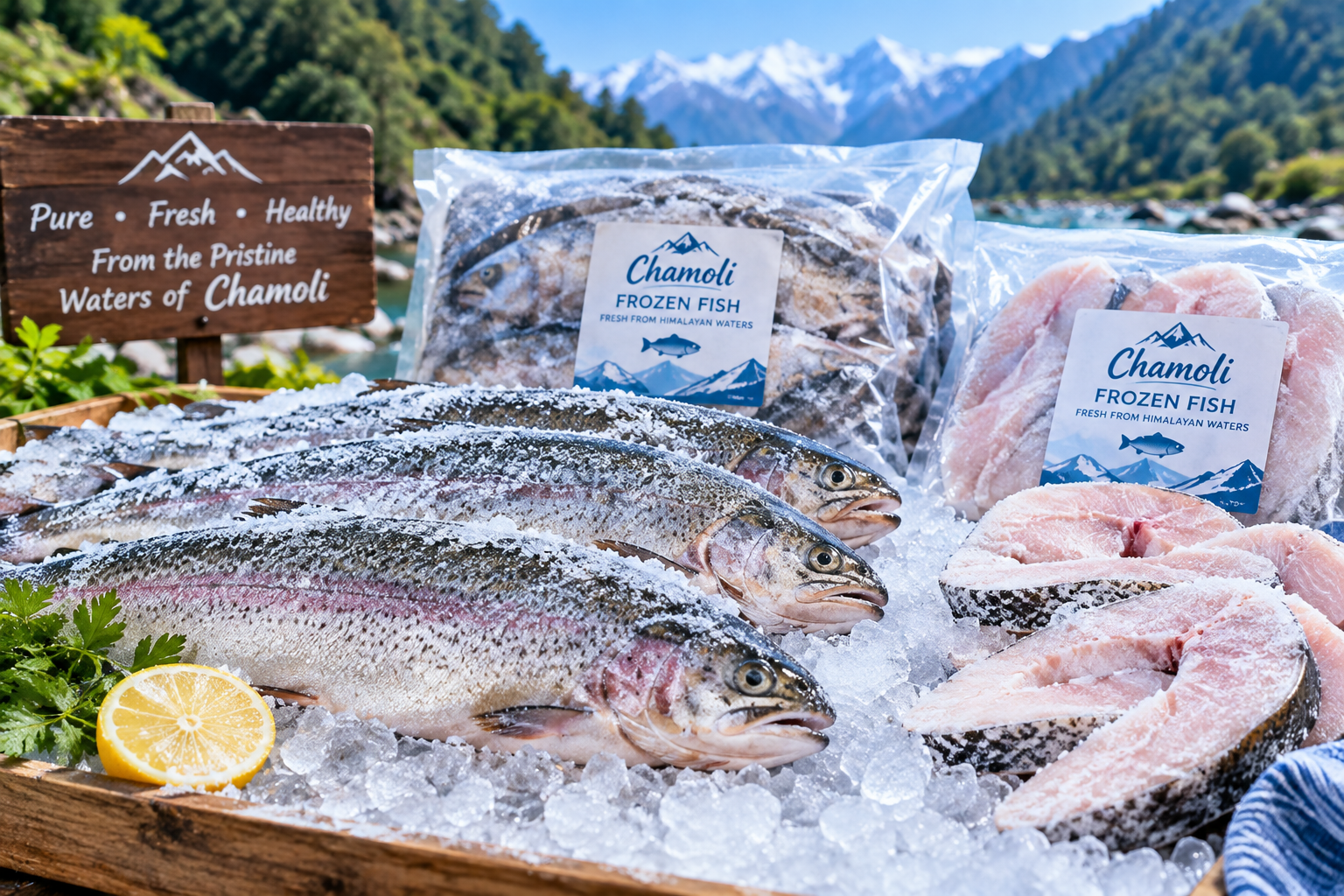
2. Frozen Fish
Freezing can extend the usability of fish when carried out under food-processing and cold-chain conditions.
Frozen products can potentially reach markets beyond the production area provided businesses maintain proper temperature control from processing through transportation and retail.
For producers cold-chain infrastructure is particularly important because mountain geography can make transportation more challenging.
3. Dried Fish
Drying is a preservation technique used in many parts of the world.
The basic principle is to reduce moisture so that the product becomes less susceptible to spoilage. Modern commercial production requires controlled processing, hygiene, appropriate packaging and compliance with food-safety standards.
Dried fish can serve as a specialty food product for customers with preserved fish and regional culinary traditions.
4. Smoked Fish
Smoking can provide a flavour while also functioning as a preservation method when properly controlled.
For entrepreneurs smoked fish can potentially be positioned as a premium specialty product than a conventional commodity.
Attractive packaging and a strong Himalayan origin story can help differentiate products in specialty-food markets.
5. Ready-to-Cook Fish Products
Convenience is a trend in modern food consumption.
Businesses can explore prepared formats such as cleaned portions, marinated fish or other ready-to-cook products subject to applicable food-safety and processing requirements.
Such products can target:
Working professionals
Restaurants
Hotels
Cafés
Home cooks
Online grocery customers
Business Opportunities in Fish Processing
Fish-based products can create opportunities at levels of the value chain.
For Farmers and Fish Producers
Fish farmers can potentially increase earnings by supplying consistent-quality fish to processors and organized buyers of relying only on direct fresh-fish sales.
For Food Processors
Small and medium businesses can develop processing units focused on cleaning, packaging, chilling, freezing, drying or other suitable value-added products.
For Retailers
retailers can build specialty sections featuring professionally packaged regional fish products.
For Hotels and Restaurants
Hospitality businesses can source produced fish where appropriate and use regional sourcing as part of their food and tourism story.
For E-Commerce Businesses
Online platforms can introduce products to consumers outside Chamoli although perishable products require suitable cold-chain logistics.
Benefits of Developing Fish-Based Products
Reducing Food Loss
Fish is perishable. Proper processing and storage can help reduce losses caused by delayed consumption or inadequate handling.
Creating Employment
The sector can generate work across:
Fish farming
Collection
Sorting
Cleaning
Processing
Packaging
Cold storage
Transportation
Marketing
Retail
Increasing Product Value
A kilogram of fish and a professionally processed, packaged and branded product serve different markets. Value addition can create commercial opportunities.
Supporting Local Entrepreneurship
Fish-based processing can encourage entrepreneurs to build businesses around local resources rather than depending entirely on conventional employment.
Strengthening Regional Branding
Products associated with Chamoli can carry a Himalayan identity helping them stand apart from generic mass-market products.
Challenges for the Fish-Based Product Industry
Developing a fish-processing ecosystem in a Himalayan district also comes with challenges.
Cold-chain requirements: Fresh and frozen fish need temperature-controlled storage and transportation.
Mountain logistics: Hilly terrain can increase transportation time and costs.
Processing infrastructure: Entrepreneurs may need access to equipment, storage and hygienic processing facilities.
Food safety: Fish products require handling to maintain quality and protect consumers.
Market development: Businesses need to educate consumers about processed fish products and communicate their quality effectively.
Consistency: Professional buyers require supply, size, quality and packaging.
Addressing these challenges will be essential for turning production into a scalable commercial opportunity.
How Businesses Can Build a Strong Chamoli Fish Brand
A successful fish-based business needs more than material. It needs a brand and market strategy.
Focus on Hygiene
Food safety should be at the centre of every stage from production and handling to packaging and delivery.
Build a Strong Local Identity
Businesses can highlight Chamoli, the Garhwal Himalayas and responsible local production to create a regional story.
Invest in Packaging
packaging should protect the product while clearly communicating its identity, weight, storage requirements and other required information.
Develop Digital Presence
A website, social media profiles, product photography and digital marketing can help local businesses reach customers beyond their immediate area.
Target the Right Markets
Potential markets can include:
Local consumers
Hotels and resorts
Restaurants
Specialty food stores
retailers
Online customers
Tourism-related businesses
The Future of Fish-Based Products in Chamoli
The future of fish-based products in Chamoli will depend on combining local production with modern processing, food safety, cold-chain management and professional marketing.
Government recognition through ODOP provides a platform for highlighting Chamolis fish-based product ecosystem. The broader ODOP initiative aims to promote district-level products improve market access and support economic development.
For entrepreneurs the opportunity is not limited to selling fish. Value-added processing can create new product categories and potentially connect Himalayan producers with larger markets.
The key is to build a supply chain in which producers, processors, retailers and consumers all benefit.
Frequently Asked Questions
1. What is Chamoli famous for under the ODOP initiative?
According to the Government of Indias ODOP listing Chamoli is identified for Fish based products.
2. What are fish-based products?
Fish-based products are foods made from fish through processes such as cleaning, chilling, freezing, drying, smoking, marinating or other suitable forms of processing.
3. Why is fish processing important?
Fish processing can improve convenience create value-added products and potentially extend usability when preservation and storage methods are used.
4. Can fish-based products become a business opportunity in Chamoli?
Yes. Opportunities can exist in fish farming, processing, packaging, cold storage, retail, hospitality and specialty-food businesses.
5. What are examples of value-added fish products?
Examples include. Packaged fish, frozen fish, dried fish, smoked fish, marinated products and other appropriately processed fish foods.
6. What are the biggest challenges in selling fish products from the region?
Cold-chain infrastructure, transportation, food safety, consistent supply and access, to processing facilities can be important challenges.
7. How can Chamoli fish products reach customers outside Uttarakhand?
Businesses can use branding, e-commerce, social media, B2B partnerships, hospitality networks and specialty-food retailers supported by appropriate cold-chain and food-safety systems.
Fish-based products play a role in shaping the growing local-product identity of Chamoli. These products have been recognized through the Government of Indias ODOP framework. This recognition helps build awareness add more value and encourage more entrepreneurship.
The chance to grow does not stop with fish. With the processing, packaging, cold-chain systems and smart marketing businesses can create products for people, restaurants, hotels and speciality markets.
For the entrepreneurs and producers in Chamoli the aim is not just to sell fish. The aim is to build a professional value chain that brings resources to modern markets.
For people and businesses trying Chamolis fish-based products is also a way to learn about a part of Uttarakhand that’s not well known. It shows the food and business side of the region.
CTA: Discover local products, new businesses and special chances from different parts of India with DesiBiz—connecting local products, with modern markets.