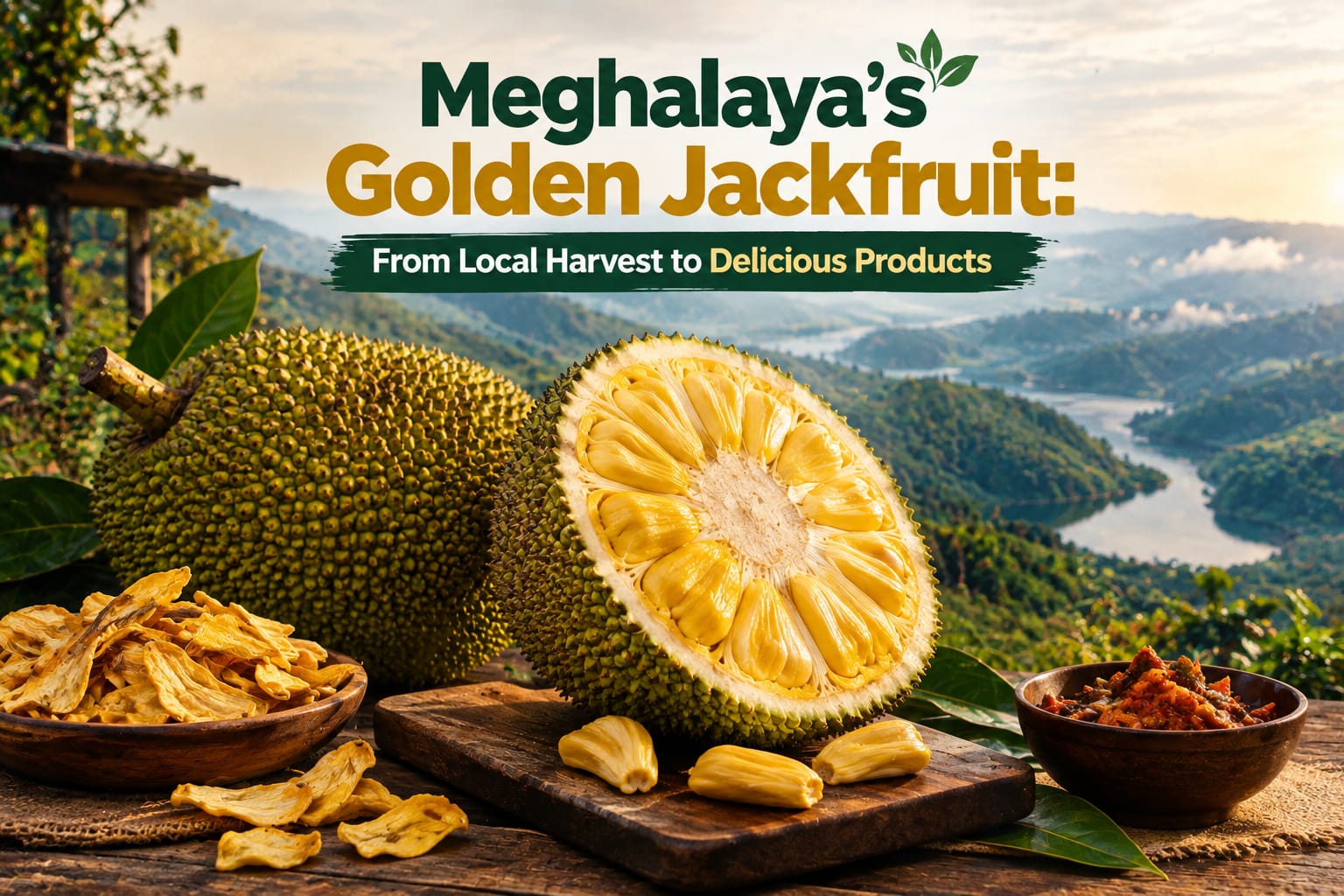

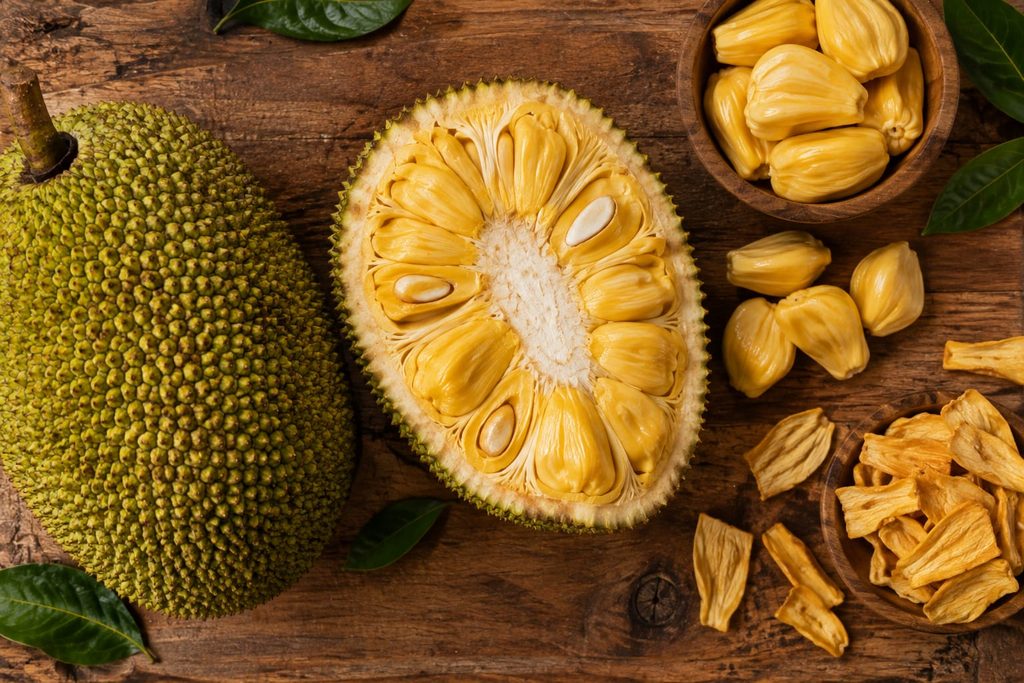
The hilly region of South Garo Hills in Meghalaya is blessed with natural resources and agricultural produce. One particular crop that has immense potential for value addition is jackfruit, which is found in abundance in the Garo Hills.
For long, much of the local jackfruit has been consumed fresh or sold during the harvest. With limited processing facilities and poor transportation and market linkages, a lot of the crop went wasted.
The jackfruit now has the potential to become a commercial product.
Jackfruit has been identified as the One District One Product (ODOP) of South Garo Hills. The focus now is on processing, value addition, branding and market development. Another positive development is the establishment of a jackfruit processing unit at Gulpani Nokat, Rongara.
Jackfruit: An Important Local Resource
Jackfruit grows well in the humid conditions of Meghalaya. Traditionally, the people of Garo Hills have been cultivating jackfruit around their homes.
Research done on jackfruit utilisation in the Garo Hills has identified the dual importance of jackfruit as a local food resource and the wastage of the crop due to lack of infrastructure, processing facilities and market development. Some studies also document the traditional jackfruit based practices of the local communities.
Processing during the harvesting season can be a good opportunity to diversify from fresh jackfruit sales. The value chain could look like:
Jackfruit → Processing → Value Addition → Packaging → Branding → Wider Markets
Why Jackfruit Processing Matters
The fresh jackfruit is bulky and seasonal. It can be challenging to get the produce from the remote village to the far-off market.
Processing can help address some of these issues.
Jackfruit can be processed into:
- Chips
- Papad
- Pickle
- Squash
- Flour
- Jam
- Snack mixture
- Dehydrated products
- Ready-to-cook products
- Other fruit-based products
The South Garo Hills ODOP initiative already identifies some of these products as potential enterprise.
The value addition can also create alternative employment avenues beyond farming. Processing also requires activities such as sorting, cleaning, cutting, drying, cooking, packaging, labelling and marketing.
Major Jackfruit Based Products in South Garo Hills
1. Jackfruit Chips
Jackfruit chips are a familiar processed jackfruit product.
Tender jackfruit can be processed into a crisp and is a popular snack. These can be made in a variety of flavours and seasonings based on consumer preference.
Chips are easier to package and transport compared to fresh jackfruit. This can also be a product for local retail stores, markets, fairs and online sales.
2. Jackfruit Papad
Jackfruit papad is another good way of storing and marketing jackfruit.
The product can also be made in convenient sizes and dried for sale throughout the year. The South Garo Hills ODOP initiative also identifies jackfruit papad as an enterprise that local enterprises can develop.
3. Jackfruit Squash
Ripe jackfruit can be processed into pulp for fruit-based beverages such as squash.
This allows value addition by converting the seasonal fruit into a product with a longer shelf life.
Jackfruit squash is also identified among the products that the ODOP initiative of South Garo Hills has earmarked.
4. Jackfruit Pickle
Raw jackfruit can be utilised to prepare pickle, which is another traditional-style preserved product.
Pickles also have the advantage of being packaged in small retail packs.
5. Jackfruit Flour
Jackfruit flour is one of the most interesting value-added products.
Raw jackfruit can be dried and processed into flour. The jackfruit seeds can also be utilised for flour production, helping to use up the part of the fruit that would have otherwise gone to waste.
Flour is also much easier to transport and store compared to fresh jackfruit.
6. Jackfruit Snacks and Mixtures
Local enterprises are also developing jackfruit-based snack products such as jackfruit chana and mixtures.
This shows how jackfruit can be utilised to make packed snacks rather than just the seasonal fresh fruit.
Jackfruit Processing at Gulpani Nokat
The major development in South Garo Hills is the establishment of the jackfruit processing unit at Gulpani Nokat, Rongara.
The unit is owned and managed by the Rongara Agri Food Processing Cooperative Society, representing small and marginal farmers.
According to Meghalaya government information, the facility has the capacity to process more than 700 metric tonnes of jackfruit annually and was developed to improve the value of the produce received by farmers.
The facility is part of Meghalaya’s initiatives to develop the jackfruit value chain and rural food-processing sector.
This form of infrastructure can help connect farmers with organised collection, processing and markets rather than each farmer struggling with fresh jackfruit sales.
Opportunities for Local Entrepreneurs
Jackfruit processing can open up opportunities at multiple levels.
Farmers can supply jackfruit to organised collection systems, and local entrepreneurs can participate in processing, packaging, branding, sales and distribution.
Women and youth can also find employment opportunities in activities such as food preparation, quality control, packaging and marketing.
South Garo Hills ODOP plan highlights skill development, packaging, branding, farmer groups, processing infrastructure and market linkages as important areas for developing the jackfruit economy of the district.
This allows jackfruit to not only be an agricultural crop but to become the foundation for a rural enterprise ecosystem.
Traditional Knowledge Meets Modern Processing
Jackfruit has traditionally been used by communities in the Garo Hills in a variety of forms.
Research has documented the traditional jackfruit utilizaiton in the region while also identifying the need for better processing and storage to reduce wastage.
Modern food processing can build on this existing local jackfruit knowledge.
Better drying, packaging, food-safety practices, labelling and branding can help create traditional jackfruit products with commercial viability that have the potential to reach markets outside of Meghalaya.
Market Potential
The market potential of jackfruit products extends beyond the local district.
Products such as chips, flour, papad, pickles and dehydrated jackfruit are easier to transport than fresh fruit and can reach customers across India.
There is also interest in tender jackfruit as a plant-based food ingredient and meat substitute. Meghalaya’s development plans identify several potential products, including flour, chips, papad, noodles, ready-to-cook jackfruit and dehydrated products.
The opportunity to make a name for South Garo Hills jackfruit lies in the combination of good packaging, quality and food-security compliance and branding for local products to compete in the larger markets.
Challenges to Overcome
The development of the jackfruit products also comes with challenges.
The crop is seasonal, and processing units need to have systems for sourcing and handling fruit during the harvesting period. Transportation from remote villages can also be costly.
Another challenge is maintaining product quality and shelf life.
Marketing is also as important as the product. Even a good product needs attractive packaging, proper labelling, branding and right market access.
Strengthening farmer groups and processing facilities can help address some of the challenges associated with the supply chain.
Future of Jackfruit in South Garo Hills
The future of jackfruit in South Garo Hills lies not in selling the seasonal fresh fruit but in developing a complete value chain so that farmers can supply fresh jackfruit, the processing units can make various products and local businesses can handle the packaging, branding and distribution.
The development of the Rongara processing facility, ODOP initiative and local enterprises provides the foundation for such a transition. Meghalaya’s Central Agricultural University has also showcased a variety of jackfruit-based products, including chips, mixtures, flour, squash, papad, crackers, cookies and cakes.
With the development of modern technological capabilities, South Garo Hills has the potential to utilise its abundant jackfruit to generate more rural income and employment.
Conclusion
Jackfruit is an important local resource for South Garo Hills, but the potential of the crop goes far beyond fresh-fruit consumption.
Through products such as chips, papad, pickle, squash, flour, jam and packaged snacks, the district can convert seasonal crop into products with greater shelf life.
The development of processing infrastructure at Rongara and the recognition of jackfruit as an ODOP product provides the necessary support for the transformation.
With stronger farmer networks, modern processing, attractive packaging and market access, South Garo Hills can develop a unique jackfruit-based rural enterprise ecosystem while also getting more value for their crop.
Frequently Asked Questions (FAQs)
1. What is the ODOP product of South Garo Hills?
Jackfruit is the One District One Product (ODOP) product identified for South Garo Hills, Meghalaya. The focus is on developing processing, value addition, branding and market opportunities around the crop.
2. What jackfruit products are made in South Garo Hills?
Products associated with the district’s jackfruit initiative include jackfruit chips, papad, pickle, squash, flour, jam, chana and snack mixtures, among others.
3. Where is the jackfruit processing unit in South Garo Hills?
A major jackfruit processing facility is located at Gulpani Nokat in Rongara. It is managed by the Rongara Agri Food Processing Cooperative Society.
4. Why is jackfruit processing important in South Garo Hills?
Processing can help address some of the issues related to the waste of seasonal fruit. It can also increase the shelf life, ease of transportation and provide additional value and income opportunities for farmers and local entrepreneurs.
5. Can jackfruit seeds also be used?
Yes. Jackfruit seeds can be processed and used for products such as flour, helping to utilise more of the fruit instead of treating the seeds as waste.