Introduction
Pour a cup of strong black tea anywhere in the world, and there’s a good chance it started in Assam. Tea lovers call it Assam liquid gold tea because of its deep amber color, its golden-tipped leaves, and its value to India’s economy.
Many buyers don’t know what makes real Assam tea special. Supermarket blends often hide its true character, and labels like “premium” or “gold” can mislead. That makes it hard to buy well or brew it right.
This guide explains where Assam tea comes from, how it’s made, and why it tastes the way it does. You’ll also learn how to spot quality, avoid common brewing mistakes, and choose the right style for your taste.
Assam liquid gold tea is a black tea grown in the Brahmaputra Valley of Assam, in northeast India. It comes from the native Camellia sinensis var. assamica plant. It’s known for its bold, malty flavor, bright reddish-amber color, and golden leaf tips, especially in the prized second-flush harvest.
Detailed Explanation
Assam sits on the floodplains of the Brahmaputra River, close to sea level. The region gets heavy monsoon rain, high humidity, and hot summers. These conditions suit the large-leaf assamica plant, which grows naturally in the region.
In 1823, Scottish trader Robert Bruce learned about wild tea plants from the Singpho people, whose chief, Bessa Gam, showed him the plants. Later, the Assam Company (formed in 1839) built the first commercial estates. Assamese nobleman Maniram Dewan also started early plantations and is remembered as a pioneer of the local industry.
Today, Assam produces roughly half of India’s tea. That makes it one of the largest tea-growing regions in the world.
Key Components of Assam Liquid Gold Tea
- Plant variety: Camellia sinensis var. assamica, a large-leaf plant suited to tropical heat
- Terroir: Low-lying land, alluvial soil, and heavy rainfall from the Brahmaputra basin
- Golden tips: Young, downy buds that turn golden during processing
- Flavor profile: Malty, brisk, full-bodied, sometimes with honey or cocoa notes
- Processing styles: Orthodox (whole leaf) and CTC (crush, tear, curl)
- Certification: Assam Orthodox tea carries a Geographical Indication (GI) tag and a one-horned rhino logo from the Tea Board of India
Why Is Assam Liquid Gold Tea Important?

Direct answer: Assam tea matters because it supplies a large share of India’s tea, supports over a million workers, and forms the base of famous blends like English Breakfast and Irish Breakfast. Its strong flavor holds up well with milk, which makes it central to masala chai and everyday tea culture.
For tea drinkers, Assam offers a bold cup that wakes you up. It’s the backbone of most breakfast blends worldwide.
For businesses, Assam tea drives exports, tourism, and specialty retail. At the Guwahati Tea Auction Centre, rare golden-tip lots have sold for record prices above ₹75,000 per kilogram.
For the region, tea shapes Assam’s economy and culture. The Tocklai Tea Research Institute in Jorhat, founded in 1911, is one of the oldest tea research centres in the world.
Today, demand is shifting toward single-estate, orthodox, and traceable teas. Buyers want to know exactly where their cup comes from.
How Does Assam Tea Production Work?
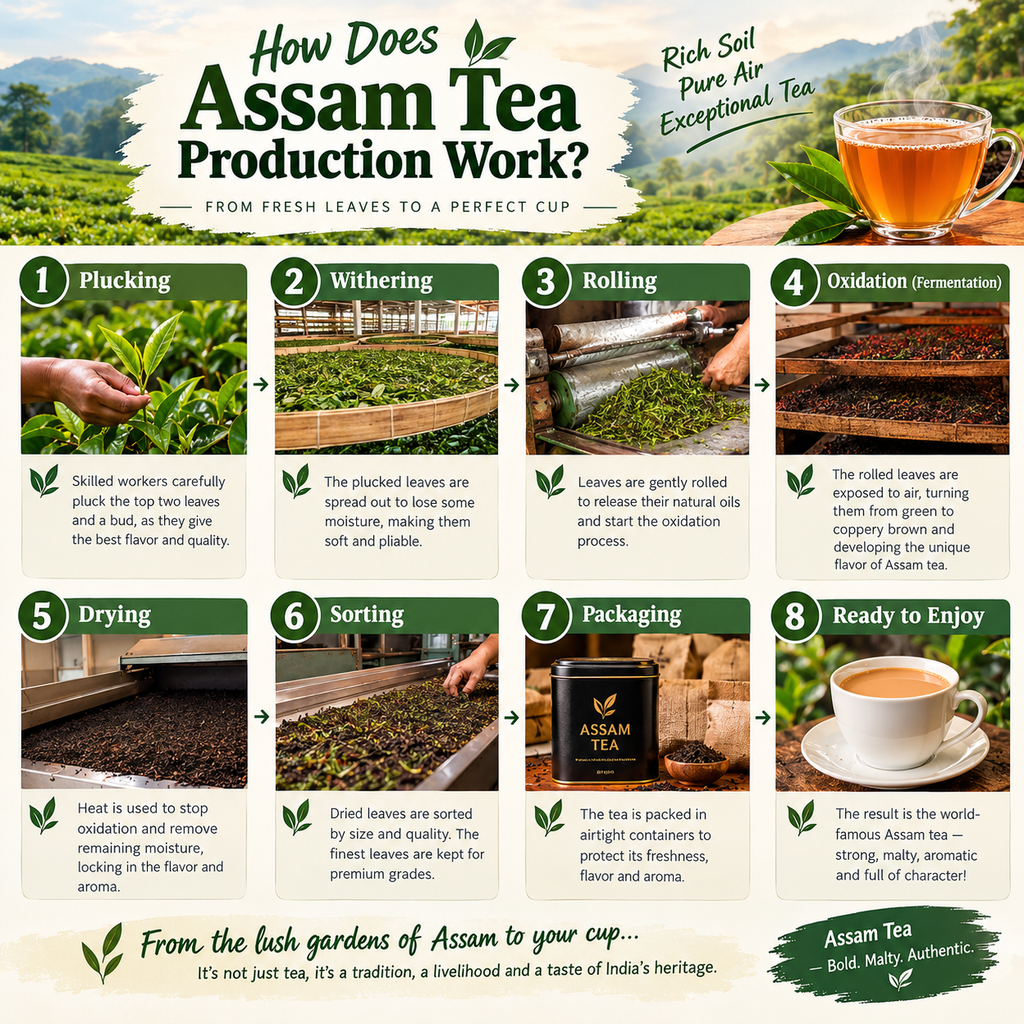
Direct answer: Assam tea is made in four main stages. Workers pluck two leaves and a bud, the leaves are withered to reduce moisture, then rolled or crushed to start oxidation, and finally dried with heat. These steps create the dark color and malty taste of black tea.
Step 1: Plucking
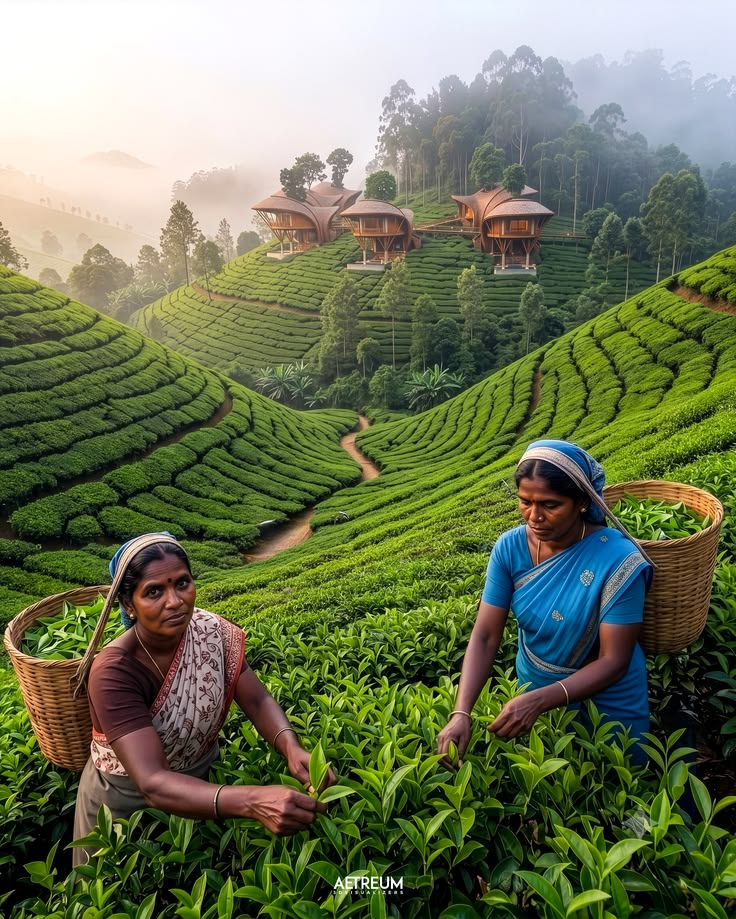
Skilled workers, mostly women, hand-pick “two leaves and a bud.” The bud gives the golden tips. Harvests run in flushes:
- First flush (March–April): Lighter and fresher
- Second flush (May–June): Richest, maltiest, and most golden-tipped
- Monsoon flush (July–September): Stronger and darker, often used for CTC
- Autumn flush (October–November): Smoother and mellower
Step 2: Withering
Fresh leaves rest on racks for 12–18 hours. They lose moisture and turn soft and flexible.
Step 3: Rolling or CTC
Orthodox tea is rolled to keep leaves mostly whole. CTC tea is pushed through rollers that crush, tear, and curl it into small pellets. CTC brews fast and strong, which is why it’s common in Indian chai.
Step 4: Oxidation and Drying
Leaves react with air and darken. Hot air then stops oxidation and locks in flavor.
Example: A second-flush orthodox tea from an estate near Dibrugarh might show plenty of golden buds. It brews a bright, coppery cup with a sweet malt finish.
Benefits of Assam Liquid Gold Tea
- Natural energy boost
- What it is: A cup contains roughly 40–70 mg of caffeine.
- Why it matters: It’s less than most coffee but enough for focus.
- Expected outcome: Steady alertness without a sharp crash for most people.
- Rich in antioxidants
- What it is: Black tea contains flavonoids like theaflavins.
- Why it matters: Studies link regular tea drinking to heart health.
- Expected outcome: A healthy habit, though research is mostly observational, not proof.
- Pairs well with milk and spices
- What it is: Its bold body doesn’t get lost under milk.
- Why it matters: It’s ideal for chai, lattes, and breakfast tea.
- Expected outcome: A full-flavored cup every time.
- Great value
- What it is: Good Assam is widely available at many price points.
- Why it matters: You don’t need to spend much for quality.
- Expected outcome: Daily luxury on a modest budget.
- Versatile brewing
- What it is: Works hot, iced, or as a cold brew.
- Why it matters: One tea covers many seasons and moods.
- Expected outcome: Less need to buy many different teas.
Challenges and Common Mistakes
| Mistake | Problem | Cause | Solution |
|---|---|---|---|
| Bitter, harsh cup | The tea tastes sharp and dry | Steeping too long, often over 5 minutes | Steep for 3–4 minutes, then taste and adjust |
| Buying fake “Assam” tea | The tea lacks malt and depth | Blends using small amounts of real Assam leaf | Look for the GI logo, estate name, and flush details |
| Stale tea | Flat or dusty flavor | Exposure to air, light, and moisture | Store in an airtight, opaque container away from spices |
| Wrong water temperature | Weak, thin cup | Water well below boiling | Use water at 95–100°C for black tea |
| Ignoring ethics | Supporting poor labor conditions without knowing it | Low wages have long been a concern on some estates | Choose brands with Fairtrade, Rainforest Alliance, or clear sourcing details |
Best Practices and Expert Tips
- Use about 2–3 grams of leaf per 200 ml of water.
- Steep orthodox leaf for 3–5 minutes and CTC for 2–3 minutes.
- Warm your teapot or cup before brewing.
- Pick second flush for the classic malty, golden-tipped cup.
- Choose CTC for strong chai and orthodox for drinking plain.
- Check leaves for visible golden tips as a sign of quality.
- Buy small batches and finish them within six months.
- Add milk after steeping, not during, for cleaner flavor.
- Try a cold brew: steep leaves in cold water for 8–10 hours in the fridge.
- Visit Jorhat or Dibrugarh to tour estates and taste fresh tea at the source.
Comparison Table: Assam vs. Darjeeling vs. Nilgiri Tea
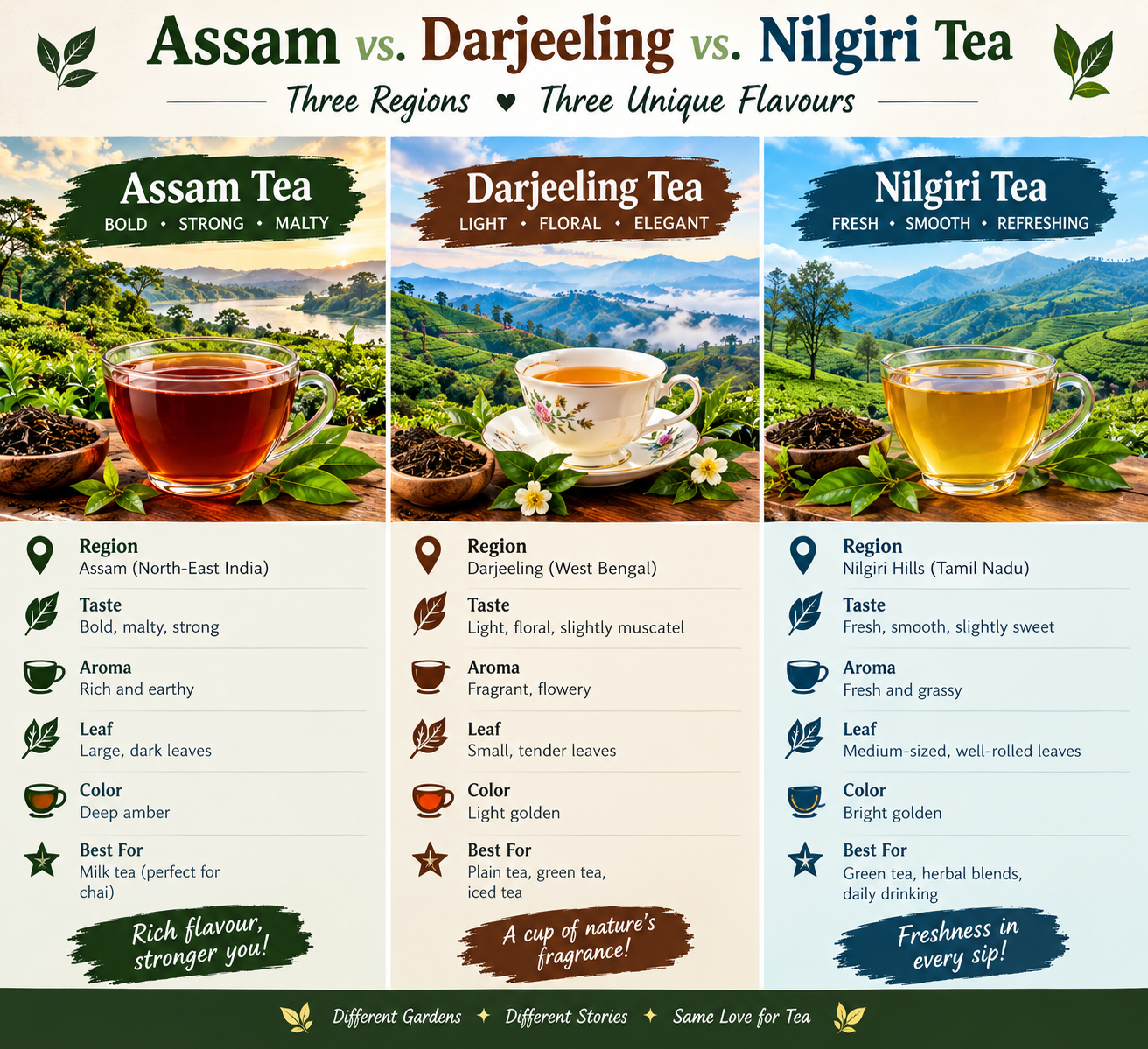
| Feature | Assam | Darjeeling | Nilgiri |
|---|---|---|---|
| Region | Brahmaputra Valley, northeast India | Himalayan foothills, West Bengal | Blue Mountains, South India |
| Elevation | Near sea level | High altitude | Mid to high altitude |
| Main plant | assamica | Mostly sinensis | Mixed varieties |
| Flavor | Malty, bold, brisk | Light, floral, muscatel | Fragrant, bright, smooth |
| Best with milk | Yes | Usually no | Sometimes |
| Ideal use | Breakfast tea, chai | Plain sipping | Iced tea, blends |
| Price range | Low to very high | Medium to very high | Low to medium |
Frequently Asked Questions (FAQ)

1. Why is Assam tea called liquid gold?
Direct answer: Assam tea is called liquid gold because it brews a bright amber-gold color and its best leaves carry golden tips. The name also reflects its economic value, as tea is one of Assam’s most important industries and a major Indian export.
Detailed explanation: Premium golden-tip lots fetch some of the highest prices at Indian tea auctions.
2. What does Assam tea taste like?
Direct answer: Assam tea tastes malty, bold, and brisk with a full body. Good second-flush teas may show notes of honey, caramel, or cocoa. It has a slight astringency that gives it a lively feel, and it stays flavorful even when you add milk and sugar.
Detailed explanation: Flavor varies by flush, estate, and processing style.
3. Is Assam tea good for health?
Direct answer: Assam tea contains antioxidants like flavonoids, and moderate black tea drinking is linked to heart health in research. It also offers mild caffeine for focus. However, it’s not a cure for any condition, and adding lots of sugar reduces its benefits.
Detailed explanation: People sensitive to caffeine or with iron deficiency should limit intake around meals.
4. How much caffeine is in Assam tea?
Direct answer: A typical cup of Assam tea has around 40–70 mg of caffeine. That’s roughly half the caffeine in an average cup of brewed coffee. The exact amount depends on leaf quantity, steeping time, water temperature, and whether the tea is orthodox or CTC.
Detailed explanation: CTC tea often releases caffeine faster because of its smaller particles.
5. What is the best time to harvest Assam tea?
Direct answer: The second flush, harvested from May to June, is widely considered the best Assam tea. It produces the most golden tips and the richest malty flavor. First flush is lighter, while monsoon and autumn flushes are stronger or smoother and often cost less.
Detailed explanation: Specialty buyers usually look for “SFTGFOP” grades from the second flush.
6. What is the difference between orthodox and CTC Assam tea?
Direct answer: Orthodox Assam tea keeps leaves mostly whole and gives a smoother, more complex cup. CTC tea is crushed into small pellets that brew quickly and very strong. Orthodox suits plain sipping, while CTC is the standard choice for Indian masala chai.
Detailed explanation: Most of Assam’s output is CTC, made for the large domestic chai market.
7. How do you brew Assam tea properly?
Direct answer: Use 2–3 grams of tea per 200 ml of water heated to 95–100°C. Steep orthodox leaves for 3–5 minutes and CTC for 2–3 minutes. Strain, then add milk or sugar if you like. Taste early to avoid bitterness from over-steeping.
Detailed explanation: For chai, simmer CTC with milk, water, and spices for a few minutes.
8. How can I tell if Assam tea is genuine?
Direct answer: Look for the Tea Board of India’s Assam logo with the one-horned rhino, the GI mark, and a named estate or flush. Genuine orthodox Assam often shows golden tips. Be cautious with vague labels like “premium Assam” that give no origin details.
Detailed explanation: Reputable sellers usually list the estate, harvest year, and grade.
Key Takeaways
- Assam tea comes from the native assamica plant in the Brahmaputra Valley.
- The name “liquid gold” reflects its color, golden tips, and economic value.
- Second flush offers the richest, maltiest cup.
- Orthodox suits plain drinking, while CTC suits chai.
- Brew at 95–100°C for 3–5 minutes to avoid bitterness.
- Check for GI and Tea Board logos to confirm authenticity.