
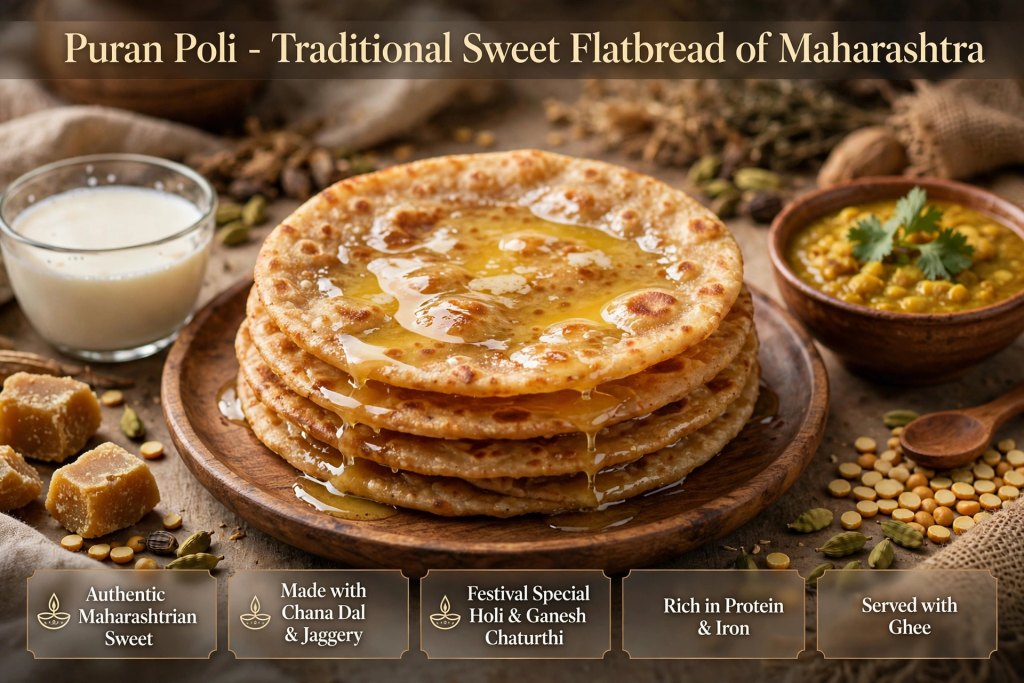
Puran Poli in Maharashtra: A Traditional Sweet Flatbread Guide
Puran Poli is one of Maharashtra’s most loved traditional foods. This soft, golden flatbread has a sweet filling made from cooked chana dal and jaggery. It is often prepared during festivals, family gatherings, and special occasions. Puran Poli in Maharashtra is more than a sweet dish; it represents the state’s rich food culture, family traditions, and hospitality.
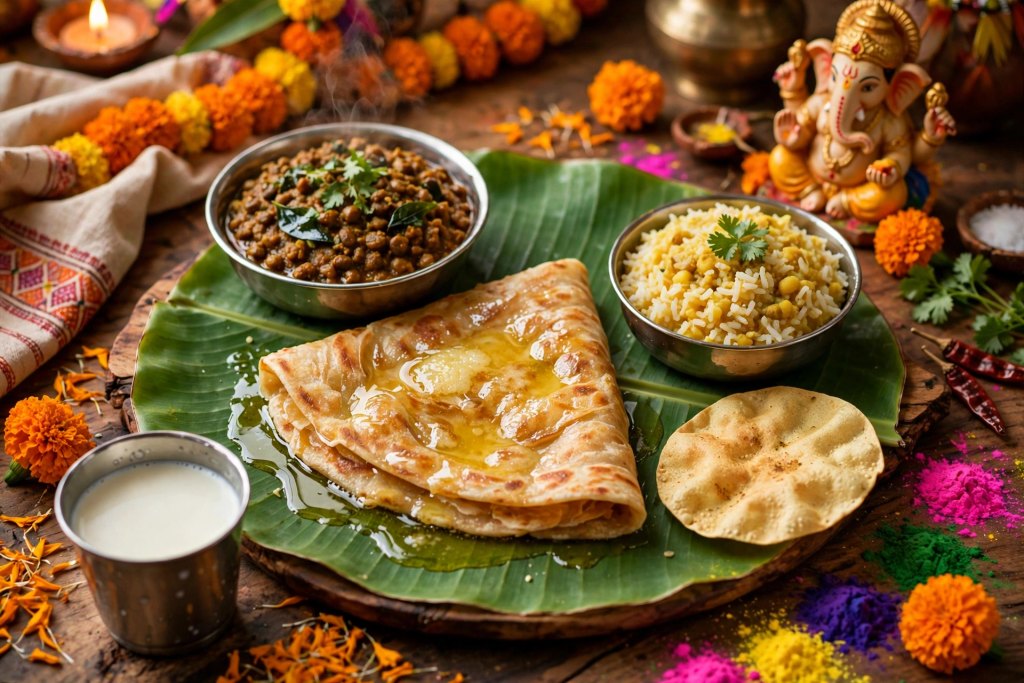
From Gudi Padwa to Holi, many Maharashtrian families prepare Puran Poli at home. Its delicious taste comes from a simple combination of lentils, jaggery, wheat flour, and aromatic spices. Some families serve it with ghee, while others enjoy it with milk or katachi amti, a traditional tangy curry.
In this guide, you will learn what Puran Poli is, how it is made, its cultural importance, its benefits, common preparation mistakes, and how it compares with other Indian flatbreads.
What Is Puran Poli?
Puran Poli is a traditional Indian sweet flatbread made by stuffing a soft dough with a sweet mixture of cooked lentils and jaggery. In Maharashtra, the filling is usually prepared with chana dal, jaggery, cardamom, and nutmeg. The stuffed dough is rolled thin and cooked on a hot griddle.
Detailed Explanation of Puran Poli in Maharashtra
The word puran refers to the sweet filling, while poli means flatbread. Together, they describe a dish that combines a soft outer layer with a rich, sweet centre.
Maharashtrian Puran Poli is especially popular during Gudi Padwa, Holi, and other auspicious occasions. Recipes can differ between households and regions. Some cooks use sugar instead of jaggery, while others adjust the spices to suit their family’s taste.
A well-made Puran Poli has three important qualities:
- Soft texture: The outer layer should remain tender after cooking.
- Smooth filling: The puran should be thick, evenly mixed, and free from excess moisture.
- Balanced sweetness: Jaggery, cardamom, and nutmeg should complement each other without overpowering the dish.
Although it looks similar to a stuffed paratha, Puran Poli has a sweeter filling and a distinct place in Maharashtrian culinary traditions.
Key Ingredients Used in Maharashtrian Puran Poli
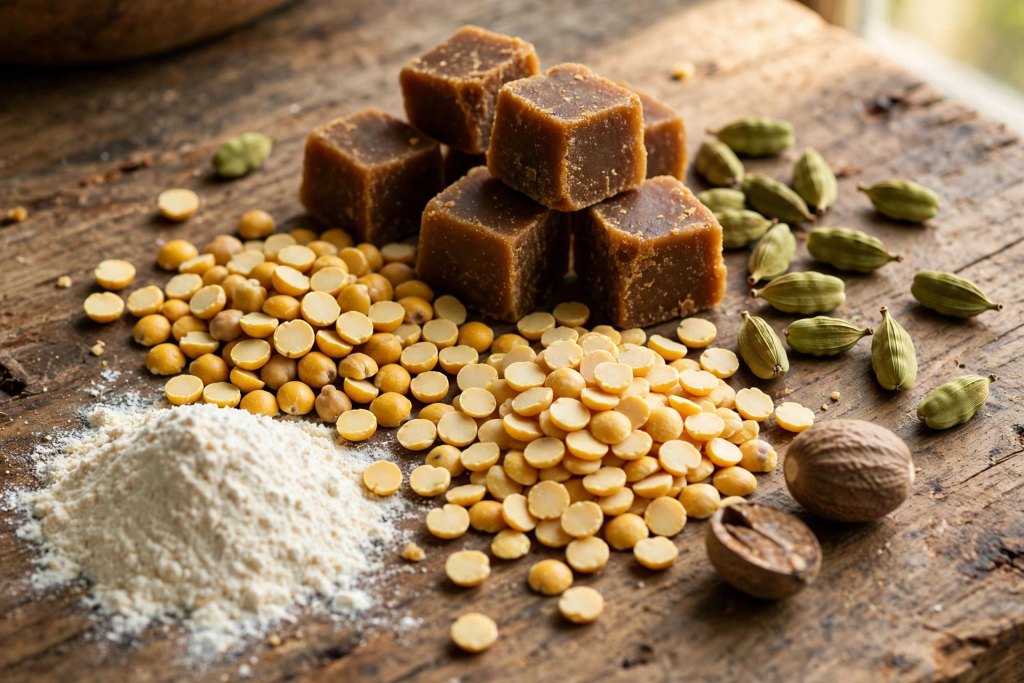
Puran Poli uses everyday ingredients that combine to create its signature flavour. Each ingredient has a specific role in the taste, texture, and structure of the dish.
- Chana dal: Split Bengal gram forms the traditional filling and provides protein and fibre.
- Jaggery: Adds natural sweetness and a deep, caramel-like flavour.
- Wheat flour: Forms the outer dough and helps hold the filling.
- Ghee: Adds aroma, richness, and a soft finish.
- Cardamom: Gives the filling a warm, fragrant flavour.
- Nutmeg: Adds a subtle spice note in many traditional recipes.
- Turmeric and salt: Small amounts may be used in the dough, depending on the household recipe.
- Water and oil: Help prepare a smooth, flexible dough.
The quality of the filling is especially important. Chana dal should be cooked until tender, but it should not contain excess water. Jaggery should dissolve evenly, and the final mixture should be thick enough to roll inside the dough.
Why Is Puran Poli Important in Maharashtra?
Puran Poli is important in Maharashtra because it connects traditional cooking with festivals, family customs, and regional identity. Families often prepare it for celebrations such as Gudi Padwa and Holi. The dish is also served during special meals and religious occasions, making it a familiar symbol of Maharashtrian hospitality.
Cultural Significance and Festival Traditions
Food plays an important role in Maharashtrian celebrations. During Gudi Padwa, the traditional Marathi New Year, families prepare festive meals that may include Puran Poli. During Holi, it is also enjoyed in many homes as part of seasonal celebrations.
The dish often involves several stages of preparation, from cooking the dal to grinding the filling and rolling the dough. Family members may help with different tasks, passing cooking methods from one generation to another.
Puran Poli also appears in regional food traditions across Maharashtra. Recipes may vary in sweetness, thickness, spice levels, and serving style.
For example, one household may prefer a thin poli with a smooth filling, while another may make it thicker and serve it with generous amounts of ghee. Both versions reflect personal and family preferences.
Practical Relevance Today
Puran Poli remains relevant for several reasons:
- It preserves traditional Maharashtrian cooking practices.
- It is popular at family celebrations and festive gatherings.
- It supports local food businesses, sweet shops, caterers, and traditional restaurants.
- It offers an example of how simple ingredients can create a distinctive regional dish.
- It appeals to people interested in authentic Indian food and regional culinary tourism.
For food businesses, Puran Poli can be included in festive menus, regional food experiences, and traditional Maharashtrian meal packages. However, businesses should maintain consistent quality, clearly communicate ingredients, and prepare it hygienically.
How Is Puran Poli Made? Step-by-Step Guide
Traditional Puran Poli is made by preparing the sweet filling, kneading the dough, stuffing the dough, and cooking the flatbread on a hot griddle. The most important steps are controlling moisture in the filling and rolling the stuffed dough gently. These techniques help prevent tearing and produce a soft, evenly cooked poli.
Step 1: Prepare the Puran
Rinse chana dal and cook it in water until tender. Drain any excess water carefully. Add jaggery to the cooked dal and heat the mixture until the jaggery dissolves and the filling thickens.
Mash or grind the mixture until smooth. Add cardamom and a small pinch of nutmeg if desired. Allow the puran to cool before stuffing.
Practical tip: If the filling is too wet, it will escape from the dough during rolling. Cook it a little longer over low heat until it becomes thick.
Step 2: Knead the Dough
Mix wheat flour with a little oil or ghee, a pinch of salt, and enough water to make a soft dough. Knead until smooth, then cover and rest it for about 20–30 minutes.
The dough should be flexible rather than stiff. A soft dough stretches more easily around the filling and helps produce a tender flatbread.
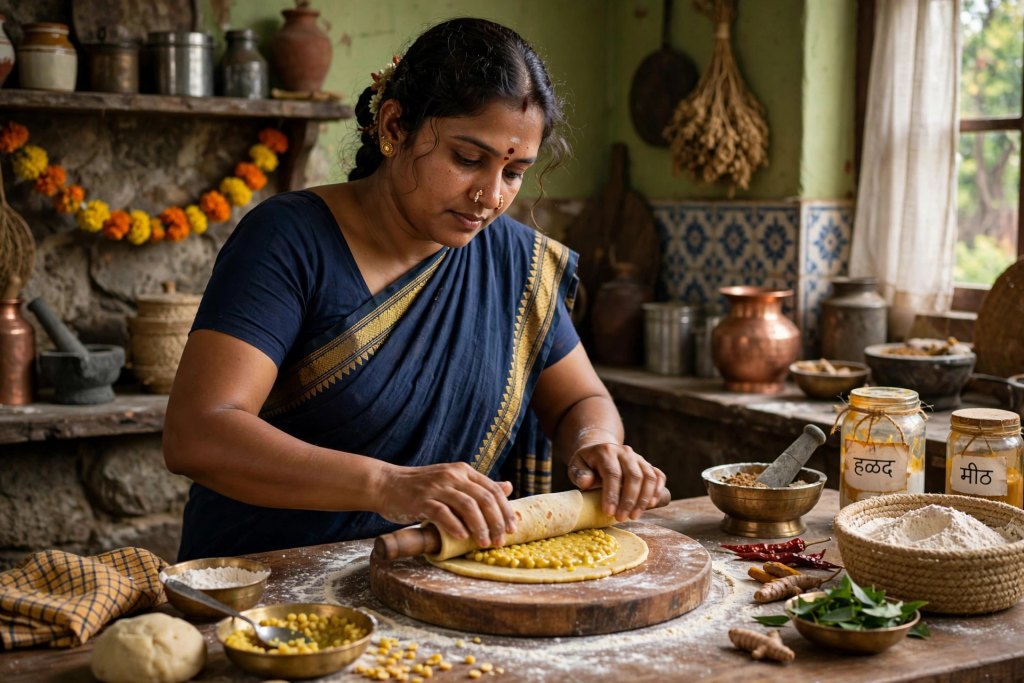
Step 3: Stuff and Roll the Poli
Divide the dough and puran into equal portions. Flatten a dough ball, place the filling in the centre, and bring the edges together to seal it.
Dust the stuffed ball lightly with flour. Roll it gently into a round flatbread without pressing too hard. If the filling begins to come out, patch the small opening with dough and continue carefully.
Step 4: Cook and Serve
Heat a tawa or flat griddle over medium heat. Place the rolled poli on it and cook both sides until golden spots appear.
Apply a little ghee if desired. Serve warm with milk, ghee, or katachi amti. The sweet flatbread can also be enjoyed on its own.
Benefits of Puran Poli
Puran Poli offers several practical and nutritional benefits when enjoyed as part of a balanced diet. Its ingredients provide energy, plant-based protein, and some fibre. However, the nutritional value depends on portion size, the amount of jaggery and ghee used, and the proportions of dal and flour.
1. Provides Energy
Wheat flour, chana dal, and jaggery provide carbohydrates that the body uses for energy. This makes Puran Poli a filling food for festive meals and occasions that involve physical activity.
2. Contains Plant-Based Protein
Chana dal supplies plant-based protein, which supports normal growth and tissue maintenance. The quantity per serving depends on how much dal is used in the filling.
3. Provides Dietary Fibre
Chana dal and whole-wheat flour contribute dietary fibre. Fibre supports digestive health, although the amount varies with the recipe and serving size.
4. Offers Traditional Flavour and Variety
Puran Poli adds variety to festive meals and showcases regional cooking traditions. Its sweet filling and aromatic spices create a flavour that differs from everyday savoury flatbreads.
5. Uses Familiar Kitchen Ingredients
Most recipes rely on common ingredients such as lentils, flour, jaggery, and spices. These ingredients are widely used in Indian cooking and are relatively easy to find.
A balanced approach: Puran Poli can be high in carbohydrates and added sugars, especially when prepared with generous amounts of jaggery and ghee. People managing blood sugar levels or following specific dietary plans should consider portion size and their individual nutritional needs.
Challenges and Common Mistakes When Making Puran Poli
Puran Poli can be difficult to prepare the first time, but most problems can be solved by adjusting the filling, dough, and cooking temperature.
| Problem | Possible cause | Solution |
|---|---|---|
| Filling leaks out | Filling is too wet or dough is thin | Thicken the puran and roll gently |
| Poli becomes hard | Dough is too stiff or overcooked | Use softer dough and moderate heat |
| Filling contains lumps | Dal is not mashed properly | Mash or grind the cooked dal thoroughly |
| Poli sticks to the rolling surface | Dough is too wet or filling has leaked | Use light flour dusting and handle gently |
| Outside burns quickly | Griddle is too hot | Reduce the heat to medium |
| Poli tastes too sweet | Too much jaggery is used | Adjust the jaggery-to-dal ratio next time |
Another common mistake is using too much dry flour while rolling. Excess flour can make the finished poli dry. Use only enough to prevent sticking.
Best Practices and Expert Tips for Perfect Puran Poli
Follow these practical tips to improve the texture, flavour, and appearance of homemade Puran Poli.
- Cook the dal properly. It should be soft enough to mash but not watery.
- Drain excess water. This helps create a thick filling that stays inside the dough.
- Choose good-quality jaggery. Its flavour has a direct effect on the final taste.
- Mash the filling smoothly. A smooth puran is easier to stuff and roll.
- Rest the dough. Allowing it to rest makes it more flexible.
- Keep the filling and dough portions balanced. Too much filling can cause tearing, while too little reduces the characteristic sweet centre.
- Roll with gentle pressure. Turn the dough regularly and avoid pressing hard in one spot.
- Use medium heat. This gives the inside and outside enough time to cook evenly.
- Apply ghee according to preference. A small amount adds aroma without making the dish excessively rich.
- Serve it fresh when possible. Warm Puran Poli has a soft texture and a fragrant filling.
For larger batches, such as those prepared for weddings or catering events, work in small portions and keep the dough covered. This prevents it from drying out while the remaining flatbreads are being prepared.
Puran Poli vs Other Indian Flatbreads
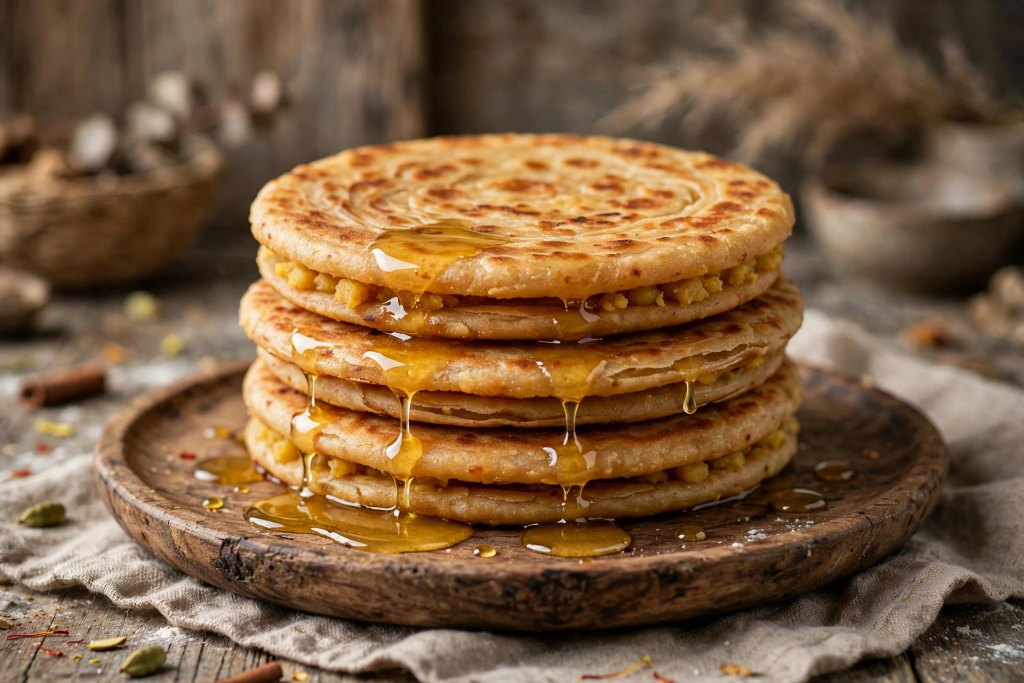
Puran Poli is one of several Indian stuffed flatbreads, but its sweet lentil filling distinguishes it from many savoury varieties.
| Feature | Maharashtrian Puran Poli | Aloo Paratha | Gujarati Vedmi |
|---|---|---|---|
| Main filling | Chana dal and jaggery | Spiced potato | Sweet lentil filling, often using regional variations |
| Taste | Sweet and aromatic | Savoury and spicy | Sweet |
| Outer layer | Wheat-based dough | Wheat-based dough | Wheat-based dough |
| Common occasions | Festivals and celebrations | Breakfast and everyday meals | Festivals and family occasions |
| Typical accompaniments | Ghee, milk, katachi amti | Curd, pickle, butter | Ghee or other regional accompaniments |
| Regional association | Maharashtra | North India, especially Punjab | Gujarat |
Although Puran Poli and Gujarati Vedmi share similarities, recipes differ by household and region. Their fillings, seasonings, preparation methods, and serving customs are not always identical.
Frequently Asked Questions About Puran Poli
1. What is Puran Poli famous for in Maharashtra?
Puran Poli is famous in Maharashtra for its sweet lentil filling, soft texture, and connection with festivals. It is commonly prepared for occasions such as Gudi Padwa and Holi. Many families serve it with ghee or milk, making it a cherished part of traditional Maharashtrian meals.
2. Which dal is used to make Maharashtrian Puran Poli?
Chana dal, also known as split Bengal gram, is the most common choice for Maharashtrian Puran Poli. The dal is cooked until tender, drained, mashed, and combined with jaggery. Cardamom and nutmeg may be added for flavour. Some household recipes use different proportions or alternative ingredients.
3. Why is Puran Poli prepared during Gudi Padwa?
Puran Poli is prepared during Gudi Padwa because it is a traditional festive dish in many Maharashtrian households. Gudi Padwa marks the Marathi New Year, and families celebrate with special meals and customary foods. The exact menu varies by family, community, and local tradition.
4. Is Puran Poli healthy?
Puran Poli provides carbohydrates, some plant-based protein, and dietary fibre from chana dal and wheat flour. However, it can also contain considerable added sugar from jaggery and fat from ghee. Its overall nutritional value depends on the recipe, serving size, and the rest of the meal.
5. What is traditionally served with Puran Poli?
Puran Poli is often served with ghee, milk, or katachi amti in Maharashtra. Katachi amti is a thin, tangy curry traditionally made using the strained cooking liquid from chana dal. The combination of sweet poli and savoury amti creates a contrast of flavours.
6. What is the difference between Puran Poli and a sweet paratha?
Puran Poli is a traditional sweet flatbread with a filling usually made from chana dal and jaggery. Sweet parathas can use a wider range of fillings, including sugar, coconut, nuts, or other ingredients. Puran Poli is particularly associated with Maharashtrian cuisine and festive traditions.
7. Can Puran Poli be made without jaggery?
Yes, Puran Poli can be made with sugar instead of jaggery, although the flavour will change. Jaggery generally provides a deeper, more caramel-like taste. The quantity of sweetener should be adjusted to suit the filling and personal preference. Neither version should automatically be considered sugar-free or suitable for every diet.
8. How should homemade Puran Poli be stored?
Allow freshly cooked Puran Poli to cool, then place it in a clean, airtight container. Refrigerate it promptly if it will not be eaten within a short period. Reheat it gently on a tawa before serving. Storage life depends on moisture, handling, and ingredients, so discard any flatbread showing signs of spoilage.
Key Takeaways
- Puran Poli is a traditional Maharashtrian sweet flatbread.
- Its classic filling contains chana dal, jaggery, cardamom, and sometimes nutmeg.
- It is commonly prepared during Gudi Padwa, Holi, and family celebrations.
- The secret to a soft Puran Poli is a smooth, thick filling and flexible dough.
- It can provide energy, plant-based protein, and dietary fibre.
- Its sugar and fat content can vary considerably by recipe.
- Puran Poli differs from savoury parathas because of its sweet lentil filling.
- Fresh preparation, careful rolling, and moderate cooking heat improve the final result.
Final Verdict: Why Puran Poli Remains a Maharashtrian Favourite
Puran Poli continues to hold a special place in Maharashtra’s food culture because it combines familiar ingredients, distinctive flavour, and family traditions. Its sweet chana dal filling, fragrant spices, and soft outer layer make it suitable for festive meals and special occasions.
For the best homemade result, focus on preparing a thick filling, kneading a flexible dough, and cooking each poli over moderate heat. Adjust the sweetness and ghee to suit your preferences, and serve it warm with a traditional accompaniment.
Puran Poli in Maharashtra is not simply a dessert. It is a regional food tradition that brings people together and preserves the flavours of home cooking. If you have never tried making it, start with a small batch and enjoy this classic Maharashtrian speciality fresh from the tawa.
