The first bite of a Bhut Jolokia feels almost gentle. There’s a fruity, slightly smoky sweetness. Then, about 30 seconds later, the heat arrives and keeps climbing for several minutes. That delayed burn is why people call it the “ghost pepper.”
Bhut Jolokia comes from Northeast India and was once the hottest chili on Earth. Today it’s famous far beyond India, in hot sauces, spicy food challenges and even defense products. Many people, though, try it without knowing how strong it is or how to handle it safely.
This guide explains what Bhut Jolokia is, where it comes from, how hot it really is, how to cook with it, and what risks to keep in mind.
What Is Bhut Jolokia?
Quick Definition: Bhut Jolokia, also called the ghost pepper or Naga chili, is a super-hot chili pepper native to Northeast India. It measures over 1 million Scoville Heat Units (SHU), about 200 times hotter than a jalapeño. In 2007, Guinness World Records certified it as the world’s hottest chili.
Detailed Explanation
Bhut Jolokia is a hybrid chili. Scientists classify it mainly as Capsicum chinense, with some genetic traits from Capsicum frutescens. It grows naturally in Assam, Nagaland and Manipur.
The name changes by region. In Assam, people call it Bhut Jolokia. In Nagaland, it’s Raja Mircha or Naga Mircha. In Manipur, it’s known as U-Morok. In 2008, the Naga Mircha received a Geographical Indication (GI) tag, which protects its regional identity.
Key ComponentsCapsaicin: The main compound that creates the burning sensation
Dihydrocapsaicin: A second capsaicinoid that adds intensity
Thin, wrinkled skin: Usually red when ripe, though orange, yellow and chocolate types exist
Size: Typically 6–8.5 cm long
Flavor profile: Fruity, smoky and slightly sweet before the heat builds
Why Is Bhut Jolokia Important?
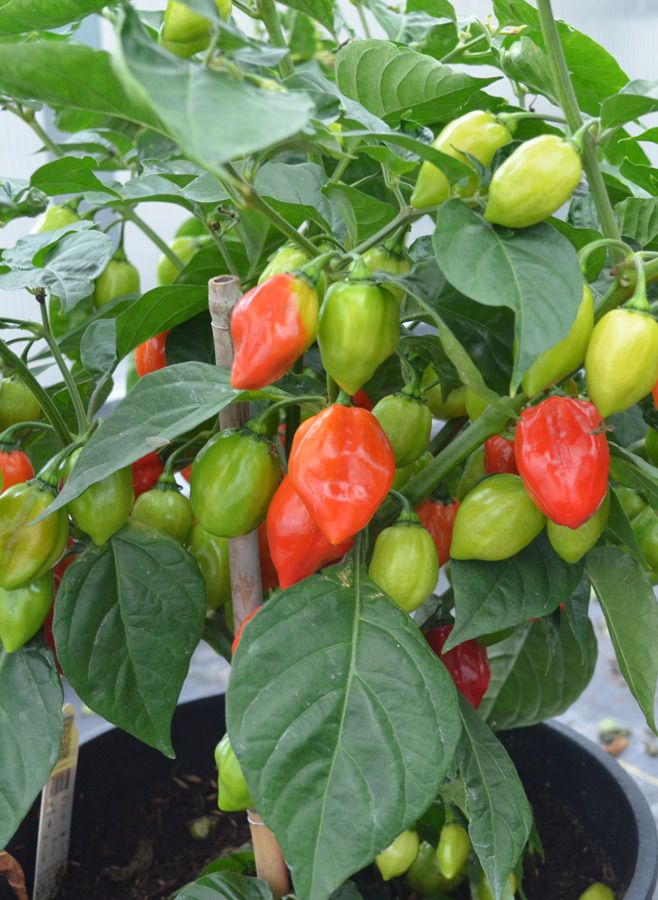
Direct Answer: Bhut Jolokia matters because it plays roles in culture, cuisine, farming income and industry. It’s central to Northeast Indian food, supports local farmers through exports, and its extreme capsaicin content makes it useful in hot sauces, pest control, elephant deterrents and non-lethal defense products.
Detailed Explanation
For communities in Nagaland and Assam, this chili is part of daily food. It appears in pork dishes, chutneys and pickles. A small amount adds both flavor and deep heat.
It also has economic value. Nagaland has exported fresh ghost peppers to the UK, which gave local growers access to international markets. The GI tag helps buyers recognize authentic produce.
Beyond the kitchen, its heat has practical uses:
- Farmers in Assam smear chili paste on fences to keep wild elephants away from crops.
- India’s Defence Research and Development Organisation (DRDO) has used it in chili-based grenades for crowd control.
- Some pepper sprays use concentrated capsaicin from super-hot chilies.
How Does Bhut Jolokia Heat Work?
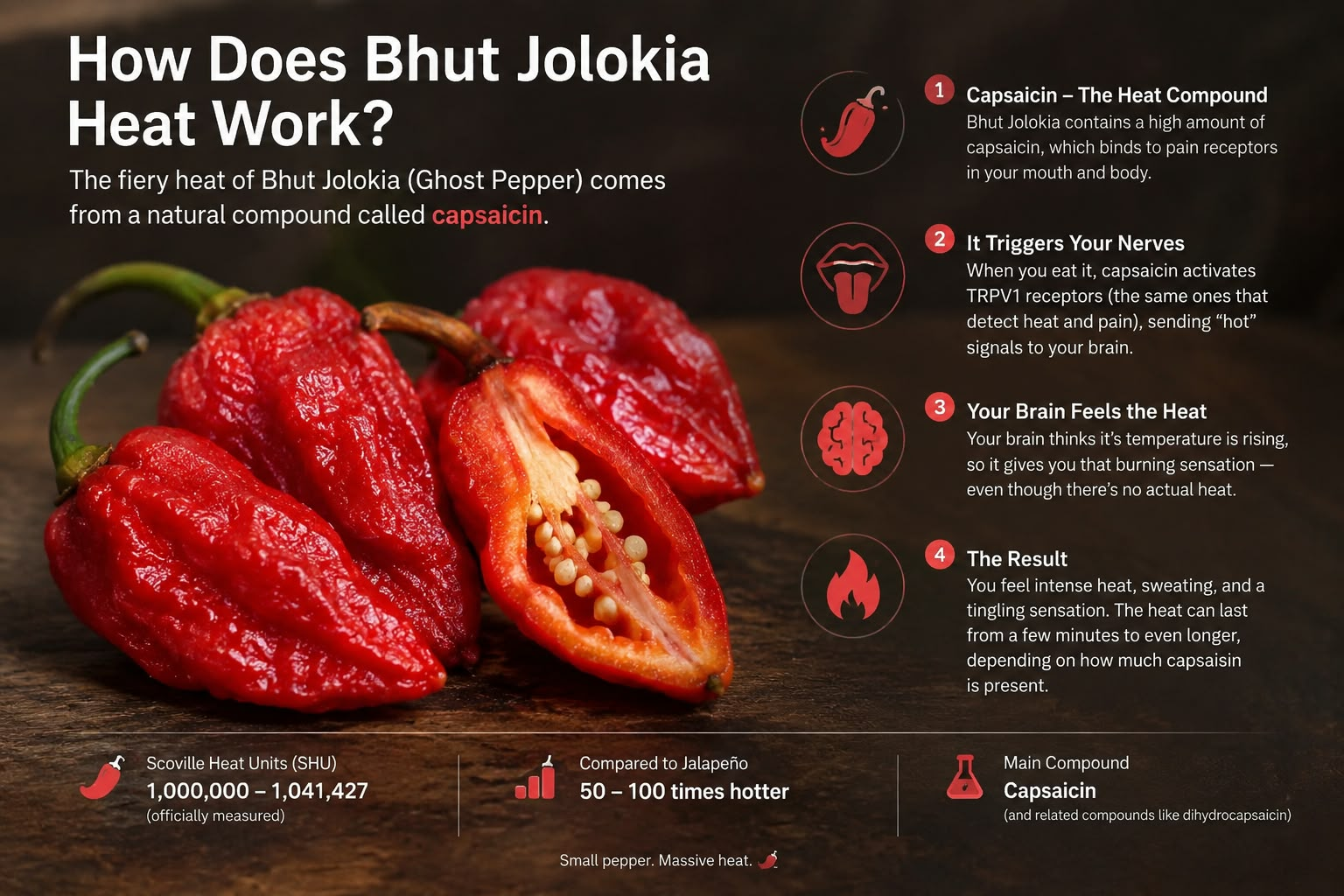
Direct Answer: Bhut Jolokia’s capsaicin binds to TRPV1 receptors in your mouth and skin. These receptors normally detect real heat, so your brain reads the chili as burning. Your body then responds with sweating, tears, a runny nose and a release of endorphins.
Step 1: Capsaicin Makes Contact
When you bite the pepper, capsaicin touches nerve endings on your tongue. Most of it sits in the white placenta (the ribs inside), not the seeds.
Step 2: Pain Receptors Fire
Capsaicin activates TRPV1 receptors. No real temperature change happens, but your brain receives a “burning” signal. With Bhut Jolokia, this signal builds slowly, which explains the delayed reaction.
Step 3: Your Body Reacts
Your body tries to cool down and flush the irritant. You may sweat, tear up and feel your heart rate rise. Endorphins then create a mild “chili high” that many spice lovers enjoy.
Practical example: If you add one dried ghost pepper to a large pot of curry for four people, the dish turns pleasantly fiery. Eating that same pepper raw, alone, can cause intense pain for 10–30 minutes.
How Hot Is Bhut Jolokia Compared to Other Peppers?

Bhut Jolokia’s certified rating was about 1,041,427 SHU. It held the world record until 2011. The Trinidad Moruga Scorpion, the Carolina Reaper and later Pepper X all surpassed it.
Bhut Jolokia vs Other Chili Peppers
| Pepper | Approx. Scoville Heat Units | Origin | Flavor Notes |
| Bell pepper | 0 | Americas | Sweet, mild |
| Jalapeño | 2,500–8,000 | Mexico | Grassy, bright |
| Kashmiri chili | 1,000–2,000 | India | Mild, colorful |
| Habanero | 100,000–350,000 | Caribbean/Mexico | Fruity, floral |
| Bhut Jolokia | ~855,000–1,041,000 | Northeast India | Smoky, fruity, slow burn |
| Trinidad Moruga Scorpion | ~1,200,000–2,000,000 | Trinidad | Sweet, sharp |
| Carolina Reaper | ~1,400,000–2,200,000 | USA | Fruity, sharp |
| Pepper X | ~2,690,000 (avg) | USA | Earthy, intense |
Benefits of Bhut Jolokia
- Big flavor from a tiny amount
- What it is: A small piece seasons a whole dish.
- Why it matters: One pepper goes a long way, so it’s cost-effective.
- Expected outcome: Rich, smoky heat without using a handful of milder chilies.
- Rich in capsaicin
- What it is: Capsaicin is linked in research to increased metabolism and pain relief in topical creams.
- Why it matters: It’s an active compound studied in health science.
- Expected outcome: Modest metabolic effects, not dramatic weight loss.
- Source of vitamins
- What it is: Like most chilies, it contains vitamin C and vitamin A.
- Why it matters: It adds nutrients, though in small quantities since you eat little.
- Expected outcome: A minor nutritional bonus.
- Natural preservative effect
- What it is: Chili-heavy pickles and sauces resist spoilage better.
- Why it matters: Traditional pickles last for months.
- Expected outcome: Longer shelf life when combined with salt, oil or vinegar.
- Income for farmers
- What it is: High demand in India and abroad.
- Why it matters: It supports rural livelihoods in the Northeast.
- Expected outcome: Better prices for GI-tagged, authentic produce.
Challenges and Common Mistakes
1. Eating it raw without preparation
- Problem: Severe mouth pain, vomiting or stomach cramps.
- Cause: Underestimating the delayed burn.
- Solution: Start with a tiny sliver cooked into food.
2. Handling it bare-handed
- Problem: Burning skin, and serious pain if you touch your eyes.
- Cause: Capsaicin oil stays on fingers even after washing with water.
- Solution: Wear gloves. Wash hands with soap and a little oil.
3. Drinking water to cool the burn
- Problem: Water spreads the heat around.
- Cause: Capsaicin doesn’t dissolve in water.
- Solution: Use milk, curd, yogurt or a spoon of sugar or rice.
4. Breathing the fumes while cooking
- Problem: Coughing and eye irritation.
- Cause: Frying or roasting releases capsaicin into the air.
- Solution: Cook with ventilation or an exhaust fan running.
5. Buying fake or mislabeled peppers
- Problem: Paying premium prices for ordinary chilies.
- Cause: Look-alike varieties are sold as ghost peppers.
- Solution: Buy from trusted sellers or GI-certified sources.
Best Practices and Expert Tips
- Always wear gloves when cutting fresh or dried ghost peppers.
- Remove the white ribs to cut the heat noticeably.
- Start with one-quarter of a pepper in a dish for four people.
- Add it early in cooking for a rounder, spread-out heat.
- Pair it with fat, like ghee, pork or coconut milk, to balance intensity.
- Use dairy on the side, such as raita or curd, when serving.
- Store dried peppers in an airtight jar away from sunlight.
- Label your sauces clearly so guests and family know what they’re eating.
- Keep it away from children and pets at all times.
- Avoid extreme eating challenges if you have heart, stomach or acid reflux issues.
How to Grow Bhut Jolokia
Bhut Jolokia needs warmth and patience. It grows best in hot, humid climates like its native Northeast India.
- Temperature: 25–35°C
- Germination: Seeds can take 2–5 weeks to sprout
- Soil: Loose, well-drained and rich in organic matter
- Harvest: Around 100–120 days after transplanting
- Tip: Keep seedlings warm. Cold weather slows growth sharply.
Frequently Asked Questions (FAQ)
1. Why is Bhut Jolokia called the ghost pepper?
Direct Answer: “Bhut” means ghost in Assamese and other regional languages. Many say the name reflects how the heat creeps up slowly, like a ghost, rather than hitting instantly. The English name “ghost pepper” is a direct translation of this local name.
The exact origin of the name is debated. Some link “Bhut” to the Bhutia people instead. Either way, “ghost pepper” became the popular global name.
2. How hot is Bhut Jolokia in Scoville units?
Direct Answer: Bhut Jolokia ranges from roughly 855,000 to over 1,041,000 Scoville Heat Units. That makes it about 200 times hotter than a jalapeño and up to 400 times hotter than Tabasco sauce. Exact heat varies with soil, climate and ripeness.
Peppers grown in Northeast India’s hot, humid conditions often test hotter than those grown elsewhere.
3. Is Bhut Jolokia still the hottest pepper in the world?
Direct Answer: No. Bhut Jolokia held the Guinness record from 2007 until 2011. Since then, peppers like the Trinidad Moruga Scorpion, Carolina Reaper and Pepper X have surpassed it. Pepper X currently holds the record at about 2.69 million SHU.
Still, Bhut Jolokia remains one of the most widely grown and eaten super-hot peppers.
4. Can eating a ghost pepper be dangerous?
Direct Answer: For most healthy adults, small cooked amounts are safe. Eating whole raw peppers can cause vomiting, severe stomach pain and, in rare reported cases, serious injury. People with heart conditions, ulcers or acid reflux should be especially careful.
There’s a documented case of a man who suffered an esophageal tear after a ghost pepper eating challenge. Moderation is key.
5. What is the best way to stop ghost pepper burn?
Direct Answer: Drink whole milk or eat curd, yogurt or ice cream. Casein, a protein in dairy, helps pull capsaicin away from your receptors. Sugar, rice or bread can also help. Avoid water, since it spreads the oil around your mouth.
If burning lasts long or you feel chest pain, seek medical help.
6. Which dishes use Bhut Jolokia?
Direct Answer: In Northeast India, it’s used in smoked pork curry, fish dishes, chutneys, pickles and eromba, a Manipuri vegetable mash. Globally, it’s popular in hot sauces, chili flakes, salsas, marinades and spicy snacks.
A little ghost pepper chutney with rice and dal is a common way to enjoy it at home.
7. Does Bhut Jolokia have health benefits?
Direct Answer: It contains capsaicin, vitamin C and vitamin A. Research links capsaicin to slight metabolism boosts and pain relief when used in topical creams. However, you eat very little, so the benefits are modest. It isn’t a cure or a weight-loss solution.
Treat it as a flavorful ingredient, not a health supplement.
8. Where can I buy authentic Bhut Jolokia?
Direct Answer: Look for GI-tagged Naga Mircha from Nagaland or produce from Assam and Manipur. Trusted spice stores, farmer cooperatives and reputable online sellers are good options. Check for reviews, origin labels and clear product details before buying.
Dried peppers, flakes and pickles are easier to find than fresh ones outside India.
Key Takeaways
- Bhut Jolokia is a super-hot chili native to Assam, Nagaland and Manipur.
- It measures roughly 1 million SHU and held the world record from 2007 to 2011.
- Its heat builds slowly, which inspired the “ghost pepper” name.
- It’s central to Northeast Indian cuisine and supports local farmers.
- Gloves, ventilation and small amounts make it safe to use.
- Dairy, not water, is the best way to soothe the burn.
Final Verdict
Bhut Jolokia deserves its reputation. It brings real flavor, not just raw heat. Its smoky, fruity taste makes it a valuable ingredient for anyone who enjoys spicy food.
That said, it demands respect. Use it in small amounts, cook it into dishes, and handle it carefully. If you’re new to super-hot chilies, start with a ghost pepper sauce or a pinch of flakes before trying a fresh pepper.
Conclusion
Bhut Jolokia is more than a spicy food challenge. It’s a cultural treasure of Northeast India, a source of farm income, and a surprisingly versatile ingredient. Its slow-building heat, GI-protected heritage and practical uses make it one of the most interesting chilies in the world.
Your next step is simple: try a small amount in a familiar dish, like dal or a curry. Keep curd nearby, wear gloves, and enjoy the flavor before the ghost shows up.