
Introduction
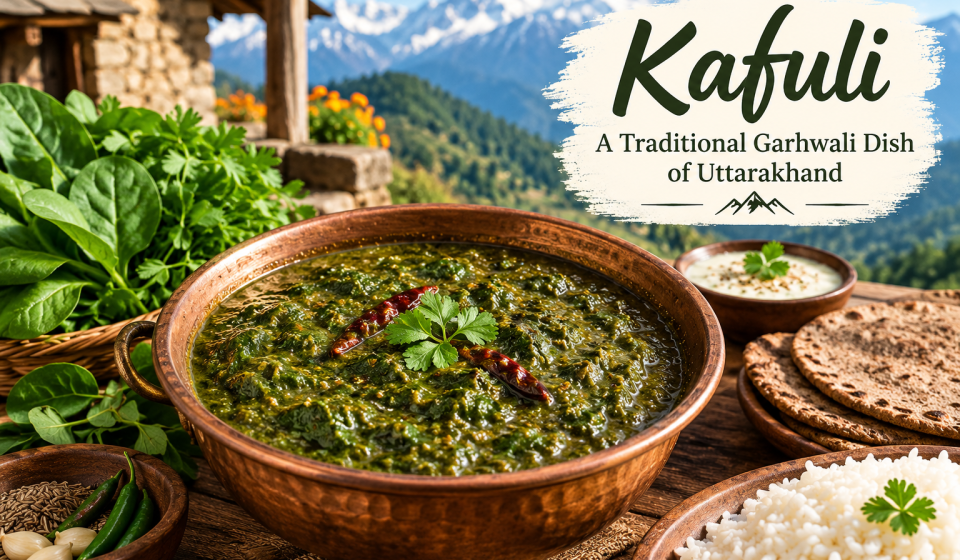
Uttarakhand is famous for its beautiful Himalayan landscapes, rich culture, and traditional food. Among its most loved local dishes, Kafuli, a traditional food of Uttarakhand, holds a special place. This nutritious green curry is known for its simple ingredients, earthy flavours, and connection to the food traditions of the Garhwal and Kumaon regions.
Kafuli is commonly prepared using leafy greens such as spinach and fenugreek leaves. Rice flour or another suitable flour may be added to thicken the gravy. Local households prepare it with regional variations, often serving it with steamed rice or traditional rotis.
Unlike many rich restaurant curries, Kafuli celebrates seasonal vegetables and everyday ingredients. It reflects the mountain communities’ tradition of cooking fresh, locally available produce.
In this article, you will learn what Kafuli is, how it is prepared, its benefits, its cultural importance, and how it differs from other traditional Uttarakhand dishes.
What Is Kafuli?
Kafuli is a traditional green curry from Uttarakhand, India, made mainly with leafy vegetables such as spinach and fenugreek leaves. It is usually cooked with spices and thickened with flour to create a smooth, flavourful gravy. Kafuli is commonly served with rice or roti as part of a traditional Himalayan meal.
Detailed Explanation of Kafuli
Kafuli, also spelled Kapa in some regional food contexts, is associated with the traditional cuisine of Uttarakhand. Its main ingredient is leafy greens, which give the dish its distinctive green colour.
The recipe varies between households. Some cooks use spinach alone, while others combine spinach with fenugreek leaves or locally available greens. Ingredients such as garlic, ginger, cumin, mustard oil, and green chillies can add flavour.
Rice flour is often used to thicken the curry. The greens are cooked until tender, then combined with spices and flour mixed with water. The mixture simmers until it reaches a smooth consistency.
Kafuli is especially appealing to people who enjoy simple, vegetable-based meals and regional Indian cuisine.
Key Ingredients Used in Kafuli
- Spinach: Provides the main green colour and flavour.
- Fenugreek leaves: Add a slightly earthy, bitter taste.
- Rice flour: Helps thicken the gravy.
- Mustard oil or another cooking oil: Forms the base of the dish.
- Garlic and ginger: Add aroma and depth.
- Cumin seeds: Provide a warm, earthy flavour.
- Green chillies: Add heat according to preference.
- Salt and water: Help balance the taste and consistency.
The exact ingredients depend on family traditions, availability, and personal preference.
Why Is Kafuli Important in Uttarakhand Cuisine?
Kafuli is important because it represents the practical, seasonal cooking traditions of Uttarakhand. It uses leafy vegetables, familiar spices, and simple cooking methods to create a satisfying meal. The dish also helps preserve regional food knowledge and introduces people to the flavours of Himalayan home cooking.
1. Connection with Local Food Traditions
Traditional Uttarakhand cuisine often uses ingredients that are available locally or seasonally. Leafy vegetables are a natural choice for dishes such as Kafuli.
Recipes passed between generations help maintain regional food traditions. Different households may use different greens, spices, and cooking methods, giving the dish a variety of local identities.
2. A Simple Home-Cooked Meal
Kafuli can be prepared with everyday kitchen ingredients. It does not require expensive ingredients or elaborate equipment.
For families interested in traditional vegetarian food, it offers a way to prepare leafy vegetables in a warm, flavourful curry.
3. A Part of Uttarakhand’s Food Heritage
Uttarakhand has a diverse food culture that includes dishes such as Chainsoo, Phaanu, Jhangora Kheer, and Kafuli.
Each dish highlights different ingredients and cooking techniques. Together, they tell the story of the region’s agricultural practices, family traditions, and local tastes.
How Is Kafuli Prepared?
Kafuli is prepared by cooking leafy greens, adding a seasoned base, and simmering the mixture with a flour slurry until the gravy thickens. The recipe below is a simple home-style version using spinach and fenugreek leaves. Ingredient quantities can be adjusted to suit your taste.
Ingredients
For approximately 3–4 servings, you will need:
- 2 cups chopped spinach
- 1 cup chopped fenugreek leaves, or extra spinach
- 1–2 tablespoons rice flour
- 1–2 tablespoons mustard oil or cooking oil
- 1 teaspoon cumin seeds
- 3–4 garlic cloves, chopped
- 1 small piece of ginger, finely chopped
- 1 green chilli, optional
- ¼ teaspoon turmeric powder
- Salt to taste
- 2–3 cups water, as needed

Step 1: Wash and Prepare the Greens
Wash the spinach and fenugreek leaves thoroughly under clean running water. Remove tough stems if necessary and chop the leaves into smaller pieces.
Fresh greens help give Kafuli its characteristic colour and flavour.
Step 2: Cook the Leafy Vegetables
Add the greens to a pan with a little water. Cook until the leaves become soft.
Allow them to cool slightly, then blend or mash them according to your preferred texture. A smooth mixture creates a creamy curry, while a coarser mixture gives it a more rustic feel.
Step 3: Prepare the Spice Base
Heat mustard oil in a pan. Add cumin seeds and let them release their aroma.
Add the chopped garlic, ginger, and green chilli. Cook briefly without allowing the garlic to burn.
Step 4: Add the Greens
Add the cooked leafy vegetables to the pan. Mix well with the spices and add turmeric and salt.
Let the mixture simmer for a few minutes so the flavours combine.
Step 5: Thicken the Curry
Mix the rice flour with a little cool water in a separate bowl. Stir until there are no lumps.
Gradually pour this mixture into the pan while stirring continuously. Add more water if needed to achieve your preferred consistency.
Step 6: Simmer and Serve
Cook the curry over low heat, stirring regularly, until the flour is fully cooked and the gravy thickens.
Taste and adjust the seasoning. Serve hot with steamed rice, roti, or mandua roti.
Cooking tip: Add the flour slurry gradually and keep stirring. This helps prevent lumps and gives the curry a smoother texture.
Benefits of Kafuli
Kafuli can be a nutritious addition to a balanced diet because its main ingredients are leafy vegetables.
- Provides vitamins and minerals: Spinach contains nutrients such as folate, vitamin K, and iron.
- Adds vegetables to meals: It offers a practical way to include leafy greens in everyday cooking.
- Can provide dietary fibre: Leafy vegetables contribute fibre, which supports normal digestion.
- Allows flexible ingredients: You can adjust the greens and spices according to availability and taste.
- Fits vegetarian diets: A traditional vegetable-based version can be suitable for vegetarian meals.
- Uses familiar ingredients: Most home-style versions can be made without specialised equipment.
Nutritional value depends on the ingredients and serving size. Kafuli should be considered one part of a varied diet rather than a cure for any health condition.
Challenges and Common Mistakes When Making Kafuli
Even a simple traditional dish can be difficult to prepare perfectly the first time. These tips can help.
1. Using Too Much Flour
Problem: The curry becomes heavy or pasty.
Cause: Too much rice flour is added at once.
Solution: Begin with a small amount of flour slurry and add more only if needed.
2. Allowing the Garlic to Burn
Problem: The curry develops a bitter taste.
Cause: Garlic cooks for too long in very hot oil.
Solution: Cook it briefly over medium heat and add the greens before it darkens too much.
3. Losing the Fresh Green Colour
Problem: The curry looks dull or brownish.
Cause: The greens are cooked for too long or exposed to excessive heat.
Solution: Cook them until tender and avoid unnecessary prolonged boiling.
4. Making the Curry Too Thin
Problem: The gravy lacks body.
Cause: Too much water is added.
Solution: Simmer the curry gently or add a small amount of additional flour slurry.
5. Using Only One Recipe as the Authentic Version
Problem: Regional variations are overlooked.
Cause: Assuming every family prepares Kafuli in exactly the same way.
Solution: Recognise that ingredients and techniques can differ across communities and households.
Best Practices for Making Traditional Kafuli
- Choose fresh greens. Fresh spinach and fenugreek offer good flavour and texture.
- Wash vegetables carefully. Remove visible dirt before chopping.
- Balance the greens. Fenugreek has a stronger, more bitter taste than spinach, so adjust the ratio.
- Use flour sparingly. The aim is a thick but pourable gravy.
- Prepare a smooth slurry. Mix flour with cool water before adding it to the hot curry.
- Cook over moderate heat. Gentle simmering helps the flavours blend.
- Season gradually. Add salt and chillies in small amounts, tasting as you go.
- Use regional ingredients when available. Mandua roti and local greens can make the meal feel closer to a traditional Uttarakhand table.
- Serve freshly cooked. Kafuli is especially enjoyable when warm and freshly prepared.
- Respect family variations. Adapt the recipe while keeping the leafy-green base at its centre.
Kafuli vs. Other Traditional Uttarakhand Dishes
Uttarakhand’s cuisine includes several distinctive dishes. Although they may be served together, their main ingredients and textures differ.
| Feature | Kafuli | Chainsoo | Phaanu |
|---|---|---|---|
| Main ingredient | Leafy greens | Black urad dal | Soaked lentils |
| Main flavour | Fresh, earthy, mildly spiced | Rich, roasted, earthy | Hearty and lentil-based |
| Texture | Smooth, thick green curry | Thick lentil curry | Usually a substantial lentil preparation |
| Typical accompaniment | Rice or roti | Rice or mandua roti | Rice |
| Main cooking feature | Greens cooked and thickened | Roasted dal cooked with spices | Soaked lentils cooked into a curry |
| Food category | Vegetable-based dish | Lentil-based dish | Lentil-based dish |
All three dishes reflect the region’s traditional approach to home cooking, but each offers a different taste and texture.
Frequently Asked Questions About Kafuli
1. What is Kafuli famous for?
Kafuli is famous as a traditional green curry of Uttarakhand, especially associated with Garhwali and Kumaoni food traditions. It is made mainly from leafy vegetables such as spinach and fenugreek. Its simple ingredients, thick gravy, and earthy taste make it a distinctive regional dish.
2. Which state is Kafuli famous in?
Kafuli is famous in Uttarakhand, a Himalayan state in northern India. It is part of the state’s traditional food culture and is enjoyed as a home-cooked vegetable dish.
3. What is the main ingredient in Kafuli?
Leafy greens are the main ingredient in Kafuli. Spinach is commonly used, while fenugreek leaves or other available greens may also be included. Rice flour is often added to thicken the curry.
4. Is Kafuli a vegetarian dish?
Yes, the traditional vegetable-based version of Kafuli is vegetarian. It uses leafy greens, spices, oil, and flour. Ingredients can vary, so people with specific dietary requirements should check how an individual version is prepared.
5. What is Kafuli served with?
Kafuli is commonly served with steamed rice or roti. Mandua roti, made from finger millet flour, can also complement the curry and create a meal inspired by Uttarakhand’s food traditions.
6. Is Kafuli healthy?
Kafuli can be a nutritious part of a balanced diet because it contains leafy vegetables that provide vitamins, minerals, and fibre. Its overall nutritional value depends on the ingredients, oil, flour, and serving size used in the recipe.
7. What is the difference between Kafuli and Chainsoo?
Kafuli is primarily a leafy-green curry, while Chainsoo is a lentil-based dish commonly prepared with roasted black urad dal. Both are traditional Uttarakhand foods, but their main ingredients, textures, and flavours are different.
8. Can Kafuli be made at home?
Yes, Kafuli can be prepared at home using spinach, optional fenugreek leaves, spices, and rice flour. The process involves cooking the greens, adding a seasoned base, thickening the mixture, and simmering until the flavours combine.
Key Takeaways
- Kafuli is a traditional green curry associated with Uttarakhand’s regional cuisine.
- Spinach and fenugreek leaves are common ingredients.
- Rice flour can be used to create a thick, smooth gravy.
- Kafuli is usually served with rice, roti, or mandua roti.
- The dish offers a practical way to include leafy greens in meals.
- Recipes vary by household, region, and ingredient availability.
- Kafuli is distinct from lentil-based dishes such as Chainsoo and Phaanu.
Final Verdict: Why You Should Try Kafuli
Kafuli is more than a simple green curry. It represents Uttarakhand’s food traditions, where fresh vegetables, local ingredients, and straightforward cooking methods come together to create flavourful meals.
Its flexible recipe makes it suitable for home cooks who want to explore regional Indian cuisine. Whether served with rice, ordinary roti, or mandua roti, Kafuli offers a taste of Himalayan culinary heritage.
If you are exploring traditional Uttarakhand food, Kafuli is a great dish to try. Start with a spinach-based recipe, adjust the seasoning to your taste, and explore local variations to appreciate the dish’s cultural roots.
Conclusion
Kafuli, a traditional food of Uttarakhand, showcases the simplicity and character of Himalayan cooking. Prepared mainly with leafy greens, spices, and a flour-based thickener, it is a comforting dish with a distinctive green colour and earthy flavour.
From its regional importance to its easy home-style preparation, Kafuli offers a meaningful introduction to Uttarakhand’s food heritage. Try making it with fresh spinach and fenugreek, and serve it warm with rice or mandua roti for a traditional-inspired meal.
Meta Title
Kafuli: Traditional Food of Uttarakhand
Meta Description
Discover Kafuli, a traditional Uttarakhand dish made with spinach and fenugreek. Explore its ingredients, easy recipe, benefits, and cultural importance.
URL Slug
kafuli-traditional-food-of-uttarakhand
5 SEO Tags
- Kafuli recipe
- Traditional food of Uttarakhand
- Garhwali cuisine
- Kumaoni food
- Famous dishes of Uttarakhand
5 LSI Keywords
- Traditional Garhwali dishes
- Uttarakhand famous food
- Spinach curry recipe
- Himalayan vegetarian cuisine
- Traditional Kumaoni recipes
Focus Keyword Placement Report
- Title: Kafuli: A Traditional Garhwali Dish of Uttarakhand
- Introduction: Included in the opening section
- H2: “What Is Kafuli?”
- H3: “Detailed Explanation of Kafuli”
- Conclusion: Included in the opening sentence
- Meta Title: “Kafuli: Traditional Food of Uttarakhand”
- Meta Description: Includes Kafuli and its connection to Uttarakhand’s traditional cuisine
