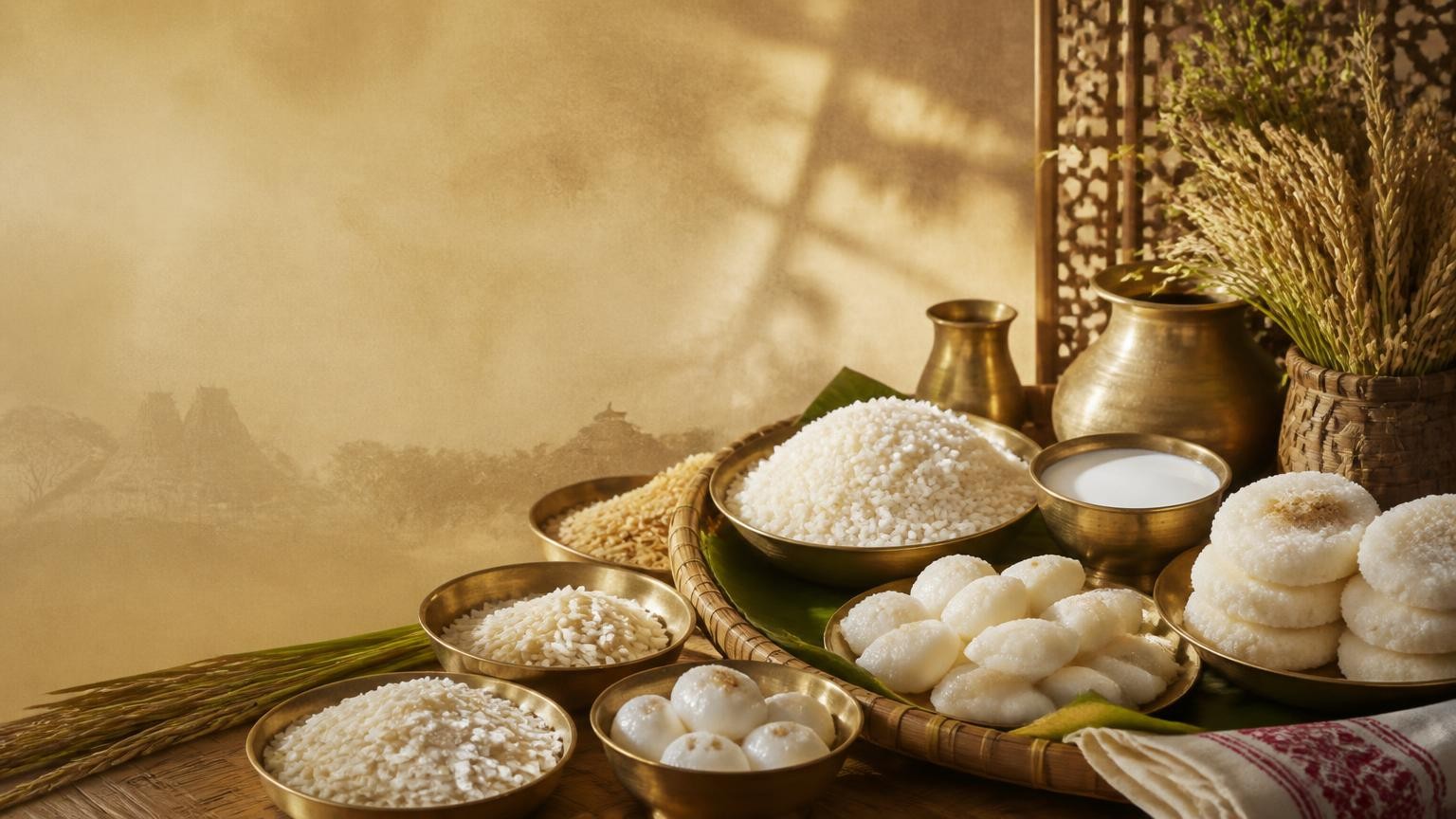


Assam is home to rice not only as a staple diet, but as a way of life – the essence of agricultural traditions, a critical element of Assamese cuisine, a vital aspect of Assamese festivals, and an integral part of Assamese identity. Rice in all its variety is turned into pitha, chira, muri, rice flour and numerous other delicacies in Assamese homes for centuries.
Among the districts of Assam, Charaideo occupies a special place, being not only the first permanent capital of the Ahom kingdom, but also boasting unique cultural heritage and ancient burial grounds of the Ahom rulers.
At the same time, Charaideo is a district where agriculture has long been at the heart of the local community. And the government’s One District One Product (ODOP) list includes Charaideo – Rice (soft rice) based products, among which are pitha, puffed rice and flakes.
For DesiBiz, the soft-rice based products from Charaideo are a great example of how home-made agricultural goods can turn into a traditional food product with the potential of a national brand.
But let us dwell on the history and culture of this charming district first.
Charaideo: The Ahom Capital of Assam
The first permanent capital of the Ahom kingdom was founded by its first king Chao Lung Siu-Ka-Pha. The name of the district translates as ‘shining town on the hill’ from the Tai Ahom language and is strategically located in the present-day Charaideo district.
Its administrative centre is the town of Sonari, which used to be the royal capital of the Ahom Kingdom.
The most notable attraction in Charaideo district are the ancient Charaideo Maidams – the burial grounds of the Ahom rulers. But aside from history and nature, Charaideo is famed for its agriculture.
The fertile soil and agricultural traditions of the district have been nurtured for centuries. The culture and know-how of local farmers are now being leveraged under the government’s ODOP initiative, which aims to promote local products and handicrafts.
Rice: The Central Ingredient of Assamese Cuisine
Rice has always been central to the food culture of Assam. According to the information from the Regional Agricultural Research Station of Assam Agricultural University, rice is widely cultivated in Assam, with many traditional rice varieties like Bora, Joha, Chokuwa, Bao and black rice.
Rice is not only the staple diet of Assam, but it is also transformed into various breakfast food items, savouries, confectionery, festive delicacies and other traditional Assamese cuisine specialities.
According to the Assam Tourism website, Jolpaan is the traditional Assamese breakfast made of rice-based food items like bora saul, chira, kumol saul, pithaguri, xaandoh, muri and others. These items are often mixed with curd, milk, cream, jaggery or bananas. Thus, rice is the cornerstone of Assamese cuisine, and rice-based products hold a special place in Assamese culture.
Soft-Rice Traditions of Assam: What Are They?
The term soft rice refers to a variety of traditional Assamese rice that does not require extensive cooking and only needs to be soaked in order to become edible.
Chokuwa rice is one of the most popular local varieties of soft rice, also referred to as ‘magic rice’, ‘boka rice’ or ‘Chokuwa soft rice’. As explained by the resources from Assam Agricultural University, Chokuwa rice can essentially be eaten after being soaked in water for 20-30 minutes.
It can be added to curd, jaggery, coconut, milk, sugar, molasses, salt, oil, pickle, vegetables, and other traditional ingredients. This unique property of ‘magic rice’ makes it a perfect ingredient for the local Jolpaan.
Soft rice is a local variety of Assamese rice that is easy to prepare and fuel-efficient. In fact, instead of being boiled on a stove, it only needs to be soaked in water before being used as a plain dish or added to milk, curd, jaggery, banana or other ingredients. Another advantage of this variety is that it requires practically no cooking fuel. Local traditions of cooking soft rice demonstrate the wisdom of Assamese ancestors who wanted to make the most of their resources.
The ODOP Initiative and Charaideo’s Rice-Based Products
The Government of India, under the ODOP initiative, has officially recognised the value of Charaideo’s local products. More specifically, the state is noted for Charaideo – Soft rice-based products, among which are pitha, puffed rice, flaked rice, etc.
This district’s agricultural goods now have a chance to reach a higher level of production, branding and sales.
Soft rice-based products are not actually new; they are an essential part of the Assamese food culture. Their potential is in being able to adapt them for the modern consumer.
For example, the following traditional rice-based products can be produced in Charaideo:
• Soft rice (komal saul)
• Pitha
• Chira or flaked rice
• Muri or puffed rice
• Rice flour
• Pithaguri
• Traditional breakfast mix
• Rice-based snack products
These local varieties of Assamese rice and rice-derived goods can easily be adapted for the modern market while retaining their unique character. Their promotion under the ODOP banner can significantly increase their popularity and expand their customer base.

Komal Saul: Assam’s Unique Soft Rice Variety
One of the most notable soft rice varieties from Assam is Komal Saul, also known as soft rice. Unlike most of the varieties known in the West, Assamese soft rice does not require extensive cooking.
This variety only needs to be soaked in water for several hours to achieve the desired consistency and then be mixed with milk, curd, cream, jaggery or other traditional ingredients. According to Assam Tourism, Komol Saul is a type of Assamese ‘soft rice’, which is traditionally used for making the local Jolpaan.
This rice variety is a staple breakfast food in Assam. Its most basic preparation includes a mixture of soft rice, curd, jaggery, and banana. Komol Saul is one of the easiest dishes to prepare since it only requires minimal effort. There is no need to introduce any special seasonings into the dish since the natural sweetness of jaggery and creaminess of curd combine with the simplicity of rice to create a dish that is both healthy and delicious.
The Traditional Assamese Breakfast Called Jolpaan
Speaking of Jolpaan, it is a traditional Assamese breakfast, which can either be served in a variety of forms or be a complete meal with a combination of different ingredients.
A traditional Jolpaan consists of the following:
• Komol Saul
• Chira
• Muri
• Bora saul
• Pithaguri
• Curd
• Milk
• Jaggery
• Banana
• Coconut
• Sesame
Depending on the village and personal preferences, Jolpaan can consist of just a couple of these ingredients. However, most traditional Assamese breakfasts include at least one rice-based product and several other items, each of which may have its own recipe. Assam Tourism notes that Jolpaan is not only an everyday breakfast but also a staple of Assamese festivals, marriages and other celebrations.
Chira: Light Flakes of Traditional Assamese Flaked Rice
Chira is another traditional Assamese product that has been made in Assam for centuries. It is a type of flattened rice that is commonly used in Assamese cuisine.
It can be eaten on its own or mixed with other ingredients like curd, milk, jaggery or banana. Chira is one of the most accessible and affordable traditional delicacies since it only takes a few steps to make it and requires minimal ingredients and cooking time.
Besides being a staple Assamese food, chira is ideal for promoting the rich food culture of Assam. It can be used as an ingredient in other dishes or be a standalone light breakfast or snack. The flaked rice is especially popular in rural areas since it can be stored for a long time without losing its nutritional qualities. A product like chira has a great potential of becoming a successful branded item since it combines convenience, nutrition and traditional authenticity.
Muri: Another Traditional Assamese Snack
A popular Assamese snack made from rice is muri or puffed rice. It is another traditional Assamese delicacy that has been consumed in Assam for centuries.
Muri is a great example of how people from Assam used to optimise their food with respect to the available resources. It is a healthy and convenient rice-based product that can be used in a variety of dishes.
It can also be eaten as a standalone snack, especially when combined with jaggery, vegetables, onions, mustard oil and other local ingredients. Muri has the advantage of being light, tasty and easy to prepare. Another potential advantage is its use in the modern branded food market. A product like puffed rice can easily be developed into a line of healthy snack foods for a local or even national market.
Pitha: Assamese Sweet Delicacy Made of Rice Flour
While soft rice and flaked rice are convenient and nutritious, many traditional Assamese prefer to make pitha from rice flour. This Assamese specialty is especially popular during various festivals. According to Assam Tourism, there are several varieties of pitha in Assam, including Til pitha, Ghila pitha, Narikol pitha, Tekelir Mukhot Dia Pitha, Sunga Pitha and many others.
Pitha is a traditional Assamese confectionery made from rice flour and various fillings, including til (sesame seeds), coconut and jaggery. Traditionally, pitha is associated with Bihu, but there are also varieties that are prepared and enjoyed throughout the year. In fact, making pitha is a tradition for many Assamese families, and the skills of preparing this specialty are passed from generation to generation. Even though pitha is a festive delicacy in many aspects, its preparation is not necessarily limited to holidays.
Pitha Making: An Interesting Aspect of Assamese Culture
Pitha has always been a part of Assamese cultural traditions. Making this festive confectionery is a true art in Assam. According to Assam Tourism, pitha is an essential part of Assamese culture because it reflects the wisdom and creativity of the Assamese people.
Pitha also plays an important role in preserving Assamese linguistic traditions and cultural heritage. Preparing pitha requires certain skills, and a person who is experienced in preparing this specialty can describe the process in full detail, including describing the nuances of dough preparation. In fact, making pitha involves assessing the consistency of the rice flour and water mixture with the naked eye. This skill, along with other cultural specifics, has been handed down through generations.
Til Pitha: One of the Most Loved Festive Snacks of Assam
One of the most beloved festive snacks of Assam is Til pitha, which is traditionally prepared with rice flour and sesame seeds. This variety of pitha is famous for being a festive food item from Assam, especially during the Magh Bihu festival.
This Assamese specialty has a unique preparation process that requires a certain set of skills. Til pitha is made by first making a thin layer of rice flour mixture, spreading roasted sesame seeds on it, and then rolling the pitha. The resulting snack has a wonderfully balanced combination of the nutty flavor of sesame seeds and the sweet taste of jaggery. Assam Tourism highlights Til Pitha as a specialty associated with Magh Bihu and Assamese home culture and traditions.
Pitha is a product with immense cultural significance. The cultural importance of this specialty has given it a unique status as a traditional Assamese dish that embodies the spirit of the Assamese festival seasons.
Ghila Pitha: One More Variation of Assamese Pitha
A variation of Assamese pitha which is also extremely popular in Assam is Ghila Pitha, also known as Tel Pitha. This snack is made from rice flour and jaggery and is fried until it reaches the desired consistency. The fried pitha has a crispy shell and a soft centre, combining the flavors of fried rice flour, oil and jaggery.
Assam Tourism describes Ghila Pitha as one of the Assamese specialties traditionally prepared for the Bihu festival and other holidays. Another interesting aspect of Ghila Pita is that it exemplifies the way Assamese people used to utilise local resources to prepare a variety of dishes. In fact, the process of making Ghila Pitha involves grinding rice, adding jaggery and oil to the rice flour, frying the mixture and thereby obtaining a food item with a unique flavor and texture.
Rice Flour and Pithaguri
Traditional Assamese cuisine also includes the rice flour and pithaguri items, which are further explained below.
Rice flour is one of the most essential ingredients of Assamese cuisine and is traditionally used in the preparation of pitha. Assam Agricultural University also notes that rice flour is used extensively in the preparation of various savouries and is a valuable addition to many dishes. The rice flour can be produced locally using traditional methods, which makes it a valuable product for local farmers and food manufacturers. This product also has great potential in the local market.
A rice flour product from Charaideo can be produced using traditional methods, and it can also be branded as a unique item from Assam with distinctive features. Such a product can be useful for the local market.
It can come in the following forms:
• Charaideo Rice Flour
• Traditional Pitha Flour
• Assamese Pitha Mix
• Traditional Jolpaan Mix
Traditional Processing of Rice Goods in Assam
There are various traditional methods of rice processing in Assam. One of these methods involves a special tool called the dheki. According to Assam Tourism, the traditional method of processing rice in Assam is to pound rice grains using the dheki. This manual process has since been mechanised in order to increase efficiency and yield. However, the traditional tool called dheki remains an important part of Assamese material culture.
Innovative technologies have allowed local producers to mechanise and optimise rice processing. At the same time, it is essential to remember the traditional methods of rice processing in Assam, which have been used for centuries. One important aspect of promoting traditional Assamese rice goods is preserving the traditional methods of preparation while improving the efficiency of the process.
Rice, Bihu and the Culture of Celebration
Rice has traditionally been associated with Assamese festivals, most notably the Bihu festival. It is during the Bihu festival that the Assamese celebrate their prosperity and joy by preparing all kinds of rice dishes and sharing them with relatives and friends. This festival is closely linked to rice and the local food culture surrounding it. Traditional Assamese breakfasts, savouries and various pitha specialties can be enjoyed during the Bihu festival. In many Assamese families, preparation for Bihu includes making festive foods, especially pitha.
Families and communities come together to prepare large quantities of food and various rice-based specialties. Family members and friends contribute to the preparation of these festive dishes by making pitha, roasting sesame seeds, boiling rice and other ingredients in order to make a variety of Assamese festive foods. In many ways, the preparation of such dishes is the hallmark of Assamese festivals.
The tradition of making pitha with family is an example of how food and festivals are inextricably linked in Assamese culture. While a package of pitha can recreate the taste of Assamese festive foods, its traditional preparation is an essential part of the festive experience.
Charaideo’s Soft-Rice Production and Environmentally Friendly Practices
The rice production in Assam has long been influenced by environmental considerations and sustainable practices. This local tradition can be leveraged to improve the sustainability profile of the brand.
For example, the government initiative ODOP promotes the local production of soft rice-based products and their promotion. The local farmers and food manufacturers are likely to benefit not only from the increased demand for their products but also from the increased value of their goods on the market. At the same time, the traditional method of preparing food from soft rice exemplifies a unique approach to minimising fuel consumption.
As mentioned above, soft rice varieties like Chokuwa rice can be used without extensive cooking. In fact, Assam Agricultural University points out that Chokuwa rice can be eaten after being soaked for a short amount of time, which means that it can be used with minimal fuel.
This characteristic could be of particular interest to the modern consumer who is looking for healthy, eco-friendly food products. However, it is essential to avoid exaggerating the benefits of local products, for example, by promoting them as health or environment-friendly. A better approach would be to focus on the unique characteristics and benefits of the traditional methods.
Soft-Rice Based Goods: From Traditional Foods to Modern Business
The ODOP list presents an opportunity to promote traditional rice products from Charaideo district. Local producers can capitalise on the growing interest in regional specialties by offering a wide range of traditional foods made from rice. These local delicacies can be promoted under a strong brand with a compelling narrative that communicates the origin and authenticity of the products.
An example of such products include:
• Packaged soft rice
• Ready-to-eat Jolpaan
• Chira
• Muri
• Pitha
• Traditional pitha mix
• Packaged sesame pitha
• Coconut pitha
• Rice-based snack mix
• Assamese gift box with rice-based specialties
These unique products from Assam can be both promoted regionally and nationally. In terms of branding, it is important to establish which of these products are traditional and which have been modified to suit modern tastes.
The traditional food products made from soft rice in Assam can become excellent examples of rural entrepreneurial activity.
Women entrepreneurs can take advantage of the opportunities offered by the local processing and production of rice-based goods. Women with access to local resources and traditional knowledge can utilise local resources to establish a small-scale business.
Self Help Groups and other women’s collectives can participate in the entire value chain, from processing and production to branding and marketing. A local pitha making enterprise can grow from a small village workshop to a branded company with sales across the country. Such an enterprise would generate income for its members, and the preservation of traditional food specialties would contribute to the preservation of Assamese culture.

Charaideo’s Rice: Opportunities for Brand Building
A strong local brand requires a compelling story, and there is no shortage of stories to tell about Charaideo. For example, the local farmers who grow the rice, the local producers who make the goods, and the local women who process the rice can all be part of the brand’s narrative. Such brands often have loyal customers who are proud to support local producers.
A strong story can be conveyed through the packaging of local products. The visual appearance of the packaging can communicate the uniqueness of the local item. For example, the packaging can feature images of the local landscape or traditional Assamese patterns. Other elements that can be used to strengthen the brand image include the local history and cultural heritage of Charaideo.
Consumers are becoming more interested in learning about the origins of the products they buy. This trend is helping independent local producers to build stronger brands by telling their stories to the customers. In the case of Charaideo, this strategy would enable building a brand with authenticity and a unique story.
DesiBiz Spotlights Charaideo’s Soft-Rice Based Products and Helps It Reach New Markets
For DesiBiz, the soft rice-based products from Charaideo district represent an array of local specialties with tremendous potential to build a strong national brand. These traditional foods originate from Assam, more specifically from a district with a rich cultural heritage. A product like pitha made from rice flour has the potential to become a well-known brand, both locally and nationally. The local producers can benefit from leveraging digital marketing to promote their traditional goods and expand their customer base.
This kind of opportunity is especially interesting for DesiBiz because it offers a platform for showcasing stories of local products that originate from Assam. Traditional food items like chira, muri, pitha, and others can become familiar names outside Assam with the help of digital promotion.
The brand promise would be focused on traditional Assamese specialties and their traditional preparation. The journey of one product from local production to a branded national item can be tracked on DesiBiz.
The Potential of Charaideo’s Rice-Based Goods: Summary
The traditional rice-based goods from Charaideo district have great potential for both local and national markets. This unique product range originates from Assam and has been a staple diet for centuries. Varieties of soft rice, like Chokuwa rice, represent the traditional Assamese wisdom in terms of minimising the effort and resources spent on food production. Komal Saul is a staple breakfast item that is used for preparing the traditional Assamese Jolpaan.
Pitha, made from rice flour, is a festive delicacy that is associated with Assamese festivals and family traditions. Chira and muri are other traditional Assamese rice specialties that are convenient and healthy. Rice flour and pithaguri items can be used in cooking in various ways to prepare traditional Assamese meals. Charaideo’s soft rice and rice-based goods can serve to promote not only local agriculture but also the local culture.
Charaideo’s Future: Advancing and Preserving Local Traditions
The local producers and processors can benefit from modernising their operations and taking advantage of new marketing opportunities. At the same time, it is essential to preserve traditional values and ensure that local culture is promoted through local products.
Documenting and publishing traditional recipes is one way to ensure that traditional knowledge is preserved. Traditional wisdom of the Assamese people can be utilised to establish traditional Assamese delicacies with unique properties. Local farmers can receive support to modernise their operations and meet the needs of the local and national markets. Local food producers can receive training on food safety, hygiene and other aspects of running a business. Local tourism can also play a role in promoting local products by encouraging visitors to try local specialties.
Charaideo’s Local Heritage, Agriculture and Cuisine
Charaideo district is known for its historical significance as the former capital of the Ahom kingdom and its unique cultural heritage. This district has an excellent opportunity to promote not only its historical sights but also its local agricultural goods, especially rice. As mentioned above, rice-based goods play an important role in the local cuisine and culture of Assam.
There are several traditional Assamese delicacies made from rice, including pitha, chira, muri and many others. These local specialties are an integral part of the traditional Assamese food culture and represent traditional Assamese values and cultural heritage. Thus, local producers have an opportunity to market not only local agricultural goods but also promote the local culture and history.
The Local Potential and the Future of Charaideo’s Rice Goods
The traditional food products made from soft rice in Charaideo district offer a wide variety of opportunities. Local producers can benefit from the rising interest in local specialties by establishing strong brands around their products. Charaideo’s soft-rice based products have the potential to become unique traditional foods with a national reputation.
Conclusion: Charaideo’s Rice Is More Than Food
Charaideo’s soft rice-based products represent a beautiful meeting point between Assam’s agricultural traditions, cultural identity and modern entrepreneurship.
The Government of India’s ODOP framework officially identifies Charaideo with soft-rice-based products, including pitha, puffed rice and flaked rice.
These products are rooted in a much older food culture.
Soft rice varieties such as Chokuwa demonstrate the ingenuity of traditional Assamese food preparation, while Komal Saul forms part of the state’s beloved Jolpaan tradition.
Pitha connects rice with Bihu and family celebrations.
Chira and muri demonstrate how rice can be transformed into convenient everyday foods.
Rice flour and pithaguri provide the foundation for traditional recipes.
Together, these products tell a story that goes far beyond agriculture.
They tell the story of Assamese kitchens, village life, festivals, farmers and generations of culinary knowledge.
And Charaideo gives that story an especially powerful setting.
It is a district where the legacy of the Ahom kingdom lives on through the historic Maidams, while agriculture continues to shape the lives of rural communities.
For DesiBiz, Charaideo’s rice-based products can therefore become more than a product category.
They can become a story of “local roots, traditional taste and modern opportunity.”
With responsible processing, attractive packaging, authentic storytelling and digital marketing, Charaideo’s soft rice-based products can find new audiences without losing their traditional soul.
Because sometimes, the simplest foods carry the deepest memories.
And in Charaideo, a handful of rice can tell a story that stretches from the fields of Assam to the kitchens of generations—and perhaps, one day, to tables across the world.