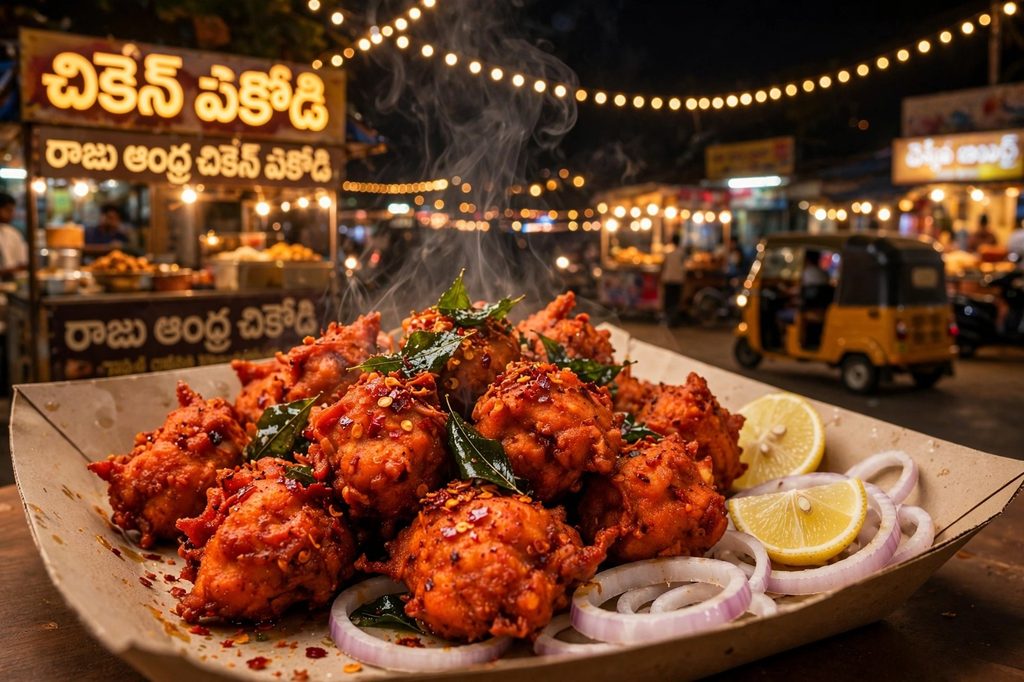
There’s a particular hour in Vishakhapatnam — somewhere between the sun softening over the Bay of Bengal and the streetlights flickering on along Beach Road — when the city seems to collectively decide it’s time to eat something fried, spicy, and shared. Scooters slow down near roadside stalls. Office-goers loiter a few extra minutes before heading home. Someone always says “ఒక ప్లేట్ చికెన్ పకోడీ” — one plate of chicken pakodi — and the evening properly begins.
If Vishakhapatnam, often called Vizag, has an unofficial signature snack, a strong case can be made for chicken pakodi. It isn’t the only fried chicken snack in India, and it isn’t unique to this city alone — but the way Vizag makes it, seasons it, and eats it has a character all its own. This is a dish that says something about the place it comes from: a coastal city with strong Andhra spice traditions, a taste for boldness, and an evening culture built around small plates and good company.
What Exactly Is Chicken Pakodi?
At its simplest, chicken pakodi is bite-sized pieces of chicken, marinated in a blend of spices, coated in a seasoned batter — usually built around besan (gram flour) and rice flour — and deep-fried until the outside turns deep golden-brown and audibly crisp, while the inside stays juicy and tender.
That description, though, undersells it. The real character of a good chicken pakodi lies in the details: the ratio of gram flour to rice flour that determines how crunchy the coating turns out, the exact blend of red chili powder and garam masala that gives it heat without overwhelming the chicken itself, and the resting time of the marinade, which lets ginger-garlic paste and spices work their way properly into the meat rather than just sitting on the surface.
In Vishakhapatnam specifically, cooks tend to lean into a slightly more robust spice profile than what you might find in, say, a Mumbai or Delhi version of fried chicken snacks. Andhra cuisine has a well-earned reputation for heat, and chicken pakodi doesn’t shy away from that identity. It’s common to find curry leaves and green chilies folded into the batter itself, along with a generous hand with red chili powder, giving the pakodi a color and a kick that’s immediately recognizable to anyone who’s had it before.
A Snack Rooted in Coastal Andhra’s Food Culture
To understand why chicken pakodi holds the place it does in Vizag’s food scene, it helps to understand the broader eating culture of the region. Coastal Andhra Pradesh has long embraced non-vegetarian food as central to its identity, unlike some other parts of South India where vegetarian traditions dominate more strongly. Fishing communities along the coast, along with a general regional love for spice-forward cooking, created fertile ground for a dish like this to thrive.
Unlike a full meal, pakodi occupies that particular social space reserved for snacking — the kind of food meant to be eaten standing at a stall, shared between friends over conversation, or ordered as a starter before a proper dinner. It fits naturally into what’s often called “tiffin culture” in South India: the informal eating occasions that fall between main meals, built around small, flavorful bites rather than elaborate courses.Vizag, with its long stretch of beachfront and its steady stream of both locals and tourists walking along RK Beach or Rushikonda in the evenings, has turned this into something of a ritual. Street vendors and small eateries set up shop specifically to catch that evening foot traffic, and chicken pakodi is almost ys somewhere on the menu, sitting alongside its vegetarian cousins like mirchi bajji and punugulu.
The Anatomy of a Good Chicken Pakodi
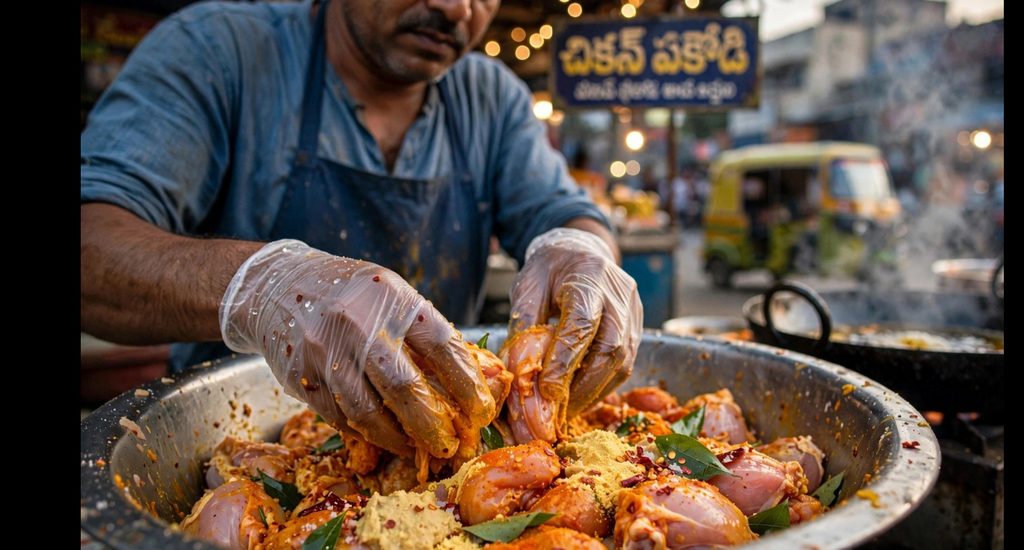
What separates a forgettable chicken pakodi from one people talk about for days later usually comes down to a handful of factors that any dedicated vendor or home cook in Vizag will take seriously.
The marination matters more than people think. Good chicken pakodi starts well before the frying pan comes out. Boneless chicken pieces — often thigh meat, prized for staying juicier than breast meat under high heat — are marinated with ginger-garlic paste, red chili powder, turmeric, a touch of lemon juice, and sometimes yogurt, which helps tenderize the meat further. This isn’t a quick five-minute step; the better versions let the chicken sit for at least thirty minutes to an hour, allowing the flavors to actually penetrate rather than just coat the surface.
The batter needs balance. A pakodi batter that’s too heavy on gram flour alone can turn dense and doughy. The addition of rice flour is what gives the coating its signature light crunch — that audible crackle when you bite in. Some cooks add a small amount of cornflour for extra crispness, or a pinch of baking soda to help the coating puff slightly during frying.
The oil temperature is non-negotiable. This is where a lot of home attempts fall short. Chicken pakodi needs to be fried in oil that’s genuinely hot — typically deep-fried in batches so the oil temperature doesn’t drop too much when the pieces go in. Fry at too low a temperature and the pakodi absorbs excess oil, turning greasy and heavy rather than crisp. Fry at the right temperature, and the exterior seals and crisps quickly while the inside cooks through gently.
The final tempering, when included, elevates it further. Many of the better versions found across Vizag don’t stop at frying. Once the pakodi pieces come out of the oil, they’re often tossed briefly in a hot pan with curry leaves, slit green chilies, and sometimes a few crushed garlic cloves, sizzled in a small amount of oil. This extra step — sometimes called a “tadka” finish — adds a fragrant, slightly smoky top note that plain fried pakodi simply doesn’t have.
How It’s Eaten
Chicken pakodi in Vizag rarely arrives alone. It’s typically served hot, straight from the fryer, on a simple plate or even folded into a paper cone if you’re grabbing it from a street stall. A wedge of lemon on the side is standard, meant to be squeezed over the top just before eating — the acidity cuts through the richness of the fried coating beautifully. Sliced raw onions often accompany it too, adding a sharp, cooling contrast to the heat of the chili.
Some stalls serve it with a side of mint or coriander chutney, though purists will often argue that a well-made chicken pakodi needs nothing beyond lemon and onion — the spice and crunch of the pakodi itself is meant to be the main event.
It’s also, notably, a food built for sharing. Order chicken pakodi in Vizag and it rarely comes as an individual portion meant for one person to finish alone. It’s placed in the middle of the table, or passed around between friends at the beach, each person picking up pieces as conversation continues. That communal quality is arguably as much a part of the dish’s identity as its taste.
Where the Tradition Lives Today
Vizag’s chicken pakodi culture is kept alive by a mix of longstanding local eateries, small family-run stalls, and street vendors who’ve built loyal followings simply by getting the balance of spice, crunch, and juiciness right, consistently, evening after evening. Many of these vendors have been at the same spot for years, and locals often have strong, specific opinions about whose version is superior — a debate that, in true food-culture fashion, rarely gets fully resolved.
Beach Road and the areas around it remain a natural hub for this kind of evening snacking, but chicken pakodi has by no means stayed confined to tourist-heavy stretches. Neighborhood stalls throughout the city serve their own versions, often with subtle differences in spice level or batter texture that mark them as belonging to a particular area or a particular family’s recipe.
As with many regional snacks, chicken pakodi has also started appearing in more standardized, packaged forms — frozen or ready-to-fry versions aimed at people who want the taste without the marination and frying process at home. These versions serve a real purpose, particularly for people who’ve moved away from Vizag and want a taste of home without recreating the entire process from scratch. But most people who grew up with the dish will tell you, without much hesitation, that nothing quite replaces a fresh batch, fried to order, eaten within minutes of leaving the pan, ideally with sand still on your feet from a walk along the beach.
A Small Dish, A Real Sense of Place
There’s something worth appreciating in the fact that a relatively simple fried snack can carry this much cultural weight. Chicken pakodi doesn’t require rare ingredients or elaborate technique — what it requires is care: a properly rested marinade, a well-balanced batter, oil at the right temperature, and often, a finishing tadka that turns a good snack into a memorable one.
For visitors to Vishakhapatnam, trying chicken pakodi from a well-regarded local stall is less a culinary curiosity and more an entry point into understanding how the city eats — unhurried in the evenings, generous with spice, and built around the simple pleasure of good food shared with good company by the sea. For those who grew up in Vizag, it’s something closer to muscle memory: the smell of hot oil and curry leaves drifting from a roadside stall, signaling that the day is winding down and it’s time to slow down, gather with people who matter, and eat something worth talking about.
That, in the end, might be the real recipe behind chicken pakodi’s staying power in Vishakhapatnam — not just the spices in the marinade, but the role the dish plays in how the city chooses to spend its evenings.