
Modak Maharashtra: Recipe, History and Festive Guide
Every year when Ganesh Chaturthi arrives, Maharashtra’s kitchens fill with the smell of ghee, coconut, and jaggery. At the centre of it all sits the modak. Yet many people struggle to get the pleats right, the filling balanced, or the outer shell soft. If you have wondered why modak Maharashtra families make is so special, this guide has answers. You will learn what modak is, why it matters, how it is made, which types exist, and how to avoid common mistakes.
What Is Modak?
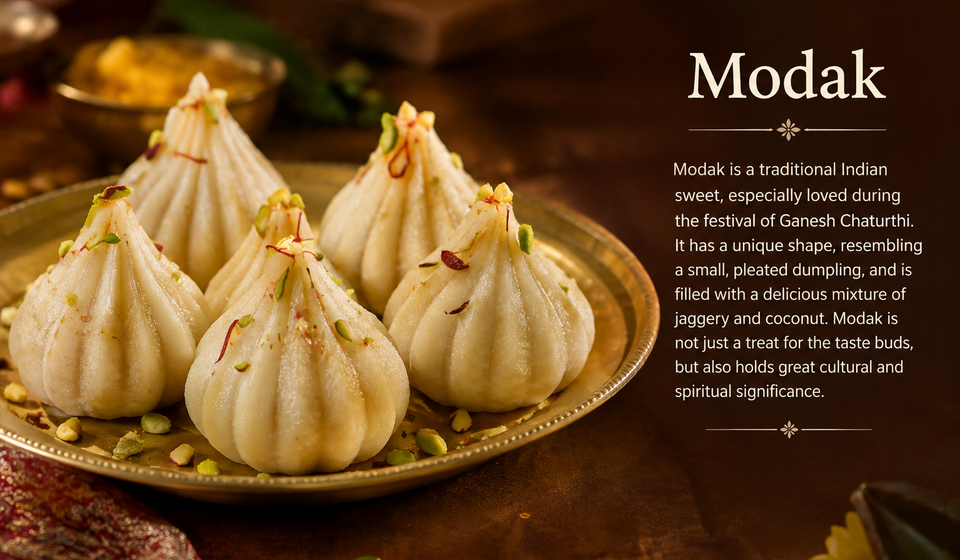
Quick Definition: Modak is a sweet dumpling from Maharashtra, traditionally offered to Lord Ganesha. It has a soft rice-flour shell filled with fresh coconut and jaggery. Ukadiche modak is steamed, while the fried version is crisp. Both are shaped with pleats that meet at a pointed top.
Detailed Explanation
The word “modak” comes from the Sanskrit root for joy. Hindu tradition calls it Ganesha’s favourite sweet. Devotees offer 21 modaks during Ganesh Chaturthi, the ten-day festival celebrated across Maharashtra, especially in Mumbai and Pune.
The classic steamed version is called ukadiche modak. “Ukad” means steaming in Marathi. The shell uses fine rice flour, and the filling uses grated coconut and jaggery with a hint of cardamom. Cooks serve it hot with a spoon of ghee on top.
Key Components
- Rice flour: Fine flour from varieties like Ambemohar gives a soft, pliable shell.
- Fresh coconut: Freshly grated coconut gives better moisture and flavour than dry coconut.
- Jaggery (gul): It sweetens the filling and adds a mild caramel note.
- Ghee: It enriches the dough and tops the finished modak.
- Cardamom and nutmeg: These add fragrance.
- Poppy seeds (optional): Some families add them for a nutty taste.
Why Is Modak Important?
Direct Answer: Modak matters because it links faith, food, and family tradition in Maharashtra. It is the main naivedya (offering) for Ganesh Chaturthi. It also supports local sweet shops, rice farmers, and home cooks, and it remains a symbol of seasonal and regional identity.
Cultural value: Each pleat on a modak is said to carry meaning. Many people see the shape as a symbol of the lotus bud or of completeness.
Practical value: Families learn the recipe together. Grandmothers often teach the shaping technique by hand.
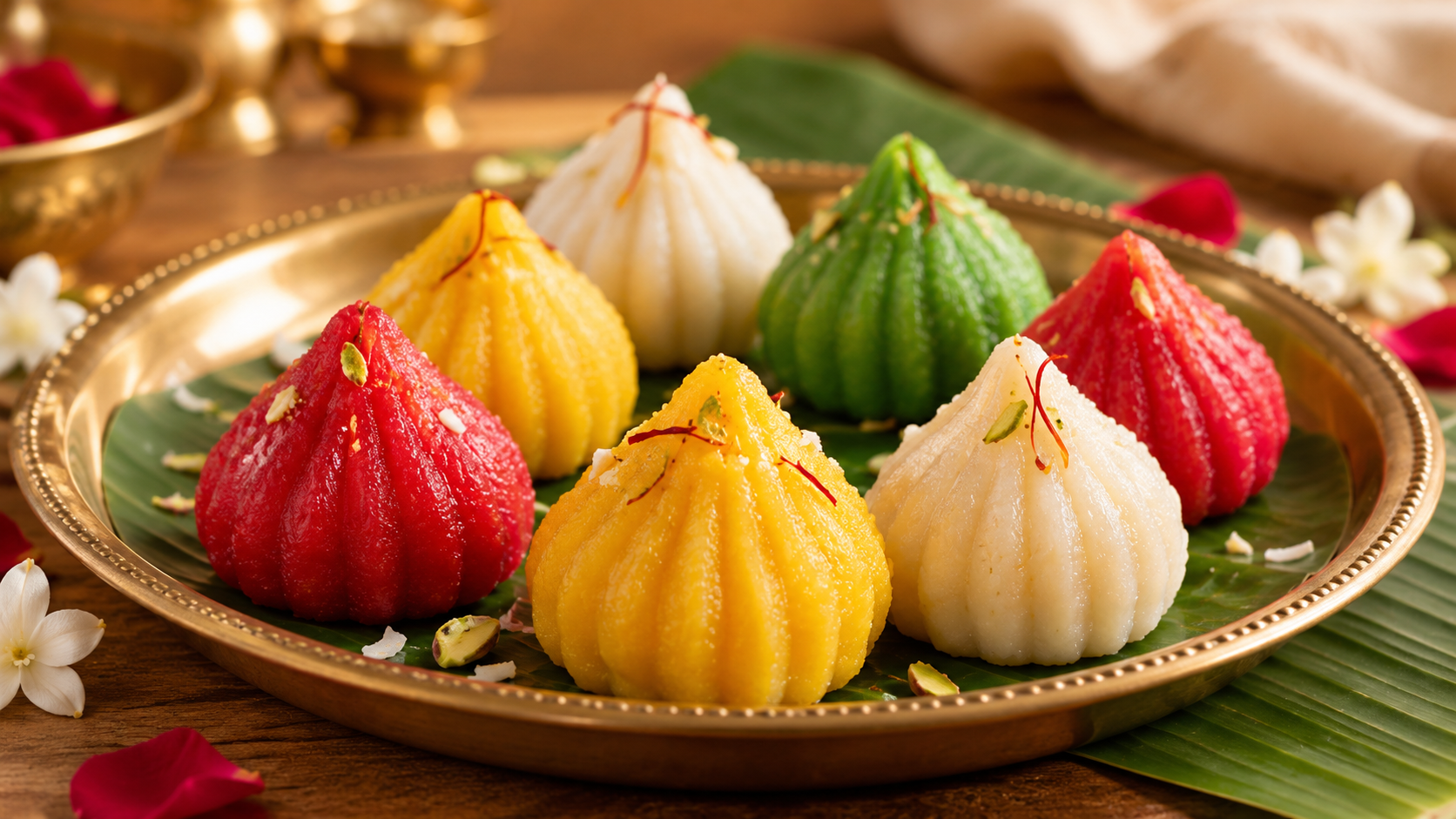
Business value: During Ganesh Chaturthi, sweet shops in Mumbai, Pune, and Nashik sell thousands of boxes. Modak varieties now include chocolate, mawa, dry fruit, and even mango flavours.
Current relevance: Modak has also gone beyond festivals. Cafés and bakeries now sell it year-round, and food bloggers share fusion versions online.
How Does Modak Making Work?
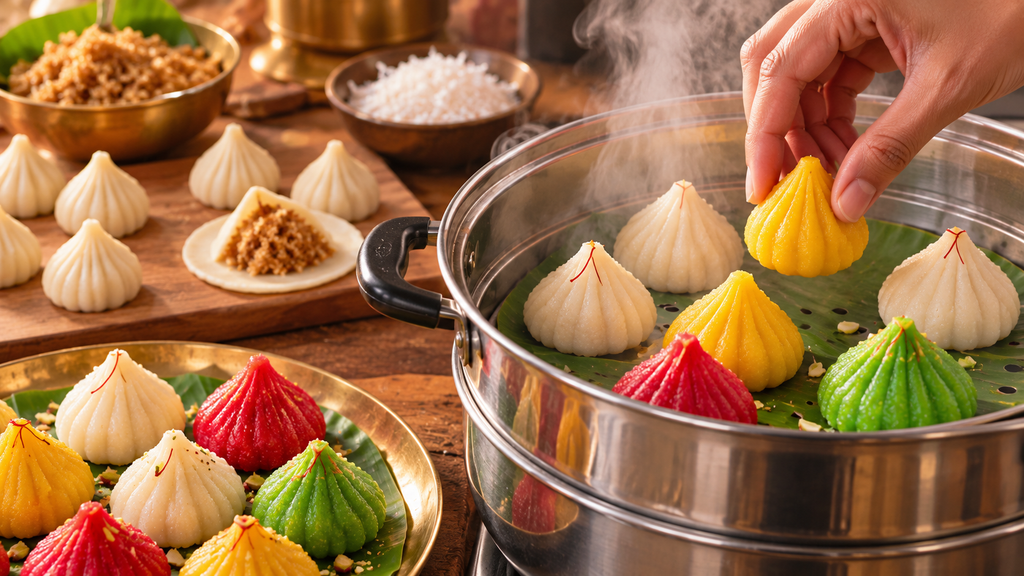
Direct Answer: Making ukadiche modak takes three steps. First, cook the coconut-jaggery filling until thick. Second, prepare the rice-flour dough with boiling water and ghee. Third, shape the dough around the filling, pleat the edges, and steam for 10 to 12 minutes until the shell turns glossy.
Step 1: Prepare the filling. Heat ghee in a pan. Add grated coconut and jaggery. Stir on low heat for 5 to 7 minutes until the mixture thickens. Add cardamom. Let it cool.
Step 2: Make the dough. Boil water with a pinch of salt and a spoon of ghee. Add rice flour and stir. Cover for 5 minutes. Knead the warm dough with oiled hands until smooth.
Step 3: Shape and steam. Flatten a small ball of dough into a cup. Add filling. Pinch the edges into five to eight pleats and join them at the top. Steam in a greased steamer for 10 to 12 minutes.
Example: A family making 21 modaks for Ganesh Chaturthi usually uses about 1 cup of rice flour, 1 cup of coconut, and ¾ cup of jaggery.
Benefits of Modak
- Cultural connection
- What it is: A festive sweet tied to Ganesh Chaturthi.
- Why it matters: It keeps rituals and family traditions alive.
- Outcome: Children grow up with a living food heritage.
- Gluten-free base
- What it is: Rice flour replaces wheat.
- Why it matters: Many people with gluten sensitivity can enjoy it.
- Outcome: A festive sweet that more guests can eat. (Always check for cross-contamination.)
- Steamed, not fried
- What it is: Ukadiche modak is cooked in steam.
- Why it matters: It uses less oil than many Indian sweets.
- Outcome: A lighter dessert option.
- Natural sweetener
- What it is: Jaggery replaces refined sugar in the filling.
- Why it matters: It retains traces of iron and minerals.
- Outcome: A more traditional taste. Note that it is still sugar and should be eaten in moderation.
- Flexible variations
- What it is: Fillings and shells can change with taste and diet.
- Why it matters: It suits both traditional homes and modern cafés.
- Outcome: Easy to adapt for guests and festivals.
Challenges and Common Mistakes
1. Dough cracks while shaping
- Problem: The shell splits when you pleat it.
- Cause: The dough is too dry or has cooled down.
- Solution: Knead while warm, keep a damp cloth over the dough, and oil your hands.
2. Hard shell after steaming
- Problem: The modak turns chewy or dense.
- Cause: Too much flour, or the water was not boiling when added.
- Solution: Use fully boiling water and measure flour carefully.
3. Watery filling
- Problem: Moisture leaks through the shell.
- Cause: Undercooked jaggery or very wet coconut.
- Solution: Cook the filling until it thickens, then cool it fully.
4. Sticking to the steamer
- Problem: Modaks tear when lifted.
- Cause: An ungreased steamer plate.
- Solution: Line with banana leaf, turmeric leaf, or greased cloth.
5. Weak pleats
- Problem: Pleats open during steaming.
- Cause: Overfilling.
- Solution: Use about one tablespoon of filling per modak.
Best Practices and Expert Tips
- Use fine rice flour. Coarse flour makes a grainy shell.
- Try Ambemohar rice flour. Maharashtrian cooks prefer its fragrance.
- Grate coconut fresh. It tastes better than packaged dry coconut.
- Cool the filling completely. Warm filling softens the dough.
- Keep the dough covered. Dry edges crack easily.
- Oil your palms lightly. It prevents sticking.
- Use a modak mould for beginners. Hand pleating takes practice.
- Steam on medium heat. Fierce heat makes the shell wrinkly.
- Serve hot with ghee. Ghee adds richness and softness.
- Eat the same day. Steamed modaks harden after a day, so reheat them briefly.
Comparison Table: Types of Modak
| Feature | Ukadiche Modak | Fried Modak | Mawa Modak |
|---|---|---|---|
| Shell | Rice flour | Wheat flour or maida | Milk solids |
| Cooking method | Steamed | Deep-fried | Moulded, no cooking of shell |
| Filling | Coconut and jaggery | Coconut, dry fruits | Often none; sweet mawa only |
| Texture | Soft and glossy | Crisp | Dense and creamy |
| Shelf life | 1 day | 2 to 3 days | 2 to 3 days (refrigerated) |
| Best for | Naivedya and fresh serving | Gifting | Sweet boxes |
Frequently Asked Questions
1. What is modak made of?
Answer: Traditional modak is made of rice flour, grated coconut, jaggery, ghee, and cardamom. The rice dough forms the outer shell, while the coconut-jaggery mix forms the filling. The modak is then pleated and steamed until soft and glossy.
2. Why is modak offered to Ganesha?
Answer: Hindu tradition regards modak as Ganesha’s favourite sweet. Texts and folk stories describe him as fond of it, and it symbolises sweetness, reward, and spiritual fulfilment. Devotees offer it during Ganesh Chaturthi as a gesture of love and devotion.
3. How many modaks are offered during Ganesh Chaturthi?
Answer: Many families offer 21 modaks, though some offer 11 or 5. The number 21 is considered auspicious in many households. There is no single rule, so practices differ by family and community.
4. What is ukadiche modak?
Answer: Ukadiche modak is the steamed modak of Maharashtra. A soft rice-flour shell holds a filling of fresh coconut and jaggery. It is served hot with ghee. “Ukad” refers to the steaming process, which gives the shell its glossy finish.
5. Is modak healthy?
Answer: Steamed modak is lighter than many fried sweets and uses jaggery instead of refined sugar. It is still a sweet, so portion size matters. People managing diabetes should consult a doctor or dietitian before eating it regularly.
6. How long do modaks stay fresh?
Answer: Steamed modaks taste best the same day. They can last up to a day at room temperature, but the shell hardens. Fried and mawa modaks last two to three days, and mawa types need refrigeration.
7. Can I make modak without a mould?
Answer: Yes. Flatten dough into a small cup, add the filling, pinch the edges into pleats, and join them at the top. It takes practice, but hand-shaped modaks look traditional and taste the same as moulded ones.
8. Where can I find the best modak in Maharashtra?
Answer: Mumbai, Pune, and Nashik have well-known sweet shops that sell modak during Ganesh Chaturthi. Local halwais and home-based sellers also offer fresh ukadiche modak. Check reviews, ask about ingredients, and order early before the festival.
Key Takeaways
- Modak is a sweet dumpling central to Ganesh Chaturthi in Maharashtra.
- Ukadiche modak uses a rice-flour shell with coconut-jaggery filling.
- Steaming gives a soft, glossy texture.
- Warm dough, fresh coconut, and a cooled filling prevent most problems.
- Fried and mawa modaks are good alternatives with longer shelf life.
- Enjoy modak in moderation, since it is still a sweet.
Final Verdict
Modak is worth learning, whether you cook for a festival or for fun. Beginners should start with a mould and the classic ukadiche recipe. If you are short on time, buy from a trusted local sweet shop. Choose steamed modak for taste and tradition, and fried or mawa for gifting and storage.
Conclusion
Modak Maharashtra celebrates every year is more than a sweet. It carries faith, family memory, and regional pride in every pleat. You now know what goes into it, how it is made, which mistakes to avoid, and how to choose among types. Your next step is simple: try the three-step method this Ganesh Chaturthi, or visit a trusted local shop for fresh ukadiche modak. The taste of a warm modak with ghee is hard to forget.