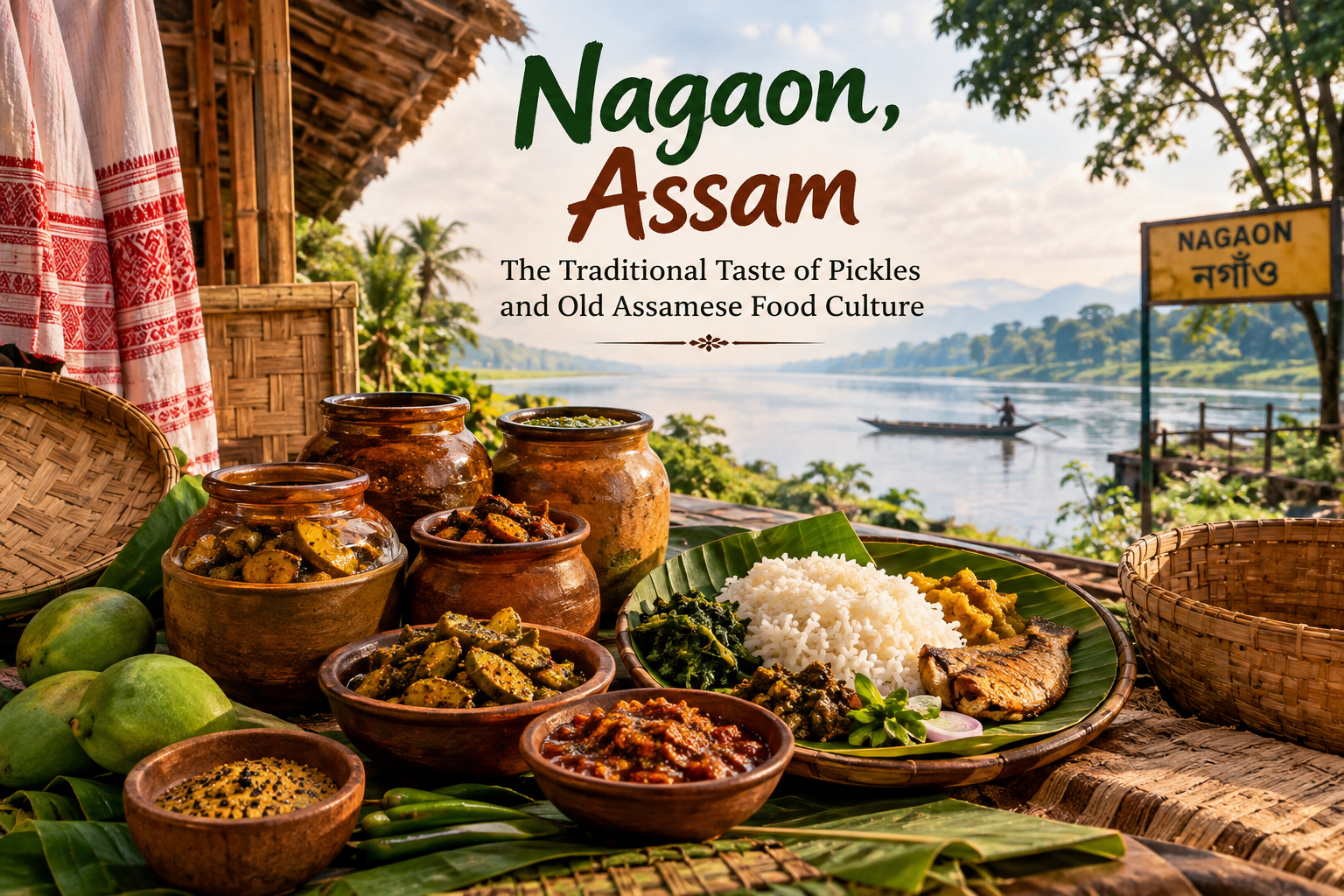

State: Assam
District: Nagaon
ODOP Product: Pickles
Category: Traditional Food & Local Value-Added Products
Food and the Seasons: Old Assamese Traditions
The food culture of Assam is closely linked to the seasons, the land, and the people. Before the advent of organized retailing and packaged foods, families used to grow, harvest, and prepare food with locally available vegetables, fruits, herbs, and spices. The traditional wisdom of the Assamese people has been passed on through generations and continues to flourish in the district.
Nagaon district, located in the core region of Assam, is famous for its agricultural produce, wetlands, and rivers.
One of the products that encapsulate the traditional food culture of the region is Pickles.
Pickles are an integral part of many Indian households. They are made of seasonal vegetables, fruits, and other locally available ingredients.
Under the One District One Product (ODOP) scheme, Pickles have been identified as the preferred product for the Nagaon district, which can help create an enduring link between the traditional food habits of the people and the organized retail market.
Old Traditions of Pickle Making
The art of pickle making has been in existence for centuries. Before the invention of modern-day refrigeration, people used to preserve food through pickling by using salt, oil, and other locally available ingredients.
The practice of pickling began when people realized that it was possible to store seasonal food for a longer time with the help of simple ingredients.
In addition, pickles could also be made as a way to relish the taste of a particular season even when the produce was not available. Over time, this practice has turned into an important part of Indian food culture.
In Assam, pickles have been a part of the traditional household food preparations. The methods and ingredients used in pickle making vary from household to household and region to region.
In many ways, pickles are an integral part of childhood nostalgia for many people. They are often associated with the simple joys of home-cooked food, where a meal of rice and lentils is incomplete without a side of pickle.
Pickle and the Traditional Assamese Meal
Traditional Assamese meals are largely characterized by the use of locally available produce. The staple food of Assamese people is rice, which is often accompanied by dal, vegetables, greens, and fish. A meal of rice and lentils is considered complete only when it is served with pickles. The sharp flavor of the pickle complements the otherwise bland taste of the rice and lentils.
In fact, pickles have been an essential part of the Assamese meal for a long time. They are made at home with locally available ingredients and are consumed with rice and other traditional Assamese dishes. Not only do they add much-needed flavor to the meal, they also provide a good amount of fiber, vitamins, and minerals.
As far as the food habits of the Assamese people are concerned, it is interesting to note that they preferred to have a balanced diet rather than variety. As such, Assamese meals were largely centered around rice and other staples, with pickles adding much-needed flavor to the dish.
Local Ingredients, Local Flavors
The traditional Assamese pickle making process has its own unique charm. It is amazing how pickles made from locally available ingredients can encapsulate the local flavor of a region.
The people of Nagaon district can create a wide variety of pickles using the rich agricultural produce of the region.
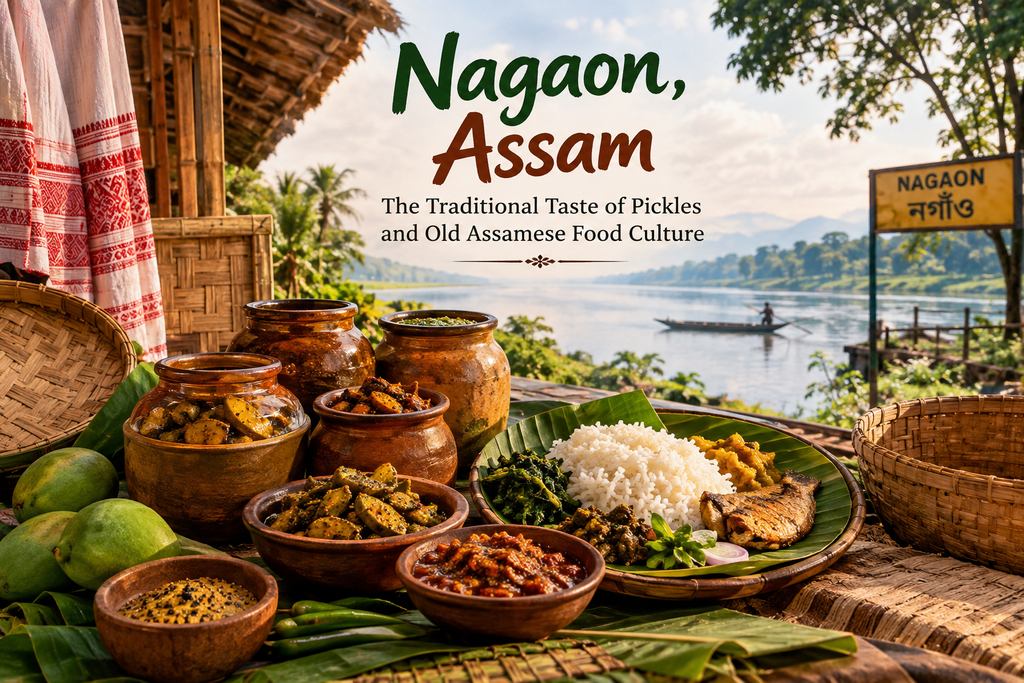
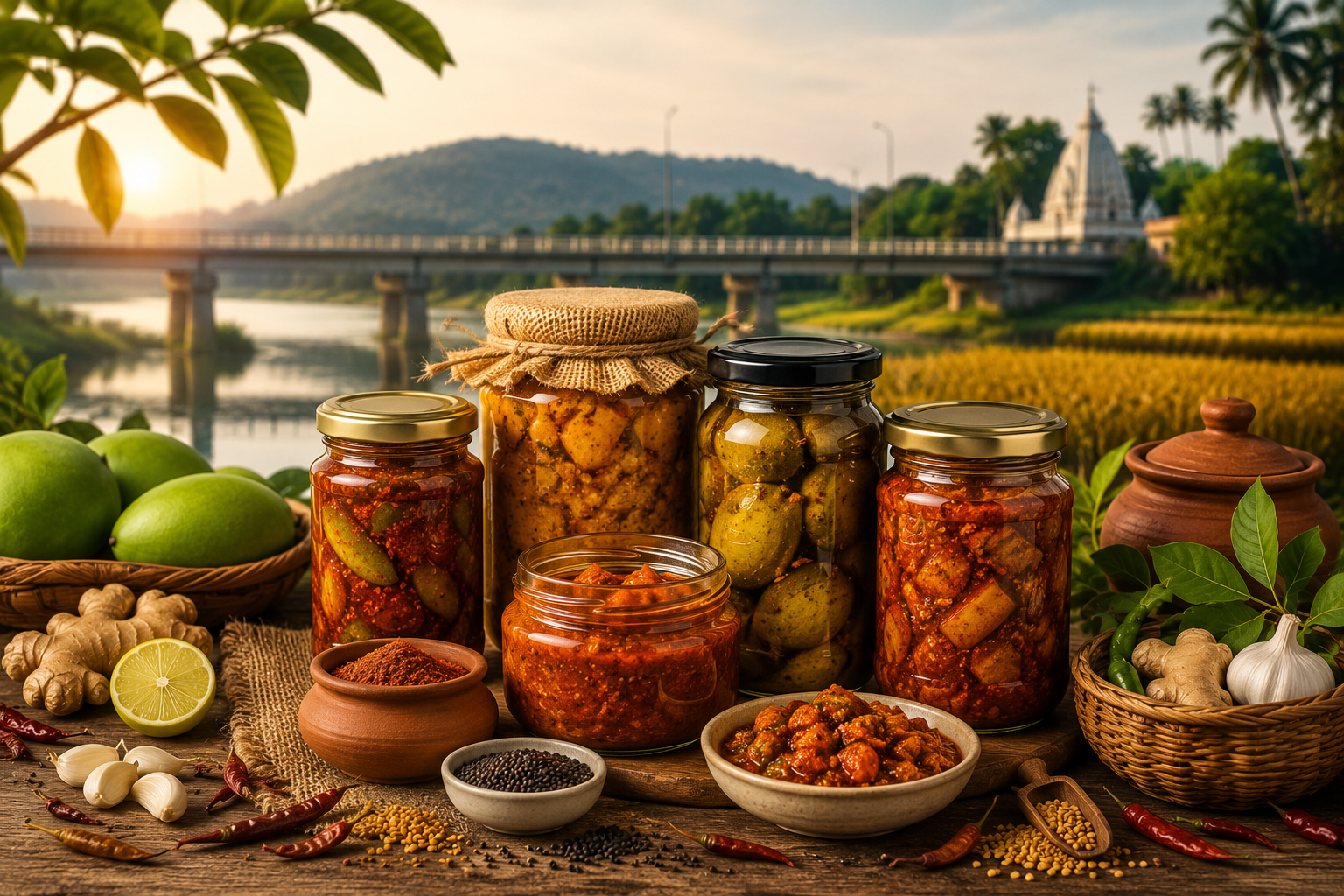
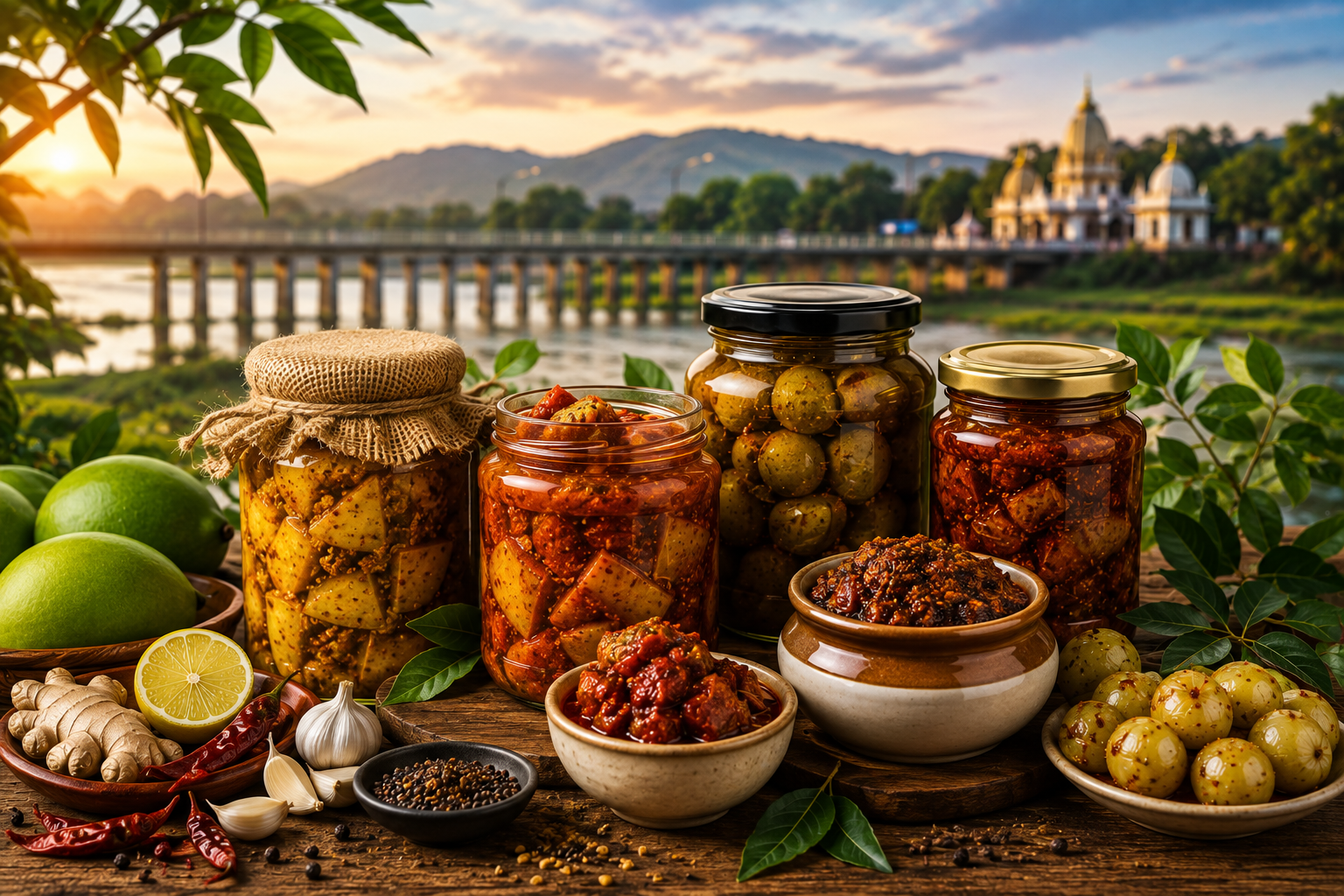
Depending on the recipe, pickles can be made with mango, chilli, lemon, bamboo shoot, ginger, garlic, seasonal vegetables, local fruits, and other locally available herbs and spices.
It is also worth noting that the recipe for pickle making varies from household to household. The same ingredients can be used to make different types of pickles depending on the preferences and choices of the maker.
As such, two different households can make two completely different pickles with similar ingredients.
Traditional Assamese Food and Pickles
The food culture of Assam is deeply rooted in the agricultural traditions of the state. Traditional Assamese meals are largely centered around rice, vegetables, and fish. The use of local produce has been an integral part of Assamese cuisine, with every region having its own unique produce that is used in local dishes. For example, bamboo shoot is an important part of the Assamese diet, especially in the Nagaon district.
Pickles complement the flavor of the local dishes and add much-needed sharpness to the otherwise mild-tasting Assamese food.
A simple meal of rice and vegetables can be made more flavorful with the addition of pickles. In fact, pickles have been an essential part of Assamese meals for centuries.
The Assamese people used to make pickles with the locally available produce to add flavor to their meals. It is also important to note that the Assamese used to follow the principles of moderation and balance in their meals.
As such, they did not use to add too many varieties of food to a single meal. Instead, they used pickles to add much-needed flavor and spice to the dish.
Why Pickles as an ODOP Product?
The ODOP scheme provides a unique opportunity to the people of Nagaon to promote and popularize a product that has been an integral part of the local food culture for centuries.
It is important to note that pickles can be made in different sizes depending on the requirements of the market.
A home-based pickle maker can start with smaller batches while a larger pickle manufacturing unit can fulfill the demand of a wider customer base.
Some of the popular varieties of pickles that can be made in the Nagaon district include:
• Traditional mango pickle
• Lemon pickle
• Chilli pickle
• Mixed vegetable pickle
• Ginger pickle
• Garlic pickle
• Bamboo shoot pickle
• Seasonal fruit pickle
• Traditional Assamese pickle combination
It is important to focus on maintaining the traditional taste of the pickles while ensuring that they are hygienic and have a long shelf life.
Opportunity for Local Farmers
Pickle making can also be a great opportunity for local farmers, as it creates an alternate market for seasonal vegetables and fruits.
Farmers often face the challenge of having to sell their produce at a lower price due to the limited shelf life of vegetables and fruits. As such, the surplus agricultural produce has to be disposed of in a timely manner.
However, food processing can create an alternate market for the produce. Instead of selling vegetables and fruits directly, farmers can use them to make pickles that can fetch a higher price.
It is also important to note that food processing creates multiple job opportunities in allied industries such as transportation, cutting, peeling, packing, and distributing.
As such, the demand for processed food products such as pickles can have a positive impact on the local economy.
Women and Home-Based Businesses
Women have traditionally been involved in the process of pickle making. As such, they can play a very important role in promoting and popularizing the ODOP product.
Women self-help groups, local entrepreneurs, and home-based businesses can explore the commercial potential of pickles and create a unique brand for their product. A group of women can come together to form a small pickle-making unit that uses locally available ingredients. They can then sell their product under a common brand name.
The traditional recipe can be modified to make the product more appealing to the general public while maintaining the unique taste that has been cherished for centuries. It is important to ensure that the product is hygienic, has a long shelf life, and comes in attractive packaging.
From the Kitchen to the Market
A home-made pickle and a commercially available pickle may look different but they can have something in common – the traditional recipe. A successful brand can be built around the unique recipe and its ability to encapsulate the traditional Assamese food culture. A good commercial pickle brand can also ensure that the local ingredients are used in the product while maintaining the hygienic standards. A simple tagline that mentions the local origin of the product can help create a unique identity for the brand.
Modern-day consumers are becoming more and more interested in regional products and their unique stories. A commercial pickle brand can position itself as a product that represents the traditional Assamese food culture and can help take the local produce to a wider customer base.
Preserving Old Traditions
Traditional food habits and their associated cultural practices can often get lost with time. The art of pickle making can be a great way to preserve the cultural heritage of the Assamese people.
The traditional recipe of pickle making has been passed on from one generation to another. Grandmothers and mothers often have their own unique recipe for making pickles. They know the exact amount of salt that needs to be added to the pickle and the exact time required to sun-dry the pickle. The knowledge of traditional pickle making is an important part of the local food culture. With proper documentation and commercialization, these time-tested methods can be preserved for future generations.
In addition, modern-day entrepreneurs can also bring in their innovative ideas and help create new opportunities for the local producers.
Pickles and Tourism
Nagaon district has a unique opportunity to promote its local food products and attract local tourists. The tourists who visit Assam often look for souvenirs that can remind them of their trip. Pickles can be a great way to represent the local food culture of Assam. A tourist can buy a local pickle as a food souvenir and take it back home. Instead of selling generic pickles, local markets can offer a variety of pickles in unique packaging with information about the local food culture. Local tourism shops, markets, and ODOP outlets can help promote and sell the product.
Creating a Unique Brand Identity
The commercial success of the Nagaon pickles will depend to a large extent on its brand value. A unique brand can be created by focusing on the local ingredients and traditional recipe. In addition, the product can also be made more appealing through attractive packaging and proper labeling. Small-scale producers can sell their product in local markets and work towards exploring new business avenues such as organized retailing, tourism outlets, and digital marketing.
The brand can also be built around the simple tagline – Local ingredients, traditional recipe, made in Nagaon.
The Future of Traditional Pickles
There is a growing interest in traditional and regional foods across the country. Many people who are away from their home state often look for traditional food products that can remind them of home. At the same time, modern-day consumers are also willing to explore regional cuisines and try new food products. As such, there is a great opportunity to popularize the traditional pickles of Assam.
It is important to note that the future of traditional pickles does not lie in being confined to home kitchens. With the right packaging and marketing, these pickles can be popularized across the country.
However, it is also important to ensure that the traditional recipe is preserved and the authentic taste is not compromised.
Conclusion
Nagaon district’s ODOP product encapsulates the traditional food habits of the Assamese people. Pickle making has been a part of the local food culture for centuries. The art of making pickles has helped the Assamese people to relish the flavors of different seasons. In addition, pickles have also been an essential part of the traditional Assamese meals of rice, vegetables, lentils, and fish.
The traditional art of pickle making can now be turned into a great business opportunity for the people of Nagaon. With proper hygiene, attractive packaging, and proper branding, these pickles can be sold across the country and the world. It is important to ensure that the traditional recipe and locally available ingredients are used to preserve the authentic taste of the pickles.