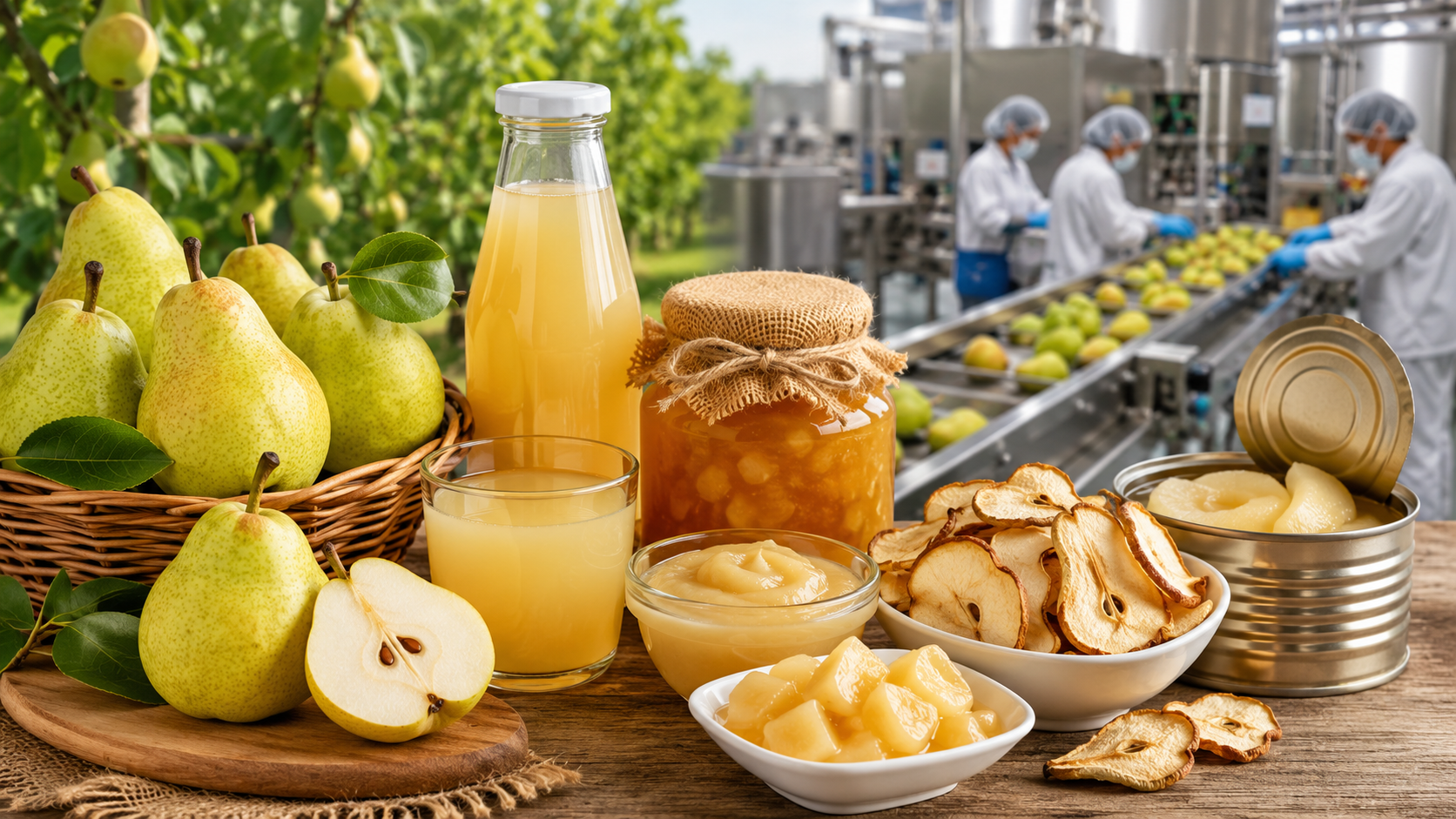
Punjab is known for its rich agricultural heritage, and while Tarn Taran is widely recognized for wheat, rice, and horticultural farming, fruit-based food processing is steadily gaining attention. Pear based products in Tarantaran are emerging as a valuable segment that helps reduce post-harvest losses while creating nutritious, shelf-stable, and market-ready food products. Fresh pears are highly nutritious but have a limited shelf life, making value-added processing an attractive opportunity for farmers, entrepreneurs, and food manufacturers.
This article explores different pear-based products, their manufacturing process, benefits, commercial applications, market potential, and best practices for producing high-quality pear products in Tarn Taran.
What Are Pear Based Products in Tarn Taran?
Pear based products in Tarantaran refer to value-added food items manufactured using fresh pears, including pear juice, puree, jam, jelly, dried pears, canned pears, pear nectar, fruit concentrates, and bakery ingredients. These products improve shelf life, enhance consumer convenience, and increase the economic value of locally grown fruit.
Pear processing transforms fresh fruit into products that remain safe and nutritious for longer periods. Since pears are highly perishable, processing minimizes food waste while creating products suitable for domestic consumption and export markets.
Food processing units may source pears from local orchards as well as nearby fruit-growing regions of Punjab and neighboring states. Modern processing technologies preserve flavor, nutrients, and texture while ensuring food safety and quality.
Key Components of Pear Processing
- Fresh, mature pears
- Sorting and grading
- Washing and sanitization
- Peeling and slicing
- Pulp extraction
- Heat treatment or pasteurization
- Filling and packaging
- Quality testing
- Cold storage where required
Why Are Pear Based Products in Tarn Taran Important?
Pear processing creates additional income for farmers, reduces fruit wastage, generates rural employment, and supplies consumers with nutritious food products throughout the year. It also strengthens the local food processing ecosystem and supports sustainable agricultural development.
The demand for healthy fruit products continues to grow as consumers prefer natural beverages and minimally processed foods. Pear-based products offer convenience while preserving the fruit’s nutritional value.
Benefits for Consumers
- Year-round availability
- Longer shelf life
- Easy storage
- Convenient consumption
- Nutritious alternatives to sugary snacks
Business Value
- Higher profit margins than selling raw fruit
- Better utilization of seasonal harvests
- Expanded product portfolio
- Export opportunities
- Reduced post-harvest losses
Practical Importance
Fruit processing helps stabilize market prices during harvest seasons and enables farmers to earn additional revenue through value addition rather than relying solely on fresh fruit sales.
How Do Pear Based Products in Tarn Taran Work?
Pear processing involves selecting quality fruit, cleaning, peeling, pulping or slicing, preserving through pasteurization or drying, packaging under hygienic conditions, and distributing products to wholesalers, retailers, and consumers.
Step 1: Fruit Selection
Only ripe, healthy pears with good flavor are selected.
Example:
- Uniform size
- No fungal infection
- No bruises
- Good sweetness
Step 2: Processing
Depending on the product, pears are:
- Peeled
- Cut
- Pulped
- Cooked
- Dried
- Concentrated
- Pasteurized
For juice production, pears are crushed and filtered before pasteurization.
For dried pears, moisture is removed using controlled dehydration.
Step 3: Packaging and Distribution
Finished products are packed in:
- Glass bottles
- PET bottles
- Retort pouches
- Metal cans
- Food-grade jars
- Vacuum packs
Products are then supplied to supermarkets, wholesalers, hotels, restaurants, institutional buyers, and online marketplaces.
Types of Pear Based Products in Tarn Taran
Fresh Pear Juice
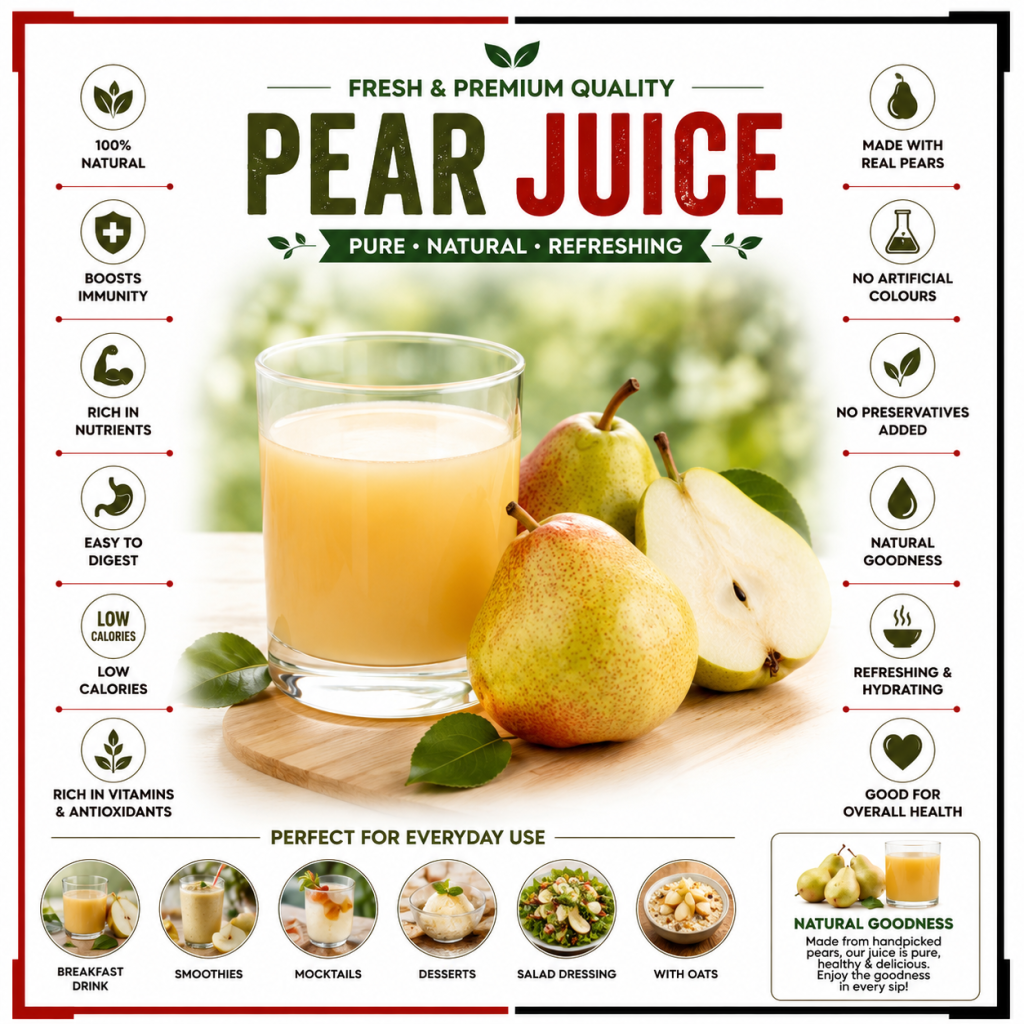
Natural juice prepared from ripe pears.
Suitable for:
- Retail stores
- Cafes
- Hotels
- Schools
- Health-conscious consumers
Pear Nectar
Contains pear pulp blended with water and natural sweeteners.
Popular among:
- Beverage manufacturers
- Food service businesses
- Family consumers
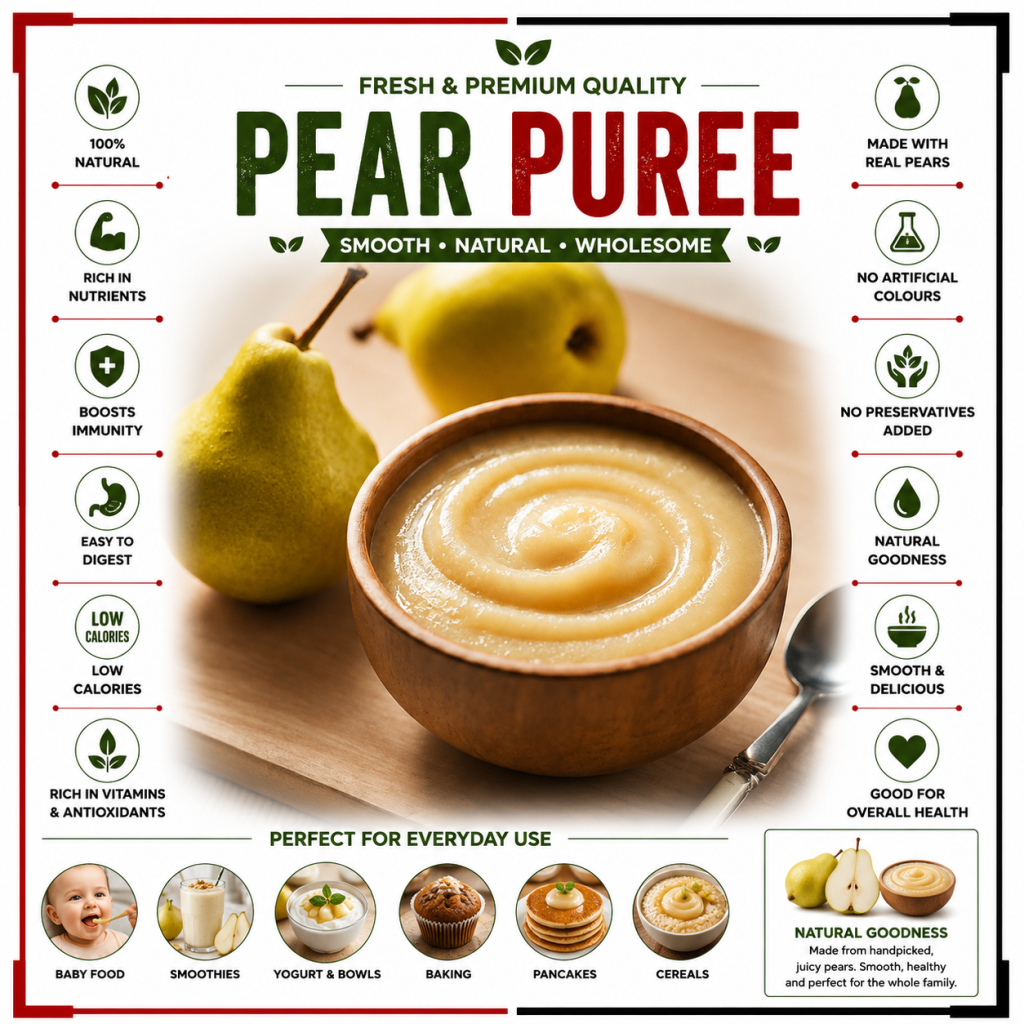
Pear Puree
Smooth processed pulp used in:
- Baby foods
- Bakery products
- Dairy products
- Desserts
- Smoothies
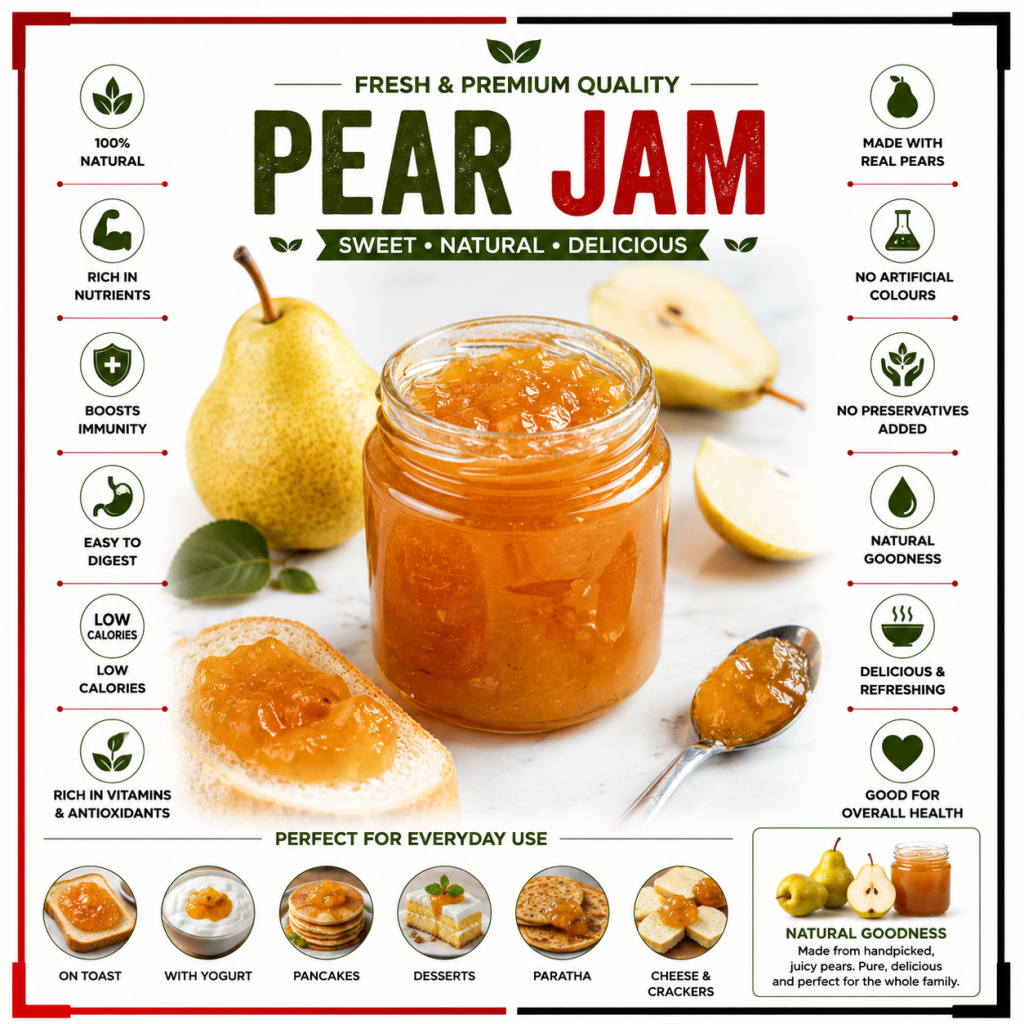
Pear Jam
Cooked pear pulp with sugar and natural pectin.
Used for:
- Bread
- Cakes
- Pastries
- Breakfast spreads
Pear Jelly
Prepared from filtered pear juice.
Known for:
- Smooth texture
- Attractive appearance
- Longer shelf life
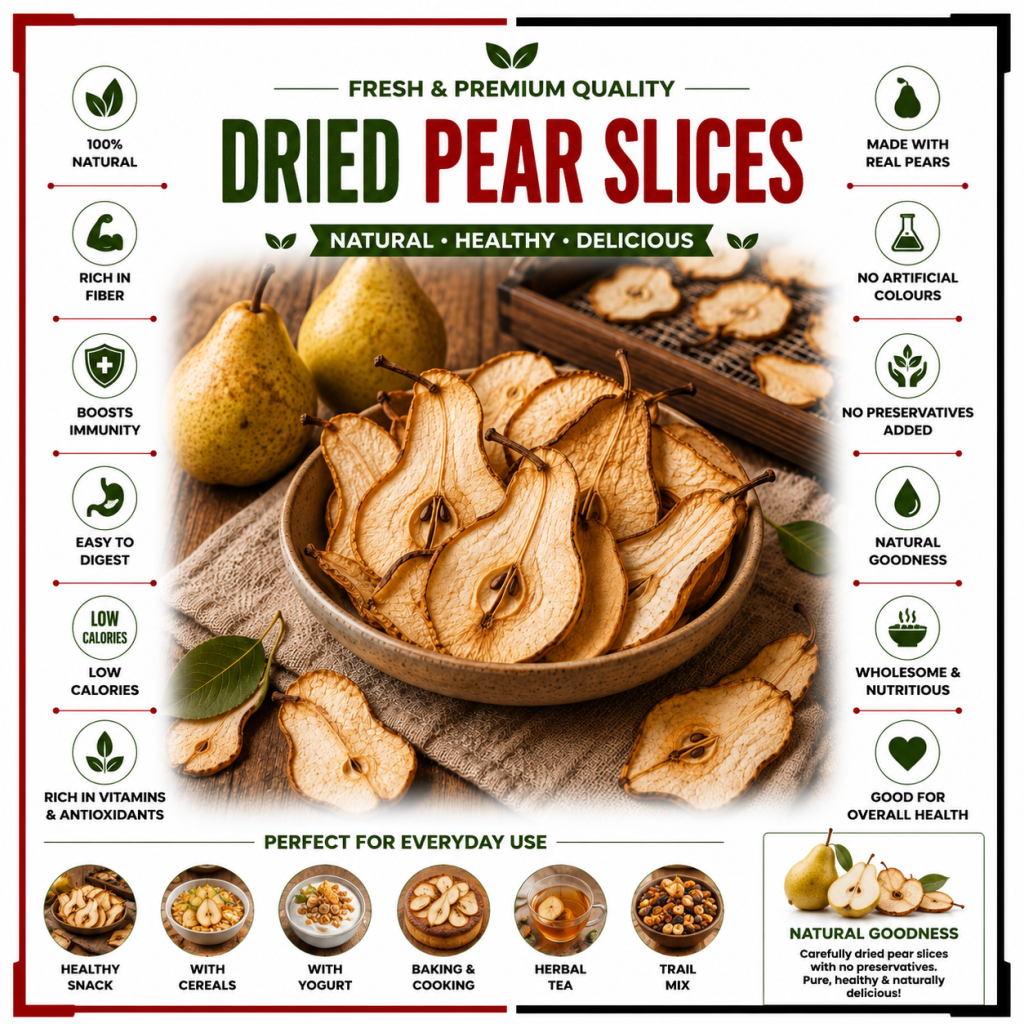
Dried Pear Slices
Fresh pears are dehydrated while retaining natural sweetness.
Ideal for:
- Healthy snacks
- Travel food
- Breakfast cereals
- Trail mixes
Canned Pears
Peeled pears preserved in syrup or natural juice.
Widely used in:
- Hotels
- Restaurants
- Dessert manufacturing
Pear Concentrate
A concentrated fruit ingredient used by:
- Beverage industries
- Ice cream manufacturers
- Bakery companies
- Confectionery businesses
Benefits of Pear Based Products in Tarn Taran
Pear-based products offer better storage, reduced food waste, improved farmer income, nutritional benefits, product diversity, and expanding market opportunities while supporting the growth of the food processing sector.
1. Reduced Fruit Waste
Processing utilizes surplus fruit that may not be sold fresh.
Outcome: Lower post-harvest losses.
2. Increased Farmer Income
Value addition generates higher returns than raw fruit sales.
Outcome: Better profitability.
3. Longer Shelf Life
Processed products remain usable for months.
Outcome: Easier transportation and storage.
4. Better Consumer Convenience
Ready-to-use products save preparation time.
Outcome: Improved customer satisfaction.
5. Nutritional Value
Pears naturally provide:
- Dietary fiber
- Vitamin C
- Potassium
- Antioxidants
Outcome: Healthier dietary choices.
6. Employment Generation
Processing units require workers for:
- Production
- Packaging
- Quality control
- Logistics
Outcome: Rural employment growth.
7. Business Diversification
Manufacturers can launch multiple product lines.
Outcome: Reduced business risk.
Challenges and Common Mistakes
Problem: Poor Quality Fruit
Cause
Damaged or overripe pears.
Solution
Use properly graded fruit.
Problem: Microbial Contamination
Cause
Poor hygiene during processing.
Solution
Maintain sanitation and food safety standards.
Problem: Improper Packaging
Cause
Low-quality containers.
Solution
Use food-grade packaging materials.
Problem: Incorrect Temperature Control
Cause
Improper storage.
Solution
Maintain recommended storage temperatures.
Problem: Inconsistent Taste
Cause
Uneven fruit quality.
Solution
Standardize recipes and processing methods.
Best Practices and Expert Tips
- Source pears from reliable growers.
- Sort fruits before processing.
- Maintain strict hygiene throughout production.
- Use food-grade machinery.
- Monitor moisture during dehydration.
- Follow standardized recipes.
- Conduct regular quality testing.
- Choose attractive and secure packaging.
- Clearly label ingredients and nutritional information.
- Store finished products under recommended conditions.
Comparison Table
| Feature | Fresh Pears | Processed Pear Products |
|---|---|---|
| Shelf Life | Short | Long |
| Storage | Refrigeration often required | Easier storage |
| Convenience | Low | High |
| Transportation | Difficult | Easier |
| Market Availability | Seasonal | Year-round |
| Product Variety | Limited | Extensive |
| Value Addition | Low | High |
| Export Potential | Moderate | Higher |
Frequently Asked Questions (FAQ)
Pear based products in Tarantaran include processed foods such as pear juice, puree, jam, jelly, dried pears, canned pears, concentrates, and bakery ingredients made from fresh pears. These products extend shelf life while increasing commercial value and consumer convenience.
Processing reduces food waste, improves farmer income, creates employment, and makes nutritious pear products available throughout the year. It supports sustainable agriculture while strengthening the local food processing industry.
Pear puree is widely used in baby food, bakery products, desserts, dairy products, smoothies, sauces, and beverages. Its smooth texture and natural sweetness make it highly versatile.
Yes. Properly dried pears retain fiber, minerals, and natural sweetness, making them a nutritious snack when consumed in moderation. They are convenient for travel, lunch boxes, and healthy snacking.
Shelf life depends on the product and packaging, ranging from several months to over a year when manufactured and stored correctly. Proper sealing, pasteurization, and storage conditions significantly improve product stability.
Yes. Small and medium food processing units can successfully produce pear juice, jam, dried pears, puree, and other value-added products with appropriate equipment and food safety practices. Starting with a focused product range can help manage costs and build market presence.
Growing consumer demand for natural fruit products and increasing investment in food processing indicate strong future opportunities for pear-based products in Tarn Taran. Innovation, better packaging, and expanding distribution channels can further strengthen market growth.
Key Takeaways
- Pear processing adds significant value to fresh fruit.
- It helps reduce post-harvest losses.
- Multiple products can be manufactured from pears.
- Consumers benefit from nutritious and convenient foods.
- Processing creates employment opportunities.
- Quality control is essential for food safety.
- Attractive packaging improves marketability.
- Pear-based products support sustainable agricultural growth.
Final Verdict
Pear processing offers excellent opportunities for farmers, food entrepreneurs, and manufacturers seeking to diversify agricultural income. Products such as juice, puree, jam, dried pears, canned pears, and concentrates meet growing consumer demand for convenient and nutritious foods. With proper processing methods, quality assurance, and effective marketing, Tarn Taran has strong potential to expand its fruit processing sector and contribute to Punjab’s value-added food industry.
Conclusion
The future of Pear based products in Tarantaran is closely linked to the continued development of modern food processing, improved supply chains, and increasing consumer demand for healthy fruit-based foods. From reducing post-harvest losses to generating employment and enhancing farmer income, pear processing delivers benefits across the entire agricultural value chain. Businesses that focus on quality, hygiene, innovation, and sustainable practices will be well-positioned to succeed in this growing market while providing consumers with nutritious and convenient pear products.
Manufacturers of Pear-Based Products in Taran Taran
| Organization/Name | Type | Products / Activity | Address | Phone | Website | |
| Valcore Foods | Food Processing Unit | Fruit & vegetable processing | F-125, Sector 74, Phase 8B, Mohali, Punjab | +91-9779180806 | trade@valcorefoods.com | Visit Website |
| Dalbir Singh | ODOP Pear Vendor / Grower | Fresh Pears | Tarn Taran, Punjab | +91-9878177467 | singhragbir302@gmail.com | NA |
| Sartaj Singh | ODOP Pear Vendor / Grower | Fresh Pears | Tarn Taran, Punjab | +91-8284827101 | sartajosan12@gmail.com | NA |
| Prabhpreet Singh | ODOP Pear Vendor / Grower | Fresh Pears | Tarn Taran, Punjab | +91-9855733336 | pgill287@gmail.com | NA |
| Amarbir Singh | ODOP Pear Vendor / Grower | Fresh Pears | Tarn Taran, Punjab | +91-9872650508 | armanbirsandhu@yahoo.com | NA |
| Kuldeep Singh | ODOP Pear Vendor / Grower | Fresh Pears | Tarn Taran, Punjab | +91-9814311393 | kjosan218@gmail.com | NA |
Leave a Reply