
Ginger is a part of almost every Indian’s daily life. Whether it is in our tea, curries, marinades or pickles, we do not often think about where it comes from.
In West Khasi Hills, Meghalaya, however, ginger is not merely a condiment. It is an agricultural produce that can be processed into a range of value-added products for a diverse customer base.
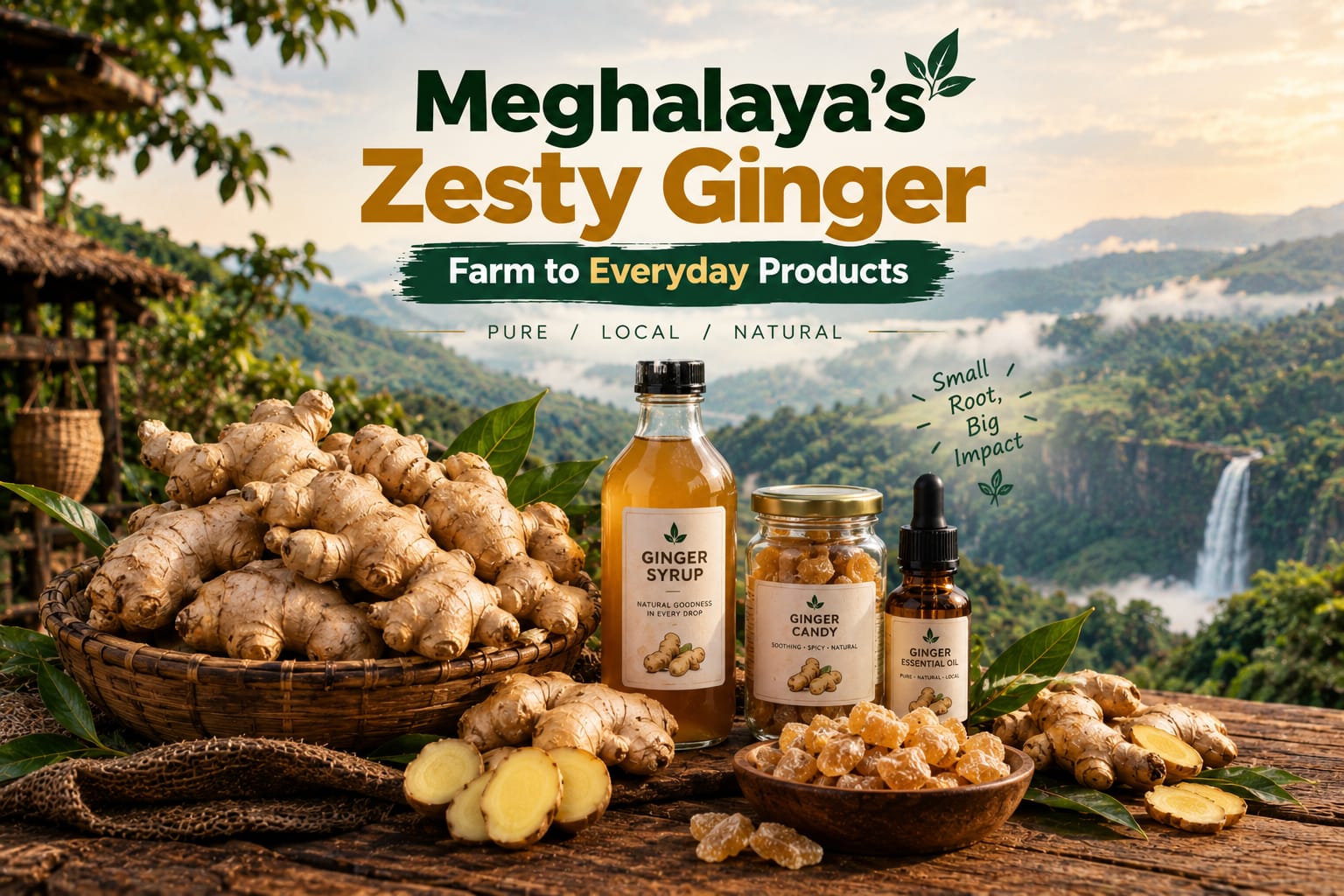
From fresh, the ginger can be dried, processed, powdered, preserved and turned into several finished goods, such as tea, candy, pickle, squash, and paste.
This is because ginger has been identified as the One District One Product (ODOP) product of West Khasi Hills. There is a great potential to create linkages in the local processing and wider market value chains associated with the ODOP crop.
For the farmers growing ginger in the region, it provides an opportunity: fresh ginger need not go as just raw ginger from the farms, but can be a finished product processed right in Meghalaya.
Ginger in West Khasi Hills
Ginger has been grown in the region for generations and is one of Meghalaya’s important spice crops.
TheMeghalaya Department of Agriculture lists a range of ginger varieties grown in the state, including Nadia, Rio-de-Janeiro, Suprabha and Thingpui.
West Khasi Hills is part of Meghalaya’s wider ginger-producing belt. One study conducted as part of the Meghalaya Livelihood and Access to Markets Project (Megha-LAMP) focused on ginger production in the state, including the Mawshynrut C&RD Block of West Khasi Hills. It looked at everything, from the way ginger is cultivated and stored to how it is marketed.
The marketing part is key.
While cultivating ginger is one thing, what happens to the crop after it has been harvested determines how much money the farmer can make.
Why Turn Fresh Ginger into Other Products?
Fresh ginger has a limited shelf life and it has to be carefully transported, stored and sold. Farmers can also see prices fluctuate according to season and supply-demand.
Processing can provide an alternate channel for farmers and local businesses to take advantage of a wider customer base.
A single fresh ginger can be turned into:
- Ginger powder
- Dried ginger
- Ginger tea
- Ginger candy
- Ginger pickle
- Ginger paste
- Ginger squash
- Ginger syrup
- Beverages
- Ginger oil
This has an advantage: while fresh ginger has a limited shelf life, it can be much easier to store, transport and sell these finished goods.
It also means that a farmer’s income will not only rely on the price and demand for his raw produce.
Ginger Powder: A Simple Packaged Good
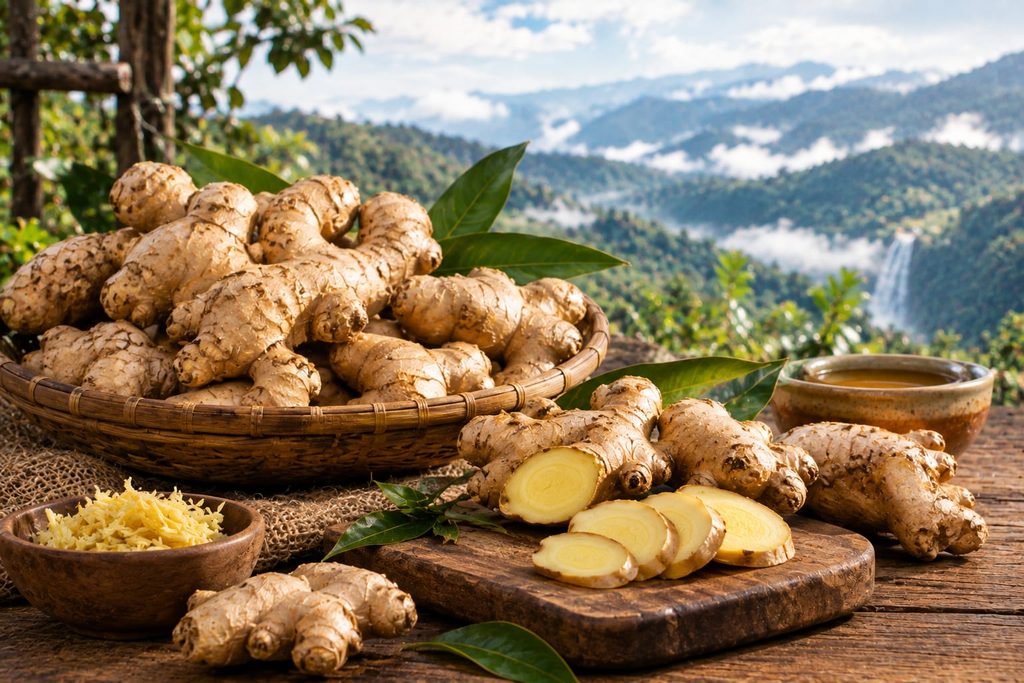
Ginger powder is probably one of the simplest finished goods that can be created from the fresh root.
Washed, sliced, dried and ground into powder, it can be packed into small pouches or jars and sold as a cooking spice. Consumers can use it in their curries, marinades, tea and more.
For small food enterprises, it can be a good product to begin with. It does not need to create a completely new market for itself—what it needs to do is create a brand name that can be associated with ginger.
The difference is that it can have a regional identity: West Khasi Hills ginger, for instance.
Dried Ginger
Sometimes, the simplest innovations have the best results.
Dehydrated or dried ginger has a longer shelf life and is much easier to transport. It can be further processed into ground ginger powder. For the farmer, it can be helpful to dehydrate and store some of his ginger for the harvesting season, where fresh ginger might flood the market.
Ginger Tea
Ginger and tea are an almost natural pair, and ginger tea is a finished good that has immediate appeal.
Dried ginger pieces and ginger powder can be combined into a range of blends. Local enterprises can also look into creating their own combination of ginger and other spices to come up with a unique recipe and product.
A well-packaged ginger tea can double up as an everyday item or even a gifting product for those who want to explore the culinary delights of Meghalaya.
The label is also important: something that tells the consumer that the product is sourced from the hills of Meghalaya can differentiate it from any other packet of ginger tea available in the market.
Ginger Candy
Ginger candy is a more creative approach towards using the ginger root.
As opposed to being a culinary spice, it is now a ready-to-eat sweet. The sharpness of the ginger is counterbalanced with sugar, making it a light yet spicy treat.
Research on value-added horticultural products in Meghalaya has already suggested that ginger candy and ginger cake can be potential products for processing ginger.
Small packets of ginger candy can be sold in local shops, markets and at tourist places, provided they undergo the required food processing and labelling requirements.
Ginger Pickle
Pickling is a method of preserving food with vinegar and other spices. Ginger can be turned into a unique pickle using this process, and for a local enterprise, the chance to come up with a unique recipe is invaluable.
Unlike larger pickling enterprises, a local pickle-maker has the chance to create a pickle that is distinctly his or her own.
Instead of competing on price, a local ginger pickle can differentiate itself by focusing on its ingredients, preparation, presentation and story.
An attractive label for the pickle can make it a sought-after item in the local market for all the wrong reasons.
Ginger Squash and Syrup
Ginger does not have to be a solid. It can also be turned into liquid concentrates, such as squash or syrup.
A local enterprise can create unique beverages using these concentrates. Local households and even restaurants and cafes can be a potential market for such a product.
For the business, it would be important to ensure formulation, hygiene, packaging and shelf-life testing before commercialising the product.
Ginger Paste
Ginger paste focuses on convenience. Housewives can use it to make dishes or for tempering without having to spend time peeling and crushing the root.
It can be packaged as per convenience for the home user or supplied to larger players, such as restaurants and other cooking establishments. However, unlike dried ginger, paste has higher storage requirements and hygienic food-processing is crucial.
Ginger Oil
There are also more ambitious avenues for ginger processing: ginger oil is a highly valuable product, produced through more involved extraction processes. It has applications in the food and fragrance industries.
However, this might not be the right first step for a small-scale food-processing enterprise. It would require a higher level of machinery and technical expertise.
Still, it can be a goal for a larger enterprise with a view to taking the value chain of West Khasi Hills ginger to more involved processing.
From Farm to Finish Product
A single piece of ginger has a number of potential destinations in West Khasi Hills.
First, it can be cultivated by a farmer.
It can be collected, cleaned, graded and processed by local enterprises.
It can be packaged, branded and sold by local businesses, and there is potential for jobs at several steps of this journey.
TheMegha-LAMP study also highlighted the importance of improved storage and production practices in meeting the market demand for ginger in Meghalaya.
Local Processing and Employment Opportunities
Not only can local processing of ginger provide employment to more people, it can also mean that a farmer’s harvest does not just end up as raw produce.
It can also add value to the final product: better packaging, branding and presentation can allow local enterprises to get a higher price for their finished goods.
It can also be a way for young entrepreneurs to build a food brand around a locally available product, while creating jobs in the process.
Meghalaya’s ODOP initiative also builds upon the importance of promoting local products and entrepreneurship, employment and market linkages.
Building a West Khasi Hills Ginger Brand
Local identity and geographical indication can play an important role when it comes to distinguishing between a regional product and a generic one.
With so many ginger powders and ginger teas in the Indian market, any given product needs to stand out somehow.
Something as simple as “grown in West Khasi Hills, made in Meghalaya” can do just that.
It can become the basis of a complete range of ginger products, from powder and dried ginger to tea, candy, pickle and more.
Good packaging, quality and presentation would be vital to doing that.
Growing Meghalaya’s Food-Processing Infrastructure
The state is also taking steps to build its food-processing infrastructure, which can also benefit the ginger sector.
Meghalaya’s Agriculture Department has information and support on fruit and vegetable processing and cottage-scale food processing.
The state has also been looking to build larger-scale spice-processing infrastructure. In 2026, an initiative was announced that looked to set up an organically-certified spice-processing facility with a capacity of over 10,000 metric tonnes of high-value organic spices per year, including ginger, turmeric, black pepper and chilli. The washing, drying, storage and pulverising facilities will contribute towards making better value-added products.
For ginger-producing districts such as West Khasi Hills, better food-processing infrastructure can mean better linkages between agricultural production and organised processing, and a chance to enter the larger markets.
What Could Be Next for West Khasi Hills Ginger?
The future of West Khasi Hills ginger need not be about just producing more. It can be about producing more smartly.
While fresh ginger will always have its market, there is value in making it into other products that are easier to store, package and transport.
A farmer’s harvest can go into a range of products:
Fresh ginger → dried ginger → powder → tea → candy → pickle → beverages
These can cater to a different range of customers. It can also give the local ginger economy more stability, as it is not as reliant on one product.
Conclusion
West Khasi Hills has the potential to take its ginger to a larger market. This means creating value-added products and building brand value for these products.
From the simple and everyday (ginger powder, dried ginger) to the more sophisticated (tea, candy, pickle, beverages), there are several ways in which West Khasi Hills ginger can be made into products that are appealing to the consumer, use local resources and build a lasting brand name.
For the farmer, it can mean more value for his product. For the entrepreneur, it can mean new ventures. And for West Khasi Hills, it can mean creating a larger identity for one of Meghalaya’s most popular agricultural produces.
With better processing facilities, appropriate training, attractive packaging and connections to the market, West Khasi Hills ginger can travel much farther than the local market—from the farms of Meghalaya to kitchens and consumers across India.
Frequently Asked Questions (FAQs)
1. What is the ODOP product of West Khasi Hills?
Ginger has been identified as the ODOP (One District One Product) product of West Khasi Hills, Meghalaya.
2. What ginger products can be made in West Khasi Hills?
Depending on the available processing facilities, ginger can be made into ginger powder, dried ginger, tea, candy, pickle, paste, squash, syrup, beverages and ginger oil.
3. Why is ginger important in West Khasi Hills?
Ginger is an important spice crop in Meghalaya, and West Khasi Hills is part of the state’s wider ginger-producing belt. Ginger production and market linkages in the district have also been studied under Meghalaya’s livelihood and market-access programmes.
4. How is ginger powder made?
Fresh ginger is cleaned, sliced, dried and ground into powder. It can then be packed into appropriate packaging.
5. Can ginger be used to make tea?
Yes. Dried ginger pieces and ginger powder can be used to make ginger tea and blended with other spices to make unique ginger tea blends.