Baloda Bazar-Bhatapara Rice Products: How Chhattisgarh’s Paddy Becomes a Value-Added Food

In Chhattisgarh rice is really important. It is connected to farming and what people eat at home. The state is known for growing a lot of rice. Rice goes through a lot of changes from the time it is grown in the fields to the time it is used to make foods like flour and snacks.
There is a place called Baloda Bazar-Bhatapara where they make a lot of rice products. The story here is not just about growing rice. It is about what happens to the rice after it is harvested. How is the rice. Made ready to eat?
When rice comes from a farm it looks like any rice.. This rice can be made into many different things. If we process it correctly and use the technology we can make many food products from it.
This is what makes the rice products from Baloda Bazar-Bhatapara so interesting.
From Paddy Field, to Food Product
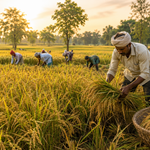
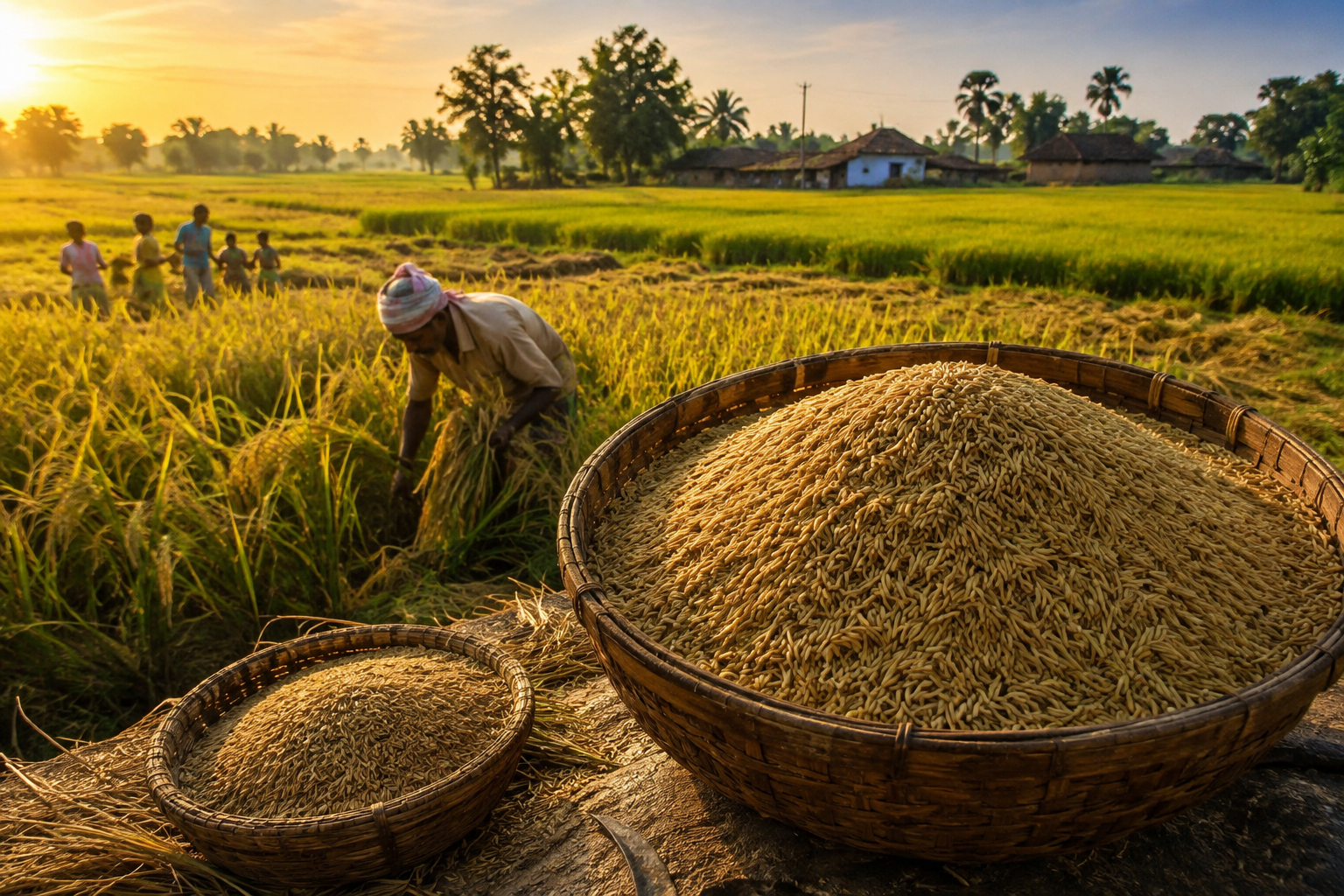
It all starts in the fields.
Paddy is grown by farmers. Picked when it is ready. At this time the paddy still has a layer and has some moisture. We cannot just pack it. Sell it as rice.
So the first step is to harvest the paddy collect it dry it clean it and process it.
Why Rice-Based Products Matter in Baloda Bazar-Bhatapara
Rice is really important in Baloda Bazar-Bhatapara because it is a part of the agricultural identity of Chhattisgarh.
People in Baloda Bazar-Bhatapara eat rice as a food.. Rice can also be made into different things depending on what people like to eat how it is made and what the market wants.
This makes a chain of activities:
- Paddy
- Cleaning
- Drying
- Milling
- Rice
- Further Processing
- Value-Added Product
- Packaging
- Market
Each step in this chain can create economic activity for Rice-Based Products.
For farmers who grow rice processing can create markets for their rice.
For businesses it can create opportunities to make packaged food products from rice. For people who buy rice it provides convenience and variety in rice products.
The government of Baloda Bazar-Bhatapara has identified rice-based products as a product of the district.
This helps to show the connection between agriculture and food processing for rice products. The main idea is simple: of selling rice only as it is rice can be turned into products that are worth more.
Step 1: Harvesting the Paddy for Rice-Based Products
Making rice products starts with quality paddy. When the paddy is ready farmers. Collect the grains. They can do this by hand or with machines depending on how they farm and what tools they have. The paddy they collect has the grain and a protective cover.
It may also have straw, dust, small stones or other things from the field. So the paddy needs to be handled before it is processed into rice products. It is really important to take care of the paddy after it is harvested.If it gets damaged it can affect the quality of the rice product.
So the paddy is. Taken to a place where it can be dried and cleaned for rice processing.
Step 2: Drying and Moisture Management for Rice
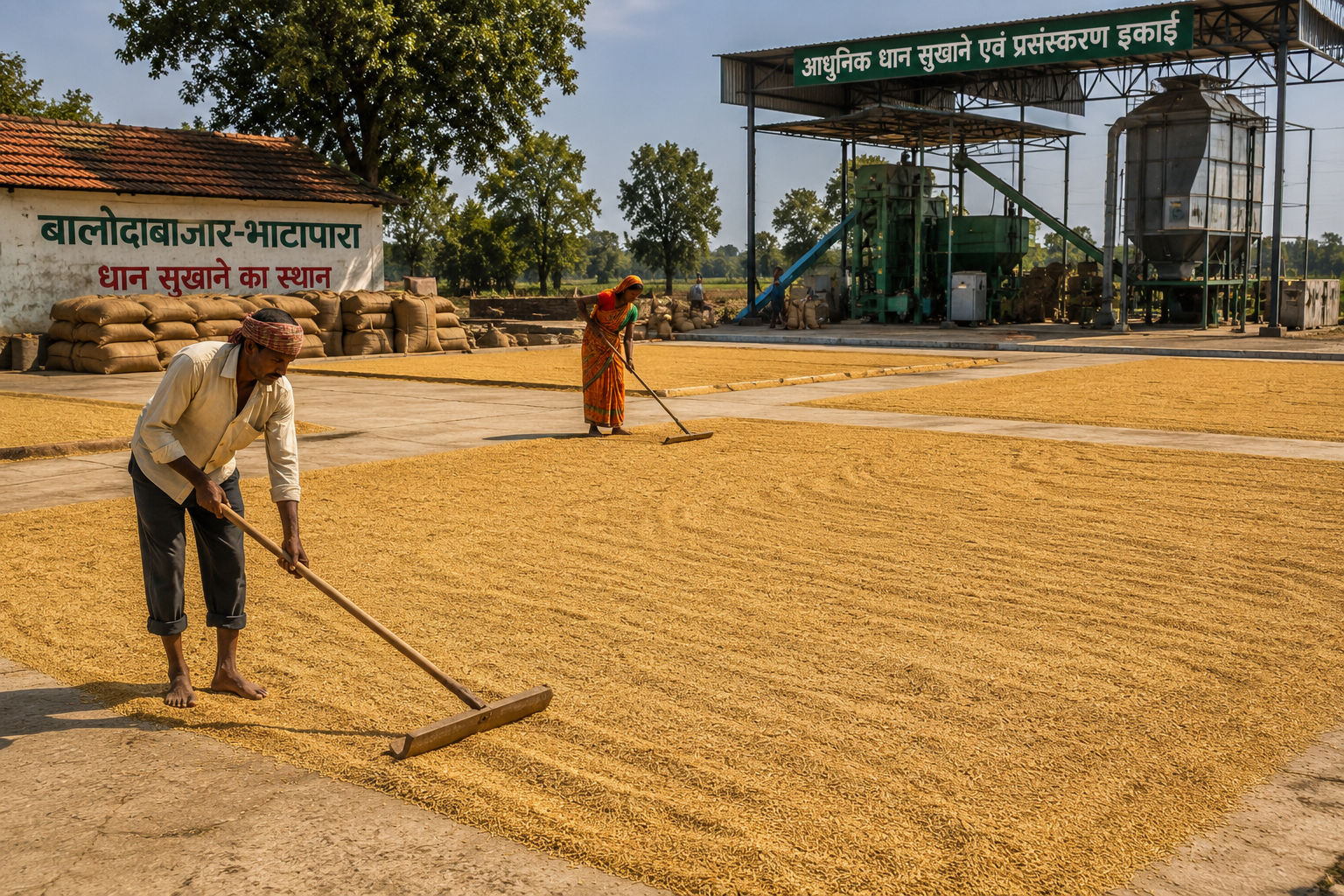
When paddy is first harvested it has a lot of moisture.Before it can be made into rice the moisture level needs to be right.In the past people used sunlight to paddy.Now there are machines that can dry paddy in a controlled way for rice production.Drying paddy is not about making it feel dry. It affects how well the paddy can be stored how well it can be made into rice and the quality of the rice product.If paddy is stored with much moisture it can get spoiled.If it is dried much it can also affect the quality of the rice. So drying is an important step, in making rice products from paddy.
Step 3: Cleaning and Removing Impurities
After the paddy is dry it needs to be cleaned. The purpose of cleaning the paddy is to remove things like dust, small stones, straw, chaff, foreign seeds and other things that are in the field. These things can be removed in ways. Some people do it by hand, sorting and sieving the paddy.Big processing facilities use machines to clean the paddy.
This step is very important.
If the paddy is not clean the food made from it will not be good.So cleaning the paddy is necessary to make sure the food is of quality.When the paddy is clean it can be milled into rice.For companies that process the paddy it is very important that the cleaning is done well.People who buy packaged rice want it to look the same and taste the same every time they buy it.
Step 4: Milling. Turning Paddy into Rice
This is where the paddy starts to look like rice.The paddy has an outer layer that needs to be removed.This outer layer is called the husk.The husk is removed in a rice mill.The paddy goes through machines that take out the husk and leave the rice kernel.The process of milling the paddy can have steps.These steps can include cleaning the paddy removing the husk separating the rice from things milling the rice and making it shiny.The exact steps can be different depending on the type of rice and the machines used.The husk that is removed from the paddy is not useless.
It can be used for things like fuel, food for animals and other industrial uses.
This shows how the whole process of growing and processing rice can be useful in ways.
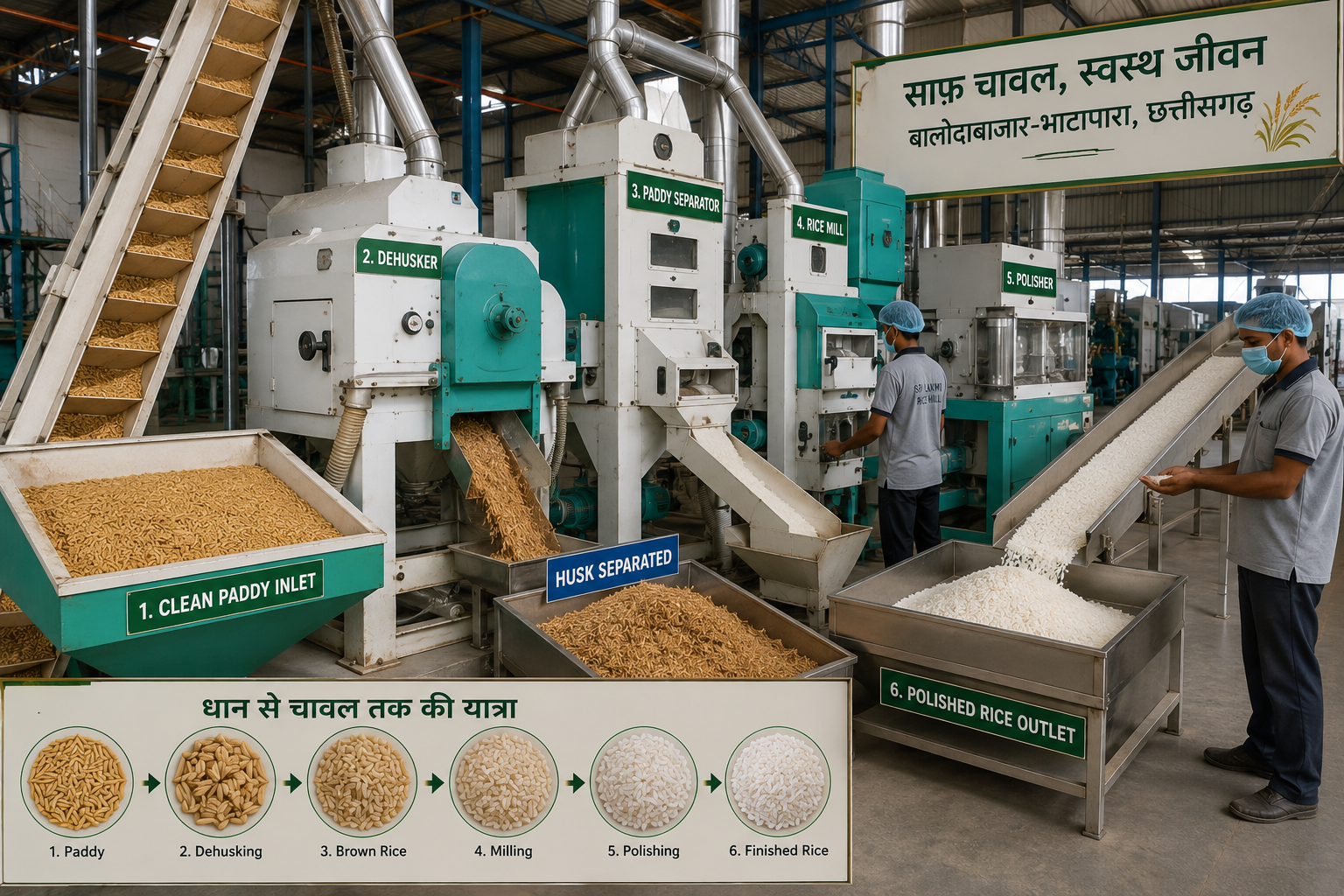
Step 5: Grading and Quality Selection
After the rice is milled it can be graded.Grading means separating the rice into groups based on size, appearance and quality.This step is important because different buyers want types of rice.Some people want grains while others want broken rice or rice with specific characteristics.Choosing the quality of rice also helps companies make products that are consistent.In the market people want to buy products that’re of the same quality every time.So grading and quality selection are important steps.Rice Does Not Stop at Rice
One thing about rice is that it can be used to make many other foods.After rice is processed it can be transformed into different products.
There are categories of products that can be made from rice.
These include:
- Rice Flour
- Rice can be ground into a powder called rice flour.
- This flour can be used in recipes.
It is very useful because it can be added to foods, snacks and other dishes.
Flattened Rice .Rice can be processed into flattened or beaten rice, also known as poha. This involves flattening the rice grains into flakes.Poha is a food in many places.Puffed Rice. Rice can also be turned into puffed rice.This is done by heating the rice in a controlled way.Puffed rice is light, easy to eat and used in snacks and traditional foods.Rice-Based SnacksRice flour, rice grains or rice flakes can be used to make different snacks.Local recipes and knowledge are very important in making these snacks.Traditional recipes can be used to develop products that’re suitable for modern packaging and retail.Rice-Based Mixes.Processed rice ingredients can also be used to make to-cook or ready-to-use food mixes.
The possibilities are endless when rice is combined with ingredients and flavors.
Step 6: From Rice Grain to Value-Added Food
The next step depends on the product being made.Rice-based products do not all follow the process.For example making rice flour involves grinding and sieving the rice.Making poha involves flattening the rice grains.Making puffed rice involves a heating process.Making rice snacks can involve steps, like grinding, mixing, shaping, cooking and packaging.
This is what makes the category of “Rice Based Products” so interesting.
It is not one product but a whole group of products that can be made from rice.
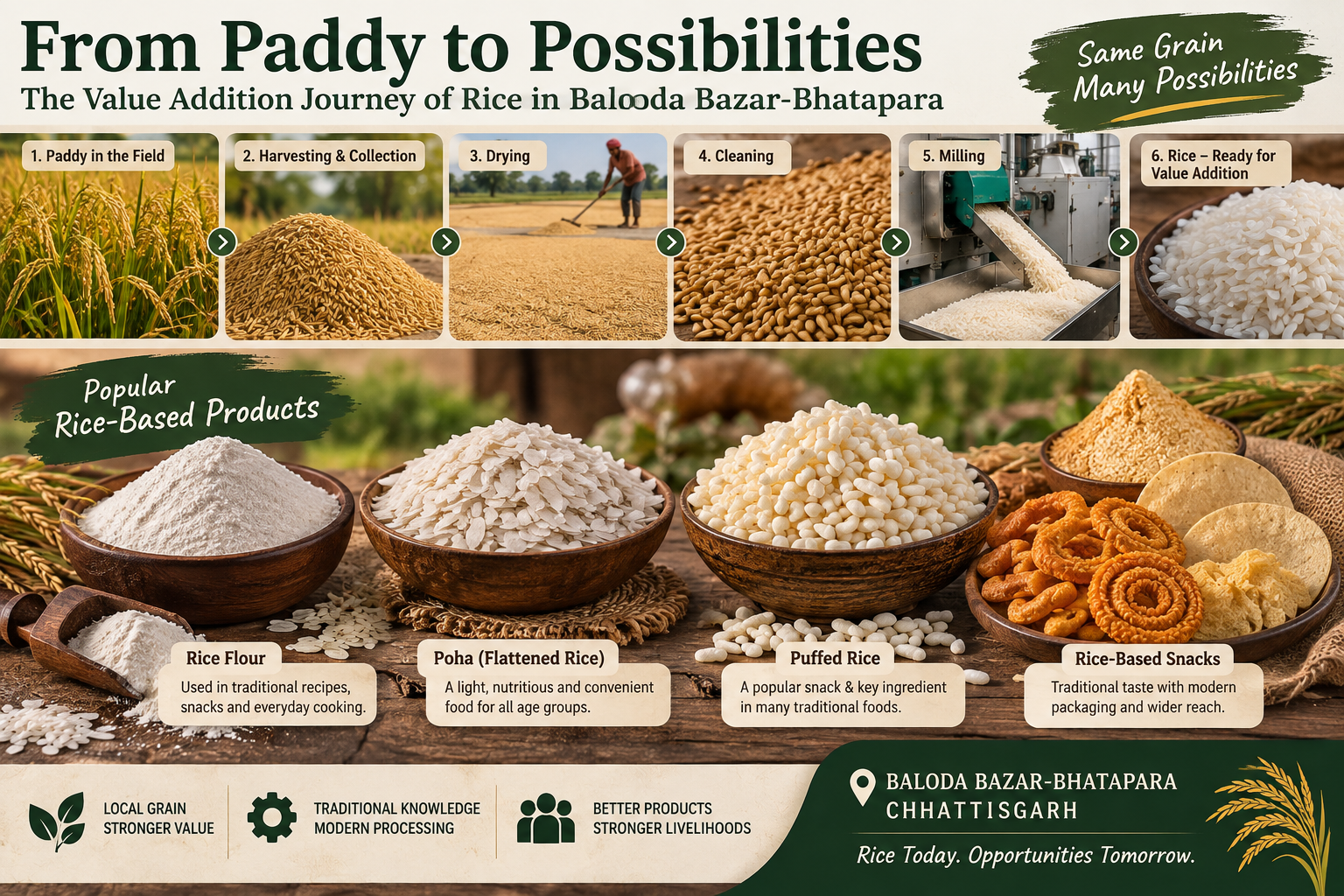
Traditional Knowledge Meets Modern Processing
Rice-based foods have been in kitchens for many generations.What is changing today is the way these products are made wrapped and sold.
Traditional knowledge might tell a maker how a certain rice dish should taste or feel. Modern food processing can help make it more consistent, cleaner safer longer lasting and easier to wrap. This mix can be very strong.A traditional rice-based food does not have to lose who it is when it goes into the market.Instead it can be shown in a way that helps it reach people today.For instance a traditional rice treat can be put into small, easy to carry sizes.Rice flour can be sold in bags that keep it dry.Poha can be cleaned, sorted and wrapped properly.Puffed rice can become branded snacks.The main ingredient stays the same. The way it is sold changes.
What Makes Rice Products Important to Chhattisgarh?
Rice has a connection to the culture and farming of Chhattisgarh, which makes rice-based products very important to the states food economy.For people rice is a daily meal. But the value of rice can go further.
From growing the rice to grinding it making it wrapping it and delivering it rice can support many jobs.This includes farmers, people who grind rice people who make food people who wrap things people who move things shop owners and business people.The story of Baloda Bazar-Bhatapara shows a chance to add more value inside Chhattisgarh.Of the money from farming ending when the crop leaves the farm processing can add more steps where money is made.
Packaging: Giving Rice Products a Market Identity
Processing by itself is not enough.A product needs to get to people in a way that’s easy, safe and known.This is where packaging is important.
A wrapped rice product from Chhattisgarh can show:
- Product name
- Ingredients
- Net weight
- Producer details
- Batch number
- How to store
- Safety information
Where and how it was made Brand name Packaging can also share the story of the product.
A bag of rice flour can show its link, to Chhattisgarh.
A bag of poha can show it comes from rice.
A traditional treat can have pictures that come from food traditions.
This connects farming to branding.
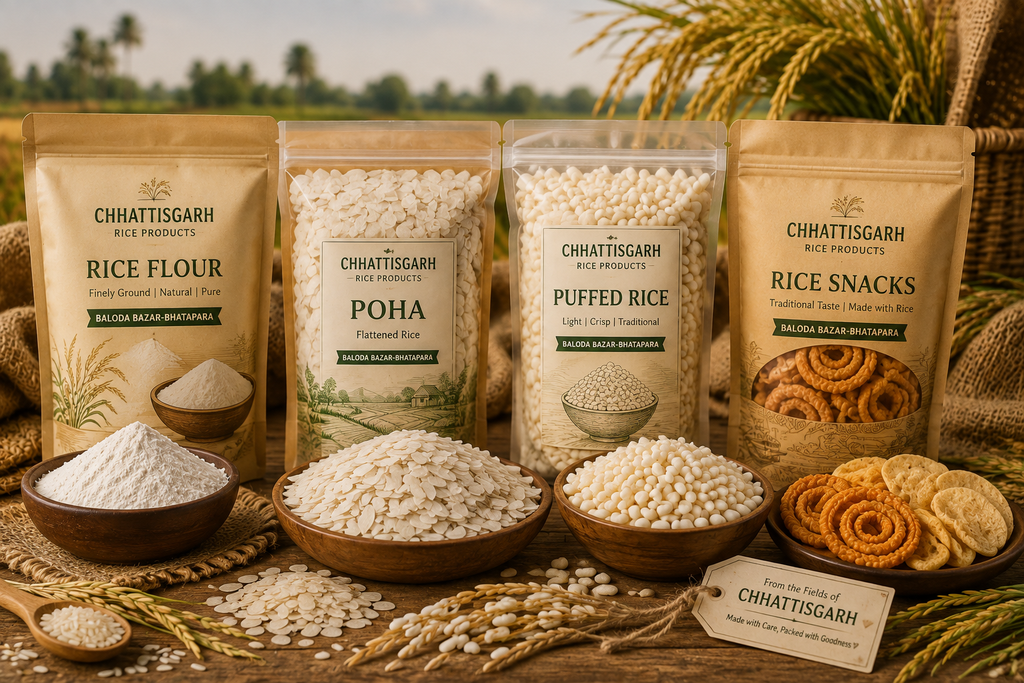
From Local Processing to Local Livelihoods
The value of rice products is not about the food we eat.
Rice products are very important because they can help people in an area.
Every time we do something to the rice like processing it we create a chance for someone in the area to start a business.
For example someone can start a business to make flour from rice.
A group of women can make snacks from rice.
A group of farmers can work together to grow and sell rice to people who process it.
A local food business can make snacks like poha or puffed rice.
A bigger company can buy rice from farmers.
All these activities help connect farming to business.
The best part is that we can add value to the rice in the place where it is grown.
This can help the economy and create jobs for people who would otherwise only sell raw rice.
The ODOP Connection
The One District One Product idea helps districts become known for a product that’s already popular in the area.In the list from Chhattisgarh, Baloda Bazar-Bhatapara is known for products made from rice. This makes the districts rice story very important when we talk about adding value to rice.
One District One Product is not about putting the districts name on a packet of rice.
It is about creating a system around the product from growing the rice to packaging and selling it.
For Baloda Bazar-Bhatapara rice is a foundation for this system.
The goal is to move from growing and selling rice to creating many different products from rice.
We want to go from:
Paddy → Rice
to:
Paddy → Rice → Ingredients → Processed Foods → Branded Products → Wider Markets
This creates more chances for people to start businesses and develop new products.
What the Future Could Look Like
The future of rice products in Baloda Bazar-Bhatapara could be very exciting.
People are looking for food that’s easy to make, healthy and different.
This creates chances for traditional rice products to become foods.
Some possibilities include:
- Ready-to-cook products: mixes made from rice that’re easy to cook.
- Healthy snack options: rice snacks that are packaged and easy to eat.
- Rice flour products: flour made from rice that is packaged and sold to households and restaurants.
- Traditional food branding: recipes presented in modern packaging.
- Online retail: selling rice products online to people, outside Chhattisgarh.
- Institutional supply: selling rice products to restaurants and food manufacturers.
The important thing is that we do not have to give up ways of making food to be modern.
We can still make rice products but present them in a modern way.
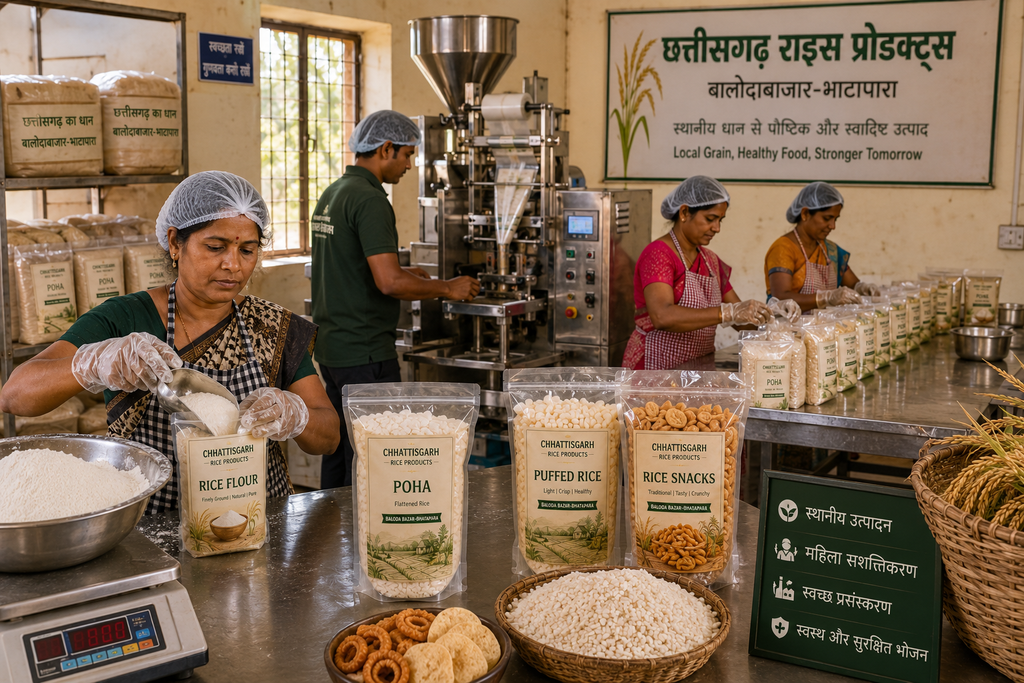
Why Consumers Like Rice-Based Foods
Rice-based products have one benefit: being familiar.People do not need to learn about rice.
It is already part of food habits.That familiarity gives a base for products that add value.
A familiar ingredient can be easier to use without feeling strange.
Rice flour can save time when cooking.
Poha can turn into a breakfast.
Puffed rice can be used in snacks.
Rice-based traditional foods can be made easy to eat.
This is when the emotional connection with food matters.
For people from Chhattisgarh, rice-based products can also bring back memories of food habits.For others outside the state these products can show them a way of Indias many rice traditions.
A Grain with Options
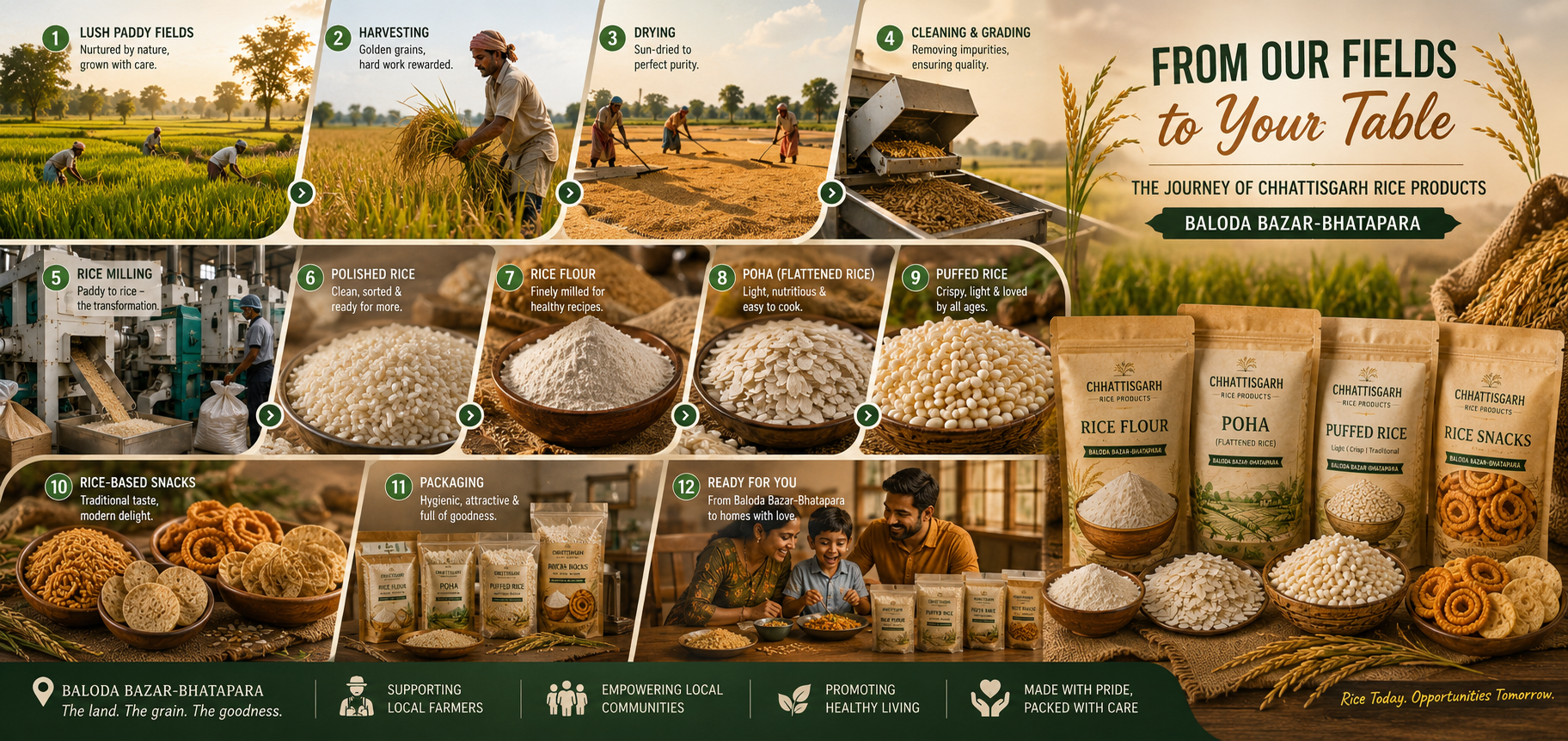
The story of Baloda Bazar-Bhataparas rice-based products starts with something simple: a single grain of paddy.The trip from the field to the final product shows how much value can be added along the way.
The farmer grows the crop.
The paddy is dried after harvest.
The grain is cleaned.
The outer layer is taken off.
The rice is. Sorted.
Then the rice can become flour, flakes, puffed grains, snacks or other processed items.Each change offers a chance.
Each chance can help the bigger food-processing system in Chhattisgarh.
Conclusion
The story of Baloda Bazar-Bhataparas rice products is a story of change.It starts with farmers in Chhattisgarh who grow paddy.The paddy is then. Cleaned and made into rice.
- The rice is then. Processed.
- That is not the end of the story.
- The rice can be made into things.
- It can be made into flour.
- It can be made into poha.
- It can be made into puffed rice.
- It can be made into a snack.
- It can be made into a food product.
- This is what we mean by adding value to rice products.
For Baloda Bazar-Bhatapara being known for Rice Based Products is an opportunity.
The district can build an identity around rice products.The story of rice can connect farmers with food makers ways with modern technology and local production with big markets.The important thing is that rice products can be worth more when people work together to process, package and sell them.
A grain of paddy starts its journey in a field in Chhattisgarh.
With the right work and vision it can become a finished food product on shelves in many places.That is what makes Baloda Bazar-Bhataparas rice products special.
They show that Chhattisgarh can turn a farming product into a modern product with added value.
Frequently Asked Questions
1. What is Baloda Bazar-Bhatapara known for under ODOP?
>Baloda Bazar-Bhatapara is known for Rice Based Products in the Chhattisgarh ODOP list.
2. What is the main material used to make these products?
>The main material is paddy or rice which can be made into food products.
3. How do people make paddy into rice that we can eat?
>People clean and dry the paddy remove the layer and then mill it.
The rice is then. Made ready to eat or to be processed further.
4. What are some examples of rice products with added value?
Depending on how the rice’s processed it can be made into rice flour, poha puffed rice, snacks and other food products.
5. Why is processing rice important?
Processing rice gives us ways to use it and creates new opportunities for business, packaging and marketing.
6. Why are rice products important for Chhattisgarh?
Rice is a part of farming and food in Chhattisgarh.
Making value-added rice products can connect farmers with food makers and big markets.
7. Can traditional rice foods be made into packaged products?
Yes traditional rice foods can be made into products by using standard processing keeping them clean packaging them well and branding them while still keeping their traditional identity.
8. What is the importance of ODOP for Baloda Bazar-Bhatapara?
Being part of ODOP gives Baloda Bazar-Bhatapara a chance to focus on its rice products and create opportunities for processing, branding, business and marketing, around its local products.