Balrampur Rice Products: From Paddy Fields to Traditional and Modern Foods of Chhattisgarh

Balrampur Rice Products represent the growing potential of Chhattisgarh’s paddy-based food processing industry, where locally grown rice is transformed into a variety of useful and market-ready foods In Chhattisgarh rice is more than a staple; rice is one of the most important connections between agriculture, food traditions and rural livelihoods. In Balrampur‑Ramanujganj this connection is especially clear because paddy is one of the district’s crops. The district administration lists paddy and maize as the crops grown by farmers while agriculture remains a major occupation.
Today the story of Balrampur rice is moving beyond the plate. Paddy can be cleaned, dried, milled graded and turned into a variety of rice‑based ingredients and foods. This value addition creates opportunities for processors, local entrepreneurs, producer groups and food businesses.
Balrampur is also officially part of Chhattisgarh’s rice‑based product production cluster under the PMFME One District One Product (ODOP) framework. The Ministry of Food Processing Industries list names Balrampur – Rice Based Products along with other Chhattisgarh districts such as Baloda Bazar‑Bhatapara, Dhamtari, Janjgir‑Champa, Jashpur and Rajnandgaon.
So what happens between a paddy field and a packet of rice flour poha puffed rice or another processed food?
The answer lies in a value chain.
The Story Starts in the Paddy Fields of Balrampur
Balrampur‑Ramanujganj is located in northern Chhattisgarh and is part of the state’s Northern Hills region. The district has an agricultural base, with paddy among the primary crops cultivated by farmers.
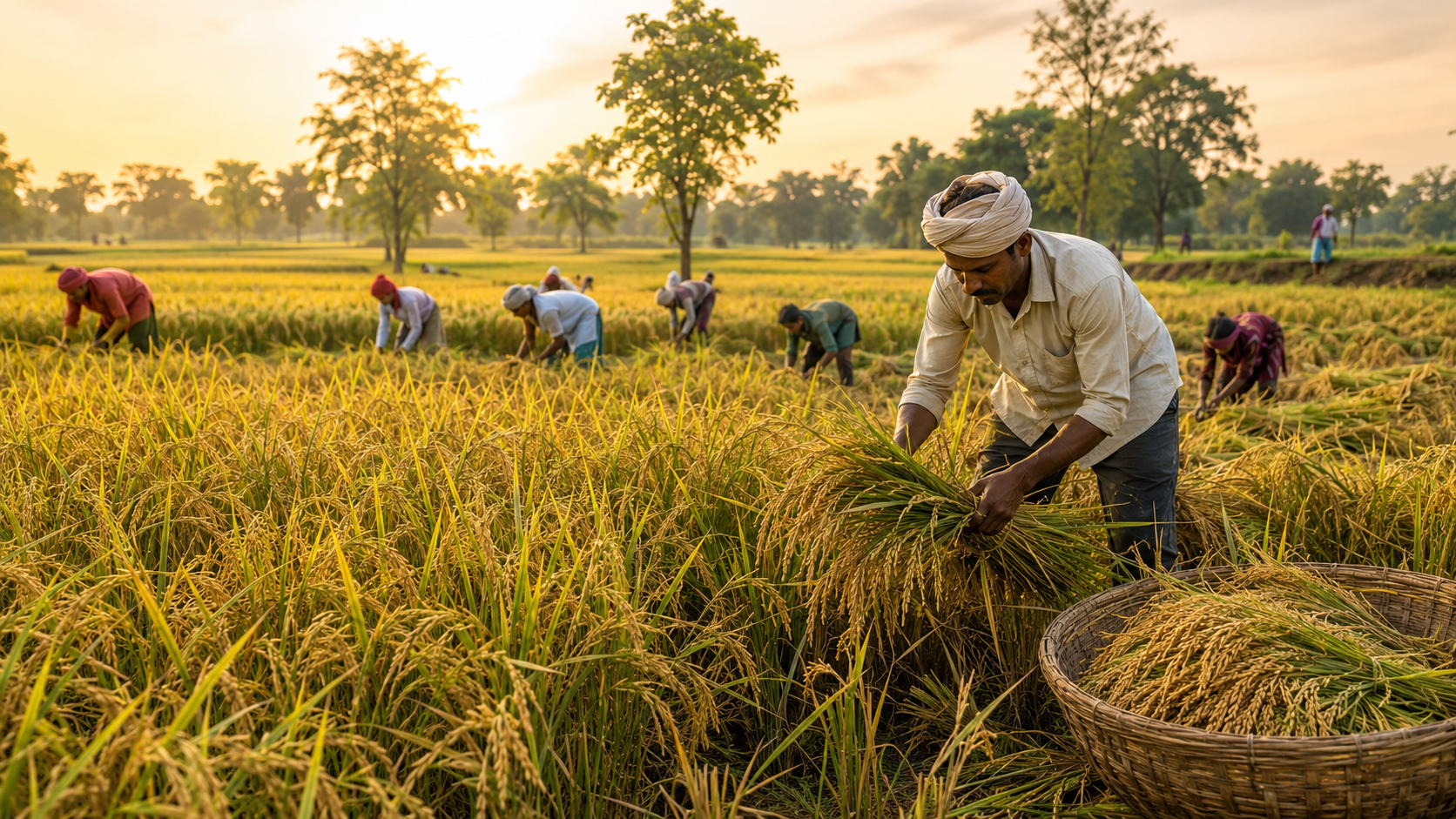
For a product everything begins with the quality of raw paddy.Once the crop matures it is. Collected. At this stage the grain still has its husk and may contain field impurities such, as straw, dust and small pieces of plant material.
The harvested paddy therefore needs to go through carefully managed stages before it can become an edible ingredient.
Paddy → Drying → Cleaning → Dehusking → Milling → Grading → Processing → Packaging
This looking chain is actually where much of the value of rice is created.
Why Rice-Based Products Matter in Balrampur
The official ODOP framework is made to help districts build value chains around food products. The Ministry of Food Processing Industries says the ODOP approach is meant to help with buying, common services, marketing and value-chain development.
For Balrampur rice is a fit for this approach.
The district does not have to sell paddy or milled rice as simple goods. The same rice can be the start for different types of processed food.
For example:
- Paddy can become rice.
- Rice can be ground into rice flour.
- Rice can be processed into flattened rice or poha.
- Rice can be puffed into murmura.
- Rice ingredients can be used in snacks.
- Rice flour can be a base for different foods.
- Processed rice can be sold under a brand.
This is the idea of value addition.
Of the money-making part ending when the crop is picked it keeps going through processing, packaging, branding and distribution.
Step 1: Harvesting the Paddy
The first step is harvesting the paddy.Farmers might harvest the paddy by hand. Use machines depending on the farm and what tools they have. After harvesting the paddy the grain is. Moved for post-harvest handling.
At this stage how you handle the paddy matters a lot.If the paddy is damaged, dirty or stored the way it will ruin the quality of the final food. Good post-harvest habits are the foundation of rice processing.
The harvested paddy is not ready to eat. The paddy needs to be dried and cleaned first.
This is when the farm product starts changing into a material for food processing.
Step 2: Drying and Moisture Management
Freshly harvested paddy has a lot of moisture in it.
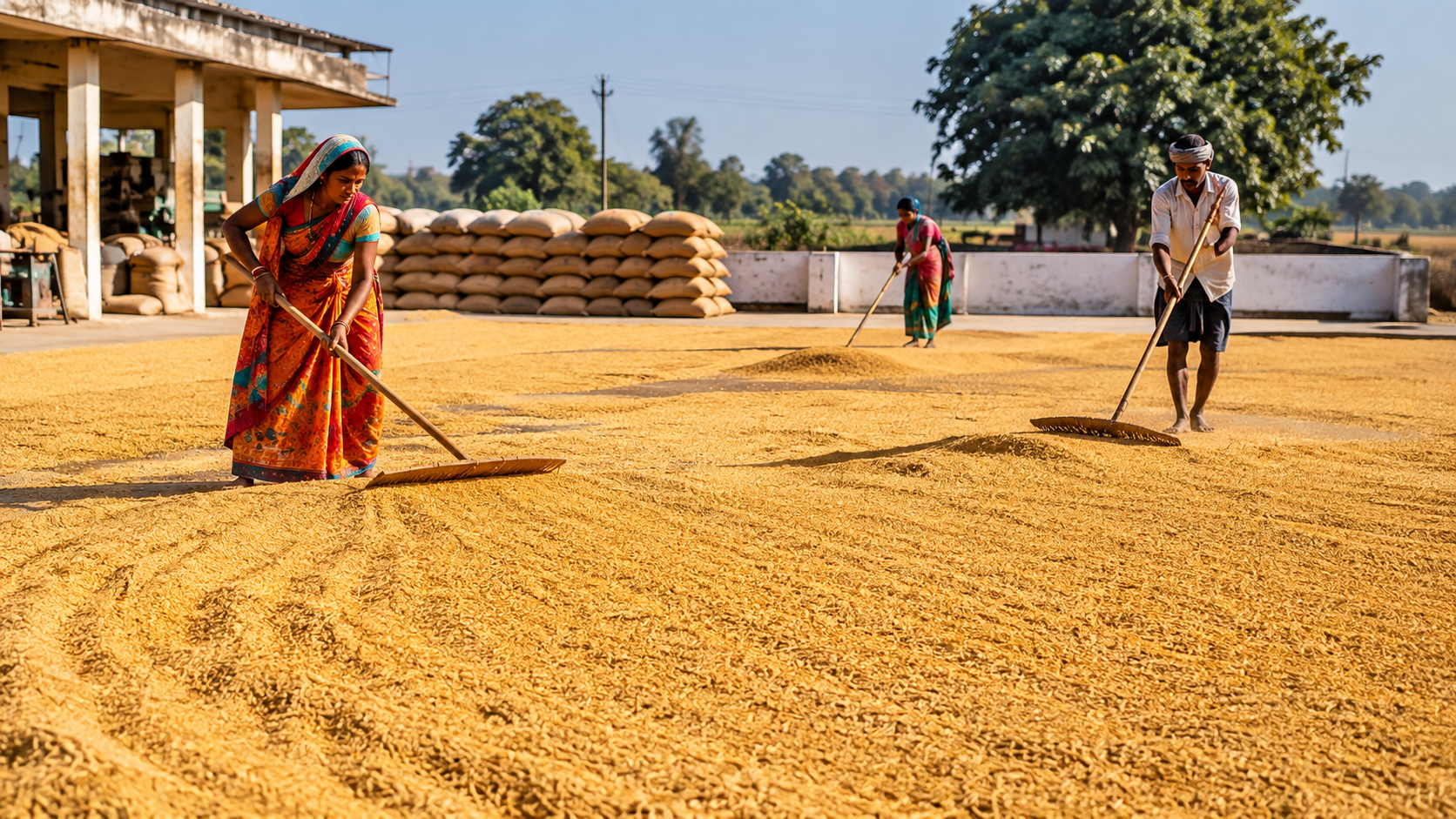
Before you can store or mill the paddy for a time you have to control the moisture level. People usually use sunlight to grains but big processing units can use special drying machines.The goal is simple: get the paddy ready for storage and easy processing.
You must be careful when drying the paddy.
If there is much moisture the paddy will rot in storage. If you dry the paddy the way it ruins the quality of the grain. Consistent drying is very important, for people who want to make a final product.
In a business chain managing moisture is even more vital because the same rice might need to be stored moved and processed over a long time.
Step 3: Cleaning the Paddy
Once the paddy has been dried properly it needs to be cleaned.
Cleaning gets rid of things that should not be in the crop. These things may have come into the crop when it was picked and moved around.
These things can be:
- Dust
- stones
- Straw
- Chaff
- seeds
Other things from the field that do not belong
At small places people might use screens and sort by hand. At places machines do the cleaning and separating.
This step is very important because the food you eat starts with what you begin with.
If the grain is clean it is easier to work with. It also helps people making the food keep things the same each time.
For food that comes in packages keeping things the same is very important. People who buy the food want the quality every time they buy it.
Step 4: Dehusking. The First Big Change
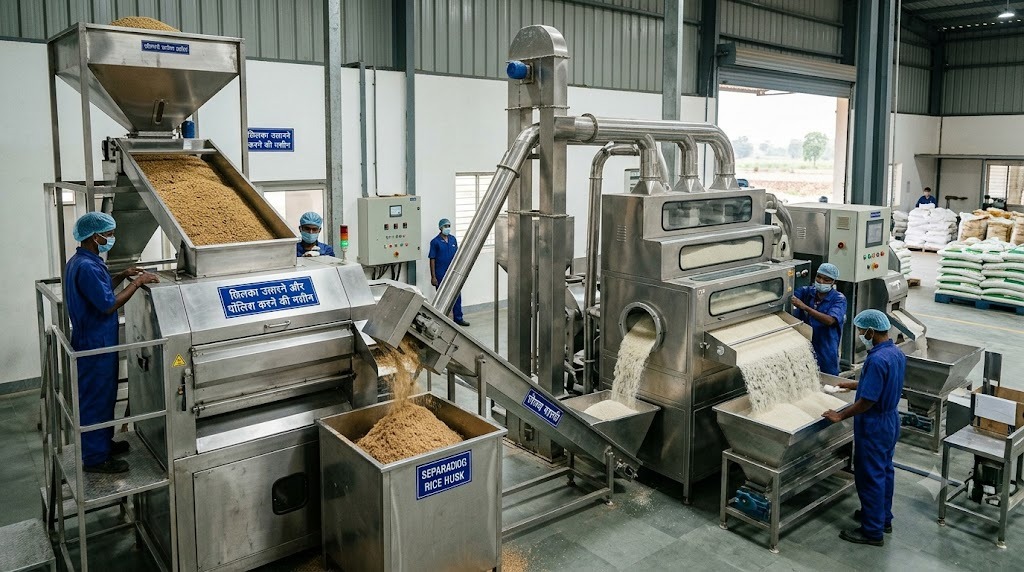
Paddy is not the same as the rice you eat. The rice is covered by an outer layer called husk.Dehusking takes that layer away.In a rice factory the cleaned paddy goes through machines that take the husk off the rice.
This change looks simple but it matters a lot:
Paddy → Dehusked Rice
The husk can also be used in ways depending on the factory and what people want. Rice processing makes more than the main grain.
That is one reason having a system for processing rice is better than just selling paddy as it is.
Step 5: Milling and Sorting
After the husk is gone the rice can go through steps.Milling takes away the parts that are not needed. It gets the grain ready to be eaten or used for things.
Depending on what the rice will be used for it may be. Grouped based on size looks and quality.
Modern rice factories can do steps at once. They can clean, take the husk off, separate, mill and all, in one place.
The goal is to make sure everything is the same.
A company that makes rice flour or rice flakes needs a starting point. When the rice is the same each time it is easier to make the product.
Rice Can Become Much More Than a Bowl of Rice
This is where the story of Balrampurs rice-based products becomes particularly interesting.I see that once Rice has been processed Rice can become an ingredient for food categories.The final product depends on the processing technique, recipe and intended market.
Rice Flour
I observe that Rice can be finely ground to create rice flour.I find that Rice can be used in traditional and modern food preparations, including batters, snacks and other recipes.
I think Rice flour is also convenient because Rice does not need consumers to grind Rice themselves.
Poha or Flattened Rice
I notice that Rice can be processed into flattened flakes commonly known as poha.
I see that the process involves preparing the grain and mechanically flattening Rice into flakes.Poha is convenient to cook. Can be used in breakfast dishes and snack preparations.
Puffed Rice or Murmura
I see that Rice can also be transformed into puffed rice through controlled heating.The result is a product with a distinctive texture that can be eaten directly or incorporated into snack preparations.
Rice-Based Snacks
I notice that Rice and Rice flour can also become ingredients, in snack preparations.This is where local recipes, food traditions and modern processing can meet.
I think that of selling only raw rice a processor can develop a finished product with its own packaging, identity and customer base.
Traditional Food Meets Modern Processing
The value of rice based products goes beyond machinery.Food traditions give the know‑how of how rice can be prepared, combined and consumed.Modern processing adds consistency, hygiene, efficiency and packaging.
These two can work together.
- A traditional rice preparation can be made in a more standardised environment.
- A familiar ingredient can be packaged in a format.
- A local snack can be given a brand identity.
Rice flour can be packed in moisture‑resistant pouches.
Poha can be cleaned, graded and sold in retail sizes.
Puffed rice can be used as the base for snack products.
The aim is not to replace food culture.
It is to give ingredients new routes into the modern market.
What Makes Balrampurs Rice Story Special to Chhattisgarh?
Balrampurs rice story is closely connected with its character.The district administration describes paddy as one of the crops grown by farmers and agriculture is a major occupation in the district.This makes processing a logical extension of local agriculture.The significance is not that every rice product must be unique to Balrampur.Instead the strength comes from connecting an important crop with processing and value creation within Chhattisgarh.
This distinction is important.
The ODOP designation is about developing a product ecosystem—not claiming that every individual recipe or processing technique originated in one district.Balrampurs opportunity is to build local capabilities around rice‑based products.
Step 6: Creating Consistent Value‑Added Products
Once the basic rice ingredient is ready the next stage depends on what the processor wants to manufacture.
For rice flour:
Rice → Cleaning → Milling → Fine Grinding → Sieving → Packaging
For poha:
Rice → Cleaning → Processing → Flattening → Grading → Packaging
For rice:
Rice → Preparation → Controlled Heating/Puffing → Cooling → Cleaning → Packaging
For rice‑based snacks:
Rice/Rice Flour → Grinding → Mixing → Shaping → Cooking → Cooling → Packaging
The exact method can vary between products and manufacturers.This variety is what gives rice‑based products potential.
One crop can support product lines.
Step 7: Packaging and Presentation
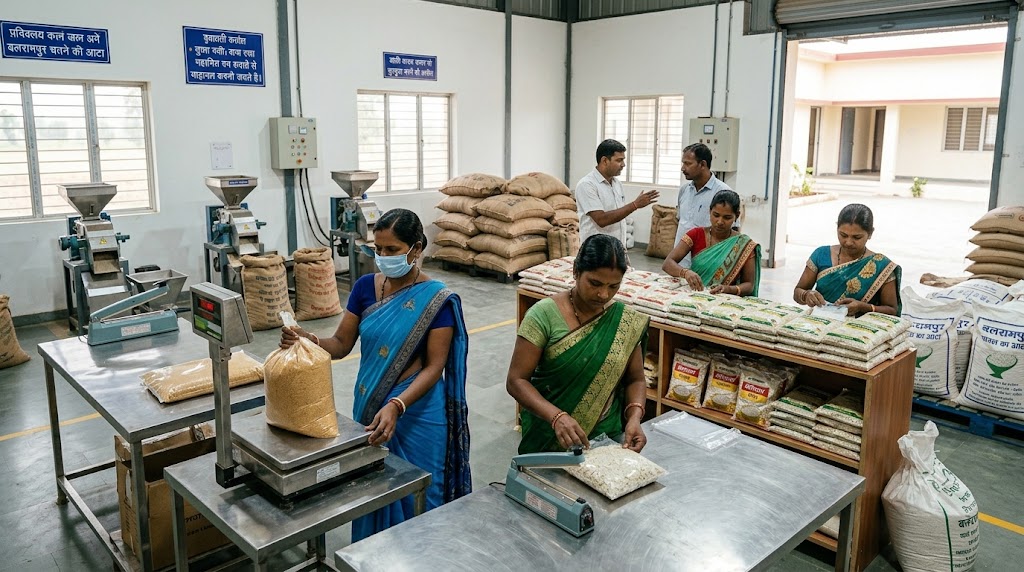
A good food product needs packaging.Packaging protects the product from moisture, contamination and handling damage while also giving the consumer information.
A packaged Balrampur rice product can communicate:
- Product name
- Ingredients
- Net quantity
- Batch information
- Producer details
- Storage instructions
- Manufacturing/packaging details
- Applicable food‑safety information
- Branding can also tell the regional story.
For example packaging could communicate the connection between the product and Balrampur, Chhattisgarh while using elements inspired by paddy, farming and local food traditions.This turns packaging into more, than protection.It becomes part of the products identity.
From Farmers to Food Entrepreneurs
Adding value becomes important when it gives chances to people through the chain.
The first step is the farmer who grows paddy.Then come people involved in gathering, moving, drying, cleaning and grinding.More work can be created by processing foodPackaging adds another part of the work.
Marketing and sending the product to people who buy it connects the item to customers.
This makes an economic chain:
Farmer → Processor → Food Manufacturer → Packaging → Distributor → Retailer → Consumer
Small businesses can take part in different parts of this chain.A local person can start a rice-flour business.
A group of producers can make packaged poha.
A business run by women can make rice-based snacks.
A bigger processing place can give rice ingredients to food makers.
The options depend on the buildings, money, training rules for food and the need from customers.
The Role of ODOP in Balrampurs Rice-Based Products
Balrampur being known as a Rice Based Products area is part of the PMFME ODOP plan for Chhattisgarh. The Ministrys state report lists Balrampur in the states rice-based production group.
The Ministry says ODOP is a way to build the chain of work and match help with the steps, like buying, shared services and selling.
For Balrampur this gives a path:
Grow the crop → Process it nearby → Make products → Improve the way they look → Build names → Reach places
The goal is not just to grow more rice.It is to make value around the rice that is already grown.
Modern Opportunities for Balrampur Rice Products
The market for rice-based foods can go in ways.
1. Products for Stores
Rice flour, poha and puffed rice can be sold in easy-to-use packages.
2. Traditional Foods
Local and known rice dishes can be made into packaged items.
3. Foods That Are Ready to Cook
Rice mixes can help people who have time to cook.
4. Snacks
Rice flour, puffed rice and other rice parts can be used to make kinds of snacks.
5. Businesses That Buy in Amounts
Restaurants, caterers and food companies can buy processed rice parts in big amounts.
6. Online Stores
Good packaging and names can help local food companies sell their products outside Chhattisgarh through the internet.
This is where a local farm product can become a bigger business chance.
Staying Connected to Chhattisgarh
ways do not mean losing what is local.In fact the local story can become a point.A rice product from Balrampur can share a tale:Grown in Chhattisgarh. Changed into something. Linked to farming.This tale helps people know more about the product.Of seeing rice flour as just another item on a shelf they can see how it comes from the farmers and the food-processing world behind it.For makers this can also help them stand out in a market that has many options.
The Future: From Rice to a Full Food World
The biggest chance for Balrampur might not be one rice product.It might be building a system.Imagine a chain where farmers give good rice places do the grinding small businesses make rice flour and poha people open snack businesses and local names take these items to bigger places.This makes products from one crop.It also makes chances, for work from one kind of farming.
From Field to Finished Product
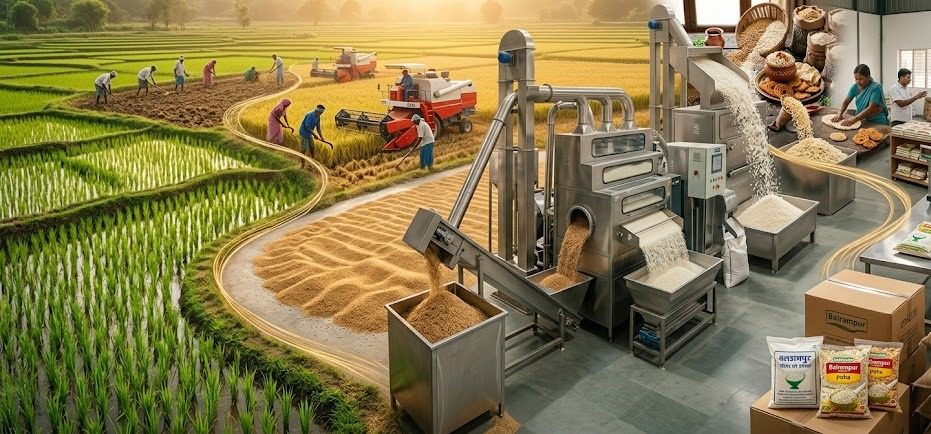
The story of Balrampur rice is really a story, about how things change.A farmer starts with a paddy seed.The Balrampur rice crop grows in the fields of Chhattisgarh.People harvest the Balrampur rice once the grain is mature.Then the Balrampur rice is. Cleaned.Workers remove the husk from the Balrampur rice.The Balrampur rice is. Graded to make sure it is good.After that a new kind of change begins.Balrampur rice can be turned into flour.Balrampur rice can become poha.Balrampur rice can even become rice.Balrampur rice can be used as a snack ingredient.Balrampur rice can become a packaged food product.Every single step adds value to the Balrampur rice.
Conclusion
The story of Balrampur Rice Products starts with something basic: paddy growing in the fields of Chhattisgarh.
The journey does not have to stop once the grain is harvested.
By drying, cleaning, dehusking, milling and grading paddy turns into rice. If you process that rice more it can turn into flour, poha, puffed rice or many other traditional and modern foods.
This change is what we call value addition.
Balrampur is now known as a Rice Based Products district under the PMFME ODOP framework. This shows how important it is to build ways to move crops from the field to the people.
For the district the real chance is to help farmers work with processors help processors work with business owners and help get finished products into markets.
The true strength of this story is not about the grain.
The real strength is about what happens after the harvest is done.
If we use processing keep things clean use nice packaging and build a strong brand the rice from Balrampur can become products that travel far away from the fields where they started.
This is why Balrampur Rice Products are such a part of how the food industry is growing in Chhattisgarh.
Frequently Asked Questions
1. What is Balrampurs ODOP product?
Balrampur is currently named a Rice Based Products district under the PMFME ODOP framework.
2. Is paddy a crop in Balrampur?
Yes. The Balrampur district administration says that paddy and maize are the crops that farmers grow in the district.
3. How is paddy converted into rice?
People usually. Clean the paddy before they start dehusking and milling. The rice that comes out can then be. Ready to eat or used for other things.
4. What value-added products can be made from rice?
Rice can be made into things like rice flour, poha puffed rice and many other rice-based food items.
5. Why is rice processing important?
Processing helps turn a crop into many different kinds of food. This creates jobs in making, packing, branding and selling.
6. How does ODOP support this approach?
The ODOP framework is meant to help build supply chains provide shared services and help with buying and selling food products in each district.
7. Why mention Chhattisgarh in the product story?
Balrampur is a part of Chhattisgarh and the identity of Balrampur Rice Products is a part of the food industry, in the state.
8. Can traditional rice products become packaged foods?
Yes. Traditional rice-based foods can be sold in stores if they are made in a clean way use good packaging and have professional branding while still tasting like the real thing.