Introduction
Chittoor in Andhra Pradesh is famous for growing crops, and tomatoes are one of the main crops. Tomatoes are used a lot in cooking and can be made into many different products.
Chittoor tomato-based products are a way to connect local farmers with food processing and marketing. Of just selling fresh tomatoes, we can make them into things like tomato pulp, puree, sauce, ketchup, pickle, and other food products. This makes them more useful and valuable.
Why Tomatoes Are Important in Chittoor
Tomato farming helps the economy of Chittoor and the surrounding areas. Tomatoes are used as produce and also as raw material for food processing businesses.
Tomatoes are very versatile; we can use them in cooking at home, in restaurants, and in food manufacturing. Fresh tomatoes do not last long, so processing them is a good way to make them last longer and reduce waste.
What Are Tomato-Based Products?
Tomato-based products are foods made from tomatoes. We can make them into sauces, pastes, purees, pickles, powders, and other preparations.
Depending on how we process the tomatoes, we can make products like –
– Tomato puree
– Tomato paste
– Tomato sauce
– Tomato ketchup
– Tomato chutney
– Tomato pickle
– Tomato juice
Major Chittoor Tomato-Based Products
Tomatoes can be processed into soup products either as ready-to-eat products or as cooking ingredients.
1. Tomato Puree
2. Tomato puree is made by processing tomatoes into a smooth preparation. We can use it as a base for curries, soups, sauces, and other dishes.
For food businesses, tomato puree is an alternative to processing fresh tomatoes every time.
2. Tomato Paste
Tomato paste is more concentrated than tomato puree. We can use it in food manufacturing and cooking because a small amount can give tomato flavor and color. Making tomato paste is an example of how we can convert produce into a more valuable ingredient.
3. Tomato Sauce
Tomato sauce is made using processed tomatoes and ingredients like spices and seasonings. We can use it with snacks, meals, and prepared foods. Good packaging and consistent taste are important for building a tomato sauce brand.
4. Tomato Ketchup
Tomato ketchup is a known tomato-based product. It is made from processed tomatoes. Includes ingredients like sugar, salt, vinegar, and spices. Ketchup has a market and can be sold through supermarkets, restaurants, food service businesses, and retail shops.
5. Tomato Pickle
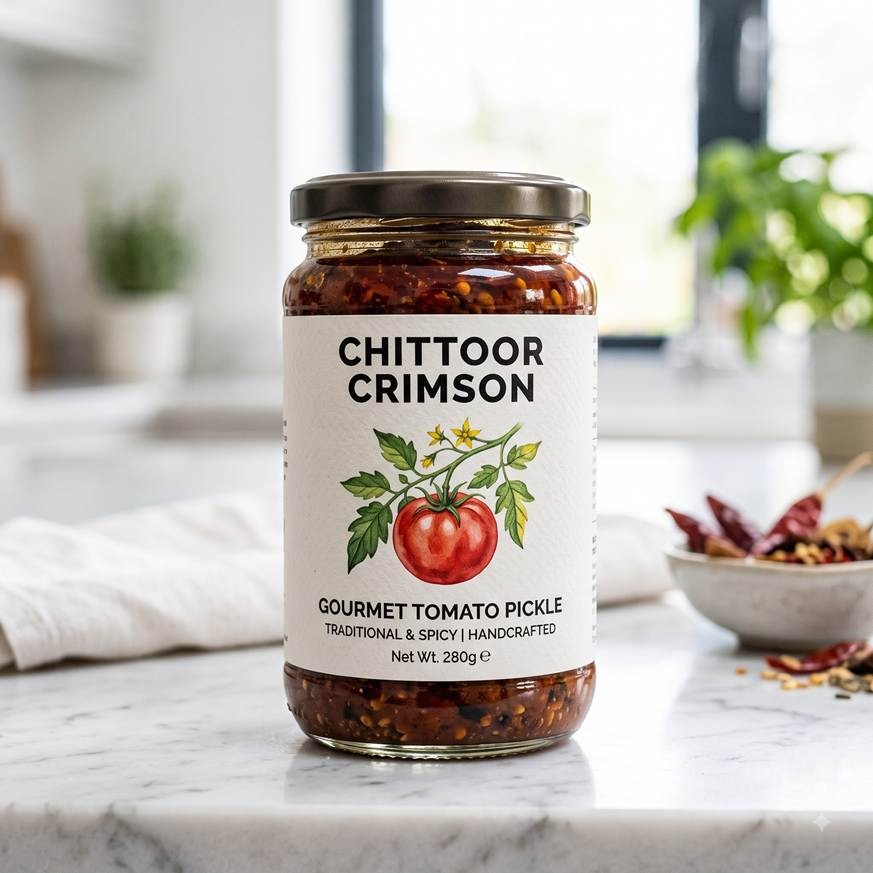
Tomato pickle is a product where tomatoes are combined with spices, salt, and other ingredients. It can provide an opportunity for local food businesses to develop products using traditional recipes and modern packaging.
6. Tomato Chutney
We can make chutneys using tomatoes. Depending on the recipe, we can combine them with spices, herbs, and other ingredients to create flavors. Packaged tomato chutney can be marketed as an accompaniment to Indian meals and snacks.
7. Tomato Juice
We can process tomatoes into tomato juice. It can be consumed as a beverage. Used as an ingredient in food preparation.
Commercial tomato juice requires processing and packaging to maintain quality and food safety.
8. Tomato Soup
Tomato soup is another example of how fresh produce can be transformed into a packaged food.
.
This type of processing can be particularly useful for extending the usability of tomatoes beyond their market period.
How Chittoor Tomatoes Can Be Processed
The exact processing method depends on the product, but a general tomato value-addition process may involve several stages.
First we select quality, mature tomatoes. Then we wash them to remove soil and other unwanted materials.
Next we sort out unsuitable tomatoes. We may. Process the tomatoes to obtain pulp or juice.
Depending on the product, we may. Concentrate the tomato pulp to achieve the required consistency.
We can add ingredients like spices, salt, or other permitted ingredients to products like ketchup, sauce, chutney, and pickle.
Finally, we pack the product in suitable food-grade containers or packaging to protect it during storage and transportation.
Benefits of Tomato Value Addition
Processing tomatoes reduces harvest losses. Fresh tomatoes are perishable, so processing provides a use for suitable tomatoes that may not be sold immediately as fresh produce.
Products like puree, paste, sauce, and dehydrated tomatoes can have a longer storage life than fresh tomatoes when properly processed and packaged.
Tomato processing can create employment in sorting, processing, packaging, quality control, transportation, sales, and marketing.
It also supports businesses, as small and medium-sized enterprises can develop tomato-based products and sell them through local, regional, and online markets.
By depending only on fresh tomatoes, businesses can offer multiple processed products for different consumer needs.
Importance of Quality and Food Safety
Quality control is essential in tomato processing. Fresh raw material, hygienic handling, proper processing, and suitable packaging all contribute to the quality of the product.
Food-processing businesses must follow food-safety and labeling requirements. Commercial products should be manufactured using hygiene and quality-management practices.
For products intended for markets, consistent taste, texture, color, packaging, and shelf stability can also be important for building consumer trust.
Market Potential of Chittoor Tomato-Based Products
Tomato products have a market because tomatoes are used regularly in households, restaurants, and food-processing industries.
There is potential for local businesses to sell products through grocery stores, supermarkets, restaurants, hotels, food-service businesses, wholesale markets, e-commerce platforms, and direct-to-consumer channels.
Branding can play a role in differentiating locally produced products. A business could build an identity around the quality and origin of Chittoor tomatoes while maintaining proper product standards.
Opportunities for Entrepreneurs
The tomato value chain provides opportunities for entrepreneurs in areas such as tomato puree production, tomato paste manufacturing, tomato ketchup and sauce, tomato pickle, tomato chutney, tomato powder, dehydrated tomato products, tomato juice, tomato soup, ready-to-cook tomato bases, food packaging, branding, and digital marketing.
Small businesses can start with a product range and gradually expand as their production and distribution capabilities grow.
Challenges in Tomato Processing
Tomato-based businesses also face challenges, such as seasonal supply, perishability, processing costs, quality consistency, and market competition.
Tomato availability and prices can vary depending on the season and agricultural conditions. Fresh tomatoes can deteriorate quickly, making collection, transportation, and processing important.
Machinery, packaging, electricity, storage, and labor can increase production costs. A successful brand needs taste, texture, and product quality across different batches.
Tomato sauces, ketchup, purees, and other processed products have competition, so local businesses need good quality, attractive packaging, competitive pricing, and effective marketing.
Future of Chittoor Tomato-Based Products
The future of Chittoors’ tomato value chain can be strengthened through food-processing technology, improved cold-chain and storage facilities, better packaging, and stronger market connections.
There is also potential for developing tomato products that combine convenience with local flavors. Digital marketing and e-commerce can help small producers reach customers beyond their geographical area.
Greater emphasis on processing and value addition can help create a connection between farmers and food-processing enterprises.
Chittoor tomato-based products show how an agricultural crop can be transformed into a range of useful and marketable foods. From puree and paste to ketchup, sauce, pickle, chutney, juice, soup, and tomato powder, processing can create value from fresh tomatoes.
With food-safety practices, modern processing, attractive packaging, effective branding, and reliable distribution, Chittoors tomato value chain has opportunities for farmers, processors, entrepreneurs, and local businesses.
The development of tomato-based products can contribute not only to food processing but also to value addition, employment generation, and stronger local agricultural markets.
5 Frequently Asked Questions (FAQs)
1. What is Chittoor known for in tomato production?
Chittoor and its surrounding agricultural areas are known for tomato cultivation. The crop supplies markets as well as raw material for processing into different tomato-based products.
2. What are the main Chittoor tomato-based products?
Common tomato-based products include tomato puree, paste, ketchup, sauce, pickle, chutney, juice, soup, tomato powder, and dehydrated tomatoes.
3. Why is tomato processing important?
Tomato processing is important because it helps us to not depend much on the fresh market. It also gives us ways to use tomatoes. This means we can use tomato products for a time. It creates opportunities for businesses that process food.
4. Can Chittoor tomato products be sold outside the market?
Yes, Chittoor tomato products can be sold outside the market. If we process, package, and make sure Chittoor tomato products follow the rules, then we can sell them in stores, supermarkets, restaurants, wholesalers, and online. We just have to make sure we follow the rules about keeping food and other regulations.
5. What is the future of Chittoor tomato-based products?
The future of Chittoor tomato-based products looks good. If we use technology to process tomatoes, improve the way we store them, control the quality, use modern packaging, create a brand for our region, use digital marketing, and make new tomato products, then Chittoor tomato-based products can grow and become more popular.