Dantewada (South Bastar) Tamarind Products: From Forest Harvest to Value-Added Foods of Chhattisgarh

Dantewada Tamarind Products show how tamarind collected from the forests of South Bastar, Chhattisgarh, can be carefully processed into useful and market-ready value-added foods.In the part of Chhattisgarh things that come from the forest are closely linked to the everyday money-making and food habits of local people. Among these items tamarind is very important. It is called imli in the language. Tamarind is used a lot as an ingredient in Indian cooking. It can also be made into easy-to-use food products.
Dantewada, also called South Bastar Dantewada is one of the districts in the Bastar region of Chhattisgarh. Its forests provide different small forest products. This gives people chances to collect make and add value to these items.
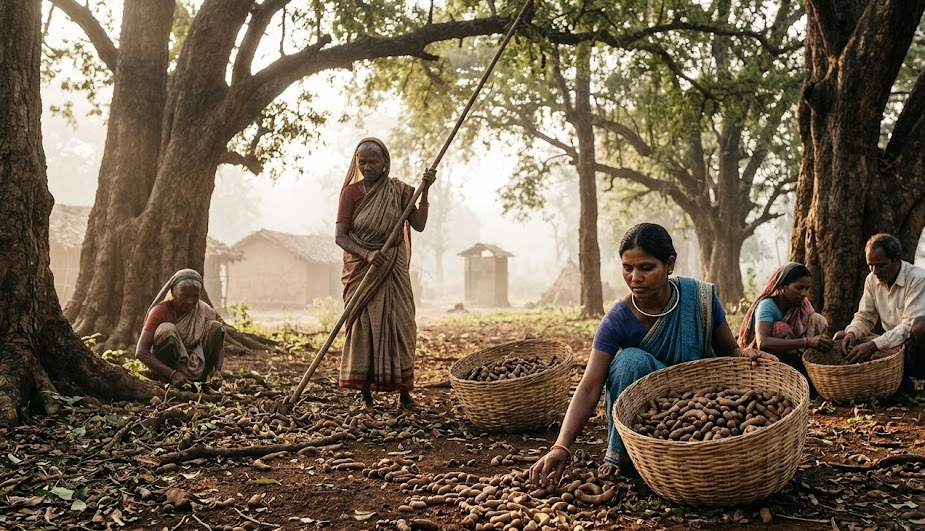
The path of tamarind does not stop when the fruit is picked from trees. With the care the raw fruit can go through many steps before it reaches people as a made product.
The basic path looks like this:
Tamarind Tree → Collecting → Sorting → Cleaning → Removing the Seed → Getting the Pulp → Processing → Adding Value → Packing → Selling
This process is what makes tamarind an interesting product for the food-processing world in Dantewada and Chhattisgarh.
Why Tamarind Is Important in Dantewada, Chhattisgarh
Tamarind has long been a food item from the forest in many parts of central and southern India. In Chhattisgarh it is especially important for the states forest-product money-making.
For people who collect forest products tamarind can be a source of income during certain times of the year. However the money from tamarind can grow a lot when it moves beyond picking and into proper processing.
Raw tamarind can be made into:
- Tamarind pulp
- Tamarind paste
- Tamarind concentrate
- Tamarind powder
- Tamarind-based sauces
- Chutney items
- Ready-to-use cooking items
- Other made food products
This creates a chain of value from the same raw item.
The Story Starts with Tamarind Collection
The first part of the value chain is collecting.
Tamarind pods grow on tamarind trees. Are picked when they are ready.
After picking the pods need to be handled
The raw material may have:
- Tamarind pods
- Leaves
- Small branches
- Dirt
- Broken pieces
- unwanted things
- So collecting is just the start.
The quality of the tamarind product depends partly on how well the raw material is handled at this point.
For items from the forest taking care during collection is just as important.
The goal is to use available things in a productive way while keeping the trees and the forest around them safe.
Step 1: Sorting the Tamarind
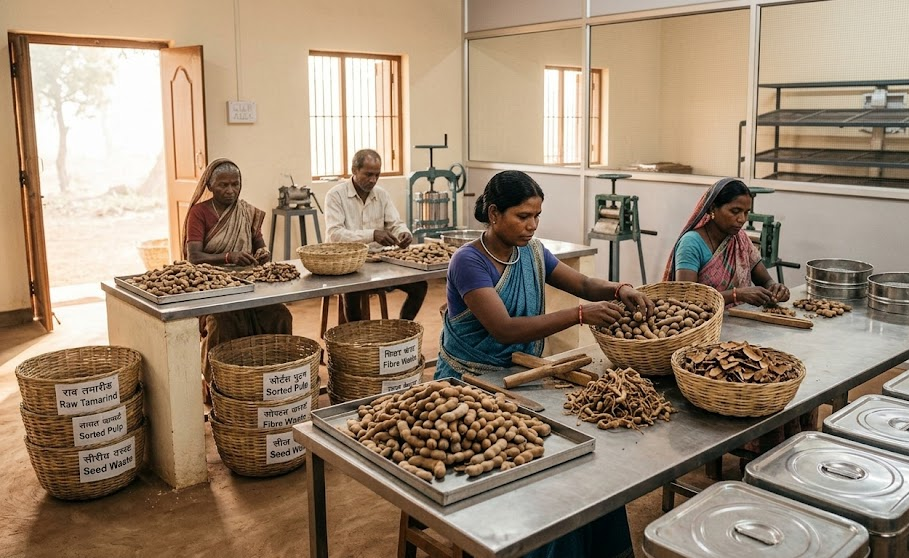
Once tamarind arrives at a collection or processing place it needs to be sorted.
Workers take out good-quality pods. Leave the damaged or not suitable ones.
Sorting can remove:
- pods
- Too damaged fruit
- Leaves
- Small branches
- Stones
- Dirt
- Other unwanted things
- At a small level this can be done by hand.
Bigger processing places may use machines to clean and sort.
Good sorting makes the raw material cleaner for the steps.
It also helps manufacturers make a consistent final product.
Step 2: Cleaning and Preparing the Pods
After sorting tamarind needs to be cleaned and prepared for processing.
The cleaning method depends on what the final product will be and how it will be processed.
The goal is to get rid of parts before the edible part is taken out.
For big-time processing keeping clean is especially important.
Clean work areas, tools that touch food, good handling habits and organized storage can all help keep the product quality high.
This is where forest-based items start to move into an organized food-processing world.
Step 3: Removing the Tamarind Shell
Tamarind pods have an outer shell that must be removed before the edible pulp can be used.The shell is carefully. Taken off to show the inside fruit.
Inside the pod are:
- Tamarind pulp
- Seeds
- material
The edible pulp is taken from the parts that are not wanted.At a level this can involve hand work.In places special tools can help make the process faster.Removing the shell is important because the final product needs a part that can be used.
Step 4: Deseeding the Tamarind
After the shell is gone the seeds need to be taken out from the pulp.Tamarind seeds are hard. Are not part of most tamarind pulp products.Workers or machines take the seeds out from the pulp.This stage can be work when done by hand.Better tools can help make it faster and more consistent.Once the seeds and other not wanted parts are gone the tamarind pulp is ready for processing.
Step 5: Extracting the Tamarind Pulp
Now comes one of the important parts: taking out the pulp.The cleaned and seedless tamarind is processed to get the pulp.Water might be used during some extraction processes depending on what the final product’s how it is made.The pulp that comes out has the taste that tamarind is known for.The pulp can then be filtered to get rid of any remaining fibers or not wanted bits.This makes a material that can be used for more making.At this point a product from the forest has already changed a lot.It has gone from a whole tamarind pod to a food item.
Step 6: Processing Tamarind into Concentrate and Paste
Tamarind pulp can be made into things depending on the final product.For example it may be made thicker to create an ingredient or turned into tamarind paste.These products are easy because customers and food businesses do not have to take out shells and seeds themselves.
Instead they can use a to-use tamarind item.
Tamarind paste and concentrate can be used in cooking ways including:
- Curries
- Chutneys
- Sauces
- Marinades
- Traditional dishes
- Snack making
- Ready-to-cook foods
Exactly how it is done depends on what the product is.
Step 7: Making Tamarind Powder
Another way to make more value is to make tamarind powder.A proper tamarind material can be made into a powder after it is dried.Powder items are easy to use because they can be measured and used quickly.
Depending on how it’s made tamarind powder can be used for:
Seasoning mixes
Instant food items
Chutney mixes
Snack making
Cooking items
Ready-to-use food mixes
Exactly how it is made and the process used must be created according to what the final food item is and the food-safety rules that apply.
Step 8: Creating Tamarind-Based Foods
This is where adding value becomes very clear.Of just selling tamarind as raw fruit makers can create different food items that people can use.
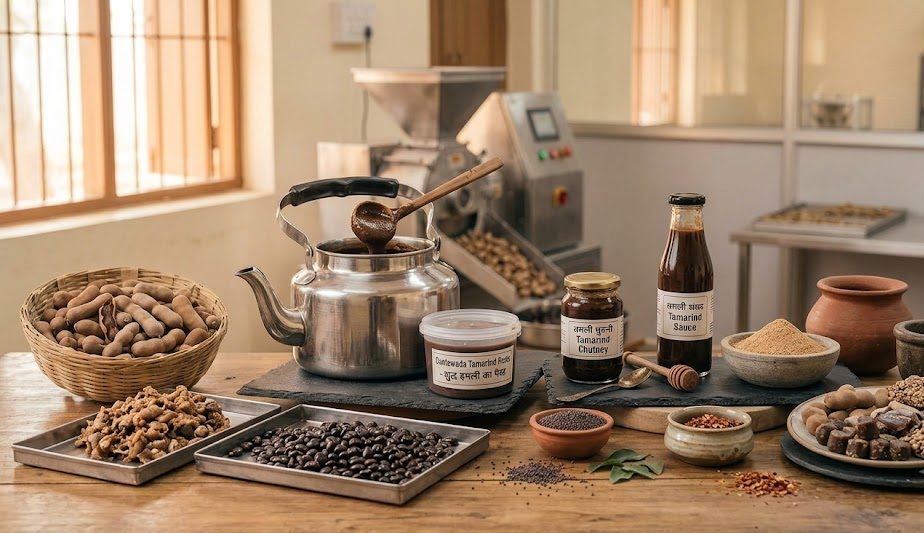
Possible types include:
Tamarind Chutney
A Indian mix that can be sold as a ready-to-use item.
Tamarind Sauce
A package form for snacks and meals.
Tamarind Paste
A strong ingredient that saves time when cooking.
Tamarind Concentrate
A item for businesses and homes.
Tamarind Powder
A dry form that is good for food uses.
Tamarind-Based Snack Items
Tamarind can also be used in some snack and seasoning mixes.
The benefit is having choices.
One item can make different products.
Why Tamarind Is Loved in Chhattisgarh
Tamarind has a place in Indian food culture because of its distinctive sweet-and-sour flavour.In Chhattisgarh tamarind can be used in cooking and food preparations.Its strong flavour means that even a small quantity can contribute a noticeable sour taste.
This makes it useful in:
- Dal
- Curries
- Chutneys
- Sauces
- Vegetable preparations
- Snacks
- recipes
The value of a regional product is often connected not only to its availability but also to how naturally it fits into local food habits.Tamarind has that advantage.It is both a forest-based resource and a familiar culinary ingredient.From Traditional Ingredient to Modern Convenience Foodusing tamarind could involve breaking the shell removing seeds and preparing the pulp.Modern food processing changes this experience.A consumer can purchase a to-use tamarind paste or chutney instead.This is an example of how food processing can convert an ingredient into a convenience product.
The original flavour remains the foundation.The processing simply makes the ingredient easier to store, handle and use.This creates opportunities for local businesses to connect ingredients with modern consumer needs.
Step 9: Quality Control and Storage
Once tamarind has been processed proper storage becomes essential.
The final product should be protected from:
- Excess moisture
- Contamination
- temperature
- Physical damage
- Poor handling
For packaged products suitable food-grade packaging and storage conditions are important.
Processors also need to maintain consistency in:
- Taste
- Texture
- Appearance
- Moisture
- Product weight
A strong value-added product should offer consumers an experience every time they purchase it.
Step 10: Packaging Dantewada Tamarind Products
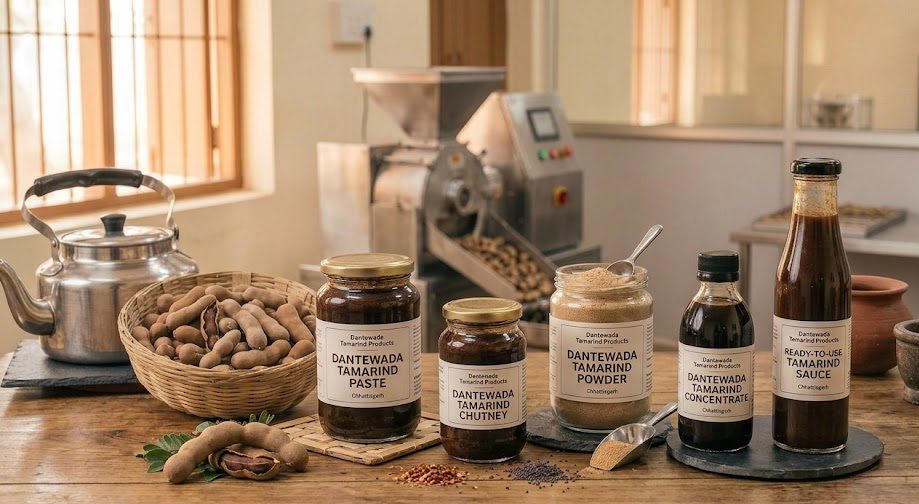
Packaging gives the processed product its market identity.A tamarind product from Dantewada can use its origin as part of its branding story.
For example packaging can communicate:
Dantewada, Chhattisgarh
Tamarind-Based Product
Processed and Packed Locally
The design can use tamarind pods, leaves and earthy visual elements.
However packaging should not make claims.
All required food information and applicable regulatory declarations should be included according to the product category.
Building a Tamarind Product Range
A regional tamarind business does not necessarily have to depend on a single product.A product range could include formats for different consumers.
Household Products
Small packs of tamarind paste, pulp or chutney can target consumers.
Food-Service Products
packs can be developed for restaurants and food businesses subject to applicable requirements.
Dry Products
Powdered tamarind products can provide a shelf-stable format when appropriately processed and packaged.
Ready-to-Use Products
Sauces and chutneys can target consumers looking for convenience.
Product diversification can help businesses reach market segments.
Local Entrepreneurs and Women in Tamarind Processing
Value addition can create opportunities beyond the collection stage.
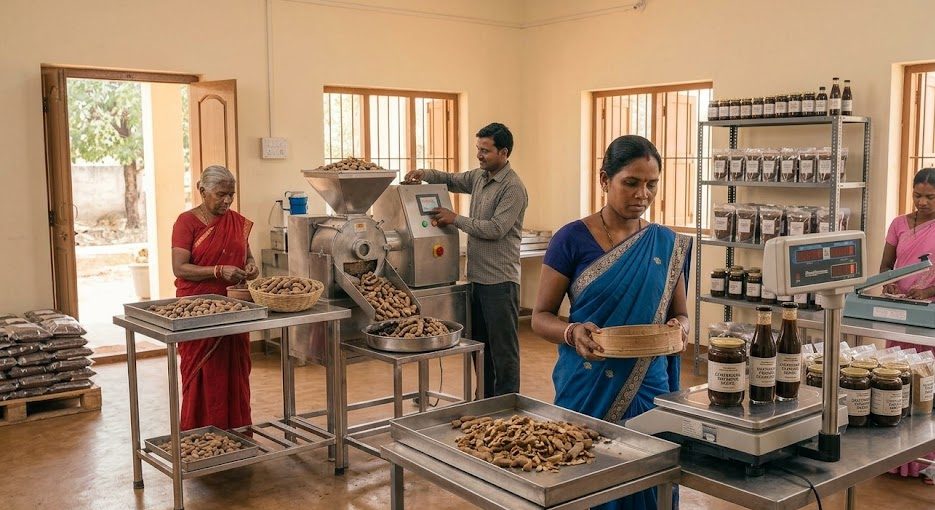
A tamarind value chain can involve:
Collector → Sorting Worker → Processor → Product Maker → Packaging Worker → Brand → Distributor → Retailer
This creates points where local employment and entrepreneurship can develop.
Small processing units can focus on cleaning and pulp preparation.
Women-led groups can participate in sorting, processing or packaging.
Entrepreneurs can develop branded tamarind products.
Larger businesses can handle distribution and marketing.
The result is a developed local value chain around an existing forest resource.
Why Value Addition Can Strengthen Dantewadas Tamarind Story
Selling tamarind provides one form of economic value.Processing it into a product creates additional stages.
For example:
Raw Tamarind
↓
Cleaned Tamarind
↓
Deseeded Pulp
↓
Tamarind Paste
↓
Branded Product
Each stage can potentially add value.
The processor has to invest in equipment, labour, hygiene, packaging and quality control.
The finished product can offer something that raw tamarind cannot:
Convenience.
The consumer receives a product that is already cleaned, processed and ready to use.
Connecting Dantewada with the Chhattisgarh Food Economy
The story of tamarind fits naturally into the food-processing identity of Chhattisgarh.
The state has an agricultural and forest-resource base.
Products that traditionally moved through local markets can increasingly be explored through organised processing and branding.
For Dantewada tamarind provides an example of how a forest-based ingredient can become a food product.
The goal is not to replace use.
It is to create opportunities around it.
The Future of Dantewada Tamarind Products
The next stage of growth can come from processing and product development.
Businesses can explore:
- pulp extraction
- Better drying and storage
- Hygienic processing
- Standardised formulations
- Attractive packaging
- Regional branding
- New convenience products
- Better market connections
- Technology can improve efficiency.
- Traditional knowledge can maintain the connection with food culture.
- Branding can communicate the origin.
- Together these elements can create a product ecosystem.
From Forest Harvest to the Consumer
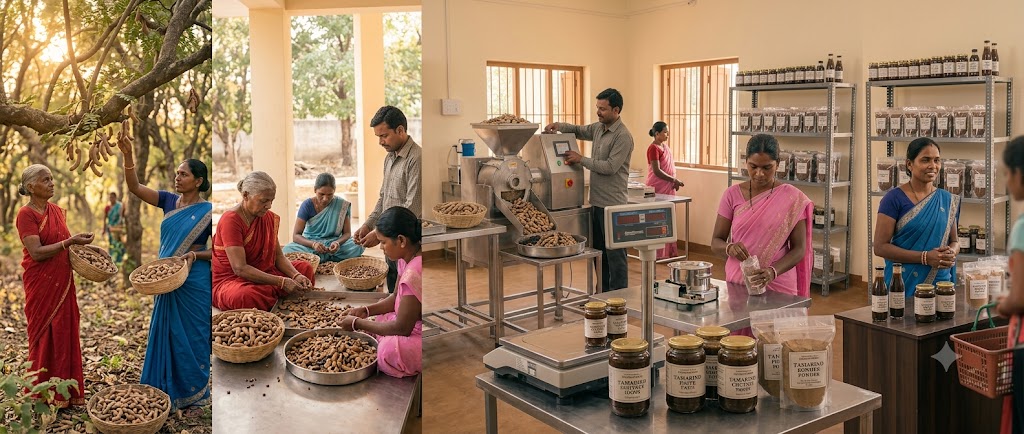
The complete journey can now be seen as one story.A tamarind pod begins its journey in Dantewada, South Bastar, Chhattisgarh.
It is collected responsibly.
The pods are. Cleaned.
The shell is removed.
The seeds are separated.
The pulp is extracted.
The pulp can be processed into paste, concentrate, chutney or other suitable products.
Dry formats such as tamarind powder can also be developed.
Finally the finished product is. Prepared for consumers.
conclusion
The story of Dantewada Tamarind Products begins with a forest resource but has the potential to become a much larger food-processing journey.
From collection and sorting to cleaning, deseeding and pulp extraction every stage prepares tamarind for its form.
The real value addition begins when the processed pulp becomes a food ingredient or finished product.
Tamarind can be transformed into pulp, paste, concentrate, powder, chutney, sauces and other suitable food products.
This creates opportunities for processing units, entrepreneurs, workers and brands.
For Dantewada and Chhattisgarh the opportunity lies in connecting the importance of tamarind with modern food-processing practices.
The journey is simple:
Forest → Tamarind → Cleaning → Processing → Value Addition → Packaging → Market
But, behind that journey is a larger story of local resources, food traditions, entrepreneurship and economic opportunity.
Dantewadas tamarind does not have to remain a raw forest product.
With collection, proper processing and thoughtful branding it can become a value-added food product representing the natural and food-processing potential of Chhattisgarh.
Frequently Asked Questions (FAQs)
1. What is Dantewada known for in Chhattisgarh?
Dantewada, also called South Bastar Dantewada is famous for its forest products, tamarind and other small forest goods.
2. How is tamarind processed in Dantewada?
The basic steps are: collecting the fruit sorting it cleaning it removing the shell taking out the seeds extracting the pulp processing the pulp and then packaging.
3. What products can be made from tamarind?
From tamarind one can make pulp, paste, concentrate, powder, chutney, sauces and other value‑added food items.
4. Why is tamarind important for Chhattisgarh?
Tamarind is a forest food source and is used a lot in traditional cooking. Processing tamarind also opens up value‑adding opportunities.
5. How does tamarind value addition benefit communities?
By adding value to tamarind people can earn more from collecting, sorting, processing, packaging, branding and marketing creating greater income from the raw product.
6. What is tamarind pulp used for?
Tamarind pulp is often used as a souring ingredient in curries, chutneys, sauces, traditional dishes and other food preparations.
7. Why is packaging important for tamarind products?
Good packaging protects tamarind products from moisture and contamination. Gives useful product information helping to build a recognizable brand identity.
8. Can Dantewada tamarind be turned into food products?
Yes. In addition to uses tamarind can be turned into convenient products such, as ready‑to‑use paste, chutney, sauces, concentrates and powdered items depending on the processing method.
9. What is the complete tamarind value‑addition process?
Collection → Sorting → Cleaning → Shell Removal → Deseeding → Pulp Extraction → Processing → Product Development → Packaging → Market