
Introduction
Kabirdham, also called Kawardha is a farming area in Chhattisgarh. It lies in the part of the state. People in this district farm live in villages. Enjoy natural scenery and cultural traditions. The district spreads over about 4,447 kilometres and contains more than 1,000 villages. Because of these villages, farming and related work are key to the economy. (Kawardha)
Sugarcane is an important crop in Kabirdham. The district has built a system for growing sugarcane, turning it into sugar and jaggery and making other products. Because of this strength Kabirdham was chosen for the One District One Product (ODOP) plan for Sugarcane‑Based Products. The new ODOP list from the Ministry of Food Processing Industries names Kabirdham (Kawardha) for this category. (Ministry of Food Processing Industries)
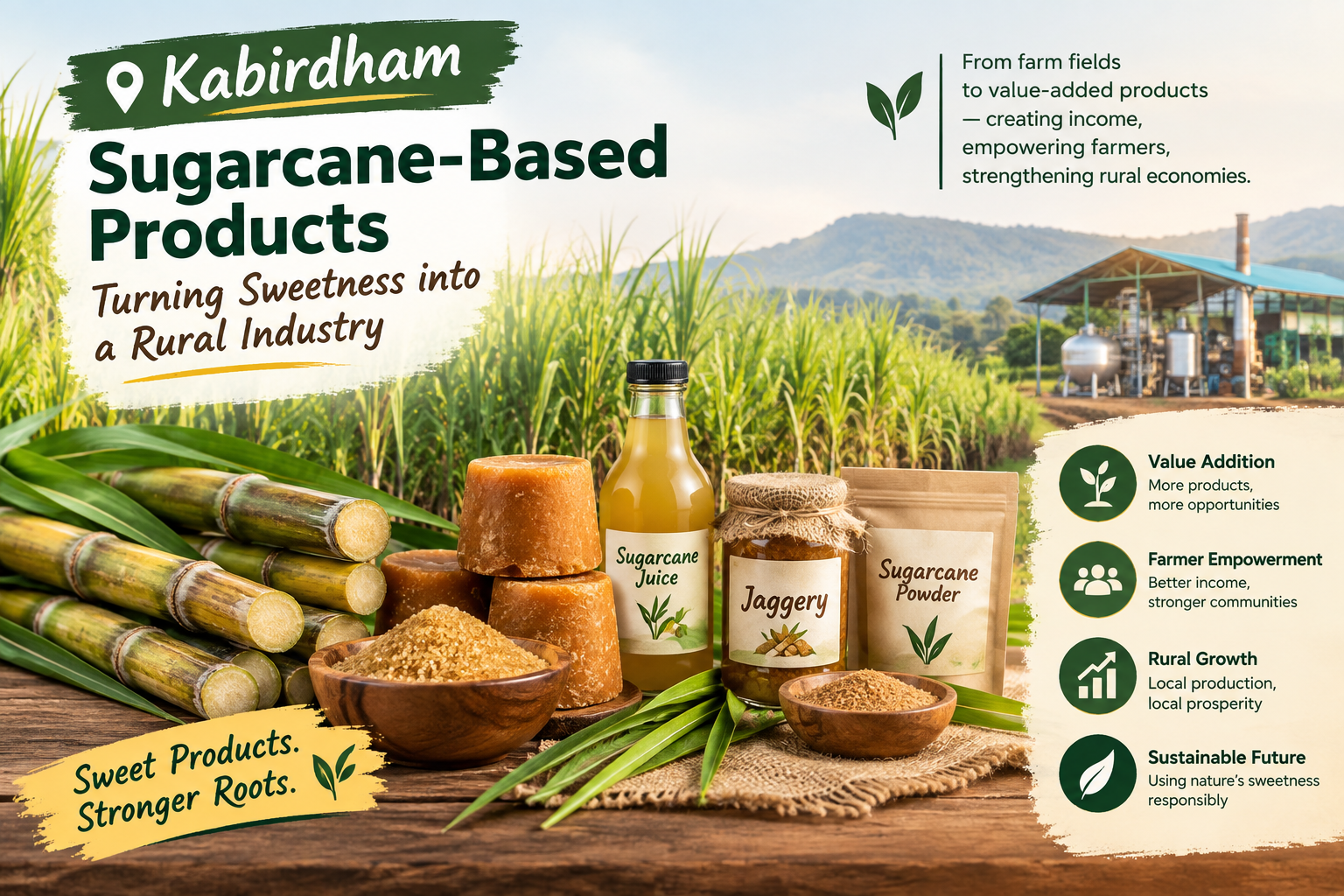
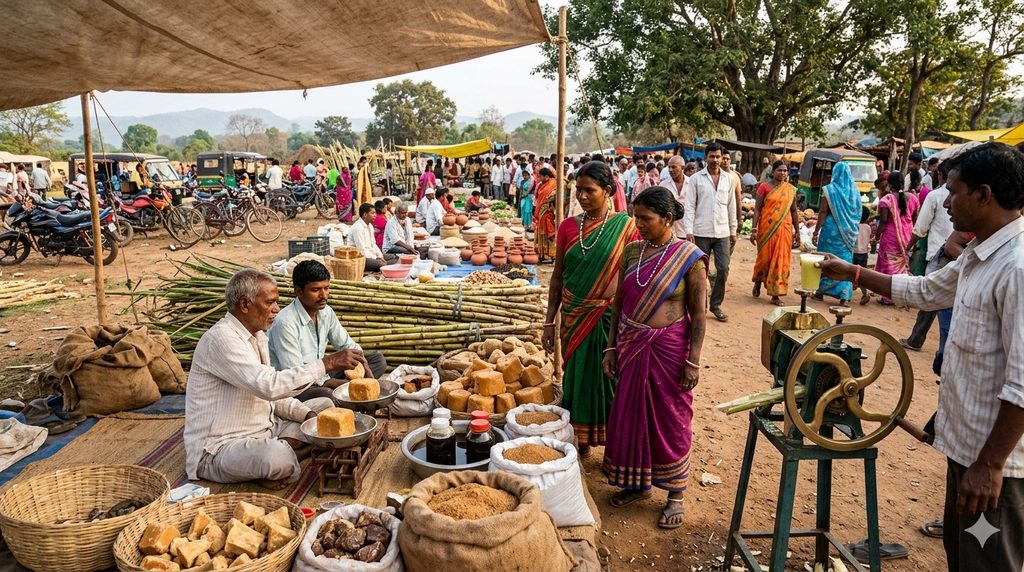
Sugarcane products are not plain sugar. They include jaggery or gur, liquid jaggery, molasses and many new food items. If Kabirdham supports processing the area can turn its farming power into more money for farmers, more jobs in villages and chances for small food‑processing businesses.
Why Sugarcane Is Important to Kabirdham
Sugarcane is not a crop in Kabirdham; it has long been a key part of the local economy. For years it has supported a network of processing units and related businesses. Studies on sugarcane farming in the district show that Kabirdham has always had a presence in sugarcane cultivation and production within Chhattisgarh. The research also highlights that making and selling gur or jaggery is an agro-based activity for many people in the area. (The Pharma Journal)
Choosing sugarcane-based products as an ODOP product makes sense because it builds on what’s already there. It is not about starting something new. Instead it is about strengthening what already exists. The district has access to sugarcane, which’s the main raw material. Farmers grow it. Traders buy it. Workers process it. Local units turn it into gur and other products. This whole chain is already in place.
By focusing on this existing system the goal is to make the economy more efficient. When the value of the sugarcane is created and captured locally more benefits stay in Kabirdham. Supporting the farmers, improving the processing units and connecting traders better. All of this helps keep money within the district. It helps the local people earn more and grow stronger. This is not about one product. It is about building a self-reliant economy.
From Sugarcane to Value-Added Products
The sugarcane value chain starts with growing. Farmers. Pick sugarcane that is ready to use before taking it to places where it gets processed or to local jaggery-making shops.
The main steps can be split into parts:
Sugarcane → Crushing → Juice Extraction → Filtration → Boiling → Concentration → Processing → Packaging → Marketing
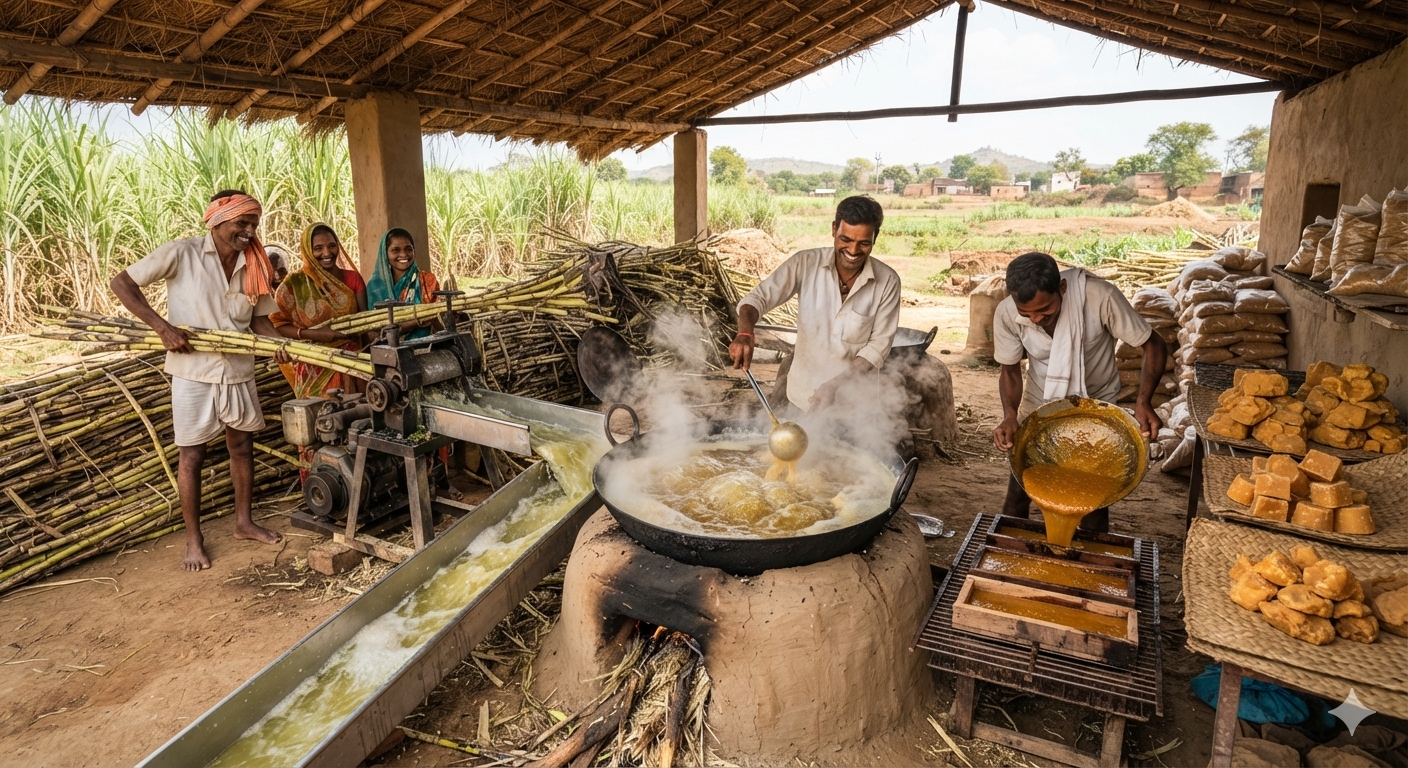
Making jaggery the old way means taking juice out of sugarcane, cleaning it and then heating it until it becomes thick enough. The thick juice is then left to cool. Made into blocks or balls or other shapes.
New ways of processing can make this method better by using better crushing tools, cleaner areas to work, better control over heat, better cleaning, better control over water machines for packing and checking how good the product is.
This gives Kabirdham a chance to use ideas along, with new food-processing technology.
Jaggery: The Flagship Sugarcane Product
Jaggery, also known as gur plays a role in sugarcane processing in Kabirdham. The Government of India has recognized jaggery from Kabirdham under the ODOP initiative. According to the National Portal of India Kabirdham’s ODOP focuses on sugarcane-based products like jaggery and molasses.
Jaggery holds a place in Indian food traditions. It is widely used in popular dishes and drinks. Some common uses include:
- sweets like laddoos, halwa and chikki
- Beverages such as jaggery tea
- Desserts and traditional snacks
Any food preparation where refined sugar can be replaced
This wide variety of uses opens up many opportunities for producers. By just selling plain blocks they can create different grades, shapes and types of jaggery to meet diverse market demands.
Moving Beyond Traditional Gur
One major opportunity for Kabirdham is product diversification.
Of selling only traditional jaggery local entrepreneurs can develop products such as:
- Powdered jaggery
- Liquid jaggery
- Jaggery cubes
- Jaggery syrup
- Flavoured jaggery
- Ginger jaggery
- Sesame‑jaggery products
- Peanut chikki
- Jaggery‑based sweets
- Jaggery beverages
- Jaggery‑coated snacks
- Bakery products using jaggery
- Traditional confectionery
Powdered jaggery for example is convenient for households because jaggery can be measured and used like granulated sugar. Liquid jaggery can also be marketed as an ingredient, for beverages, desserts and cooking.
This diversification can increase the value obtained from the agricultural raw material.
Molasses and Other By-Products
Sugarcane processing can generate useful by-products. Molasses is one of the products specifically associated with Kabirdhams ODOP category. The National Portal of India describes molasses as a by-product of jaggery production and highlights its use as a sweetener and flavouring ingredient. (National Portal of India) I see molasses as an ingredient here.
Other processing residues can also have value when appropriately managed. Sugarcane bagasse for example can be used as a source of fuel or biomass energy in processing systems. I think bagasse can power our plants.
The objective should be to develop a system in which as much of the sugarcane, as possible, is utilised, reducing waste while creating revenue streams. I believe the goal is to use every part of sugarcane to cut waste and make money.
Farmers at the Centre of the ODOP Model
Farmers are the foundation of Kabirdham’s sugarcane-based industry. Without a supply of good-quality sugarcane processing enterprises cannot operate efficiently.
Therefore strengthening the relationship between farmers and processors is essential.
Farmers can benefit from:
- Better access to quality planting material
- Improved cultivation practices
- Efficient irrigation and farm management
- Timely harvesting
- Better transportation
- Transparent weighing systems
- Improved market access
- Training, in quality management
- Farmer Producer Organisations (FPOs)
FPOs can play a role by aggregating sugarcane from multiple farmers and improving their bargaining position. They can also participate in processing, packaging and collective marketing.
The Role of Bhoramdeo Sugar Factory
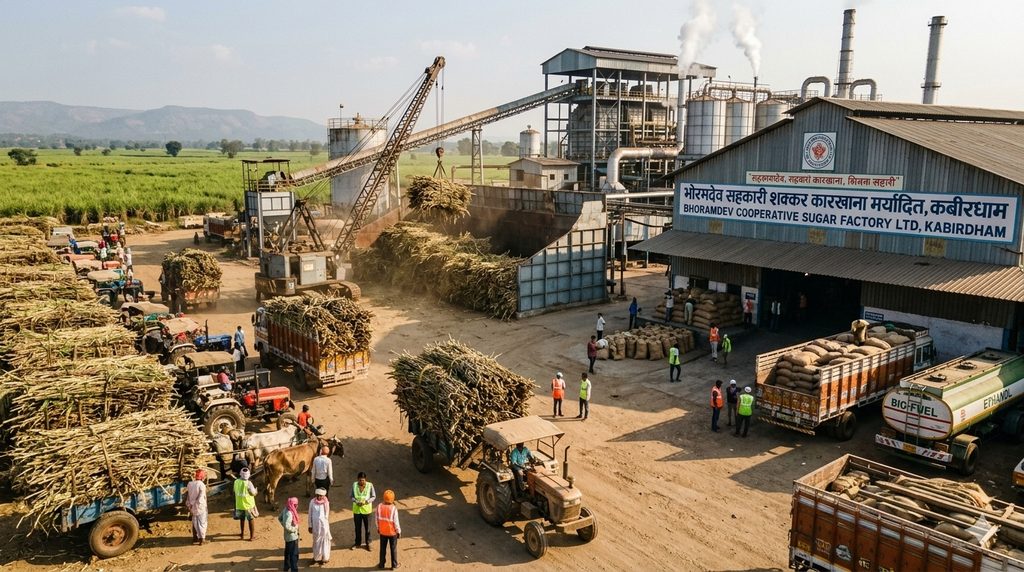
Kabirdham has a sugar-processing unit known as Bhoramdeo Sahakari Shakkar Karkhana Maryadit. This factory is located near Ramhepur in the Bodla region. According to its website the factory began cooperative operations during the 2002–03 season. At that time it had a crushing capacity of 2,500 tonnes of sugarcane per day. Over time the capacity was increased to 3,500 tonnes per day. The factory also added a 6 MW power plant that runs on biomass or bagasse. This kind of setup shows how the district can grow a sugarcane value chain. Having processing facilities helps support farmers and opens up opportunities, for more industries related to sugarcane. It proves that Kabirdham has the foundation to expand beyond growing cane.
Women and Self-Help Groups
Women and Self-Help Groups (SHGs) can play a role in the sugarcane-processing economy. Big sugar processing needs a lot of equipment. Small businesses can make many useful products. SHGs can get involved in:
- Jaggery powder packaging
- Sweets
- Chikki
- Jaggery-based snacks
- Gift packs
- Local food products
- Retail marketing
With the right training, in hygiene, packaging, bookkeeping and digital marketing these groups can turn local agricultural resources into branded products.
Improving Quality and Food Safety
I believe that for Kabirdhams sugarcane products to compete in markets, quality and hygiene must become major priorities.
I notice that traditional jaggery has consumer appeal but modern consumers increasingly expect products that are hygienically processed, properly packaged and consistently graded.
Processing units should focus on:
- Crushing equipment
- Proper filtration
- Hygienic boiling areas
- Safe storage
- Moisture control
- Food-grade packaging
- Batch identification
- Appropriate labelling
- Quality testing
Improved quality can help local sugarcane producers move from informal markets toward supermarkets, online platforms and institutional buyers.
Government Support and ODOP
The ODOP method under the Pradhan Mantri Formalisation of Micro Food Processing Enterprises scheme is created to help food-processing areas add more value, share facilities and improve selling products.
Kabirdham’s choice for sugarcane-based items gives a plan for building businesses around something the local area already does well. The Ministry of Food Processing Industries says sugarcane-based items are a recognized production group in Kabirdham as part of Chhattisgarh’s ODOP plan. (Ministry of Food Processing Industries)
The Chhattisgarh State Industrial Development Corporation also says Kabirdham is an ODOP district for sugarcane-based products. (CSIDC)
For business people, government programs can help with things like building processing places, making businesses official, creating names for products and improving skills. This depends on the rules of each program. If the person meets the standards.
Challenges Facing the Sugarcane Industry
The ODOP method under the Pradhan Mantri Formalisation of Micro Food Processing Enterprises scheme is created to help food-processing areas add more value, share facilities and improve selling products.
Kabirdham’s choice for sugarcane-based items gives a plan for building businesses around something the local area already does well. The Ministry of Food Processing Industries says sugarcane-based items are a recognized production group in Kabirdham as part of Chhattisgarh’s ODOP plan. (Ministry of Food Processing Industries)
The Chhattisgarh State Industrial Development Corporation also says Kabirdham is an ODOP district for sugarcane-based products. (CSIDC)
For business people, government programs can help with things like building processing places, making businesses official, creating names for products and improving skills. This depends on the rules of each program. If the person meets the standards.
Conclusion
Kabirdham has been chosen as a district for Sugarcane-Based Products under the One District One Product initiative. This choice shows how long Kabirdham has been working with sugarcane farming and making jaggery. (Ministry of Food Processing Industries)
Jaggery and molasses are the base. There are many other possibilities. Powdered jaggery, liquid jaggery, traditional sweets, chikki, drinks and new products can give farmers and small business owners ways to earn money.
If Kabirdham uses processing machines, good packaging, strict quality checks, a clear brand, online promotion and help from institutions Kabirdham can develop a strong identity around its sugarcane goods.
The real power of the ODOP model is that it does not only push a product; it helps the people, the farmers, the businesses and the local economy that make that product. For Kabirdham sugarcane can become more than a crop. It can become a sign of business spirit, extra value and lasting growth, for Chhattisgarh.