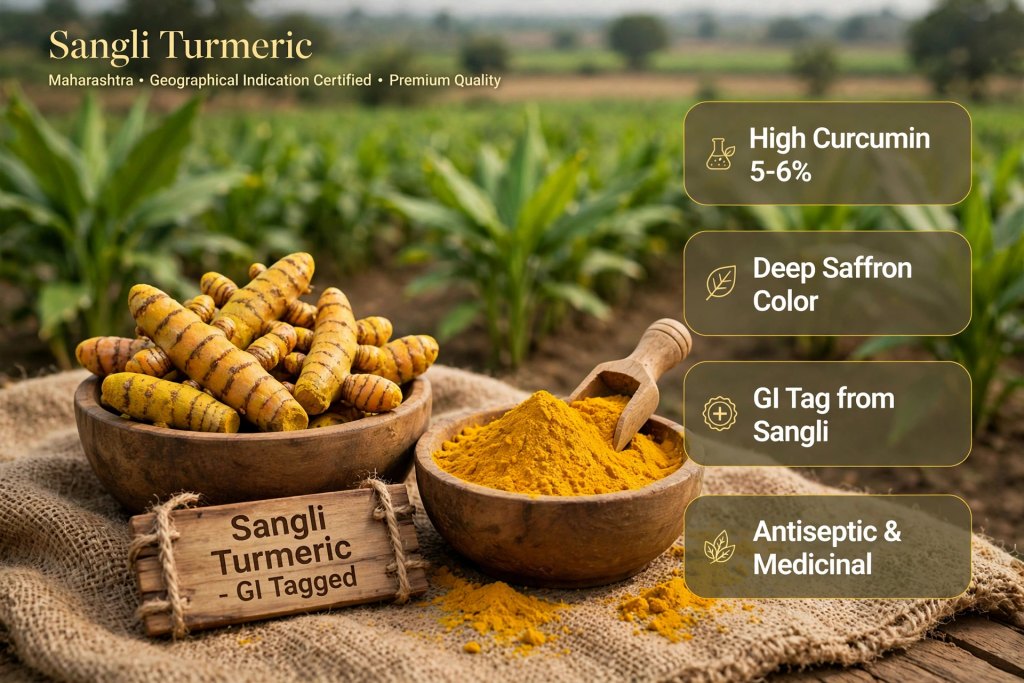
Sangli Turmeric in Maharashtra: Benefits, Uses, Quality and Farming Guide
Sangli turmeric is one of Maharashtra’s well-known agricultural products. It is valued for its rich colour, distinctive aroma, and wide use in Indian cooking. Farmers, traders, food manufacturers, and households all contribute to the demand for this popular spice.
Sangli Turmeric in Maharashtra has a special place in India’s turmeric trade because Sangli is an important centre for turmeric cultivation, processing, and marketing. The region’s agricultural experience and established trading networks help connect turmeric growers with buyers across different markets.
Whether you want to understand its quality, explore its health-related uses, or learn about its commercial value, this guide covers the essentials. You will discover how Sangli turmeric is produced, what makes it valuable, how to identify good-quality turmeric, and what buyers should consider before purchasing it.
What Is Sangli Turmeric?
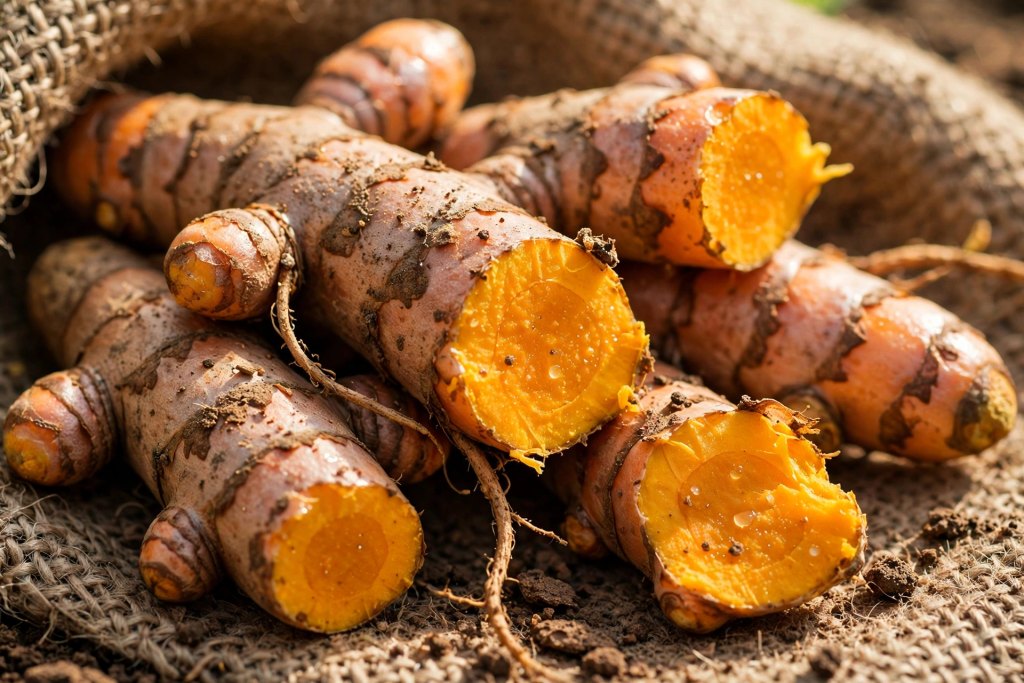
Sangli turmeric is turmeric grown, processed, or traded in and around Sangli district in Maharashtra, India. It comes from the rhizomes of Curcuma longa, a plant in the ginger family. It is widely used as a culinary spice, natural colouring ingredient, and source of curcumin and other plant compounds.
Understanding Sangli Turmeric in Maharashtra
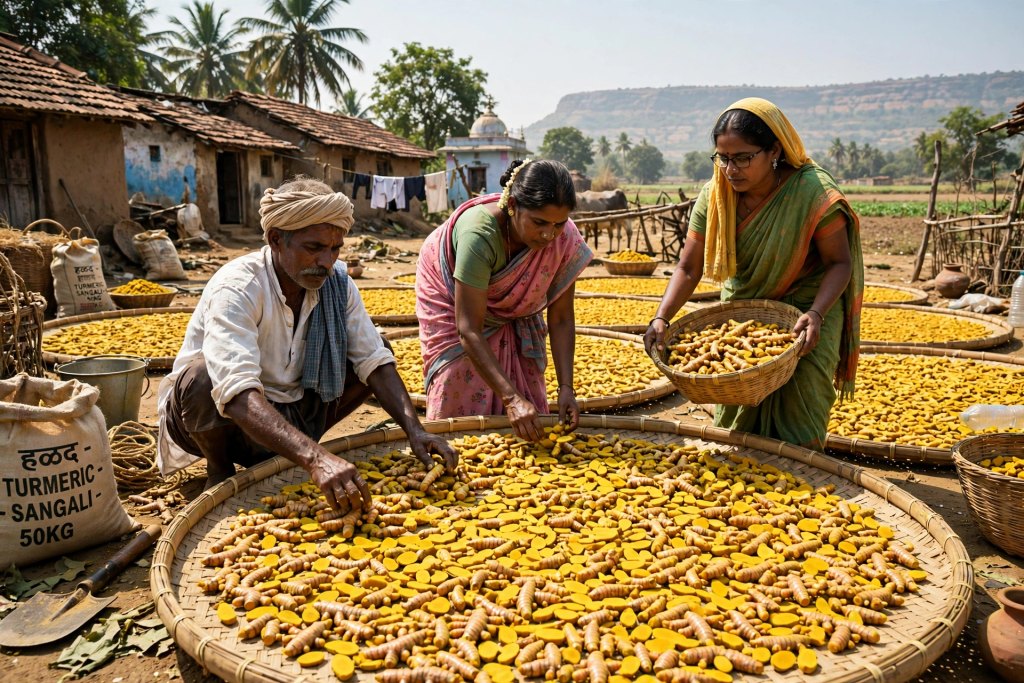
Sangli is known for its agricultural economy and turmeric trading activity. Turmeric is harvested from underground rhizomes, which are cleaned, boiled or cured using suitable methods, dried, and sold either as whole fingers or ground powder.
The region’s reputation is linked to its turmeric supply chain. Farmers grow the crop, processors prepare it for sale, and traders distribute it to wholesalers, retailers, manufacturers, and other buyers.
However, turmeric quality can vary by variety, growing conditions, processing methods, storage, and handling. Not every product sold in Sangli has identical colour, aroma, curcumin content, or moisture levels.
Key Components of Sangli Turmeric
The main components and characteristics of turmeric include:
- Curcumin: A natural pigment responsible for much of turmeric’s yellow colour. It has also been studied for its biological properties.
- Essential oils: These contribute to turmeric’s distinctive aroma and flavour.
- Natural pigments: Curcuminoids help give turmeric its characteristic golden-yellow appearance.
- Dietary fibre: Present in whole turmeric and turmeric powder.
- Minerals and other plant compounds: These occur naturally in varying amounts.
- Moisture content: An important quality factor that affects storage stability and the risk of mould.
The concentration of these components depends on the turmeric variety, cultivation practices, maturity, and post-harvest processing.
Why Is Sangli Turmeric Important?
Sangli turmeric is important because it supports farmers, creates opportunities for traders and processors, and supplies a widely used ingredient to food businesses. Its value extends beyond household cooking to spice manufacturing, food processing, wholesale distribution, and selected cosmetic and wellness applications.
1. Agricultural Value for Farmers
Turmeric provides an income opportunity for farmers who can manage its growing requirements and market risks. Its commercial value depends on yield, production costs, quality, and the price available at harvest.
Farmers may improve returns by using suitable planting material, managing soil health, and harvesting at the right stage. Access to reliable buyers and transparent grading can also make a difference.
2. Commercial Value for Traders
Turmeric trading connects producers with larger markets. Wholesalers may purchase dried turmeric fingers in bulk, while processors grind or package the product for retail and industrial customers.
For example, a spice distributor may purchase graded turmeric fingers, send them for grinding, and supply the resulting powder to grocery brands or restaurants.
3. Importance for Food Businesses
Turmeric is used in many products, including:
- Curry powders and spice blends
- Packaged masalas
- Pickles and savoury snacks
- Ready-to-cook food products
- Restaurant and catering ingredients
- Food products that require a yellow colouring ingredient
Businesses need consistent colour, flavour, cleanliness, and traceability. These factors can matter more than appearance alone.
4. Value for Consumers
Consumers use turmeric to add colour, flavour, and aroma to everyday meals. It is a common ingredient in dals, vegetable dishes, curries, marinades, and traditional recipes.
Choosing clean, properly stored turmeric from a trustworthy supplier helps reduce the risk of buying adulterated or poorly handled products.
How Does Sangli Turmeric Reach the Market?
The turmeric supply chain generally follows three main stages: cultivation, post-harvest processing, and marketing. Farmers grow and harvest the rhizomes, processors prepare and dry them, and traders sell the finished product to different buyers.
Step 1: Cultivation and Harvesting
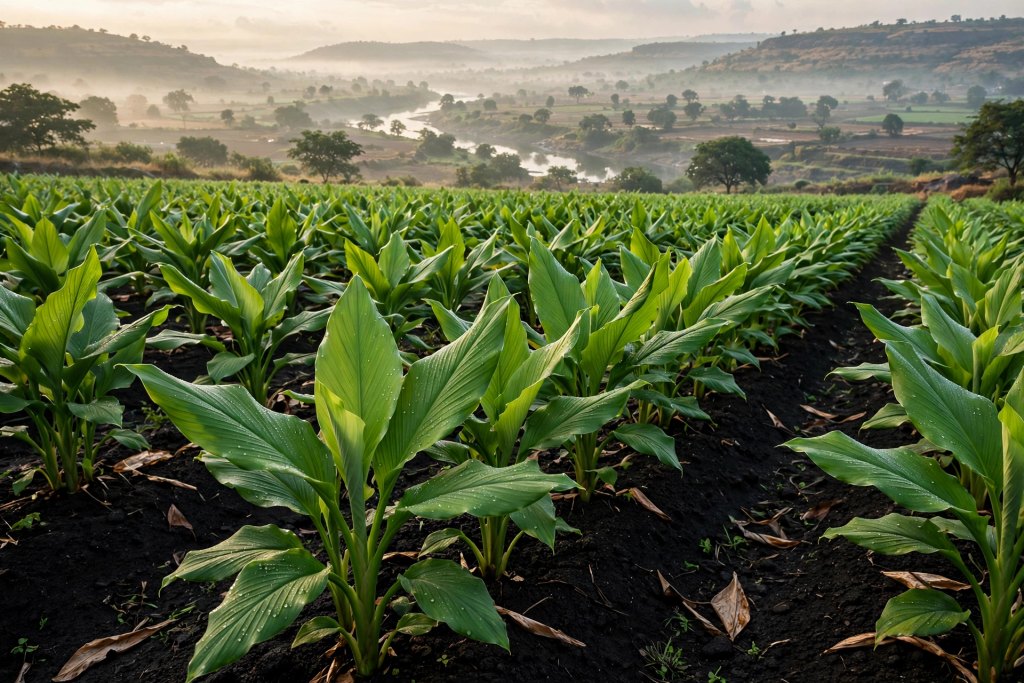
Turmeric grows from underground rhizomes. Farmers select planting material, prepare the soil, manage water and nutrients, and protect the crop from weeds and pests.
The crop usually needs several months to mature. Harvest timing depends on the variety, local conditions, and crop maturity. Mature rhizomes are lifted from the soil and separated from the plant.
Step 2: Cleaning, Curing and Drying
Fresh turmeric contains considerable moisture, so it needs proper post-harvest treatment.
The process commonly includes:
- Removing soil and unwanted plant material.
- Washing the rhizomes when required.
- Curing or boiling using an appropriate method.
- Drying the rhizomes until they reach a suitable moisture level.
- Sorting and grading them according to size, appearance, and quality.
Poor drying or damp storage can lead to mould, spoilage, and reduced product quality.
Step 3: Grading, Trading and Processing
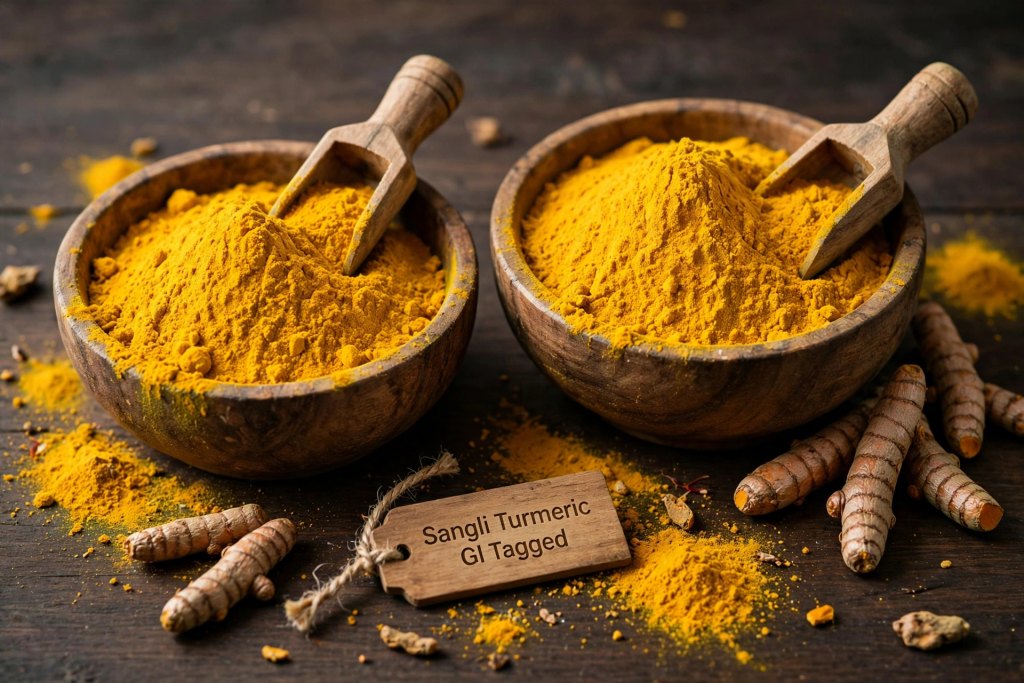
Dried turmeric may be sold as whole fingers or sent for polishing, grinding, and packaging. Buyers assess its appearance, aroma, moisture, cleanliness, and suitability for their intended use.
For example, a household spice brand may prefer turmeric with a consistent colour and flavour. An industrial buyer may also require laboratory results for curcumin content, microbial safety, pesticide residues, or other specifications.
Benefits of Sangli Turmeric
Sangli turmeric offers several practical benefits as a culinary ingredient and agricultural commodity. Its usefulness depends on product quality, proper handling, and the needs of the person or business buying it.
- Rich colour: Turmeric gives many dishes a warm yellow colour. This makes it useful in home cooking and commercial spice blends.
- Distinctive flavour: Its earthy, slightly bitter taste adds depth to curries, soups, and marinades.
- Versatile applications: It can be used in cooking, spice manufacturing, and selected food-processing applications.
- Commercial opportunities: Farmers, traders, millers, and packaging businesses can participate in the turmeric supply chain.
- Convenient storage: Properly dried whole turmeric and powder can be stored for extended periods when protected from moisture, heat, and light.
- Naturally occurring plant compounds: Turmeric contains curcuminoids, including curcumin, which are studied for their potential biological effects.
- Availability in different forms: Buyers can choose whole fingers, crushed turmeric, or powdered turmeric to suit their needs.
Is Sangli Turmeric Good for Health?
Turmeric is a useful culinary spice, but its health effects should not be overstated. Curcumin has been studied for its anti-inflammatory and antioxidant properties, yet evidence for many health claims remains limited or mixed. Normal food use is different from taking concentrated turmeric supplements.
Turmeric can add flavour to a balanced diet. However, it should not replace prescribed medicines or professional medical advice. Concentrated supplements may interact with medicines and can cause side effects in some people.
Challenges and Common Mistakes When Buying Sangli Turmeric
Buying turmeric based only on colour or price can lead to disappointing results. Quality depends on several factors, including authenticity, drying, storage, and processing. Buyers should assess the product carefully instead of assuming every turmeric product from the same region has identical characteristics.
| Problem | Possible cause | Practical solution |
|---|---|---|
| Dull aroma | Old stock or poor storage | Check freshness and aroma before purchase |
| Damp turmeric | Incomplete drying or moisture exposure | Check moisture levels and packaging |
| Uneven colour | Natural variation or inconsistent processing | Compare representative samples |
| Mould or musty smell | Damp storage or poor handling | Reject affected stock |
| Unusually bright colour | Possible added colour or other adulteration | Seek appropriate laboratory testing |
| Weak flavour | Low-quality or aged material | Test a sample before bulk purchase |
| Unclear origin | Inadequate supplier records | Request traceability documents |
Common Misconceptions
Misconception 1: Darker turmeric is always better.
Turmeric colour varies naturally. A deeper shade does not automatically mean higher curcumin content or better quality.
Misconception 2: All turmeric from Sangli has the same curcumin level.
Curcumin content varies with variety, growing conditions, maturity, and processing. Laboratory analysis is needed to verify a specific value.
Misconception 3: Natural turmeric cannot be adulterated.
Turmeric powder can be adulterated with prohibited or unsafe colouring substances. Trusted suppliers and suitable testing help reduce this risk.
Best Practices for Choosing Quality Sangli Turmeric
Use these recommendations when buying turmeric for home use, retail sales, or commercial processing.
- Buy from a reliable supplier. Look for sellers who provide clear product details, invoices, and consistent quality.
- Check the product form. Decide whether you need whole turmeric fingers or powder before comparing prices.
- Examine the aroma. Fresh, characteristic turmeric aroma is a useful initial indicator, although it cannot confirm purity.
- Inspect the packaging. Choose clean, dry, sealed packaging that protects the product from moisture and contamination.
- Ask about processing. Understand how the turmeric was cured, dried, stored, and ground.
- Request quality specifications. Commercial buyers should ask for moisture, curcumin, and other relevant quality measurements.
- Check food safety compliance. In India, verify applicable Food Safety and Standards Authority of India (FSSAI) requirements for the product and business.
- Request laboratory testing when needed. For bulk or high-value purchases, test for adulterants, contaminants, pesticide residues, and microbial risks as appropriate.
- Compare samples before bulk buying. Assess colour, aroma, cleanliness, and consistency across representative samples.
- Store turmeric correctly. Keep it in an airtight container in a cool, dry place away from sunlight and strong odours.
For businesses, a written supplier specification and a documented quality-control process can improve consistency from one purchase to the next.
Sangli Turmeric vs Other Turmeric Sources
Turmeric from different Indian regions may differ in aroma, colour, curcumin content, price, and market positioning. The place of origin alone does not determine quality. Buyers should compare actual product specifications and intended use.
| Feature | Sangli Turmeric | Other Indian Turmeric |
|---|---|---|
| Regional association | Linked with Sangli’s turmeric trade in Maharashtra | Linked with the agricultural and trading centres of other states |
| Availability | Depends on local production and market supply | Depends on the source region and season |
| Colour and aroma | Vary by variety and processing | Vary by variety and processing |
| Curcumin content | Must be verified for the specific batch | Must be verified for the specific batch |
| Price | Changes with supply, grade, demand, and transport | Changes with supply, grade, demand, and transport |
| Suitable uses | Household cooking, spice processing, and wholesale trade | Household cooking, spice processing, and wholesale trade |
Sangli turmeric may suit buyers who value its regional sourcing and established trade connections. However, buyers should not assume it is automatically superior to every alternative. Quality testing and price comparison provide a more reliable basis for choosing.
Frequently Asked Questions About Sangli Turmeric
1. What is Sangli turmeric famous for?
Sangli turmeric is known for its connection with Maharashtra’s turmeric trade and its use as a culinary spice. It is sold through agricultural markets and commercial supply chains. Its colour, aroma, and curcumin content vary by variety and processing, so buyers should assess the actual product rather than relying on regional reputation alone.
2. Where is Sangli turmeric grown?
Sangli turmeric is associated with Sangli district in Maharashtra and its surrounding agricultural supply network. Production depends on local growing conditions, suitable planting material, soil management, and water availability. Turmeric may also enter Sangli’s markets from other growing areas, so the place of sale does not always confirm the place of cultivation.
3. What makes Sangli turmeric different from other turmeric?
Its regional identity and established trading connections distinguish Sangli turmeric in the marketplace. However, differences in colour, aroma, flavour, and curcumin content depend mainly on the specific variety and how it is grown and processed. Comparing product specifications and laboratory results is more reliable than judging quality by origin alone.
4. How can I identify pure Sangli turmeric powder?
Start by checking the supplier, packaging, product details, and characteristic aroma. Avoid powder with an unusual smell or signs of poor storage. Appearance alone cannot prove purity, and home tests cannot reliably detect every adulterant. For greater confidence, purchase from a reputable seller and request suitable laboratory testing.
5. Is Sangli turmeric good for daily cooking?
Yes, turmeric from a reliable source can be used as a regular culinary spice in normal food quantities. It adds colour, flavour, and aroma to many dishes. Choose properly stored products and use turmeric as part of a varied diet. Concentrated supplements are different from ordinary cooking use and may carry additional risks.
6. What is the curcumin content of Sangli turmeric?
There is no single curcumin percentage that applies to every batch of Sangli turmeric. The level depends on the variety, growing conditions, maturity, and processing. Buyers who need a specific concentration should request a laboratory certificate or arrange testing through a qualified laboratory rather than relying on colour or marketing claims.
7. How should Sangli turmeric be stored?
Store turmeric in a clean, airtight container in a cool, dry place away from direct sunlight. Keep it away from steam and moisture, especially near cooking areas. Bulk buyers should use appropriate food-grade packaging and monitor storage conditions. Discard turmeric that shows mould, unusual odours, or signs of contamination.
8. Where can businesses buy Sangli turmeric in bulk?
Businesses can explore agricultural market traders, spice wholesalers, processors, and established turmeric suppliers in the Sangli region. Before placing a large order, request samples, compare quotations, confirm the product’s origin, and review applicable food safety documents. Agree on quality specifications, delivery terms, and testing requirements in writing.
Key Takeaways
- Sangli turmeric is associated with turmeric cultivation, processing, and trade in Maharashtra.
- Its main uses include household cooking, spice manufacturing, and food processing.
- Colour, aroma, and curcumin content vary between varieties and batches.
- Proper curing, drying, storage, and handling help maintain quality.
- Trusted suppliers and laboratory testing can reduce the risk of adulteration.
- Bulk buyers should compare samples, prices, traceability, and quality specifications.
- Turmeric is a culinary ingredient, not a substitute for medical treatment.
Final Verdict: Is Sangli Turmeric Worth Buying?
Sangli turmeric is worth considering for households, spice retailers, food manufacturers, and wholesalers seeking turmeric connected with Maharashtra’s established agricultural trade. Its value depends on the product’s actual quality, price, intended use, and supplier reliability.
For household use, choose clean turmeric from a trustworthy seller and store it correctly. For commercial purchases, compare samples and request documented quality specifications. Laboratory testing is especially useful when curcumin levels, purity, or food safety are important to the purchase.
Buyers should also remember that regional reputation alone does not guarantee superior quality. A careful comparison of origin, processing, freshness, and testing results offers a stronger basis for making a sound decision.
In conclusion, Sangli Turmeric in Maharashtra represents an important part of the region’s agricultural and spice trade. Understanding its production, benefits, limitations, and quality indicators can help consumers make informed choices and help businesses source turmeric more confidently.