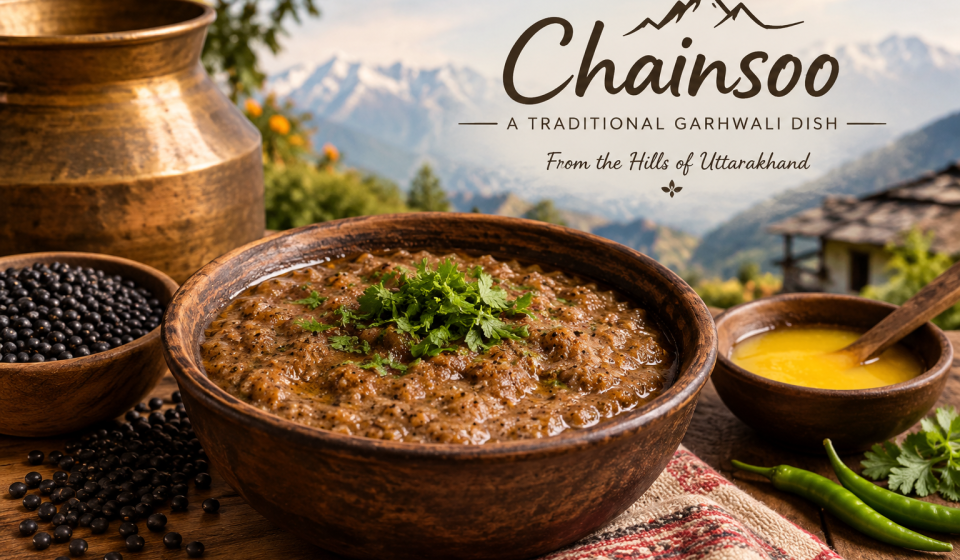

Chainsoo is a traditional dish from Garhwal, Uttarakhand, known for its rich taste and simple ingredients. Made mainly from roasted black gram (urad dal), this hearty lentil preparation reflects the food culture of the Himalayan region.
Unlike many everyday dals, Chainsoo uses roasted and ground lentils. This gives it a deep, nutty flavour and a thick texture. It is often enjoyed with rice, roti or other local accompaniments.
As interest in regional Indian cuisine grows, Chainsoo offers a way to discover Garhwali cooking, local ingredients and food traditions. This article explores its origins, ingredients, preparation, nutritional qualities, serving ideas and place in Uttarakhand’s culinary heritage.
What Is Chainsoo?
Chainsoo is a traditional Garhwali lentil dish from Uttarakhand, India. It is commonly prepared with black urad dal, which is dry-roasted, ground and cooked with spices. The roasting gives Chainsoo its distinctive earthy flavour, while the ground lentils create a thick, comforting gravy.
Chainsoo is part of the traditional food culture of the Garhwal region. It is a home-style dish rather than a single fixed recipe. Ingredients, spice levels and cooking methods can vary between households.
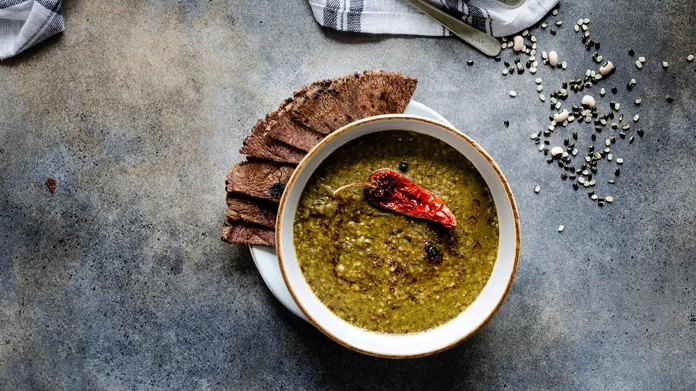
Key ingredients in traditional Chainsoo
The basic ingredients are easy to find:
- Black urad dal (black gram)
- Mustard oil or another cooking oil
- Cumin seeds
- Garlic
- Ginger
- Asafoetida (hing)
- Turmeric
- Coriander powder
- Red chilli powder
- Salt
- Water
Some cooks use additional spices or adjust the recipe to their family’s taste. The exact combination is not universal.
The Cultural Importance of Chainsoo in Garhwal
Chainsoo represents the practical, ingredient-focused cooking associated with Uttarakhand’s mountain communities. Lentils and grains have long been important in regional diets. Traditional dishes often make use of locally available crops and cooking methods that suit the climate and household needs.
Garhwali food includes dishes such as Chainsoo, Phaanu, Kafuli and local preparations made with millets, pulses and leafy vegetables. These foods reflect the diversity of Uttarakhand’s regional cuisine.
Chainsoo is especially notable for turning a humble pulse into a flavourful meal. Roasting the dal before cooking adds depth without requiring expensive ingredients.
Regional dishes also carry family memories. Recipes may be passed down through generations, with each household maintaining its own preferred texture, seasoning and serving style.
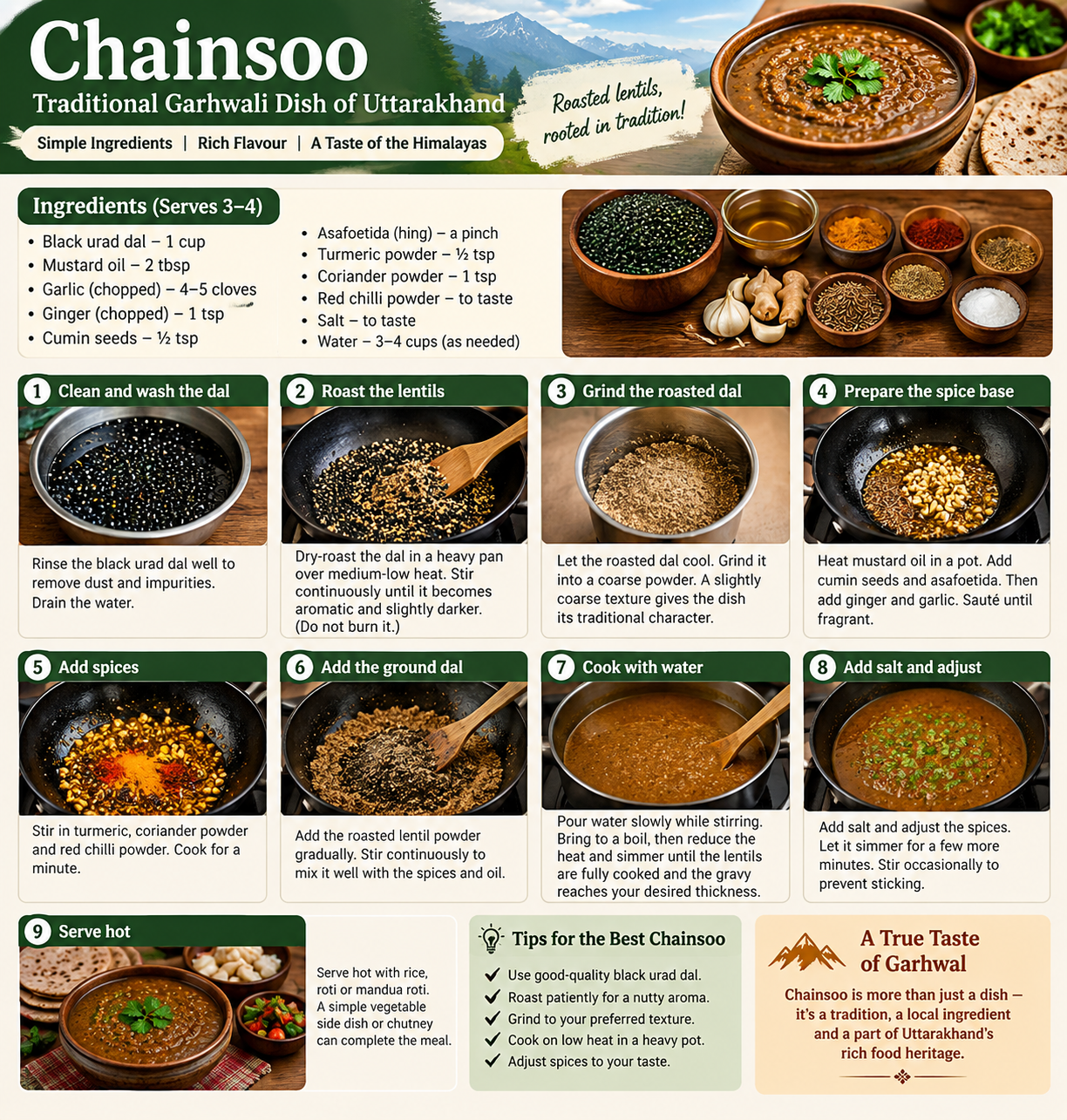
How to Make Traditional Garhwali Chainsoo
Chainsoo is prepared by roasting black urad dal, grinding it coarsely and simmering it with spices. The roasting step is central to its flavour. A slow cook helps the lentils soften and develop a thick, satisfying consistency.
The following is a home-style recipe. Cooking methods and spice quantities can vary across Garhwali families.
Ingredients for 3–4 servings
| Ingredient | Quantity |
|---|---|
| Black urad dal | 1 cup |
| Mustard oil | 2 tablespoons |
| Garlic, chopped | 4–5 cloves |
| Ginger, chopped | 1 teaspoon |
| Cumin seeds | ½ teaspoon |
| Asafoetida | A pinch |
| Turmeric powder | ½ teaspoon |
| Coriander powder | 1 teaspoon |
| Red chilli powder | To taste |
| Salt | To taste |
| Water | About 3–4 cups, adjusted as needed |
Step-by-step preparation
Step 1: Clean and roast the lentils.
Wash and drain the urad dal. Dry-roast it in a heavy pan over medium-low heat, stirring regularly. Continue until the lentils become aromatic and slightly darker. Avoid burning them, as burnt dal can taste bitter.
Step 2: Grind the roasted dal.
Allow the lentils to cool. Grind them into a coarse powder. A slightly coarse texture gives the dish character, although some cooks prefer a finer grind.
Step 3: Prepare the spice base.
Heat mustard oil in a heavy-bottomed pot. Add cumin seeds and asafoetida. Add ginger and garlic, then sauté until aromatic. Stir in turmeric, coriander powder and chilli.
Step 4: Add the ground dal.
Add the roasted lentil powder gradually. Stir continuously so it mixes with the oil and spices. This helps prevent lumps from forming.
Step 5: Cook until thick and flavourful.
Add water slowly while stirring. Bring the mixture to a gentle boil, then reduce the heat. Simmer until the lentils are fully cooked and the gravy reaches your preferred consistency. Stir often to prevent sticking.
Step 6: Taste and serve.
Add salt and adjust the spices. Serve hot with mandua roti, rice or regular wheat roti. A simple vegetable side dish can complete the meal.
What Makes Chainsoo Different from Other Indian Dals?
Chainsoo stands out because of its roasting and grinding technique. Many familiar dals are cooked with whole or split lentils first, then seasoned. Chainsoo develops its flavour from the roasted lentils themselves.
| Feature | Chainsoo | Everyday dal |
|---|---|---|
| Main ingredient | Usually black urad dal | Various lentils |
| Preparation | Roasted, ground and simmered | Often boiled or pressure-cooked |
| Flavour | Deep, earthy and nutty | Depends on the lentil and seasoning |
| Texture | Usually thick | May be thin or thick |
| Regional association | Garhwal, Uttarakhand | Many Indian regions |
| Typical accompaniment | Rice, roti or mandua roti | Rice, roti or other breads |
Chainsoo is also different from Phaanu, another Garhwali lentil dish. Phaanu is commonly made by soaking and grinding lentils before cooking them. Recipes vary, so the distinction is best understood as a difference in typical preparation rather than a strict rule.
Benefits of Chainsoo
Chainsoo can be a satisfying part of a balanced meal. Its nutritional value depends on the ingredients, serving size and amount of oil used.
- Provides plant-based protein: Black gram contains protein, which supports the body’s growth and repair.
- Contains dietary fibre: Lentils provide fibre that supports normal digestion.
- Offers lasting fullness: Protein and fibre can help make a meal satisfying.
- Uses familiar ingredients: The dish can be prepared with common pulses and household spices.
- Supports regional food traditions: Cooking and sharing traditional dishes helps preserve local culinary knowledge.
Chainsoo is not a cure for health conditions. Its nutritional benefits should be considered alongside the rest of the diet.
Is Chainsoo a healthy dish?
Chainsoo can be nutritious because its main ingredient is a pulse. However, the amount of oil, salt and portion size affects the overall meal. People with specific dietary needs should consider their own requirements rather than assuming every traditional recipe is suitable for everyone.
Challenges and Common Cooking Mistakes
Even a simple lentil dish can be difficult to prepare well. These common mistakes can affect the taste and texture.
| Problem | Why it happens | How to improve it |
|---|---|---|
| Bitter flavour | Dal is roasted too dark or burned | Roast slowly and stir frequently |
| Lumpy gravy | Water is added too quickly | Add water gradually while stirring |
| Raw lentil taste | The mixture is not cooked long enough | Simmer until the lentils are fully cooked |
| Dal sticks to the pot | Heat is too high or stirring is infrequent | Use a heavy pot and cook over low heat |
| Dish becomes too thick | Too little water or continued simmering | Add warm water and stir to adjust |
Best Practices for Preparing Chainsoo
- Choose good-quality dal. Clean lentils give a better flavour and texture.
- Roast patiently. Aim for a nutty aroma rather than a very dark colour.
- Grind to your preference. Coarse powder gives texture; finer powder produces a smoother gravy.
- Use a heavy-bottomed pan. It helps distribute heat and reduces sticking.
- Add water gradually. This makes it easier to control the consistency.
- Cook on a low flame. Gentle simmering helps the ground lentils cook evenly.
- Adjust spices to taste. Traditional home recipes differ in their seasoning.
- Serve freshly cooked. Chainsoo is especially enjoyable when warm and freshly prepared.
- Pair it thoughtfully. Rice, roti, mandua roti or vegetables can make a balanced meal.
- Respect regional variations. A family recipe may differ from another household’s version and still be traditional.
How Chainsoo Can Be Introduced to New Audiences
Traditional regional foods can interest people beyond their home regions. Chainsoo can be presented in food festivals, regional restaurants, cultural events and Uttarakhand food showcases.
For a restaurant, a useful approach is to describe Chainsoo clearly on the menu: roasted black gram cooked with Garhwali spices. Serving it with millet roti or rice can introduce guests to a traditional regional meal.
For a food project, students can document the dish’s ingredients, preparation, regional identity and variations. Photographs of roasting, grinding and cooking can help explain why Chainsoo differs from other lentil dishes.
Commercial food production would require additional recipe standardisation, food-safety controls, packaging decisions and shelf-life testing. A home recipe should not be assumed to be suitable for packaged sale without those steps.
Frequently Asked Questions About Chainsoo
1. What is Chainsoo, and where does it come from?
Chainsoo is a traditional lentil dish associated with the Garhwal region of Uttarakhand, India. It is usually made from black urad dal that is roasted, ground and simmered with spices. Its rich flavour and thick texture make it a distinctive part of Garhwali home cooking.
2. What is the main ingredient in Chainsoo?
Black urad dal, also known as black gram, is the main ingredient in the commonly prepared version of Chainsoo. The lentils are dry-roasted and ground before cooking. Some household recipes may use variations in the type of pulse or seasoning, but black gram is the familiar choice.
3. Is Chainsoo a Garhwali or Kumaoni dish?
Chainsoo is primarily identified with Garhwali cuisine, which comes from the Garhwal region of Uttarakhand. Kumaon has its own rich culinary traditions and lentil dishes. Although regional foods may be enjoyed across the state, Chainsoo is particularly associated with Garhwal.
4. What does Chainsoo taste like?
Chainsoo has an earthy, roasted and nutty flavour. Garlic, ginger, cumin and other spices add warmth and depth. Its texture is usually thick, making it different from a thin lentil soup. The final taste depends on how the dal is roasted and seasoned.
5. What is Chainsoo eaten with?
Chainsoo is commonly served with rice or roti. Mandua roti, made from finger millet, is a regional pairing that complements the dish. A meal may also include seasonal vegetables, chutney or other local accompaniments. The choice depends on household preferences and availability.
6. Is Chainsoo made from whole or split urad dal?
Recipes may vary, but black urad dal is commonly used. Some cooks roast whole lentils and grind them, while others may use a suitable split form. The key technique is roasting the pulse before cooking, which gives Chainsoo its characteristic flavour.
7. Is Chainsoo the same as Phaanu?
No. Chainsoo and Phaanu are distinct Garhwali lentil dishes. Chainsoo is typically prepared with roasted, ground black gram. Phaanu is commonly made from soaked and ground lentils, which are cooked into a different style of preparation. Both have regional variations.
8. Can Chainsoo be made without mustard oil?
Yes. Mustard oil is a common choice in traditional home-style recipes, but another cooking oil can be used. The flavour may change slightly. The essential characteristic of Chainsoo is the roasted lentil preparation, not the use of one specific oil.
Key Takeaways
- Chainsoo is a traditional Garhwali dish from Uttarakhand.
- Black urad dal is its common main ingredient.
- Roasting and grinding the lentils create its distinctive flavour and texture.
- It is usually served with rice, roti or mandua roti.
- Recipes vary between households and regions.
- Chainsoo reflects Uttarakhand’s local ingredients and food heritage.
Final Verdict
Chainsoo is a simple yet distinctive example of Garhwali cuisine. Its roasted black gram, warming spices and thick texture make it different from many everyday lentil dishes. It also shows how traditional mountain cooking can turn familiar ingredients into a memorable regional meal.
For anyone exploring traditional foods of Uttarakhand, Chainsoo is worth learning about and tasting. Try preparing it at home, pair it with a local grain such as mandua, and explore how different Garhwali families make the dish.
SEO Publishing Details
Meta Title: Chainsoo: Traditional Garhwali Food of Uttarakhand
Meta Description: Discover Chainsoo, a traditional Garhwali dish of Uttarakhand made with roasted black urad dal. Learn its ingredients, recipe, flavour and cultural roots.
URL Slug: chainsoo-traditional-garhwali-food-uttarakhand
5 SEO Tags: Chainsoo, Garhwali food, Uttarakhand traditional food, black urad dal recipe, traditional Himalayan cuisine
5 LSI Keywords:
- Traditional Garhwali dishes
- Famous food of Uttarakhand
- Chainsoo recipe
- Garhwali black gram curry
- Local cuisine of Garhwal
Focus Keyword Placement Report — “Chainsoo”