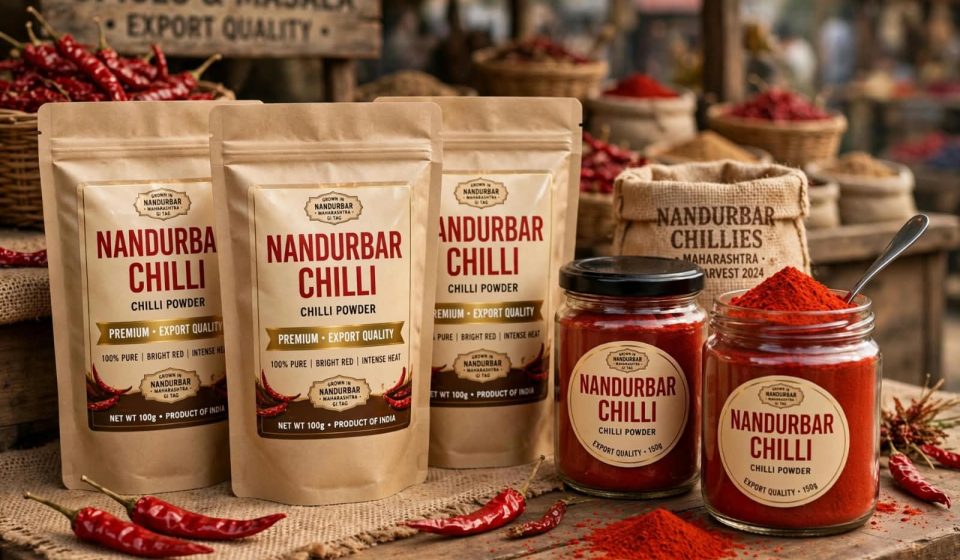

Nandurbar Chilli Powder Maharashtra: Origin, Benefits, Uses and Buying Guide
Introduction
India is famous for its rich spices, and chilli powder holds a special place in Indian cooking. From spicy curries to traditional chutneys, chilli powder adds colour, flavour, and heat to everyday meals. Maharashtra is known for its diverse agricultural products, including several varieties of red chillies.
Nandurbar chilli powder Maharashtra is a topic of interest for people exploring regional spices, local agricultural products, and traditional Maharashtrian cuisine. Nandurbar, located in northwestern Maharashtra, has an agricultural economy supported by farming and local markets. However, specific claims about a distinct Nandurbar chilli powder variety should be verified with local producers and agricultural sources.
This article explores the regional background, characteristics, culinary uses, potential benefits, buying tips, and business opportunities associated with chilli powder from Nandurbar. It also explains how to identify good-quality chilli powder and use it safely in everyday cooking.
What Is Nandurbar Chilli Powder Maharashtra?
Nandurbar chilli powder Maharashtra refers to red chilli powder that is grown, processed, sold, or sourced in the Nandurbar region of Maharashtra. It is used to add heat, colour, and flavour to Indian dishes. Its exact taste, colour, and spiciness depend on the chilli variety and processing method.
Understanding Nandurbar’s Regional Spice Market
Nandurbar is a district in northwestern Maharashtra. Agriculture plays an important role in the local economy, and farmers grow a range of crops suited to local conditions.
Chilli powder is produced by drying ripe red chillies and grinding them into a fine or coarse powder. Depending on the chilli variety, the finished product can range from mildly spicy to extremely hot.
It is important to distinguish between a locally sourced product and a formally recognised regional speciality. Not every spice sold in a district has a unique geographical identity or a protected regional status.
Buyers interested in Nandurbar chilli powder should check the producer’s location, the chilli variety, the source of the raw material, and the processing method before making specific claims about its origin.
Key Components of Red Chilli Powder
Quality red chilli powder generally contains the following natural components:
- Capsaicinoids: Compounds responsible for the burning sensation and heat of chillies.
- Natural pigments: Carotenoids that give red chillies their characteristic colour.
- Dietary fibre: Small amounts may remain in the ground chilli.
- Vitamins: Dried chillies can contain vitamin-related nutrients, although levels vary with drying and storage.
- Aromatic compounds: These contribute to the chilli’s distinctive smell and flavour.
Pure chilli powder should not contain undeclared colours, fillers, or other unwanted ingredients.
Why Is Nandurbar Chilli Powder Important?
Nandurbar chilli powder is relevant to regional food culture because chilli powder is a common ingredient in Maharashtrian cooking. Locally sourced spices can also create opportunities for farmers, processors, retailers, and small food businesses.
1. Importance in Traditional Cooking
Red chilli powder is widely used in Indian recipes. It adds heat to vegetable dishes, lentils, curries, chutneys, and spice mixtures.
In Maharashtrian cuisine, chilli powder may be used in dishes such as misal, spicy gravies, thecha, and regional masalas. The exact quantity depends on the recipe and the chilli’s strength.
For example, a household preparing a traditional curry might use a small amount of chilli powder for colour and moderate heat. A restaurant preparing a spicier version may use a stronger chilli variety.
2. Value for Farmers and Local Businesses
Chilli cultivation and processing can support agricultural supply chains wherever the crop is grown.
Local businesses may participate in several stages:
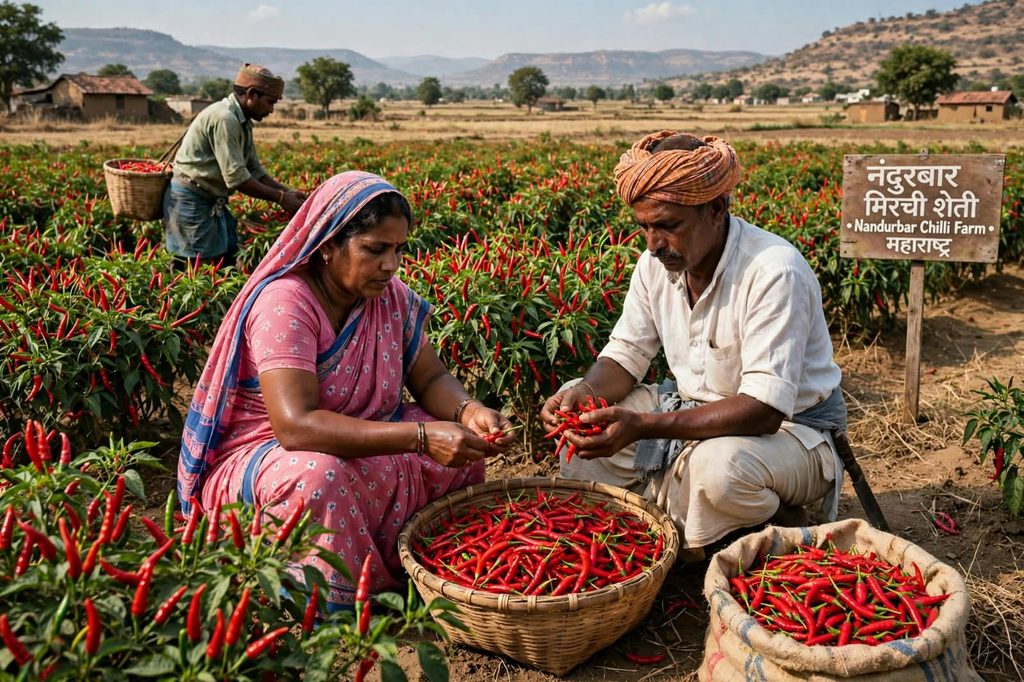
- Cultivating and harvesting red chillies.
- Drying and sorting the crop.
- Grinding chillies into powder.
- Packing the product for sale.
- Supplying grocery shops and restaurants.
- Selling packaged spices through online marketplaces.
These activities can create opportunities for rural enterprises. However, actual income depends on crop yields, input costs, market prices, competition, and product quality.
3. Relevance to the Spice Industry
Consumers increasingly look for information about ingredient origin, purity, packaging, and traceability.
A seller offering chilli powder from Nandurbar can build trust by clearly identifying the source of the chillies, the processing location, and the ingredients. Transparent labelling helps customers distinguish locally processed products from spices sourced elsewhere.
How Is Chilli Powder Produced?
Chilli powder production involves several stages. Proper drying, hygienic handling, and suitable packaging help protect flavour and product quality.
Step 1: Selecting and Harvesting Red Chillies
Farmers or suppliers select mature red chillies suitable for drying. The variety influences the final colour, aroma, and heat level.
Damaged, mouldy, or spoiled chillies should be separated before processing. Careful selection reduces the risk of poor-quality raw material entering the production chain.
Step 2: Drying and Cleaning
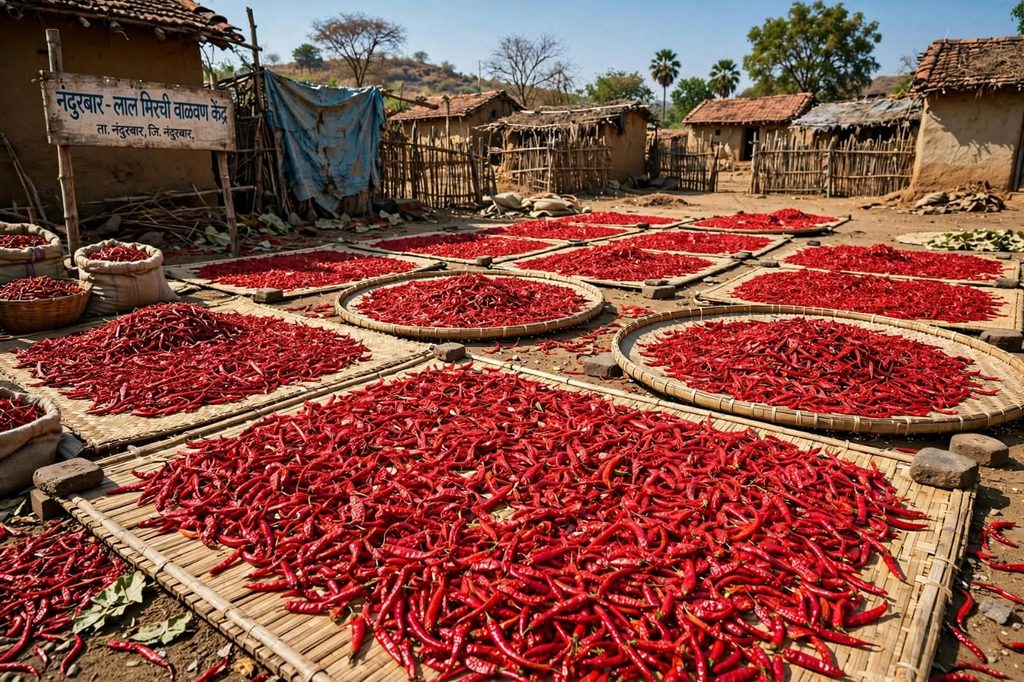
Fresh chillies contain moisture, so they must be dried before grinding. Drying may take place under controlled sunlight or in suitable drying equipment.
The goal is to reduce moisture without unnecessarily damaging colour and flavour. Chillies should be protected from rain, dust, animals, and other sources of contamination.
After drying, the chillies are cleaned and sorted.
Step 3: Grinding and Packaging
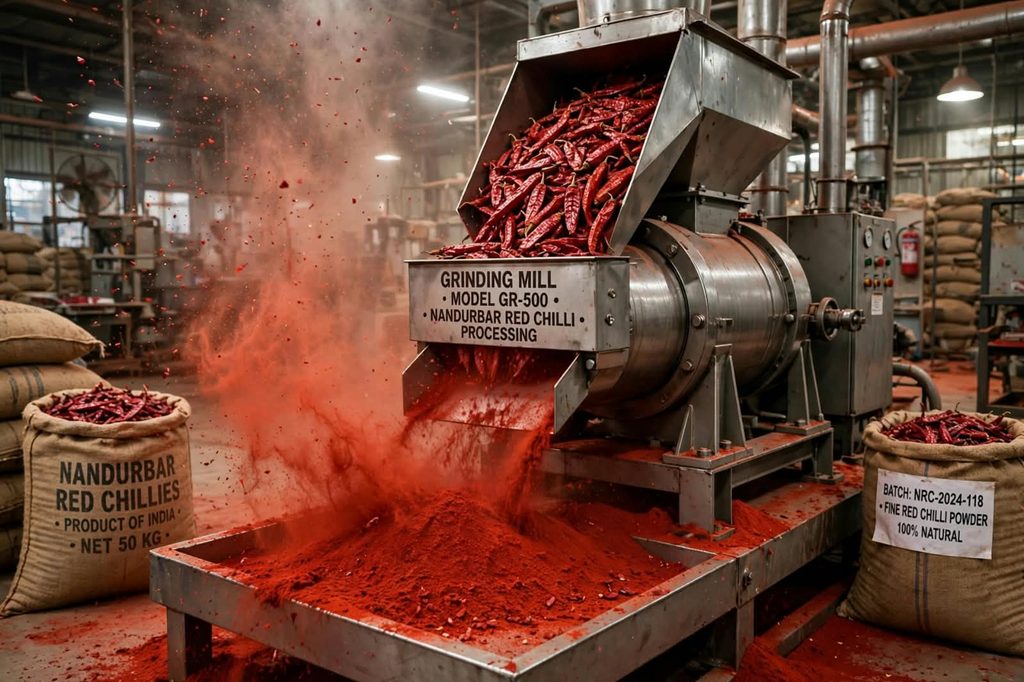
The dried chillies are ground into powder using suitable equipment. The powder may then be sieved to achieve a consistent texture.
Processors should use clean equipment and food-safe packaging. Properly sealed, moisture-resistant packaging helps preserve the product’s quality during storage and transport.
Practical example: A small spice business sourcing dried chillies from regional suppliers could clean and grind them in a hygienic facility, pack them in sealed pouches, and label the product with accurate ingredient and manufacturer information.
This example describes a general production process; it does not establish that every stage currently takes place within Nandurbar district.
Benefits of Nandurbar Chilli Powder Maharashtra
The main benefits of chilli powder are culinary. Its nutritional properties depend on the chilli variety, quantity consumed, and processing conditions.
1. Adds Heat and Flavour
Chilli powder gives food a spicy taste and can add depth to savoury recipes. It works well in curries, vegetables, marinades, and spice blends.
The expected result depends on the chilli variety. Some chillies provide strong heat, while others are valued more for their colour.
2. Enhances the Appearance of Food
Natural red pigments give chilli powder its characteristic colour. A small quantity can make gravies, sauces, and spice mixtures appear richer.
However, colour alone is not a reliable measure of quality. Naturally coloured chilli powder can vary in appearance, and unusually bright colour should not automatically be considered a sign of purity.
3. Provides Plant Compounds
Red chillies contain capsaicinoids and carotenoid pigments. Some varieties also provide vitamin-related nutrients.
The amount of these compounds varies with the chilli type, ripeness, drying process, and storage conditions. Chilli powder should be treated as a seasoning rather than a major source of essential nutrients.
4. Supports Recipe Variety
A versatile spice can be used in both traditional and modern dishes.
Examples include:
- Maharashtrian curries and vegetable preparations.
- Chutneys and dry spice mixtures.
- Marinades for paneer and vegetables.
- Soups, sauces, and savoury snacks.
- Homemade seasoning blends.
5. Offers Opportunities for Local Branding
A well-managed regional spice business can highlight authentic sourcing, consistent quality, and clear product information.
Local branding may help a business reach customers who value regional ingredients. Still, a regional name alone does not guarantee superior flavour or quality.
Challenges and Common Mistakes
Chilli powder quality depends on more than its colour or heat. Buyers and sellers should understand common risks before purchasing, processing, or marketing the product.
| Problem | Possible cause | Practical solution |
| Weak flavour | Old stock or unsuitable storage | Buy fresh stock and store it in an airtight container |
| Loss of colour | Exposure to light, heat, or air | Use opaque, sealed packaging |
| Clumping | Moisture entering the package | Keep the powder dry and use a clean, dry spoon |
| Excessive heat | A naturally hot chilli variety | Check the variety and begin with a small quantity |
| Unusual colour | Natural variation or possible adulteration | Buy from a reputable seller and seek appropriate testing |
| Mould or musty smell | Poor drying or damp storage | Do not consume the affected product |
| Unclear origin | Incomplete product information | Ask for supplier and manufacturing details |
Food Safety and Adulteration
Spice adulteration is a recognised food-safety concern. Some products may contain undeclared ingredients or contaminants.
Consumers cannot reliably identify every contaminant by sight, smell, or taste. When purity is important, choose traceable products from reputable suppliers and look for appropriate food-safety compliance.
In India, packaged food businesses should follow applicable Food Safety and Standards Authority of India (FSSAI) requirements. Buyers should check the relevant licence or registration details where required.
Best Practices for Buying and Storing Chilli Powder
Use these practical tips to choose and preserve good-quality chilli powder.
- Check the ingredient list. Look for products that clearly identify red chilli as the ingredient.
- Verify the origin. Ask whether the chillies were grown in Nandurbar or simply processed or packed there.
- Choose sealed packaging. Avoid damaged packs or products exposed to moisture and dust.
- Check the manufacturing date. Fresh stock is generally preferable for stronger flavour and aroma.
- Compare colour and aroma. Natural colour and a clean chilli smell are useful indicators, but they cannot prove purity.
- Understand the heat level. Ask the seller about the chilli variety if you prefer mild or strong spices.
- Review the label. Check the manufacturer’s details, batch information, net quantity, and applicable compliance information.
- Store it correctly. Keep the powder in an airtight container in a cool, dry, dark place.
- Avoid moisture. Never put a wet spoon into the container.
- Buy from traceable suppliers. Choose sellers who can explain their sourcing and quality-control practices.
These steps are useful for household consumers, restaurant owners, retailers, and small spice businesses.
Nandurbar Chilli Powder vs Other Red Chilli Powders
Red chilli powders differ according to their chilli varieties, production methods, and intended uses. The following comparison is general; individual products may differ significantly.
| Feature | Chilli powder sourced from Nandurbar | Kashmiri chilli powder | Guntur chilli powder |
| Regional association | Nandurbar, Maharashtra | Kashmir region | Guntur region, Andhra Pradesh |
| Common culinary use | Depends on the variety and local supplier | Often selected for colour and relatively mild heat | Often selected for pronounced heat |
| Colour | Depends on the chilli variety | Commonly deep red | Varies by variety |
| Heat level | Must be verified with the seller | Often mild to moderate, depending on the product | Can be moderate to very hot |
| Best use | Regional recipes and everyday cooking | Gravies and dishes where colour is desired | Spicy curries, pickles, and masalas |
| Buying consideration | Verify the actual growing and processing location | Check purity and the specific product grade | Check variety and heat level |
Important: These are broad culinary comparisons, not guaranteed product specifications. Heat levels vary between varieties and batches. The name of a district or region does not establish a standard level of spiciness.
Business Opportunities for Nandurbar Chilli Powder
Regional spice products may offer opportunities for farmers, food processors, wholesalers, retailers, and online sellers. Success depends on verified sourcing and consistent quality.
1. Local Retail Sales
Small businesses can supply households, grocery stores, and restaurants. Consistent packaging and reliable supply help develop repeat customers.
2. Online Spice Sales
Businesses can sell packaged chilli powder through their own websites or suitable e-commerce marketplaces.
Useful product information includes:
- The exact source of the chillies.
- Ingredient and net-weight details.
- Manufacturing and packing information.
- Storage instructions.
- Applicable food-safety details.
3. Private-Label Products
A business may work with an established processor to create a branded spice product. Before doing so, it should confirm manufacturing standards, traceability, labelling rules, and supply reliability.
4. Value-Added Spice Products
Depending on demand and production capability, businesses may explore chilli-based masalas, seasoning blends, or other spice products.
Each product requires suitable formulation, hygienic processing, and compliant labelling. Businesses should not make unsupported claims about origin, health benefits, or product quality.
Frequently Asked Questions
1. What is Nandurbar chilli powder Maharashtra?
Nandurbar chilli powder Maharashtra refers to chilli powder grown, processed, sold, or sourced in the Nandurbar region of Maharashtra. Its flavour and heat depend on the chilli variety and processing method. Buyers should verify whether the raw chillies are locally grown or only processed and packed in the district.
2. Is Nandurbar famous for chilli powder?
Nandurbar is an agricultural district in northwestern Maharashtra, but its reputation as a specialised chilli powder centre should not be assumed without reliable evidence. To establish its importance in chilli production, consult local agricultural offices, producer organisations, market records, and verified information from regional suppliers.
3. What is the taste of Nandurbar chilli powder?
The taste depends on the chilli variety used. Some red chillies provide strong heat, while others contribute more colour and a milder flavour. There is no single flavour profile that can be guaranteed for every product sold as Nandurbar chilli powder. Ask the supplier about the variety and heat level.
4. How is red chilli powder made?
Red chilli powder is made by selecting ripe red chillies, drying them, cleaning them, and grinding them into powder. The powder is then sieved if needed and packed in suitable food-grade packaging. Hygienic handling and moisture control help preserve flavour and reduce the risk of spoilage.
5. What are the benefits of red chilli powder?
Red chilli powder adds heat, flavour, and natural colour to food. It also contains plant compounds such as capsaicinoids and carotenoids. However, its nutritional contribution varies, and it should be used as a seasoning. People sensitive to spicy food may need to reduce their intake.
6. How can I identify pure chilli powder?
Check the ingredient list, packaging, manufacturer details, and supplier reputation. Pure chilli powder should not contain undeclared fillers or artificial colours. However, visual inspection cannot confirm purity. Laboratory testing is more reliable when adulteration or contamination is suspected, especially for commercial buyers purchasing in bulk.
7. How should chilli powder be stored?
Store chilli powder in a clean, airtight container in a cool, dry place away from sunlight. Use a dry spoon and close the container after every use. Avoid storing it near steam or other moisture sources. Replace it when its aroma fades or when you notice signs of spoilage.
8. Can I buy Nandurbar chilli powder online?
You may find chilli powder marketed as being from Nandurbar through regional sellers or online marketplaces, depending on availability. Before ordering, verify the seller, ingredients, product origin, packaging, and applicable food-safety information. Do not assume that a product is locally grown simply because its listing mentions Nandurbar.
Key Takeaways
- Nandurbar is an agricultural district in northwestern Maharashtra.
- Nandurbar chilli powder may refer to a product grown, processed, sold, or sourced in the region.
- Its colour, aroma, flavour, and heat depend on the chilli variety and processing method.
- Chilli powder adds flavour and colour to traditional Indian dishes.
- Proper drying, hygienic processing, and sealed packaging help protect product quality.
- Buyers should verify the origin, ingredients, and supplier information.
- Regional branding can create business opportunities when supported by reliable sourcing and consistent quality.
- No specific regional quality or health benefit should be claimed without supporting evidence.
Final Verdict
Nandurbar chilli powder Maharashtra is a useful topic for anyone exploring regional spices, Maharashtrian food, agricultural products, or local business opportunities. Chilli powder is a versatile ingredient that adds heat, flavour, and colour to many everyday dishes.
However, the quality of any particular product depends on the chilli variety, growing conditions, processing methods, and storage practices. Buyers should not judge quality by regional naming or bright colour alone.
For consumers, the best approach is to purchase sealed, traceable products from reputable suppliers. For businesses, the priority should be verified sourcing, hygienic production, accurate labelling, and consistent quality.
Conclusion
Nandurbar chilli powder Maharashtra represents a topic worth exploring within Maharashtra’s wider agricultural and spice market. Red chilli powder remains an important ingredient in Indian cooking because it adds flavour, colour, and varying levels of heat.
Whether you are a home cook, retailer, or aspiring spice entrepreneur, understanding chilli varieties, production methods, storage, and food safety can help you make better decisions. If you plan to buy or market a product specifically associated with Nandurbar, verify its origin with the producer and request reliable product information.
Choosing quality spices and sharing accurate information helps consumers enjoy regional food products with greater confidence.
