
When we think about Himachal Pradesh, one of the first things that comes to mind is its beautiful mountains, green valleys, cool climate, and, of course, fresh apples. Apple cultivation is an important part of the agricultural identity of several districts of Himachal Pradesh, and Chamba is one of them.
But the story of Chamba’s apples does not end when the fruit is harvested. Apples can be transformed into a variety of value-added products, allowing their flavour and usefulness to reach consumers in a different form. Apple jam is one such product.
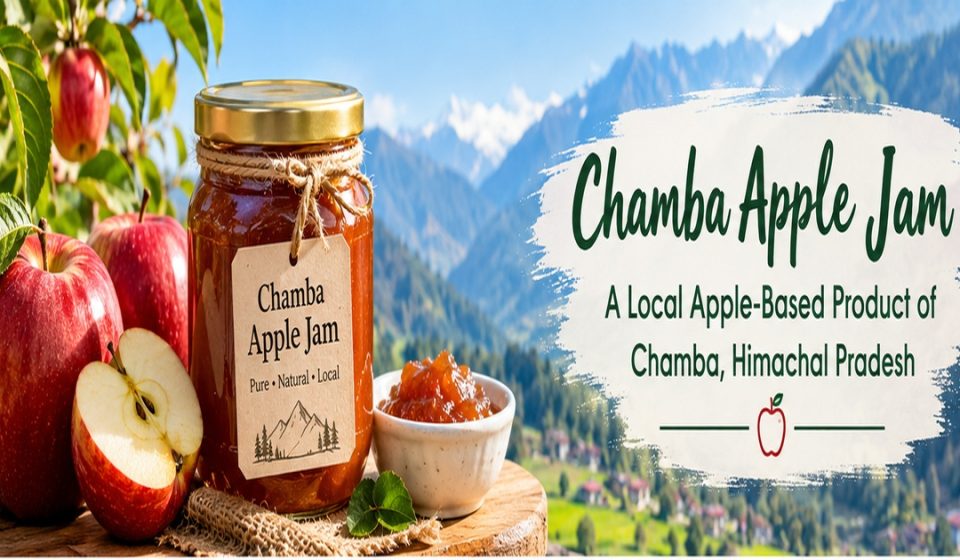
Chamba Apple Jam represents a simple but interesting connection between local agriculture, food processing, traditional flavours, and modern food businesses. It takes a familiar fruit and turns it into a product that can be enjoyed throughout the year.
The Government of India’s PMFME programme lists Apple-based Products as the One District One Product (ODOP) for Chamba district, placing value-added apple processing within the district’s local-product ecosystem.
What is Chamba Apple Jam?
Chamba Apple Jam is a fruit spread prepared by processing apples into a thick, sweet, spreadable product. Depending on the recipe and processing method, apples may be cleaned, peeled or chopped, cooked and processed with sugar and other ingredients to achieve the desired texture and flavour.
What makes the product interesting in the context of Chamba is its connection with Himachal’s apple-growing regions and the growing importance of processing local agricultural produce into marketable products.
A Chamba-linked food producer, Valley Agro Foods, offers Apple Jam made with hand-picked Himalayan apples and describes its range as being inspired by the culinary heritage of Chamba Valley and Himachal Pradesh.
So, rather than seeing an apple only as fresh fruit, apple jam shows how the same agricultural produce can be converted into a convenient, packaged food product.
Why Are Apples Important in Chamba?

Chamba is known for its diverse natural landscape, traditional culture, and agricultural products. Its mountain environment supports the cultivation of different fruits, with apples being an important part of the district’s horticultural economy.
Fresh apples are highly seasonal. Farmers harvest them during a particular period, after which the fruit enters markets and supply chains. Processing offers another way to make use of the crop.
This is where products such as apple jam, apple jelly, apple juice, and apple cider vinegar become relevant.
The PMFME apple-focused material specifically identifies Chamba, Kullu and Shimla in Himachal Pradesh among districts where apple is the ODOP product.
The idea behind ODOP is not simply to promote a raw agricultural product. It also creates opportunities around processing, packaging, branding, marketing and value addition.
From Fresh Apples to Apple Jam
The journey from an apple orchard to a jar of apple jam involves several stages.
First, suitable apples are selected. Good-quality fruit is important because the flavour and quality of the final product depend heavily on the raw material.
The apples are then cleaned properly to remove dirt and unwanted material. Depending on the processing method, they may be peeled, cut and prepared for cooking.
Next comes the cooking and processing stage. The prepared apples are heated and combined with ingredients according to the recipe. The mixture gradually develops a thicker consistency as it cooks.
Once the desired texture is achieved, the jam is filled into clean and suitable containers. Proper packaging is important because it protects the product and makes it easier to store, transport and sell.
Commercial food processing also involves attention to hygiene, food safety, consistency and labelling.
The result is a convenient product that can be enjoyed without having to process fresh apples at home.
What Makes Apple Jam Different from Fresh Apples?
Fresh apples and apple jam are obviously not the same product, but they are connected through the same basic ingredient.
A fresh apple is usually eaten directly, while jam is designed as a spread or ingredient. This makes apple jam particularly useful for breakfast and snacks.
It can be spread on:
- Bread and toast
- Parathas
- Pancakes
- Waffles
- Scones
- Biscuits
- Cakes and desserts
It can also be used as a topping or flavouring in different recipes.
For people who enjoy fruit-based spreads, apple jam offers a different way to experience the familiar taste of apples.
The Taste of Chamba Apple Jam

One of the appealing things about apple jam is its balance of fruity flavour and sweetness.
A well-prepared apple jam can have a soft texture and a pleasant apple aroma. Depending on the recipe, spices or other ingredients may also be used to create a distinctive flavour.
For example, Chamba-linked food businesses offer different apple-based variations. Valley Agro Foods lists Apple Jam as well as a Black Pepper Apple Jam, showing how traditional fruit processing can also be adapted into new flavour combinations.
This kind of product development can make local agricultural products more interesting to modern consumers.
Apple Jam as a Value-Added Product
One of the biggest advantages of processing apples into jam is value addition.
Instead of selling only fresh fruit, producers can create packaged products with a longer commercial life and a different market position.
For example, one apple crop can potentially support several product categories:
- Fresh apples
- Apple juice
- Apple jam
- Apple jelly
- Apple cider vinegar
- Other processed apple products
This creates more possibilities for farmers, food processors, entrepreneurs and local brands.
The PMFME scheme itself focuses on strengthening food-processing enterprises and value chains. Its ODOP approach aims to support procurement, common infrastructure and marketing around district-level products.
Supporting Local Businesses in Chamba
Apple-based processing can also contribute to the growth of small and medium-sized food businesses.
A local processing business does more than manufacture a product. It can create work in areas such as:
- Fruit collection
- Sorting and processing
- Packaging
- Quality control
- Transportation
- Sales
- Digital marketing
- Retail and distribution
Valley Agro Foods, for example, says its brand was established with the aim of promoting traditional recipes and the culinary heritage of Chamba Valley and Himachal Pradesh. It also states that its operations generate employment opportunities, particularly in Chamba, with a significant portion of its workforce comprising women.
This illustrates how a local food product can become part of a larger rural business ecosystem.
The Role of Women in Food Processing
Food processing can create useful opportunities for women in rural and semi-rural communities.
Activities such as sorting, preparation, packaging, labelling and quality-related work can become part of a local food-processing enterprise. With appropriate training and business support, women-led groups and small enterprises can participate in value addition instead of relying only on the sale of raw agricultural produce.
Government programmes such as PMFME also include support mechanisms for groups such as Self-Help Groups (SHGs), FPOs and cooperatives, along with capacity building and financial support for eligible food-processing activities.
This makes apple-based products an interesting area for local entrepreneurship.
Packaging and Branding of Chamba Apple Jam

Today, a good food product needs more than good taste. Packaging and branding play an important role in how consumers perceive a product.
A jar of Chamba Apple Jam can communicate its regional identity through:
- Product name
- Attractive label design
- Images of apples or Himalayan landscapes
- Information about ingredients
- Manufacturing details
- Net quantity
- Storage instructions
- Brand story
- Food safety and regulatory information
A strong regional identity can help a product stand out in a crowded market.
Instead of presenting apple jam as just another fruit spread, businesses can tell the story behind it—Himachal’s orchards, Chamba’s landscape, local fruit, food processing and the journey from farm to table.
That story can be especially useful when selling through tourism outlets, local stores, exhibitions and online marketplaces.
Chamba Apple Jam and Tourism
Tourism provides another interesting opportunity for local apple-based products.
Chamba attracts visitors because of its mountains, temples, architecture, traditional culture and natural beauty. Tourists often look for food products that they can take home as memories of a destination.
A beautifully packaged jar of apple jam can therefore work as a regional food souvenir.
Instead of taking home only photographs, visitors can carry a taste associated with Himachal Pradesh.
This creates an opportunity for local producers to connect agriculture with tourism and develop products specifically for travellers.
Digital Marketing Can Take Local Products Further
The market for local products is no longer limited to the place where they are produced.
A small food brand from Chamba can use digital platforms to reach customers in cities across India.
Social media can be used to showcase:
- Apple orchards
- Harvesting
- Processing
- Packaging
- Recipes
- Customer experiences
- Local stories
- Behind-the-scenes production
Short videos showing the journey “from apple orchard to jam jar” can make the product more relatable.
E-commerce can then make it easier for customers outside Himachal Pradesh to discover and purchase regional products.
This combination of local production + strong branding + digital marketing + e-commerce can give Chamba’s apple-based products greater visibility.
Challenges in Apple-Based Food Processing
Although apple jam has good potential, producing and selling a successful food product is not always easy.
Producers may face challenges related to:
- Availability of quality raw material
- Seasonal production
- Processing infrastructure
- Food safety requirements
- Packaging costs
- Transportation from hilly areas
- Competition from established brands
- Consumer awareness
- Digital marketing
- Maintaining consistent quality
Another challenge is building trust.
Consumers want to know where a product comes from, what ingredients it contains, how it is processed and how it should be stored. Clear labelling and consistent quality can help local brands build that trust.
The Future of Chamba Apple-Based Products
The future of Chamba’s apple-based products lies not only in producing more products but in creating better and more recognisable products.
There is room for innovation in flavours, packaging, gift boxes, tourism products and online sales.
Apple jam can also be combined with other local ingredients to create unique regional variations. The presence of products such as Apple Jelly & Kiwi Jam and Black Pepper Apple Jam in a Chamba-linked product range shows how apple processing can move beyond a single traditional format.
With better branding, food-processing skills, quality control and access to wider markets, value-added apple products can become an important part of Chamba’s local food economy.
Conclusion
Chamba Apple Jam is more than just a sweet fruit spread. It represents the journey of a local agricultural product into a value-added food product that can reach consumers far beyond the apple-growing region.
Chamba’s connection with apples provides a strong foundation for developing products such as jam, jelly, juice and other processed foods. The Government of India’s PMFME framework identifies Apple-based Products as the ODOP for Chamba, highlighting the importance of value addition around the district’s apple sector.
For local entrepreneurs, apple jam can provide an opportunity to build a regional brand. For farmers, food processing can create additional avenues around agricultural produce. For consumers, it offers a convenient and enjoyable way to experience the flavour of Himalayan apples.
Most importantly, products like Chamba Apple Jam show how a simple local fruit can become part of a larger story—from orchards and farmers to processing, packaging, tourism and the modern marketplace.
Frequently Asked Questions (FAQs)
1. What is Chamba Apple Jam?
Chamba Apple Jam is a processed fruit spread made primarily from apples and other recipe ingredients. It is associated with the broader apple-based food-processing ecosystem of Chamba, Himachal Pradesh.
2. Is apple an ODOP product of Chamba?
Yes. Under the Government of India’s PMFME ODOP listing, Chamba is associated with Apple/Apple-based Products.
3. How is apple jam made?
Apple jam is generally prepared by cleaning and processing apples, cooking them with the required ingredients and concentrating the mixture until it reaches a suitable spreadable consistency. Commercial production also requires appropriate hygiene, packaging and food-safety practices.
4. How can apple jam be used?
Apple jam can be spread on bread, toast, pancakes, waffles and parathas. It can also be used in cakes, desserts and other recipes.
5. Why are apple-based products important for Chamba?
Apple-based products create opportunities for value addition, food processing, entrepreneurship, branding and wider marketing of the district’s agricultural produce.
6. Can Chamba Apple Jam be sold outside Himachal Pradesh?
Yes. Properly packaged and compliant food products can be marketed through retail stores, tourism outlets, exhibitions and e-commerce channels, allowing local brands to reach customers outside Himachal Pradesh.