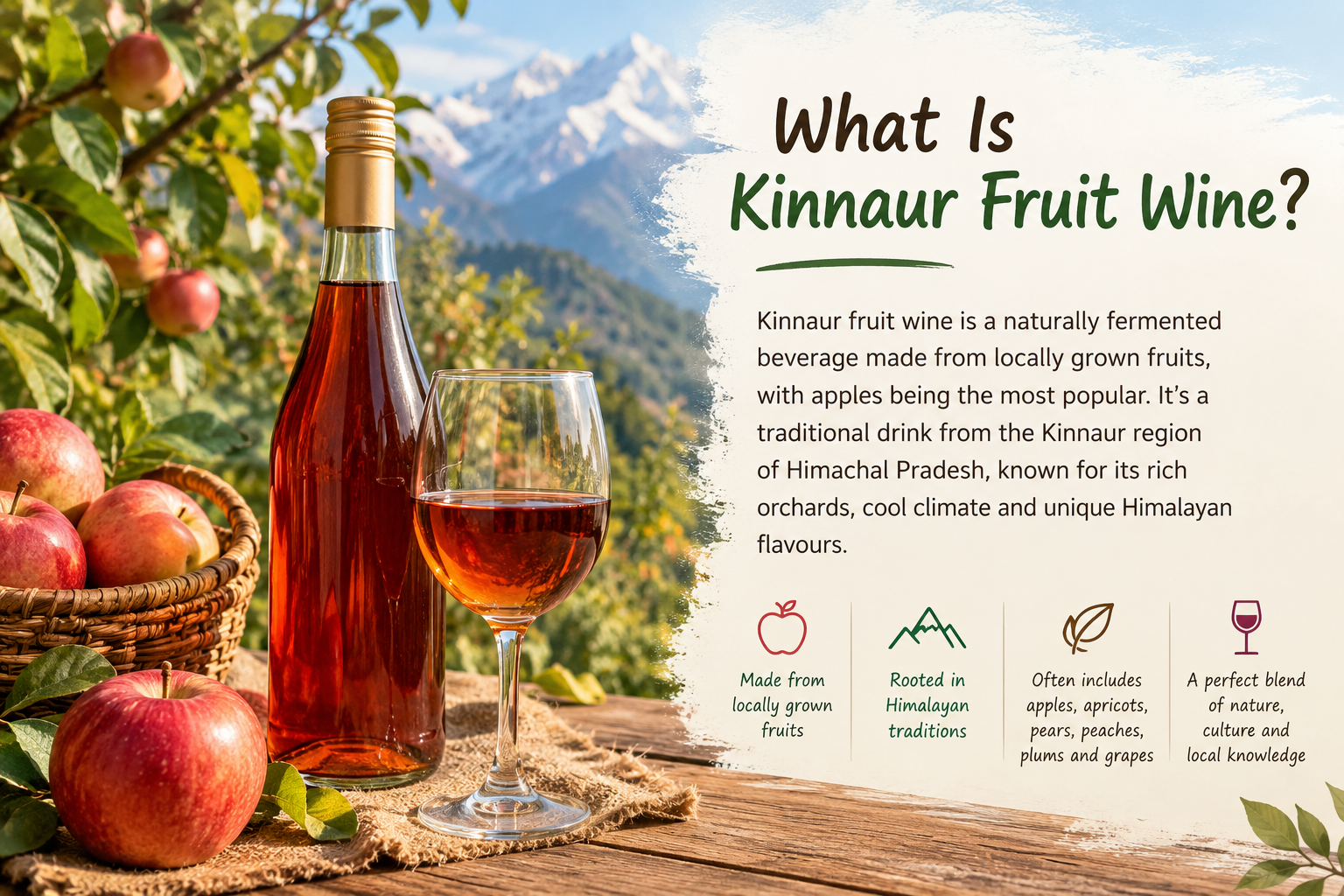

When you think about Kinnaur, the first things that may come to mind are beautiful Himalayan mountains, quiet valleys, traditional villages, and rows of apple orchards. Located in Himachal Pradesh, Kinnaur is especially well known for its apples and the important role fruit cultivation plays in the region.
But there is another interesting side to these famous Himalayan fruits. For generations, local communities have used fruits in different traditional preparations, including alcoholic beverages. This is where the story of Kinnaur apple wine becomes interesting.
Apple-based beverages connect the region’s famous orchards with its local food and beverage traditions. They also show how a simple fruit grown in the mountains can become a distinctive regional product.
For anyone interested in Himachali food, traditional drinks, or unique products from India, Kinnaur apple wine is worth exploring.
What Is Kinnaur Apple Wine?
Kinnaur apple wine is a fruit-based alcoholic beverage associated with the apple-growing region of Kinnaur. Unlike conventional wine, which is generally made from grapes, fruit wine can be produced from fruits such as apples.
Apples naturally contain sugar and acidity, which makes them suitable for fermentation. During fermentation, yeast converts the sugars into alcohol, while also helping develop the aroma and flavour of the final beverage.
Kinnaur also has its own traditional beverage culture. One traditional apple-based preparation associated with the region is known as Seo Rak. However, it is important not to assume that Seo Rak and commercially produced apple wine are exactly the same thing. Traditional beverages can have different preparation methods, including fermentation or distillation.
That difference is part of what makes Kinnaur’s beverage heritage so fascinating. It combines local fruits with knowledge and traditions that have developed within Himalayan communities over time.
Why Is Kinnaur Famous for Apples?
Apples are closely connected with the identity of Kinnaur. The region’s high-altitude environment and cool climate provide suitable conditions for growing temperate fruits.
If you visit Kinnaur during the growing season, apple orchards are an important part of the landscape. These orchards are not just beautiful to look at; they also provide an important source of livelihood and agricultural activity for the region.
Most people know Kinnauri apples as fresh fruit, but apples can be used in many other ways too. They can be made into juices, jams, dried products, preserves, and fermented beverages.
This makes Himachal apple wine part of a much bigger story about how locally grown fruit can be turned into different value-added products.
The Story Behind Seo Rak

Traditional drinks often have names that tell us something about the language, ingredients, and culture of a place. In Kinnaur, Seo Rak is associated with an apple-based traditional alcoholic preparation.
The word Seo refers to apple, while Rak appears in the names of several traditional alcoholic beverages from the region.
What makes this particularly interesting is that Kinnaur’s traditional beverage culture isn’t limited to apples. Local alcoholic preparations have also been associated with fruits such as apricots, pears, peaches, plums, and grapes.
So, Seo Rak isn’t simply about alcohol. It also reflects the way Himalayan communities have made use of fruits that are naturally available in their surroundings.
At the same time, the term should be used carefully. Traditional Rak beverages should not automatically be described as commercial wine because the preparation methods can be different. Some may involve fermentation, while others can involve distillation.
How Is Apple Wine Made?
The exact process used to make apple wine depends on the type of product and the producer.
Generally, the process starts with ripe apples. The apples are cleaned and processed to obtain juice or pulp. Since apples naturally contain sugars, the juice can then undergo fermentation.
Yeast plays an important role during this stage. It converts the sugars into alcohol and also contributes to the flavours and aromas that develop during fermentation.
Commercial producers may carry out additional steps such as clarification, filtration, maturation, and controlled bottling. These processes help create a consistent final product.
Traditional preparation can be quite different. Local methods may depend on traditional knowledge, equipment, and practices followed within the community.
As a result, the taste of apple wine can vary depending on the apple variety, sugar content, acidity, fermentation conditions, alcohol level, and production method.
What Does Kinnaur Apple Wine Taste Like?
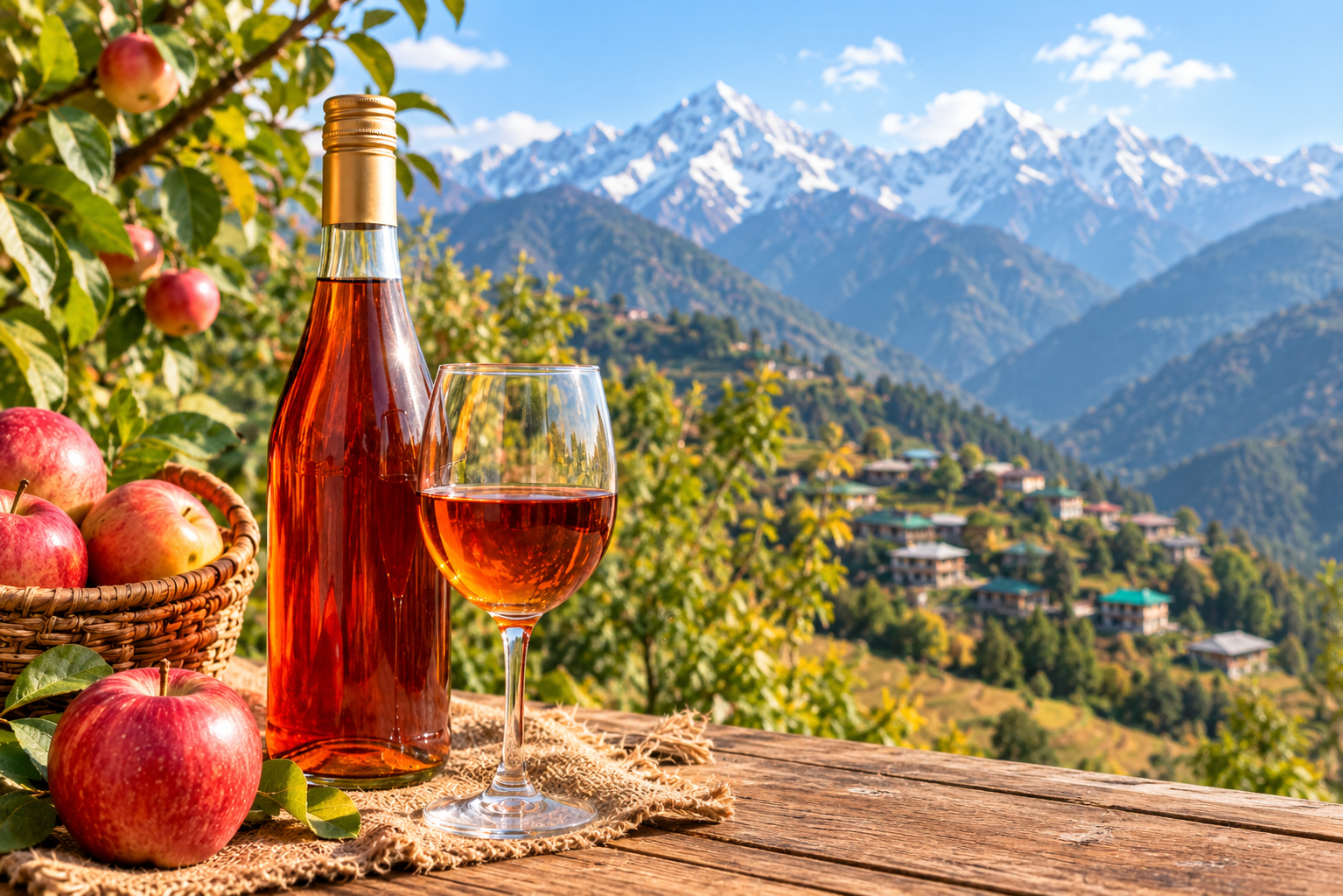
There isn’t one single taste that describes every Kinnaur apple wine.
The flavour depends on the apples used and how the beverage is produced. Apple-based beverages can have a noticeable fruity aroma, while natural acidity can give them a fresh character.
Some products may be sweeter, while others may have a drier taste. The balance between sweetness and acidity can make a big difference to the overall experience.
Traditional apple-based beverages may also taste different from commercially produced apple wine because the production methods aren’t necessarily the same.
This variety is actually part of the fun of exploring Kinnaur fruit wine. Different fruits and different production techniques can create completely different flavours.
Kinnaur Apple Wine and Local Food Culture

Food is often one of the best ways to understand a place. The ingredients people grow, the way they prepare them, and the products they create can tell us a lot about local culture.
In Kinnaur, fruit cultivation is an important part of everyday life and the regional economy. Apples, in particular, are strongly connected with the landscape and identity of the area.
Traditional fruit-based beverages are another example of how local communities have made use of what grows around them.
For travellers visiting Kinnaur, exploring local food and traditional beverages can therefore be an interesting part of the experience. It allows visitors to discover more than just the mountains and tourist attractions—they can also learn about the region’s agriculture and traditions.
That connection between the land, the fruit, and local knowledge is what gives Kinnaur apple wine its unique regional character.
Apple Wine vs. Traditional Kinnauri Beverages
There is an important distinction between commercial apple wine and traditional Kinnauri alcoholic beverages.
Commercial apple wine is generally produced using controlled fermentation processes. Traditional Kinnauri beverages, on the other hand, can follow local recipes and methods that have been passed down through generations.
Some traditional beverages may also be distilled rather than simply fermented. This can result in a considerably different alcohol concentration.
So, if you’re researching or purchasing a Kinnauri beverage, don’t rely only on the name. Check the product label, ingredients, alcohol percentage, and production information.
This is especially useful because traditional names may be used for different types of preparations.
Why Is Kinnaur Fruit Wine Getting Attention?
Today, many people are interested in products that have a story behind them.
Instead of choosing something simply because it looks appealing on a shelf, consumers are often curious about where it comes from, what ingredients are used, and how it is made.
This is one reason Kinnaur fruit wine is an interesting regional product.
Its story begins with Himalayan orchards and locally grown fruits. From there, it connects with traditional knowledge, local culture, and modern food processing.
For local producers, turning fruit into value-added products can also create opportunities beyond selling fresh produce alone.
In that sense, apple wine is not just a beverage. It can also be a way of introducing people to the agricultural heritage of Kinnaur.
Supporting Local Fruit Products
Fresh fruit is seasonal and can be affected by transportation, storage, and market demand. Processing fruit into other products can give producers additional ways to use their harvest.
Think about the number of products that can come from apples: fresh apples, juice, dried apples, jams, preserves, and fruit-based beverages.
Each product tells a slightly different story about the same fruit.
For a region like Kinnaur, greater awareness of these products can help more people discover the variety of Himalayan agriculture and the work that goes into producing regional food and beverage products.
How to Choose Apple Wine
If you’re interested in trying apple wine, take a moment to read the product information before buying it.
Look at the type of apples used, sweetness level, alcohol percentage, production method, and storage instructions. Two apple-based beverages can taste quite different depending on how they are made.
It’s also important to buy alcoholic beverages through legally permitted and licensed sellers and to follow the applicable drinking-age requirements in your state.
And, as with any alcoholic beverage, responsible and moderate consumption is important.
Kinnaur Apple Wine: More Than Just a Drink
The story of Kinnaur apple wine starts in the apple orchards of Himachal Pradesh, but it doesn’t end there.
It brings together agriculture, local fruit, traditional knowledge, and changing consumer interest in regional products.
For someone visiting Kinnaur, learning about its fruit-based beverages can offer another perspective on the region. Instead of seeing apples only as something sold in markets, you begin to see how deeply they are connected with local agriculture and culture.
And for people interested in Kinnaur fruit wine, the attraction isn’t only the taste. It’s also the story behind the product—the orchards, the farmers, the fruit, and the traditions connected with it.
Conclusion
Kinnaur apple wine brings together one of Himachal Pradesh’s most famous fruits with the region’s long-standing tradition of fruit-based beverages.
From the apple orchards of Kinnaur to traditional preparations such as Seo Rak, the region offers an interesting example of how locally grown fruits can become part of a community’s food and beverage culture.
Whether you’re a traveller, food lover, or simply curious about unique Indian regional products, exploring Kinnaur apple wine gives you another reason to look beyond the usual tourist attractions and discover the stories behind Himalayan food traditions.
Ultimately, Kinnaur fruit wine is about more than what’s in the glass. It’s about the apples, orchards, people, traditions, and Himalayan landscape that make the story unique.
Frequently Asked Questions About Kinnaur Apple Wine
1. What is Kinnaur apple wine?
Kinnaur apple wine is a fruit-based alcoholic beverage associated with the apple-growing region of Kinnaur in Himachal Pradesh. It is made using apples and is connected with the region’s long-standing tradition of fruit-based beverages.
2. What is Seo Rak?
Seo Rak is a traditional apple-based alcoholic preparation associated with Kinnaur. The name is linked to the apple, but Seo Rak should not automatically be considered the same as commercially produced apple wine, as traditional beverages can use different preparation methods.
3. Why is Kinnaur famous for apple wine?
Kinnaur is well known for its beautiful apple orchards and favourable conditions for growing apples. Because apples are such an important part of the region, they have also been used in different traditional and processed products, including fruit-based beverages.
4. What does Kinnaur apple wine taste like?
The taste can vary depending on the apples and the production method. Some apple wines can be fruity and slightly sweet, while others may have a drier taste with more noticeable acidity.
5. Is Kinnaur apple wine the same as regular wine?
Not exactly. Traditional wine is generally associated with grapes, while apple wine is made from apples. The ingredients give them different flavours, aromas, and characteristics.
6. What fruits are used in Kinnaur fruit wine?
Apples are one of the most important fruits associated with Kinnaur fruit wine. Traditional Kinnauri beverages are also associated with other local fruits, including apricots, pears, peaches, plums, and grapes.
7. Is Seo Rak the same as Kinnaur fruit wine?
Not necessarily. Seo Rak is a traditional Kinnauri alcoholic preparation, while the term fruit wine can refer to commercially produced fermented fruit beverages. The production methods can be different, so the two terms shouldn’t always be used interchangeably.
8. How is apple wine made?
Apple wine generally begins with ripe apples that are processed to obtain juice or pulp. The natural sugars are then fermented with yeast, which produces alcohol. Commercial producers may use additional steps such as filtration and maturation before bottling.
9. Where does Kinnaur apple wine come from?
Kinnaur apple wine is associated with Kinnaur, a mountainous district in Himachal Pradesh known for its apple orchards, scenic valleys, and distinctive local culture.
10. Why are people interested in Kinnaur fruit wine?
A big part of the interest comes from its regional story. People are increasingly curious about locally sourced products and traditional food and beverage cultures. Kinnaur fruit wine brings together Himalayan fruits, local agriculture, and regional traditions.
11. Can I buy Kinnaur apple wine online?
It depends on the particular product and the alcohol regulations in your state. If you are looking to purchase it, use legally permitted and licensed sellers and check the product’s availability and details before ordering.
12. Is Kinnaur apple wine alcoholic?
Yes. Apple wine is an alcoholic beverage, although the exact alcohol content can vary from one product to another. Always check the label for the alcohol percentage before consuming it.