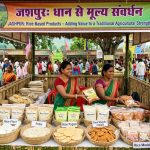

Introduction
Jagdalpur, the headquarters of Bastar district in Chhattisgarh lies in a place for its thick forests, many kinds of wildlife and strong tribal customs. Forest life has long been a part of the local economy because people gather and sell many kinds of Minor Forest Produce (MFP).
Among these forest goods tamarind is especially important. Seeing its ability to add value and create jobs, Jagdalpur (Bastar) has been chosen under the One District One Product (ODOP) program for Minor Forest Produce (Tamarind). The updated ODOP list from the Ministry of Food Processing Industries names Jagdalpur (Bastar) for this product. (Ministry of Food Processing Industries)
Tamarind is not a classic ingredient for its unique sweet-and-sour taste. It can be turned into pulp, paste, concentrate, sauces, drinks, chutneys and many other foods. With processing, packaging and branding tamarind gathered by forest‑dependent people can become a way to earn more money and create jobs.
Tamarind and the Bastar Region
Bastar owns many kinds of Minor Forest Produce. The Chhattisgarh State Minor Forest Produce Federations district profile for Bastar shows tamarind with sal seed, Harra, Mahua, Kusum, Aonla, Baheda, Tikhur, honey and many other forest goods. The profile names Jagdalpur as the district union. Lists 15 main cooperative societies. (Cgmfpfed.org)
For people who live near forests, gathering MFP can offer ways to earn a living. Tamarind is especially valuable because its fruit sells well, can be kept for a time and can be made into many products.
The hard part however is making sure that collectors get a part of the money that comes after raw tamarind leaves the forest.
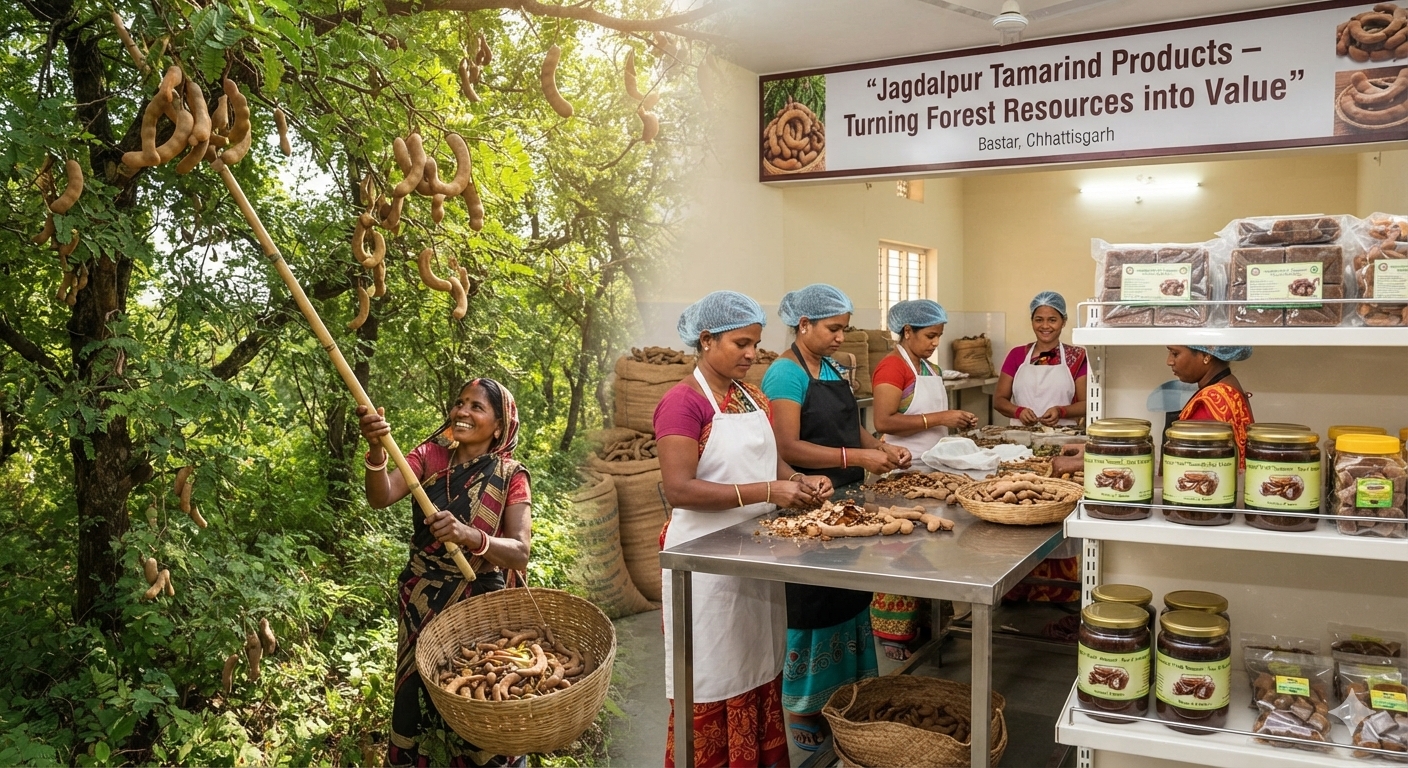
From Tamarind Pod to Finished Product
The simple tamarind value chain starts with picking pods. A short version is:
Collection → Sorting → Cleaning → Dehulling → Deseeding → Pulp Extraction → Processing → Packaging → Marketing
people sell tamarind in a fairly raw state. Making it near the place where it is collected can add value before the product goes to bigger markets.
The Indian Council of Agricultural Research (ICAR) wrote about a livelihood project in Bastar where community groups handled tamarind buying and basic processing. The project had groups for buying and, for processing and it involved 60 families. I have seen how the idea showed that when people work together they can cut out middlemen and keep value in the local community. (Indian Council of Agricultural Research)
This example shows why tamarind fits well with a value‑adding approach.
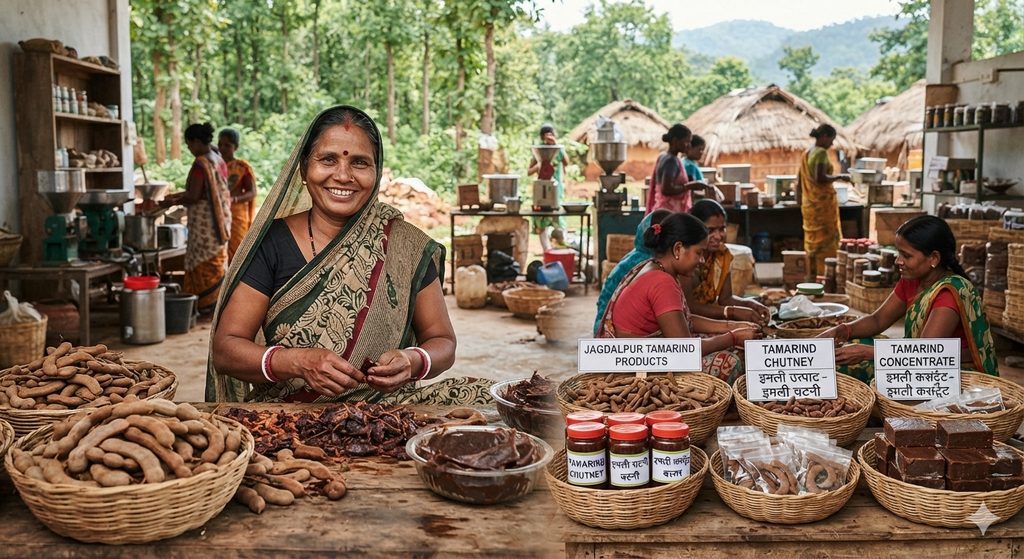
Tamarind Pulp: The Foundation Product
Tamarind pulp is one of the important products that can come from tamarind. I find tamarind pulp very useful.
Tamarind pulp is convenient for consumers and food businesses because it removes a lot of the work needed to use tamarind. I think this saves time.
It can be used in:
- Chutneys
- Curries
- Sambhar
- Rasam
- Sauces
- Pickles
- Marinades
- Beverages
- Dishes
- Ready-to-cook food products
When tamarind pulp is properly processed and packaged it can serve both household consumers and commercial food manufacturers. This means more people get tamarind easily.
Tamarind Paste and Concentrate
Tamarind paste and concentrate offer another chance to add value to tamarind. I like the idea of turning tamarind into these forms.
By selling tamarind as a seasonal raw material processors can make products with more convenient formats and longer usability. This helps keep tamarind around all year.
Tamarind concentrate can be marketed to:
- Restaurants
- Hotels
- Food manufacturers
- Catering businesses
- Snack manufacturers
- Sauce producers
This creates opportunities for B2B and also for consumer-oriented businesses. I see many small firms could use this.
A standardised product with flavour, acidity and quality is much easier for commercial kitchens and food manufacturers to use. Consistency matters a lot.
Tamarind-Based Chutneys and Sauces
Tamarind’s distinctive and-sour flavour makes it especially suitable for sauces and chutneys. Local entrepreneurs can make products such as:
- Tamarind chutney
- Sweet tamarind sauce
- Spicy tamarind sauce
- Tamarind cooking paste
- Tamarind dipping sauce
- Tamarind-based marinades
These products can combine Indian flavours with modern packaging. That could make them more attractive.
A designed product could be positioned as a regional speciality from Bastar instead of just another generic tamarind sauce that gives a story.
Tamarind Beverages
Another potential area is the beverage market.
Tamarind can be used in drinks and modern ready-to-serve beverages. Products could include:
- Tamarind sherbet
- Tamarind drink concentrate
- Tamarind-based summer beverages
- Tamarind-flavoured drinks
With food-safety controls and packaging these products could be sold beyond local markets. I think there is potential.
Seasonal demand for beverages can also give opportunities to small-scale entrepreneurs. This could boost income.
Tamarind in Traditional Foods
Tamarind already has an established role in cuisine.
It is used to provide acidity and flavour in traditional preparations. This existing consumer familiarity is an advantage because producers do not need to introduce a new ingredient to the market.
Instead the opportunity is to make tamarind more convenient, consistent and accessible.
Ready-to-use tamarind pulp, paste and chutney can save consumers preparation time while preserving the flavour of traditional foods.
Farmers and Forest Collectors at the Centre
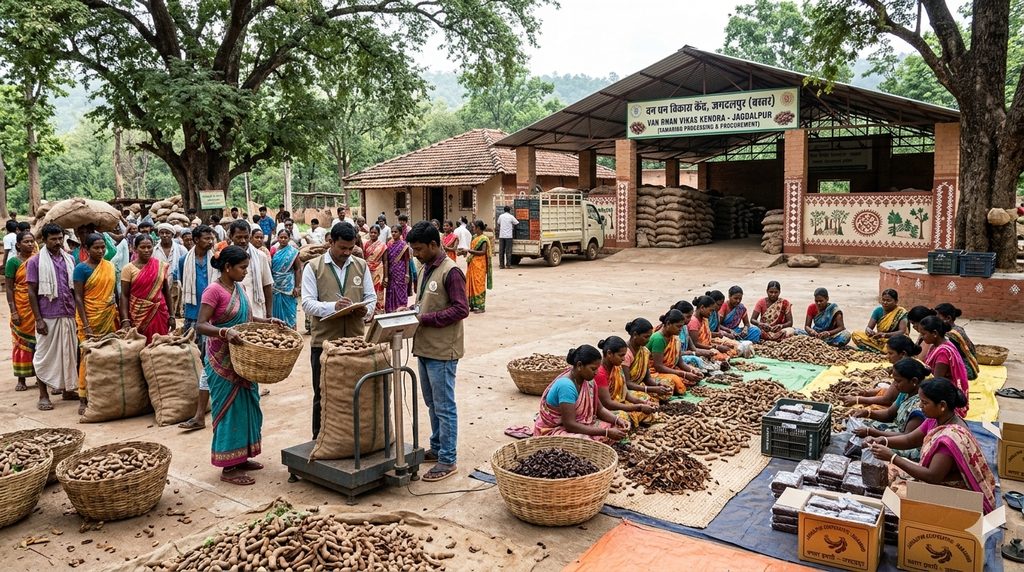
The success of Jagdalpurs tamarind industry ultimately depends on the people who collect the material.
The Chhattisgarh MFP Federation has a system for Minimum Support Price (MSP) procurement of minor forest products. For the 2024–25 collection year the federation lists an MSP of ₹36 per kg for tamarind with seeds and ₹69 per kg for tamarind. (Cgmfpfed.org)
Such mechanisms can give collectors price security, subject to the applicable procurement arrangements.
However the bigger opportunity lies in combining procurement support with processing.
If communities sell raw tamarind much of the added value is created elsewhere. If they take part in cleaning, deseeding, pulping, packaging and marketing more of the value chain can stay within the region.
Opportunities for Women Entrepreneurs
Tamarind processing offers potential for women-led enterprises and Self-Help Groups. While scale industrial processing needs heavy infrastructure many parts of the process can be managed by smaller local businesses. Women’s groups can get involved in key activities: cleaning tamarind, removing the seeds, preparing the pulp, making chutneys, producing sauces, packaging the products, labeling them, selling locally and even promoting them through digital marketing. These opportunities allow women to use their existing skills in food preparation and traditional recipes turning them into income sources.
Government and Institutional Support
The ODOP framework plays a role in shaping the tamarind-processing ecosystem in Jagdalpur. The Ministry of Food Processing Industries has officially listed Jagdalpur (Bastar). Minor Forest Produce (Tamarind) in its updated ODOP list. This recognition shows that tamarind is not a forest product but a key economic opportunity for the region. The Chhattisgarh MFP Federation also supports the value chain from collecting forest produce to adding value through processing. Their project documents stress how primary and secondary processing can boost market value and improve returns for forest- communities. The federation has even started planning for integrated tamarind-processing facilities signaling a shift from collection to organized processing and marketing.
Businesses that qualify can apply for government schemes related to food processing infrastructure, formalization, branding and marketing. These schemes are available under guidelines and eligibility conditions. Still they offer support for building a stronger more structured industry.
Challenges
Despite all this promise the tamarind sector faces challenges. The availability of tamarind is seasonal. Most of it comes from forest collection. Prices often. There is limited local processing capacity. Traditional methods are still widely used. Many producers depend on middlemen who often buy the raw tamarind at low prices. Storage facilities are inadequate branding as quality varies from batch to batch. These issues make it hard to reach markets.
A study by ICAR on livelihoods in Bastar highlighted how raw tamarind was quickly sold to traders at prices leaving little value for the people who collected it. The study showed that organized procurement and primary processing could help keep more of the value within communities. That’s why adding value at the level should remain a top priority in the ODOP initiative.
From Forest Produce to a Complete Value Chain
The best chance for Jagdalpur lies in creating a tamarind value chain. Not just focusing on collecting raw pods. The ideal chain could be:
Forest Collectors → Cooperative or FPO → Collection Centre → Cleaning & Grading → Processing Unit → Packaging → Brand → Retail or E-Commerce → Consumer.
Each step in this chain creates jobs and income. The more processing that happens locally the economic benefit stays within the district.
Conclusion
Jagdalpur’s inclusion as an ODOP district for Minor Forest Produce (Tamarind) shows how important this forest resource is to the Bastar region. Tamarind has more potential than just selling raw pods. Through cleaning, deseeding, pulping and processing it can become chutneys, sauces, concentrates, beverages and other ready-to-use food items. Importantly adding value helps ensure that the economic gains from tamarind go directly to the forest collectors, farmers, women’s groups, cooperatives and rural entrepreneurs who are the backbone of this industry.
With the technology sustainable collection practices, government backing and strong local branding Jagdalpur can turn its tamarind resources into a powerful value-added industry. From the forests of Bastar to kitchens across India tamarind can become more than a forest product. It can be a symbol of entrepreneurship respect, for traditional knowledge and inclusive rural development.