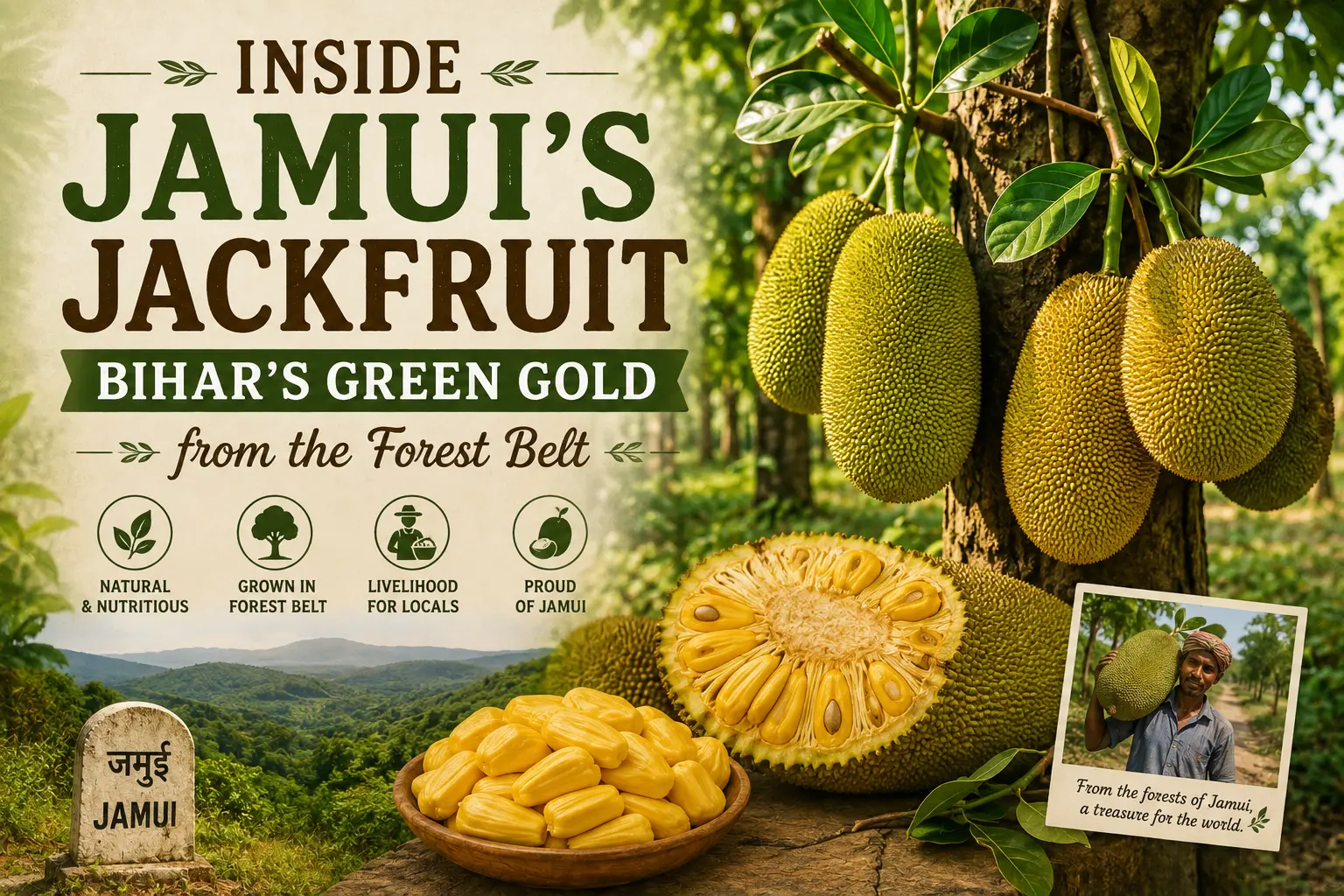
Inside Jamui's Jackfruit: Bihar's Green Gold from the Forest Belt
Jamui’s jackfruit is one of Bihar’s abundant yet underrated agricultural treasures. What has long grown wild and semi-wild across the districts forested terrain is today being recognised as a genuine economic opportunity. With rising interest in forest produce and plant-based foods this humble fruit is stepping out of village kitchens and into a larger conversation about rural livelihoods and food processing.
The Heritage of Jamui Jackfruit
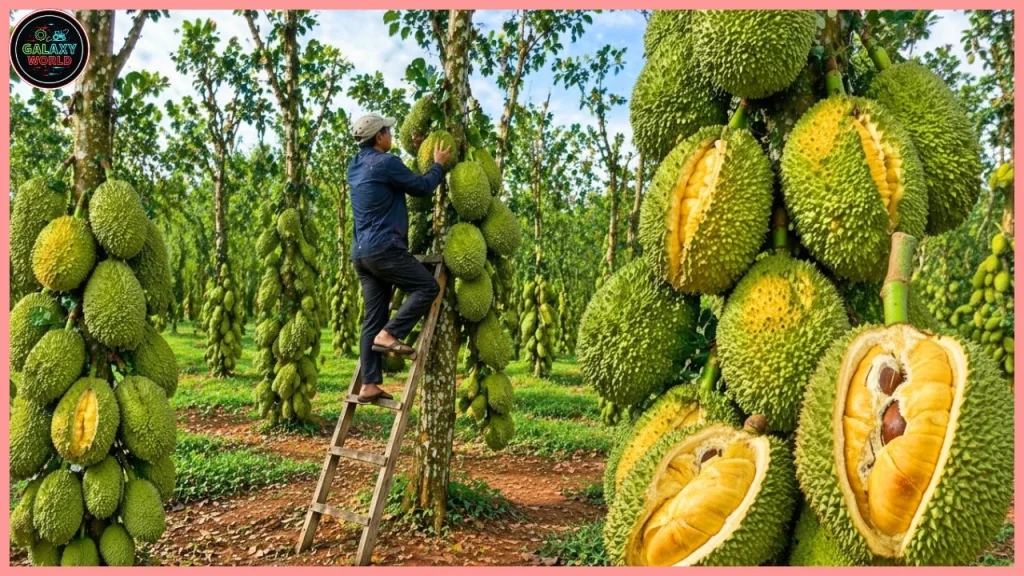
Jamui a district carved out of forested and hilly terrain in Bihar has long been home to jackfruit trees growing across its rural and semi-forested land. Recognised officially as the districts One District One Product under the “Minor Forest Produce” category, jackfruit—locally called Kathal—has been a part of local diets and village economies for generations. Its abundance in the region has made it less a cultivated cash crop and more an occurring resource making it a living part of Jamui’s rural identity rather than just another fruit.
The Varieties and Uses of Jamui Jackfruit
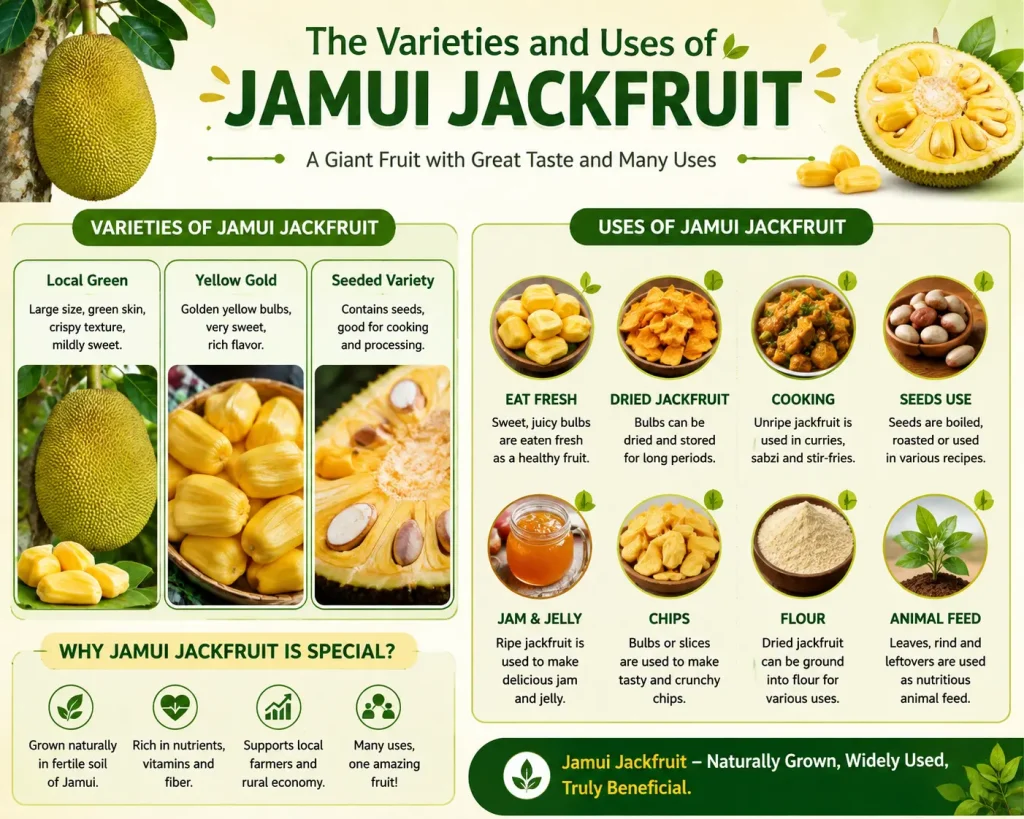
Jamui’s jackfruit is consumed across different stages of ripeness—raw, semi-ripe and fully ripe—each suited to a different culinary use. Raw and semi-ripe jackfruit is prized as a vegetable cooked into curries and pickles that’re staples of Bihari cuisine while the fully ripe fruit is eaten fresh as a sweet fibrous snack or fruit salad ingredient. This dual identity as both vegetable and fruit gives it culinary relevance than most single-use produce and local sellers now market it specifically by type to match customer needs.
How Jamui's Jackfruit Reaches the Market
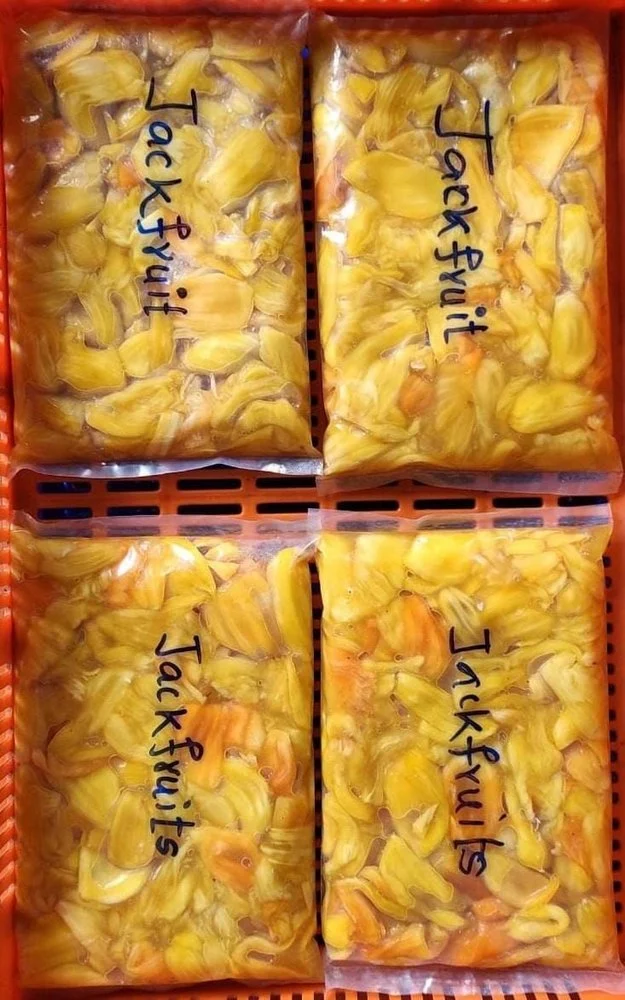
The process begins with harvesting jackfruit from trees across Jamui belt timed to the fruits stage of ripeness depending on intended use. Once harvested the fruit is sorted into semi-ripe and fully ripe categories before being packed for sale typically in one to five kilogram batches. Because jackfruit has a short shelf life of four to five days after harvest it is moved quickly from farm to local markets and increasingly to online ODOP platforms that connect Jamui produce directly with buyers.
Recognition Under ODOP and Government Support
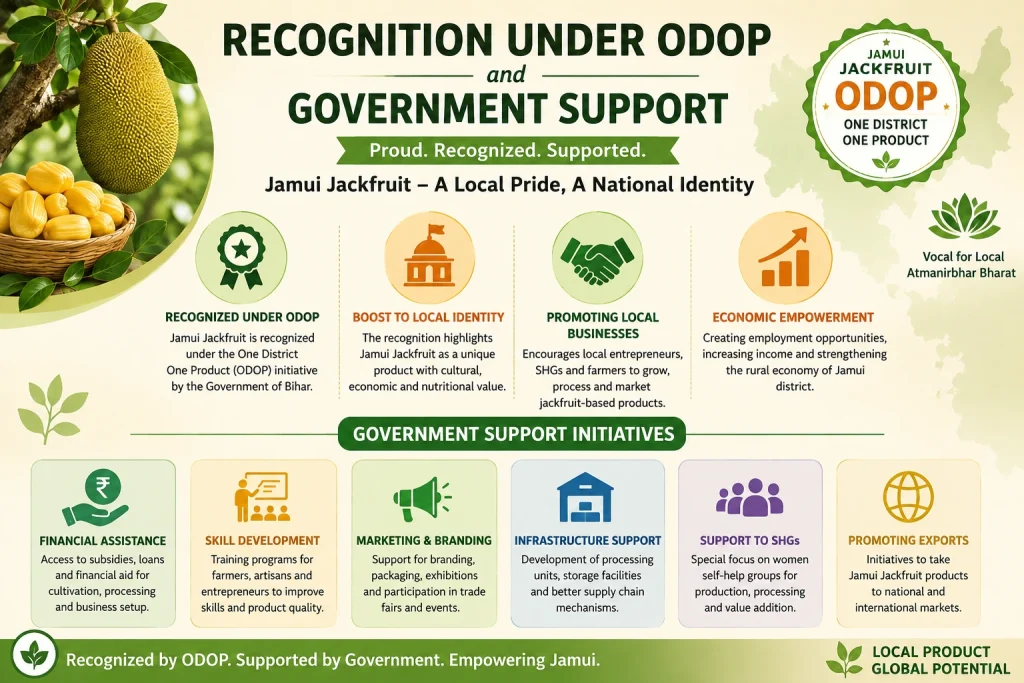
Jamui’s jackfruit has been formally listed under Bihar’s One District One Product scheme, categorised as an agricultural product tied to the districts minor forest produce. This recognition places it alongside Bihar ODOP items being promoted through government platforms aimed at connecting rural producers to wider markets. The classification has helped bring visibility to a fruit that despite its abundance had previously stayed within local and regional trade.
Business Potential for Farmers and Entrepreneurs

Jamui’s jackfruit offers opportunity for local farmers and small entrepreneurs thanks to the districts natural abundance of jackfruit trees and growing demand for both raw and ripe fruit. Businesses can start with sales of fresh jackfruit and expand into value-added products like pickles, chips and packaged curry-cut jackfruit for urban and export markets. As interest in forest produce and plant-based eating grows nationally early movers in Jamui’s jackfruit trade stand to benefit from ODOP-backed platforms and rising consumer demand.
Conclusion
Jamui’s jackfruit reflects the abundance of Bihar’s forest belt—a fruit long valued locally and now gaining formal recognition as a district product. As ODOP support connects farmers to markets and demand for natural plant-based foods rises Jamui jackfruit is positioned to grow from a village staple into a name recognised well beyond its home district.
Leave a Reply