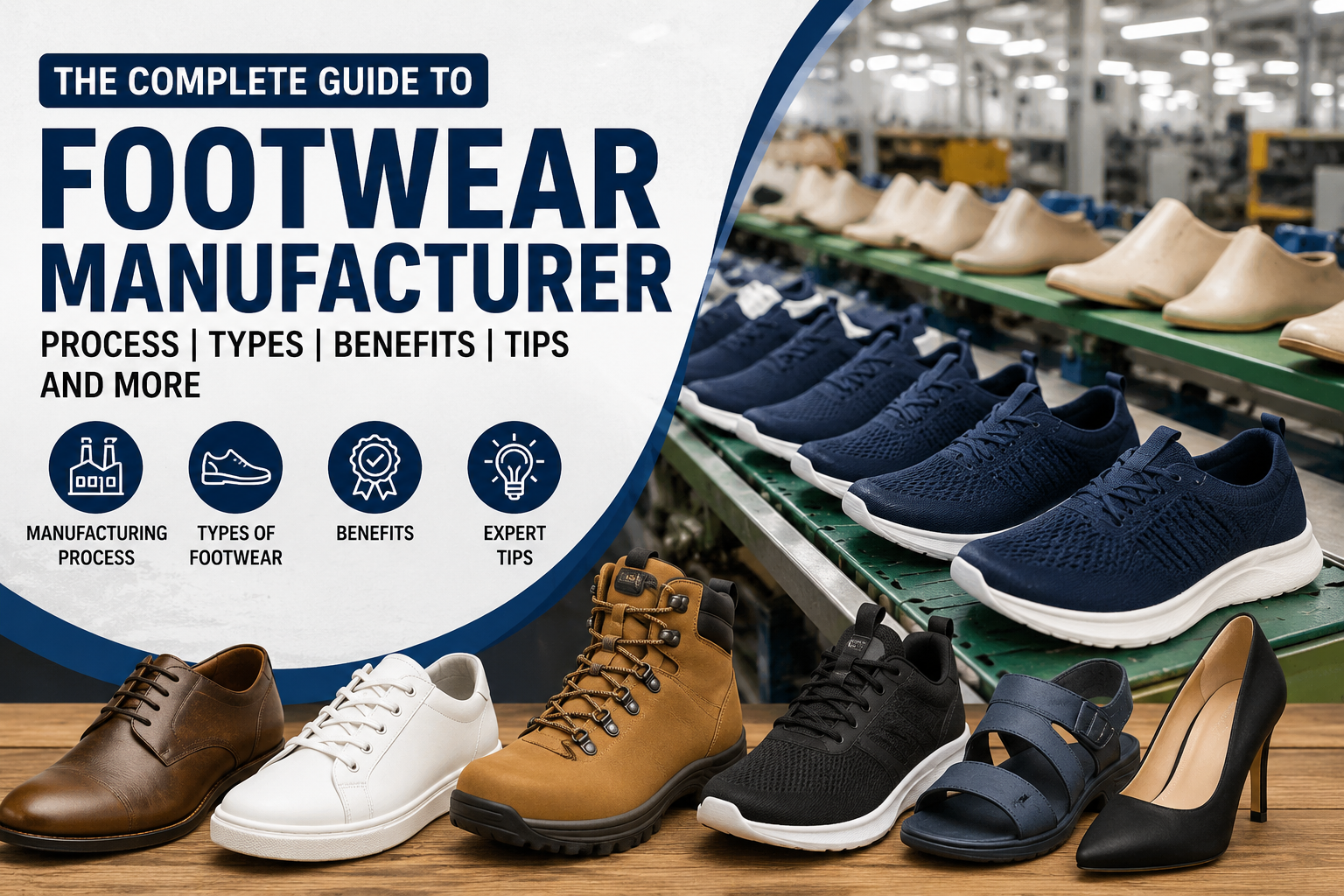
Footwear Manufacturer: Complete Guide to Quality Footwear Manufacturing
The global footwear industry continues to evolve as consumers demand comfortable, stylish, and durable shoes for everyday use, sports, work, and fashion. Choosing the right Footwear manufacturer is one of the most important decisions for brands, retailers, wholesalers, and startups looking to deliver high-quality products to their customers. A reliable manufacturer not only ensures superior craftsmanship but also supports consistent production, timely delivery, and product innovation.
This comprehensive guide explains what footwear manufacturing is, how it works, the different types of footwear, key benefits, and how to choose the right manufacturing partner for your business.
What Is Footwear?
Why Footwear ?
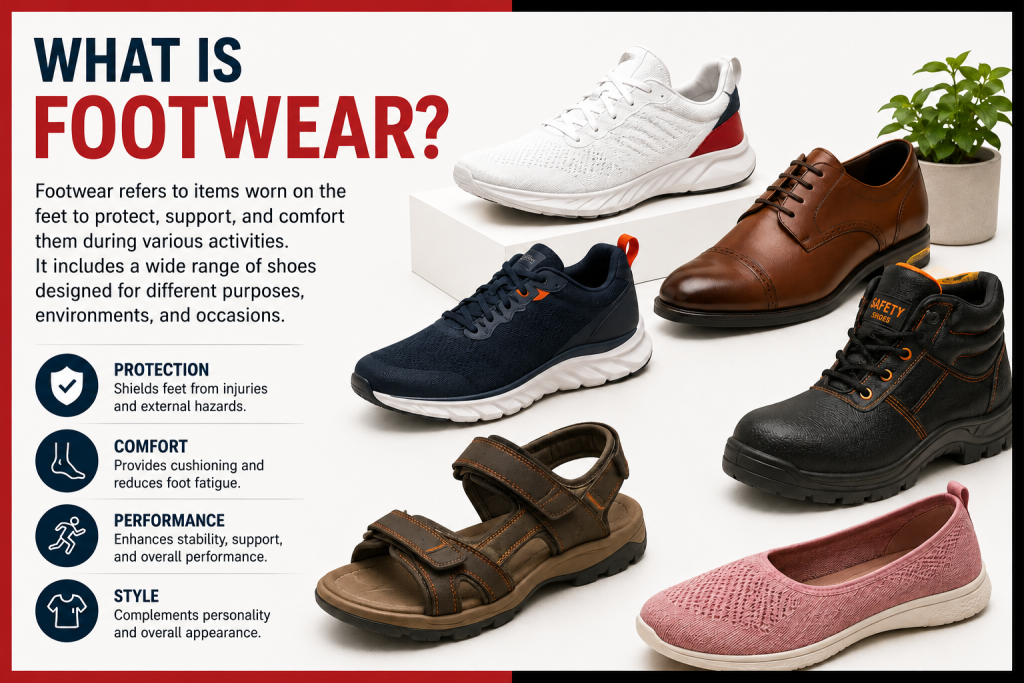
Footwear refers to products designed to protect and support the feet while providing comfort, safety, and style. A Footwear manufacturer produces different types of shoes, sandals, slippers, boots, sports shoes, and specialized footwear for consumers and businesses using various materials and production techniques.
Detailed Explanation
Footwear manufacturing involves designing, developing, producing, and finishing shoes for different industries and consumer segments. Manufacturers combine materials such as leather, synthetic fabrics, rubber, EVA, PU, PVC, mesh, and foam to create footwear that meets specific functional and fashion requirements.
Modern footwear manufacturers often provide complete production solutions, including:
- Product design
- Material sourcing
- Prototype development
- Sample production
- Bulk manufacturing
- Branding
- Packaging
- Quality inspection
- Logistics support
These services help brands launch products efficiently while maintaining consistent quality.
Key Components of Footwear Manufacturing
- Product Design
- Material Selection
- Pattern Making
- Sole Manufacturing
- Upper Stitching
- Assembly
- Quality Control
- Packaging
- Distribution
Why Is Footwear Important?
Answer
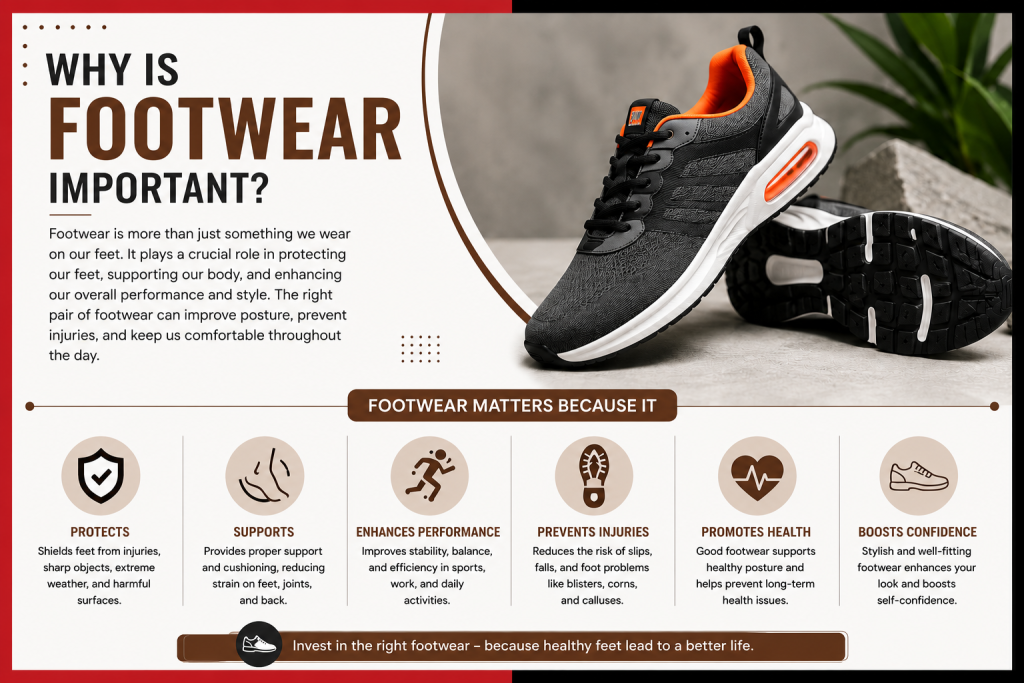
Footwear protects the feet, improves comfort, supports mobility, and enhances safety across different environments. High-quality footwear also reflects personal style while reducing the risk of injuries and long-term foot problems.
Detailed Explanation
Footwear has become an essential product across residential, commercial, industrial, and healthcare sectors. Beyond everyday use, specialized footwear is required for sports, construction, manufacturing, healthcare, hospitality, and outdoor activities.
For businesses, working with a trusted Footwear manufacturer ensures consistent product quality, efficient production, and customer satisfaction.
Top 10 Footwear Manufacturers in India
India is one of the world’s leading footwear manufacturing hubs. The following companies are recognized for producing high-quality footwear for domestic and international markets.
| Rank | Manufacturer | Headquarters | Major Products | Industries Served |
| 1 | Bata India Ltd. | Gurugram, Haryana | Formal Shoes, Casual Shoes, Sandals | Retail, Fashion |
| 2 | Relaxo Footwears Ltd. | New Delhi | Slippers, Sandals, Sports Shoes | Retail, Wholesale |
| 3 | Liberty Shoes Ltd. | Karnal, Haryana | Formal, Casual & Safety Shoes | Fashion, Corporate |
| 4 | Paragon Footwear | Kozhikode, Kerala | Sandals, Slippers, Casual Footwear | Retail |
| 5 | VKC Footwear | Kozhikode, Kerala | PU Sandals, EVA Footwear | Retail |
| 6 | Action Shoes | New Delhi | Sports Shoes, School Shoes | Sports, Education |
| 7 | Campus Activewear Ltd. | New Delhi | Sports & Lifestyle Shoes | Sports, Fashion |
| 8 | Khadim India Ltd. | Kolkata, West Bengal | Footwear for Men, Women & Kids | Retail |
| 9 | Red Chief | Kanpur, Uttar Pradesh | Leather Shoes & Boots | Fashion |
| 10 | Lakhani Footwear | Faridabad, Haryana | Sports Shoes, School Shoes | Retail, Institutional |
How Does a Footwear Manufacturer Work?
Footwear Manufacturer do :-
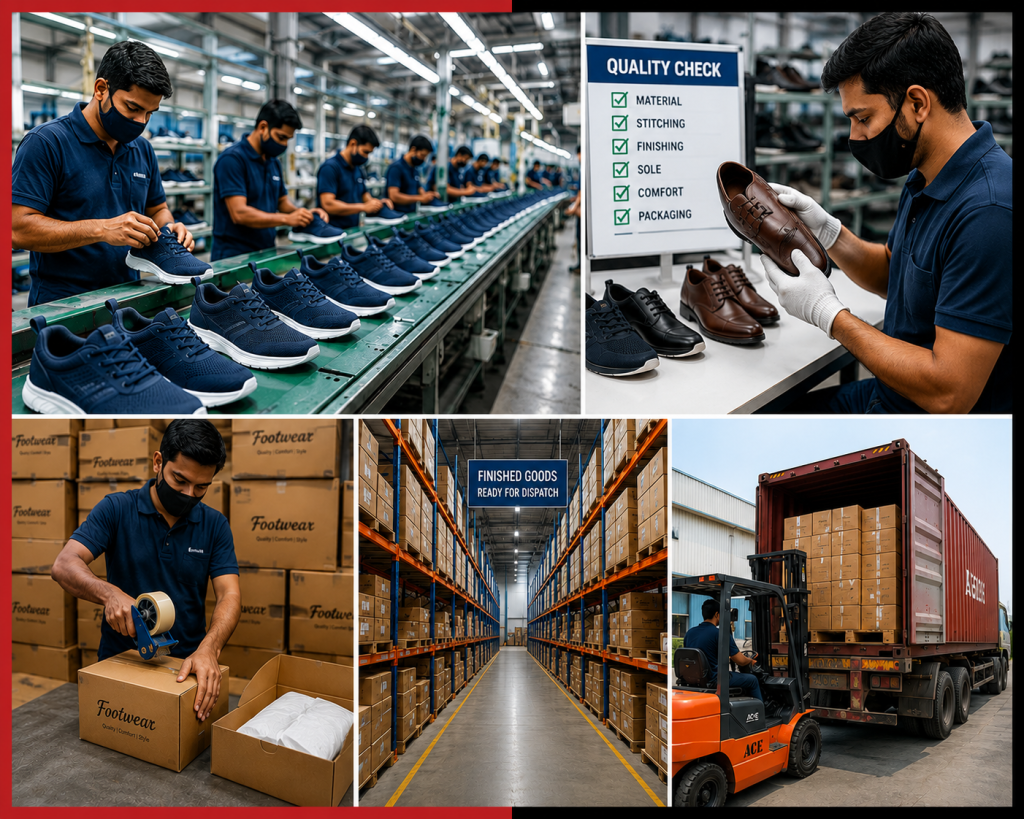
A footwear manufacturer follows a structured production process that begins with product design and material selection, followed by sampling, manufacturing, quality inspection, and final packaging before the products are delivered to distributors or retailers.
Step 1: Product Design and Material Selection
The process starts with creating footwear designs based on market trends and customer requirements.
Manufacturers select suitable materials such as:
- Leather
- Mesh Fabric
- EVA
- PU
- PVC
- Rubber
- Foam
- Textile
Material selection directly affects durability, comfort, appearance, and cost.
Step 2: Manufacturing and Assembly
Production includes:
- Pattern Cutting
- Upper Stitching
- Sole Moulding
- Lasting
- Sole Attachment
- Finishing
- Branding
Modern factories use automated machinery alongside skilled workers to improve production efficiency.
Step 3: Quality Inspection and Packaging Footwear
Each finished pair undergoes quality checks for:
- Size Accuracy
- Stitching Quality
- Adhesion Strength
- Sole Flexibility
- Appearance
- Comfort
Approved products are packaged and prepared for shipment.
Types of Footwear
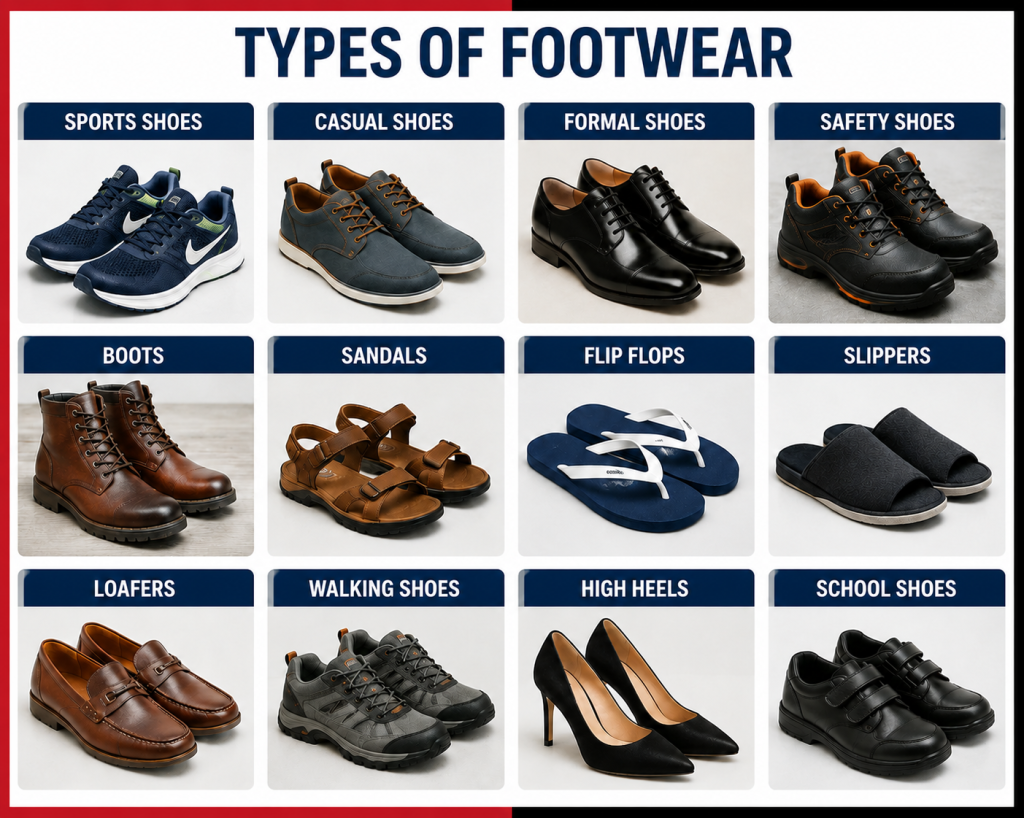
1. Sports Shoes Footwear
Designed for running, walking, training, and athletic activities.
Common Features
- Lightweight
- Breathable
- Shock Absorption
- Flexible Sole
2. Casual Footwear
Suitable for everyday use.
Includes:
- Sneakers
- Loafers
- Slip-ons
- Canvas Shoes
3. Formal Shoes
Designed for business professionals and office environments.
Popular options include:
- Oxford Shoes
- Derby Shoes
- Monk Strap Shoes
4. Safety Shoes
Manufactured for industrial workplaces.
Features include:
- Steel Toe
- Slip Resistance
- Oil Resistance
- Electrical Protection
5. Sandals and Slippers
Ideal for daily comfort and warm climates.
Materials include:
- EVA
- PU
- Rubber
- PVC
6. Boots
Used for outdoor activities, industrial work, and fashion.
Common types include:
- Leather Boots
- Hiking Boots
- Safety Boots
- Military Boots
Benefits of Choosing a Reliable Footwear Manufacturer
Answer
A reliable footwear manufacturer provides consistent quality, scalable production, efficient supply chains, product customization, and dependable delivery schedules. These advantages help businesses strengthen their brand reputation and improve customer satisfaction.
High Product Quality
Experienced manufacturers follow standardized production methods.
Why it matters
Customers receive durable and comfortable footwear.
Expected outcome
Higher customer satisfaction and repeat purchases.
Product Customization
Manufacturers can produce private-label footwear according to your specifications.
Why it matters
Supports brand identity.
Expected outcome
Unique products in competitive markets.
Cost Efficiency
Bulk manufacturing lowers production costs.
Why it matters
Improves profitability.
Expected outcome
Competitive retail pricing.
Faster Production
Modern manufacturing equipment increases productivity.
Why it matters
Reduces delivery delays.
Expected outcome
Better inventory management.
Consistent Quality
Quality inspections maintain production standards.
Why it matters
Builds customer trust.
Expected outcome
Lower product returns.
Scalability
Manufacturers can increase production as demand grows.
Why it matters
Supports business expansion.
Expected outcome
Long-term growth opportunities.
Professional Packaging
Many manufacturers provide customized packaging solutions.
Why it matters
Improves product presentation.
Expected outcome
Stronger brand image.
Global Supply Support
Many Indian manufacturers export footwear worldwide.
Why it matters
Creates international business opportunities.
Expected outcome
Expanded market reach.
Challenges and Common Mistakes When Choosing a Footwear Manufacturer
Footwear used For .
Selecting the wrong Footwear manufacturer can lead to poor product quality, delayed deliveries, higher production costs, and dissatisfied customers. Footwear Manufacturer: Complete Guide to Quality Footwear Manufacturing. Evaluating a manufacturer’s experience, production capacity, quality standards, and communication process helps reduce these risks and ensures consistent results.
1. Choosing Based Only on Price
Problem: Low-cost manufacturers may compromise on quality.
Cause: Buyers focus only on the lowest quotation.
Solution: Compare product quality, materials, certifications, production capacity, and after-sales support instead of price alone.
2. Ignoring Material Quality
Problem: Shoes wear out quickly or become uncomfortable.
Cause: Inferior leather, fabric, EVA, PU, or rubber materials.
Solution: Request material specifications and approve samples before bulk production.
3. Skipping Sample Approval
Problem: Final products differ from expectations.
Cause: Bulk production begins without reviewing a prototype.
Solution: Always approve a pre-production sample for design, size, comfort, and finish.
4. Poor Quality Control
Problem: Defective footwear reaches customers.
Cause: Limited inspection during manufacturing.
Solution: Choose manufacturers with strict quality checks at every production stage.
5. Unclear Production Timelines
Problem: Delayed deliveries affect sales and inventory.
Cause: Lack of documented production schedules.
Solution: Agree on clear milestones and delivery dates before production starts.
Best Practices and Expert Tips
Answer
Partnering with a trusted footwear manufacturer requires careful planning, supplier evaluation, and quality verification. Following industry best practices helps businesses maintain product consistency, reduce risks, and build long-term customer trust.
- Define Your Product Requirements Clearly
Specify footwear type, materials, sizes, colors, branding, and packaging before requesting quotations. - Verify Manufacturing Experience
Choose manufacturers with expertise in producing the type of footwear you need. - Request Product Samples
Evaluate comfort, durability, stitching, and overall finish before placing a bulk order. - Check Production Capacity
Ensure the factory can handle both current and future order volumes. - Review Quality Standards
Ask about inspection procedures and quality assurance systems used during production. - Understand Minimum Order Quantity (MOQ)
Confirm MOQ to ensure it matches your business needs and budget. - Discuss Branding Options
Verify private labeling, logo printing, packaging, and custom design capabilities. - Maintain Regular Communication
Schedule updates throughout production to avoid misunderstandings. - Sign a Detailed Manufacturing Agreement
Include pricing, timelines, quality expectations, payment terms, and delivery conditions. - Build Long-Term Partnerships
Reliable manufacturers often provide better pricing, faster support, and improved production efficiency over time.
Comparison Table: Local vs Overseas Footwear Manufacturers
| Feature | Local Footwear Manufacturer | Overseas Footwear Manufacturer |
| Communication | Easy and quick | Time zone differences |
| Production Monitoring | Simple | More difficult |
| Delivery Time | Faster | Longer |
| Shipping Cost | Lower | Higher |
| Factory Visits | Convenient | Limited |
| Minimum Order Quantity | Often flexible | Usually higher |
| Product Customization | High | Varies by supplier |
| Lead Time | Short | Longer |
Frequently Asked Questions (FAQ)
Answer
A Footwear manufacturer designs, develops, and produces shoes, sandals, slippers, boots, and other footwear products for brands, retailers, wholesalers, and private-label businesses. Many manufacturers also offer material sourcing, packaging, and quality inspection services.
Detailed Explanation
Modern manufacturers provide complete production solutions, allowing businesses to launch and scale footwear collections efficiently.
Answer
Common materials include leather, synthetic leather, mesh fabric, EVA, PU, PVC, rubber, foam, and textile fabrics. The material selected depends on the intended use, durability, comfort, and budget.
Detailed Explanation
For example, sports shoes often use breathable mesh and EVA soles, while formal shoes typically use leather.
Answer
MOQ varies depending on the manufacturer, footwear type, materials, and customization requirements. Some manufacturers support startups with smaller production runs, while others focus on high-volume manufacturing.
Detailed Explanation
Always discuss MOQ before finalizing your production agreement.
Answer
Yes. Many footwear manufacturers offer private-label production, including custom branding, logo printing, packaging, labels, and exclusive product designs for businesses.
Detailed Explanation
Private labeling allows brands to build a unique market identity without owning manufacturing facilities.
Answer
Production timelines depend on product complexity, material availability, order quantity, and customization. Small orders generally require less time than large-scale production runs.
Detailed Explanation
Planning production schedules in advance helps avoid delays during seasonal demand.
Answer
Compare manufacturers based on product quality, experience, certifications, production capacity, communication, pricing, and customer reviews before making a final decision.
Detailed Explanation
Request samples and verify manufacturing capabilities before committing to bulk orders.
Answer
Quality control ensures footwear meets design specifications, durability standards, comfort expectations, and safety requirements. Effective inspections reduce product defects and improve customer satisfaction.
Detailed Explanation
Reliable manufacturers inspect materials, stitching, sizing, and finished products before shipment.
Answer
Yes. India is one of the world’s leading footwear manufacturing hubs due to its skilled workforce, competitive production costs, diverse material suppliers, and strong export capabilities.
Detailed Explanation
Indian manufacturers produce footwear for both domestic and international markets across multiple product categories.
Key Takeaways
- A reliable Footwear manufacturer ensures consistent quality and timely production.
- Footwear Manufacturer: Complete Guide to Quality Footwear Manufacturing
- Product quality depends on material selection, manufacturing expertise, and quality control.
- Sample approval is essential before bulk production.
- Private-label manufacturing supports brand growth.
- Clear communication reduces production risks.
- Quality inspections improve customer satisfaction.
- Long-term supplier relationships often lead to better pricing and service.
- Footwear Manufacturer: Complete Guide to Quality Footwear Manufacturing
- Choosing the right manufacturing partner contributes to sustainable business growth.
Final Verdict
Selecting the right Footwear manufacturer is a strategic investment that influences product quality, customer satisfaction, and long-term business success. While pricing is important, factors such as manufacturing expertise, material quality, production capacity, quality assurance, and reliable communication should guide your decision. Businesses that partner with experienced manufacturers are better positioned to deliver durable, comfortable, and market-ready footwear.
Conclusion
The footwear industry continues to grow as consumer demand for quality, comfort, and innovative designs increases. Choosing an experienced Footwear manufacturer allows businesses to Footwear Manufacturer: Complete Guide to Quality Footwear Manufacturing maintain high production standards, streamline operations, and strengthen their brand reputation. Before selecting a manufacturing partner, evaluate product quality, production capabilities, certifications, and communication processes. A well-informed decision today can support long-term business growth and customer loyalty.
| Manufacturer | Contact |
| Unistar Footwears Pvt. Ltd. | Visit Website |
| Vintex Footwear | Location |
| Keshav India Footwear Pvt. Ltd. | Location |
| Hetro Shoes Pvt. Ltd. | Visit Website |
| Kiero Footwear | Visit Website |
| Diamond Footcare Udyog Pvt. Ltd. | Location |
| Lancer Footwear India Pvt. Ltd. | Visit Website |
| MOOZZA Footwear LLP | Location |
| RNS Footwear Pvt. Ltd. | Location |
| Macpro Footwear | Location |
Leave a Reply