
Fresh guava attracts buyers with its pleasant aroma, crisp or soft texture and sweet-tangy flavour. In particular, Datia Guava refers to fruit that farmers cultivate, traders collect and suppliers distribute through Datia district in Madhya Pradesh. Depending on the buyer’s needs, sellers may offer it for household consumption, fruit retail, wholesale distribution or food-processing requirements.
However, every guava lot does not offer the same quality. Variety, maturity, harvesting method, handling, grading and transportation can all influence the fruit’s taste, appearance and storage life. Therefore, buyers should inspect the actual fruit instead of relying only on attractive product descriptions.
In addition, buyers should check the source, firmness, colour, aroma, size and internal condition before purchasing. As a result, they can avoid damaged, overripe or poorly handled fruit. Overall, this guide explains the main characteristics, uses, quality checks, buying methods and storage requirements of fresh guava from Datia.
What Is Datia Guava?
Direct answer: Datia Guava refers to fresh guava that farmers grow, traders market and suppliers distribute through Datia district in Madhya Pradesh. Depending on the variety, the fruit may have green or yellowish skin with white or pink flesh. Moreover, households, retailers, wholesalers and food processors use it for fresh consumption, retail sales, bulk distribution and value-added products.
Botanists identify guava as Psidium guajava. In India, farmers cultivate it as an important commercial fruit crop. Furthermore, the National Horticulture Board describes guava as one of the country’s major fruit crops after mango, banana and citrus. As a result, guava plays an important role in fresh-fruit markets as well as food-processing businesses.
Datia Guava may be marketed using terms such as:
- Fresh Datia Guava
- Datia Amrud
- Farm Fresh Guava
- Indian Guava
- Wholesale Guava from Datia
- Natural Guava
- Guava for Juice Processing
- Premium Fresh Guava
These descriptions should not replace proper quality information. Buyers should still verify the actual farm source, variety, harvest date and fruit grade.
Important Clarification About Datia Guava
Datia Guava should not currently be promoted as Datia’s official One District One Product item. Madhya Pradesh’s official ODOP product list identifies Jaggery as the selected product for Datia.
This does not mean guava cannot be cultivated or sold in Datia. Farmers, traders and fruit businesses in the district may still grow, collect or supply guava.
It only means sellers and publishers should avoid unsupported claims such as:
- Official Datia ODOP Guava
- GI-tagged Datia Guava
- Government-certified Datia Guava
- Official speciality fruit of Datia
Unless documentary evidence becomes available, Datia Guava should be described as a regional agricultural or commercial fruit product.
Why Is Guava Important for Datia’s Agricultural Market?
Direct answer: Guava can support Datia’s agricultural market by creating opportunities for orchard owners, agricultural workers, fruit traders, graders, packers, retailers and processing businesses. It can be sold as fresh fruit or converted into products such as juice, pulp, jam, jelly and beverages.
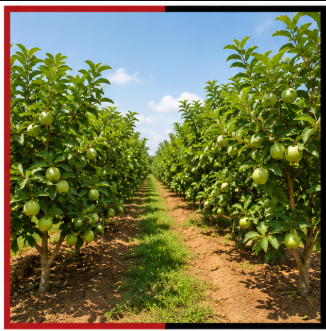
Guava is suitable for both direct consumption and value-added processing. Its commercial chain can involve:
- Farmers and nursery operators
- Agricultural labourers
- Harvesting teams
- Fruit traders
- Grading and packaging workers
- Transport providers
- Wholesale fruit markets
- Retailers
- Restaurants and caterers
- Food-processing units
APEDA includes guava among the major fresh fruits grown and traded in India.
Agricultural Value
Guava is a perennial fruit crop. After orchard establishment, healthy trees may continue producing fruit over multiple seasons when properly managed.
Retail Value
Fresh, attractive and evenly graded guava can be sold through fruit markets, street vendors, supermarkets and online grocery businesses.
Processing Value
Fruit that is safe and mature but does not meet premium retail appearance requirements may be suitable for regulated processing.
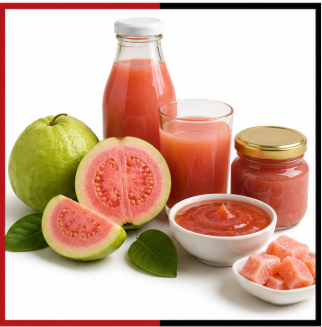
Potential guava products include:
- Guava juice
- Guava pulp
- Jam and jelly
- Fruit nectar
- Squash
- Candy
- Fruit bars
- Puree
- Flavoured beverages
- Bakery fillings
Key Features of Fresh Datia Guava
Fresh guava should be evaluated according to its actual quality rather than attractive marketing claims.
Natural Colour
The skin colour may range from deep green to light green or yellowish-green, depending on variety and maturity.
A yellowish shade may indicate ripening, but colour alone cannot confirm sweetness or internal quality.
Pleasant Aroma
Ripe guava generally develops a noticeable fruity aroma. Very hard, immature fruit may have little fragrance.
A fermented or unpleasant smell may indicate over-ripening or spoilage.
Firm Texture
Guava intended for transportation should be reasonably firm. Fruit for immediate consumption may be slightly softer.
Excessively soft areas can indicate bruising, internal damage or over-ripening.
Suitable Weight
A fresh guava often feels reasonably heavy for its size. A lightweight fruit may have lost moisture or developed dry internal flesh.
Clean Surface
The fruit should be reasonably clean and free from:
- Deep cuts
- Mould
- Leakage
- Severe bruising
- Major insect damage
- Rotten areas
- Excessive shrivelling
Minor natural marks may appear on farm-grown fruit and do not always make it unsuitable.
How Is Datia Guava Grown and Marketed?
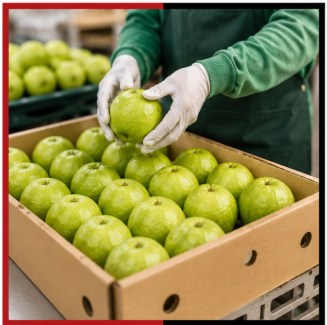
Direct answer: Guava production includes orchard preparation, planting, irrigation, nutrient management, pruning, plant protection, maturity assessment and careful harvesting. After harvesting, the fruit is sorted, graded, packed and transported to retailers, wholesalers or processing units.
Step 1: Land and Orchard Preparation
The field is cleared, levelled and prepared before planting. Proper drainage is important because waterlogging can affect tree health.
The National Horticulture Board notes that guava land is generally prepared by ploughing, levelling and removing weeds.
Step 2: Planting
Healthy planting material is selected according to the preferred variety and cultivation system.
The National Horticulture Board identifies the rainy months of June and July as a suitable planting period for guava layers and seedlings under general Indian conditions.
Step 3: Orchard Management
Farmers manage:
- Irrigation
- Plant nutrition
- Weed control
- Pruning
- Pest monitoring
- Disease management
- Fruit development
- Orchard sanitation
Management practices may vary according to soil, climate, variety and farming system.
Step 4: Maturity Assessment
Guava should be harvested at a stage suited to its final destination.
Fruit for local markets may be allowed to mature further. Fruit travelling a long distance is usually harvested firmer so it can tolerate transportation.
Step 5: Harvesting
Guava should be removed carefully from the tree. Pulling, dropping or throwing the fruit can create bruises and reduce shelf life.
Step 6: Sorting and Grading
The harvested fruit is sorted according to:
- Size
- Shape
- Colour
- Firmness
- Maturity
- Surface condition
- Intended use
Damaged or spoiled fruit should be separated from healthy stock.
Step 7: Packaging and Transportation
The fruit is placed in suitable crates, cartons or ventilated packaging. Materials that prevent rubbing and pressure damage may be used for premium fruit.
The packages are then transported to markets, retailers, processors or institutional buyers.
Benefits of Choosing Fresh Datia Guava
Suitable for Direct Consumption
Fresh guava can be washed, sliced and eaten as a snack or added to fruit-based preparations.
Useful for Several Products
The fruit can be used in juice, pulp, jam, jelly, puree and beverage production.
Retail and Wholesale Potential
Different fruit grades may serve local vendors, supermarkets, wholesalers, processors and catering businesses.
Opportunity for Local Farmers
Organised guava cultivation can create an additional horticultural income option for farmers.
Scope for Value Addition
Processing can create a commercial use for safe fruit that may not have perfect size or external appearance.
Flexible Harvest Markets
Firm guava may be sent to distant markets, while riper fruit can be supplied locally or used for immediate processing.
Common Uses of Datia Guava
Datia Guava can be used in household, retail and commercial applications.
- Fresh fruit consumption
- Fruit salads
- Smoothies
- Guava juice
- Jam and jelly
- Fruit pulp
- Squash and nectar
- Chutneys
- Desserts
- Bakery fillings
- Fruit candy
- Institutional catering
- Retail fruit displays
- Food-processing operations
The correct fruit grade depends on its intended use.
Retail-display guava may require better shape, colour and surface appearance. Processing units may focus more on pulp, maturity, flavour and food safety.
Challenges and Common Buying Mistakes
Selecting Only by Size
Problem: Buyers assume the largest fruit always offers the best quality.
Cause: Internal flavour, maturity and texture are ignored.
Solution: Check a cut sample instead of depending only on size.
Ignoring Maturity
Problem: Fruit may be too hard or become overripe before sale.
Cause: The maturity stage does not match the delivery distance.
Solution: Confirm whether the fruit is required for immediate eating, retail storage or transportation.
Buying Only by Price
Problem: A low-priced lot creates high wastage.
Cause: Bruised, overripe or mixed-quality fruit may be included.
Solution: Compare usable fruit quantity and expected shelf life, not only price per kilogram.
Not Inspecting the Inside
Problem: Attractive fruit may contain dry, damaged or discoloured flesh.
Cause: The buyer checks only the peel.
Solution: Cut multiple samples from different packages.
Using Weak Packaging
Problem: Guava becomes bruised during delivery.
Cause: Fruit moves or gets compressed inside overloaded boxes.
Solution: Use suitable crates or cartons with careful stacking.
Ordering in Bulk Without Sampling
Problem: The delivered fruit does not match the required variety or grade.
Cause: No representative sample was approved.
Solution: Purchase a trial lot or inspect the consignment before dispatch.
How to Buy Datia Guava Safely
Direct answer: Buy Datia Guava by checking the source, harvest date, variety, maturity, firmness, surface condition and packaging. Bulk buyers should inspect fruit from different parts of the consignment and confirm grade, permissible defects, quantity, delivery schedule and rejection terms in writing.
Follow these buying steps:
- Decide whether the guava is required for eating, retail or processing.
- Ask about the variety and cultivation source.
- Confirm the harvest and dispatch dates.
- Check the fruit’s firmness and aroma.
- Inspect for mould, bruises and deep cuts.
- Cut samples from different boxes.
- Check the flesh colour and texture.
- Confirm fruit size and maturity requirements.
- Review the packaging and transport method.
- Approve a trial quantity before bulk purchasing.
Datia Guava vs Unverified Generic Guava
| Factor | Verified Datia Guava | Unverified Generic Guava |
| Regional source | Datia source can be identified | Origin may be unclear |
| Harvest details | Can be requested | May not be available |
| Fruit grading | Defined through buyer agreement | May contain mixed grades |
| Traceability | Farm or supplier details may be available | Often limited |
| Processing suitability | Can be selected by maturity | May vary |
| Bulk purchasing | Specifications can be documented | Depends on seller |
| Best suited for | Buyers seeking regional procurement | General price-based buying |
A district name should only be used when the product has genuinely been sourced, traded or packed through the claimed region.
Fresh Guava vs Processed Guava Products
| Feature | Fresh Guava | Processed Guava Products |
| Form | Whole fruit | Juice, pulp, jam or jelly |
| Storage period | Relatively limited | Usually longer after safe processing |
| Quality focus | Freshness, firmness and maturity | Ingredients and processing controls |
| Main buyers | Households and fruit retailers | Food businesses and institutions |
| Handling | Requires careful transportation | Requires hygienic manufacturing |
| Wastage risk | Higher if not sold quickly | Depends on packaging and storage |
Both categories can support the guava value chain. Fresh fruit serves direct buyers, while processing creates additional markets.
Best Guava Manufacturer and Supplier in Datia
Datia may have guava growers, orchard owners, fruit traders, packers, processors and wholesale suppliers, but no official authority ranks one business as the best guava manufacturer or supplier. Buyers should compare fruit freshness, farm traceability, grading, packaging, processing hygiene, supply capacity, prices and delivery performance before choosing a supplier for retail, wholesale or processing requirements.
Best Practices for Guava Buyers
- Purchase fruit according to its intended use.
- Confirm the maturity stage before dispatch.
- Inspect more than one fruit from the lot.
- Avoid guava with mould, leakage or a fermented smell.
- Specify the acceptable size and surface defects.
- Use ventilated and protective packaging.
- Request harvest and source information.
- Keep quality and rejection conditions in writing.
- Check fruit at the time of delivery.
- Store and sell older stock before new arrivals.
How to Store and Handle Guava
Direct answer: Store guava according to its maturity. Firm fruit should be kept in a clean, cool and ventilated place, while ripe fruit should be consumed or processed quickly. Avoid excessive stacking, direct sunlight, moisture and rough handling because guava bruises easily.
Storage Tips
- Separate damaged fruit immediately.
- Avoid washing the entire stock before storage.
- Keep storage crates clean.
- Do not throw or drop the fruit.
- Protect guava from direct heat.
- Monitor ripeness every day.
- Use older fruit before newer stock.
- Keep the fruit away from contaminated materials.
- Refrigerate ripe fruit when appropriate.
- Follow safe cold-storage practices for commercial lots.
Frequently Asked Questions
Datia Guava refers to guava cultivated, traded, packed or supplied through Datia district in Madhya Pradesh. It may be sold for fresh consumption, retail distribution, wholesale trade or processing into juice, pulp, jam and jelly.
No. The official Madhya Pradesh ODOP product list currently identifies Jaggery as Datia’s selected product. Guava businesses may still operate in Datia, but the fruit should not be marketed as the district’s official ODOP product without supporting government recognition.
Fresh guava should feel reasonably firm and heavy for its size. It should have a clean surface without mould, leakage or deep bruising. Ripe fruit may also produce a pleasant aroma. Cut a sample to check the flesh.
Neither type is automatically better. White and pink guavas may differ in flavour, flesh colour, texture and processing use. The best choice depends on consumer preference, variety, maturity and intended product.
Yes. Guava can be supplied to retailers, wholesalers, restaurants and processors in bulk. Buyers should confirm the variety, grade, maturity, packaging, transport conditions and delivery schedule before ordering.
Yes. Mature and food-safe guava may be processed into juice, pulp, jam, jelly, nectar, candy and bakery fillings. Processors should select fruit according to pulp quality, flavour, maturity and applicable food-safety requirements.
Key Takeaways
- Datia Guava refers to guava cultivated or supplied through Datia.
- Guava is not currently Datia’s official ODOP product.
- Freshness depends on maturity, harvesting and handling.
- Peel colour alone does not confirm internal quality.
- Buyers should inspect cut samples before bulk purchasing.
- Suitable packaging helps reduce bruising and wastage.
- Guava can be consumed fresh or used in processed products.
- Written grade and delivery terms protect commercial buyers.
- No supplier should be called the best without comparing quality and performance.
Final Verdict
Datia Guava can serve household, retail, wholesale and processing markets when it is harvested and handled carefully. The fruit’s commercial value depends on freshness, maturity, firmness, flavour and usable yield.
However, the Datia name alone cannot guarantee quality. Buyers should inspect the actual fruit, check the source and approve clear product specifications.
Household buyers should purchase a suitable quantity according to ripeness. Commercial buyers should begin with a sample lot and document all quality and delivery requirements.
Conclusion
Datia Guava can offer valuable opportunities for farmers, fruit traders, retailers and processing businesses. Its suitability for direct consumption and value-added food products gives it a flexible market.
Buyers looking for fresh Datia Guava should verify the farm or supplier source, harvest date, maturity, firmness and packaging. Bulk purchasers should also compare samples, delivery performance and rejection terms.
Careful grading, protective packaging and correct storage can reduce wastage while maintaining the fruit’s flavour, texture and market value.
Leave a Reply