
Introduction
Jashpur is one of the agricultural districts of Chhattisgarh, where farming remains a major part of the local economy. The district is known for its agriculture, horticulture, animal husbandry and rich natural resources. Among its agricultural products rice holds a particularly important position, with the district producing several varieties, including scented rice. (Jashpur District)
Recognising this strength Jashpur has been identified as a Rice-Based Products district under the One District One Product (ODOP) initiative. The Ministry of Food Processing Industries lists Jashpur among Chhattisgarh’s districts selected for rice-based products under the PMFME framework. (Ministry of Food Processing Industries)
The ODOP approach provides an opportunity to move beyond selling rice as a raw agricultural commodity. Through processing, packaging, branding and diversification rice can be converted into a range of products, with greater market value.
Rice and the Agricultural Economy of Jashpur
According to the Jashpur district administration agriculture is the mainstay of most of the population. The district economy depends largely on agriculture, horticulture and animal husbandry. Rice is one of the agricultural products together with pulses, maize, Ramtil and wheat. (Jashpur District) The presence of varieties of rice including scented rice offers a good base for value‑added products. By relying only on bulk sales producers can create special products that reflect the variety, quality, processing method and consumer preferences. This makes rice suitable for both eating and modern food processing.
What Are Rice-Based Products?
Rice-based products are foods and ingredients made using rice as the material.
The category can include:
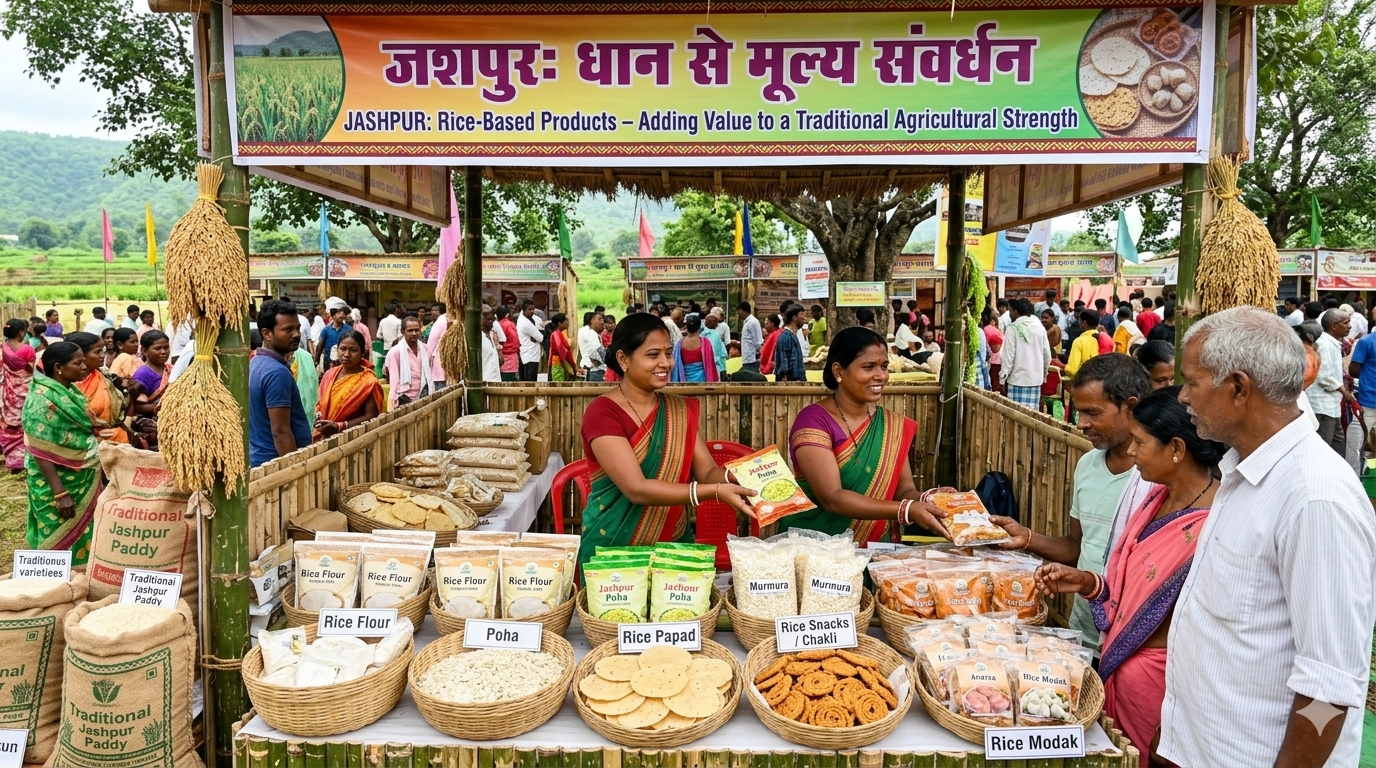
- Rice flour
- Poha or flattened rice
- Puffed rice or murmura
- Rice snacks
- Rice papad
- Rice noodles
- Rice-based sweets
- Rice crackers
- Ready-to-cook rice products
- Traditional rice foods
- Rice mixes
- Packaged specialty rice
This diversification gives opportunities for farmers, millers, small food‑processing units, Self‑Help Groups (SHGs) and local entrepreneurs.
The PMFME programme itself highlights types of Rice and allied products, including pitha puffed Rice and flaked Rice showing the wide range of products that can be developed around Rice.
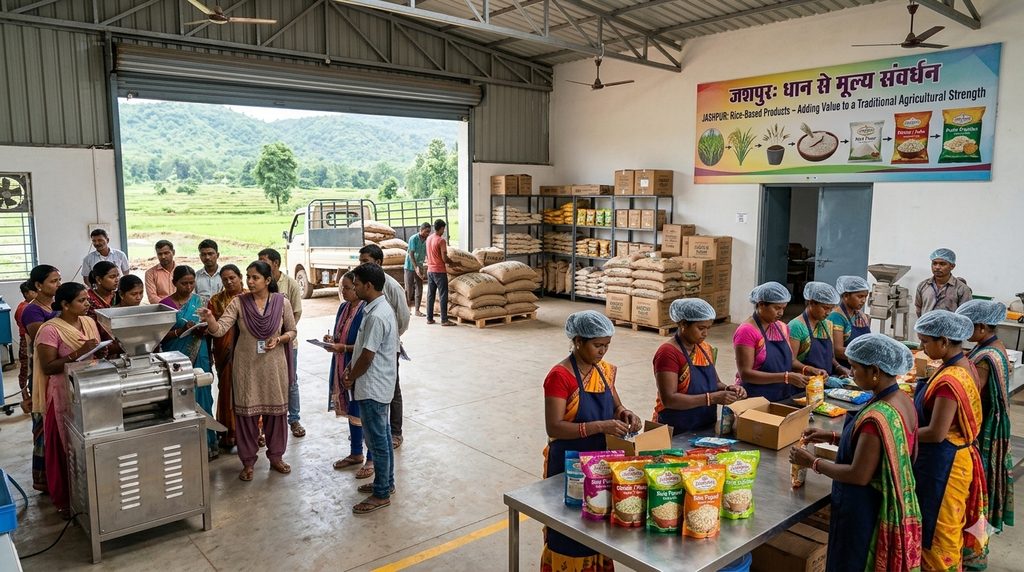
From Paddy to Processed Product
The rice value chain starts in the fields with paddy cultivation.
A simplified value chain is:
Paddy → Cleaning → Dehusking → Milling → Grading → Processing → Packaging → Branding → Marketing
Traditional rice milling mainly focuses on making rice. However modern food processing can use parts of rice and create many products.
For example rice can be milled into flour, flattened into poha or processed into puffed rice. Broken rice can also become an input for processed foods instead of being treated simply as a lower‑value output.
This approach helps increase the value obtained from each unit of agricultural production.
Rice Flour: An Important Opportunity
Rice flour is an opportunity for Jashpur.
It is a product that can really help farmers and businesses.
Rice flour has uses:
- It can be used in snacks.
- It works well in rice cakes.
- It is great for sweets.
- It fits into bakery products
- It is an ingredient in gluten-free food.
- It helps in mixes.
- It is used in batter mixes.
- It serves as a thickening agent.
- It is also part of regional recipes.
Making rice flour locally can give rice farmers a market. It also gives people a ready-to-use product. With the tools like cleaning machines, grinding equipment, sieving units and packaging systems. Small businesses can make rice flour that sells well. This can create jobs. Boost the local economy. Rice flour is not just useful, it is practical and profitable. It connects farmers to consumers in a way. It supports local food production. Rice flour is an idea, with big potential.
Poha and Flaked Rice
Poha or flattened rice is another product made from rice.
It is widely liked because it is easy to prepare and can stay fresh for a time if it is processed and packed well.
Local entrepreneurs have the chance to create types of packaged poha, such as:
- Regular poha
- Thick poha
- Thin poha
- Roasted poha
- Flavoured poha mixes
- Ready-to-cook poha products
When poha is packed well it can go from a simple loose item sold in local markets to a branded product that people buy in stores. Good packaging helps make poha more appealing and convenient, for use.
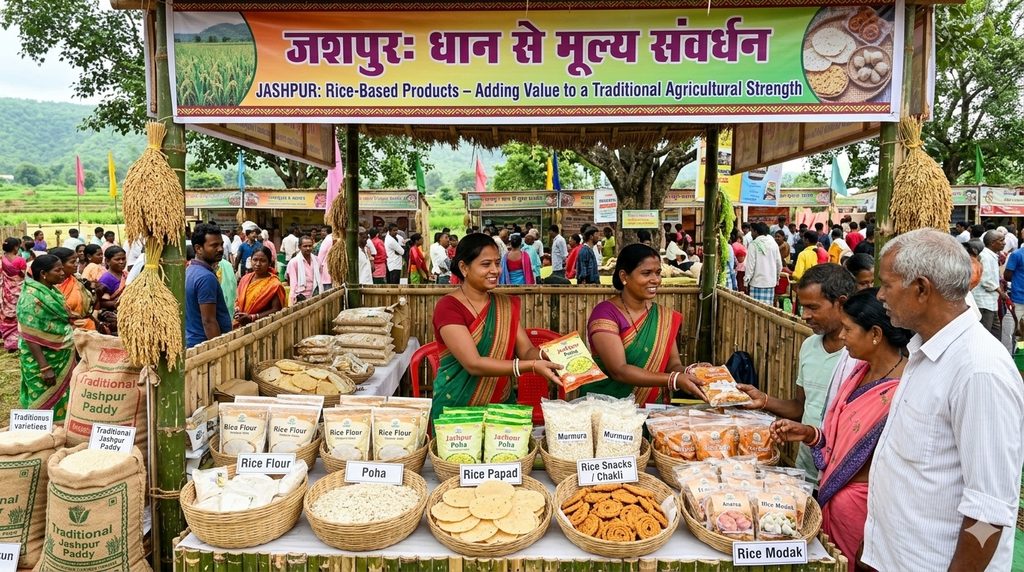
Puffed Rice and Rice Snacks
Puffed rice, also called murmura, can be made from the rice value chain. Puffed rice products can be eaten on their own. Added to other snacks.
Entrepreneurs can create:
- Spiced puffed rice
- Masala murmura
- Namkeen mixtures
- Jaggery‑coated rice snacks
- Peanut and puffed‑rice mixtures
- Ready‑to‑eat snack packs
These puffed rice products can be sold to customers and to people, in cities.
The benefit of puffed rice products is that they use a well‑known ingredient while using new packaging and new branding.
Women and Self-Help Groups
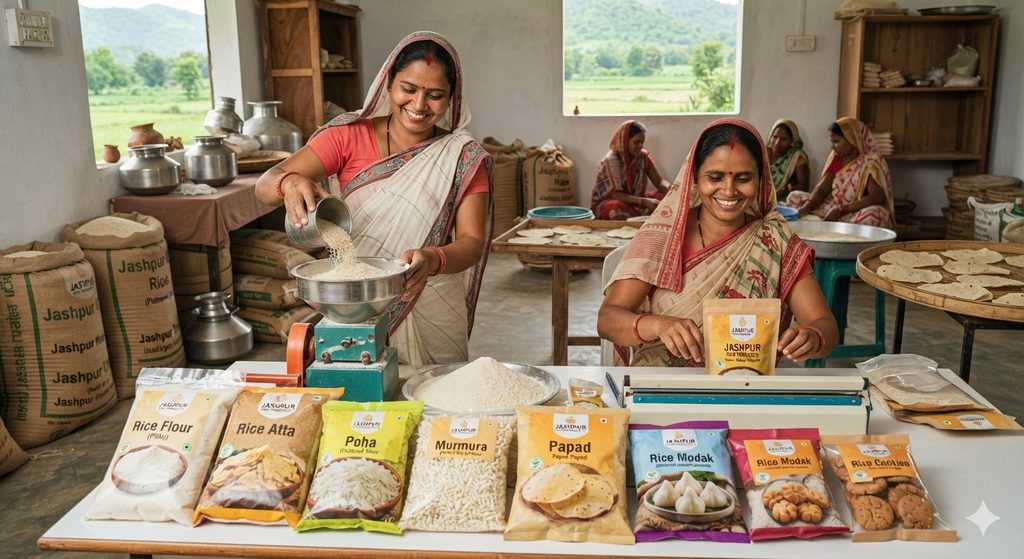
Women-led enterprises and Self-Help Groups can play a role in developing Jashpur’s rice-based product ecosystem. Small groups can participate in activities such as snack preparation, rice flour production, snack manufacturing, packaging, labelling, local retailing, catering products and online sales. Products made by SHGs can be marketed as produced foods while providing additional livelihood opportunities. Training in food safety, bookkeeping, packaging and digital marketing can further improve their ability to operate commercially.
Government Support Through ODOP
The ODOP framework is created to help products by making sure they are bought more using shared services doing more processing adding more value building better infrastructure and making the products more known through branding and advertising.
Jashpur being part of the rice-based-product group helps start a system for making food in the area. The Ministry of Food Processing Industries says Jashpur is one of the districts in Chhattisgarh that has a rice-based ODOP cluster. Other districts include Baloda Bazar-Bhatapara, Balrampur, Dhamtari, Janjgir-Champa and Rajnandgaon. (Ministry of Food Processing Industries)
The Chhattisgarh State Industrial Development Corporation (CSIDC) is the group in the state that handles the PMFME scheme. CSIDC lists Jashpur, as a district that focuses on rice-based products. (CSIDC)
These kinds of programs can help small food-processing companies become more official and grow, long as they follow the rules of the scheme.
Challenges
Opportunities exist but many challenges must be solved as well.
These challenges may include:
- Dependence, on rainfed agriculture
- Seasonal availability
- Limited modern processing infrastructure
- Inadequate storage facilities
- Processing methods
- Limited branding
- Packaging challenges
- Difficulty accessing larger markets
- Competition from established brands
Jashpur’s economy still relies heavily on rainfed agriculture so agriculture productivity and post-harvest management become very important. (Jashpur District)
Improving storage, processing and market connectivity can help reduce many of these constraints.
Conclusion
I see how Jashpur’s selection as a Rice‑Based Products district under the One District One Product initiative shows how vital rice is to the farming economy. (Ministry of Food Processing Industries)
The opportunity is not about selling raw paddy or milled rice. Rice can become flour, poha puffed rice, snacks, traditional foods, ready‑to‑cook products and many other value‑added items.
With processing, attractive packaging, strict quality control, strong branding and digital marketing Jashpur can build a recognisable identity for its rice‑based products.
Importantly developing this sector can open doors for farmers, rural entrepreneurs, women‑led groups and food‑processing businesses.
Jashpur’s rice can become more than a farm commodity. Through the ODOP approach it can become the foundation of a value‑added food industry that links traditional farming with modern markets.