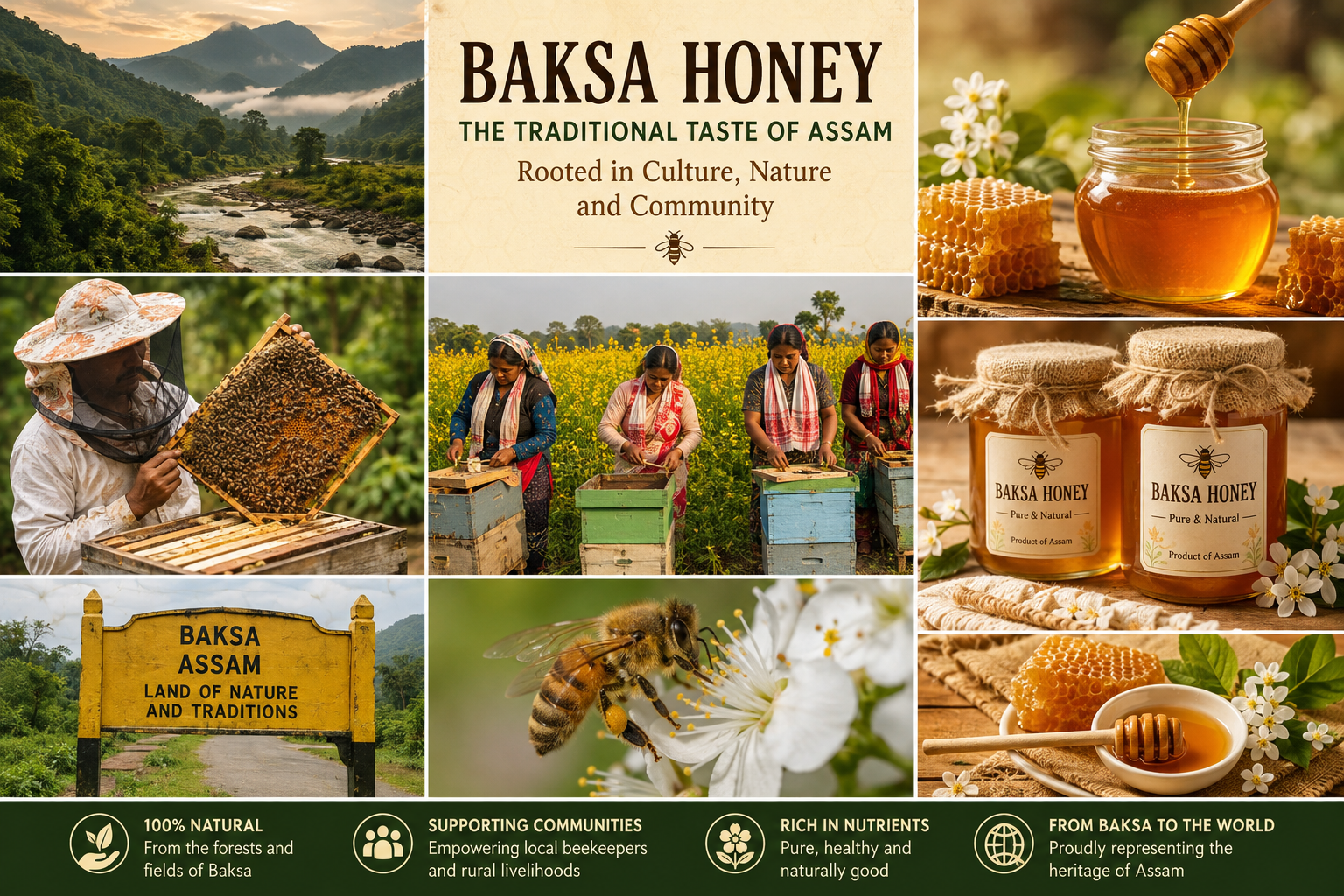

Assam has nature and tradition, biodiversity and indigenous communities, agriculture and traditional food roots. The hill districts of the state have their share of unique produce – and one of them has recently seen its age-old local honey gain popularity far beyond the state borders.
Baksa, which falls under the Bodoland Territorial Region, is home to many natural landscapes familiar to local beekeepers, including forests, croplands, floral vegetation, and diverse flora and fauna. Honey collection has long been a part of the local tradition. Today, the craft is gaining new traction – with the government designating honey as the “one district, one product.” The first ever export of the local produce was made in May 2026 – 20 tonnes of Baksa honey were sent to the United States.
But what makes this local produce so special? Let’s look at the long tradition of honey-making in Assam, the unique qualities of Baksa honey, and how local beekeepers are ensuring its future.
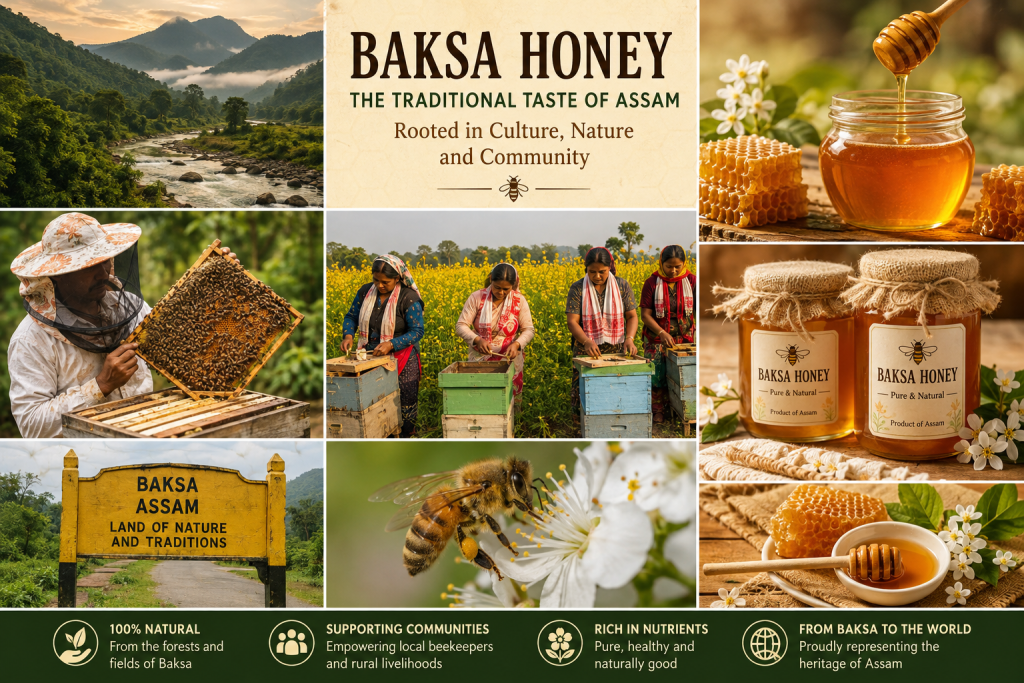
Baksa Honey: Nature Helps Tradition
The territory of the district is located in the ecologically rich area around the foothills of Bhutan. The landscape is varied, ranging from agricultural lands to forests, hills, and rivers. There are plenty of flowering plants and shrubs in the district – and local honey is a product of this rich flora.
The beekeeping tradition is closely related to the area’s rich agriculture and ecosystem. Local beekeepers have long been using their environment to their advantage, as the local vegetation provides the bees with food and shelter. The beekeeping tradition is a part of locals’ daily lives – according to a local resource profile, there is a rich agro-diversity in the district.
It is not surprising that local honey has long been a staple of the local cuisine, as well as a source of nutrition and folklore tradition. The honey has a unique flavor and positive effect on health attributed to the environment in which bees live and the local flora that provides them with food.
Assam’s Traditional Honey Story
Traditional honey-making in Assam is based on the local forest knowledge. Indigenous people have long been aware of the resources and the best time for harvesting. Local government confirms that in Assam, especially among the Bodo, Karbi, and Mishing, people used to utilize honey for food, medicinal, and ritualistic purposes.
Local beekeepers in Baksa are using the same wisdom passed down through generations. According to a profile of the traditional honey making area, there is a certain season for harvesting wild-honey in the district, usually from December to May.
The tradition of local honey-making is part of the area’s unique cultural heritage. It plays an essential role in the lives of the locals as it has deep historical and cultural significance. However, honey-making is not just about following the age-old wisdom. Local beekeepers have vast practical knowledge and pass it down from generation to generation.
The tradition tells about the close relationship between people and nature, highlighting the value of natural resources and sustainable methods. Local honey-making is a part of the people’s daily lives and cultural heritage, an essential part of their identity.
Baksa Honey in Food Culture
The food culture of Northeast India is rooted in the region’s geography and its diverse communities. Local ingredients play a big part in traditional cuisine. This also includes local honey, which has been part of the diet of Assam’s tribal people for centuries.
In traditional communities, people have been collecting honey from the local forests or producing it at home, using it as a sweetener in their food. Honey has also been used in various dishes as an ingredient. Local healers have used it for its healing properties, and some cultures attribute sacred status to it. Local honey-making is a part of the cultural heritage of the Bodos, Karbis, and other tribes of Assam.
Women Make Traditional Beekeeping Thrive
One of the most unique parts of the local beekeeping tradition is that it is practiced by both men and women. According to a report by a research agency of Bhutankhuti, an area in Baksa, beekeeping is becoming a part of the local ecosystem with many women being involved in the process.
The area has a rich ethnic composition, with many Gorkha, Bodo, Adivasi, and Assamese people. Beekeeping is a tradition of the local farmers who live in the region. They are mostly subsistence farmers, meaning that they produce food for their own household.
Traditional beekeeping has long been a part of the local culture, and people are now trying to make it more of a business. Organized training, as well as institutions and cooperatives that support the local beekeepers, have allowed many to take up the craft. Traditional knowledge and skills passed down through generations can now become a source of income for many local farmers.
Assamese Traditional Honey: Unique Qualities
The unique qualities of Baksa honey come from the natural environment. Bees make honey from the local flora, so the diet of the bees directly impacts the flavor and properties of the local honey. The natural environment of Baksa provides the bees with diverse and nutritious food.
This makes the local honey unique, as the diet of the bees varies depending on the season. Local producers report that the flower diversity and relatively untouched environment contribute to the quality and nutritional value of Baksa honey.
Flowers of agricultural crops are an essential source of nutrition for the bees, as reported by a local apiculture project. Mustard, which is grown abundantly in Assam, is one of the most common crops which add to the flavor of local honey. According to the apiculture project, 135 bee boxes were set up in 3 villages in the mustard belt. Within the 95-day season, the beekeepers harvested 10 quintals of honey.
Assam’s Traditional Beekeeping: Source of Supplemental Income
Local beekeeping is a vital part of the local agro-forestry system. In many ways, it resembles a traditional form of subsistence farming. Local beekeepers traditionally sell their surplus honey for additional income. Today, organized cooperatives and enhanced producer companies help the local beekeepers generate income following modern standards.
Wild honey used to be collected in the forests by local tribal people, but they had limited access to the broader market. According to a tribal livelihood profile, many of the local people were involved in wild honey collection and processing, but they had little opportunity to sell the processed honey for a satisfactory price. Value addition and institutional support have provided them with essential support which has allowed them to benefit from their experience and skills.
This is the point where the traditional meets the modern: the traditional knowledge and experience of the local beekeepers can be channeled through modern production and marketing practices to generate higher revenues.
This way, the traditional beekeeping methods can pass on to the next generations while also providing supplemental income to many local farmers and beekeepers.
One District One Product: Highlighting Local Tradition
The traditional craft of local honey-making has become an essential part of the region’s local culture. Recognizing the cultural and economic significance, the local government has officially assigned honey as the one district, one product.
Designating honey as the official product has had a significant impact on local beekeepers, as it allowed them to market their produce both nationally and internationally. According to one report, in May 2026, APEDA exported 20 tonnes of ODOP honey from Baksa to the U.S., which marked the first ever export. This event was considered to be historic, as it would elevate the local beekeepers and farmers in the national and global markets.
Forests, Agroforestry and Traditional Markets: The Legacy of Local Honey
The legacy of the local honey-making tradition is closely connected to the local forests, agroforestry practices, and traditional markets. Local beekeepers have long been using natural resources and their knowledge of the local ecology to produce high-quality honey. Local ecological knowledge and traditional beekeeping play a crucial role in preserving the local biodiversity. The apiculture practice has been beneficial for the area’s ecosystem, as beekeepers ensure the sustainability of the local flora and fauna.
The traditional markets provided an essential source of income for the local beekeepers. The produce of the local beekeepers was in demand in the traditional markets, where it was valued not just for its taste but also for its therapeutic qualities.
However, traditional methods and local markets often had limited reach. Local beekeepers used to sell their honey for a small profit, without employing modern marketing strategies. Even though the traditional markets served as an essential source of income, they lacked the infrastructure to help the local producers generate higher revenues.
International Recognition of Assam’s Local Honey
The international recognition of local honey was a milestone in the long journey of the local beekeepers. The traditional product has been marketed as a natural, organic, and high-quality honey. Local beekeepers have benefited immensely from the increased presence in traditional and modern markets.
There is, however, a certain amount of responsibility that comes with the increased interest in the local product. Sustainable production is the key to ensuring the future of local beekeeping and apiculture in general.
The traditional apiculture practices need to be augmented with the latest technological advancements to ensure that the beekeeping practices are sustainable and profitable for the local beekeepers.
Protecting Nature to Ensure the Future of Local Honey
The future of local honey is inextricably linked with the future of bees. The survival of bees directly impacts the future of apiculture and the local beekeeping tradition. In order to ensure the sustainability of honey-making as a whole, it is vitally important to preserve the biodiversity and ecological sustainability of the local environment.
Agriculture and horticulture are essential for the nutrition and survival of the local bee populations. Apiculture not only plays a vital role in the local ecosystem but also serves to sustain the local economy. In Baksa, as in many other areas, local beekeepers follow the age-old tradition of apiculture that helps to maintain the sustainability of local agriculture.
However, with climate change affecting the delicate balance of the local environment, beekeeping has become a more challenging endeavor. Reports from Assam show that local beekeepers are facing new difficulties due to extreme weather conditions impacting the local bee population.
That is why the environmental sustainability of the local area is of paramount importance for the future of local honey. Planting flower-rich trees and bushes can help provide the bees with the necessary nutrition. The use of chemical insecticides and pesticides should be minimized in order to prevent the deterioration of the local flora and fauna. Sustainable and responsible beekeeping is the only way to ensure the longevity of the local apiculture tradition.
Why is Assam’s Local Honey Special?
When talking about Assam’s local honey, one may think about its qualities and unique flavor. However, there is much more to the traditional product than its sweet taste and beneficial properties. Local honey is a part of the region’s cultural heritage, with beekeeping passing through generations of local beekeepers. The traditional apiculture practices are deeply rooted in the local environment, which has played a vital role in the development of the local beekeeping tradition. The rich biodiversity of Assam has served as the foundation for the local apiculture practices. The local beekeepers are the guardians of the region’s traditional ecological knowledge, passing it on to younger generations.
Local honey embodies the traditional lifestyle of Assam’s villages. Local bees are found in the local forests, flowers, and farms. It takes hard work and dedication to make sure that the beekeepers and their families can have sufficient income and livelihood. The legacy of local apiculture is multifaceted; it encompasses the traditional knowledge of the local beekeepers, the biodiversity of the region, local food heritage, and even the women’s participation in the local economy. Local honey-making traditions represent the traditional lifestyles of the local villagers.
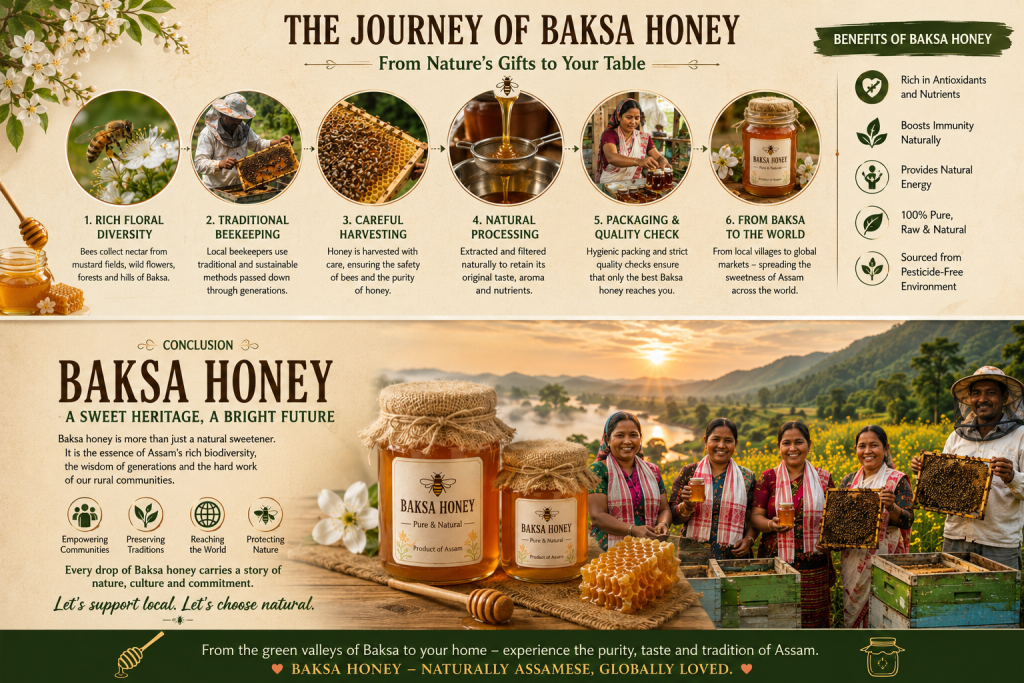
Sweet Future Ahead for Local Honey
Local honey is a unique product with a bright future ahead. The long tradition of beekeeping in Assam has served as the foundation for the local apiculture practices that are being passed on to generations of local beekeepers. Local honey-making methods are deeply intertwined with the local ecology and biodiversity. Local beekeepers make sure that their practices are sustainable and that the local environment is preserved for the future generations of locals and bees.
Local honey is a symbol of the local economy. Local beekeepers are playing a vital role in conserving the area’s ecology while generating much-needed income. With local honey making its way into national and international markets, people all over the world can soon appreciate local apiculture. It is hoped that this traditional craft will continue to flourish and that local beekeepers will be able to improve their livelihoods in the years to come.
Conclusion
Baksa honey is much more than just yet another sweet treat. The local product is the result of generations of local beekeepers and their families, who have passed on their knowledge and skills to younger generations. It is a part of the local cultural heritage, one that is deeply rooted in the area’s rich ecology and diverse biodiversity. Local people have long been making their living using their knowledge of the local environment.
Today, with the introduction of modern practices and increased awareness of the local product, Assam’s local honey is taking on new significance. The traditional apiculture practices and local ecological knowledge are becoming increasingly important in the modern context. Local beekeepers are ensuring the sustainability of their craft while passing their wisdom to younger generations. With local honey making its way to international markets, the future of the traditional apiculture looks bright and promising.
But, for local beekeeping to thrive and continue to sustain the local economy, it is vitally important to ensure that the natural environment is preserved. With the local climate change impacting the delicate local ecosystem, beekeepers are having a hard time keeping up. The traditional ecological knowledge acquired by local beekeepers over generations is being put to the test as the local environment continues to change.
The rich biodiversity of Assam is being threatened, and the future of local apiculture is in doubt. The sustainability of the local beekeeping practices will be ensured through the use of advanced technologies and responsible use of chemical insecticides and pesticides.