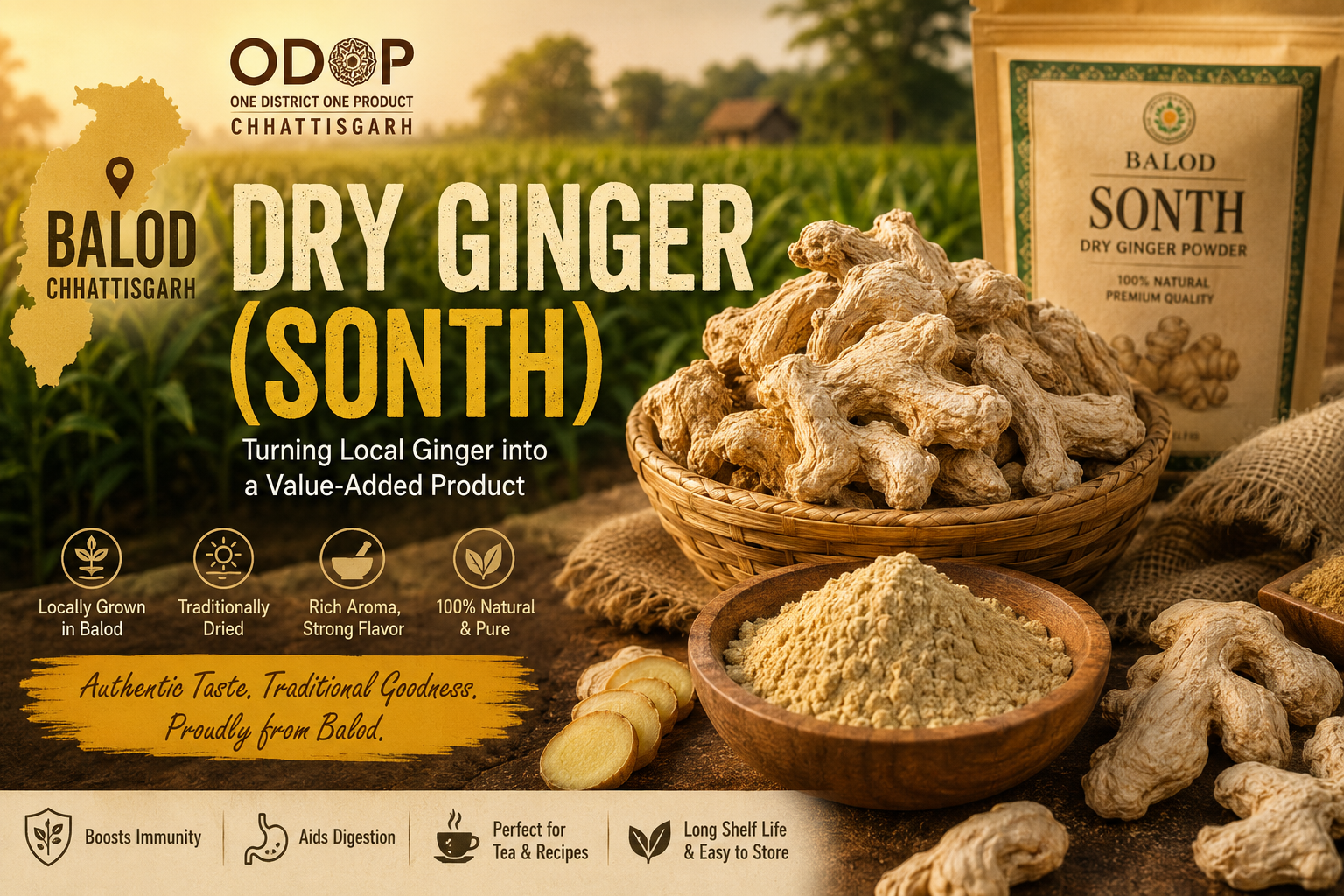
Balod Dry Ginger (Sonth): The Traditional Spice Turning Local Ginger into a Value-Added Product

Balod, a district in the heart of Chhattisgarh is famous for its agricultural landscape, rich natural resources and strong connection with rural livelihoods. The district is situated around the Tandula river. It has important irrigation sources like the Tandula, Kharkhara and Gondli dams, which make it perfect for agriculture and agro-based industries.
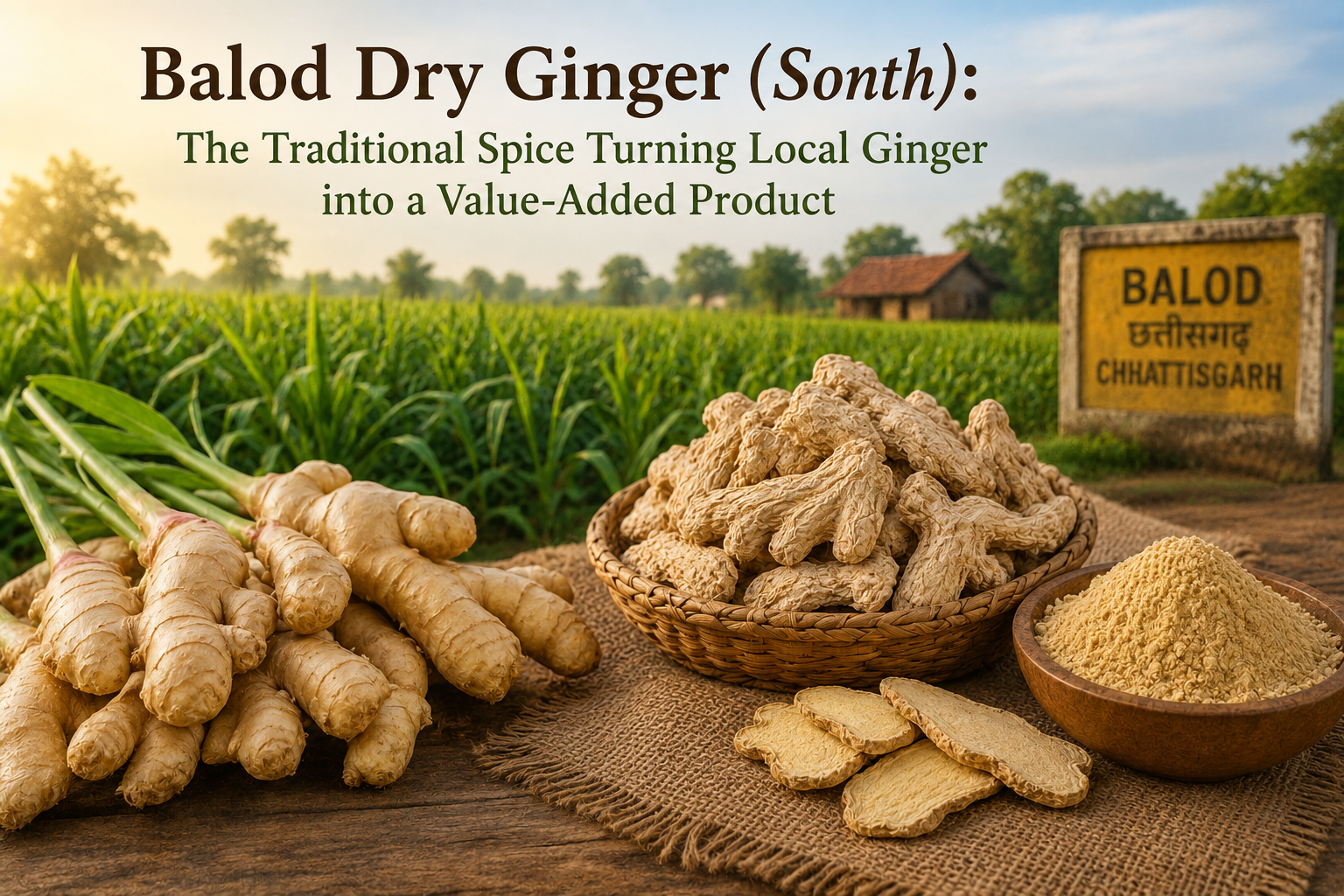
The official district profile says that paddy, gram, sugarcane and wheat are some of the agricultural products of the district and it has a lot of potential for agro-industries.
Among the products that can be made from Bacolod’s food-processing potential, ginger-based products are very special under the One District One Product framework of Chhattisgarh’s PMFME implementation. The Government of India’s ODOP list says that Balod is known for Ginger Based Products, which’s a great opportunity to turn locally grown ginger into products that can be stored for longer and have more market value and commercial potential.
One important value-added form of ginger is Dry Ginger, which is popularly known as Sonth.
For a time ginger has been a crucial ingredient in Indian kitchens. Fresh ginger is used in tea, curries, chutneys, pickles and traditional preparations while dried ginger has a concentrated aroma and flavor and can be stored for much longer. Once processed and dried ginger becomes a spice that can be used in many ways beyond the limitations of a seasonal fresh crop.
For Balod this transformation from ginger to dry ginger is more than just drying an agricultural commodity. It is an opportunity to connect farming, food processing, traditional knowledge, rural entrepreneurship and modern markets.
Why is Balod associated with Ginger-Based Products?
Baldos’ agricultural environment is perfect for growing and processing crops. The district has a wet-and-dry climate with most of its annual rainfall during the monsoon months. Its agricultural land has soil types and the irrigation infrastructure supports cultivation in the district.
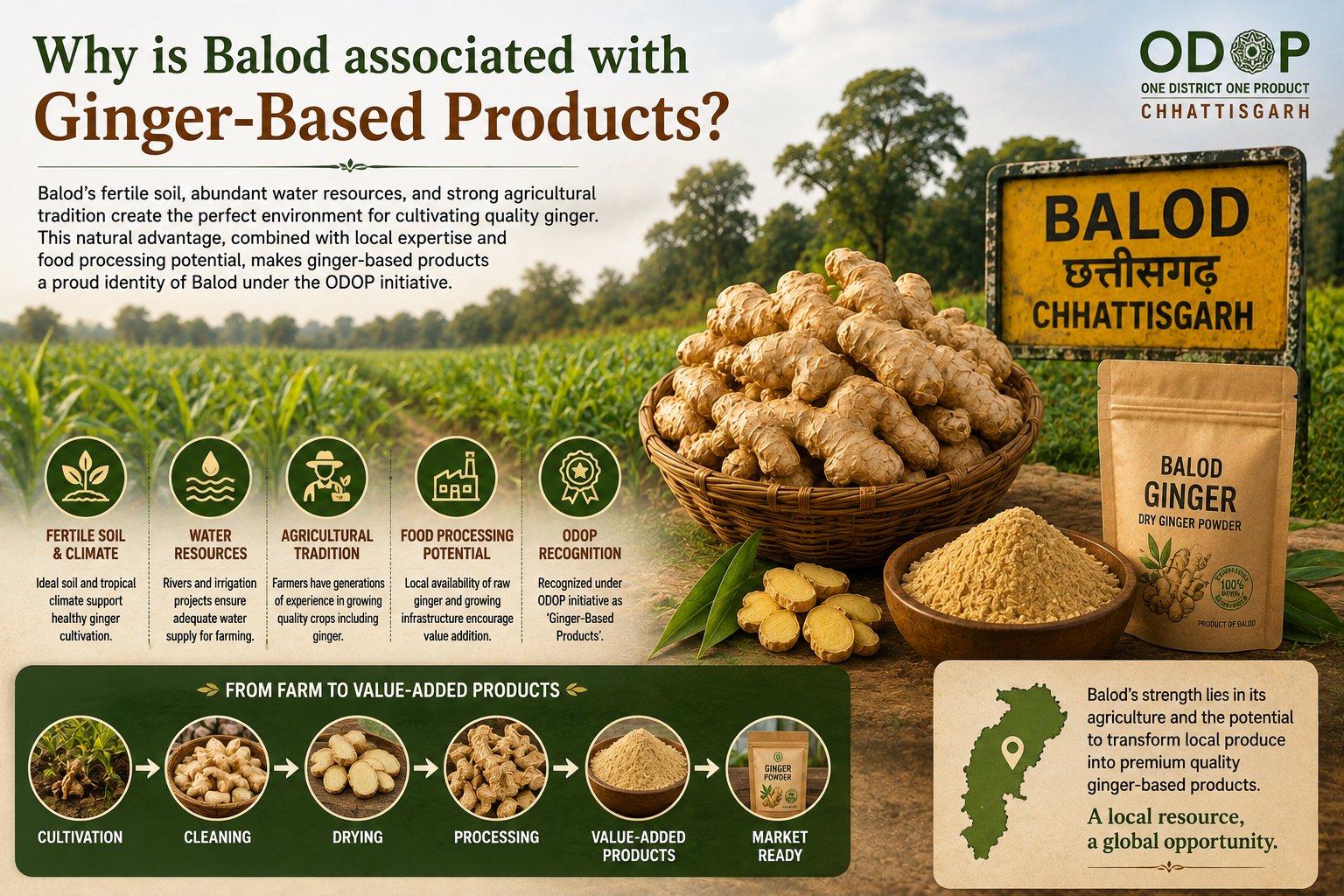
Ginger is particularly interesting because it can be converted into forms after harvesting. Fresh ginger can be cleaned, graded and marketed directly but processing can create products like dried ginger, ginger powder, ginger paste, ginger-based beverages and other food preparations.
The Government of Chhattisgarh’s CSIDC lists Balod – Ginger Based Products among the approved products under the state’s PMFME implementation.
This ODOP focus is important because the idea behind the One District One Product initiative is not just to identify a commodity. It is to encourage an ecosystem around a district’s strengths, including processing, branding, packaging, entrepreneurship, market access and employment.
In this context dry ginger or Sonth can become a part of Balod’s value-added ginger story.
Balod, a district in the heart of Chhattisgarh is famous for its agricultural landscape, rich natural resources and strong connection with rural livelihoods. The district is situated around the Tandula river. It has important irrigation sources like the Tandula, Kharkhara and Gondli dams, which make it perfect for agriculture and agro-based industries.
What is Dry Ginger or Sonth?
Dry ginger, commonly called Sonth or Sonthh in parts of India, is prepared by drying mature ginger rhizomes after harvesting. Fresh ginger contains a lot of moisture which makes it highly perishable compared to its dried form. Through drying moisture is reduced and the ginger becomes harder, lighter and suitable for longer storage.The dried rhizome can then be sold whole, sliced or further processed into powder.Sonth is easily recognized by its warm aroma, sharp flavor and slightly pungent taste. It is widely used as a spice and as an ingredient in Indian food preparations.Its versatility is one of the reasons dry ginger has potential. A single agricultural crop can be converted into marketable formats allowing farmers and small food-processing businesses to explore different customer segments.
From Fresh Ginger to Sonth: Understanding the Process
The journey of ginger begins in the field.
1. Selection and Harvesting
The first step is selecting healthy ginger rhizomes. Quality at the farm level has an impact on the quality of the final dried product. Ginger intended for drying needs to be properly harvested and handled to minimize damage, contamination and unnecessary moisture.
2. Cleaning
After harvesting the ginger is cleaned to remove soil and other unwanted material. Proper cleaning is a part of food processing because the final product needs to maintain acceptable hygiene and quality.
3. Peeling or Preparation
Depending on the processing method and intended market ginger may undergo peeling or preparation before drying. The objective is to prepare the rhizomes so that moisture can be removed efficiently.
4. Drying
Drying is the important stage in producing Sonth. Traditionally ginger may be dried using sunlight while commercial processing can use controlled drying systems. The basic objective remains the same: remove moisture while protecting the product’s quality.Good drying requires attention to cleanliness, temperature, time and protection from moisture during the process.
5. Grading
Once dried ginger can be sorted according to size, appearance, cleanliness and overall quality.Grading creates consistency. Can help producers serve different markets.
6. Grinding and Powdering
Dry ginger can be sold as dried rhizomes or processed further into ginger powder.Powdered Sonth is convenient for households and food businesses because it can be measured easily and incorporated directly into recipes.
7. Packaging
The final product must be protected from moisture, contamination and excessive exposure to air. Good packaging is therefore not merely about appearance. It is a part of maintaining product quality and building consumer confidence.
What makes Sonth different from Fresh Ginger?
Fresh ginger and dry ginger come from the crop but their characteristics and uses are different. Fresh ginger has a texture and a bright fresh flavor. It is commonly grated, chopped or crushed for cooking and beverages.
Sonth on the hand has a stronger concentrated character. Because much of its moisture has been removed it becomes more suitable for storage and transportation.
This difference creates an economic opportunity.
A farmer selling ginger is primarily selling an agricultural commodity. A producer processing the ginger into a properly prepared and packaged dried product is participating in value addition.That additional step can open doors to packaging, food-service markets, spice businesses and other processing opportunities.
Traditional uses of Sonth in Indian Food Culture
Dry ginger has been part of culinary traditions for generations. It is commonly used in spice blends, beverages, sweets and traditional preparations. In households a small quantity of Sonth is added to recipes to provide warmth, aroma and characteristic pungency.
Sonth powder can be used in:
- Masala tea and other traditional beverages
- Spice blends
- Savory preparations
- Traditional sweets
- Bakery and confectionery preparations
- Pickle and seasoning formulations
- Home cooking
- Food-processing applications
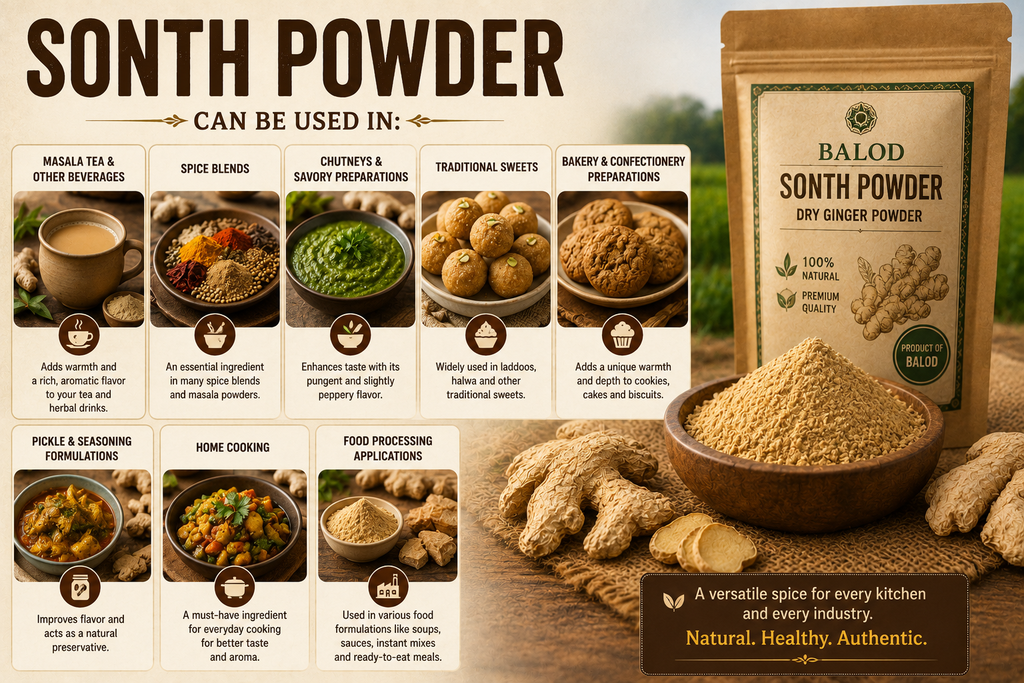
Its flavor means that only a relatively small amount may be needed in many recipes.
This combination of flavor and storage convenience makes dried ginger an attractive ingredient for both household consumers and commercial food producers.
The role of Dry Ginger in Value Addition
One of the advantages of processing agricultural products is that it can reduce dependence on selling crops only in their raw form.
Suppose a farmer harvests ginger during a particular season. Fresh produce needs handling and timely marketing because of its moisture content and perishability.Processing some of the harvest into ginger changes the equation. Of having only one form of product the local value chain can include:
Ginger cultivation → Cleaning → Processing → Drying → Grading → Packaging → Branding → Retail/Wholesale Markets
- Each stage can create opportunities for different participants.
- Farmers can focus on cultivation.
- Small processing units can handle cleaning and drying.
- Women-led self-help groups can participate in sorting, processing, packaging or other suitable activities.
- Entrepreneurs can develop branded products.
Traders and distributors can connect Ballod’s products with markets outside the district. This is the kind of ecosystem that makes an ODOP product more than a geographical label. Balod and the Opportunity for Rural Entrepreneurship. The potential of ginger is particularly relevant to rural entrepreneurship. A large processing factory is not necessarily the way to create a ginger-based business. Small and medium enterprises can participate in parts of the value chain depending on their investment capacity.
For example a local entrepreneur could develop a branded range of dried ginger products. Another business could specialize in ginger powder. A producer group could focus on processing and supplying ingredients to larger food businesses. With food-safety practices, packaging and branding local products can potentially move from informal markets to organized retail and online channels.
This is where ODOP can make a difference. The initiative aims to support district-level products by strengthening ecosystems and encouraging balanced regional development. Chhattisgarh’s official ODOP platform notes that the initiative considers the existing ecosystem, district export potential and other local strengths when identifying products.
Creating a Brand Around Balod Sonth
The future of Baldos dry ginger is not only about production. It is also about presentation. Consumers today increasingly want to know where their food comes from. A package that simply says “Dry Ginger Powder” may communicate the product. A well-developed regional brand can communicate a story.
A Balod-based Sonth brand could highlight:
- Origin: Balod, Chhattisgarh
- Product: Dried Ginger / Sonth
- Processing: Carefully cleaned, dried and packed
- Identity: A value-added product associated with Bacolod’s ginger-based ODOP ecosystem
- Usage: Cooking, beverages and food preparations
Story telling can make an ordinary spice more memorable.
The product could be presented not as another packet of ginger powder but as a product connected to farmers, local agriculture and the food traditions of Chhattisgarh.
Packaging: From Local Product to Market-Ready Product Packaging plays a role in transforming agricultural produce into a consumer product. For dry ginger packaging needs to protect the product from moisture and contamination.
For Sonth powder moisture control becomes more important because powdered products can lose quality when exposed to unsuitable storage conditions.
A professional package can include:
- Product name
- quantity
- Ingredients
- Batch details
- Manufacturing and packaging information
- Storage instructions
- Food-safety and regulatory information, as applicable
- Producer or brand information
- Contact details
- certification or registration information
A clean design that uses elements from Balod or Chhattisgarh can also make the regional identity of Balod and Chhattisgarh stronger. Economic Importance of Ginger Processing Agriculture does not just stop at the farm. It can go further than that. The value of a crop like ginger can increase when people work on processing and packaging and transportation and marketing and distribution. For a place like Balod, a stronger system for processing ginger could create opportunities for people.
Farmers can. Supply good quality ginger. Local workers can help with processing and packaging of ginger. Small business owners can start units that process food. Designers and marketers can work on branding of ginger products. Transport operators can help with distribution of ginger products. Retailers can sell ginger products.Food businesses can buy ingredients made from ginger. In this way one crop like ginger can support economic activities.
The PMFME framework is very relevant here because it helps food processing businesses. Chhattisgarh’s CSIDC is the agency that implements PMFME in the state. It has listed ginger products from Balod under the approved ODOP products. Traditional Knowledge Meets Modern Food Processing
The story of Sonth is a story of something that has been continued over time.
Drying food to make it longer is a very old technique that people around the world have used. Indian households have used drying to preserve products and spices for a long time.Modern food processing does not have to replace these traditions.It can make them better and more consistent. Traditional knowledge can provide the base and modern processing can improve hygiene and standardization and packaging and market access.This combination is very valuable for ODOP products because their strength comes from something The challenge is to turn that strength into a product that can compete in modern markets.
Why Balod Sonth Has Wider Market Potential
Ginger is already well known to consumers across India. That gives ginger-based products an advantage because consumers already know what ginger is. The opportunity lies in quality and convenience and consistency and identity of Balod and Chhattisgarh.
Dry ginger can serve markets.
- Household Market: consumers can use Sonth powder in cooking and beverages.
- Food-Service Market: restaurants and caterers and food businesses can use ginger and ginger powder.
- Spice Market: Sonth can be sold as a spice. Used in spice blends.
- Food Processing Industry: manufacturers can use ginger powder in food products.
- Gift and Regional Food Market: a packaged Balod spice product can be part of regional food hampers.
This diversity reduces dependence on one type of customer, for Balod Sonth.
Building a Future for Balods Ginger
The success of Balods ginger products in the long run will depend on a lot of things not just how much ginger is produced.
Quality is really important here.
Farmers need to know about farming practices and they need to have good seeds to plant. The places where ginger is processed need to be clean and have systems for drying. The people who make these products need to know about keeping food safe.Business people need to know about packaging and selling these products. There is a chance to make groups of farmers stronger and to create places where ginger can be processed locally. When farmers work alone it is hard for them to sell their products to companies. When they work together they can negotiate better prices and sell their products to more people. This way Balod can become a place that is known for its ginger products, not a place where ginger is grown.
The Bigger ODOP Story
The idea of One District One Product is to help local products become bigger and better.
In India different areas are known for products, like handicrafts and food.The idea is to find out what each area is good at and help them become better at it. For Balod ginger products are a choice.
Dry ginger or Sonth is especially interesting because it shows how processing can change the value of a product.
Fresh ginger is a regular farm product.
Dry ginger is a product that has been processed and has more value.Ginger powder is a product that’s easy to use and convenient.A branded Balod Sonth product can become a known product in the region.
The difference is in how the product’s made and sold.A branded product can become a product that people want to buy.Balods Dry Ginger or Sonth shows that local farm products can become modern and valuable. From growing the ginger to cleaning, drying and packaging it every step adds value.
What starts as a farm product can become a product that is convenient and can be sold to people far away.Balods ginger products have a foundation because of the PMFME ODOP framework.
The area already has a reputation for farming and has the resources to support it.The future of Balod Sonth depends on how well these resources are used.Better processing can make the products more consistent.Better packaging can make the products more appealing.
Better branding can make the products more recognized.Better market access can give opportunities to the people who make these products.Stronger local businesses can keep the value of the products in the local community.In this way Sonth is not dry ginger it is an example of how a regular farm product can become a valuable product. As people become more interested in Indian food products Balod has a chance to make its ginger products more well-known. This can start in the fields of Chhattisgarh. Can become a product that is sold all over India.
Frequently Asked Questions
1. What is the ODOP product associated with Balod?
Balod is associated with Ginger Based Products under the PMFME ODOP list.
2. What is Dry Ginger or Sonth?
Dry ginger or Sonth is ginger that has been dried to remove most of the moisture. It can be sold as dried ginger or ground into powder.
3. How is Sonth different from ginger?
Fresh ginger has moisture and is juicy.Sonth is. Has a stronger flavor and it can be stored for longer.
4. What can Balods ginger be made into?
Ginger can be made into products like dry ginger, ginger powder and other ginger-based products.
5. Why is dry ginger important for farmers and business people?
Drying can change a farm product into a more valuable product that can be stored and sold in different ways.This can create opportunities, for farmers and business people.
6. Can Balod Sonth become a branded product?
Yes if the products are of quality processed well packaged attractively and marketed effectively dry ginger can become a well-known regional product associated with Balod.