Dhamtari Rice Products: The Journey from Chhattisgarh Paddy to Everyday Value-Added Foods

Dhamtari rice products showcase how locally grown paddy from Chhattisgarh is transformed through traditional and modern processing into useful foods for everyday consumption. Rice has always been closely connected with the agricultural identity of Chhattisgarh, and Dhamtari is a part of this rice‑producing landscape.. The journey of rice can go beyond just selling or cooking plain grain. By processing and adding value paddy can turn into convenient and marketable food items.
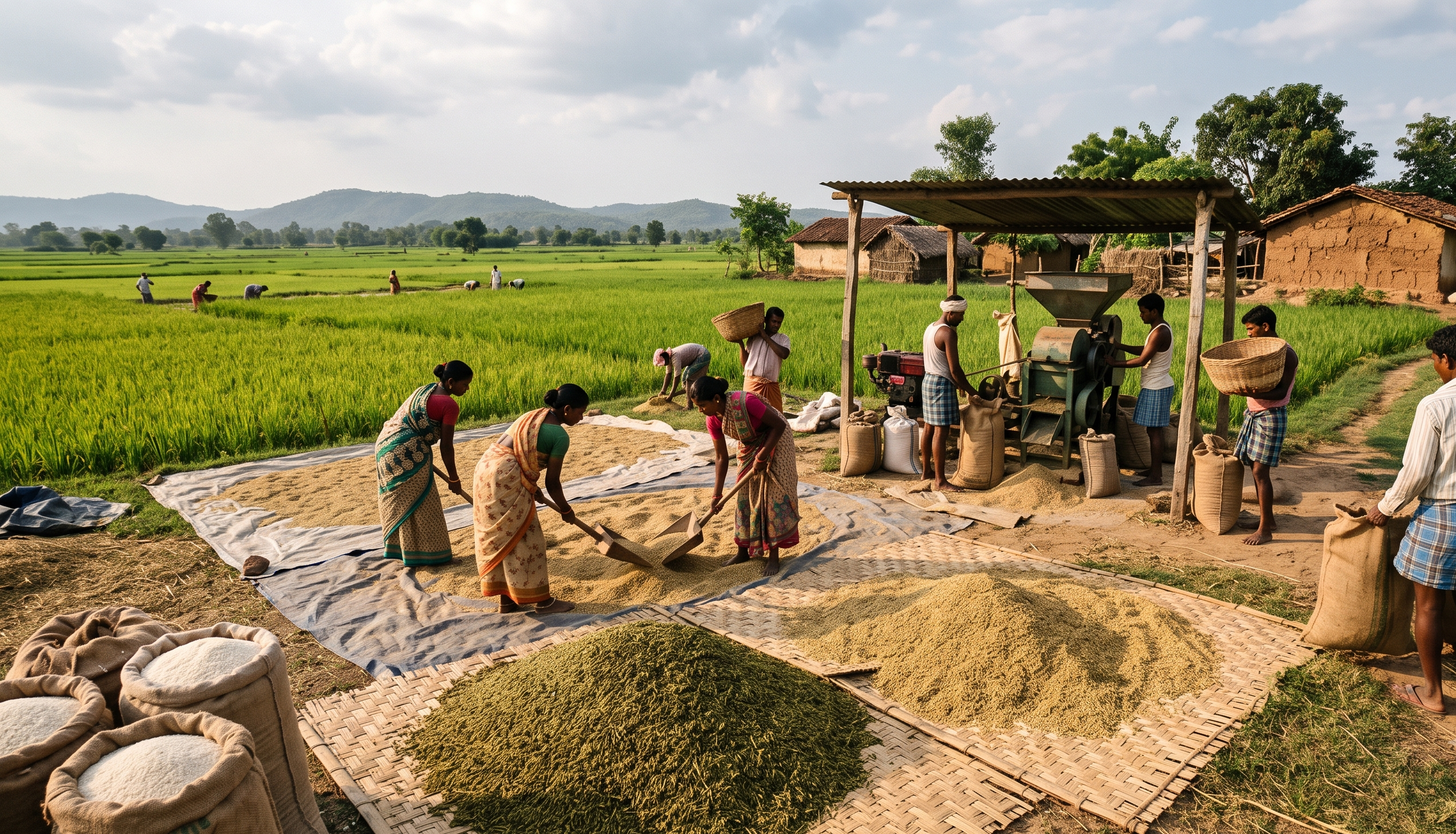
From the paddy fields through cleaning, drying, milling and processing each step adds more value. Rice can turn into flour, poha, puffed rice, snacks and other foods that are easier to pack keep and sell.
The whole journey looks like this: Paddy Cultivation → Harvesting → Drying → Cleaning → Milling → Processing → Value Addition → Packaging → Market
This transformation shows how an agricultural crop, from Dhamtari Chhattisgarh can become a variety of everyday food items.
Why Rice Products Matter in Dhamtari, Chhattisgarh
Dhamtari has an agricultural connection with paddy cultivation. Rice is a part of the food culture of Chhattisgarh making rice processing a natural opportunity for local value addition. Selling paddy provides one level of value. Processing it into food products creates additional stages involving milling, product development, packaging, branding and distribution. Rice can be converted into products such, as:
- Rice flour
- Poha
- Puffed rice
- Rice snacks
- Rice-based mixes
- Traditional rice foods
- Ready-to-use ingredients
This allows the same agricultural raw material to reach consumers in different forms.
The Story Begins in Dhamtari’s Paddy Fields
Every rice product begins with rice cultivation.Farmers grow rice based on farm conditions and pick the mature rice when it is ready.
After harvesting the paddy holds the rice grain inside its husk. The rice must be. Dried before it can go to the milling stage.
This is the stage of the journey from farm, to rice food product.
Step 1: Harvesting the Paddy
Harvesting is the major stage after cultivation.Once the rice crop is ready farmers harvest the paddy. Gather the grains.Large farms might use agricultural machinery while manual harvesting is still important, in many places.After the crop is harvested it must be. Readied for drying.It is important to handle the crop because damaged or dirty grain can hurt what happens next.The harvested paddy is then moved into the step: managing moisture.
Step 2: Drying and Moisture Management
Harvesting is the stage after cultivation.
Once the rice crop is ready farmers harvest the paddy. They gather the grains carefully.
Large farms might use machinery to do the work faster.. In many places manual harvesting is still important. People use knives or sickles to cut the plants by hand.
After the crop is harvested it must be readied for drying. This step comes away. The wet paddy cannot stay damp for long.
It is important to handle the crop with care. If the grains get damaged or dirty it can hurt what happens next, in the process. Bad quality grain can cause problems when it is stored or sold.
The harvested paddy is then moved into the step: managing moisture. This means making sure the grains have the right amount of water. Much moisture and mold can grow. Too little and the grains become brittle. So this step is crucial.
- Moisture levels
- Drying time
- Temperature
- Cleanliness
- Exposure to contamination
Proper drying helps prepare the paddy for efficient milling and storage.
Step 3: Cleaning the Paddy
Once the paddy is dried it goes through a cleaning process.
Harvested grain often has materials, like:
Dust
Stones
Straw
Leaves
Soil
And other foreign particles
Cleaning equipment removes these materials from the paddy.At processing units some sorting is still done by hand.The goal is to make sure only clean paddy enters the milling system.Good cleaning helps improve processing efficiency and also makes the final rice quality better.
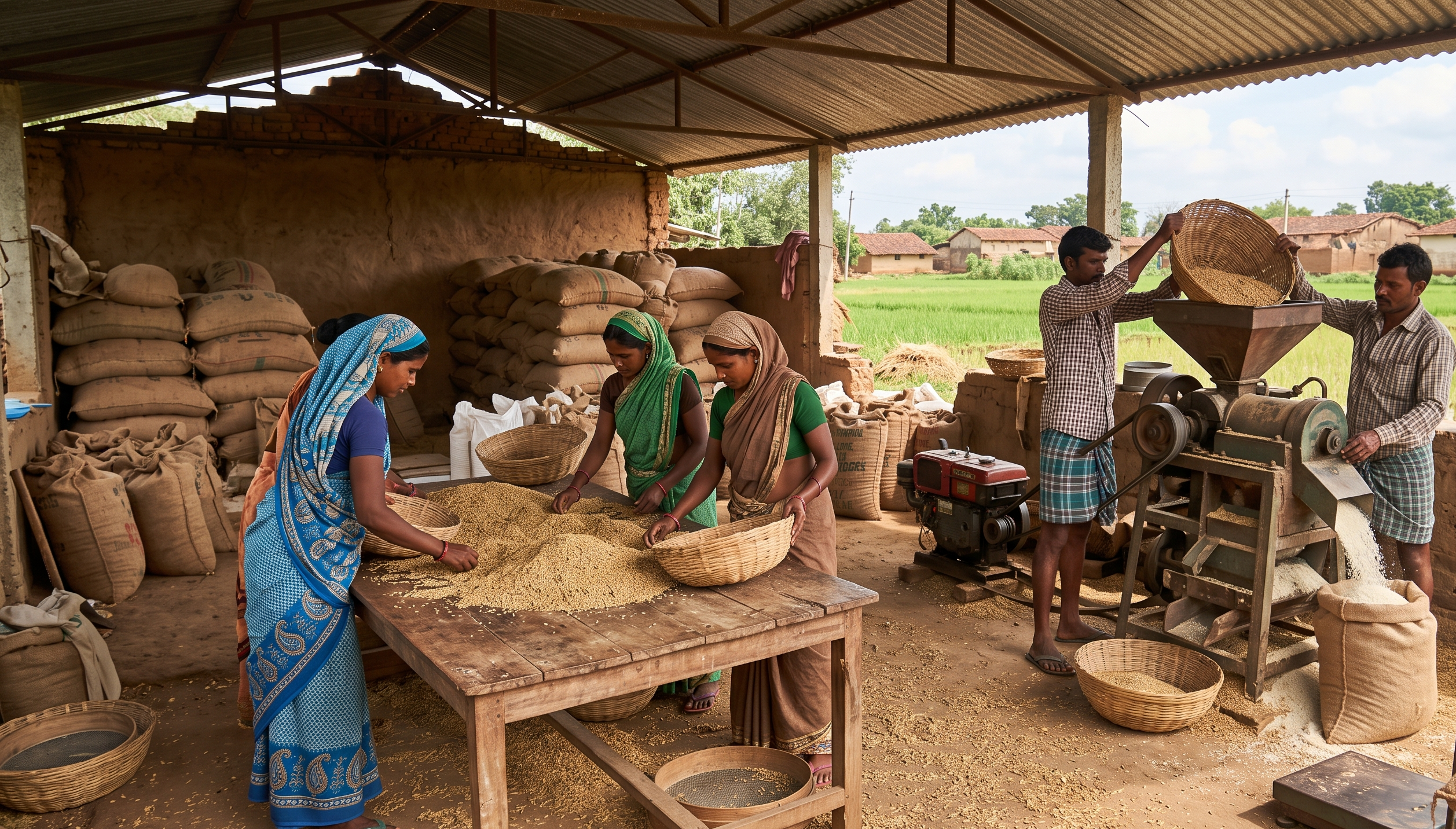
Step 4: Rice Milling
The next major stage is milling. Paddy still has its husk so it cannot be eaten as ordinary rice. Rice milling equipment removes the husk. Separates the edible rice grain. Depending on the processing facility the system can also include:
- Dehusking
- Separation
- Whitening
- Grading
- Broken-grain separation
- Final cleaning
Rice mills can be modern and process amounts of rice quickly. Smaller rice mills often work on a scale. The result is rice. Clean rice can be sold as grain or sent for further value addition.
Step 5: Sorting and Grading
After the rice is milled I see that the rice is sorted and graded.
I notice that this helps separate grains, foreign material and rice pieces that do not meet the desired specifications.
I have observed that modern processing units may use optical sorting systems to sort the rice.
I think sorting is especially important when rice is being prepared for branded products.
I know that consumers expect the rice grains, in a packaged product to have an appearance and quality.
I understand that once the rice has been sorted it can be sold as rice or moved towards additional processing.
Step 6: Making Rice Flour
I think rice flour is one of the ways to add value.Clean rice grains are milled again to become a powder.Of selling only whole rice the processor now offers a ready‑to‑use ingredient.
Rice flour can be used in dishes, including:
- Traditional rice foods
- Snacks
- Baked products
- Batter-based foods
- Desserts
- Food mixes
The exact use depends on the characteristics of the flour and, on the formulation of the product.
For consumers the main advantage is convenience because it saves time and effort.
The grain has already been processed into an ingredient that can be directly incorporated into recipes so you do not need to grind or sift.
Step 7: Processing Rice into Poha
Poha, also called flattened rice is another rice product that has extra value.
The process means treating rice and flattening the grains into flakes.Processing conditions must be controlled carefully to get the thickness, texture and quality.After the poha is made it can be cleaned, graded and packaged.
Poha is popular because it is easy to prepare and can be used in everyday foods.This is an example of how a simple grain can become a product, with a different texture, cooking method and consumer use.
Step 8: Making Puffed Rice
Puffed rice is another type of value-added rice product.Rice is treated with controlled heating methods that make the grains puff up and gain a texture.The final result is something that’s light in weight and easy to handle.Puffed rice can be eaten on its own. Added to snacks and traditional dishes.Its easy storage and use make it a useful option for food businesses.For processors items, like puffed rice show how processing can change how rice looks and feels and turn it into a new kind of product.
Step 9: Creating Rice-Based Snacks
Value addition becomes more interesting when rice is used as an ingredient for prepared foods.Rice flour, poha puffed rice and whole rice can all serve purposes, in food formulations.
Depending on the recipe processors can develop:
- Rice-based snack mixes
- Puffed rice snacks
- Rice crackers
- Traditional rice snacks
- Ready-to-cook mixes
- Other processed foods
The product-development stage allows entrepreneurs to move beyond basic grain sales.
Of offering only rice businesses can create products designed around convenience, taste and consumer preferences
Why Rice-Based Foods Are Loved in Chhattisgarh
I see that rice has a link with the food customs of Chhattisgarh.
I know that rice is used in meals and also in many traditional preparations.
I feel that this familiarity gives rice products an advantage.
I notice that consumers already know the ingredient.
I realise that extra processing simply shows rice in convenient forms.
I have seen that poha can become a breakfast.
I know that rice flour can become an ingredient, for preparations.
I have seen that puffed rice can be used in snacks.
I see that rice products can therefore link food habits with modern convenience.
Step 10: Quality Control
Food processing needs attention to quality at every step.
For rice products checking quality can start with the paddy and keep going through milling and the last step of packaging.
Key areas are:
- Raw-material quality
- Clean processing conditions
- Moisture control
- Proper storage
- Equipment hygiene
- Consistent product quality
- Suitable packaging
Food businesses must follow food-safety and labelling requirements, for their products.
A good product is not attractive.
It needs to be processed safely handled and consistently packaged.
Step 11: Packaging Dhamtari Rice Products
Packaging is where the processed product becomes ready, for the consumer market.
Whole rice, rice flour, poha puffed rice and snacks can all require packaging formats.
A designed package should protect the food while also communicating its identity.
For a Dhamtari-based product packaging can subtly highlight:
- Dhamtari
- Chhattisgarh
- Rice-Based Product
The design can use rice grains, paddy stalks and simple agricultural visuals.
Packaging should also include the information required for the food product under applicable regulations.
Local Entrepreneurs and Rice Processing
Rice value addition can create opportunities at stages.A local entrepreneur can operate a milling unit.Another business can manufacture rice flour.A food-processing group can produce poha. Puffed rice.A startup can develop packaged rice snacks.
Packaging and branding businesses can help these products reach markets.
This creates a network, around one product.
The chain can look like:
Farmer → Collection → Processing → Product Development → Packaging → Branding → Distribution
The more stages that are developed locally, the greater the opportunity to build a stronger regional food-processing ecosystem.
Building a Strong Dhamtari Rice Brand
A regional product becomes stronger when consumers can understand its story.
For Dhamtari the story can be built around a journey:
Chhattisgarh Paddy → Dhamtari Processing → Value-Added Rice Products → Consumer
Branding does not need to be complicated.
A clean visual identity, consistent packaging and clear product information can help create recognition.
The regional connection can become part of the brand story while keeping the focus firmly on the food itself.
From Paddy to Multiple Products
The greatest advantage of rice processing is diversification.
One crop can produce different product categories.
Whole Rice
For consumers who want to cook rice in the way.
Rice Flour
For households and food businesses that need a rice ingredient.
Poha
For meals and traditional preparations.
Puffed Rice
For snacks. Everyday food use.
Rice Snacks
For consumers looking for packaged foods.
This diversity allows the same agricultural raw material to serve markets.
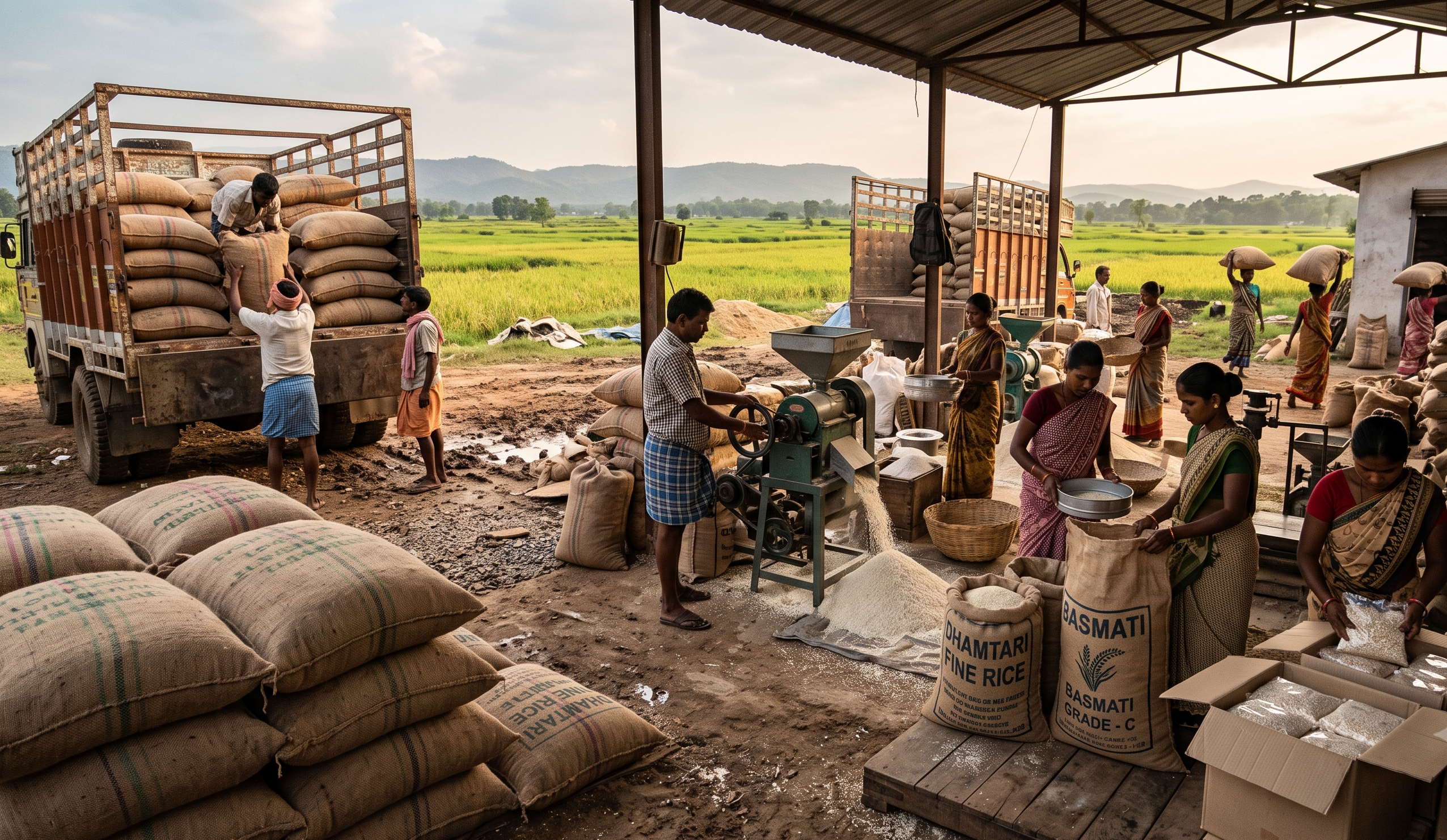
The Farm-to-Market Journey
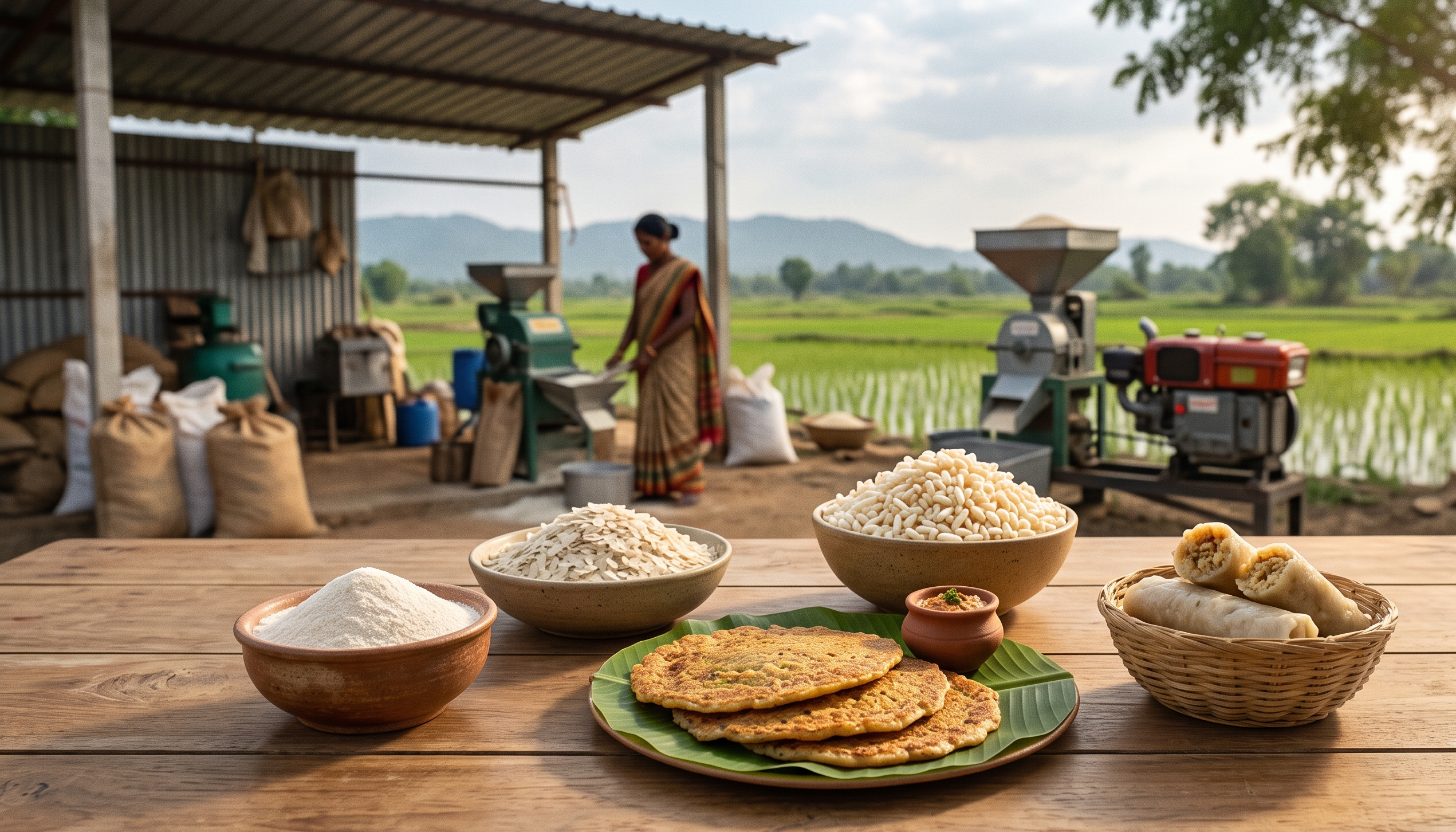
The greatest advantage of rice processing is diversification.One crop can produce different product categories.
Whole Rice
For consumers who want to cook rice in the way.
Rice Flour
For households and food businesses that need a rice ingredient.
Poha
For meals and traditional preparations.
Puffed Rice
For snacks. Everyday food use.
Rice Snacks
For consumers looking for packaged foods.
This diversity allows the same agricultural raw material to serve markets.
Conclusion
The story of Dhamtari Rice Products is ultimately a story of value addition.
The journey starts with paddy grown in the landscape of Chhattisgarh and continues through harvesting, drying, cleaning and milling.
The real change happens when the processed rice becomes something more.
It can become rice flour, poha puffed rice, snacks and other value-added foods.
Each product offers a form of convenience and creates another opportunity for processing, packaging and marketing.
For Dhamtari this creates the possibility of building a connection between agriculture and food processing.
Farmers provide the crop.
Processing units transform it.
Entrepreneurs develop products.
Packaging gives them a market identity.
Consumers receive food products.
The complete journey can therefore be summarised simply:
Paddy → Rice → Processing → Value Addition → Packaging → Market
What starts as a crop in the fields of Dhamtari Chhattisgarh can become a range of everyday food products.
That is the potential of rice-based value addition. Turning an agricultural staple into a wider food-processing opportunity, for Chhattisgarh.
Frequently Asked Questions (FAQs)
1. What is Dhamtari known for in Chhattisgarh?
Dhamtari is a known agricultural area in Chhattisgarh. Paddy and rice are very important for the farming and food business
2. How is paddy converted into rice?
First paddy is dried. Then it is. The husk is removed. After that it is milled. Finally the rice is. Graded. This whole process makes rice.
3. What are rice-based value-added products?
Rice can be turned into products. Some examples are rice flour, poha puffed rice, snacks and other food items.
4. How is rice flour made?
First the rice grains are cleaned. Then they are milled again. The result is a powder. This fine powder is rice flour.
5. How is poha made from rice?
Rice is. Then flattened. Thin flakes are produced. These thin flakes become poha called flattened rice.
6. What is puffed rice?
Puffed rice is a rice product. It is made by heating the rice in a controlled way. The heat makes the grains expand.
7. Why are rice products important in Chhattisgarh?
Rice is a part of the food and farming identity of Chhattisgarh. Turning rice into products gives more chances for adding value.
8. How can rice processing benefit local entrepreneurs?
Entrepreneurs can join steps. They can do milling make flour produce poha make snacks do packaging create a brand and distribute. All these steps give business chances.
9. Why is packaging important for rice products?
Packaging keeps rice safe from moisture and germs. It also shows information about the product. Packaging gives the product an identity, in the market.
10. What is the complete rice value-addition process?
Paddy cultivation → Harvesting → Drying → Cleaning → Milling → Sorting → Product development → Packaging → Market