Bharatpur Manufacturer: Premium Mustard Oil for Everyday Health
Mustard Oil has been an essential part of Indian kitchens and traditional wellness practices for generations. From cooking flavorful meals to supporting natural skincare and hair care routines, mustard oil continues to be one of the most trusted edible oils. As consumer demand for pure and high-quality edible oils increases, every reliable Bharatpur Mustard Oil Manufacturer focuses on producing mustard oil that meets modern quality standards while preserving its natural aroma, taste, and nutritional value.
Whether you are a household buyer, retailer, wholesaler, food business, or exporter, choosing the right manufacturer is important for ensuring consistent quality and food safety. This guide explains everything about mustard oil manufacturing in Bharatpur, including the production process, quality control, benefits, applications, and what to consider before selecting a supplier.
What Is Mustard Oil?

Quick Definition
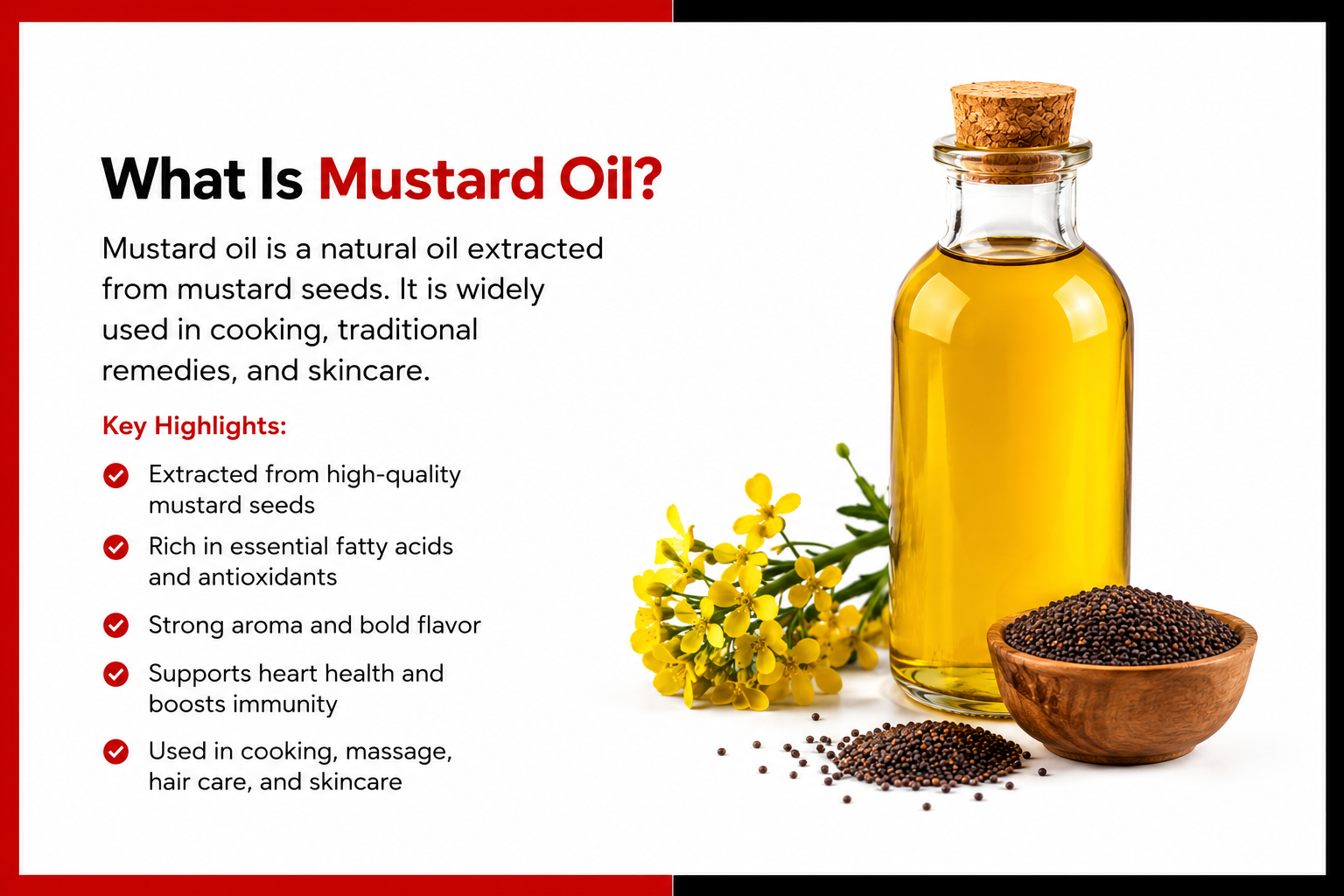
Mustard Oil is a vegetable oil extracted from mustard seeds using traditional cold-pressed methods or modern expeller technology. It is widely used for cooking, pickling, massage, skincare, and hair care because of its distinctive flavor, healthy fats, and naturally occurring antioxidants.
Detailed Explanation
Mustard oil is obtained from carefully selected mustard seeds that undergo cleaning, crushing, oil extraction, filtration, and packaging. The oil is known for its golden-yellow appearance, pungent aroma, and rich nutritional profile.
Modern manufacturers use advanced machinery and strict quality-control processes to ensure purity, freshness, and food safety. Many manufacturers also produce cold-pressed mustard oil, which retains more natural nutrients and flavor compared to heavily refined alternatives.
Because of its versatility, mustard oil is widely used in homes, restaurants, food processing units, and traditional wellness practices across India.
Key Components of Mustard Oil
- Rich in monounsaturated fats
- Contains omega-3 and omega-6 fatty acids
- Natural antioxidants
- Vitamin E
- Essential plant compounds
- Strong natural aroma
- Distinctive pungent taste
- High smoke point suitable for Indian cooking
Why Is Mustard Oil Important?

Answer
Mustard oil is important because it combines nutritional value, cooking performance, and multiple household applications. It offers a distinctive taste, supports traditional cooking methods, has a high smoke point, and is widely used in food preparation, skincare, hair care, and pickling.
Detailed Explanation
The growing popularity of mustard oil is driven by increasing awareness about natural food products and healthier cooking options. Consumers prefer oils that provide both flavor and nutritional value.
For manufacturers, mustard oil represents a growing market because of increasing demand from:
- Households
- Restaurants
- Grocery chains
- Food manufacturers
- Hotels
- Export markets
Bharatpur has emerged as an important manufacturing location because of its agricultural connectivity, availability of mustard crops, improving industrial infrastructure, and access to regional markets.
How Does Mustard Oil Manufacturing Work?
Answer
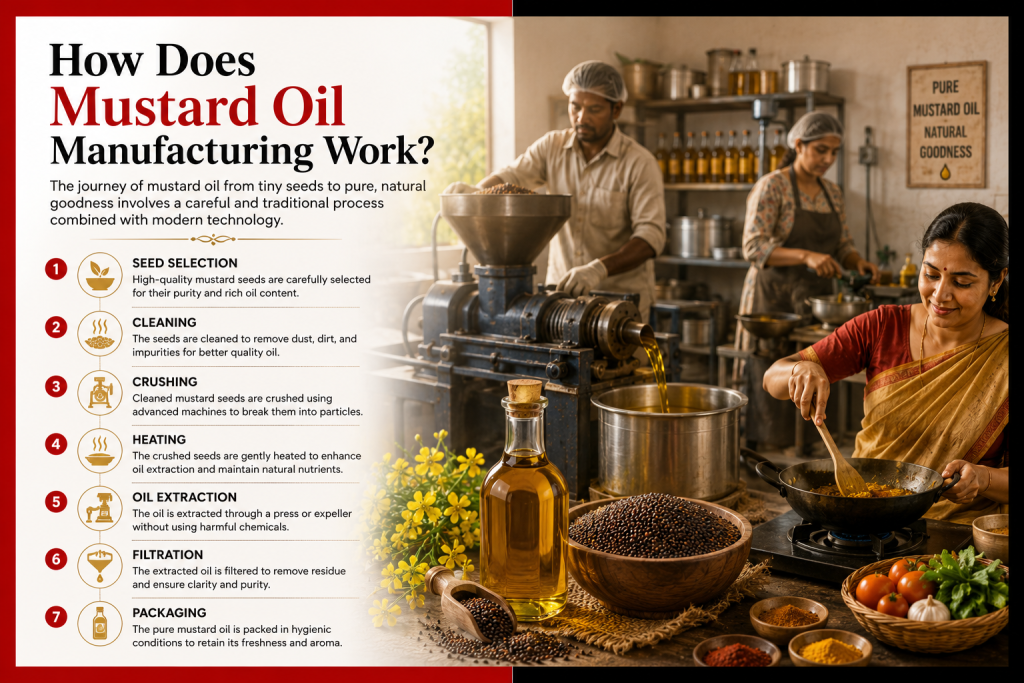
The manufacturing process involves sourcing quality mustard seeds, cleaning impurities, crushing the seeds, extracting oil using expellers or cold-press machines, filtering the oil, performing quality testing, and packaging the final product in hygienic containers before distribution.
Step 1 – Selection of Mustard Seeds
High-quality mustard seeds are sourced from trusted farmers and agricultural markets. Seeds are inspected for:
- Size
- Moisture level
- Purity
- Oil content
- Freshness
Using quality raw material directly affects the final oil quality.
Step 2 – Cleaning and Processing
Before extraction, seeds pass through cleaning equipment that removes:
- Dust
- Stones
- Leaves
- Metal particles
- Foreign materials
This improves hygiene and extraction efficiency.
Step 3 – Oil Extraction
Manufacturers generally use one of two methods:
Cold-Pressed Extraction
- Lower processing temperature
- Preserves nutrients
- Rich aroma
- Natural taste
- Premium-quality oil
Expeller Press Extraction
- Higher production capacity
- Efficient oil recovery
- Suitable for commercial supply
- Consistent quality
Step 4 – Filtration
Freshly extracted oil is filtered to remove fine particles while maintaining natural characteristics.
Step 5 – Quality Testing
Before packaging, every batch is tested for:
- Purity
- Moisture
- Color
- Aroma
- Acidity
- Food safety parameters
Step 6 – Packaging
The finished mustard oil is packed in:
- PET bottles
- HDPE containers
- Tin containers
- Bulk drums
- Institutional packs
Proper packaging helps maintain freshness and shelf life.
Benefits of Mustard Oil

Answer
Mustard oil offers numerous advantages, including rich flavor, versatile cooking applications, high smoke point, nutritional value, multiple household uses, and suitability for commercial food preparation. Its versatility makes it one of the most preferred edible oils for both domestic and industrial applications.
1. Rich Traditional Flavor
Mustard oil adds a unique taste and aroma to Indian dishes, making curries, vegetables, pickles, and regional recipes more flavorful.
Outcome: Better culinary experience.
2. High Smoke Point
Its high smoke point makes it suitable for frying, sautéing, and deep cooking.
Outcome: Better cooking performance with reduced oil breakdown.
3. Multipurpose Usage
Besides cooking, mustard oil is widely used in:
- Hair care
- Skin massage
- Traditional wellness
- Pickle preparation
Outcome: Greater value from a single product.
4. Nutritional Value
Mustard oil naturally contains healthy fatty acids and Vitamin E that contribute to a balanced diet when consumed appropriately.
Outcome: Supports overall nutritional intake.
5. Suitable for Commercial Food Businesses
Restaurants, hotels, food manufacturers, and catering services rely on quality mustard oil because of its consistency and cooking performance.
Outcome: Reliable results in commercial kitchens.
Applications of Mustard Oil
Answer
Mustard Oil is widely used in households, restaurants, food processing industries, pickling, Ayurveda-inspired wellness practices, cosmetics, and hair care products. Its distinctive flavor, versatility, and high smoke point make it suitable for both domestic and commercial applications.
Detailed Explanation
Mustard oil is much more than a cooking ingredient. Its versatility makes it valuable across several industries and daily-life applications.
1. Household Cooking
It is commonly used for:
- Frying
- Sautéing
- Deep frying
- Curry preparation
- Vegetable dishes
- Traditional Indian recipes
Its strong aroma enhances the taste of many regional cuisines.
2. Pickle Manufacturing
Mustard oil is a preferred choice for preparing pickles because of its rich flavor and traditional use.
Benefits include:
- Better taste
- Long-lasting freshness
- Authentic texture
- Traditional preparation methods
3. Food Processing Industry
Food manufacturers use mustard oil in:
- Ready-to-eat foods
- Spice blends
- Pickles
- Snacks
- Packaged food products
Consistent quality is essential for maintaining product standards.
4. Hotels & Restaurants
Commercial kitchens prefer mustard oil for recipes that require authentic Indian flavor and consistent cooking performance.
5. Hair Care
Many people traditionally apply mustard oil to the scalp and hair as part of their personal care routine.
Common uses include:
- Hair massage
- Hair nourishment
- Traditional grooming practices
6. Skin Massage
Mustard oil has long been used in traditional massage practices, especially during winter months.
Bharatpur Mustard Oil Manufacturing Industry
Answer
A Bharatpur Mustard Oil Manufacturer typically sources mustard seeds from agricultural regions, processes them using modern extraction technology, and supplies edible oil to wholesalers, retailers, distributors, food businesses, and institutional buyers. The industry focuses on maintaining quality, hygiene, and consistent production standards.
Detailed Explanation
Bharatpur, located in Rajasthan, is connected to important agricultural regions where mustard cultivation is common. This makes raw material procurement easier for manufacturers.
Many production units combine:
- Modern oil expellers
- Efficient filtration systems
- Hygienic packaging
- Quality testing laboratories
- Skilled workforce
Manufacturers often supply products to:
- Local markets
- Rajasthan distributors
- North Indian wholesalers
- Grocery stores
- Supermarkets
- Food businesses
- Institutional buyers
Quality Standards Followed by Reliable Manufacturers
Answer
Reliable manufacturers maintain strict quality standards through hygienic processing, raw material inspection, food safety compliance, quality testing, and proper packaging. These practices help ensure purity, consistency, freshness, and customer satisfaction while meeting regulatory requirements.
Important Quality Practices
A professional manufacturer generally follows:
- Careful seed selection
- Hygienic processing
- Batch testing
- Controlled filtration
- Moisture control
- Safe storage
- Tamper-proof packaging
- Traceable production systems
Common Industry Certifications
Depending on the manufacturer, certifications may include:
- FSSAI Compliance
- ISO 9001 Quality Management
- HACCP Food Safety Systems
- GMP (Good Manufacturing Practices)
These certifications demonstrate commitment to quality and food safety.
How to Choose the Best Bharatpur Mustard Oil Manufacturer
Answer
Choose a manufacturer that offers consistent product quality, transparent manufacturing processes, food safety compliance, reliable packaging, timely delivery, and responsive customer support. Checking certifications, production capacity, testing procedures, and customer reputation helps buyers make informed purchasing decisions.
1. Product Purity
Ensure the oil is manufactured using quality mustard seeds and proper filtration methods.
2. Manufacturing Infrastructure
Modern production equipment generally provides:
- Better efficiency
- Consistent quality
- Improved hygiene
3. Quality Testing
Reliable manufacturers perform routine laboratory testing before dispatch.
4. Packaging Standards
Proper packaging protects the oil from:
- Moisture
- Air exposure
- Leakage
- Contamination
5. Supply Capability
Large buyers should evaluate:
- Production capacity
- Delivery timelines
- Bulk supply options
- Distribution network
6. Customer Support
Professional communication and after-sales support contribute to long-term business relationships.
Common Mistakes to Avoid When Buying Mustard Oil
Many buyers focus only on price, but quality should always come first.
Avoid these common mistakes:
- Choosing suppliers without quality verification
- Ignoring food safety compliance
- Purchasing without checking packaging quality
- Not reviewing manufacturing standards
- Ignoring storage recommendations
- Buying from unreliable sources
- Selecting products solely based on low price
These precautions help ensure better quality, consistency, and long-term satisfaction.
1. What is Mustard Oil?
Answer
Mustard Oil is an edible vegetable oil extracted from mustard seeds. It is widely used for cooking, frying, pickling, and traditional wellness practices because of its distinctive flavor, natural aroma, and nutritional composition.
Detailed Explanation
Mustard oil is one of India’s most widely used cooking oils. Depending on the production method, it may be available as cold-pressed or expeller-pressed oil. It is valued for its versatility, taste, and suitability for everyday cooking.
2. Why choose a Bharatpur Mustard Oil Manufacturer?
Answer
A Bharatpur Mustard Oil Manufacturer benefits from proximity to mustard-growing regions, modern processing facilities, and efficient distribution networks. Many manufacturers focus on hygienic production, quality testing, and reliable packaging to meet the needs of households, retailers, wholesalers, and food businesses.
Detailed Explanation
Bharatpur’s agricultural connectivity and industrial development make it a suitable location for producing high-quality mustard oil with consistent standards.
3. What is the difference between Cold-Pressed and Expeller Mustard Oil?
Answer
Cold-pressed mustard oil is extracted at lower temperatures to help preserve its natural aroma and nutrients. Expeller-pressed mustard oil uses mechanical pressure and is suitable for larger-scale production. Both methods produce edible oil, but they differ in processing techniques and product characteristics.
4. How should Mustard Oil be stored?
Answer
Store mustard oil in a cool, dry place away from direct sunlight. Keep the container tightly sealed after every use to maintain freshness, aroma, and quality. Proper storage also helps extend the product’s shelf life.
5. Is Mustard Oil suitable for commercial kitchens?
Answer
Yes. Mustard oil is widely used in restaurants, hotels, catering businesses, and food processing industries because of its distinctive flavor, cooking performance, and suitability for various Indian recipes.
6. What factors indicate good-quality Mustard Oil?
Look for:
- Natural aroma
- Golden-yellow color
- Hygienic packaging
- Food safety compliance
- Reliable manufacturer
- Quality certifications
- Proper labeling
- Fresh production date
Frequently Asked Questions (FAQs)
Mustard Oil is an edible oil extracted from mustard seeds. It is widely used for cooking, frying, pickling, and traditional wellness practices because of its rich aroma, distinctive flavor, and nutritional value.
A Bharatpur Mustard Oil Manufacturer offers high-quality mustard oil produced using carefully selected mustard seeds, modern extraction techniques, hygienic processing, and strict quality control to ensure purity and consistency.
Cold-pressed mustard oil is extracted at low temperatures to help preserve its natural aroma and nutrients, while expeller mustard oil is mechanically extracted for higher production efficiency and consistent quality.
Yes, mustard oil has a high smoke point, making it suitable for deep frying, sautéing, and preparing a wide variety of Indian dishes.
Store mustard oil in a cool, dry place away from direct sunlight. Keep the container tightly sealed to maintain freshness, aroma, and quality.
Quality testing ensures that the oil meets food safety standards, maintains purity, and delivers consistent taste, aroma, and performance for consumers and businesses.
Key Takeaways
- Mustard Oil is one of the most widely used edible oils for cooking, frying, and pickling.
- A Bharatpur Mustard Oil Manufacturer focuses on producing pure, hygienic, and high-quality mustard oil.
- Modern manufacturing includes seed selection, oil extraction, filtration, quality testing, and secure packaging.
- High-quality mustard oil is suitable for households, restaurants, wholesalers, retailers, and food processing industries.
- Choosing a trusted manufacturer ensures consistent quality, food safety, and timely supply.
Conclusion
Mustard Oil continues to be one of the most trusted edible oils because of its versatility, traditional value, and wide range of applications. A professional Bharatpur Mustard Oil Manufacturer combines quality raw materials, advanced extraction technology, hygienic processing, and strict quality control to deliver products that meet the expectations of households and commercial buyers alike.
Whether you are purchasing for home use, retail distribution, restaurants, food processing, or bulk supply, selecting a reliable manufacturer ensures consistent quality, food safety, and dependable service. By evaluating manufacturing practices, certifications, packaging standards, and customer support, buyers can make informed decisions and build long-term sourcing partnerships.
| Company Name | Contact |
| Shree Shankar Industries (Natraj Mustard Oil) | Visit Website |
| Yogesh Industries & Oil Mills (AZAD Brand) | visit website |
| Shree Shanti Oil Mill | Visit Website |
| Rakesh Oil Industries | Visit Website |
| National Industries & Oil Mill (Dulhan Mustard Oil) | Visit Website |
| Shivam Oil Mill | Visit Website |
Leave a Reply